Springbank 17yo 1997/2015 “Sherry Wood” (52.3%, OB, Fresh and Refill Sherry Butts and Hogsheads, 9.120 bottles, 15/24)

When attending the Whisky Show in London last year I absolutely loved this one at the Springbank stand. Sure there were better Whiskies at the show, but also you’d almost have to take out another mortgage on your house to buy those. Nope, I mean, this was definitely one of the best Whiskies at a fair price. Still, over here in Europe this sells for well over a hundred euros. Despite this, it was really a no brainer to buy, and remember, why get only one, when you gen get two for twice the price. When I just recently finished another Springbank, (more about that next time), it was time to finally break out this one. Distilled in 1997 and fully matured in fresh and refill Sherry butts and hogsheads. Possibly, but not necessarily, a combination of european and american oak.
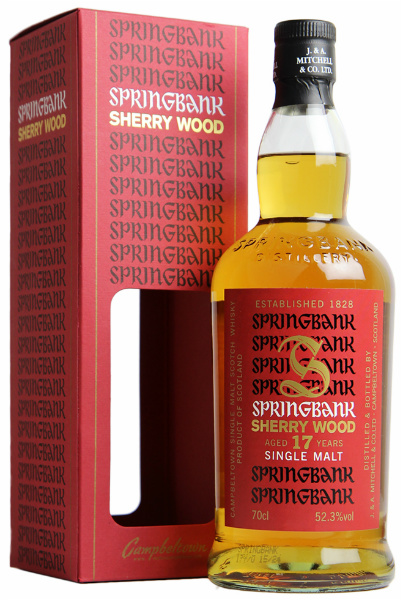
Springbank 17yo SherryColor: Gold.

Nose: Nice, waxy and fresh, powdered vitamin C or should we call it vitamin W from now on? Dusty and dry and definitely lots of Sherry mustiness. Hints of apples (Calvados). Slightly wet forest floor with mushrooms growing. Unripe cold banana, some sweet malts, vanilla and quite vegetal as well. Ashy and slightly smoky (more so than peat). Hints of tar and charred cask and even some new wood, although that isn’t used for this expression. Even though this is 100% Sherry, this smells like a typical Springbank, minus the big sweet creamy vanilla that is, the Bourbon part always brings. Remember, Springbank usually is a blend of Bourbon and Sherry casks. Luckily the Springbank distillate does well in every kind of cask. However, all types of casks used, bring their own flavor to the Springbank spectrum. So there is no better Whisky to try different expressions from. This one reminds me of old Springbank in a way. Coconut and quite fruity as well. Very well made and extremely balanced smell. They are definitely doing everything right. The Sherry smells unbelievably fresh and defined. It must have some casks (if not all) that contained Sherries matured under flor. Fino and Manzanilla that is. I doesn’t smell like typical Oloroso matured Whisky to me, (although very dry Oloroso could be possible). The Sherry notes also smell a bit different from the Sherry in the 12yo Cask Strength. Lovely expression, which would have been nice to compare to the 18yo I reviewed earlier. Alas, that one is already gone, so that is not possible anymore. Bugger.

Taste: Yup, Sherry (from under flor) and typical Springbank. If you love Springbank like I do, it feels like coming home again. Waxy, vanilla and lots and lots of coconut again. Sometimes a bit soapy even. Welcome back: coconut! Peat (more so than smoke) and quite vegetal and fruity. Coconut mixed with almond cookies. Cookie dough and a nice friendly sweetness to it. Toffee. It also has a bite as well. Burnt wood and some peat. On top, as with many modern Sherry casked Whiskies, a slightly acidic red fruitiness that stands out a bit, less integrated so to say. It’s this aroma that dominates the finish as well. Thus the finish is less about the cookies, coconut, toffee and dough. Nevertheless, this one has it all. Super stuff with utter balance. Springbank works very well in Bourbon casks, and although you know what some Bourbon casks would have done to this Whisky, this time I don’t miss them. Nice Sherry expression this is. Well done Springbank!

I’d like to mention, that this review is written just a few minutes after opening the bottle. Springbank is never at its best right after opening the bottle. It’s a big Whisky that needs time to breathe. If you are patient with it and it has time to breathe, wow!

Points: 90

Presidente Solera 23 Años (40%, Dominican Republic)

There are probably more Rum brands in the world than there are people, which makes the Rum world less transparent than, lets say, the Scottish Single Malt Whisky industry. Remember the reviews I wrote about Malecon? Malecon is a brand and not a distillery. Malecon is a Brand of PILSA. A Panamanian company which is known for its Cuban master blender: Francisco “Don Pancho” Fernandez Perez. Malecon is Rum made in the Cuban tradition. Well, something like this is also true for the Presidente brand. Presidente is made the Cuban way in the Dominican Republic by Oliver & Oliver and just like PILSA, Oliver & Oliver make, and own, a lot of brands of Rum, like Cubaney, Opthimus, Puntacana and Quorhum, to name but a few. They also make Rums like Atlantico and Tres Hombres, for other brand owners. Oliver & Oliver will make even Rum for third-party brand owners. If you and me want to put out a Rum together, Oliver & Oliver will be happy to oblige, but so would PILSA and many others around the world.

We’ll encounter many Rums in the future that are made by Oliver & Oliver, so more about them next time. Their website is more down than up these days, so lets find out who this guy on the label is. It is José Julián Martí Pérez (1853-1898), a big national hero in Cuba. Amongst other things he is known as a writer, poet and journalist, but foremost as a political activist. He fought for Cuba’s independence against Spain, traveling the world to spread the gospel of political and intellectual independence and was the architect of the Cuban Revolutionary Party. The Cubans fought three wars against Spain for independence, and in the third and final war (1895-1898), during the battle of Dos Ríos, Martí was killed. Martí helped planning and execution of this war. After his death one of his poems was turned into the song Guantanamera (which is probably a Rum brand by now).

Presidente 23Color: Dark brown, slightly mahogany.

Nose: Big, initially sweet and syrupy, but quickly some dry woody aromas emerge as well. Old cabinet with faint smell of dried out lavender soap. Hints of cured meat, dust and toned down sawdust. Very closed actually and it comes across as one big aroma which makes it hard to detect distinct markers for this Rum. I have seen that before in Whisky when a lot of caramel colouring is done. I’m guessing from the smell that this has seen some sugar added to it. Sweet biggish smell with some dry spicy wood. Sweet black tea. Yet overall lacking some depth, so not all that old I guess. In fact it smells a bit like a El Dorado 12yo light, which also saw some added sugar. If you need to refresh your knowledge about the Solera System at this point, please read the introduction to this review. Nevertheless a very nice smelling Rum.

Taste: Sweet caramel, dry wood, slightly bitter spicy wood and plywood. Sitting near the fireplace in winter, when the air outside is crisp and sharp. Toffee, lots of vanilla and sugared cacao. Burnt sugar, and the aroma of burning paper. A touch of glycol. Because this has hints of burnt sugar and burnt wood, the sweetness is well hidden but unmistakably there. Big aroma. On top a nice well-integrated, slightly acidic fruitiness, which balances out the Rum. Just enough. Honey and licorice. The finish is rather cloying, another sign of added sugar, and surprisingly sees the soapy note from the nose return. The finish is of at least medium length, with quite a warming quality to it. Again a Rum that suffered a bit by reduction to 40% ABV.

This Rum is pretty sweet and these days, added sugar is like swearing in the church of Rum. And rightly so. Although Rum is made from molasses and sugar cane, adding sugar is something else. Sure, lots of Rum drinkers love their Rums sweet, but for that we have liqueur. Calling Rums like these just “Rum” is a bit confusing and to be honest, misleading. We already have the Spiced Rum category, why not add a Sugared Rum category. As a Sugared Rum this is not bad. It does taste nice, and although it has its flaws, I do quite like it.

Points: 85

Malecon Seleccion Esplendida 1979 (40%, Panama)

Why not make it a Malecon, double bill? In the previous review I had a look at the 25yo brother/sister of this Rum, called the Reserva Imperial, and was surprised by its youthful, vibrant quality, I somehow didn’t expect of a 25yo Rum. The label mentions: Rum made in the Cuban style (a light style), although hailing from Panama. For me the Rum also suffered a bit by its reduction to 40% ABV, where clearly this should have been a bit higher to “carry” the Rum. Today we’ll have a look at an Seleccion Esplendida from 1979, what should be an exceptional vintage Rum. This one was bottled in 2008, but I am not sure. I gather, Las Cabres de Pese wasn’t working in 1979 so I’m guessing this was distilled at Varela Hermanos S.A. as well. My only fear is again the 40% ABV…

Before I set off, if you are interested more about the Malecon brand and some of its history, I ask you to read the lengthy introduction to the previous review of the Malecon 25yo.

malecon-1979Color: Orange brown, slightly lighter than the 25yo.

Nose: Drier. Spicy and reeks of higher quality. After only smelling it once I already like it a lot better than both Malecons I reviewed earlier. Thus, we are going into the right direction. Nice fruity acidity, better balanced and integrated compared to the 25yo. Hints of Aspirin powder and nice dry oak. Again a meaty quality like the 25yo, but this time it makes my mouth water. Dry cured meat, beef jerky and some cold gravy. Vanilla is next and quite present. Oak driven vanilla. This smells so good, I’d almost wear it as a perfume.

Taste: Well this doesn’t seem so reduced as the 25yo. Alas the fruity acidity is present, but in a less integrated way as the nose. Fruity black tea? Quite some dry wood spiciness as well, and from the start you see this has some sweetness to it, but that is well overpowered by the dry aroma’s. I don’t think they sugared this one up, guys! If so, its masked rather well. it has some bitter notes as well, but they help the whole. Even the bitterness in the finish is not hurting the Rum at all. Apart from this, some nice toffee notes stay behind next to the woody and bitter notes. Again, just like the 25yo, the finish is short, and again, this was probably reduced too much. Bugger!

We are entering super premium territory now, since today this 1979 costs about tree times more than the 25yo. Is it worth that kind of money? It is definitely a step up from both other Malecons, but for a Rum in general, it lacks complexity. It’s basically a bit too simple, to be honest. The nose promised a lot, but the taste didn’t deliver what could have been. Stop diluting it so much! I feel both the 25yo and especially the 1979 are a bit overpriced for what you are getting. Nice just isn’t enough anymore, especially at these prices, so I can’t really recommend both of them.

Points: 84

Malecon Reserva Imperial 25yo (40%, Panama)

Malecon was featured almost four years ago on Master Quill with a very light 12yo Reserva Superior. We’re four years on and still it is quite hard to find any information about the brand. What we know is that the Rum comes from Panama and that it is made in the cuban style, as stated on the Malecon labels. So its safe to hazard a guess and say that the Rum is probably made by the people behind the Abuelo brand, although they themselves don’t put “Cuban style” on their labels, so maybe they make this in a different way, or is it just a matter of cask selection?

don-panchoThe brand, as well as Malteco, is owned by Caribbean Spirits and worldwide distribution lies with Italian outfit Savio s.r.l. owned by jet-setting spirits importer Marco Savio. Although the Savio website isn’t completely clear, I’m guessing that Caribbean Spirits is also owned by Savio. We can also read that Marco hooked up with the legendary Cuban Rum-maker, Francisco “Don Pancho” Fernandez Perez. We know Don Pancho is Cuban, and we also know that he worked a long time as master blender at Varela Hermanos S.A. in Panama (Abuelo). So now you can do the math about Malecon.

Don Pancho is also the blender for Ron de Jeremy (and probably many other Rums). Since 2000, Don Pancho oversees production in the resurrected Panamanian distillery, Las Cabres de Pese, owned by Proveedora Internacional de Licores, S.A. (PILSA), located not far from the distillery of Varela Hermanos, so it is possible that younger expressions of Malecon are produced at Las Cabres than at Varela, but I’m only guessing here.

PILSA is also responsible for Panama Red, Caña Brava, Selvarey and the Origenes Rums and boast producing Rums in the Cuban style. Rums like Zafra, Panamonte, Debonaire and Bohemio are also produced at Las Cabres de Pese although the brands are owned by other companies than PILSA. PILSA’s Origenes Rum is marketed as “the ultimate expression of Don Pancho´s vision and a lifetime dedicated to the production of the world´s finest rums”, So cheers to that and Don Pancho, who seems to be responsible for our Malecon 25yo as well…

malecon-25-reserva-imperialColor: Copper brown orange.

Nose: It starts out with glue, and yes this does remind me more than a bit of Abuelo. Fruity and also the Abuelo 7 yo’s acidity. Next some cereal and vegetal notes. Cookies and fudge. Dry leaves and a little bit of hay. Sawdust. Hints of gravy even. Maybe herein lies the age? A very vibrant Rum nevertheless, because I expected a more dark and brooding Rum after 25 years in wood. It doesn’t even have a particularly woody aroma and does smell a bit sweet and syrupy. Toffee and runny caramel.

Taste: On entry a decent but very diluted taste. This type of Rum does need a bit of strength to it, but at 40% ABV. It completely lost its oomph. I hope this isn’t the way they want to reach cuban lightness, because it doesn’t taste like a Cuban Rum at all. If I want a Cuban Rum right now, I’d rather have me a Cubay. Its obvious right now that the Metodo Tradicional Cubano mentioned on the label refers to Don Panchos schooling! Back to Panana then, as did Don Pancho. Again I smell this Rum has a lot in common with Abuelo, but not with the Abuelo Centuria, which also consists of some pretty old Rums. No it smells and taste younger than the 25yo it is. There are some burnt notes, burnt wood (cask) and burnt sugar, giving the Rum a nice backbone and some character. Still, the Abuelo fruity acidity lies on top. Short finish, leaving hardly any aftertaste.

Tasting this I would definitely say Abuelo, although not such an old one. How funny would it be if it wasn’t an Abuelo! It tastes like an Abuelo to me, just watered down too much. Did they think they would scare the public with some more alcohol, or was it an economical decision? At least it not very expensive for the age.

Points: 82

Caroni 12yo 1996/2009 (69%, Krugers Whiskygalerie, Rendsburger Bürgermeister, Cask #1107, Trinidad & Tobago)

October always starts out with the best Whisky Festival in the world, The Whisky Show in London (UK). I visited it so many times already it stopped being about the Whiskies, although I tasted many of them. It’s a festival about people. Meeting the makers, the owners, the writers, the bloggers and its about meeting the friends I made along the way, your old buddies, so to speak. Missing those who could not be there this year. It’s always nice to meet some new people as well. I’ve just returned and it always takes me a while to adjust back to normal life. Many Whisky reviews were written before The Whisky Show and many were tasted at the show. So why not go cold turkey and do some Rums for a while, another passion of mine?

The Kruger in Krugers Whiskygalerie is Thomas Kruger, probably best known for his auction site. I actually don’t know if he auctions Rums somewhere, but he does bottle Whiskies and the occasional Rum. From Thomas’ bottling business, here is a Caroni! My heart always skips a beat when hearing that name, especially when it is un-diluted.

Caroni #1107Color: Orange brown.

Nose: Right from the start you get this utter balanced smell. It smells fairly dry, herbal and industrial, with a nice dose of heated oak (when sawing) and sawdust, just like a Caroni should. It’s also easily recognizable as a Caroni, leaning towards Rhum Agricole, with a splash of petrol in it, but not as much as other Caroni’s have. In and out come some whiffs of tar, burnt sugar, leather, Italian laurel licorice and again the wood of the cask. Past the usual suspects, this one boasts also some nice (red) fruitiness. The fruit, ripe raspberries, sugared pineapple (which I know are not red) and unripe wild strawberries. These fruits merge as a second layer and when that layer settles in, you get a more creamy, vanilla-like, toffee-sweet smell. It still is a Rum y’know. If I was presented with this blind, I would have argued it was an aged, rather dry, Rhum Agricole. Love this profile. Once you get the hang of it, there is no going back.

Taste: Starts out dry with a woody aroma, aided by the high ABV. Nevertheless very drinkable (for me) at this strength. I no way does it feel as 69% ABV. A little bit dirty, as Caroni should be. Petrol, exhaust gasses and licorice. Exhaust gasses, wow, never had that before! Not an aroma for the masses. Since the world prefers the flavour profile of Angostura, no wonder Caroni got closed, a fact that makes Rum aficionados break out in tears once in a while. It is so dirty I could also call this animalesk. It does resemble the nose, but seems a bit less complex. Powdery dryness. The high strength is duly noted when my lips start burning a bit and some heat clings to the roof of my mouth. Is it a problem? No it’s not. Blood comes out my nose. Just kidding. It does taste dryer than the nose lead me to believe. But when the dry spell passes, there is some residual toffee sweetness noticeable. In the taste, it is less of a “Rhum Agricole” than the nose promised. Not all returns for the finish. The finish is made up of the wood and (thin) licorice, but has lots of staying power with some very late, yet diluted, warm caramel to it.

I tried to compare this one to the Bristol 1998, but that is impossible, the difference in ABV is too big. From memory I know the Bristol has the petrol but is even more fruity. This Kruger expression is woodier. But I have another ace up my sleeve. The Kintra 1999 expression. Both seem remarkably similar at first. Lots of wood going on in both, but more of that in the Kruger. The Kintra has some whiffs of (clear) glue that can’t be found in the Kruger expression, and the Kruger shows some honey and even hints of Bourbon Whiskey (Buffalo Trace to be exact). On the taste, the Kintra is woodier and Kruger has more licorice and sawdust, but again they are pretty similar. Even the fruit profile matches. Always a good idea to do direct head to head (H2H) comparisons.

Points: 88

Thanks go out to Nico!

Tomatin 12yo (43%, OB, Bourbon and Sherry Casks, 2016)

Not so long ago, I reviewed four twelve-year olds from Tomatin’s Cuatro Series. Whisky that started out in Bourbon casks but then were transferred for a finish into four different kinds of Sherry; Fino, Manzanilla, Oloroso and Pedro Ximénez. A longer while back, I also reviewed the entry-level 12yo, calling it the new look bottle, built around the color of the distillery. Black, white and the red of the doors. That design was introduced in 2009 and now, in 2016, The company is changing the design again. This is the even newer look from Tomatin. Newly shaped bottle and a new logo, depicting a hogshead. Nope, not the cask, the head of a hog. I love it when people have humor. With the change came also the change in ABV. The old expression I reviewed was 40%, although 43% versions did exist. This new one is bottled at 43% ABV. I’m not sure yet if I like this new design. Although the old bottle themselves look pretty standard. I did like the color scheme of them. This 12yo for instance, looks like it was made for lumberjacks with a green camouflage label. By the way, the gold lettering on the label is hardly readable so bring your reading glasses when visiting your place of choice for buying Whisky…

Tomatin 12yo (40%, OB, Bourbon and Sherry Casks)Color: Light gold.

Nose: Creamy, creamy wood, leafy and definitely similar stuff to the previous 12yo. Sweet vanilla underneath and quite some funky, slightly acidic Sherry on top. LActic acid, toffee and caramel with a hint of raisins. Waxy and quite some woody aromas complete with toasted oak. It also has a powdery quality to it and I even get the occasional whiff of Beer. Even though it doesn’t seem to be pleasantly fruity and accessible at first, it does have a lot going for it. The nose balances out when it gets the chance to breathe for a while. With time, even a floral note emerges and finally some of the typical Tomatin tropical fruits as well. I don’t have the old 12yo around anymore, but if memory serves me well, this new edition seems to be slightly better balanced and seems to be of higher quality as well.

Taste: Sherry comes first. Funky and musty, but less so than the nose promised. Quite sweet and fruity. Funky Sherry and a little bit of burnt oak. Candy sweetness, caramel sweetness with some cocktail cherries. Creamy again. However, the sweetness subsides under the influence of the woody backbone, which also gives it a slight bitter edge. Drying it out a bit. Next, some more creamy vanilla and cookie dough aroma’s, although the Sherry part has the upper hand. This is quite an interesting entry-level Malt. There is definitely quality here and you get a lot for what they ask you to pay for it. The taste may be simpler than the nose, but quite big and nice nevertheless.

If you are willing to give this Malt some time to breathe you’ll be rewarded with a pretty good Whisky at a more than fair price. Sure, the Legend is even less expensive, but for that, you get a much younger Malt with less depth. I would go for this one instead…

Points: 83

Same score actually as the “older expression”, but I do prefer this newer expression over the previous one.

Thanks for the Whisky Erik!

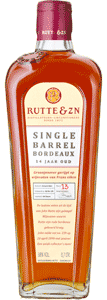
Dutch Jenever Week – Day 7: Rutte Single Barrel Bordeaux Graanjenever 14yo 1999 (38%, Limousin Oak Cask #239, 490 bottles

Jenever Week Logo

We already reached the end of our Dutch Jenever journey. It was a long journey for me, and writing the reviews and doing the research took me a whole lot longer than first expected. Lots of other things came in between, both already published and some not, like the next Master Quill week, which at this point in time is nearly finished as well. It’s a good thing I took my time, because in the mean time I somehow connected with Jenever and found out what it is and what its place is in the big scheme of things. I learned to appreciate it for the wonderful traditional liquor it is. I present to you the last review of the week and it is a 14yo Rutte, aged in a Bordeaux cask, in many ways similar to yesterdays 14yo Zuidam that was matured in two Oloroso Sherry casks. I expected both to be dominated by the Bordeaux Wine or Oloroso Sherry before setting off…

RUTTE_SINGLE_BARREL_BORDEAUX_14JR_lowresxxx300Color: Vibrant copper gold.

Nose: Very fruity. Berries, cherries and this definitely has some characteristics of wine, just not the wine itself. Very fresh and vibrant at first, but also a deep dull nutty undertone that evolves over time. Sweetish and grainy. The cask impaired a lot of aromas onto the Jenever. Waxy red apple skins. Vanilla, mocha and plywood. Small hint of licorice, some toasted cask and sometimes a light whiff of cigarette smoke. Still not a true red wine aroma, if you ask me. If someone would give me this Jenever blind and ask what kind of cask this came from, I would have been sure this was from a Calvados cask. The aroma is from apple, but also the typical acidity from Calvados. Very perfumy and fruity. Definitely floral as well. Cinnamon comes next and as we all know, cinnamon goes together well with the apple aroma this Jenever has. Nice stuff to smell. Soft.

Taste: Sweet, sweet, sweet. Apples in many (distilled) guises. First impression shows an enormous lack of complexity. Fruity, overpowering and warming, and yes, quite likeable as well. Liquid candy and although 38% ABV is not high, it seems way less than this. It drinks like a soft Sherry with corresponding ABV. Christmas pudding. More Calavados notes mixed together well with some soft and spicy notes from wood. I know this is from a cask that once held French Red Wine, but the spirit is Dutch. Having said that I can’t get rid of the French feeling this Jenever gives me. maybe this is because this hardly tastes like a Jenever at all? Am I biased by the statement on the label and the aroma’s of Calvados? I wish I had tasted this blind, not knowing what it was, would I call this a Calvados then? Even after 14 years we can safely say that the Bordeaux may have overpowered the Jenever a bit, but some nice synergy was achieved as well. It ís still recognizable as a Jenever. It has a great nose and tastes well. Big gulp now and damn, this has a lot to do with a semi-sweet Calvados (and nothing with Bordeaux or the other Rutte offerings I reviewed and tasted). Again a Jenever that has to breathe for a while, so don’t be hasty with it.

Whereas with Zuidam you get the feeling everything is intelligently planned and intended, with Rutte it sometimes is more random and spontaneous. Trial and error. Hit or miss.”Well lets not chuck out the cask, people. Rinse it out and put some spirit in it, I might like it in the end.” (And then forget about the cask altogether untill a cleaning-lady accidentally stumbles upon it…)

I hope Patrick van Zuidam doesn’t feel too comfortable now, to sit back on a beach somewhere, and just let things happen. Although the Rogge Genever was a bit sweet and simple, the rest of the offerings I reviewed here were top-notch. A clear winner. Rutte seems to be trying to find an identity for itself by concentrating on experimentation, marketing and far away markets. Everything was pretty decent though, especially this Dutch Calvados made from Jenever and Bordeaux casks. However, the bottle of the Rutte Twaalf Graanjenever started out as a disappointment by its lack of balance. Shockingly so, since I actually expected quite a lot of that one. When it got some extensive contact with air it got way better. I tasted some young expressions, maturing in American oak and they were pretty good. I should try another bottle of this 12yo, to see if the profile is just different. Knowing the Rutte 12yo, puts this Bordeaux Jenever more into perspective. The fruity acidity I expected to come from the Bordeaux cask is actually coming from the spirit itself, since it is also present in the 12yo.

In the end this Dutch Jenever Week only featured products from Rutte and Zuidam. Of course there are a lot more Dutch and other Jenevers around, as I mentioned yesterday, and I will absolutely source some more for future reviews., because Jenever is definitely worth your attention. Just let it be Jenever and don’t compare it to anything else. It’s not Whisky nor Gin and why should it? Proost!

Points: 79

Dutch Jenever Week – Day 6: Zuidam Korenwijn 14yo 1999/2013 Oloroso Sherry (38%, Special #3, Cask #1649 & 1650, 491 bottles)

Jenever Week Logo

On the sixth day, God created… This actually is the last review I’m writing for this series of Dutch Jenevers. To be honest, I almost never write reviews in the order of publication. Especially with the Master Quill Weeks. At some point in time, I find a “logical” progression in which to order the seven days of the Master Quill Week, not necessarily by ascending scores, mind you.

This is the fourth (!) offering by Zuidam in this week, another Korenwijn, and I promise you, it’s the last in this series. Tomorrow we’ll see another offering from Rutte (again). Now don’t start thinking now that Rutte and Zuidam are the only distilleries in The Netherlands producing Jenever. There actually is a long list of companies around, many of which are several centuries old.

The history of Jenever started in the Dutch cities of Amsterdam and Rotterdam, both port towns. Other cities like Groningen and Leeuwarden (in the north) also have a Jenever history. Making Jenever turned out to be a smelly business, so with time the production of Jenever moved into neighbouring cities with some more room. Weesp (near Amsterdam) and Schiedam (near Rotterdam).

From Amsterdam I’d like to mention Lucas Bols (1575), Wynand Fockink (1679) and Van Wees (1782). From Rotterdam I’d like to mention Onder De Boompjes (1658), Nolet (1691), De Kuyper (1695), Wenneker (1693), Herman Jansen (1777) and Dirkzwager (1879). Most of them produce Jenever under different brand names.

Rutte was never located in Rotterdam itself. Rutte has always been from Dordrecht. Finally Zuidam itself is more recent. It started doing business since 1975 in the town of Baarle-Nassau near the Belgian border.

Zuidam Korenwijn 1999Color: Orange gold.

Nose: Closed at first. Some wine related notes, fruity. Needs to move around in my glass some more. Yeah development commences quickly. A deep thick aroma, countered by sharp woody dry notes. Some ground white pepper and clear glue which dissipates quickly never to return again. Also a slightly burnt and tarry cask note. Sawdust and toffee for short. The whole smells rather laid-back and calm. Subdued yet big. Happy about itself. Sawdust and pencil shavings and underneath some hints of new wood. All very spicy but well in check. It has a very specific fresh and fruity acidity to it, I also got from tomorrows offering, although not in such a big way, and way more balanced as well. Here it must be from the Sherry cask. The nose is an amalgamation of Jenever, the Sherry cask and oak, and I must say the Sherry cask really did its work here.

Taste: Creamy, buttery and very fruity. Very nice and very appealing. It starts out sweet. Toffee, mocha and runny caramel. When that subsides, and it does that quite quickly, it makes room for a very nice fruity aroma. You could almost call it a “special effect”. Nice wood as well, sometimes bordering on cardboard and old paper, but it works quite well. However, I feel it is hardly recognizable as a Korenwijn. At least when I compare it to it younger Brother, the Korenwijn 5yo I reviewed earlier. it almost seems like a hybrid with Whisky, Cognac and other distillates. Taste this blind and try to find out what this is. Again an entirely different product from Zuidam. Nice. The finish has medium length and finishes with the warmth of the Toffee/Caramel and some sharpness of wood. Chewy. This is definitely after dinner. It’s a dessert all by itself. Nicely soft and lively, even though the basis is quite sweet, as all Zuidams seem to have. Likable and dangerously drinkable.

Quite a small outturn, considering this came from two Sherry casks ánd the Korenwijn being reduced to 38% ABV. Nice expression from Zuidam though, and its clear to me why it was chosen as a special release. This one is quite expensive. Its more than twice the price of the Korenwijn 5yo, but when compared to the Korenwijn 10yo and 20yo, Zuidam also produces, the price seems to fit right in.

Points: 85

Dutch Jenever Week – Day 5: Zuidam Korenwijn 5yo 2008/2013 (38%, Single Hogshead #761, The Netherlands)

Jenever Week Logo

We’ll continue our journey with this Zuidam Korenwijn 5yo, the brother of the Zuidam Oude Genever 5yo. Korenwijn (grain wine) is a Jenever, very similar to the 18th century style Jenever, and is often matured for a few years in an oak cask. It is made from grain only and  contains a minimum of 51% Malt Wine and up to 20 g/l of sugar. Caramel can be added for coloring and added sweetness. Caramel that is, not E150 which is used in coloring Whisky and doesn’t add sweetness. If the Korenwijn is distilled from Malt Wine only, it can be called a Malt Wine Jenever (Moutwijnjenever).

In the case of Zuidam, The Zeer Oude Genever 5yo was distilled three times without spices, and this Korenwijn 5yo was distilled four times, before the fifth distillation with the added spices is carried out. According to Zuidam this raises the fruitiness and makes for a more delicate Jenever. The ingredients here are the same as in the Zeer Oude Genever, so rye, corn and malted barley. Spices are also the same, juniper berries, licorice root and anise seeds. According to the Zuidam website, newer bottlings of the Zeer Oude Genever and Korenwijn are matured solely in virgin oak barrels, which is obviously not the case with this older bottle from 2013 which contains Korenwijn matured in a (Whisky) Hogshead. The Zeer Oude Genever 5yo I reviewed by the way, was aged in a used Bourbon barrel.

Zuidam Korenwijn 5Color: Full gold, slightly orange.

Nose: Much, much more aromatics than its little brother. Loads of soft spices and some (dry) green notes. Mocha, vanilla and toffee. Wax and wood. Oak and cedar. The occasional whiff of an unlit Cuban Cigar. Nice. Thick and chewy. Almost like a candy store or grocers shop from a hundred years ago. (Indian) Spices, old sweets and cookie dough. Cinnamon, cloves and crushed beetle. If you’ve experienced that smell, you’ll know what I mean, if not, don’t go out hurting animals now. Old wet wood and burlap. Sweet mud and some fermenting clay. Animalesk. The fruitiness moves into the realm of sugared citrus skins, but also some warm apple pie. Orange zest (not lemon, since it lacks the freshness and the sharp acidity). For me this is definitely a step up from the 5yo Zeer Oude Genever. Much more happening, wonderful interaction with the wood, and way bigger. Maybe a tad too big for lovers of Jenevers? Wonderful.

Taste: Sweet on entry but also plenty of wood and wax again. Sawdust and freshly cut wood. Sugar-water and creamy latex paint. More green leaves and garden waste. Believe me it smells better than it might sound right now. Again, just like the nose, much more aromatics going on, compared to it little brother. Small hints of nuts and coffee, and also lots of fudge. Toffee and caramel happening again. Not of the added kind of course, mind you! This is definitely sweeter, bigger and more chewy compared to its twin from another egg. So not really delicate as Zuidam puts it. Light milk chocolate and to liven things up, a nice acidic note is present as well. The finish is reasonable for something that has a an ABV of only 38%, which is quite common in the Jenever business. It sure would be nice for once, to try a higher strength version of this, and I don’t mean 40%. What do you say Patrick? By the way, this is labeled as a “Single Barrel” (although note every cask found in this series yielded from a Barrel). This Korenwijn, for example, came from a Hogshead that previously held Whisky). Since different types of casks were used in this series, the outcome is different every time, so you’ll never get the same if you buy another bottle.

By now you know I prefer the Korenwijn version of Jenever over the Zeer Oude Jenever. Or do I? When I had the chance to talk with a lot of the Dutch Jenever drinking public, some told me they found the Korenwijn too sweet. Some even preferred the 3yo version over the 5yo version. The Zeer Oude Genever is lighter and a tad simpler and more towards vanilla than to the sweetness itself. Both can coexist very well next to each other. They are quite different. I’m not sure anymore if I prefer the Korenwijn over the Zeer Oude Genever. It is a welcome distraction when I try it right after the Korenwijn and does holds it own, even when lighter in style. It’s a breath of fresh air. There are enough moments I want the Zeer Oude Genever more. In a direct H2H, it is the bigger taste and the quality that makes me score the Korenwijn higher, but I really like the Zeer Oude Genever as well, no question about it. I’m more than happy to have both bottles open on my lectern.

Points: 83

Dutch Jenever Week – Day 4: Rutte Oude 12 Graanjenever (38%, The Netherlands)

Jenever Week Logo

For day 4 we return to the Rutte distillery we already encountered on the first day. This Jenever fits snugly in the “Oude Jenever” category as well, and the addition of the word Graanjenever tells us this was made from grain based spirit only, just like the Zuidam actually. A sign of quality. Together with a maturation of no shorter than 12 years makes me having high hopes for this one. But first, a history lesson and an amazing run of naming children by the Rutte family:

The history of Rutte starts with Sijmon Rutte born in 1749. Next came his son Simon Rutte, born in 1779. The Rutte family moved to Rotterdam. Both are said to have laid the basis for distilling Jenever. Antonius was born in 1806. In 1830 Antonius moved to Dordrecht and started working for a distillery. At the same time he started experimenting with distillation at home. One of the sons of Antonius called Simon Antonius (born in 1844) bought a bar in 1872 and started distilling in a shed in the back. After a while he started selling his own distillates in his own bar. The bar was closed eventually and Simon Antonius turned it into a shop, selling his (and other) distillates.

Next in line was Antonius Johannes (Anton) Rutte, born in 1872. Anton took over the business in 1905 but he died quite young and his wife Margaretha continued the business eventually handing over the reigns to her eldest son Johannes (Jan) Rutte. Jan had a son called… Jan (John) born in 1931. It was this John who started to distill with passion, making the Rutte distillery known far beyond the borders of the city of Dordrecht. John had three children but none of them showed any interest in the distilling business, so in 1991 John sold the company to a group of investors, clients actually, who loved the products of John. Erik Herter, one of them, someone like John himself, was taught the ropes. Even though the business was sold, John stayed around untill his death in 2003. Erik left the business in 2006 leaving Myriam Hendrickx in charge to this day.

Rutte Oude 12 GraanjeneverColor: Pale gold.

Nose: Very soft and fruity. Definitely grainy. Hints of Grappa and slightly soapy. Very fresh for a 12yo. Hints of butter, warm toffee and vanilla. Warm and soothing, like grandpa’s warm embrace. Yes, smells like something from the past. Vanilla ice-cream. Lots of woody notes you get from American oak. Not only soft, but also slightly spicy. Watercress! The whole is unbelievably soft smelling and introvert as well. The distinct smell of fruity new make spirit, you know, the stuff before it becomes Whisky. The new-make smell has this fruity acidity that is placed on top. It’s a bit dissonant at times. It seems a bit volatile, because for a moment, when sniffing, it is gone and then the whole becomes a lot nicer. Remember that Graanjenever is made with juniper and other spices, so those add to the smell as well. The Jenever has to breathe for a while to get rid of the volatile new-make part. It does help. Breathing makes the whole more coherent and nice. More vanilla sugar-water. I’m actually amazed that even after 12 years of ageing, this new-make aroma is still around, but now you know how to deal with it.

Taste: Starts somewhere between sharp and creamy, but turning quickly into something more chewy and sweet. Refined sugar with a splash of vanilla. Sometimes the sugary part tastes like brown sugar. Nice effect. Quite a mouth full, but also, again, that hint of new-make spirit I don’t really care for. Soft wood, with more of a vanilla pudding note. Quite a short finish and a creamy vanilla part forms the after taste, together with some bread aromas. Well this sure isn’t a Whisky, for those of you looking for an alternative. No, it is a whole new discipline, you might have to grow into. And if you can forget about Whisky for a while, and treat it as such, it can be quite rewarding, getting to know stuff like this, to broaden your distilled horizon.

I have tried more products of Rutte and liked quite a few of them. Beforehand I thought this one would be a favorite, after 12 years of ageing, but actually it starts out as bit of a disappointment. Extremely unbalanced start. I can’t get past the new make spirit in the nose and the taste, and some flavours just don’t seem to mix together well. Luckily there are some parts that are nice, so it’s not a complete let-down.

However, breathing does the trick here. It needs to be decanted. Give it time and lots of air and it becomes significantly better, but to my taste it will never completely recover, no matter how many time you are willing to give it. Still, I don’t dislike it. No. It has its charm and is definitely different from the Zuidam expression I reviewed yesterday. It is different in style and maybe is an acquired taste. For best results, buy a bottle and leave the cork off for two weeks. No, I’m not crazy. Try it for yourself.

Points: 77