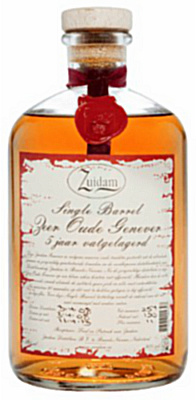
Dutch Jenever Week – Day 7: Rutte Single Barrel Bordeaux Graanjenever 14yo 1999 (38%, Limousin Oak Cask #239, 490 bottles

Jenever Week Logo

We already reached the end of our Dutch Jenever journey. It was a long journey for me, and writing the reviews and doing the research took me a whole lot longer than first expected. Lots of other things came in between, both already published and some not, like the next Master Quill week, which at this point in time is nearly finished as well. It’s a good thing I took my time, because in the mean time I somehow connected with Jenever and found out what it is and what its place is in the big scheme of things. I learned to appreciate it for the wonderful traditional liquor it is. I present to you the last review of the week and it is a 14yo Rutte, aged in a Bordeaux cask, in many ways similar to yesterdays 14yo Zuidam that was matured in two Oloroso Sherry casks. I expected both to be dominated by the Bordeaux Wine or Oloroso Sherry before setting off…
RUTTE_SINGLE_BARREL_BORDEAUX_14JR_lowresxxx300Color: Vibrant copper gold.

Nose: Very fruity. Berries, cherries and this definitely has some characteristics of wine, just not the wine itself. Very fresh and vibrant at first, but also a deep dull nutty undertone that evolves over time. Sweetish and grainy. The cask impaired a lot of aromas onto the Jenever. Waxy red apple skins. Vanilla, mocha and plywood. Small hint of licorice, some toasted cask and sometimes a light whiff of cigarette smoke. Still not a true red wine aroma, if you ask me. If someone would give me this Jenever blind and ask what kind of cask this came from, I would have been sure this was from a Calvados cask. The aroma is from apple, but also the typical acidity from Calvados. Very perfumy and fruity. Definitely floral as well. Cinnamon comes next and as we all know, cinnamon goes together well with the apple aroma this Jenever has. Nice stuff to smell. Soft.

Taste: Sweet, sweet, sweet. Apples in many (distilled) guises. First impression shows an enormous lack of complexity. Fruity, overpowering and warming, and yes, quite likeable as well. Liquid candy and although 38% ABV is not high, it seems way less than this. It drinks like a soft Sherry with corresponding ABV. Christmas pudding. More Calavados notes mixed together well with some soft and spicy notes from wood. I know this is from a cask that once held French Red Wine, but the spirit is Dutch. Having said that I can’t get rid of the French feeling this Jenever gives me. maybe this is because this hardly tastes like a Jenever at all? Am I biased by the statement on the label and the aroma’s of Calvados? I wish I had tasted this blind, not knowing what it was, would I call this a Calvados then? Even after 14 years we can safely say that the Bordeaux may have overpowered the Jenever a bit, but some nice synergy was achieved as well. It ís still recognizable as a Jenever. It has a great nose and tastes well. Big gulp now and damn, this has a lot to do with a semi-sweet Calvados (and nothing with Bordeaux or the other Rutte offerings I reviewed and tasted). Again a Jenever that has to breathe for a while, so don’t be hasty with it.

Whereas with Zuidam you get the feeling everything is intelligently planned and intended, with Rutte it sometimes is more random and spontaneous. Trial and error. Hit or miss.”Well lets not chuck out the cask, people. Rinse it out and put some spirit in it, I might like it in the end.” (And then forget about the cask altogether untill a cleaning-lady accidentally stumbles upon it…)

I hope Patrick van Zuidam doesn’t feel too comfortable now, to sit back on a beach somewhere, and just let things happen. Although the Rogge Genever was a bit sweet and simple, the rest of the offerings I reviewed here were top-notch. A clear winner. Rutte seems to be trying to find an identity for itself by concentrating on experimentation, marketing and far away markets. Everything was pretty decent though, especially this Dutch Calvados made from Jenever and Bordeaux casks. However, the bottle of the Rutte Twaalf Graanjenever started out as a disappointment by its lack of balance. Shockingly so, since I actually expected quite a lot of that one. When it got some extensive contact with air it got way better. I tasted some young expressions, maturing in American oak and they were pretty good. I should try another bottle of this 12yo, to see if the profile is just different. Knowing the Rutte 12yo, puts this Bordeaux Jenever more into perspective. The fruity acidity I expected to come from the Bordeaux cask is actually coming from the spirit itself, since it is also present in the 12yo.

In the end this Dutch Jenever Week only featured products from Rutte and Zuidam. Of course there are a lot more Dutch and other Jenevers around, as I mentioned yesterday, and I will absolutely source some more for future reviews., because Jenever is definitely worth your attention. Just let it be Jenever and don’t compare it to anything else. It’s not Whisky nor Gin and why should it? Proost!

Points: 79

Dutch Jenever Week – Day 6: Zuidam Korenwijn 14yo 1999/2013 Oloroso Sherry (38%, Special #3, Cask #1649 & 1650, 491 bottles)

Jenever Week Logo

On the sixth day, God created… This actually is the last review I’m writing for this series of Dutch Jenevers. To be honest, I almost never write reviews in the order of publication. Especially with the Master Quill Weeks. At some point in time, I find a “logical” progression in which to order the seven days of the Master Quill Week, not necessarily by ascending scores, mind you.

This is the fourth (!) offering by Zuidam in this week, another Korenwijn, and I promise you, it’s the last in this series. Tomorrow we’ll see another offering from Rutte (again). Now don’t start thinking now that Rutte and Zuidam are the only distilleries in The Netherlands producing Jenever. There actually is a long list of companies around, many of which are several centuries old.

The history of Jenever started in the Dutch cities of Amsterdam and Rotterdam, both port towns. Other cities like Groningen and Leeuwarden (in the north) also have a Jenever history. Making Jenever turned out to be a smelly business, so with time the production of Jenever moved into neighbouring cities with some more room. Weesp (near Amsterdam) and Schiedam (near Rotterdam).

From Amsterdam I’d like to mention Lucas Bols (1575), Wynand Fockink (1679) and Van Wees (1782). From Rotterdam I’d like to mention Onder De Boompjes (1658), Nolet (1691), De Kuyper (1695), Wenneker (1693), Herman Jansen (1777) and Dirkzwager (1879). Most of them produce Jenever under different brand names.

Rutte was never located in Rotterdam itself. Rutte has always been from Dordrecht. Finally Zuidam itself is more recent. It started doing business since 1975 in the town of Baarle-Nassau near the Belgian border.

Zuidam Korenwijn 1999Color: Orange gold.

Nose: Closed at first. Some wine related notes, fruity. Needs to move around in my glass some more. Yeah development commences quickly. A deep thick aroma, countered by sharp woody dry notes. Some ground white pepper and clear glue which dissipates quickly never to return again. Also a slightly burnt and tarry cask note. Sawdust and toffee for short. The whole smells rather laid-back and calm. Subdued yet big. Happy about itself. Sawdust and pencil shavings and underneath some hints of new wood. All very spicy but well in check. It has a very specific fresh and fruity acidity to it, I also got from tomorrows offering, although not in such a big way, and way more balanced as well. Here it must be from the Sherry cask. The nose is an amalgamation of Jenever, the Sherry cask and oak, and I must say the Sherry cask really did its work here.

Taste: Creamy, buttery and very fruity. Very nice and very appealing. It starts out sweet. Toffee, mocha and runny caramel. When that subsides, and it does that quite quickly, it makes room for a very nice fruity aroma. You could almost call it a “special effect”. Nice wood as well, sometimes bordering on cardboard and old paper, but it works quite well. However, I feel it is hardly recognizable as a Korenwijn. At least when I compare it to it younger Brother, the Korenwijn 5yo I reviewed earlier. it almost seems like a hybrid with Whisky, Cognac and other distillates. Taste this blind and try to find out what this is. Again an entirely different product from Zuidam. Nice. The finish has medium length and finishes with the warmth of the Toffee/Caramel and some sharpness of wood. Chewy. This is definitely after dinner. It’s a dessert all by itself. Nicely soft and lively, even though the basis is quite sweet, as all Zuidams seem to have. Likable and dangerously drinkable.

Quite a small outturn, considering this came from two Sherry casks ánd the Korenwijn being reduced to 38% ABV. Nice expression from Zuidam though, and its clear to me why it was chosen as a special release. This one is quite expensive. Its more than twice the price of the Korenwijn 5yo, but when compared to the Korenwijn 10yo and 20yo, Zuidam also produces, the price seems to fit right in.

Points: 85

Dutch Jenever Week – Day 5: Zuidam Korenwijn 5yo 2008/2013 (38%, Single Hogshead #761, The Netherlands)

Jenever Week Logo

We’ll continue our journey with this Zuidam Korenwijn 5yo, the brother of the Zuidam Oude Genever 5yo. Korenwijn (grain wine) is a Jenever, very similar to the 18th century style Jenever, and is often matured for a few years in an oak cask. It is made from grain only and  contains a minimum of 51% Malt Wine and up to 20 g/l of sugar. Caramel can be added for coloring and added sweetness. Caramel that is, not E150 which is used in coloring Whisky and doesn’t add sweetness. If the Korenwijn is distilled from Malt Wine only, it can be called a Malt Wine Jenever (Moutwijnjenever).

In the case of Zuidam, The Zeer Oude Genever 5yo was distilled three times without spices, and this Korenwijn 5yo was distilled four times, before the fifth distillation with the added spices is carried out. According to Zuidam this raises the fruitiness and makes for a more delicate Jenever. The ingredients here are the same as in the Zeer Oude Genever, so rye, corn and malted barley. Spices are also the same, juniper berries, licorice root and anise seeds. According to the Zuidam website, newer bottlings of the Zeer Oude Genever and Korenwijn are matured solely in virgin oak barrels, which is obviously not the case with this older bottle from 2013 which contains Korenwijn matured in a (Whisky) Hogshead. The Zeer Oude Genever 5yo I reviewed by the way, was aged in a used Bourbon barrel.

Zuidam Korenwijn 5Color: Full gold, slightly orange.

Nose: Much, much more aromatics than its little brother. Loads of soft spices and some (dry) green notes. Mocha, vanilla and toffee. Wax and wood. Oak and cedar. The occasional whiff of an unlit Cuban Cigar. Nice. Thick and chewy. Almost like a candy store or grocers shop from a hundred years ago. (Indian) Spices, old sweets and cookie dough. Cinnamon, cloves and crushed beetle. If you’ve experienced that smell, you’ll know what I mean, if not, don’t go out hurting animals now. Old wet wood and burlap. Sweet mud and some fermenting clay. Animalesk. The fruitiness moves into the realm of sugared citrus skins, but also some warm apple pie. Orange zest (not lemon, since it lacks the freshness and the sharp acidity). For me this is definitely a step up from the 5yo Zeer Oude Genever. Much more happening, wonderful interaction with the wood, and way bigger. Maybe a tad too big for lovers of Jenevers? Wonderful.

Taste: Sweet on entry but also plenty of wood and wax again. Sawdust and freshly cut wood. Sugar-water and creamy latex paint. More green leaves and garden waste. Believe me it smells better than it might sound right now. Again, just like the nose, much more aromatics going on, compared to it little brother. Small hints of nuts and coffee, and also lots of fudge. Toffee and caramel happening again. Not of the added kind of course, mind you! This is definitely sweeter, bigger and more chewy compared to its twin from another egg. So not really delicate as Zuidam puts it. Light milk chocolate and to liven things up, a nice acidic note is present as well. The finish is reasonable for something that has a an ABV of only 38%, which is quite common in the Jenever business. It sure would be nice for once, to try a higher strength version of this, and I don’t mean 40%. What do you say Patrick? By the way, this is labeled as a “Single Barrel” (although note every cask found in this series yielded from a Barrel). This Korenwijn, for example, came from a Hogshead that previously held Whisky). Since different types of casks were used in this series, the outcome is different every time, so you’ll never get the same if you buy another bottle.

By now you know I prefer the Korenwijn version of Jenever over the Zeer Oude Jenever. Or do I? When I had the chance to talk with a lot of the Dutch Jenever drinking public, some told me they found the Korenwijn too sweet. Some even preferred the 3yo version over the 5yo version. The Zeer Oude Genever is lighter and a tad simpler and more towards vanilla than to the sweetness itself. Both can coexist very well next to each other. They are quite different. I’m not sure anymore if I prefer the Korenwijn over the Zeer Oude Genever. It is a welcome distraction when I try it right after the Korenwijn and does holds it own, even when lighter in style. It’s a breath of fresh air. There are enough moments I want the Zeer Oude Genever more. In a direct H2H, it is the bigger taste and the quality that makes me score the Korenwijn higher, but I really like the Zeer Oude Genever as well, no question about it. I’m more than happy to have both bottles open on my lectern.

Points: 83

Dutch Jenever Week – Day 4: Rutte Oude 12 Graanjenever (38%, The Netherlands)

Jenever Week Logo

For day 4 we return to the Rutte distillery we already encountered on the first day. This Jenever fits snugly in the “Oude Jenever” category as well, and the addition of the word Graanjenever tells us this was made from grain based spirit only, just like the Zuidam actually. A sign of quality. Together with a maturation of no shorter than 12 years makes me having high hopes for this one. But first, a history lesson and an amazing run of naming children by the Rutte family:

The history of Rutte starts with Sijmon Rutte born in 1749. Next came his son Simon Rutte, born in 1779. The Rutte family moved to Rotterdam. Both are said to have laid the basis for distilling Jenever. Antonius was born in 1806. In 1830 Antonius moved to Dordrecht and started working for a distillery. At the same time he started experimenting with distillation at home. One of the sons of Antonius called Simon Antonius (born in 1844) bought a bar in 1872 and started distilling in a shed in the back. After a while he started selling his own distillates in his own bar. The bar was closed eventually and Simon Antonius turned it into a shop, selling his (and other) distillates.

Next in line was Antonius Johannes (Anton) Rutte, born in 1872. Anton took over the business in 1905 but he died quite young and his wife Margaretha continued the business eventually handing over the reigns to her eldest son Johannes (Jan) Rutte. Jan had a son called… Jan (John) born in 1931. It was this John who started to distill with passion, making the Rutte distillery known far beyond the borders of the city of Dordrecht. John had three children but none of them showed any interest in the distilling business, so in 1991 John sold the company to a group of investors, clients actually, who loved the products of John. Erik Herter, one of them, someone like John himself, was taught the ropes. Even though the business was sold, John stayed around untill his death in 2003. Erik left the business in 2006 leaving Myriam Hendrickx in charge to this day.

Rutte Oude 12 GraanjeneverColor: Pale gold.

Nose: Very soft and fruity. Definitely grainy. Hints of Grappa and slightly soapy. Very fresh for a 12yo. Hints of butter, warm toffee and vanilla. Warm and soothing, like grandpa’s warm embrace. Yes, smells like something from the past. Vanilla ice-cream. Lots of woody notes you get from American oak. Not only soft, but also slightly spicy. Watercress! The whole is unbelievably soft smelling and introvert as well. The distinct smell of fruity new make spirit, you know, the stuff before it becomes Whisky. The new-make smell has this fruity acidity that is placed on top. It’s a bit dissonant at times. It seems a bit volatile, because for a moment, when sniffing, it is gone and then the whole becomes a lot nicer. Remember that Graanjenever is made with juniper and other spices, so those add to the smell as well. The Jenever has to breathe for a while to get rid of the volatile new-make part. It does help. Breathing makes the whole more coherent and nice. More vanilla sugar-water. I’m actually amazed that even after 12 years of ageing, this new-make aroma is still around, but now you know how to deal with it.

Taste: Starts somewhere between sharp and creamy, but turning quickly into something more chewy and sweet. Refined sugar with a splash of vanilla. Sometimes the sugary part tastes like brown sugar. Nice effect. Quite a mouth full, but also, again, that hint of new-make spirit I don’t really care for. Soft wood, with more of a vanilla pudding note. Quite a short finish and a creamy vanilla part forms the after taste, together with some bread aromas. Well this sure isn’t a Whisky, for those of you looking for an alternative. No, it is a whole new discipline, you might have to grow into. And if you can forget about Whisky for a while, and treat it as such, it can be quite rewarding, getting to know stuff like this, to broaden your distilled horizon.

I have tried more products of Rutte and liked quite a few of them. Beforehand I thought this one would be a favorite, after 12 years of ageing, but actually it starts out as bit of a disappointment. Extremely unbalanced start. I can’t get past the new make spirit in the nose and the taste, and some flavours just don’t seem to mix together well. Luckily there are some parts that are nice, so it’s not a complete let-down.

However, breathing does the trick here. It needs to be decanted. Give it time and lots of air and it becomes significantly better, but to my taste it will never completely recover, no matter how many time you are willing to give it. Still, I don’t dislike it. No. It has its charm and is definitely different from the Zuidam expression I reviewed yesterday. It is different in style and maybe is an acquired taste. For best results, buy a bottle and leave the cork off for two weeks. No, I’m not crazy. Try it for yourself.

Points: 77

Dutch Jenever Week – Day 3: Zuidam Zeer Oude Genever 5yo 2008/2013 (38%, Single Barrel #178, The Netherlands)

Jenever Week Logo

Since the previous review was about the Rye Jenever from Zuidam, for this Zeer Oude Genever we can stay in beautiful Baarle-Nassau, because here is another Zuidam Jenever. This one classifies as an “Oude Jenever”. So no funny business with a single grain version or the addition of an unusual spice. By the way, the word “Genever” is sometimes used as a synonym for Oude Jenever.

Oude Jenever must contain at least 15% Malt Wine, and no more than 20 g of sugar per litre. Yes sugar. It is not uncommon to add caramel to Jenever to enhance the color and to sweeten it up a bit. Oude Jenever must have a minimum ABV of 35%. Compared to Jonge Jenever, Oude Jenever has a smoother, more aromatic taste with malty flavours. Oude Jenever is often aged in wood. Some others are finding that its malty, woody and smoky flavours resemble whisky a bit, but personally I would say that it is a distant relative at best. Different grains can be used in the production process, such as barley, wheat, corn, spelt and rye.

For This Zeer Oude Genever Zuidam uses the same amounts of rye (spicy), corn (giving sweetness) and malted barley. The Jenever is distilled three times. In the fourth distillation run the spices are added. Juniper berries, licorice root and anise seeds. In general it is possible however that the spices are distilled separately and blended together in the final product or some or all spices are redistilled with the Malt Wine. Finally, the spirit is reduced to 45% before entering the cask. Casks are newly made American oak barrels. a.k.a. Virgin oak.

As I already mentioned in the first review of this week, old doesn’t mean the Jenever has aged for a long time, rather means it is made in the old style. This doesn’t mean the Jenever is not aged for a prolonged amount of time, since a lot of Jenevers in this style get (long) ageing in oak.

Zuidam Zeer Oude Genever 5yoColor: Light gold.

Nose: Grainy, floral and fruity, so all is here. Silky soft and somewhat sweet. Smells like an old well made grain distillate. Old as in, not modern. Like the combination of a dusty alley and a slightly damp alley. Clean alleys from the past, that is. Quite romantic. Old parcels come to mind next, those with the brown paper held together by a piece of string. Brought to you by way of steam train. That’s the kind of romantic feel I get from this. Yellow fruits and somewhat waxy. Hay and dry wild grass. Distant apricots and hints of lavender and jasmine. Perfumy. Crispy citrus is present as well. Well balanced stuff, all fits together well. Hints of wood, soft and silky. Fresh oak and some tree sap. Vanilla, so no doubt this being from an American oak barrel, also helped by the fact that the label mentions this particular Genever was aged in a 190 litre cask. Overall quite light and friendly and a very nice distillate to smell.

Taste: Light, sweet and a bit thin. Starts out with some oaky bitterness, but also some spices are noticeable right away. Sugar water with lots of toffee and caramel. Fruity, warming and well-balanced. Both the nose and the taste fit together very well. Creamy vanilla with hints of added anise. Almond like nuttiness. Fits the warming quality this Genever has. Even after 5 years, the wood didn’t leave an overly woody taste behind. Overly? It’s hard to detect any wood at all! Hardly any bitterness whatsoever. However, after 5 years I expected a bit more complexity to be honest, but then again this is not a Whisky and its bottled at 38% ABV. Not very complex, but very likeable nevertheless.

First of all, with this you get a nice, light and well made Genever. Your first dram of the day. Enjoyable. Second, if you can find it where you live, this comes at quite a nice price, especially when compared to today’s Whisky, and you’ll get a whole litre to boot. Other sizes like 0.5 and 0.7 litre bottles are in existence as well.

Points: 82

Dutch Jenever Week – Day 2: Zuidam Rogge Genever (35%, The Netherlands)

Jenever Week Logo

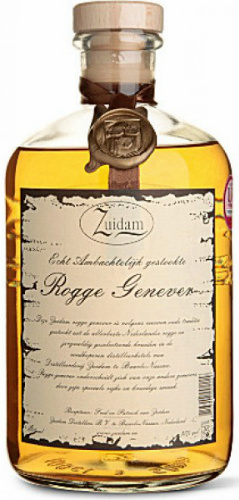
Day two and we’ll continue with another Jenever from the “Specials” category. This particular example from Zuidam was distilled three times in copper stills, using only Rye as a flavour grain, which makes it a speciality in the Jenever world. Only half of the Rye was malted. The distillate was aged for 5 years (!) in new American oak barrels. Rye itself is already quite a spicy grain, but nevertheless juniper berry, licorice root and aniseed were added. Here the spices weren’t distilled with the Rye, but only added prior to bottling. So again a special kind of Jenever, but I may have said that already…

Zuidam Rogge GeneverColor: Straw.

Nose: Dull, very grainy and recognizable as rye spirit. Fresh new make spirit. Grain and grassy. Very much from the cereal corner of the ring. Sour bread and cookie dough. Extremely vegetal, lacking freshness and fruitiness. When nosed more vigorously, the hidden wood is noticeable. Give it some time and the wood becomes more creamy and spicy even. Vanilla and toffee. It does need to breathe for a while to compose itself. It becomes friendlier and softer that way. Butter and butter getting warm on the frying pan. (at the start of the process, before it starts to become brown). Spicy and grassy throughout. Hints of cinnamon and some anise. Nice fatty rye aroma’s. Soft. Sometimes I get whiffs of licorice and summer flowers in a field. The tiny hint of florality goes rather well with rye based spirits. This time it is elegant and delicate as opposed to the heavy and raw spirits that can be made with rye as well. Achieves great balance if you manage to be patient with it.

Taste: Sweetish and behind the sugar-water and the creamy, chewy vanilla, it is quite vibrant simple and likeable. Second sip: surprisingly sweet and soft, hardly warming though. Well, 35% ABV isn’t much where I’m coming from. It doesn’t have the taste of new make spirit. Its more sweet and creamy. Not very complex though, surprisingly simple actually. Fatty vanilla ice-cream in a bottle. The nose gives us some tension from wood and some spiciness, in the taste all that is absent.The first time I tried this I tasted it blind and from that occasion I remember I never would have guessed the rye distillate has aged for 5 years, before the spices were added.

Although this isn’t a Gin, I would most definitely experiment using this in a Gin & Tonic. First try would be with Fentiman’s. I guess, It somehow wants to be a summer drink. Excellent stuff and definitely worth your time as a sipper as well. Very accessible and friendly. Dare I just say that I find it a bit too sweet and simple? Especially since this has aged (without the spices) for five years. Lacks a bit of complexity. It comes across as everybody’s friend. If you can respect that, and don’t want it to be a 5yo Zeer Oude Genever or a 5yo Korenwijn even, than you are in for a treat. Zuidam plans to release true aged versions of Rogge Genever in the near future, meaning the spices are distilled with the spirit. I welcome that. This kind of Jenever can do with some more influence from the cask (first fill, second fill), maybe even from European oak that once held Sherry!

Points: 76

Dutch Jenever Week – Day 1: Rutte Zeeuwier Jenever (35%, The Netherlands)

Jenever Week Logo

Time to introduce another distillate on Master Quill. This time, we’ll have a look at Dutch Jenever (or Genever) and even dedicate a whole week to it. Jenever is a distillate common to The Netherlands and Belgium, but also to the North of France (Genièvre) and the West of Germany (Korngenever). Jenever is sometimes (wrongly) known as Dutch Gin, since Jenever is the forefather of Gin, although different in taste and smell. Both are made with juniper berries, but with Jenever that’s not so obvious as in Gin. So Dutch Gin is Gin made in The Netherlands and not Jenever.

Jenever came into existence, by distilling malt wine. Malt wine is produced by distilling a fermented grain mash in a (pot) still from barley and other grains. In the old days it was not particularly nice to drink, so spices were used to mask the not-so-nice flavour. Primary spice was the juniper berry (jeneverbes) which was chosen for its medicinal properties, hence the name Jenever. True Jenever was first distilled in the thirteenth century in Flanders, Belgium. Jenevers can be classified into three groups. Although officially only two groups exist, I feel Korenwijn is more than just a variant of Oude Jenever. Today, as with Gin, distillers experiment a lot and come up with variants to the theme. Unusual herbs and spices are added, or their product is finished in casks not common to traditional Jenever production or only a single grain is used. So for the time being, I will add even a fourth category called “Specials”.

  1. Jonge Jenever,
  2. Oude Jenever,
  3. Korenwijn.
  4. Specials.

We’ll start our journey with a special Jenever, since a very unusual spice was used in the production of this Jenever. In this particular case, Kombu was used to get a subtle briny aroma. Kombu is an edible kelp common throughout Japan, China and Korea. Although it isn’t mentioned on the label, this Zeeuwier Jenever can be seen as a Jonge Jenever with added Kombu. So in our journey, this Jenever will not only cover the “Specials” category, but the “Jonge Jenever” category as well, since it is the only example of a Jonge Jenever I will review in this week.

Jonge Jenever got its name from young, or new style Jenever. It stems from the time when neutral, and foremost cheaper, alcohol could be distilled in a proper way from almost anything (neutral spirit). Neutral spirit is usually made in a column still from molasses and/or potatoes. The original Jenever thus became Old (style) Jenever. So in fact “Old” and “New” have nothing to do with the age of the Jenever itself. Jonge Jenever can not contain more than 15% Malt Wine and 10 grams of sugar per litre. Strange enough, no minimum percentage is set for Jonge Jenever, so it can be made without any Malt Wine whatsoever. This is usually the case with very cheap Jonge Jenevers. Jonge Jenever is often unaged, has a neutral taste, somewhat similar to Vodka, with a slight aroma of juniper (and Malt Wine). No rules exist for the usage of the spices as well, so it is common practice to add the aroma of juniper berries after distillation. Again this is true for most run of the mill Jonge Jenevers. Jonge Jenever has an ABV of 35% or higher.

Rutte ZeeuwierIf Jenever is distilled only from grains and malt, the Jenever can be labelled as “Graanjenever” (Grain Jenever).
Color: Almost colorless, smallest hint of green.

Nose: Sweet alcohol and juniper. Fresh and warming. Good balance. Very soft with a breath of fresh air, more than a breath of fresh air. Windy beaches. Salty. Very much coastal (cold weather) and coastal vegetation, dare I say fresh fish? Great nose, and unbelievably un-alcoholic. A treat.

Taste: Soft, very soft and creamy. A bit too light, since it tastes like a soft, watered down Vodka. Slightly warming going down. Hints of vanilla and even smaller hint of wood. The attempt of a bitter note in the finish, shows me some wood, but not much. Alcoholic sweetness without the alcohol. Not a lot of the coastal notes in the taste though.

Very nice nose. Smells interesting and well made. Going down it has its warming qualities, but on the palate a bit too young and too soft for my taste. I would like this to be stronger in taste, since this makes hardly a ripple in the ocean, whereas we like to see some waves. Maybe an aged version? So elegant and over the top soft. The nose is there, but the taste could be stronger.

Points: 70

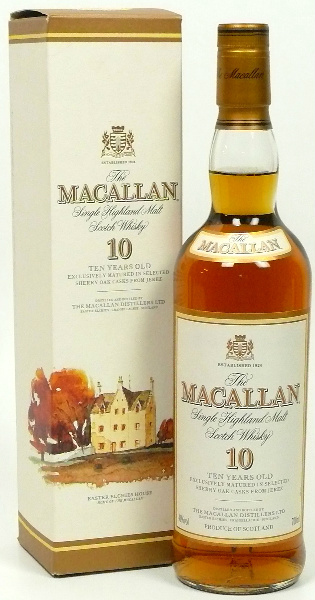
The Macallan 10yo (40%, OB, Circa 2003)

We move back a decade or so to visit one of our old friends. One of the most standard bottlings of that time, the original Macallan 10yo. It had an age statement back then and was diluted to 40% ABV. It was the time, no fan of Macallan or otherwise, was aware of the dark clouds that were forming up ahead. Finally the storm broke and we were given the Fine Oak series. So for me the downfall in quality started with bottlings issued in the newly designed bottlings like the “Fine Oak” series. However, if memory serves me well, in 2002 they started releasing some sort of NAS called the “Elegancia”, preparing us for a softer and smoother experience, moving away from the true Sherry experience of the true Macallan. Not truly a NAS by the way, since it did carry a vintage, like Elegancia 1991. Nevertheless, after the Fine Oaks I really didn’t look back. I was so disappointed. I turned my attention towards Longmorn instead. Back then a lot of it was around and at fair prices to boot. The standard 15yo was pretty good, although the introduction of the 16yo made me rise my eyebrows a bit. Better looking bottle, but the Whisky was less interesting. No, may independent released some pretty stellar Longmorns, so I needn’t look back at Macallan. Of course I did try some of the newer bottlings, but I was never convinced moving back towards the Macallan. Only the future can tell us.

Macallan 10yo (40%, OB, Circa 2003)Color: Dark orange gold.

Nose: Wow, very aromatic. Heaps of Sherry. Extremely fruity, Cherries, apples and banana. Simply wonderful. Already from the start a nice backbone of (new) Oak and a promise of toffee’d sweetness. Warm runny caramel. A lot is happening from the start and it only needs little time to reach a nice balance. This is how I remember drinking Whisky a decade ago, without even giving it much thought then. Stuff like this would be around forever, wouldn’t it? Damn, why is it so hard to make something like this today? Ice cream, vanilla, caramel, laced with apples. Sugared apples and a splash of plain and simple refined sugar-water. Fruity, but not only apples. Sugared cherries and hints of mango and passion fruit. A tropical mix that could have been an older Tomatin. Resembles Tomatin 25yo a bit. Thick and cloying at first, but give it some time to breathe and the whole gets thinner. I wouldn’t say it dies out on us, but it does get a bit more restrained. Balances out. Every time I smell this I get hints of well made Calvados. It becomes fresher. More waxy apple skin aroma’s emerge. When you look for it, there are hints of toasted cask. Hints that are more upfront in older good Ex-Sherry cask matured Whiskies.

Taste: Simpler. Starts out soft and sweet, but not as complex as the nose. Tropical fruits and runny caramel again. Is is youth? Probably not. Is it reduction? I guess so. Sweet and on entry, sometimes like someones bad breath mixed with cardboard, what? Relax, it’s not that bad actually. This time around definitely some toasted cask in the mix, which does wonders for the balance. It gives the fruity and fresh Whisky a nice backbone. Slightly bitter oak, slightly burned as well. New sappy wood aroma is also present, although it is highly unlikely new wood was used, but you never know don’t you. The wood is sappy and sometimes a bit harsh and upfront. It’s the “burned” sensation however, that stays well into the finish. Also a nice and rich nuttiness appears towards the finish, combined with the cardboard we found earlier. For a 40% ABV Whisky this has a pretty lengthy finish, but no, it’s not long.

Tasting it now, in 2016, this is high quality by todays standard. Remember this was the simplest of Macallans some ten years ago. Sure, Italy had their official 7yo, since they like young and fresh Whiskies. Hard to believe not so long ago this was entry-level stuff. Today this would have been packaged in a shiny box that costs more than the  Whisky itself did ten years ago. You don’t want to know even how much it would cost today. Looking at auction prices, I would say every time, you get a fair deal when you want to buy one like these. Go for it. They don’t make them like this anymore.

Points: 85

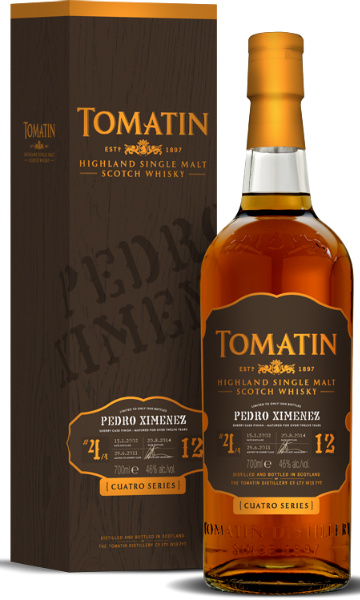
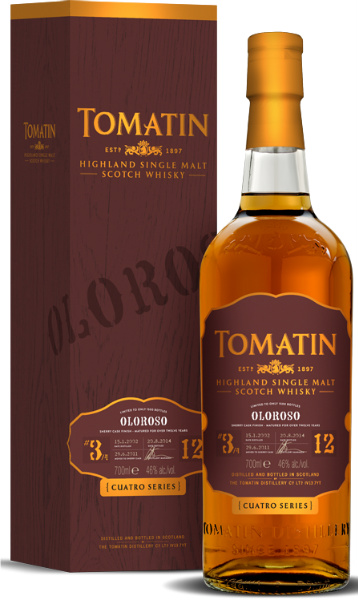
Tomatin 12yo 2002/2014 “Pedro Ximénez Sherry” (46%, OB, Cuatro Series #4, 3 years Pedro Ximénez Sherry Finish, 1.500 bottles)

The fourth and final installment of the Cuatro series is the one finished in Pedro Ximénez (PX) Sherry casks. Understandably the last one of the series, since PX is a very dark and sweet dessert Sherry. The grape variety itself is white, getting its color of drying in the sun. We started out light (in color, not aromatics) with the Fino and Manzanilla expressions. Examples of Sherries that age under flor (which keeps oxygen at bay). The third expression was the Oloroso one. Oloroso is a Sherry that ages without flor and thus prone to react with oxygen. So finally the PX. Even darker than Oloroso and also very sweet as opposed to most other kinds of Sherry. Historically, Oloroso casks were always the most popular casks for ageing Whisky. Back in the day, one was sure the Oloroso butt (or puncheon) was made of european oak, giving off some more tannins than the American oak that is so popular with Sherry Bodega’s today. American oak gives off a more vanilla like and creamy aroma. Today, PX has become quite fashionable as well, for ageing Whisky, since it gives off a lot of color and a sweetish aroma. However, the sweetness does not always come through though.

Tomatin Cuatro Pedro XiménezColor: Gold, more or less the same as the Oloroso expression, ever so slightly darker.
Nose: Thick and a very rich nose. Hints of burned wood and even some tar and coal. Nice, and right from the start a better balanced nose than the Oloroso expression. Underneath, thick, creamy and chewy, like crème brûlée. If you smell it vigorously, you can recognize the PX. On top lies a nice acidic winey note as well, adding to the complexity of the Whisky. All well-balanced here. A nice grassy note emerges, aided by some fruits. Nice overripe red and yellow fruits, but also a very distinct aroma of unripe bananas, biscuits and vitamin C pills (another acidic note). An Autumn Whisky, just for the moment the leaves start to fall. Wonderfully rich and elegant nose, better than the nose of the Oloroso expression. I hope it tastes better too!

Taste: Big. A lot from the nose comes back in the taste. Slightly tarry, burnt wood again, with hints of vanilla and butter. Burnt sugar, yet not sweet sugar. All of the (acidic) fruity notes are there, but here, even some hints of white grapes show themselves. Add to that a typically Dutch coffee bon-bon called Haagsche Hopjes, and you’ll get the picture. Nutty. Hazelnuts and even fatty peanuts. The body and the finish are not thick, chewy and cloying like a true PX Sherry, but the aroma’s are there. A somewhat Beer-like finish. The different “burnt” notes; the tar, the wood and the sugar, are on the rise, so if you don’t like that, don’t get this one. It starts out elegant, but ends a bit raw and bold.

And there you have it. The whole Cuatro range explored. Was it worth it? Yes! A very nice learing experience. Do you, and I, as consumers need the whole set of four? Yes, we do if you want to share the experience with lots of others. Four bottles of study material from the Tomatin University Distillery. Do you need a whole box to drink by yourself? No, not really.

For this end piece I did a proper H2H2H2H. Yes, that means I have four drams in front of me. Comparing the Fino to the Manzanilla is interesting, but for a drinking Whisky both are too similar. Especially on the nose. If you only want one, I would opt for the Fino expression, since it tastes slightly better. Oloroso, supposedly the best Sherry cask for Whisky, was in this case a bit disappointing. Smelled less aromatic than the first two, but otherwise surprisingly similar. Not the same but certainly very well related. On the taste it is somewhat unbalanced especially toward the finish. I would pass on that one. Finally the PX does show poise, and yes it does start a bit sweeter on entry compared to the other three. It’s well-balanced, and definitely the one to pick over the Oloroso expression. But, and there is a but, the PX does show a lot of burnt notes you’ll have to like, although those notes are more and more obvious in the Oloroso expression as well. In the end, I would take two, The Fino and the PX, Both are very tasty and somewhat different from each other, but not as much as expected beforehand. If I had to pick one, I would definitely go for the Fino, which for me is the best of the bunch.

Points: 85

Tomatin 12yo 2002/2014 “Oloroso Sherry” (46%, OB, Cuatro Series #3, 3 years Oloroso Sherry Finish, 1.500 bottles)

Number three is the Oloroso finished one. Hands down the most popular Sherry in the Whisky industry. Somehow casks that once held Oloroso Sherries produce the best Whiskies that (once) graced the face of the earth, even though the Sherry itself isn’t seen as the best there is in the (fortified) Wine world. Oloroso Sherry is produced by oxidative ageing, meaning, there is more contact with air than the previous two expressions that age under flor. The forming of flor is suppressed by adding alcohol from distilled Wine, thus prohibiting flor to form. This oxidative ageing produces a darker more nutty Sherry which is not sweet. Dark sweet Sherry will be the topic of the next Sherry finished Tomatin. Let’s see if our precious Oloroso finish also manages to fetch the best results in the cuatro series. Up untill now the “Fino” expression managed to get the highest score so, 85 is the score to beat.

Tomatin Cuatro OlorosoColor: Gold, but slightly darker than the previous two.

Nose: Funky and dusty. Slightly acidic. New wood and raisins. Yes its nutty. Quite complex and lovely. New wood and toasted wood, slightly tarry. Spicy wood and slightly herbal. Vanilla, creamy and fruity, although new, fresh oak is always right up front. Very aromatic. Loose, unlit cigarette tobacco mixed in with the new wood aroma and licorice. Actually this smells like coming from a red wine cask. It’s sharply defined, fresh and slightly acidic. Tannins and spicy. Slightly dusty and smoky. Very nice stuff if you give it time to develop in your glass. Mocha and tar (again). Nice.

Taste: Sweet and funky on entry. Nutty with a fruity acidity, and very aromatic. If you ask me, easily recognizable as a true Oloroso. Tasting the nuttiness brings out the nuttiness in the nose as well. Milk chocolate and a sharp spiciness. Wait a minute. Where is the Tomatin in this? Where are my tropical fruits? Quite the finish ‘eh? Yup, a bit overpowering. Heaps of fruity acidity now. Red wine (finish). The new (peppery) wood from the nose comes to the fore right before the finish. Luckily it doesn’t dominate it. Breaks down a bit in the finish, which is a shame really. A hot sensation stays behind, with wood and the acidity with the longest staying power. Big and raw, but also lacking a bit in complexity as well as in elegance both the Fino and the Manzanilla expressions showed.

This one is big, but not the best balanced one. This one has its moments, but also has its flaws. Its nice, but not the best one up ’till now. Maybe the Oloroso Sherries and/or the casks they were matured in aren’t what they used to be? On the other hand, what still is…

Points: 83