Seven years between the first review of Glen Elgin and the second one. That has to change, so what about two weeks between the second and the third review? Now, that’s a lot better now, isn’t it? Third review and again it is an offering by an independent bottler. The company’s name is Meadowside Blending, based in Glasgow, and specializing in Single Malt Whiskies, and run by the Hart Family. I don’t know why, but initially I thought this was a German outfit, probably because a lot of their bottlings are imported into Germany. My bad. This is a Scottish firm and they have several ranges on the market. Foremost is the range called The Maltman. These are all single cask releases. Next interesting range is The Grainman. Yes, you guessed it, all single cask, Single Grains. Other brands carried by the firm are The Granary (Blended Grain) and Royal Thistle. The bottle at hand, and this is no surprise if you are a regular on these pages, comes from The Maltman, yes a single cask, Single Malt Whisky from Glen Elgin. And yes imported into Germany by Alba Import, not sure if all of it went to the German market though…
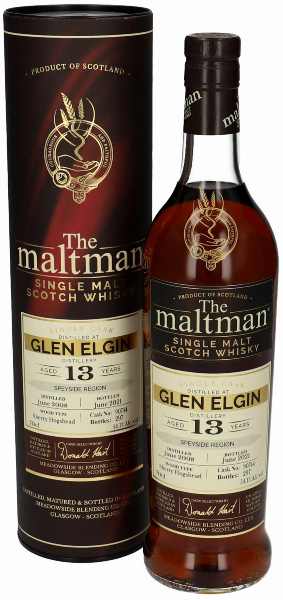 Color: Orange gold.
Nose: Spicy sherry. Wood-spice and rather fresh and appealing, yet also some black coal with tar and right after that a more sharp and acidic fresh note. I have to say, all fits together quite well, so nothing wrong in the balance department. Lovely oak. The nose as a whole is thus rather appealing, fruity with half ripe sour cherries and maybe somewhere in there a more yellow fruit-note (indistinct). Breaths of fresh air run through the Sherry bits as well as some gravy? This is not a Sherry monster in the style you now often get with all these 10yo first fill Oloroso Sherry monsters. No, this is way more refined and still has quite a lot of colour to it. Tiniest hint of sulphur which I don’t even pick up on every time I nose this. Right after that some honey and maybe even some cigarette smoke. Warming and actually helping the whole of the nose. This has some fresh wood right from the start, but it’s not overpowering and actually very nice. Reminds me a bit of being outside near a sweet water lake on a nice and sunny day. Fresh winds, and the sherry bit could almost be some nice floral aromas blooming in nature. I guess this will not be a bad weather Whisky.
Taste: Half sweet yet also spicy (wood). Runny caramel or warm toffee. The coal, the tar and the wood are present right from the beginning. Sweetness seems building already. Quite some toffee now. All of this right before some fruit sets in. Warm apple compote? Nutty (yet different than in other Sherry bottlings), soft and supple leather. Leather as in belts and trousers, not thick saddle leather. Aftertaste is toffee and caramel again. Hints of plastic and warm wood. Again well balanced. I wouldn’t call the nose better than the taste of the other way around. No, this is one nice complete package indeed. Yet if I had to… yeah the nose is slightly better.
This one differs obviously from the Bourbon hogshead one by the Sherry influence. Apart from that, the Sherry influence didn’t actually overpower the traits of Glen Elgin, so there is still a family resemblance to be noticed between the two. I have to say, I like both Glen Elgins a lot, and both have their own moments. This one scores slightly higher (one point), because it is just a little bit more appealing and definitely better suited for a larger audience than the Bourbon hogshead one, which is more of an anorak-y Whisky. This one is also a little bit lower in ABV, which helps the drinkability. I like this one a lot, and would definitely it pick up again if I weren’t that adventurous and prefer to see what else is out there!
Points: 87
 Color: Pale White Wine.
 Color: Light gold.
 Color: Full gold, just shy of orange gold.
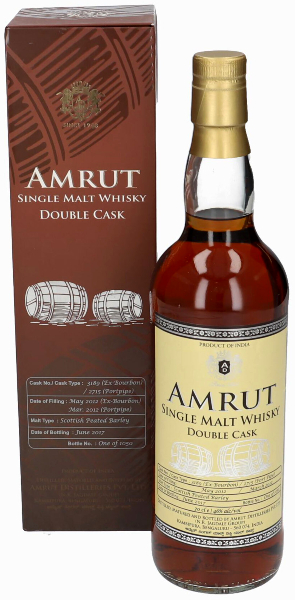 Color: Dark orange brown.
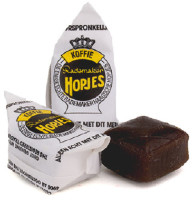 Haagsche Hopjes, a Dutch hard coffee candy. Well isn’t this turning into a treat? Very nice. With a taste like this, who needs complexity? In the end, this one is on the palate still a wee bit too thin. Could have done with slightly more points on the ABV-scale, 50% seems about right, but this is just a minor gripe. I haven’t tasted this at 50%, so I really don’t know if it would have been better. The finish and the aftertaste retain quite a lot of fruity sweetness. To be hones it could have done with slightly less of it. Highly drinkable every time, but not one keep pouring one after the other. If your glass is empty refill it with another Amrut. I’ll finish this like I started, really sad there aren’t any more Amrut Double-casks around. Please Amrut do some more, surprise us. I’ll even forgive you if you keep them at 46% ABV, for continuity purposes.
 Color: Copper gold, yes, let’s just say orange gold!
 The previous post, which was quite long to be honest, was about a somewhat experimental special release Ardbeg called
  Color: Pale orange gold, with an ever so slight pink hue.
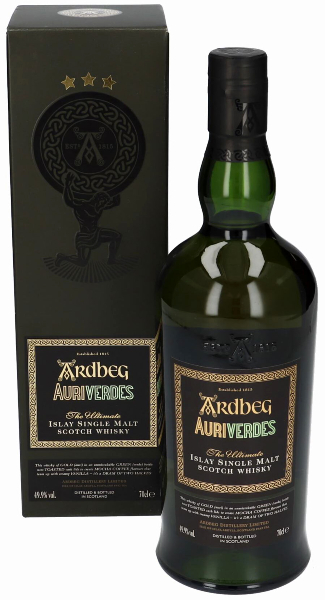 Color: Light gold, not pale.
 Guadeloupe is an overseas department and region of France and it consists of threes. It has three main islands and has three Bellevue distilleries. From west to east we first have the island of Basse-Terre, easy to recognize because of its mountains and an active stratovolcano called “La Grande Soufrière”. Last eruption: 1977 (phreatic eruption, steam). The last magmatic eruption was in 1580 (give or take 50 years, sice nothing was recorded). The soil of Basse-Terre, and this probably doesn’t come as a surprise any more, is volcanic and thus fertile, very suitable to grow many variants of sugarcane. More to the east lies the island of Grande-Terre, separated from Basse-Terre by a narrow body of water called Rivière Salée. Grande-terre is flat and has a limestone soil. A bit farther away to the east and more to the south lies Marie-Galante. Also flat with a limestone soil and thus akin to Grande-Terre.
 As said above, then there are three Bellevue distilleries. Don’t worry, there are many more distilleries on the three islands that are not called Bellevue. The first Bellevue is Bellevue au Moule better known under it’s Rum-brand name: Damoiseau, located on Grande-Terre. The second Bellevue is Bellevue Sainte Rose, better known under it’s Rum-brand name: Reimonenq, located on Basse-Terre. And finally Bellevue Marie-Galante located on…do you really want me to spell it out for you? So we have three islands and all three have their own Bellevue Rhum Distillery. How’s that for order in the universe?
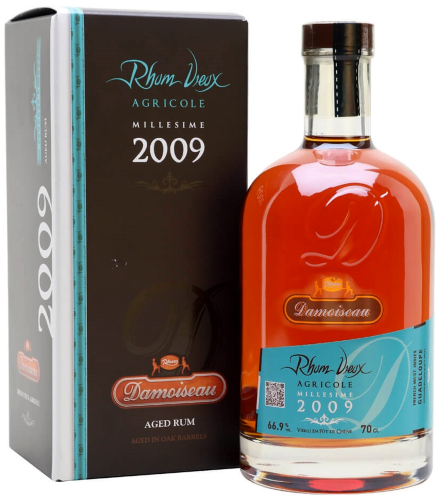 Color: Orange gold.
 Color: Copper Brown.
 Master Quill