Lagavulin 12yo 1995/2008 (48%, OB, European Oak, for the Friends of the Classic Malts)

So with the longest day of the year at hand, some would say that this isn’t the time for Peat. Peat needs rugged shores, strong gale force winds and driving rain to be thoroughly enjoyed, doesn’t it? Why not take a light, grassy and lemony Lowlander instead, or even some tropical stuff? Well what can I say, I just felt like it, that’s all.

A week ago I hosted a Whisky-tasting centered around the indie bottler, Signatory Vintage. I opened some bottlings of them, which will feature on these pages soon. Of course a good tasting needs an even better after-tasting, like a good party needs an even better after-party. The after-tasting, yes you’ve guessed it: Lagavulin. The distillery that’s celebrating its 200th anniversary this year, with the release of a 8yo, which will also feature on these pages shortly.

But first this oldie (but goldie). Relatively speaking of course. This Lagavulin was released in 2008 and it took well into 2015 to sell out. It was available in shops for a whopping 7 years! Now that its gone, prices are soaring. It was available for such a long time, because there may have been a lot of bottlings around, but it also gained a bit of a reputation. A lot of people, including fans of Lagavulin weren’t very fond of this particular bottling. I consider myself a fan of Lagavulin, so I just has to open it, and try for myself! But first a thought…

Bottlings like this, baffle me to the max. All this time we hear the industry explaining to us, that colouring is done to ensure consistency in colour from batch to batch. Also, the public, when buying Whisky, or any other brown spirit, may be put off when the aforementioned spirit is too light in colour. So why then is this one-off Lagavulin, bottled in a brown glass bottle, coloured with E150, when we, the public can’t even see the colour of the spirit untill after the purchase? Boggles the mind, and mind you, don’t go around thinking that caramel colouring doesn’t affect the taste, because it does, just read Michel’s article back from the day I used to be in the “Coloured Gang”. Sure, it may be a bit lengthy, but it definitely worth it.

Lagavulin 12yo 1995/2008 FFOTCMColour: Orange brown, just like a Bourbon.

Nose: Excellent smoky nose. It starts with more smoke than peat. Sure peat is next. Earthy, sweet and fatty clay. Ashes. Nice wood, accompanied by red fruity notes and some Italian laurel licorice as well. The fruity bit smells more yellow than red. Funky chewy sweetness. Cream Sherry. Mocha cream, cookie dough and light chocolate powder. Leather. Milk chocolate shavings on vanilla ice-cream held up by the wood. Again a lovely smelling Lagavulin, which always works well when it’s matured in Sherry casks. Hints of tar and also some spices. The creamy Sherry notes overpower the spices a bit, so its hard to tell them apart. If you have read the article I mentioned above, you might remember my comments about mellowing out the aroma’s by E150. I feel that is the case here also. This Lagavulin has a nice, very nice actually, but rounded out smell.

Taste: Quite sweet and creamy on entry, quickly followed by peat and toasted cask. Small vegetal bitter note. Very nice. Lots of sweet licorice, almonds and black and white powder. Pepper & salt and definitely some smoke and nuts. Smoked nuts? Smoked sweet almonds (not the salty ones). Red cocktail cherry and a whiff of artificiality in the fruit department. The sweetness is of the typical sugar-water kind. Its fantastic on entry, but the body is losing it at bit already. Falling apart and being quite simple. In no way, has the finish the length of other Lagavulins, but the one big taste lingers on for a while in the aftertaste. However, it’s more the sweet and fruity bit, with only a hint of smoke, than the peat.

This Lagavulin has matured in first fill Sherry casks, not made with American oak. There was a time when (probably) all Sherry matured in European oak butts and puncheons, which are quite large casks. Today a lot of Sherry casks are made from American oak, impairing vanilla and giving off a more creamy feel. Also the casks made today (hogsheads) are smaller than the butts and puncheons, thus allowing for some quicker maturation.

Let me start by saying this is a good Lagavulin. It drinks easily and there is more than enough happening. I like it a lot. However, if I compare this to other Lagavulins, it isn’t the best one out there. I believe the colouring did its part in mellowing out the aroma’s and blending them together into one big (nice) taste. Nothing sticks out really. Apart from the E150, the casks themselves probably weren’t the best money could buy as well, as well as its previous contents. So for a Lagavulin its good, but nothing more than that, but it’s also a Whisky most others can only dream of producing. Lagavulin has stiff competition from… itself.

Points: 88
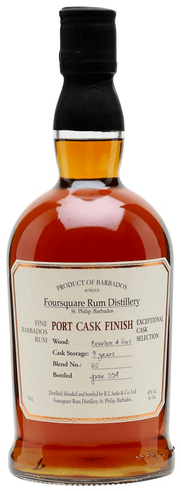
 

Foursquare 9yo Port Cask Finish (40%, R.L. Seale, Foursquare, Blend No. 162, Exceptional Cask Selection, 2014, Barbados

I had planned to open a bottle of Plantation St. Lucia Rum after I finished both the Plantation Jamaica and Guyana, but after the Doorly’s 12yo I reviewed last, I just had to open a bottle of the Port Cask Finish as well. I just couldn’t help myself, I was so curious, especially after all the rave reviews. The St. Lucia just will have to wait a little longer. Port cask finish? The Rum is 9 years old, of which the “finish” took a whopping 6 years. The start was carried out in a Bourbon cask.

But first we have to get back to 1926. Back then, Reginald Leon Seale started the R.L. Seale & Co. Ltd. A company that is of interest to us since it was trading Rums. Sir David and now his son Richard are the Seale’s that also started distilling their own Rums in 1996 after they bought a defunct sugar factory a year earlier. Simply because it is better to trade Rum you made yourself, than constantly sourcing other Rum’s.

Although Foursquare is a Bajan Rum distillery, molasses are mainly imported from Guyana and the yeast used for fermentation is South-African. Foursquare Rums are blended from a pot still and a two (or three?) column stills. The copper pot still even has a copper column fitted on top, which looks funny for one that is used to Pot Stills with lyne arms on them.

ColoFoursquare Port Cask Finishr: Orange gold. A tiny fraction darker than the Doorly’s 12yo. No red hue.
Nose: Toffee and caramel. Fresh wood, sappy and spicy. A breeze across a dry grass field on a hot and silent summer’s day. Distant fruit (more red this time) and a definite winey note, with slightly burned wine cask notes). On top of the medium sweetness lies a nice acidic red fruit aroma which is different from the 10% Madeira (a sweet fortified white wine) you can find in Doorly’s 12yo. The fruit is redder. The is also a nice nuttiness and dustiness surrounding this Rum, which mixes well with the medium sweetness and (red) fruity acidity. This Rum isn’t about finding lots of aroma’s and complexity. No, this one shines because of its balance. Well constructed, but is a bit middle of the road. It does its best to be liked by everyone. Although the label is pretty anorak, it really is a Rum for everybody, hence the reduction to 40% ABV. Luckily this Rum can handle the reduction, at least on the nose.

Taste: Ahhh here is the greatness. Spicy Indian feel, Cinnamon and exotic wood. This reminds me a bit of an Amrut I reviewed last. It’s still Rum by the way. Even though six of the nine years this was matured, was spent in Port casks, it hasn’t become Port of even Port dominated, but obviously the Port impaired some nice flavours to the Rum. I recognize the nuttiness and the hint of glue from the 12yo (the 12yo has more glue). Wow, amazing balance between the sweet and the dry. It is actually more dry than sweet, influence of the wood of both casks, again a bit virgin oaky, but the wood doesn’t dominate here as it does in the 12yo. Slightly longer finish than the 12yo, but still not very long. The Port starts to really assert itself way into the aftertaste, with the wood of the cask it came in. Nice fruity acidity. Very accessible and extremely drinkable.

This one is younger than the Doorly’s 12yo and therefore less heavy on the wood aroma’s. It seems perfect. Enough to give it character and a backbone, but never dominating the spirit like in the Doorly’s 12yo. Having this, it’s nice to have the woody 12yo open next to it. Personally I don’t have a problem with the wood in the 12yo. It fits the profile Richard went for blending the 12yo.

Highly drinkable, and well made. Not as complex as I expected, but good nevertheless. Again a bottle that will be gone soon I fear. 40%, yeah all right, it will do, but I would prefer a higher ABV. I understand the next Exceptional Cask Selection, The Zinfandel finish is 43% ABV and there will be a Vintage 2004 that will be much higher. I can’t wait. Good stuff especially considering the price. Daily sippers (at 40% ABV), both the Port finish as well as the Doorly’s 12yo, which is a bit more chewy, woody and somewhat sweeter and imho a bit bolder. I did several H2H’s with both and sometimes it’s hard to pick a favorite. Both are equally good. On some days I prefer the 12yo, and on others I like the Port better.

Points: 83

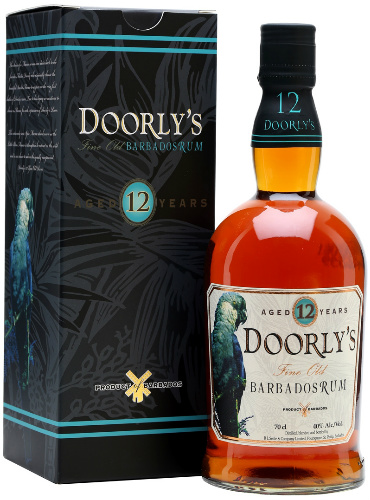
Doorly’s 12yo (40%, R.L. Seale, Foursquare, 2016, Barbados)

I am incredibly keen on reviewing this particular Rum. Why you might ask? It’s only a 12yo Rum from Barbados, nothing fancy, nothing super-ultra-premium and one that is very inexpensive to boot. How can that be? Wouldn’t you rather review an ancient Velier bottling then? Sure, but this one has a story to it. I write about Whiskies for quite some time now, and essentially kept my Rum-adventures to myself. I always liked Rum, but a few years back I really started to love the stuff, especially when I “got” Rhum Agricole and found out that the Rum spectrum is very wide and shows lots of variation.

A long time ago, when I got interested in Whisky I started to surf the interweb looking for information. Back then not a lot of it was around, and there were hardly any books as well. Whisky blogging was just about starting. More recently, when I started to look for information about Rum, I came across some very good Rum bloggers. There are more which I read on a near-daily basis, but for my story here, I have to mention two or three in particular. First I read this review by thefatrumpirate and this one on Inu A Kena.Although I have heard of Foursquare I wasn’t aware of the Port finish Rum. Both reviewers are very happy with the bottling, so my interest was “aroused”.

Next, I started looking for an official un-finished Foursquare bottling to compare it with, and came across this post and especially this post from Lance. “Weak, pussilanimous wuss of a rum. It’s so low key that its piano seems to lack keys altogether” So the Port finished product seems to be stellar and the un-finished XO seems a bit less than perfect. Nevertheless, my interest was now even aroused some more. Being warned, because a smart person learns from the experiences of others, I skipped the XO. Recently I found out there is this newly released 12yo as well. Back in business so to speak. I bought the Port finish as well as this new 12yo, so let’s see first if this 12yo is something Lance should buy.

Doorly's 12yoColor: Copper gold.

Nose: First of all, this smells great right from the start. Modern and tight. Woody, some clear glue and spicy. Typical Bajan Rum, with hints of orange and fresh fruits in the morning market. Definitely also the wooden crates fruit is shipped in. Fresh virgin wood, not necessarily oak at this point. An expected, deep caramel and medium sugar syrupy sweetness. Yes you can smell sweetness, or maybe I should say, smells associated with sweetness. The smell is fruity, but on top of the syrupy part is another fruity smell. It’s the red berry acidity I didn’t like that much in some Abuelo offerings, but that quickly dissipates. Warm sawdust, definitely oak now and a small hint of gunpowder and honey, which is great. The wood aroma is growing stronger with time, which does wonders for the nose. Hints of an unlit Havana Cigar, a combination of Bolívar (spice) and Hoyo de Monterrey (cream). It smells fresh and even slightly winey, which is no surprise since 10% of this Rum was matured in ex-Madeira casks, the other 90% in ex-Bourbon casks. I believe Foursquare uses a lot of casks from Jack Daniels, which would make it ex-Tennessee Whiskey casks rather than ex-Bourbon casks. Whichever cask were used, both are made with American oak, giving off a vanilla aroma.

Taste: On entry a bit thin, but the aroma’s take over quickly. Hints of glue (from the nose) and almonds. It starts out with the woody flavours from the nose. Good balance, it matches the nose perfectly. Tiny hint of soap now, but nothing to worry about. Toffee is next, although the wood is still the dominant factor. Not too sweet. The back-label states 12 years of maturation in American white oak. If not all, then at least part must have been virgin white oak. If not, it may have been ex-Bourbon casks, which must have been very active then. It has so much fresh oak flavour. Chewy toffee is next, even though the Rum is quite thin. The finish is medium at best (probably due to the reduction to 40%), but the aftertaste does have some staying power. Sure not the most complex Bajan Rum around, but I’m not disappointed. The 10% Madeira work wonders without taking center stage. I would say well blended, this one. It’s a friendly nice Rum I’ll probably finish more sooner than later. Good for every (sipping) occasion and that is what you want a nice little OB to do.

It has been ages since I opened a bottle with a screw cap. It only happens when I open an old bottle of Whisky from Gordon & MacPhail and such. It’s all cork now. Screw caps were once a sign of cheapness, for me it’s not. I like the screw cap. It’s retro. They work well, although screw caps on miniature bottles are a lot worse. Corks can dry out, crumble or have holes and other weak spots. So no beef with the screw cap, unless it rotates for ever. “Screw cap” is even nicer to pronounce than cork, and it looks better on T-shirts. Just say it several times at loud, just not if you’re reading this at work and want to keep the respect of your co-workers. “Je suis screw cap”

Lance, it is safe (from “Marathon Man”) and Richard, well done!

Points: 83

Glenrothes 1987/2002 (43%, OB)

Here is another vintage Glenrothes. After the 1992,  the 1989 and the 1979, this 1987 is the fourth of these vintage bottlings on Master Quill. All were nice, but never scoring very high. All were nice, with enough difference to warrant buying more than one, but also none of them blew me out of the water. Just look at both other Glenrothes I reviewed earlier. One bottled by Wilson & Morgan and one by Douglas Laing. Both managed to score higher than the official bottlings. By now I can say that I expect this one to be nice, but again I don’t think it will blow me out of the water.

Glenrothes 1987/2002 (43%, OB)Color: Gold.

Nose: Dusty, definitely Sherried. Spicy and tickles the nose. Also some burnt elements. Next some aroma’s you get from an old (dry) cellar or attic. Funky but not the funky damp notes you sometimes get from cellars. More like the odours of stored old stuff. Old paper, old cardboard and old wood. Old, worn out vanilla pods. Later a breath of rural fresh air, coming to you over water. Let it breathe some more, and it becomes more like a “normal” Whisky. Vanilla, wood, fruity Sherry notes and spicy oak and cask toast. Hints of butter and dry grass (not hay), and even some toffee.

Taste: Short attack of (fresh) oak and a more waxy note, quickly succeeded by cherries and sugared yellow fruits. Fruity sweet toffee, alas a bit diluted. Über-fruity sugar-water. Warming. Apart from the initial wood, this is quite a fruity expression of Glenrothes. Hints of soap and paper from the nose and a growing aroma of burnt wood. At best a medium finish with a note of Beer and burnt wood. Yes, a bit bitter, which adds to the character of the Whisky after the initial sweetness and fruitiness. The aftertaste matches the nose exactly.

Although the nose isn’t one of the most balanced expressions of Glenrothes, the taste is way better that way, helped along by the sweetness it has. It’s all right this one. It may be a bit simple, diluted and lacking complexity. It does some across as balanced and tastes nice. Maybe it’s time to up the strength a bit?

Points: 83

Rum Nation Martinique AOC Hors d’Âge (43%, Single Domaine Rum, EMB 97209J, 2008, Martinique)

And here is Rum number three of Fabio Rossi’s Rum Nation Single Domain series. Earlier I reviewed the Panama 18yo and the Barbados 10yo from this series, both very likeable, enjoyable and very affordable. Third time lucky and this third one is a Martinique Hors d’Âge and an official AOC. Don’t be fooled, this is not a Wine, but a Rhum Agricole, made from Cane Juice. Rum’s like this are different from other types of Rum, made from molasses. So don’t go out buying the aforementioned Panama 18yo and this one, expecting two similar Rums, because they aren’t.

First of all I would like to mention, and I may have done that (several times) already, that Rhum Agricole is an acquired taste, especially for those who started out with sweet, molasses based Rum’s. It may take you a while to like something like this. I can’t stress this enough. Although I came from Whisky, which is something different entirely, I also needed some time to “get it”. I assure you, it will be worth your while, because after a while you also might “get it” or find out it never was meant for you in the first place., which is possible too. In that case I apologize. For the first group who “gets it”, what did I tell you? Isn’t it great!

The version I’ll be reviewing has a code EMB 97209J on it, and was released in 2008, there exists an earlier batch coded: EMB 97230, which was released in 2006. To complicate things a bit, It seems that parts of the EMB 97209J batch were also released in 2010 and 2011. Finally a new version, bottled in the dumpy bottle, was released in 2013. I don’t have confirmation yet, but I understand this Rhum Agricole was distilled by Habitation Saint Etienne (HSE), but I also don’t know if all batches were distilled by HSE, if distilled by them at all. I’ll let you know when I find out.

Rum Nation Martinique AOC Hors d'Âge (43%, Single Domaine Rum, EMB 97209J, 2008, Martinique)Color: Copper brown.

Nose: Nice Agriciole nose. Grassy, some orange skins, and a promise of a full body with maybe some more sweetness than usual from an Agricole. Dusty, drying and full of nice spices. Half warm, fresh black tea with sugar in it. Maybe not very complex, but very nice smelling. Hints of a grass and hay note I know from Grappa. Licorice and a wee bit of tar, but also a slight hint of burnt sugar, a very Caribbean smell. Add to that the smell of an unpainted hot metal roof. Hints of dry oak, like smelling the outside of the cask.

Taste: Light on entry, but with a nice half-sweet attack. It shows sweetness and dryness in quick succession. Again a hint of orange skins combined with dried out leather. Fresh, untreated almonds.  The luke-warm black tea shows itself in the taste too. Gelatine and a small hint of floral soap towards the finish. The finish is of medium length and not much stays around for long in the aftertaste. The hot metal roof is the last note standing, essentially.

I did an extensive H2H2H with this Rum Nation Martinique, which is between 5 and 8 years of age, the J.M Vintage 2002 (11yo) and the 100% Canne Bleue Clément Single Cask (9yo) I reviewed earlier. First of all, these three are not similar, but do resemble each other. The Rum Nation offering is definitely younger, than both others. A clean Agricole taste, not very complex, but very nice and highly drinkable. The Clément has an amazing colour after only 9 years in a Bourbon cask. Uncanny. It must have come from a very active cask. It is a Rum of broad strokes and primary colours. A bit raw, and everything that lies on top, overpowers any subtleties that lie underneath. The J.M is a bit like this Rum Nation with an added dimension. Here Bourbon maturation, did what you would expect. The American oak added sappy wood and vanilla to the mix, as well as a creamy and sweet-corn distillate note. You might say that the J.M is easily the best of the three, but keep in mind that the Rum Nation Martinique costs about half of both others, and keep in mind as well, that the Clément comes in a half litre bottle only. Rum Nation again shows its incapability of bottling a dud, and if you get the chance to talk to Fabio and he starts to talk about his entry-level Rums, just slap him over the head. He doesn’t bottle entry-level Rums, he only bottles Rums at entry-level prices. So if you get the chance to buy one…what are you waiting for?

Points: 85

Glencadam 30yo 1975/2006 (54.4%, Dewar Rattray, Cask Collection, Bourbon Cask #7588, 216 bottles)

Why not make it a double bill, and review our third Glencadam. Both Glencadam’s I reviewed earlier managed to score a nice 85 Points, so let’s see if this one does better. This particular on is 30 years old, and by itself it’s older than both previous examples put together. This is another one from the attic, since it was released back in 2006. The difference couldn’t be greater when comparing it to the Glencadam I just reviewed. It is twice the age and this one comes from a Bourbon cask, surely it will do better?

Glencadam 30yo DRColor: Full gold, and only slightly lighter than the 15yo.

Nose: Half sweet and nice biscuity barley. Slightly spicy and reminds me of old Dutch Jenever. Definitely some Bourbon influences. Some waxy elements, but not much. In fact the Whisky smells quite young and vibrant and not at all would you expect it to be 30 years old. Fresh, hints of citrus and only mere hints of vanilla. Dusty wood completes the nose. That’s it, not much more is happening. After a while more fruit comes to the fore. Sweetish yellow fruits. Some unripe banana skin. Adding to the structure of banana comes powdered coffee-creamer, in the smell a creamy variant of vanilla. Dusty and slightly dried out ice-cream after you spilled it and didn’t clean it right away. Given some time the freshness takes a back seat and the whole is nice but also rather dull. Not a very active cask I’m afraid. Having said that, it does smell like something from the past.

Taste: Wood, paper and cardboard and after that a short, sharp attack, quickly followed by a short sweet note. After the sweetness comes some woody bitterness. Distant dull vanilla. Waxy again. Cold candle wax. So the body is present and almost chewy, yet surrounded by dry paper and woody notes. A nice old Bourbon matured Whisky, but not a stellar one like 1972 Caperdonich or 1976 Tomatin, to name but a few. Here also some fruit emerges, but again a bit dull. Dried bits of pineapple and some old broken almond bits, you sometimes find in the couch. Luckily the sweetish and fruity note dominate the body, not leaving much room for the woody bitterness. The finish has medium length, but there isn’t much happening afterwards. What stays around for the longest, apart from general (cardboardy) creaminess, is a sour note you get from (new) oak.

Not bad, quite nice, but also not spectacular as well. No real off notes and nothing (bad) overpowering the whole. Still a nice one to pick up when all of its distant relatives are sold out. Definitely a lot better than most of the modern Whiskies though. I’ll have fond memories of this nevertheless.

Points: 85

Glencadam 15yo 1989/2005 (58%, Signatory Vintage, Cask Strength Collection, Sherry Butt #6014, 578 bottles)

Another one I found in the attic. Although this hasn’t been bottled ages ago, this time around I have a Signatory Glencadam bottled back in 2005. That’s already 11 years ago. Time flies. This is just the second Glencadam on these pages and it seems not to be a Malt with a big reputation. Having said that, the “new” 10yo I reviewed last time around, was something of a nice surprise for me. Quite impressive for an officially bottled 10yo. However, I have seen it before that the first release of something is better than most subsequent releases. Just sayin’…

Glencadam 15yo SigVColor: Copper gold.

Nose: Creamy and strictly Sherry. Smells like a Red Wine cask actually. Whiffs of stale Beer. Wow, where is this going? Hints of caramel and licorice. Creamy and perfumy. Definitely more floral than most Whiskies I recently tried. Floral pudding. Sure some dried apricots underneath, but not enough to call this fruity as well, although the fruit aroma becomes stronger with prolonged breathing, so it may be more fruity then I initially thought. Hardly any wood. Fruity and floral it is and dry warm wind blowing over the top. After even some more time the floral part seems to have disappeared. Interesting effect. It’s all about what evaporates the first. It becomes nicer over time, and better balanced as well.

Taste: On entry again the feeling this comes from a Wine cask. Apart from the slightly harsh winey note, a lot of paper and cardboard notes. A Beer-like carbonation taste (not saying there are bubbles in this one, an effect I know from a certain Teaninich, also bottled by Signatory (not reviewed yet, but I do have a bottle of that somewhere). Lots of pronounced Italian laurel licorice. Cumin and slightly minty. Hidden sweetness and a nice bitter (hoppy?), and slightly soapy, edge well into the finish. Well this one seems to have it all doesn’t it?

If you work on this a bit it is quite nice and wonderfully complex. For some it may be an acquired taste. You need to let this breathe for quite some time though, although seeing it change with time is quite nice as well. Interesting Malt. Recommended for aficionado’s. I liked the feel of the 10yo I reviewed earlier, and this one doesn’t disappoint as well. However, I’m not that positive about some of the other regular releases by the owners themselves, so be careful with buying those without trying.

Points: 85


Bushmills Irish Single Malt 1991/2015 (52.2%, The Whisky Mercenary, for Whiskysite.nl and The Single Malt Whisky Shop)

Usually, independently released Irish Malts are sourced from Cooley, especially the peated ones. This time it’s not. Many 1991 peated Irish Malts that were released independently in 2015 were from a batch of peated Bushmills, although you won’t find the name Bushmills anywhere on the label. This particular bottling was done for the Dutch Whisky-shop Whiskysite.nl and Belgian outfit The Single Malt Whisky Shop. let’s see what Jürgen offers us now…

The Whisky Mercenary IrishColor: Gold.

Nose: Nice elegant peat, which rules out Cooley right of the bat. Cooley has a more fatty and rough kind of peat. This smells more refined and a bit sweet. Fruity (yellow). Sure there is this clay element in the peat, that is also present in Cooley, but it still is different. Hardly any smoke although the first sniff was quite sharp. If it’s there it’s already gone. This is a wonderful smelling Malt. The wood shows itself next and it reminds me of pencil-shavings combined with some fresh oak. Again, all kept very much in check. Vanilla is present but again, not in a big way. Deep underneath the hints of red fruit, is also a sweaty element. Animalesk and organic, which only adds to the complexity of this Malt. Well integrated. On top a more heavy aroma emerges, fresh butter. So we have some peat, some wood, some vanilla and some butter and all is nicely held together with a very appetizing fruitiness. If this will taste anything like it smells we’ll have a winner here.

Taste: Ahh my favorite red berry flavour is there. I also find it, and love it, in the 2005 batches of Redbreast. Quite funny since Redbreast isn’t produced at Bushmills, but rather at Midleton. Maybe its Irish. The fruit combines really well with a warming, but still fresh peat. Creamy and with some vanilla, but also a slight hint of burned kerosene, mixed it with the toffee. Pencil-shavings are in here as well. The peat is again light and elegant. Great. Almonds and some wax are next. Almond-milk, mixed with latex,quickly followed by red fruit juice. What a wonderful Malt this is. It smells great, tastes great, up ’till now this is so good that I would even forgive a short finish. Short it is not, but it is of medium length. The aroma’s leave my mouth one by one. The aftertaste is about fruity wax and, a little bit of peat and the memory of red fruit and a light bitter edge to hold it all up.

This is wonderful stuff and yes, Jürgen has done it again. What a wonderful selection. By now long gone, but can be found at different auctions across Europe. Just be ready to dish out quite some money for this, since most aficionado’s know this is excellent. It was quite expensive to boot, and even more now, but it also is quite excellent, so this time you will get what you pay for, and in today’s market, notwithstanding the origin of the Malt, you get more quality out of this for this kind of money, than most other Malts. So a no brainer for me (and I don’t sit on heaps of money)…

Points: 90

I had to do a H2H with a 2005 batch of Redbreast. The Redbreast smells oilier and somewhat less fresh. I would almost say, more Rum-like. It seems to smell a bit of petrol and exhaust and overall seems less complex. Caroni anyone? Don’t underestimate the power of H2H’s. The Bushmills smells more organic and definitely fruitier. Although the difference in ABV is only slightly more than 6%, it makes the Redbreast much softer than it actually is. Again in comparison, the Redbreast has some gout de petrol (like you can find in excellent Rieslings). I scored the excellent Redbreast, 86 points, but today I would score it higher…(but not 90).

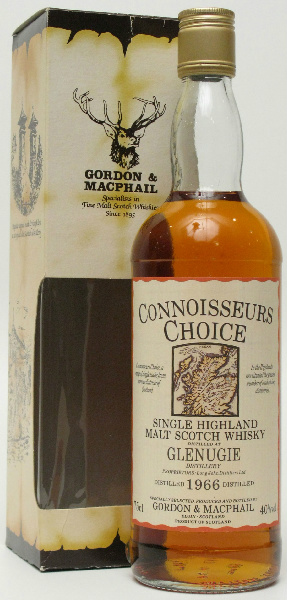
Glenugie 1966 (40%. Gordon & MacPhail, Connoisseurs Choice, Old Map Label, 75cl, 4699)

Up next a blast from our collective Whisky past. This is only the second Glenugie on these pages, and rightfully so. It’s closed and it’s today, bottlings like this moved into the realm of collectors (who don’t drink it) and anoraks (who do). So what do we have here? A few years ago an anorak posted an article about what clues can be found on a G&M bottling to date it. We see that this bottle doesn’t have a neck label to date it, so it’s not from the 1991 batch, but earlier. We do know it is an 75cl bottle and on the bottom the glass code 4699 can be found. This particular glass container was used in between 1982 and 1991, which isn’t really helping, but narrows it down a bit. I’ve seen this bottle with different cardboard boxes though, so that isn’t helpful either. The box in the picture isn’t necessarily the box the bottle was sold in. Second we do not know if only one bach was released, looking like this. There may be different batches with different boxes who look exactly the same filled in exactly the same coded bottles. I’m guessing the one I’m about to taste is more form the second half of the eighties than the first half, but that’s only speculation. Let’s try it then shall we?

Glenugie 1966Color: Slightly orange gold.

Nose: Very dusty and old smelling. Funky dry Sherry. Deep grassy, slightly waxy and old soft oak(y). Time capsule. Some faint red berry fruit in the background. Add to that a more creamy, vanilla note and some burnt wood. It’s a mere hint that burnt note though. Adds to the character fo the Whisky. If you let it breathe for a while, more and more of this red fruit comes to the fore, cloaked in the wood and creamy notes. Diluted warm caramel and slightly dusty as well. This is an old gem, and needs to be treated as such. It’s fragile at 40% ABV. Don’t be hasty too. With even some more air, hints of licorice and a floral note emerges. Floral but not soapy. Elegant and distinguished florality. Vegetal (with some wood), floral and fruity, that sums it up.

Taste: The wax, diluted caramel and the wood are up front here. Diluted sweetness. It’s slightly sweet at first, but that is quickly gone. It’s so obvious that I do feel that some caramel colouring has been done. Yep, toffee, hard candy coffee bon-bon. More wood, slightly sappy and bitter. It has some creamy nuttiness to it. Does warm hazel-nut milk make any sense? Disappears rather quickly, hence it has a short finish. The finish is made up of toffee and it’s actually almost the only thing that is noticeable in the aftertaste (as well as a hint of paper…).

Wonderful old malt, that has been diluted too much and might have seen some caramel colouring. You know it’s there, but it lost its battle trying to show it to us, since it has been hindered by too much water. Bummer. I have to report this to the Whisky police and hopefully the culprits will be brought to the Whisky-tribunal. Smells great though, that’s where the potential is still noticeable, or should I say that’s where you can still get a glimpse of what could (should) have been…

Points: 83

Plantation Jamaica 2000 (42%, Old Reserve, 2013, Jamaica)

Some two months ago I reviewed the first Plantation Rum bottled in the Old Reserve Series, time for another one. The first one was made in Guyana, an easy choice since I do love Demerara’s. Same with Jamaica. Jamaican Rums tend to be big and bold, high on esters and funky! Actually Jamaica 2000 (in the old bottle, like the review of the Guyana), was my first Plantation Rum ever. That one was stunning. Here we have probably the first batch, released in the new bottle. There is a laser edged code on the bottle stating this one was bottled on April 18, 2013. I know both batches already, and there is some batch variation. I found the earlier one even bigger than the one I’m about to review here…

Plantation Jamaica 2000 (new bottle)

Color: Full gold.

Nose: Extremely buttery start. Lots of caramel and toffee aroma’s. Big, big, big, compared to other Rums from this range. It smells sweet, candy-like and so funky. I love the smell of stuff like this. Sugared yellow fruits in alcohol. Buried deep down below, there is this wine-note, so Cognac is noticeable. Ex-Cognac casks were used to finish the Rum in. Leather, nuts, nougat, chocolate. Hazelnuts, wood and sawdust. It’s all in here and for you to smell, so the big Rum didn’t even overpower it all, so no heavy thick cloak of toffee lies over this Rum, or is it? Next, because these is an evolution going on, a more nutty aroma emerges. Wood, almonds and cold black tea. The whole seems to become drier, which I like. Smells great, as often with Jamaican Rums.

Taste: Not as thick as one would expect, and certainly not as chewy. Fruity, yes. It is not overly sweet as well, but the sweetness is your typical refined sugar taste, as well as some burnt sugar. Right from the start quite some influence from the wood, combined with the defining Jamaican funk from the smell. Toffee, wax and nuts. Vanilla Ice-cream with Rum and raisins, which I also remember from Christmas. No big toffee from the nose as well. Liquid toffee and alcohol. Without smelling it, I repeat, without the smell, tasting this blind I would almost call this an Abuelo expression (the 7yo), only less sweet and more powerful. How strange. It has a nice woody backbone, with a slight bitter edge to it. Cask toast, burnt sugar, something like that. Warming. letting this “melt” on your tongue, a more fruity aroma emerges and even some fresh artisanal cola notes, which aren’t so damn sweet as those sold to you by the US sugar mafia. Whatever the aroma, it will always be slightly woody accompanied with a woody and waxy bitterness. I guess in this case the finish did some work on the typical Jamaican profile.

Just try something like this from Jamaica and try to compare it to a Rhum Agricole, I bet you can’t do that in the same tasting without losing something that both Rums offer. That far apart are both distillates, and so broad is the scope of Rum.

Since I still have it around, I compared it directly to the Guyanan offering I reviewed earlier: The Guyana seems more organic. More smells from the earth in that one. Flora and fauna and a wee hay-like Grappa note. Both share the same waxy notes though. In the taste the Guyana is a bit sharper and hotter. The Jamaica is definitely sweeter, and the sweetness overpowers the finish. Both are influenced by wood. In fact, both are similar but not similarly good, and if you have one of them, you don’t really need the other as well. Yes the smell is different, but the treatment both have received by their owners have brought them closer together.

Points: 81