Slowly but surely we move on up (and down) the rather large collection of Glenfiddichs, the mother of all malts. Earlier we’ve already covered the 12yo “Special Reserve” (80 Points), the 15yo “Solera Reserve” (82 Points) and the 15yo “Distillery Edition” (83 Points). The odd one out was a Vintage 1974 (91 Points) bottled for the nice people of La Maison Du Whisky in Paris, France. This time around we’ll up the age again and move from 15yo up to 18yo and with that, we arrive at a bottle that was married in small batches. The latest offering of this bottle is now called Small Batch Reserve, maintaining the 18yo age statement.
 Color: Full gold
Nose: Malty, waxy (like in old bottles), and very fruity. A fruit mish-mash since no specific fruit is discernable. A vegetal and new wood smell. Nice and elegant. Dusty but also creamy. Nice combination between vanilla and the waxyness I mentioned before. Not overly complex for a malt of this age, but it does have great balance and is well made around good maltiness, the wax and the fruit.
Taste: Waxy and lots of woody notes. Wood, oak, cardboard and just the right amount of bitterness. Next toffee, caramel, creamy not sticky nor sweet. Hints of the wax is in here too. Malt and old cellar notes. Peanut skins and maybe walnut skin bitterness right at the back of my tongue. Vanilla, but typical vanilla you get from American oak. Definitely a Glenfiddich with some (wooden) balls. OK at 40% and definitely is presented as an old (18yo) malt. Like the nose, this is not overly complex, but very drinkable (even with this wooden bite). This lacks the fruit I got in the 15 Distillery Edition, and lacks the acidity I got from both 15yo’s. This is definitely older and spicier (like it should) and placed in the range as such. Despite the oak, this has a short finish.
Often scuffed at and I never got that. Even if it would taste lots worse than it actually does, I still love the history and the pioneering work done by this malt. But it doesn’t taste bad, and it is pretty good stuff. Why does it have a bit of a reputation then? Sure the 12yo is pretty simple, and most of them are bottled at the lowest strength possible. Most anoraks prefer “the other” Grant brand Balvenie. Yes it’s not complex, but very enjoyable nevertheless and very inexpensive to boot.
Points: 82
For Tony, Mr. Glenfiddich!
 Franschhoek Valley is a broad valley in the south-east corner of Paarl, Western Cape. Franschhoek is warm and produces robust red wines (and fruity whites). The surrounding mountains (Wemmershoek to the north and Groot Drakenstein & Franschhoek to the south) cast shadows which help reducing the temperature and hours of sun the grapes get. They also reduce the influence from the sea. On the other hand, the mountains also hold the cooler winds from the south. Terroir is alluvial sandstone (doesn’t hold water well) and in the north some granite (in the mountains). On the hillsides there is some clay to be found.
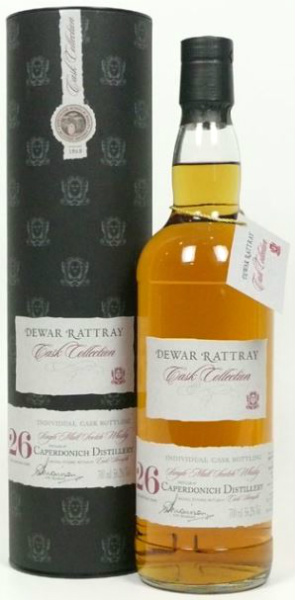 Color: Dark gold.
 Color: Light gold with a pinkish hue. Sherry all right.
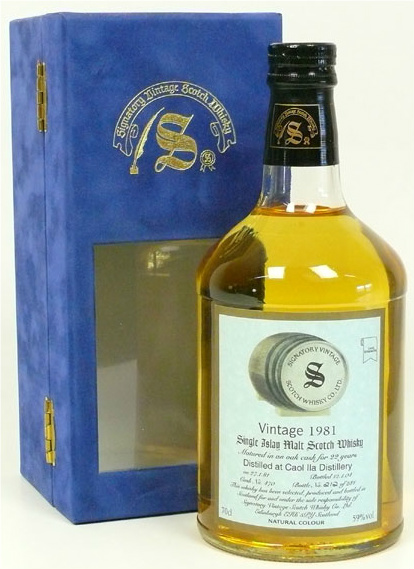 Color: Light gold.
 Color: Full gold.
 Color: Full gold, almost orange.
 Color: Sparkling light gold.
 Michel still had his house in Bouze-les-Beaune and returned there in 1978. Behind the house he dug out a new cellar in the hillside, making it a center for importing good Sherry casks from spain (to the south of where he was), and Whisky (from the north). One of his cellars is pretty humid, with natural water running down the walls, I’m not even mentioning here what grows on the walls! The first cellar that lies between the house and the rest of the underground complex is drier and is where all the casks are stored (see picture above). Visiting there some time ago, I saw some nice casks of Sherried 1981 Brora (which I got to taste) and a 1969 and some seventies Springbank. If Michel thought the Whisky had matured enough, he transferred the Whisky to large glass bottles and stored them in dark passageways. On August 17, 2013 Michel left for the big distillery in the sky at the age of 85 years.
 Color: Murky orange brown.
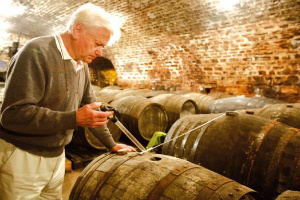 Michel Couvreur was born in Belgium. He came to Burgundy in 1951 to market wine, but also to make wine. He did that untill 1978. Through all of his life, Michel had a passion for production methods, and not only for Wines. Michel travelled to England and Scotland for the Wine trade and there came in contact with Whisky. He moved first to England in 1956 (in the same year he acquired the cellars of Molet) and subsequently moved to Scotland in 1964. In 1971 he left again and moved his Wine trade to Canada (untill 1978). In Scotland (in 1986 at Edradour) he studied the production methods for Whisky, amongst others, focussing on different kinds of Barley and forging a love for Sherry casks that once held Pedro Ximénez and Palomino Fino. Michel claimed that 90% of the quality of the end-product comes from the cask used, and a mere 10% by the distillate itself. Here we’ll try an example of one of Michels Whiskies. Sourced from Scotland, peated, reduced with imported water from Scotland, and matured in good Sherry Casks.
 Color: Copper orange glow. Unfiltered.
 Master Quill