Glenglassaugh 26yo 1983/2009 (50.4%, Mo Òr, Oloroso Sherry Butt #171, 885 bottles, 500ml)

Glenglassaugh LogoIt’s been a while since a bottling of Dutch indie bottlers Mo Òr graced these pages, but it certainly is the first Glenglassaugh. Last MoÒr was an old Aultmore that turned out to be very good. This time we’ll have a look at an example of Glenglassaugh, an ex-closed distillery. The demand for Whisky is so great these days, that the industry resurrected every distillery that still could be reopened. Even when cold economics suggested more money could be made, distilleries only got demolished to make way for an even bigger more modern (read: efficient) distillery (Imperial). Only recently Diageo announced they are going to hugely expand Mortlach, and it ptobably won’t be the last one.
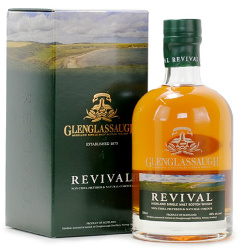
A new bottling by the reopened Glenglassaugh: The Glenglassaugh RevivalSo any distillery that reasonably could be reopened is reopened, the rest is demolished, stripped bare, or otherwise made unusuable. I wouldn’t be surprised anymore if Diageo decides to cash in on the name, and reopen Brora! Besides this, more and more new distilleries are popping out of the ground like mushrooms on a forest floor…

Back to Glenglassaugh. Glenglassaugh itself was founded in 1875 but was closed already in 1908, and fell silent for a whopping 23 years! It reopened in 1931 just to be closed again 5 years later, in 1936. This time the distillery wasn’t working for 24 years. Reopened in 1960, the distillery was fitted with new stills, but still it didn’t manage to stay open permanently, because it was closed again in 1986. It was reopened (again) in 2008, after an extensive 22 years of silence. Since then the distillery has already changed hands. What a rocky past!

Glenglassaugh 26yo 1983/2009 (50.4%, Mo Òr, Oloroso Sherry Butt #171, 885 bottles, 500ml)Color: Copper Brown.

Nose: Hmmmm, very nice and classic Oloroso! The smell seems chewy! Nice woody spices emerge, but in this case, the whole smell is fantastic. With some air, the Sherry becomes even more funky which only adds to its likeability and complexity. The smell is dry and dusty, but not meaty. The wood plays an important role, it’s an integral part of it, without overpowering it. After some time, more heavy elements are coming out, hints of dates, coal and tar and toasted cask (and some violet soap, but it suits the Whisky).

Taste: Toffee and caramel, initially sweeter than expected, but quickly turning dry. What a bomb of aroma! Just put a few drops in your mouth and you know exactly how this tastes. It seems condensed! Laurel and hints of licorice on the back of my tongue. Dark fruits are in the mix too, blackberries mostly and blueberries are present in the finish. The finish itself is fantastic. It’s great that this Whisky retained a little bit of sweetness, which matches the dryness and the spiciness of the wood. I guess this was bottled at its peak. Well done!

Guys, thank you for not reducing it. I already thought your reduced Tomatin and the Caperdonich were fantastic, both at 91 points, but this cask strength Glenglassaugh blows them hands down! Excellent!

Points: 93

The Balvenie 1989/2003 “Portwood” (40%, OB)

It’s almost a year ago I review my last Balvenie, and since there are lot’s of them around, why not have another look at a product from this distillery. Up untill now I reviewed some Balvenies with an age statement, this time I’m going to have a look at a Balvenie from a vintage, 1989 to be precise.

Those of you who know Balvenie, know that one of the best Balvenies around is the 21yo Portwood. yet in 2003, a vintage Portwood saw the light of day, this 1989 but also a 1991 exists. Two years later, in 2006, a 1993 vintage was released. I haven’t tried this 1993 yet, but earlier the 1991 was rather disappointing, still it fetched 78 points. Let’s have a look if this 1989 is any better, maybe even as good as the famous 21yo!

Balvenie 1989/2004 Portwood (40%, OB)Color: Pinkish gold.

Nose: Buttery, and creamy. Sweet cookie dough, but also a slight woody and winey note is present. The more this breathes, the more a spicy woody note comes to the fore. Red fruit hard candy. Quite dusty after a while. Vanilla and dough again. Also some candied sweet tangerine skins.

Taste: A sweet candy note, malty and quite dull at first. The Port even though is not heavy, dominates the palate, still it dominates in a transparent way, since it lets through the malty distillery character of Balvenie. All in all a funky battle between winey wood, (with a slight bitter edge to it),  and it’s sweetness. Definitely some citrus in here, Tangerine or sugared orange skins.

Again a very nice and never misbehaving Balvenie. Nothing wrong with it, but it also doesn’t stick out either. This Balvenie will also never drive to fast or smoke a cigarette where it isn’t allowed. It obeys. It isn’t bad either, but for me a little bit boring. Still it’s a Portwood, and it isn’t harsh as some whiskies that came in contact with Port pipes can be. The aroma’s fit well together, so it has good balance. A bit weak with its 40% ABV, but it offers yet another variation on the Balvenie theme, again with a lot of reduction.

Points: 83

Kopke Special Reserve Tawny (150th Anniversary in Holland)

And finally the third and last of the trilogy of Kopke Ports I had open on my lectern (not counting the Moscatel that is). The Trilogy started off with Kopke 10 Years Old Port (Matured in Wood), continued with Kopke Christmas Port (Reserve Ruby) and now finishes off with this Kopke Special Reserve Tawny (150th Anniversary in Holland), which just like the 10yo matured in wood Port is a Tawny Port.

Tawny Port is named for its tanned color, which occurs when Port matures (oxidizes) in barrels for several years. Tawny Port mostly consists of Port wines from different vintages blended together. Cheaper examples are made by blending Ruby and White Ports, a method which surpasses the time the Port would need to age to become a Tawny port, and as we all know time = money. Having said that, even by blending Ruby and White Port together, nice results can be achieved. Blending isn’t necessarily a bad thing you know!

Kopke Special Reserve Tawny (150th Anniversary in Holland)There is a little back label on this bottle that explains why this Port is “special”: We specially selected this Kopke aged tawny Port to express the pleasant cooperation between Kopke and our eldest client, the Dutch importer J. van Ouwerkerk, founded in 1860. 1860 -2010, 150 years in the wine trade.
Color: Sparkling light red with a brown hue, actually more pinkish red than tawny. Long legs in my glass.

Nose: Smells extremely sweet, not very different from (the sweetness of) a PX Sherry sweetness. Very fruity, sugary and it has a lot of red wine notes. Smells fresh (young) and full on summer. A kind of happy Port. It also shows a little depth with a balanced woody and vanilla (ice-cream) note. Do I detect some sort of minty freshness? Nice and not too complicated Tawny.

Taste: Thick lemonade, due to its youthful fruityness. Small hints of chocolate and licorice. Not heavily sweet and the half-sweetness it has, is nicely counteracted by good acidity. Good balance but with a short finish though. A light Port.

A decent and fruity, happy Port. Actually not very Tawny If you ask me. I can imagine drinking this with ice cubes on a terrace in the summer. Especially since it has lemonade written all over it! Don’t analyze this one, just enjoy. This Tawny has an ABV of 20%.

Points: 84

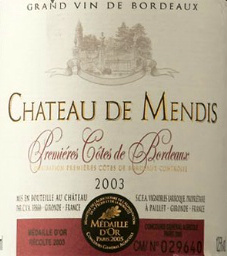
Short Stories: Chateau de Mendis Premiéres Côtes de Bordeaux 2003

Hey another short story. So no introduction, no research (or nothing to research), just a short (tasting) note about something (in most cases, a wine I had with dinner), so without further ado…

Chateau de Mendis 2003Color: Extremely dark ruby-red

Nose: Nicely spicy and warming. Oozes hot earth. Spicy and somewhat woody. Nose is nicely balanced. Again lots of earth, dusty, meaty and with deep red fruits, mainly cherries. Very pleasant nose. I don’t know why, but smelling this, I have a craving for Pizza.

Taste: The mouthfeel is a bit thinner than I expected from the nose. It still is warming and has quite the body. Fruity again with some added acidity (but not much). This most definitely is a wine that needs to breathe. It was aged for quite a bit and has developed well. I imagine this wine wasn’t made for keeping. The soft tannins are there, on the tongue, but not as much in the taste. Again a bit meaty, but in no way unforgiving. Will do well with most foods. Meat and cheese and anything in between.

Mostly Cabernet Sauvignon, but blended with a little bit of Cabernet Franc and Merlot. 12.5% ABV.

Points: 84

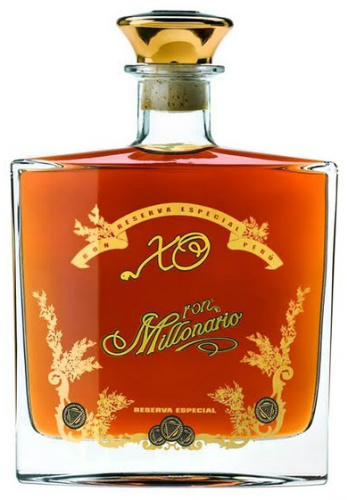
Ron Millonario XO Reserva Especial (40%, Peru)

Rum, Rhum, Ron all words for the same beverage. The fact that there are so many ways to describe this drink shows us that Rum is made all over the world. But then again, which drink isn’t? Whisky is made all over the world now and so is Wine. This particular Rum, or Ron in this case wasn’t made on a small Caribbean island, but in the northern part of Peru, South America. Ron Millonario have a website, but somehow it only shows their 15yo Solera Reserva Especial. This Super Premium XO Reserva Especial is nowhere to be found. The  Millonario Rums are made by slow distillation of sugar cane molasses, using three old Scottish column stills. The distillery has its own coopers that make casks from American and Slavonian! oak. The 15yo Rum is made with four stage Solera system. Chip Dykstra mentiones that for the XO a fifth stage may be introduced, lifting the age by 3 to 6 extra years over the 15yo mentioned above. Mind you, in Rum, 15yo means that the oldest Rum is 15yo, whereas in Whisky 15yo means that the youngest Whisky is 15 years old.

The XO is limited to 6000 bottles per annum.

Ron Millonario XO Reserva EspecialColor: Copper Brown

Nose: Sweet, floral and quite light. The rum also brings a small hint of acetone and dry wood. Dry powdered raspberry sweets, which also resemble not quite ripe cherries. Toffee, old vanilla and wood again. It doesn’t promise heavy sweetness. Tiny hints of young Cuban tobacco and cookie dough and wet brown sugar, which still doesn’t make this Rum smell “sweet”. Very interesting smell, but not a powerhouse.

Taste: Well balanced stuff, this is (Yoda). Seems a bit light at 40% ABV though, but still has a lot going for it. Very sweet (honey) and well made. Small hints of licorice that goes extremely well with the honey I mentioned earlier. It has quite some staying power and the finish sometimes resembles a cognac. Very smooth stuff. Elegant.

The profile seems to be a bit middle of the road for me, but the view from the middle is quite spectacular. The sweetness is perfect as is the balance. The only thing wrong with it is that it’s quite expensive, but hey, most Whiskies cost (a lot) more than this, so I guess buying this it would be money well spent. Recommended!

Points: 85

Kopke Moscatel 10 Years Old

Moscatel is the Spanish and Portuguese word for a fortified wine made with the muscat grape variety. Muscat grapes are not a single grape variety, but a whole group of hundreds different grape varieties, ranging from white to almost black grapes. Muscat grapes are one of the oldest grape varieties still left, already used by the ancient Greeks. Therefore it’s not surprising a lot of different wines in large parts of the world are made with this grape variety, ranging from Moscato d’Asti in Italy to Kopke’s Moscatel from the Douro region in Portugal. Muscat wines can be dry, medium, sweet, sparkling or a desert wine (fortified). Wines made with Muscat grapes have a low acidity, and can’t be aged a lot, unless it’s fortified like this Moscatel by Kopke, which is a whopping 10 years old. By the way: Muscadelle, Muscadet and Muscardin do not belong to the Muscat family.

Kopke Moscatel 10 Years OldColor: Copper, or very dark amber.

Nose: Deep old sweetness, syrupy and reminiscent of sultanas. But it’s not only oozing promises of sweetness, but also some acidity seems to be present, which is rather uncommon for a Muscat Wine. Hot earth with a tiny, tiny hint of smoke, which gives the Moscatel a lot of character. Hints of pineapple, dry leaves, licorice and it has a little bit of a floral perfume too. Creamy. The nose is not far from some PX Sherries. Lovely.

Taste: Milk chocolate, vanilla and sultanas again. Peaches and apricot syrup. Some alcohol is showing as with cherry bonbons. The sweet (which seems to dissipate fast) and the acidity mingle well, and after the sweetness retracts, the acidity takes over, without being aggressive like lemon juice would. Where the nose promised a lot of sweetness the taste, luckily, is more balanced, due to perfect acidity, yet not very complex. Then nose is most definitely more complex than the taste is. So it’s not syrupy sweet nor does it have the consistency of a syrup, since the Moscatel is quite thin in texture. In the glass some long legs are showing, but not a lot, nor are they very thick. The finish is not too long, and has a little touch of grape skins. The taste has nothing to do with PX Sherries though 😉

Lovely stuff, easily drinkable and I’m quite curious for other Moscatel wines now. I hope to find one that has some more complexity in the taste. ABV for this Moscatel is 19%.

Points: 85

Glenrothes 25yo 1975/2001 (50%, Douglas Laing, Old Malt Cask, 600 bottles)

Hello everybody! How is this new year treating you? I’m totally fine, thank you. Let’s start this new year off on Master Quill with another oldie, bottled by Douglas Laing. The last Whisky I reviewed in 2013, was a very young and recently bottled Tamdhu by fellow indie bottler The Ultimate (Van Wees). This time however we will take a look at a 25 year old Glenrothes from 1975. If only this would have been a 25yo Ardbeg from 1975, bottled by the same outfit… Maybe by saying that, I’m doing Glenrothes wrong, so lets not waste any more time and have some Glenrothes please!

Glenrothes 25yo 1975/2001 (50%, Douglas Laing, Old Malt Cask, 600 bottles)Color: White Wine.

Nose: Fresh and funky at the same time. Minerality and flor from Fino Sherry. Probably from a second fill cask. Smells sweetish and very lively, maybe even young, from a less than active cask. Nutty, roasted and fresh almonds, which for me is also quite typical for dry Fino Sherries. Nice distant maltiness. Nose develops nicely too.

Taste: Great, or maybe even fantastic fruit candy sweetness, very unique. When that dissipates a nice soury and woody touch matched with some nice creaminess. Vanilla Ice-cream. Slightly bitter black tea, and a bit salty on the lips. The wood gives off a little bite, which I like. All in all, it’s quite mild and tasted blind I would have never guessed it has 50% ABV. Nicely balanced, and very Fino.

The bitterness that is there has two functions. It gives some oomph to the fresh, fruity and lively profile (which is good), but also dominates the finish a bit (which is not so good). Nevertheless, the whole is very a-typical for a Glenrothes, and I can easily understand why this didn’t fit the profile for an official release, or why it wasn’t used for a blend. On the other hand, this is exactly why, especially the earlier bottlings of Douglas Laing are so popular. It is a chance of a lifetime, to taste some Whiskies from distilleries who do not resemble the products of their makers. Somewhat similar to the Douglas Laing Taliskers, or Tacticals if you prefer. Most of those are not very obvious Taliskers too. This is a very nice Glenrothes and for me better than a lot of the official Glenrothes, even though in the end I’m not the biggest fan of Fino Sherry Casks being used for Whisky, I prefer Oloroso, but that’s a matter of taste obviously, having said that, this Glenrothes managed to get:

Points: 88

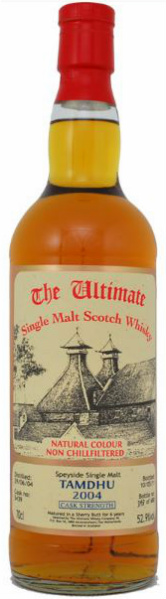
Tamdhu 6yo 2004/2011 (52.9%, The Ultimate, Sherry Butt #5439, 680 bottles)

Just before Christmas I reviewed a young Tamdhu bottled by The Ultimate (Van Wees, The Netherlands). That one was only 8 years old and I dared to mention in that review that at 8yo that Whisky was maybe bottled to late, since a lot of wood was present in that bottling. Luckily the wood gave the Whisky a lot of character, but I hoped it would have been a wee bit sweeter. Now look here. I’ve got an even younger Tamdhu bottled by The Ultimate. This time I’ll have a look at a 6yo Tamdhu from 2004 (the second of the six, bottled in 2011), and have a look how the two compare. How was your Christmas, by the way?

Tamdhu 6yo 2004/2011 (52.9%, The Ultimate, Sherry Butt #5439, 680 bottles)Color: Pale gold.

Nose: Definitely a less full on nose. Less powerful, dryer and somewhat more floral than cask #347. Again nice woody notes, but less prominent. Still a lot of pencil shavings though. This one needs a little breather. I just opened the bottle. Good balance and again a very likeable smell. Appealing. Somewhat cleaner this one is (thanks Yoda). When smelling these two H2H, is think this younger example is even more complex, since the 8yo is all wood.

Taste: Sweet and creamy and delayed pepper, but overall a weaker body than the 8yo. Now you all are going to think that I’ve lost it, but this 6yo Tamdhu is more complex than the 8yo I reviewed before Christmas. On the taste lots of nice aromas have lined up and come through one after the other instead of all at once. Black and white powder, vanilla pudding, elegant wood, licorice, and some yellow fruits even. What a treat. The finish isn’t longer, but has some more aroma’s and this one is heavy on cask toast and a little bit of sulphur, but again not dominant, so adding to the character. A nanosecond of sweet on the entry, than quickly into wood and then the workings of layers when the Whisky is swallowed. These young Tamdhu’s are hidden treasures!

The whole is more toned down compared to cask #347, but this one has some more going for it. It is a bit sweeter (as I hoped), but the sweetness is a bit funky, so I’m glad is isn’t sweeter than it is. The Whisky is only 6yo, but still it seems to be more complex than it’s older sister. I like the finish better too, although it has some sulphur, but that gives it even more character. As I said, more going on in this one. Time will tell what extra air will do for this Tamdhu. For the time being, a well urned:

Points: 88

Tamdhu 8yo 2005/2013 (59.6%, The Ultimate, Sherry Butt #347, 724 bottles)

The people who choose the casks really aren’t crazy. They obviously taste a lot, as they have released already some 500+ different bottlings, and many more probably have been rejected. Looking at the history of The Ultimate, most bottlings up untill 2005 were bottled at 43% ABV, and after that at 46% ABV. Sometimes however, a cask strength Whisky is released. Sometimes as a ‘Rare Reserve’ release, sometimes because a Whisky just doesn’t respond well to water and sometimes, being the Whisky lovers they are, they leave a Whisky be. It’s already good and it would be a shame to reduce it, let’s just bottle it.

In the recent past this was true for a lot of Islay Whiskies, like Bowmore, Laphroaig and some others, but more recently, a couple of bottlings of “other” Whiskies have surfaced at cask strength, which for me fall in the category of being a stunner in their own right, let’s not fiddle with it. One of those are the sherried Longmorn’s (17yo) of which, up untill now, six casks have been released, two of those I already reviewed: cask #72315 (the first) and cask #72319 (the third). It turns out there is another series that flew under my radar for a while: very young sherried Tamdhu’s. There are six of those as well. Five from 2004 (6yo, 7yo and 8yo) and one from 2005 (another 8yo), that was released last. Let’s review the latter one: the 2005, 8yo, from cask #347.

Tamdhu 8yo 20052013 (59.6%, The Ultimate, Sherry Butt #347, 724 bottles)Color: Pale gold.

Nose: Very full, buttery and spicy. lots of wood aroma’s, sawdust, pencil shavings with a little bit of cask toast, and quite alcoholic. What a stunning nose for such a young Whisky. Wild vanilla in peppered pudding. Musty and some deep licorice from the Sherry and toasted wood. Maybe not the most complex nose, but hey, it isn’t even ten years old, but it is very appealing. I can’t stop smelling this. The sweetish, toffee and butter notes leave the glass and the wood remains. The spicy and peppery wood is omnipresent in this bottling, so if this would have been bottled some years later, it probably “wood” have been too much. Now the wood gives a lot of character to the nose, without dominating. Good call.

Taste: Nice full body full on wood and caramel, toffee. Pepper and spice. Butter and salt. It’s in utter balance since the nose and the taste are a complete match. The taste itself is a bit unbalanced (huh?) because the wood gives off some sour oak which makes the body a bit less sweet than expected and this type of Whisky does need some sugars in the mix. Because of the same reasons, the finish isn’t as long as expected, nor does it leave a specific taste in your mouth (but it does leave a little bit of woody bitterness and butter). It should have been more cloying. All the wood that can be smelled and tasted predicted a lot of dryness even though some sweetness is present. Maybe this should have been bottled even sooner? Who would imagine that! Quite hot at nearly 60% ABV.

So it’s lacking some sugars, there is a lot of wood, so isn’t it any good? On the contrary. What remains is a very good young Tamdhu, that isn’t super complex, but does have a lot of character and I most definitely like this very much. I’m lucky to have stumbled on this, and could still buy it. Recommended!

Merry Christmas everybody!

Points: 87

Kopke Christmas (Reserve Ruby)

Kopke logoJust in time for Christmas, or should I say, just in time for last-minute Christmas shopping, another Kopke Port. The Tawny Kopke I reviewed last, turned out to be quite good, and doesn’t break the bank, so why not try another Kopke, but this time a Ruby. They call this a ‘Reserve’ to distinguish it from more generic rubies, and considering this is for a special, festive occasion, this (young) Ruby should be quite good also, and again this is a pretty inexpensive Kopke. Should you buy this for Christmas?

Kopke Christmas Port (Reserve Ruby)Color: Ruby red, with lost of purple near the edges of the glass.

Nose: Raisins and fresh, typical Ruby if you ask me. Very fresh (fresh air) young and lively, but also promising a lot of sweets. Thick, fat and buttery with heaps of raisins, something you would expect from a PX Sherry (the raisins). The whole does not smell like a PX at all. After all this, it smells more like a “red wine”. Cheesecake, a little bit of wood and some acidity and mustiness later on, so the smell does develop a lot in the glass.

Taste: More of the same, young and fresh, sweet and sour. Distant hint of bitter wood (walnuts), but the note is not dominant. It does fit the nose, but the taste is not very complex, and does seem a bit unbalanced. In this case the sweet and the sour don’t like each other very much. And the bitterness (not only walnuts, but also earwax), well, also not completely in harmony. The fruits in this Port are more of the half-sweet black and red summer fruits, and do I detect some tannins drying my tongue? Yes. This finish is half-long, but also a bit anonymous. This Port almost seems stopped dead in its shoes in its transition from a Red Wine to a Port. It’s still too much a Red Wine.

After my comments especially those for the taste, one might think It’s not a very good Port, but that wouldn’t be true. It’s a nice Ruby Port, not extremely special, but very drinkable. I suspect this to be very young. It’s alright, but if you like your ports a bit more special, a bit more festive, and a bit more “Tawny” I would recommend the Kopke 10yo matured in wood I reviewed last some more. For me Warre’s Warrior is also slightly better and especially a more balanced, somewhat sweeter, example. ABV for this Christmas Kopke is 19,5%.

Points: 82