 Two months ago I reviewed the first Chablis on these pages, and here is already the second one. Already, considering I mainly review Single Malt Whiskies that is.
Chablis is the northernmost part of the Burgundy Wine region. Chablis lies some 15 to 20 kilometres to the east of Auxerre. The Grand Crus all lie on one southwest facing slope just north of Chablis. The ‘terroir’ is clay with outcrops of the same chalk layer that runs from Sancerre to the White Cliffs of Dover. Chablis is made with Chardonnay Grapes and is famous for its clean, acidic, flinty and dry White Wines. Chablis Wines are more acidic due to the cool climate, compared to other Chardonnay growing regions. Not a lot of ageing in wood is done in Chablis, and this example I’m about to review has no wood ageing whatsoever.
 The Chablis by Louis Moreau was pretty good, so let’s have a look, what Antonin Rodet did with his Chardonnay grapes.
Color: White Wine.
Nose: Sweet and fruity. Lychees and hints of peaches. Very fresh and lively. Wow, I always get happy smelling a white wine with a nose like this. It smells sweet and flinty. Chalk even. Also some floral notes like geraniums and it promises a nice acidity. Nice balance too. Very nice and typical Chablis nose. I like my Chardonnay. This nose, compared to the one by Louis Moreau, is cleaner, more elegant and lovely.
Taste: Zesty and acidic (Vitamin C). Very clean, fresh and likeable. I get the chalk from the nose again, but not a lot more. Not very complex, maybe even simple, but also without faults. Appetizing and easy drinkable.
As said above. The nose of Antonin Rodet is better than the one by Louis Moreau, but beauty is in the eye of the beholder, so it may depend on your mood, which one to choose. Taste wise I guess the Louis Moreau offering was a tad more interesting and had a finish with more meat on its bones, making that one slightly better in my opinion, but still, differences are small and I liked the Antonin Rodet Chablis a lot too. By the way the ABV is 12%.
Points: 84
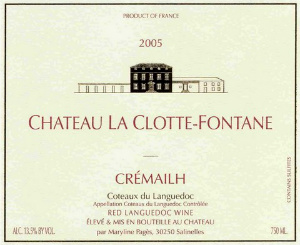 The domaine is situated near Salinelles, between Nimes and Montpellier and spreads over 130 ha and has two types of soils. One, on the sunny eastern side, contains large pebbles. The second is rather flat and is made up of clay and limestone.
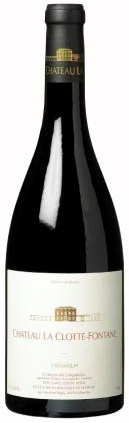 Color: Intense deep red, almost black. Lets only sunlight through.
 Grimbergen Goud 8º, together with Grimbergen Optimo Bruno are the specialities in the range of Grimbergen Beers. The other beers in the Grimbergen range are the usual suspects in Abbey Beers: Blond, Dubbel & Tripel. Recently I already reviewed Grimbergen
 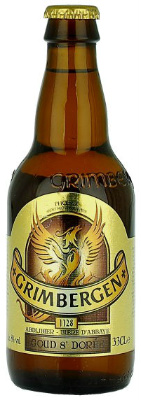 Color: Orange Gold with light yellow to white foam.
 Special Roman is made by Brouwerij Roman from Mater, Belgium. Mater is in the Oudenaarde municipality, a region where Flemish Brown Beer is made.
  Taste: Candied Sugar and unexpectedly only lightly acidic. Maybe some acidity fell victim to the additional ageing? Likeable. Malty (roasted) and hints of burnt sugar. Definitively some hops are in the mix. Not a lot of yeast is noticeable. It seems light and the finish is short. Nice stuff nevertheless. Elegant and perfumy and half-sweet. The sweetness isn’t dominant at all.
 There are a few “rock-stars” amongst the Belgian brewers and one of them surely is Pierre Celis, who unfortunately is no longer with us (1925-2011). Pierre Celis was born and lived in Hoegaarden, famous for its white beer. As Pierre saw the his beloved white beer disappear in 1955, he decided in 1966, to remake the white beer under his own name. His uninsured brewery burned down in 1980, after which he reopened his brewery in Austin, Texas, USA.
 After he sold his brewery to the Michigan Brewing Company, Pierre returned to Belgium to add a new notch on his stick. He developed a dark Belgian Beer to age in caves. Grottenbier roughly translates into Cave-Beer. Pierre favored caves for their constant temperature in which the beer could mature. At first the caves of Folx-les-Caves were used, but soon the Enterprise was transferred to the marl-caves of Kanne.
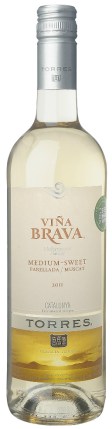 Torres has a nice
  This time a top-fermented Abbey beer made by Brasserie St-Feuillien (recently also called Brasserie Feuillien and/or Brasserie Roeulx). It’s history can be traced back to 1873 to the Friart Family, but the name, and the history behind it is much older. In the seventh century AD an Irish monk named Foillan (Faelan) passed through Le Roeulx to preach the gospel, but before he could do that he abused and finally beheaded by highwaymen. Right there where this happened, a chapel was built in his name (twelfth century AD). The chapel was eventually extended into an abbey, and as good Belgian monks do, they brew a great Beer on site…
 Color: Brown Gold with very fine caramel colored fine cream.
 Color: Beautiful red salmon.
 Color: Ultra light white wine.
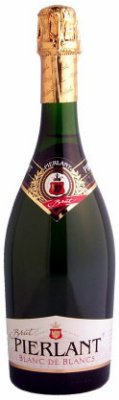 This wine is 100% Blanc de Blancs and produced with the following white grapes: Chardonnay, Colombard, Ugni Blanc (Trebbiano) & Gros Manseng harvested from: Bordeaux, Charentes and the Loire Valley. The wine has an ABV of 11%.
 Master Quill