Inverleven (Dumbarton) 15yo 1987/2003 (58.1%, Cadenhead, Bourbon Hogshead, 294 bottles)

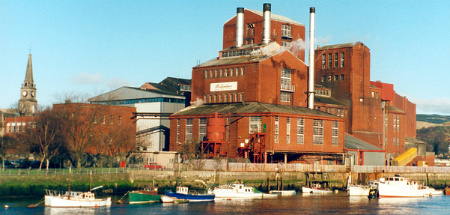
I ended the last post about Gordon & MacPhail’s Inverleven with the hope that they wouldn’t reduce the next issue (so much). Frolicking around in my stash of samples I unearthed this unreduced Inverleven bottled by Cadenhead’s. It’s from another year, so this may have a different profile, but still worth checking out. Dumbarton was foremost a Grain Distillery. The distillery was built in 1938. In 2002 the distillery was closed and demolition commenced in 2005. I’ve added a picture here, because I have always liked the big red brick industrial complex on the river. By the way, after stopping the production of the Inverleven malt, the Stills went on to Islay to produce Port Charlotte at Bruichladdich.
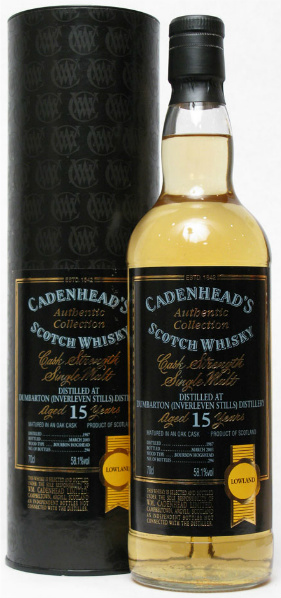
Color: White wine.

Nose: Grassy and murky, like sitting next to a ditch in summer, not bad, but certainly not lovely as well. A lot of citrus fruits. Lemon, lime, tangerines, but over this a lot of dried grass and hot butter. A slightly meaty or gravy like component emerges from all this. Quite fresh and slightly estery. Hints of mint when nosed vigorously.

Taste: Sweet and fresh. Lively, leafy, slightly woody and again lemons. Some underlying caramel and this type of whisky at this strength makes this hot, but that’s not a bad thing. Caramels, vanilla and toffee, are the main markers here. Not very complex. After some breathing, the bite of the wood enters, but luckily not a lot of bitterness.

Compared to the 1991/2012 G&M, this has even less than half of the wood the G&M. So this is more grassy, lemony and much sweeter to boot. This one lacks complexity, and even though the G&M was on the brink of becoming a log of wood, that one was more complex and therefore more interesting. This Cadenheads is easier to drink (as long as you like cask strength whiskies), sweeter and fresher. Still I like this type of Lowlander profile. Sadly gone.

Points: 84
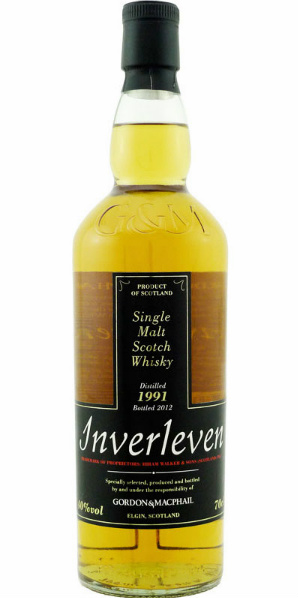
Inverleven 1991/2012 (40%, Gordon & MacPhail, AB/JDAD)

This is the latest Inverleven bottling of the now defunct Inverleven Distillery by Gordon & MacPhail. Gordon & MacPhail still have casks of Inverleven lying around, but have told me since Inverleven is a closed distillery, and the whisky more and more rare, this is the last time Inverleven was bottled in this series. Next time it will be issued in a ‘higher’ series (and hopefully at a higher strength). Inverleven is a whisky made in two Copper Pot Stills on the premises of the Dumbarton Grain Distillery. Whisky was made in these stills between 1938 and 1991, when the Stills were removed. Grain Whisky is still made here in a Column Still. For a while even a Coffee Still was in operation making the very rare “Lomond” Whisky (from 1959 to 1991). By the way, this is not Loch Lomond Whisky, that actually is only a few kilometres away, far enough to be a Highland Whisky. Dumbarton is the home of Ballantine’s blended Whisky.

Inverleven 1991/2012 (40%, Gordon & MacPhail, AB/JDAD)Color: Gold.

Nose: Very fresh, citrussy and creamy. Dry leaves in the autumn. So, lots of lemon and vanilla ice-cream. Very nice, slightly sour and spicy wood. Wood in wet earth. Never overpowering. Elegantly spiced, but all the spice is from the wood. Fresh air. This seems to me, based on the nose alone to be a great summer or autumn Whisky. For a Lowlander ánd a Whisky at this strength, this has a very rich nose and very good balance. I can only hope the whisky tastes as great as this nose does.

Taste: Well the first sip I took was quickly gone. So quick that the only taste that came to mind was sweet pineapple and after that I already tasted the spicy bite of the wood, which again is not overpowering, but firmly present. From the second sip I have some vanilla, caramel and even later on a dried grass element. It’s not quite hay.  The initial sweetness, dries out quickly. Malty.

Quite a lot of wood in this one. And the first time around I found the finish to be short. Second time around, when the Whisky had some time to breathe the finish became a wee bit longer. Still, the nose is very nice and the wood shows itself in the nicest of ways. After breathing the woody part got bigger as well, but the finish got a little bit unbalanced. Maybe this got reduced too much? Let’s hope that the next 1991 Inverleven get’s a better chance at 46% (and maybe more…).

Points: 85

Thanks to Stan and Alistair for the sample.

Lochside 18yo 1991/2010 (59.7%, Gordon & MacPhail, Reserve, Refill Bourbon Barrel #15217, 149 bottles)

Here we have one of the many 1991 Lochsides, and one of the many that were issued as a Gordon & MacPhail Reserve. This one was picked by Dutch retailer Van Wees. Gordon & MacPhail code for this one is AJ/JBEC. The spirit was distilled on September 18th, 1991 and eventually bottled on March 8th, 2010. Alas we don’t know exactly the date when Han van Wees tasted it and picked this ;-). Kudos to Gordon & MacPhail for all the information on the bottle and back label.
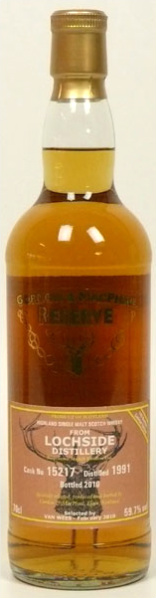
Color: Gold

Nose: Clean and farmy or organic. The wood is upfront too. Slightly yeasty and estery, which makes it a bit fruity. But the fruit isn’t here in abundance. Actually it is pretty dusty and comes across as dry. Do I detect some fatty peat in here? Small hints of rubber and smoke. This definitively is one to work with, and then the best things are in the details. There are some hidden treasures in this. Some vanilla, cream and petrol. Complex and nicely balanced. The longer I nose this the better it gets. Definitively peat and clay in here. Salty too. I’ve got to stop nosing this, otherwise this will never end…

Taste: Sweet and woody. On the precipice of bitterness. Still the bitterness is controlled by the sweetness. Nice big body, and the ABV helps with this. Creamy vanilla again, but with a bite from the wood. In the depth there is some sugared dried yellow fruits, Apricots are the most recognizable. The sweetness is also aided by some late acidity, that transports the hint of yellow fruit. It seems to me as if someone squeezed some lemon into this. peppery, woody attack. The finish is slightly off-balance, but overall this is a very good malt.

It seems to me you can’t go wrong with these kinds of Lochsides. There are a lot of 1991 bottles around, but they are all different. sure the family resemblance is there, but I’ve tasted more of the 1991 G&M Reserve, and they all are variations of a theme. Even the reduced Connoisseurs Choice are very drinkable summer whiskies. If that is the case I would say that these 1991 Reserve’s are more of your winter dram. Recommended.

Points: 86

Thanks go out to Erik for providing yet another sample.

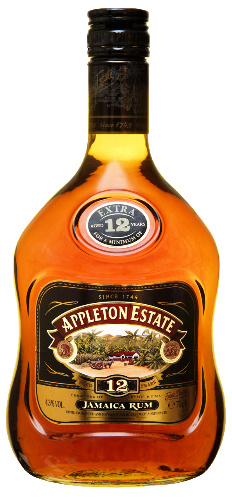
Rum Week – Day 7: Appleton Estate 12yo Extra (40%, Jamaica)

Appleton Estate, of course, is a sugar estate that started to distill their waste, to earn some extra money. It is located on the Island of  Jamaica and makes Rum since 1749. The estate exists since 1655. It is the oldest sugar estate and distillery on the island. Appleton is owned by J. Wray and Nephew Ltd. another name we know from the rum business. The Appleton Estate covers more than 4,500 ha of land. Nice to know is that they still, in part, cut cane by machete! The Appleton Estate makes traditional pot still Rums that are aged in American Bourbon Barrels. Just like their counterparts of El Dorado.

Color: Orange brown.

Nose: yeah! That’s more like it! Sweet, Cane Sugar and molasses. Very fruity. Lots of banana. And some clean wood with tar in the far distance. Thick. Clay and full of esters. I like this very much.

Taste: Syrupy, half-sweet, and has a bit of a bite from the wood. It tastes just a tad too much toward the new-wood spectrum to call it great, but it does seem to be a great rum. Altogether I expected this to be a bit heavier and more complex, than it actually is.

So there you have it. Seven Rums in seven days. Three were pretty good and very close in points. If I would pick a winner I would choose the Barbancourt. It’s the most perfect of the bunch. The El Dorado is as good and who knows maybe even better in complexity, but I have a dislike for the sweetness that is on the edge. Almost too sweet or maybe it is already too sweet. This Appleton is almost as good as the ones I just mentioned, yet the taste is a bit too simple for the nose and maybe a tad too woody. Still I consider this a very good rum. Of the rest the Malecon is too weak to stand out, but the quality is there. The Angostura 1919 is pretty good too. The Diplomatico and the Flor de Caña were, for me at least, disappointing. Not bad, but disappointing. I expected more of both. These were all readily available rums that, compared to Single Malt Whiskies these days, cost next to nothing. To explore this further it will be interesting to look into some single cask Rums. I enjoyed this week thoroughly, but I do feel there is a lot of Sugar in these Rums, I’m not quite accustomed to. LOL.

Points: 83

Rum Week – Day 6: Flor de Caña 12yo Centenario (40%, Nicaragua)

Flor de Caña is made by Compañía Licorera de Nicaragua that is based in Managua. Their first distillery was built in 1890 in Chichigalpa that lies some 120km from Managua. Flor de Cana was only introduced in 1937. The Chichigalpa distillery was modernized three times in 1963, 1965 and 1996, and in 1973 a second distillery was built in Honduras. I’m not sure if distillate from this Honduran distillery finds its way into Flor de Caña.

Color: Orange copper.

Nose: Vegetal, leafy and spicy. Lemons combined with fresh air. Unripe strawberries. Dry and cardboardy. Old books, musty. Hot water with hints of wood. Average balance.

Taste: First cardboard, and decent sweetness, Dissolved sugar cubes in lukewarm water and brown sugar. Quite a lot of wood. Half-firm body. The taste is even less balanced than the nose was. The finish is rather light after the woody body.

This one is not for me, not my style of rum. It doesn’t bring a lot into the fold. Lots of wood and cardboard and a short finish. Do I want to say some more about this? Nope.

Well yes, actually. I come from Single Malt Scotches, so I will most definitively look at these rums with a specific baggage of knowledge that is very different from a rum-buff’s. This Flor de Cana Centenario and The Diplomatico I reviewed first are both multiple award-winning rums. They just don’t seem to match up with my palate. So keep this in mind, when reading these reviews.

Points: 74

Rum Week – Day 5: Malecon 12yo Reserva Superior (40%, Panama)

Well this will almost be a short story, since there is not a lot of information around about Malecon. The label states that it is made the Cuban way.

One from the grape-vine is that it made by an Italian importer, who uses predominantly Panamanian Rums, but not exclusively. So I’m not sure what this is and where it’s from. Sorry…

Color: Orange copper.

Nose: Spirity and woody. Smells a bit like a Single Malt Whisky, with added sweetness. But the wood also gives this a sense of a dryness. Vanilla cola. After some air, more powdery and less balanced as at first nosing. The spicy wood plays a very important role in keeping this together.

Taste: Fruity sweet and very reserved. Nothing pops out. Only in the finish, the wood shows a little spice, and oak. That’s remarkable, since it played such a big role in the nose. Actually this has a slight bitterness towards the end, and the fruits are lovely. An elegant rum. Light.

Some time ago Erik and I did a rum tasting. When this was put in a row of eight whiskies we tasted, this was probably too light to be truly noticed. When I try it on its own it’s a very nice elegant and restrained rum. It is much better now, than I remember from the tasting. It’s light and easily overshadowed by other heavy hitting rums. When you would try this after a Demarara, this would get lost. But on its own it shows it’s lovely quality. So very light, that even the Barbancourt tried earlier blows this out of the water! Elegant, and definitely worth a try!

Points: 80

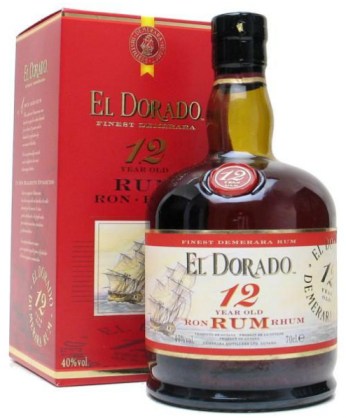
Rum Week – Day 4: El Dorado 12yo (40%, Guyana)

Next up a true Demarara Rum from Guyana. Guyana is a south-american country next to Surinam. Guyana had a lot of great Demerara distilleries. One by one they got closed, but most of the equipment was saved and moved to the next distillery that was kept open for a while, and when that one was closed this all happened again. Today, all the stills that survived are in one place. Diamond. So rums distilled in a few of these stills find their way into El Dorado Rum. In this 12yo, I’m happy to report, are Rums made in the original wooden Enmore Coffey still and predominantly, the original Diamond two column metal Coffey still. All the El Dorado Demerara Rum is aged in American Bourbon barrels.

Color: Copper.

Nose: Very perfumy and very mature. Hints of caramel and burned sugar. Leafy and tarry. Heavy organics and crude oil. Wow, such a lot of character and so thick. A stunner this! Licorice all sorts. Lots of it! It takes a while to let the wood take a little spot in the whole. Utter balance in the nose which keeps on developing. If the taste will be anything like the nose, we’ll have a winner!

Taste: Well this is pretty sweet, but not as sweet as I seem to remember. At first opening this was extremely sweet and I didn’t like it for it. It’s more or less the nose in a toned down version, with added sweetness. Cough Syrup and syrupy altogether, with a very nice acidity that comes through the sweetness. For me this is a bit too sweet.

Again we have a rum that has a fantastic nose, but doesn’t seem to put that quality into the taste as well. Still this is a very good rum, and compared to a lot of Single Malts, this is dirt cheap. Having said that is this a replacement for overpriced Single Malts? No, not really, this is a completely different kind of sport. It should be added to your palate not to replace something else.

Points: 85

Rum Week – Day 3: Barbancourt 8yo (40%, Haiti)

Barbancourt was founded in 1862 by Dupré Barbancourt on the Island of Haiti. Haiti was struck by a massive earthquake that all but demolished the Island in 2010. If you want to help by donating funds please have a look here.

Dupré started to make Rums as one would make a Cognac. Barbancourt is made from cane juice that is distilled twice. First distillation happens in a column still and the second distillation is done in a Pot Still. Ageing happens in cask made of French Limousin oak.

Color: Full Gold

Nose: Yeah, that’s more like it. This has body and a very interesting nose to boot. It already shows incredible depth. Not the usual sweetness, but a more ‘dry’ nose. It’s leafy and acidic, also toast that goes beyond toasted wood. It also has a petrochemical edge to it. And that’s great! But wait, there is some fruit in this too. Apricots. And what’s that, woody gravy? I’ll stop now, because this doesn’t seem to end here. This is a very nice and complex nose.

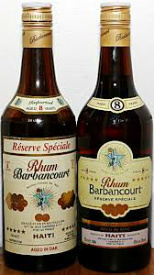
Old and new packaging

Taste: Wow, isn’t this a nice restrained sweetness. It’s sweet, but not in a way if you have a spoon full of syrup in your mouth, Here too shines the wood, but not in a toasted manner. Not very cloying and the whole is nicely balanced. Again an Industrial note of steam, coal and maybe a little tar or licorice.

Very nice rum, with an Industrial edge to it. In my mind it takes me back a 100 years plus. Also for the Single Malt Whisky drinker this is a fine rum. Very much recommended!

On the right you can see the old (left) and the new (right) looks for this rum.

Points: 84

Rum Week – Day 2: Angostura 1919 (40%, Trinidad & Tobago)

On the site is this snippet of a great story: “After a fire in 1932, which destroyed the Government Rum Bond, the master blender of Fernandes Distillers, J.B. Fernandes, bought the charred casks, only to discover they had been filled in the year 1919.” but also this: “Our rums are 100% Trinidadian, made in one distillery on one Island. Much like a single malt only better” – John Georges, Angostura Master Distiller.

WOW that’s quite a statement! I know a lot of maltheads or connoisseurs of single malt whisky are looking around for something beyond malts, since the original product is getting, more and more outrageous in price. yet, most will tell you that it is to broaden their horizons. Well I’m broadening my horizon here and am very curious how (this) rum will do.

Color: Gold

Nose: Sweet, but not overly sweet. A lot of creamy components. Enormous amounts of vanilla, toffee and custard. Also a little hint of smoke and there is a little bit of wood. Also a little bit of varnish or thinner, and a lot of toffee, caramels and such. Clay. (The blocks they make for children), but otherwise quite simple.

Taste: Sweet and thick. Caramel and woody toffee. The varnish or thinner component is here at the front of the taste, but dissipates with some air. After the initial sweetness, comes a more dry spell. Definitely more woody, like chewing on grand dad’s cedar cigar box. With that it also becomes more thinner and reduced. The finish is the part I liked the least. It has a little burned component to it, that would be great if there was any more, but the rest of the finish is rather thin, and more or less quickly gone.

In essence this is an eight year old blended rum from Trinidad (West Indies). Comparing it to the Diplomatico offering, there is no doubt about it this is the more interesting rum from a single malt point of view, but in all honesty I like the more aromatic and more complex Diplomatico better. Somehow, this 1919 is not my Rum, not for sipping anyway. I’ve drank a whole bottle of this and I think I’m allowed to say so.

Points: 75

Rum Week – Day 1: Diplomático 12yo Reserva Exclusiva (40%, Venezuela)

Let’s finish off this first month of the year with another Master Quill week. I like doing these weeks and the theme can be almost anything. This third week will be all about rum. Isn’t that a surprise, since I never reviewed rum on these pages before. So time to pull up the drawbridge, leave the moat alone and lock myself between the thick walls of Master Quill’s castle.

Diplomático is a Venezuelan rum. Just click on the link and you’ll see how many awards this baby got in its life. It should be pretty good then…

Color: Copper Gold

Nose: Half sweet and very aromatic rum. Vibrant and lively. Hints of sharp dry wood. Not thick nor cloying. Grassy with oranges, and raspberry syrup. Fruit liqueur. There are some more wood influences and do I detect the smallest hint of smoke? Probably the cask toast. Also some pastry in it, cookie dough, cake with raisins. Toasted bread. Cocos and sappy oak again. Lots going on in here. The nose is lovely although I do feel it is covered under a sugar blanket. An effect similar to adding caramel coloring to Single Malt Whisky. Homogenizing the smell.

Taste: Sweet. Very sweet. Heaps of chewy toffee with quickly a hint of wood. Strange enough a very thin texture, nothing syrupy as you might have expected. Very much about toffee, caramel and fudge. Actually pretty clean this one, but it has a bit of a disturbed balance by something sour that doesn’t fit this type of sweetness. I feel the sweetness and the acidity are in a constant fight with each other, but obviously the sweetness wins since this is über-sweet. Cold chocolate sauce on vanilla ice cream. This is actually so sweet that it hides a lot of the aroma’s that must be there. The finish is also dominated by sugar, and burned sugar, (and a fruity note), making the finish fall flat on its face.

I poured this once over vanilla ice with warm chocolate sauce and it worked wonders. This rum is a dessert in its own right. It has a fabulous nose a somewhat less complex taste. I think there is a lot of potential to this, and I feel a well aged rum at a higher ABV with more wood ageing and less sweet and ‘thin’, should be pretty spectacular.

From a single malt point of view, I wouldn’t recommend this, and that is pretty strange. Venezuela is a good market for single malt scotches, so one would expect… Well it has its uses, but I don’t feel it’s a sipping rum. For me this is more a rum you should ‘do’ something with. Mix it, Cocktail it, or put it on your dessert. It’s good never the less, the super-sweet style is just not so much for me.

Points: 75