Christmas time is here again, and I needed a decent bottle of wine for Christmas dinner as a companion to sauerkraut and fish. I do like Alsace, so this time I pulled out a Grand Cru Riesling from Praelatenberg. Praelatenberg is one of 51 Alsatian Grand Crus, that got this status in the big expansion of 17 December 1992. It is located between Kintzheim and Orschwiller, and is the most southerly of the Grand Cru sites of the Bas-Rhin.
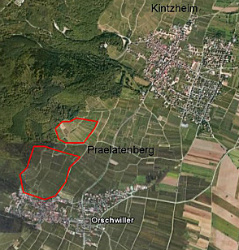 Above Praeatenberg towers the Koenigsbourg castle, built in the 12th century. The altitude of Praelatenberg slopes ranges from 250 to 350 metres and has an east-south-east orientation with a size of 18.7 Ha. The granite bedrock that underlies all Alsace vineyards is very close to the surface. The soil is heavy, covered with loose schist, and is rich with silicium. Dotted with stones rich with iron, quartz and other minerals. This helps the warming of the ground and lets water through easily.
Heim is now owned by Bestheim, a cooperation that was founded in 2000 by the merger of two smaller cooperations from the villages of Bennwihr & Westhalten, together with the house of Heim.
 Color: Straw Yellow.
Nose: Very clean and citrussy. Lemon. Through the freshness and the acidity there is another layer, that at first seems sweet, but also has a creamy peachy element to it. A sort of light non-fat whipped cream of lemon and peach. Very nice. Sweet as in coffee-caramel sweets we know over here as Haagsche Hopjes. Also a slightly meaty sensation.
Taste: It starts with a nice fresh and not overly acidic lemon and chalk. Do you know those little vitamin C pills by Roter? Well, that too. Again a tiny hint of peach. Really subdued and elegant. The finish comes quick and is soon gone, what really is a shame. Always there, is that little bit of acidity that makes your mouth water, and lest not forget that added creaminess. Not very complex.
The taste maybe a bit too simple, in the nose maybe a little bit too. Still it’s a nice wine. It does have a nice balance, but overall it could have done with some added depth and complexity. Easy to drink, and should hold well when aged. ABV is 12%.
Points: 82
Picture is for the Riesling Reserve. Our Grand Cru looks similar (brown glass).
 Quite hard to figure out how to call this malt. On the label is stated: Säntis Malt, Swiss Highlander, Appenzeller Single Malt, Matured in Old Oak Beer Casks. On their
  Belgium’s own, Bert B. came into the Cadenhead’s shop in Amsterdam (The Netherlands), with a tale of buying the ‘Winkeldochters’ in an old liquor store in a long forgotten town, near the coast. Howling wind and rolling bushes through the streets. Winkeldochters translates into shop’s daughters. It’s a great Flemish word for those items that are around for a long time in a shop which in fact never get sold.
 Well one of these bottles he bought was this Dufftown from Cadenheads. He opened it in the shop and we tried this. He didn’t like it then and exchanged it with Andries (The Cadenhead’s Shop owner) for a wedge of cheese, a cup of coffee and a wooden clothes pin. Andries was kind enough to pour me a nice sample of this (100ml) to take home with me. Cleaning out the closet, I stumbled across this sample, so here it is…
 Color: On the edge between copper gold and copper brown.
 Points: 92
 So there are quite a lot of official Wine finishes by Glen Moray themselves. Now Ian MacLeod decided to add their wine finish of their own, or maybe bought it straight from the distillery.
 Langhe is a hilly area to the south-east of the Tanaro river in the Cuneo province in Piedmont, northern Italy. The black grapes used for this wine is the Dolcetto grape that is widely used in this region, where wineries favour Nebbiolo or Barbera. These wines need a long time ripening. Dolcetto on the other hand is one that doesn’t require a long time ageing, two years will suffice.
 Color: Dark ruby-red.
 I caught a cold last week, which is very unfortunate when you try to write tasting notes. Fortunately my nose is back in business now, and in the process ‘got a rest’. Let’s start whisky reviewing again, with an example of a whisky that should be light and is ‘low’ in ABV.
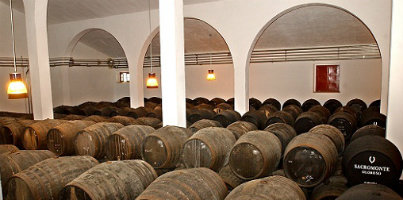
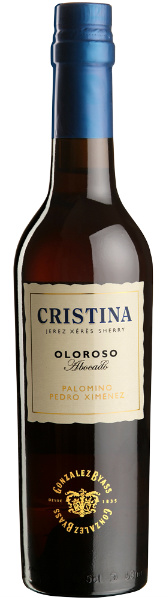 Essentially, there are three types of Sherry:
 Valdivia was founded by a supplier of building materials in 2003. He bought an old property in Jerez and completely renovated it. Next was locating some old stock to be able to release a series of old Sherries. This Series is called Sacromonte and are made up of 15 year old Sherries. Here we will try a PX from the ‘standard’ series. The modern look is aimed at the new trend-conscious generation. In its young history, Bodegas Valdivia already has its third owner.
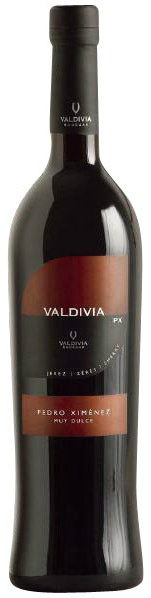 Color: Mahogany. Dark brown with a fabulous red hue.
 For me the nose is fabulous, and the taste a bit thin and short. Lacks a bit of complexity. When I finish this bottle, I will try the 15yo Valdivia.
 Early November I started a series to support the drinking of sherry to get more good sherry casks for the whisky industry. For reasons not even science can wholly explain, I picked PX Sherries as a starting point. As mentioned before, PX or Pedro Ximénez is the most syrupy and sweet Sherry around, and is considered an after dinner Sherry or one to accompany a nice (sweet) dessert. Goes well with ice-cream.
 Yes the apricots are there and some vibrant freshly made raisins and maybe some dates. Very lively and never dull, heavy or dusty.Very well balanced. Actually, this is blended so well to a nice harmony, that it’s almost hard and not even fair to look for separate markers or hints of it. The sum is so great.
 Lou Reed’s Transformer on the record player and the new Tomatin 30yo OB in my glass, what can go wrong? As I already mentioned
 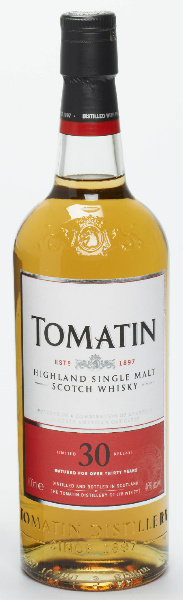 The new 30yo was introduced in 2011, replacing the 25yo that still can be found. It’s reduced to 46% ABV, to fit neatly in the ‘standard’ range which now comprises of the 12yo, the 15yo, the 18yo and now the 30yo. The 21yo I reviewed earlier is a limited release and higher in ABV (52%), so it’s not part of the standard range. Still it looks like a huge gap to me between the 18yo and the 30yo. And a new 21yo or 25yo would be nice. For now, mind the gap…
 Can’t imagine this was colored. It’s so light in color. That would be great, since we don’t like people messing with our drams, don’t we? Both the nose and the palate are neatly balanced. I really love these kinds of whiskies. One I thoroughly enjoyed. Imagine a great 30yo whisky and what they ask you to dish out these days. Considering this, this one is a steal (in some markets) and deserves a following. It’s 46% ABV and very nice, this makes it almost too easily drinkable and there is a possibility that this bottle will be empty in no time, so beware. The 2011 batch was also very good, still this one from 2012 scores one point higher, since it’s even more fruity.
 Master Quill