Tomatin 12yo 2002/2014 “Manzanilla Sherry” (46%, OB, Cuatro Series #2, 3 years Manzanilla Sherry Finish, 1.500 bottles)

On with #2. The second installment is the Manzanilla Finished one. Quite the logical #2, since Manzanilla is also a type of Fino Sherry. Manzanilla is made in the town of Sanlúcar de Barrameda in Andalusia. Just like Fino, it is a very dry and pale kind of Sherry. The region is less hot and more humid, so the flor here is even thicker, giving an even better protection against oxygen. Manzanilla’s are therefore even fresher than their Fino-brothers. Manzanilla’s also have a somewhat salty feel to them. The Sherry ages near the sea, but should that allow for a more salty liquid? In Spain, Manzanilla means camomile tea. The Sherry is named as such, since the aroma’s are thought of resembling camomile. So salt and camomile are the things to look for in a Manzanilla Sherry, but are they also the things to look for in this Whisky?

Tomatin Cuatro II - ManzanillaColor: Gold.

Nose: Starts immediately less funky than the Fino. It also doesn’t need a lot of time to breathe, to settle, its ready for consumption right of the bat. Subtler and more restrained. Hints of burning wood and toasted cask. Dry grass, vegetal and dry warm barley. Easier than the Fino and seems less complex as well. Sweetish and again full on aromatics. Just not as thick and cloying. Smells nice. Fruity, and quite similar to the Fino expression. Tropical, ripe, sweet and aromatic fruit, which is typical for the Tomatin spirit. Dried apricots, but also a hint of bicycle tire. If you ask me, no traces of camomile in the nose. Salty? Nope again.

Taste: Sweet and boasts a fruity start. Chewy toffee. Fruity, yes, but this time slightly fresher and more acidic. Fresh green apple skin and white pepper. Not (as) hoppy as the Fino, but there are some fruity Beer aroma’s to be found towards the end of the body. The wood moves into the realm of pencil shavings. I don’t get the camomile one might expect, nor do I find it salty, although I do have slightly salty lips. Quite a simple expression. Likable, but simple. Maybe next time they should finish this for a while longer, although this finish carries just enough bitterness for me.

Slightly more approachable than the Fino, but with that also slightly less “special”. Sure, you have to work the Fino a bit, and its start can be a bit of a scare, but when it opens up, lots is happening, especially on the nose. Yes the Fino has definitely the better and more complex nose of the two. In the taste both are closer to each other. The Manzanilla expression actually doesn’t show as much development in the glass as the Fino. It is immediately clear what you have in your glass. This one is more of a daily drinker. No faults, but also no ooohs and ahhhs as well. Good, but not as special as the Fino. However, I do feel that these casks that once held Sherries that aged under flor, show a lot of potential for ageing and finishing Whiskies, and especially the tropical fruit spirit of Tomatin.

Points: 84

Tomatin 12yo 2002/2014 “Fino Sherry” (46%, OB, Cuatro Series #1, 3 years Fino Sherry Finish, 1.500 bottles)

It’s Monday, vacation is over, September is already visible at the horizon, so back to “work”. Time to pick up again with a nice box of four Tomatin’s, the highland distillery known for it’s Whisky with tropical aroma’s…

In 2014 Tomatin released a box with four full-sized bottles called the “Cuatro Series”. All four Whiskies were distilled on Tuesday the 15th of January 2002. All four were matured for 9 years in American oak, however, all received a final maturation of three years in four casks that previously held different kinds of Sherry. An excellent way to show the adventurous public the differences between finishing with four different Sherries. A novel idea and the pricing was reasonable as well. Just releasing it as four full-sized bottles in one box made for slow sales. Who wants to buy four more or less similar bottles of Tomatin where the difference lies in the details? Learing from the experience, Tomatin released several similar ideas since, but always in half sized bottles. Nevertheless, the “Cuatro Series” did sell out eventually, although the odd single bottle seem to be still available.

The four Sherries used in this series are, Fino, Manzanilla, Oloroso and Pedro Ximénez. The first expression, as numbered by the distillery, is the Fino expression. Fino Sherries are very dry and very pale. What makes Fino stand out, is the fact that maturation in the cask happens under flor. Flor is a layer of the Saccharomyces yeast strain, that lies on top of the liquid. The layer of yeast prevents the ageing fortified wine from oxidizing too much, making for a fresher Sherry. In the Wine-world Sherries like this are considered the cream of the crop, as opposed to Scotland’s favorite, Oloroso.

Tomatin Cuatro I - FinoColor: Gold.

Nose: Very musty on entry, which is not very pleasant. Luckily the mustiness dissipates rather quickly. So you really need a glass for this one. Underneath a nice note of olives, burning coal, some charcoal and lots of fruit. Yellow fruit, overripe or sometimes even candied. Some pineapple, mango and maybe even some nectarines. This nose is exploding with aroma. Dusty and creamy vanilla and nice soft oak, so the original cask did it’s work well. The Fino cask also seems to be of high quality, since it did impair some wonderful aroma’s to the Whisky. This one is wonderfully balanced and eventually smells rather nice. The fresh oak bit turns floral. More vanilla but this time with a touch of jasmine and, dare I say it, a hint of paracetamol. Wonderful nose for a 12yo. It has the tropical fruit traits Tomatin is known for. Reminds me a bit of a Fino Glenfarclas I once had.

Taste: Sweet and spicy. Beer-like hops, and again lots of fruits carried by the beer-like bitterness. Is it the yeast from the flor that does this? Again, like the nose, wonderfully balanced, but not as complex as the nose. Here the Fino impairs a nice nutty flavour as well as some italian laurel licorice (sweet). Creamy with a note of buttery vanilla. Strange enough there is an acidic top-note now. Finish has some length, with again some bitterness that carries it. And beyond that a nice lingering and fruity/nutty aftertaste. This may not turn out as the easiest of the four, but if you have mastered tasting Fino (finished) Whiskies, this is certainly no dud.

For those of you who also read my Rum-reviews, you’ll know, that I found Rhum Agricole to be wonderful stuff as long as you give yourself the time to grow into. More or less the same goes for finishing in Fino Sherry. There are examples of Whiskies with a Fino finish that work exceptionally well, but I also found Fino finishes, something I had to get used to.

Points: 85

Lagavulin 12yo 1995/2008 (48%, OB, European Oak, for the Friends of the Classic Malts)

So with the longest day of the year at hand, some would say that this isn’t the time for Peat. Peat needs rugged shores, strong gale force winds and driving rain to be thoroughly enjoyed, doesn’t it? Why not take a light, grassy and lemony Lowlander instead, or even some tropical stuff? Well what can I say, I just felt like it, that’s all.

A week ago I hosted a Whisky-tasting centered around the indie bottler, Signatory Vintage. I opened some bottlings of them, which will feature on these pages soon. Of course a good tasting needs an even better after-tasting, like a good party needs an even better after-party. The after-tasting, yes you’ve guessed it: Lagavulin. The distillery that’s celebrating its 200th anniversary this year, with the release of a 8yo, which will also feature on these pages shortly.

But first this oldie (but goldie). Relatively speaking of course. This Lagavulin was released in 2008 and it took well into 2015 to sell out. It was available in shops for a whopping 7 years! Now that its gone, prices are soaring. It was available for such a long time, because there may have been a lot of bottlings around, but it also gained a bit of a reputation. A lot of people, including fans of Lagavulin weren’t very fond of this particular bottling. I consider myself a fan of Lagavulin, so I just has to open it, and try for myself! But first a thought…

Bottlings like this, baffle me to the max. All this time we hear the industry explaining to us, that colouring is done to ensure consistency in colour from batch to batch. Also, the public, when buying Whisky, or any other brown spirit, may be put off when the aforementioned spirit is too light in colour. So why then is this one-off Lagavulin, bottled in a brown glass bottle, coloured with E150, when we, the public can’t even see the colour of the spirit untill after the purchase? Boggles the mind, and mind you, don’t go around thinking that caramel colouring doesn’t affect the taste, because it does, just read Michel’s article back from the day I used to be in the “Coloured Gang”. Sure, it may be a bit lengthy, but it definitely worth it.

Lagavulin 12yo 1995/2008 FFOTCMColour: Orange brown, just like a Bourbon.
Nose: Excellent smoky nose. It starts with more smoke than peat. Sure peat is next. Earthy, sweet and fatty clay. Ashes. Nice wood, accompanied by red fruity notes and some Italian laurel licorice as well. The fruity bit smells more yellow than red. Funky chewy sweetness. Cream Sherry. Mocha cream, cookie dough and light chocolate powder. Leather. Milk chocolate shavings on vanilla ice-cream held up by the wood. Again a lovely smelling Lagavulin, which always works well when it’s matured in Sherry casks. Hints of tar and also some spices. The creamy Sherry notes overpower the spices a bit, so its hard to tell them apart. If you have read the article I mentioned above, you might remember my comments about mellowing out the aroma’s by E150. I feel that is the case here also. This Lagavulin has a nice, very nice actually, but rounded out smell.

Taste: Quite sweet and creamy on entry, quickly followed by peat and toasted cask. Small vegetal bitter note. Very nice. Lots of sweet licorice, almonds and black and white powder. Pepper & salt and definitely some smoke and nuts. Smoked nuts? Smoked sweet almonds (not the salty ones). Red cocktail cherry and a whiff of artificiality in the fruit department. The sweetness is of the typical sugar-water kind. Its fantastic on entry, but the body is losing it at bit already. Falling apart and being quite simple. In no way, has the finish the length of other Lagavulins, but the one big taste lingers on for a while in the aftertaste. However, it’s more the sweet and fruity bit, with only a hint of smoke, than the peat.

This Lagavulin has matured in first fill Sherry casks, not made with American oak. There was a time when (probably) all Sherry matured in European oak butts and puncheons, which are quite large casks. Today a lot of Sherry casks are made from American oak, impairing vanilla and giving off a more creamy feel. Also the casks made today (hogsheads) are smaller than the butts and puncheons, thus allowing for some quicker maturation.

Let me start by saying this is a good Lagavulin. It drinks easily and there is more than enough happening. I like it a lot. However, if I compare this to other Lagavulins, it isn’t the best one out there. I believe the colouring did its part in mellowing out the aroma’s and blending them together into one big (nice) taste. Nothing sticks out really. Apart from the E150, the casks themselves probably weren’t the best money could buy as well, as well as its previous contents. So for a Lagavulin its good, but nothing more than that, but it’s also a Whisky most others can only dream of producing. Lagavulin has stiff competition from… itself.

Points: 88


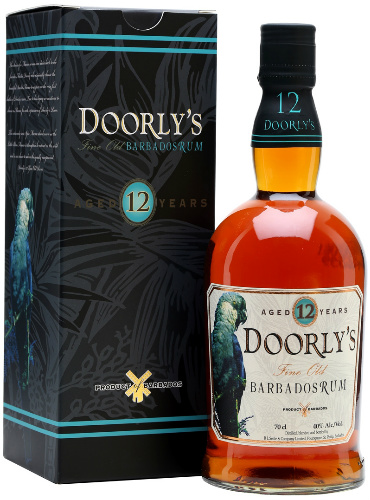
Doorly’s 12yo (40%, R.L. Seale, Foursquare, 2016, Barbados)

I am incredibly keen on reviewing this particular Rum. Why you might ask? It’s only a 12yo Rum from Barbados, nothing fancy, nothing super-ultra-premium and one that is very inexpensive to boot. How can that be? Wouldn’t you rather review an ancient Velier bottling then? Sure, but this one has a story to it. I write about Whiskies for quite some time now, and essentially kept my Rum-adventures to myself. I always liked Rum, but a few years back I really started to love the stuff, especially when I “got” Rhum Agricole and found out that the Rum spectrum is very wide and shows lots of variation.

A long time ago, when I got interested in Whisky I started to surf the interweb looking for information. Back then not a lot of it was around, and there were hardly any books as well. Whisky blogging was just about starting. More recently, when I started to look for information about Rum, I came across some very good Rum bloggers. There are more which I read on a near-daily basis, but for my story here, I have to mention two or three in particular. First I read this review by thefatrumpirate and this one on Inu A Kena.Although I have heard of Foursquare I wasn’t aware of the Port finish Rum. Both reviewers are very happy with the bottling, so my interest was “aroused”.

Next, I started looking for an official un-finished Foursquare bottling to compare it with, and came across this post and especially this post from Lance. “Weak, pussilanimous wuss of a rum. It’s so low key that its piano seems to lack keys altogether” So the Port finished product seems to be stellar and the un-finished XO seems a bit less than perfect. Nevertheless, my interest was now even aroused some more. Being warned, because a smart person learns from the experiences of others, I skipped the XO. Recently I found out there is this newly released 12yo as well. Back in business so to speak. I bought the Port finish as well as this new 12yo, so let’s see first if this 12yo is something Lance should buy.

Doorly's 12yoColor: Copper gold.

Nose: First of all, this smells great right from the start. Modern and tight. Woody, some clear glue and spicy. Typical Bajan Rum, with hints of orange and fresh fruits in the morning market. Definitely also the wooden crates fruit is shipped in. Fresh virgin wood, not necessarily oak at this point. An expected, deep caramel and medium sugar syrupy sweetness. Yes you can smell sweetness, or maybe I should say, smells associated with sweetness. The smell is fruity, but on top of the syrupy part is another fruity smell. It’s the red berry acidity I didn’t like that much in some Abuelo offerings, but that quickly dissipates. Warm sawdust, definitely oak now and a small hint of gunpowder and honey, which is great. The wood aroma is growing stronger with time, which does wonders for the nose. Hints of an unlit Havana Cigar, a combination of Bolívar (spice) and Hoyo de Monterrey (cream). It smells fresh and even slightly winey, which is no surprise since 10% of this Rum was matured in ex-Madeira casks, the other 90% in ex-Bourbon casks. I believe Foursquare uses a lot of casks from Jack Daniels, which would make it ex-Tennessee Whiskey casks rather than ex-Bourbon casks. Whichever cask were used, both are made with American oak, giving off a vanilla aroma.

Taste: On entry a bit thin, but the aroma’s take over quickly. Hints of glue (from the nose) and almonds. It starts out with the woody flavours from the nose. Good balance, it matches the nose perfectly. Tiny hint of soap now, but nothing to worry about. Toffee is next, although the wood is still the dominant factor. Not too sweet. The back-label states 12 years of maturation in American white oak. If not all, then at least part must have been virgin white oak. If not, it may have been ex-Bourbon casks, which must have been very active then. It has so much fresh oak flavour. Chewy toffee is next, even though the Rum is quite thin. The finish is medium at best (probably due to the reduction to 40%), but the aftertaste does have some staying power. Sure not the most complex Bajan Rum around, but I’m not disappointed. The 10% Madeira work wonders without taking center stage. I would say well blended, this one. It’s a friendly nice Rum I’ll probably finish more sooner than later. Good for every (sipping) occasion and that is what you want a nice little OB to do.

It has been ages since I opened a bottle with a screw cap. It only happens when I open an old bottle of Whisky from Gordon & MacPhail and such. It’s all cork now. Screw caps were once a sign of cheapness, for me it’s not. I like the screw cap. It’s retro. They work well, although screw caps on miniature bottles are a lot worse. Corks can dry out, crumble or have holes and other weak spots. So no beef with the screw cap, unless it rotates for ever. “Screw cap” is even nicer to pronounce than cork, and it looks better on T-shirts. Just say it several times at loud, just not if you’re reading this at work and want to keep the respect of your co-workers. “Je suis screw cap”

Lance, it is safe (from “Marathon Man”) and Richard, well done!

Points: 83

Millstone 12yo “Sherry Cask” (46%, OB)

Non Scottish Single Malts a.k.a. world Whiskies are taking over the…uhhh…world. Sure, Scottish Single Malts are still in high demand, especially in countries that are fairly new to them. They are embracing them with much love, as long as the local government permits them to. However, there isn’t enough well aged Whisky to go around the world. Thus, opportunity knocks for the rest of the world to step up their game. Add to that the growing interest of local products and you know where this is heading. Some countries already had a prosperous Single Malt culture, but were ahead of their time, and almost didn’t manage to stay afloat for the current boom. Just look at the history of Irish and New Zealand Whisky to name but a few.Luckily most of them have survived and see a bright future ahead. Then there is a second group. Whisky from countries that didn’t have a blooming local Whisky culture, like Sweden and The Netherlands, again to name but a few, because there are many, many others. I already reviewed a Rye Whiskey from Millstone (Zuidam) from the Netherlands and this time we’ll have a look at a proper Single Malt Whisky. I still have an old expression with the cream label. As far as I know there were two small batches of this, one made up from only two casks, and one made up with three. I only don’t know which of the two I have here…

Millstone Sherry Cask 12yoColor: Orange brown.

Nose: Sherried, definitely Oloroso, but quite dry and elegant as well. Spicy with nice wood, but also some honey sweetness. Wonderful fresh (and slightly soapy) fruity acidity. Good spirit in good casks. I also get some licorice, quite surprising for a Dutch malt. Creamy vanilla, maybe from American oak. Towards the end some nice red fruit notes appear as well as some lavas. Nice development.

Taste: Very creamy but less integrated than the nose suggested. Some light raisins and warming. Almonds and a bigger nutty aroma altogether. The Sherry cask bestows even a winey note to the Whisky. On entry, the cream has a sweet edge to it, although the wood and the Sherry quickly overpower it with a nice and spicy dryness, never to let the sweetness take over again. I’m guessing Oloroso again, but probably a high quality one. A two-faced Malt. Towards the finish a medium kind of bitterness emerges, but in a soft way. It like chewing on a pencil. The finish itself is of medium length. In the aftertaste a slight burnt note, with even a hint of tar.

A Whisky which is great already and still shows lots of potential and is definitely something The Netherlands should be proud of. Kudo’s for Patrick and the Van Zuidam family.

Points: 84

Cadenhead Demerara Rum 12yo (46%, Green Label, Laphroaig Cask Finish, Guyana)

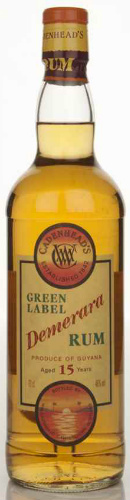
First of all I’d like to start telling you that this review won’t be about the Cadenhead 15yo Demerara Rum that’s in the picture. It’s actually about the Cadenhead 12yo Demerara Rum, and not just any 12yo, but one that was finished in an ex-Laphroaig cask. Laphroaig being one of the most famous of peated Islay Whiskies. Of course Ardbeg and Lagavulin are equally as famous, but that’s beside the point. I couldn’t find a suitable picture of the bottle (I don’t have it here), so I put in this one, since it looks pretty similar. The 12yo has an additional sticker over the neck and cork, starting this is from an ex-Laphroaig cask. The 12yo Rum is even lighter in color, than that of the 15yo in the picture. Cadenhead of course, is an Scottish independent bottler whose main business is bottling Single Malt Whiskies, who also bottle some pretty good Rums as well. I’m sure, more of those will feature on these pages in the future, especially the cask strength ones.

Cadenhead Green Label 15yo DemeraraColor: White wine. Very pale gold.

Nose: Sweet and funky. Thick and unmistakable Demerara. I know peated Whiskies very well, but I can’t detect any peat in this yet. Distant hint of yellow fruits, white peach. The fruit interacts very well with a mystical hot dry wind note. Sweet peach yoghurt (not the acidity, there is no acidity in the nose whatsoever) and sweet black tea. Creamy. Small hint of nice smelling paper, which adds to the wonderful balance this Rum emits from my glass. All aroma’s go together very well. At this point I have to stress that this Rum has had plenty of time to “settle” with air. Maybe one to decant as well. (I’ve written about the benefits of decanting Whiskies earlier). Still no peat, nor smoke, but I do get some toasted wood. A more than wonderful nose that seems to go on and on. Exceptional. Just give it time to breathe!

Taste: I get the tea note first. Starts sweet, but the sweetness is quickly gone, to be replaced by a prickly woody note, which strips most of the sweetness out of my mouth like it’s been done with sandpaper. This makes room for the strange combination of acidity from unripe berries, milk chocolate and earwax. Wow, this is getting strange fast. Is this the effect of the peat? It still doesn’t remind me of peat though. Lets take another sip. When the dryness takes over, the balance deteriorates a bit. Not everything seems to be in check, and the aroma’s feel a bit uncomfortable. Something new moved into the building and the older residents don’t know yet what to make of it. More toasted cask now, with even some bitterness from one, or both casks. The finish seems short at first but when it turn into the aftertaste a smoky prickly sensation starts to happen mixed with mustard and the typical aroma’s of Demerara that were pushed out of the body and finish of the Rum. The Laphroaig cask did have an effect on this Rum, just not as I expected.

Maybe you Rum buffs don’t know this, but Laphroaig is actually a very sweet Whisky underneath. It’s sweetness is just well hidden underneath heaps of peat and iodine. Well, Laphroaig used to taste like that. More modern Laphroaigs are more obviously sweet, and the peat became more accessible, and the iodine, well, you can get that at your local pharmacy. How strange it is then, that a sweet Whisky with a sweet and heavy Demerara Rum make for such a dry Rum?

I always passed on the Green Labels when buying Rum from Cadenhead in favour of the dumpy bottles with Cask Strength Rum’s in them. Somehow a dumpy bottle with 36yo Uitvlugt (PM Mark!) Demerara Rum from 1966 bottled at 69.3% ABV, had more appeal to me than a 12yo Laphroaig finished Demerara. It still does, but this Green Label is no punishment to drink either. Maybe a bit unusual but also a very interesting experiment. I like it, and its even better than I thought it would be. Beyond the obvious, I’m not sure what the Laphroaig cask did for this Rum, but I do feel that the Demerara Rum, before it was finished, was already good to start with. I’m pretty sure it is Enmore (VSG Mark).

Points: 86

Bushmills 12yo “Distillery Reserve” (40%, OB, Oloroso Sherry Casks, Circa 2006)

1608. The Old Bushmills distillery got its licence in 1608! It was King James I who then issued the licence to distill to Thomas Phillipps. As most of you very well know, this makes The Old Bushmills distillery the oldest licensed distillery…in the world (Jeremy Clarkson voice-over). Try to imagine how long the distillery may have even existed before that. Since then the distillery was in and out of production many times.

More recent history then: Diageo bought the distillery in 2005 for £200 million, only to trade it with José Cuervo (Tequila) for their 50% share in Mexico’s Don Julio Tequila brand, making Diageo the sole owner of Don Julio. Don Julio was founded in 1942 and is the eleventh largest Tequila brand in Mexico. For the time being I prefer 1608 over 1942…

Bushmills 12yo Distillery ReserveColor: Full gold, slightly “red”

Nose: Creamy with lots of vanilla ice-cream soaked into some shiny cardboard. You must know Vanilla ice-cream from a paper cup. Cheap milk chocolate or fake milk chocolate. Give it a minute and a more fruity note appears. Red forest fruit. Mint infused warm chocolate. Weak after eight. The mint fondant nose stays on. Hint of funky red Sherry. The whole is very restrained. It almost because the glass won’t let it go, or smelling the spirit through a neutral cloth. Molten ice-cream, weak milk chocolate and mint fondant, that this nose in a nutshell. Oh, and some cardboard…

Taste: Fruity and quite sweet. Fruity toffee, which should have been sticky, but tastes watery here. Again a Whisk(e)y that should have had a higher ABV. Remnants of fortified wine. Red berries and black currants I also get from Redbreast 15yo. Here also quite some vanilla. Tiny hint of burnt wood, but also the big paper note from the nose. Recognizable as an Irish Whiskey, but for me it’s also a bit flawed. It has a great side to it, but also a not-so-great side. Paper disturbs me, and takes away from the pleasure of drinking this. It wants to be a Redbreast 15yo or a Jameson’s 18yo, but falls rather short. Equally annoying is the finish, or lack thereof.

If you concentrate a bit, you can taste the sheer potential of this Whiskey. It could have been great since there are many likeable notes in here. Alas some off notes (paper) and the weakness of the whole ruin it for me. I hate to play the where-is-the-finish game. A damn shame, for I believe a potentially great Whiskey was ruined.

Points: 77

Angostura 12yo “1824” (40%, Circa 2014, Trinidad & Tobago)

Are you mad? Reviewing the same Rum again? Nothing better to do? Well, at first I didn’t want to write two reviews about one Rum. I actually wanted to write one review about two Rums, expecting both to be the same, with just an upgrade in the presentation. When I was on my way writing the previous review, I grabbed this more recent bottling of the “1824” and was quite surprised about the difference when smelling it. I poured it back, without even tasting it, and right on the spot decided to break up the review and write two of them. So here is number two. By now we already know there is a difference in smell, but does it also taste differently? Let’s find out…

Angostura 1824 (2014)Color: Copper brown, ever so slightly lighter than the 2008 version.

Nose: Dry and woody with only a distant funkiness. Well balanced yet very laid back in the nose. Nice red fruity acidity kicks in. Dry vanilla powder and sugared almonds. Sugary in its sweetness as opposed to honey, caramel and toffee. There is vanilla. Smelling very smooth, almost elegant and sometimes perfumy. Sweet black tea with a tropical twist. Dried pineapple? It smells nice, smells like a decent brown Rum, but lacking something. It doesn’t smell like something special, but it does smell rounded out and appetizing. Also performs a bit poor in development. Altogether very middle of the road. Yes, smelling like an Abuelo, but that comes from a different place entirely.

Taste: Starts with red fruity acidity, sugary sweetness with some toffee. Warm diluted, but thin, caramel. Sugary with an herbal quality (cannabis), maybe that’s the influence of the wood. I imagine splinters taste like this. Quite simple with a short finish. Luckily this doesn’t remind me of the “1919” but this new “1824” isn’t one to be overly enthusiastic about as well. Bugger. At least Angostura was able to show its potential with the old “1824”. By the way, this Rum tastes better in big gulps. You need to concentrate it yourself to get the most out of it.

Well, there goes batch consistency. Quite worrying, the difference between a 2008 and a 2014 bottling can be so great, especially when the newest one isn’t the netter of the two. New and improved? nope, alas. Obviously they didn’t change the taste profile of this Rum with the new glass container it comes in, but if I were you, I would still seek out bottles looking like the one from the previous review. That one had a lot more going for it. This newer bottling is not a bad Rum, but the older one is a bit better better!

Tasting the old and the new “1824” side by side I now notice that the old “1824” is more akin to the old “1919” I tasted earlier. Having said that, the old “1824” is still a lot better than the new “1824” and both are better than the old “1919”. Capiche?

Points: 80

Angostura 12yo “1824” (40%, Circa 2008, Trinidad & Tobago)

A long time ago I reviewed the 8yo Angostura “1919” and to be honest, great quality, but it’s taste is not for me. Since then a long time has passed, tried the “1919” on many occasions and it still didn’t manage to grow on me. Well, sometimes that happens. Something like the saying about the organic matter and the personal-cooling-propellor-device…

As I said a long time has passed without the urge to try more Angostura and why should I, since the now defunct Caroni Rum also comes from Trinidad? I somehow liked all Caroni’s I tried better than Angostura “1919”. Finally time has come to try the older brother of the “1919”. A distinguished gentleman from the drinks business personally recommended me this 12yo “1824”, so I just had to buy it. Here goes…

Angostura 1824 (2008)Color: Copper brown

Nose: Initially sweet, but soon more funky, and dries out over time. Nutty start with nice wet outdoorsy clay. Like running with Wellington’s through the fields in autumn. A wonderful depth I didn’t expect, why? Just read the review of Angostura’s 1919 which turns out to be something completely different from this. Soft elegant notes of wood and even some red fruit scents. Red berries. After the Rum got time to breathe more and more vanilla surfaces, and for a moment I got scared this is developing into the vanilla I remember so well from the 1919. No, in this one it stays in check, it is under control, so to speak. A slightly burnt note appears as well, giving the whole some more oomph. The burnt note combines well with the dry woody notes that lies underneath.

Taste: A thin kind of sweetness to start with, with some burnt caramel and toffee combined with hints of red berries. Nice sugared fruity sweetness. At 40% ABV, it tastes a bit thin, but the aroma’s are lovely. Not overly complex, but it works well as a whole. Nice sweetish and warming. You can sense there is more to this Rum than meets the palate, but it probably is reduced too much, weakening that mystery. I’ve said it before, and I won’t say it again. (Hint: it’s about reducing too much), there, I’ve said it anyway! The funkyness from the nose is present again in the finish and aftertaste, where a sweet and slightly burnt not have the longest breath.

I scoffed a bit at the Angostura 1919. I can recognize the quality of that Rum, but after drinking the whole bottle over a prolonged period of time, I never got around to like it. In the world of Rum it is my main example of a decent Rum I really don’t like. It may work very well for you, but it is most definitely not my cup of tea. This 1824 however very much is my cup of tea. With nice Rum funkyness we know from Jamaican high ester Rum, and Borgoe 15yo to name but a few. Nice.

Points: 85

Aberlour 13yo 1989/2003 “Warehouse No 1” (58.7%, OB, Single Cask Selection, First Fill Sherry Cask #13330)

Yes, it’s still not over. Just like the 2003 Bourbon Cask Aberlour, I have also a Sherried one. The 1995 16yo Sherry was impressive, let’s see how this 1989 13yo compares…

Aberlour 13yo 1989/2003 Warehouse No 1 (58.7%, OB, Single Cask Selection, Sherry Cask #13330)Color: Mahogany.

Nose: Wow! This is more like it. This smells of proper Sherry cask. From proper European oak. Whisky from the old days. Wonderful wood and dry leafy quality. warm milk chocolate, no raisins. The Sherry is extremely well-integrated and immediately make the right connections in my mind. Wonderful (there is that word again!). Hints of tar and black coal. Remember this from the dark 1971 Scott’s Longmorns? Hints of warm machine oil. Warm steam locomotive, but not as strong as the aforementioned Longmorns. Dry and dusty wood. Old wood, just stripped of 50 years of paint. Wonderful dry fruit. Black berries and such. I love a Sherry profile like this. I just hope it tastes just as good…

Taste: Wow, it starts with wood and the high ABV. Careful. Extremely smooth. Here, there are some raisins put in the chocolate mix. Earwax and nice powdery wood. Cough syrup and wonderfully deep. Thick and cloying. A tad sweeter than the nose lead me to believe. Lacks the tar and black coal from the nose. In itself that’s a shame, but the overall taste and the sheer balance make up for it. This cask had much to give, that they were right to bottle it after 13 years. It would have been over the top with wood if would have aged a few years longer. Stellar aftertaste as well. Near perfect stuff.

I just finished my bottle of a heavily Sherried 1989 Mortlach, but Aberlour also had something going for them in 1989. Tasted blind I might have gone with a Japanese Whisky. I wish I visited Aberlour Distillery in 2003…

Although the Bourbon Aberlour’s are nothing to scoff at, the Sherries are the way to go. Aberlour and Sherry are a made for each other. This 13yo Aberlour is better than all the A’bunadh’s I’ve ever tasted.

Points: 93