Lagavulin is one of my all time favorite distilleries. It’s almost impossible to encounter a bad Lagavulin. I can’t believe this is just the third review of Lagavulin on these pages the other two being the other two from the current standard range. The 16yo and the 12yo. The 16yo is the modern classic (It used to be the 12yo with the cream label) and right at the time there was a rumour the 16yo would be quite scarce, the new cask strength 12yo was released. As I said, the current standard range is the 16yo, this distillers edition I’m about to review, and the 12yo cask strength version. The latter two come to us as “annual releases”. Just like Springbank, this means that there is some batch variation. A wanted batch variation, to buy more of the same and compare them to other releases, identified by bottling year.
Just like NAS today, batch variation was always a dirty phrase, it’s not a word isn’t it. But marketing turned that around, just as they are trying with NAS. For me NAS means younger, less matured Whisky, so less contact with wood and as Gordon & MacPhail so aptly put it: “The wood makes the Whisky”. I’m not really happy about NAS, but I never disliked batch variations (again, look at Springbank), unless if the only way seemed to be down. There always has been a lot of discussion about our very Lagavulin 16yo, losing power, balance and character, but I hear the latest batches are becoming better and better again. Today Laphroaig seems to suffer from that…
This is the fifth Lagavulin Distillers Edition (DE). The first was distilled in 1979, the second in 1980, the third in 1981, and the fourth in 1984. Just like all the other distillers Editions, this Lagavulin has undergone a second maturation (a finish) in Pedro Ximénez (PX) casks.
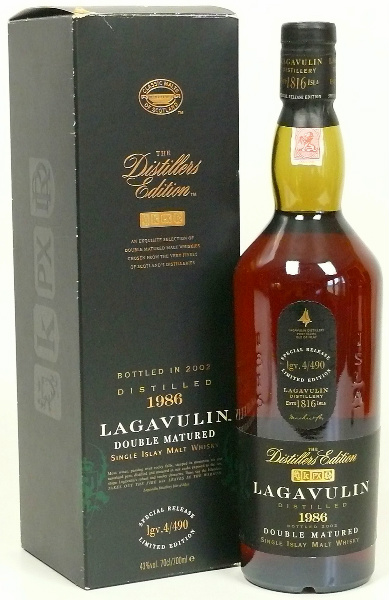 Color: Copper orange.
Nose: Fantastic peat. Lagavulins from the eighties can have this excellent peat, I never get tired of. Peat, tar, seashore, you name anything maritime and its in here. Sure the more recent DE’s are still pretty good, but they don’t smell like this. That’s why Whisky lovers still pay a great deal of money for these older bottlings. Smoke comes next and it smells a bit electrical. It has vanilla and a slight fruity nose. You know it’s there, but so hard to distinguish what it is. Ahhh lots of smoked (dry) sausage and slightly dried out onions and pear. Excellent, what a combination. Where have you smelled that last in a Whisky? This Lagavulin is all about balance (again some kind of dirty word for some). The whole is so fantastic, and goes on and on. Wonderful. Hard to put down. With time the fruit, still distant, finds it’s place in the whole and adds a more fresh and fruity part to the whole. Just smelling it is quite the experience, and still getting better. Lagavulin is such a big aroma, that even the thick and sweet PX can’t overpower it, just add a little something. I guess the finish was done intelligently. I’m putting off tasting it for just a while longer to put on my fisherman’s sweater…
Taste: …in the end it would be a shame not to taste this, so here goes. Well somewhat less special than the nose is the first thing that comes to mind. The PX is more upfront as well. It starts out chewy. Nice licorice, black and white powder and a thick sweet Sherry without most of its sweetness. Does that even make sense? Waxy and again very coastal and raw. Masculine. Puffer’s smoke. Burning hay. Fishy, as it should be. Smoked fish of course. Smearing tar on the hull of a boat. Get yourself something like this, because modern peated Whiskies are nowhere near this profile. I wouldn’t add water to it, because reducing it to 43% shortened the finish already. Big body, with only a medium finish. In the aftertaste the balance is slightly gone. It could have been even better than it already is! Wow.
It’s been a while, but I do understand why Whisky lovers in general pay lots of money for Whiskies like this. This is great and they sure can’t make them like this anymore. Drinking this put you in a different place and time altogether. It changes you as a person (for a while). Sure it puts you back a few hundred euro’s pounds or dollars, but try to imagine what a trip to Islay in 1986 would cost you now. It’s a time-machine and time-bomb in one. A must have.
Points: 91
 In 2004 Macallan officially released two Sherried 18yo’s. The one on the right, we know very well, that was the one with the old labels that have been used for decades. (For reasons science cannot wholly explain…). Around 2004 Macallan also started to release a new bottle design we all know from the Fine Oak series and later bottlings. Here we’ll review the 2004 18yo with the new design. The label states that this is Whisky distilled in 1986 and earlier years. We know the “other 18yo” to be very good, now lets see if this is any better or maybe it’s the same stuff…
 Color: Orange gold.
 Color: Dull light gold.
 Here are a few firsts, and on paper a quite interesting one to boot. This is the first Ben Nevis on these pages. It’s also the first time I’m reviewing a Whisky that was bottled by
  Color: Pinkish gold
 goes a bit wrong in the finish. Slightly acidic and the vegetal part (fern) starts to play a larger role. Also, but very late, comes in some bitterness from the wood. Fern with the sweetness, and the slight bitterness, is maybe a strange combination, but hey it’s only part of the finish, so don’t worry.
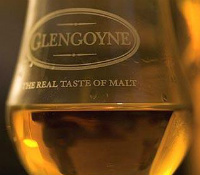 Well here you go, day four and here is the third and last of the Mashman’s choices from Glengoyne. Hardly a surprise after the last two days, isn’t it? This time a Pedro Ximénez Sherry Butt. Pedro Ximénez or PX for short, is a very sweet dessert Sherry. Oloroso Sherry were always considered to be the best for maturing Whisky, but it turns out that PX Casks are very good too. Let’s see how this PX-Glengoyne will do.
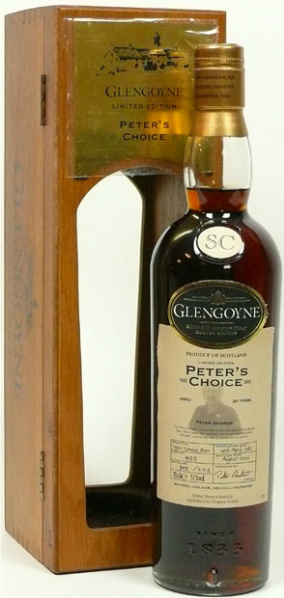 Color: Sparkling copper brown, almost with a red tinge.
 * Shoogle is a Scottish word which means to gently shake or agitate.
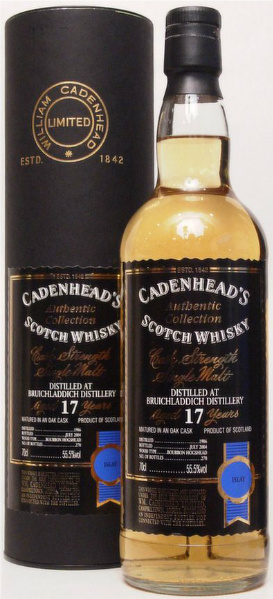 Also from 1986 but several years younger, a 13yo to be precise. Even though it was younger, this bottle showed more character to it. The 13yo was almost empty and maybe these Bruichladdich’s need a lot of air. Let’s have a look in my controlled environment and using my glass of choice, how this Bruichladdich really is. (This bottle, just open).
 Master Quill