Longmorn 1967/2003 (52.2%, Scott’s Selection, Speyside Importing Company, Duxbury MA USA, 750 ml)

Longmorn is a distillery with a huge reputation with Whisky aficionados. If you encounter a person who identifies as a Whisky aficionado and you start talking about Longmorn from 1971, chances are quite big that a person like that will start talking enthusiastically, not stopping for at least half an hour. Reason for this is that there are a lot of really, really good Longmorns from 1971. Actually, there are lots of really, really good Longmorns from the sixties and the seventies. The highlight of the Longmorn-era, although some feel that Longmorn still is very good. Sure, there are a lot of good Longmorns in more recent decades as well, yet those from the sixties and seventies are in a class of their own. Really, really good. Focusing now on Scott’s Selection, there are two dark sherry bottlings from 1971 bottled by Scott’s Selection that are amazing. One bottled @ 58.6% and the other one @ 57.8%. Both bottled in 1999, but there are two (?) others, one bottled in 2000 bottled @ 52.3% (one that I have never ever seen in the wild, no clue is this another dark one or not and if it actually exists to boot). In 2004 one was bottled for the US market, this one is definitely not dark. In 2003 and 2004 several more, “lighter”, Longmorns from 1967 and 1968 have been bottled for the US-market. Let’s have a look and a taste one of those, the 1967 Longmorn bottled in 2003.

Color: Full Gold.

Nose: Waxy (almond wax, if that exists) and super fruity. Soft warm fruit and candied fruit both mixed with a little bit of sweat. Old style. Old style is often riddled with funky organic aroma’s, which might be quite negative to read for some, like sweat for instance, yet those funky aroma’s are always very nice in an old style Whisky. Old clothes cabinet. Old, time-worn, smelling wood. Great complexity. Chewy with hints of black coal. Nope they don’t make them like this anymore. Soft, wet wood. Not spicy nor harsh. More wax mixed in with the wood. Old style dust and lots of old style yellow fruits. Deep and brooding. Hints of white chalk and white latex wall-paint. Old bottle effect combined with a minty note. Hints of peach, dried apricots and ripe, yet not overpowering, banana. Cherries on syrup. I don’t pick up on the banana every time I smell this though. Steam, also with hints of latex. Well balanced. Vegetal and green, especially after some time of breathing. Late to the mix: pencil shavings as well as some cold dish water. Maybe even a tiny hint of smoke, but this also can be the toasted bit from the cask-char. The whole nose has this promise of a sweet Whisky. The colored bits of Licorice Allsorts. If you leave the (not empty) glass standing around for a bit, notes of honey emerge (as well as some plastic). The empty glass the next day has even more of this plastic aroma. However, needless to say, but the whole is very nice, very nice indeed.

Taste: Starts powerful and spicy. Very fruity and a lot more wood-influence than expected form the nose. Where the nose finished on Licorice Allsorts, here on the palate it starts with it. Candied anise seeds. So yes it starts out sweet, but not overly so, especially when the wood kicks in. Slightly soapy. Green again with half-bitter hops and some cannabis. Waxed nuts and waxed wood with a decent amount of bitterness. Just enough for the whole taste of it. This has a beer-like quality to it. Half-sweet and very fruity again. Not only yellow fruits, but some red fruits as well. Sweetish strawberry and cherry juice combined with hints of vanilla. The minty bit comes through here as well as again the slightly soapy bit. Just like the bitterness, the minty taste comes from the wood. This is a Whisky that grows even more complex on the nose when you finally start sipping it. You’ll probably take a while taking in the complexity of the nose anyway. Finish shows some more cask toast and retains the soapy taste, which strange enough works well this time. Very fruity with a slightly bitter aftertaste from the woody backbone, especially if it got time to breathe. Great dram, just not as good, but also very different, as the darker 1971’s.

Hard to say really in what kind of cask this was matured in. First guess would be a Bourbon hogshead, not a barrel and also not a first fill. (Second) refill Sherry, could be.

Points: 91

Springbank 12yo 2003/2015 (58.3%, OB, Port Pipe, for UK Customers, 696 bottles, 15/177)

When the fifth release of Springbank Local Barley 10yo (2019) hit the shelf, I was offered a generous sample by Nico. In stead of money exchanging hands, it is always nicer and more adventurous to exchange it for a sample that hopefully can stand up to the Local Barley. Looking through my stock, I decided upon this single cask bottling for UK customers. I opened it, filled a sample bottle for Nico and when he got it, we had contact whilst he was trying it. Sort of an online tasting. I poured myself a wee dram as well. Well, what can I say, we both liked it. At first Nico liked it big time and appreciated it even more than I did, and I already did like it. Some time has passed since then, and with some air, and maybe even some more balance to it, it is time to have this more “official” look at this full time Port cask matured Whisky from the stills of Springbank Distillery.

Color: Orange gold. No red hue.

Nose: Funky Wine. Fresh and fruity smelling. Cherries (fresh and sour ones), sweet licorice, waxy and oily. Traces of peat, hints of dust and cardboard. Warm electricity cable and sometimes a whiff of hospital (ether). Funky organics and animalesk. Fruity and slightly sweet smelling. Nice warm wood notes with almonds and after a while a soapy note emerges, at times more resembling a lemon based dishwater soap. Sounds bad, I know, but it’s not, giving it a fresher, more zesty phase. If this soapy note comes back in the taste though, than it’ll be a problem! The winey bit is very present and almost overpowering, and it doesn’t remind me necessarily of Port. It was bottled just in time for it be be nice smelling and balanced in the nose as well. At times floral and perfumy. This is a nice smelling and highly complex Springbank, showing its provenance because of the oils and fats, not dissimilar to a (very) good batch of the 10yo. I see this as a Springbank “+”. It still is clearly a Springbank with just another layer added. Some light and subdued mixture of kitchen spices and sometimes some notes of hay and dry grass. Amazing balance and complexity in the nose. After a while a more fresh oak note emerges, and more grass, especially after sipping it. The nose becomes even better and more balanced after sipping.

Taste: Nice big entry. Again fatty, fruity and nutty, yet much less so than on the nose. Waxy and ever so slightly peaty, with a peppery and spicy attack (not yet from the wood it was aged in). Deep note of peat and red ripe fruit (and some plastic?). Big, big, big, yet somewhat less complex than the nose is. Black coal, maybe some tar and warm machine oil. More hints of wood, just like smelling fresh dried staves. Dried grass and definitely licorice. Honey-licorice with a slight bitterness and spiciness to it. Definitely more wood in here (eventually) than in the nose. Where the nose was almost overpowered by the fruity Port cask, here it is the other way ’round. The Springbank spirit overpowers the Port. Unmistakable Springbank here. Still enough fruit and sweetness now. You can’t call this sweet in any way, but there is some of it giving it even more balance, although I feel this is also less balanced than the nose was. More fruity wax, and the tiniest hint of clay. Fruity Port and some black coal in the finish. For this particular Malt, balance is very important. If the balance of the taste and the mouthfeel were just as good as the nose, than this would have scored (close to) 90 points.

A very good expression, yet not in the style of a daily drinker. A bit too demanding for that. Complex and big. In a way this doesn’t resemble a modern Malt. It has a rarely seen profile, that oozes the times of yesteryear. Also, to finish things off, if you want to catch some annoying fruit flies in your home, than this is your liquid of choice, even now that we’re well into autumn/fall.

Points: 88

Highland Park 14yo 2003 (52.9%, The Creative Whisky Company, The Exclusive Malts, Refill Hogshead #751, 235 bottles)

This Highland Park was a bit hard to review. The rule of thumb is usually, when reviewing a Whisky I have a full bottle off: open a bottle, let it breathe a bit, try it several times and when it’s about half full, (or half empty), review it, A review not only based on the tasting experience when analysing and writing, but also from memory of the first half of the bottle. Well, this bottle has now only 20% left in it and from memory alone, I would have a hard time writing something up, not because I killed off most of my brain cells, no, more because this is a very particular Whisky, one that seems to have an attitude, grumpy if you will. One that needs all your attention, and if not, sod it; “I’m not opening up to you drinker!” “I will keep most of my secrets to myself!” I have no clue how this Whisky really is, after an evening on my couch watching something or reading, thus giving less attention to the Whisky it requires. This was not an instant gratification Malt and I might have told you it is a disappointing Malt. Only when I took it with me to a friends house for a dedicated evening of a lot of great Whiskies and music, thus giving it the attention the Whisky itself feels it deserves, it finally did shine. What a moody piece of work! I could pick a fight with this Highland Park, telling it to behave or grow up or just… (pardon my French).

Color: Light gold (not pale).

Nose: Creamy toffee. Bourbon hogshead alright. Fatty and big. Quite aromatic. Fruity with some nice smoke to it, as well as slightly nutty (oak). Soft bonfire and waxy oak. Right out of the gate it smells quite complex, with a lot of creamy, toffee and caramel notes, but also a lot of ripe yellow fruit notes and on top if this, the smoky bit. A very clean smelling Highland Park, big and aromatic, so clean and in a way also modern. Sweet smelling. Very ripe and sweet white peach. Dried apricots. Pineapple syrup. After a while the soft oak comes forward, smelling almost as if the wood was painted white on the outside, because of the tiny chemical aroma this Whisky has. The small chemical bit smells thus of white paint but also whiffs of moped (warm oil, exhaust fumes) and polyester (probably from inside the saddle of the moped), otherwise clean oak (it still matured in a hogshead) and a wee bit of horseradish and unlit tobacco. All of this is so minutely present, that it only adds to the complexity without putting you off. See how strangely complex this one is? This must be why it does need your full attention. Do you also see what is happening here, I give the damn thing the attention it wants and it gives me all these complex and wonderful big aroma’s in return, however if I carelessly sip it away…nothing much! What a piece of work this is. This one seems to be alive and having a personality. There is just too much (happening) in the nose, and it is just too complex for casual sipping, and if you don’t understand its components, it will tell you off. I guess this is one of those Malts not for novices (yet again). I’ll get back to that later.

Taste: (Heathery) sweet, waxy, nutty and woody and pretty smoky on entry, fatty smoke with again some minor hints of plastics and/or polyester. Creamy fruit, mixed with some woody bitterness that not always pops up. In fact all the chemical bits mentioned above are here, yet not causing any problems. The entry is fantastic. It is not entirely similar to the nose, but seems to build on it, extending it. It is chewy and stays moderately sweet. With enough wood and smoke (and peat) to balance this out. Its certainly prickly on my tongue. White pepper? Apart from the heathery sweetness of the initial taste, this could have been a Talisker. Amazing complexity and a wonderful balance. Also some green notes, like dried out leaves and garden waste in autumn (dry, so the pre-rot phase, although close to it). Since I found the pre-rot here, I now also detect it on the nose. These green notes I mentioned earlier, also show up in the nose, after it showed up in the taste. That’s the workings of your oral cavity for you! Warming, The finish is long, complex and warming, and the aftertaste is an extension of the finish. Great balance! After a while the finish shows some bitterness from the wood paired with some licorice and the tiniest hint of some soapiness on the back of my tongue. The amount of bitterness seems different from day to day and is definitely saying something about the taster and not entirely about the Whisky.

A wonderful piece of work. Complex and of very high quality. Ranking very, very high on the interesting Whiskies list as well. Amazing how this Whisky manages to takes some off-notes (The bitter, the soap, the paint, the polyester and the moped for instance) and turns them around into something nice in the balancing-out-department. You as a consumer better be a skilled and an experienced taster, if not, this most definitely is not for you. It will sense that and will try to piss you off, making you think this is a mediocre and not so nice Whisky. It is not. It’s amazing. It really is. If anything, it might be slightly too sweet in the beginning and slightly too bitter at the end. If you try this on a couch or a reclining seat, you will miss the point. You need to try it sitting upright on a chair at the table, alert, without being distracted, giving it a lot of time, and then, if you’re “lucky” (actually luck has nothing to do with it), and the planets align as well, you will finally get it, like I just did. This one will not stop giving. It’s special stuff, ’nuff said…

Points: 90

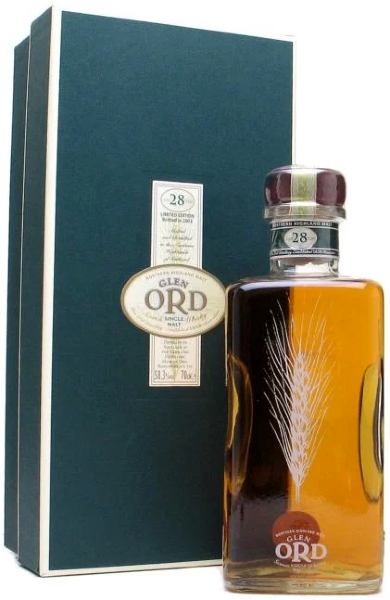
Glen Ord 28yo (58.3%, OB, Limited Edition, 2003)

Back in 2012 I reviewed one of Diageo’s Special releases from 2004, the Glen Ord 25yo. That one was released a year after this 28yo. Amazingly, the review of the 25yo is, untill now, the only Glen Ord on these pages. The Rare Malts series had just been cancelled and the annual Special releases were the new kid on the block. Asking a higher price than they did for the Rare Malts, but that goes without saying, especially today. Back then, the public probably weren’t ready for this and found them too expensive, resulting in many expressions not selling very well. So after a few years Diageo just offloaded those special releases onto certain markets. This way I could get my hands on very reasonably priced Glen Ord’s, all three of them (the 25yo, the 28yo and the 30yo), but also both Glenury Royal 36yo’s and lots of Talisker 25yo’s, from many different years. More or less all the cask strength versions, apart from the first one. Diageo were ahead of their time, asking prices for super premium Malts, the public wouldn’t go for, but today, hey, that’s an entirely different matter now isn’t it. Today people scream, “take my money” and are almost throwing pure gold at “Rare” Single Malts, some of which aren’t even that good to begin with, as the earlier releases which cost a fraction of those recent ones. Fred Laing once said to me: “If only I knew then what I know now…” hinting at all his Brora’s and Port Ellen’s, put on the market for a fraction of today’s prices.

Back to Glen Ord. So, the 25yo Glen Ord has already been reviewed. A good one, especially when analysing it (hence the score of 90 points), but not an easy one for careless sipping. The 25yo does need all of your attention, which can be a nuisance. Therefore, it took a while to finish it, and I can’t say, in hindsight, that I have a lot of fond memories (of a Whisky that scored 90 points!). Yes it is very good, but it didn’t bond with me personally, and I had to work it a bit too much. I remember it as a closed Malt, hot and a bit harsh. This is also why it took me almost a decade (!) to open this next super premium Glen Ord, the 28yo. I expected more of the same to be honest. A decade, wow, amazing how time flies, truly amazing. But I’m an adventurous guy (yeah right, a hand-reader actually read differently a while back), so time has come to dip into yet another super premium Glen Ord and I’ll let you in on a little secret already, nope, I didn’t regret opening this one!

Color: Gold.

Nose: Wow, what an amazing start, aromatic, with sugared dried fruits, pineapple even, with powdered sugar and some dust. Fresh and lively even though it’s slightly dusty. Next, a hint of smoke, waxy, sweaty and big and so appetizing you just want to bite a piece of it off and chew it. These seventies distillates can be so fruity. This should be 75-ish? Reminds me, initially, a lot of Caperdonichs from 1972, which are even bigger and more aromatic. Here, with this Ord, over time the big fruitiness gets less pronounced making room for a thinner and more acidic woody note and a more organic note in the back. This is definitely the wood that is speaking to us. The Caperdonichs I mentioned earlier don’t change like this. A dry warehouse floor, again a dusty and now slightly cardboardy note comes next. Powdered orange candy, a sort of artificial orange flavour like Sinaspril, (orange flavoured Aspirin for kids, remember those headaches when you were a kid)? Funny how open this 28yo is, as well as old and lively smelling. The 25yo was closed to the last drop. An entirely different Ord. After sipping, the woody bits stand out some more in the nose.

Taste: Big, nutty (bordering on peanut butter), slightly grassy (not hay-like), waxy and so fruity. The paper is here as well. Definitely a seventies distillate, and my guess would be that this was matured solely in ex-Bourbon casks. Half sweet. The taste is less comparable to the Caperdonichs than the nose was. Sweet toffee. Waxy and woody, as well as quite some woody (and old paper) bitterness. Strange enough, the oak comes across as quite new or youthful. Not old, matured or settled. Salted caramel, slightly peaty even. Peat might be unlikely, but some smoke may very well be here. The sensation of this peat, or probably smoke, is quite prickly on the ol’ tongue. After dinner the bitterness is less pronounced, so all this depends on the taster and the moment in the day. First, fruit on my palate is again pineapple. Quite hot going down. I still keep getting a slightly smoky note throughout as well as some old Malt mint now. In part animalesk, mixed in with the waxy notes. Very tasty, but not as complex as expected. The complexity of this Malt could have, or should have been comparable to the likes of its peers like the aforementioned Caperdonichs, if it had, than the score would have been higher, because the Whisky would have been even better than it already is. A minor gripe, but an important one nevertheless. Maybe that’s why Diageo is calling it lively, since one doesn’t expect a 28yo form the seventies to be lively. There is often a lot of BS on labels, but this remark is spot-on. As a consumer you only just need to understand the meaning of these words…

Where the 25yo was hard work, it still was very good. The quality was unmistakeable. It was closed and a bit harsh and hot, this 28yo is something different entirely, even though there are many similarities, as you tend to have between siblings. Easy, open, a very damn tasty old Malt this 28yo, one of those they don’t make any more, because they can’t. The times have changed, the methods have changed and the ingredients, barley, yeast, wood from the casks (and the quality of what they previously held) have changed as well…

Points: 91, almost the same score as the 25yo, but I’ll remember this one way more fondly.

I’ll be back with the review of the Glen Ord 30yo somewhere around 2030 I guess…

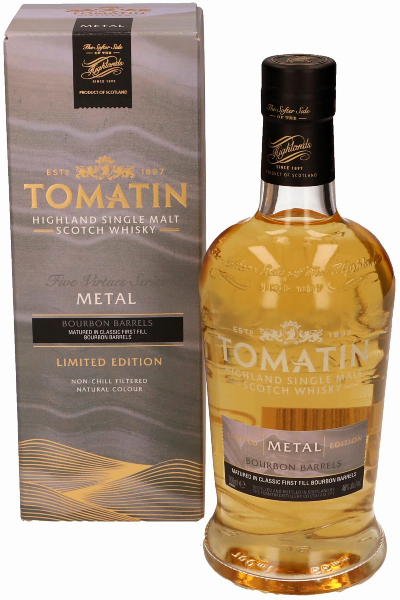
Tomatin “Metal” (46%, OB, Five Virtues #4, First Fill Bourbon Barrels, 6.000 bottles, 2017)

The five virtues are coming along quite nicely. Metal is already the fourth out of the five virtues. Earlier I reviewed the first three: Wood (85 points), Fire (85 points) and Earth (86 points), the last one a rare peated Tomatin. On Paper, Metal is a fairly simple Whisky compared to Wood (which was made with three different kinds of wood), Fire (made with de-charred and re-charred wood) and Earth (three different kinds of casks and also made with peated barley to boot). Metal is made solely with first fill Bourbon barrels, filled with distillate from 2003 thus making it also the oldest expression of all the five virtues. It should be 13 or 14 years old. In earlier reviews I mentioned, that my journey with the Tomatin five virtues series actually started with this Metal (and Water) expressions in London 2018. I liked both and this made me backtrack a bit, buying the first three of the series. All three earlier versions didn’t disappoint, so let’s see if the last two are the best of the bunch, as I currently believe from memory. As said before, I did buy the whole set eventually, but the last two reviews will be based on samples I brought back from London.

Color: White Wine.

Nose: Fruity and very likeable. This brings back memories! Sweet barley and cardboard. Perfumy soft wood (and paper), with mocha notes and dusty. Ever so slightly meaty with a tiny hint of lavas and an indistinct melange of dry herbs. Definitely well aged and this oozes style and class. Its very refined, but lacks a bit in the complexity department, (maybe this is the reduction to 46% ABV). I’m already smelling this for a while now, and not a lot of evolution is happening to be honest. Nevertheless all that is there is very fine and balanced and easily recognizable as a Whisky from ex-Bourbon casks. Vanilla notes and slightly creamy. Faint flinty note as well as a faint menthol note. I have to say that what is here does go together rather well together. Based on the nose alone, easily the best of the five virtues (’till now).

Taste: Sweet and fruity, something that is present in all good Tomatin’s from ex-Bourbon. Just have a look at the 30yo, which offers this in spades, tropical style. Here there are yellow fruits like maracuja and dried pineapple mixed with vanilla pudding or custard. Right next to this, or behind it, if you like, quite a firm backbone of oak, pencil shavings and a little bit of smoke (probably from toasted oak, which matches the flinty note from the nose). There is most definitely quite some influence of wood to be noticed in the back. Strong and spicy and even some bitterness, not too much though, the bitterness is adding to the whole, not taking it over. Sweet mint. The whole is pretty straight forward and comes as no surprise to those who know their Tomatins. Just don’t make the error believing this is simple, because it’s not. Very nice expression this one, and also after tasting it, still the best of the five virtues. I wonder how this compares to a recent, regular 15yo also solely from American oak casks, which is slightly older and slightly cheaper.

When pouring this, I was quite surprised, the colour being only White Wine, or straw as some people call it. This is said to be from first fill Bourbon casks, and especially first fills can impair quite some colour onto the Whisky, especially after some odd 13 years. Also, I wonder why this was called “Metal”. If I would pick a Whisky to show off the Metal from the still, I would have picked (third) refill hogsheads. These casks would certainly not overpower the distillate thus showing off the most distillery character. But then again, these first fill barrels aren’t overpowering anything as well. Considering the colour of this Whisky I still have a hard time believing this came from first fill casks. Based on the nose as well, I would still not believe this is from first fill Bourbon casks. Tasting it, however, there might just be a possibility this has seen some first fill Bourbon casks, since there seems to be quite some influence from wood, yet it is different from the “Wood” expression. Lets just forget about all this and conclude that this “Metal” is a very good Whisky. Tomatin does well in American oak, especially when it gets the time to mature for a prolonged amount of time.

Points: 87

Monymusk 12yo 2003/2015 (46%, Kill Devil, 309 bottles, L15 008 PB, Jamaica)

After the Moka Intense, why not try another Rum while we’re at it. Lance was nudging me in the ribs for quite some time and I started to feel a bit sore and guilty actually for letting him down for so long! Yesureebob! This time I’m going to have a look at a bottle of Rum I bought when visiting the U.K. a few years back. When visiting one of my favorite retailers, I found three different Kill Devil Jamaican Rums. Kill Devil is the Rum brand of Hunter Laing, best known as an Independent Whisky bottler. Maybe Old Malt Cask rings a bell? For reasons I really can’t remember now, I chose this one to be the first of the three to open.

Monymusk, for Whisky-people at least, maybe known as a Scottish village. It isn’t even a Jamaican distillery. Monymusk in fact, is the sugar factory next to the big and modern Clarendon Distillery and name giver to this “brand” of Rum. So Monymusk is made at the Clarendon distillery, which is owned by NRJ (National Rums of Jamaica) and Diageo (for Captain Morgan). NRJ itself, is owned by the National Sugar Company (Jamaican Government), Maison Ferrand (of Plantation Rum fame) and Demerara Distillers Limited (we know for El Dorado Rums). What a partnership! Imagine being invited to a party thrown by these people! I imagine a very sweaty Caribbean night indeed. By the way, NRJ also owns the Long Pond distillery and the now defunct Innswood distillery, which is now used for aging casks. After WWII (in 1949 to be exact), Clarendon was built with Pot Stills and much later (somewhere around 2009) the modern addition was made, housing Column Stills. Since our Monymusk was distilled in 2003, we know which stills “did it”…

Color: Straw.

Nose: Ahhh, Jamaican Funk, with dust and vanilla powder, yet also extremely fresh. Big and grassy. Mocha and milk chocolate. Old leather. Almonds and a lemon and lime peel note in the back, maybe even some orange peel, but to a lesser extent. Whiffs of gun-powder occasionally fly past, as well as a different burnt note, more like well roasted meat, roasted (not burnt) to a crisp. More almonds and ear wax. What I quite like is the citrus combined with the thick Jamaican funk, well maybe not that thick, not very thick at all actually. This is more like funk light. Jamaican funkette. Its there but balanced out by a fresh beach/sea note and obviously the citrussy aromas which combine very nicely. Some nice soft wood washes ashore (along with some paper). A light Monymusk, but quite balanced and appealing. Easy going and all is well integrated. Don’t confuse lightness with reduction to 46% ABV. Even cask strength Rums can be light, and this Monymusk surely was probably light in its cask strength form as well.

Taste: Waxy and funky. Short sweetish and nutty burst that washes down quickly. Paper and cardboard followed by a sweet honeyed note and some licorice, finishing the first sip off with a medium pepper attack. Warming. Second time around, more wood is showing and the paper/cardboard note returns as well. More bitter this time, bitterness from wood and again this ear wax aroma. Green and spicy and also a bit minty. Laurel licorice, that’s it! Given more time, some sweeter notes do appear. Sweetish cold black tea with more almonds and dried out yellow fruits. Dry pineapple comes to mind. Since there isn’t actually that much wood (apart from the bitter notes), I’m guessing this wasn’t a very active cask otherwise. Light color and the weak finish also tell some tales. After a while some medium bitter, waxy and sometimes even industrial notes appear, which takes away from the balance a bit. After some breathing, it’s also dryer than expected. The Jamaican funkette seems to have taken a back seat, or maybe found it’s way all back into the boot/trunk (or the trailer for that matter). Not a long finish actually, similar in lightness, to the Cadenhead Epris I reviewed earlier (only in lightness mind you, the similarity ends there). Light aftertaste, but not much at all. Although the laurel licorice seems to have some staying power.

Although not the world’s most powerful Monymusk, it has good drinkability. Definitely a better nose than taste. The body falls down a bit, and it is also a bit weak in the finish and aftertaste. The nose was better balanced as well, but hey, no real off-notes. It is a decent Jamaican Rum, but also nothing more than that. There are many better offerings of Monymusk to be found, and if you already bought this, you’ll have no problem finishing it. I haven’t. Yes, quite light in style, which is OK and reduced in ABV as well, which maybe somewhat less OK to be honest. I wonder how this was at cask strength although you really can’t make up for quality that way, but I’m sure in this case it would surely have helped a bit.

Clarendon can make a lot of different marks, from light to very, very, very heavy (lots and lots of esters), so from such an uninformative label as Kill Devil has, you never know what you’re gonna get. You don’t say, Forest! Its Jamaican and its Monymusk, but that’s about it. Excellent introduction to the Jamaican Rum-style if you’re a novice, although I do wonder if a novice would go for a Kill Devil bottle to boot or any other independent bottler? I don’t know. Entry-level it is not, but definitely second tier. Maybe Hunter Laing (and the others) should not reduce Rums at all, we well experienced (Rum) drinkers and anoraks are willing to pay more for a cask strength Rum. Yes we do, don’t we Lance?

Points: 82

Kopke Colheita 2003 (2018)

In several of my previous reviews, even more than once, I stated that I love my Ports, and I hereby confirm that I still do, even though my last review was done in the spring of 2014! Terrible! There is no excuse! How did that happen? five years! Is time flying this fast? I have to make amends and restart the fire of Port! Auke, also mentioned before, was so kind as to present me with a sample of one of his recent acquisitions, to help me restart the fire. Kopke Colheita 2003. Auke loves his Ports as well, and even managed to visit Portugal this summer, something I have yet to do.

personally, I love Colheita’s. They are aged, refined, easy to use, (so no decanting of unfiltered vintages) and quite affordable. Sure, vintages are the biggest thing in Port-world, but Colheita’s most definitely earned their place under the sun as well. Even better, Colheita’s also offer us a high quality alternative to Vintage Port and L.B.V.’s, with a different profile, a Tawny profile. Aged, not ruby red any more and more delicate. So a true win-win situation.

Color: Vibrant old red, tiniest hint of tan.

Nose: Fresh, sweet and fruity. Perfumy even. Deep, dusty and dark, with hints of asphalt, tar and licorice. Dry forest floor (in the summer). This adds to the third dimension of the Port and is most certainly not upfront. The combination of freshness and fruits with the darker side is quite interesting. The fruit stays, cherries and raisins with a nice acidic vibrancy. Waves of chewy fruity sweetness. Hardly any wood notes, not even the vanilla of American oak, nor the tannins of European oak. This Colheita is all about being quiet. It’s quiet and calm, softly spoken. The quiet intelligent guy in the corner who would rather ready a book than party hard.

Taste: Quite thin on entry. Not very syrupy and the sweetness seems to be very well kept in check. Plenty of youthful vibrancy and acidity. Here it shows its winy character. The body is quite simple, very nice, but simple. This is a Colheita that is not about sweetness. Sure it has some sweetness to it, (dry honey, does that make sense?), but that is not the crux of the story this Port wants to tell. Nope, this is about fruit, little sweet forest strawberries, cherries (especially in the nose). Not overly ripe red fruits, but almost there. all in all, a rather short finish for such and “old” Port, or does the old age show its fragility here? By the way, the deeper notes I got from the nose are not here in the body of the taste, not even in the finish, although the tiniest hint of wood (bitter) does show itself along to some almonds. Nope, well into the fruity and acidic aftertaste some more of the darker notes briefly return to take a final bow to the lover of Port and kiss his or her lips for the final time.

Medium sweetness which is balanced out nicely by firm fruity acidity. Very friendly and likeable on entry, but lacking a bit of complexity and oomph in the body and finish, but a real winner on the nose! Master Quill’s top tip: take this in big gulps to enhance the aroma’s.

Points: 84

Longrow 14yo 2003/2018 (57.8%, OB, Limited Edition, Refill Oloroso Sherry, 9.000 bottles)

At the moment I have two Longrows open on my lectern. One is the 1992 Vintage, which, I have to admit, is damn fine, really very good, so it is a favourite and I don’t think it’ll be around for long. The second one is this, limited to 9.000 bottles only, edition of Longrow. This particular Longrow was fully matured in refill Oloroso Sherry casks. I really like the output of the Springbank Distillery, so I expect a lot for each and every Whisky of theirs I can afford to buy and review. This time a bottling that has fully matured in Oloroso cask, so not a finish and not a blend with Bourbon casks, like many standard expressions are. The 12yo cask strength version for instance is usually blended from 70% Sherry casks and 30% Bourbon casks. The link, by the way, will lead you to my review of batch 8 from 2014. Now let’s have a look at this 14yo Longrow. Yes please!

Color: Copper gold.

Nose: Spicy, with slightly rotting banana’s, some muddy sulphur and fruity Sherry. Fatty peat (not a lot) and some soft wood. Freshly ground coffee and lots of fresh coastal air. Some licorice and somewhat more sulphur. Toasted wood. Big bonfire and more aroma’s from being in the woods at night (with a bonfire burning close by). Night air, with a smelly pond (yes, sulphur again) and a sweeter bit close to creamy raisins. As I’m smelling this a lot, this raisiny bit has the staying power and not the sulphury bits mentioned earlier, but since its part of the DNA of this Whisky, I wouldn’t be surprised if it returns. More creamy bits emerge. Vanilla, Sherry casks made of American oak? Probably. Sweetness from the Sherry and the oak as well, so yes, American oak, if you ask me. Raspberry hard candy adds a tad of more fruit to it. Dries out a bit over time with more burnt notes coming forward. By now I’m again struggling to find peat on the nose of an aged Longrow. Did I already mention raisins? I did? Alright then!

Taste: Wood first, then sweet fruits, sulphur, ashes, and even some more wood. they present themselves in this order. Ashtray, and candied red fruits come next. After this first sip the nose gets bigger instantaneously. Still, not a lot of peat, but more on the smoky (sharper than peat) and ashtray side, and don’t forget about the slightly bitter wood. Maybe it’s not the wood that’s bitter, but the sulphur. Hint of burn plastic. Warming honey. Second sip reveals more of good old Oloroso, we know from the past. Red fruits and coal. Burnt rubber, and aroma’s, I tasted last in Rhum Agricole. The aromas of cold ashtray never leaves the palate. It is an integral part of this Whisky and pretty dominant. Sure, some sulphur is here as well, but it seems to be mixed in with the ashtray notes. Cigarette ashes in the aftertaste accompanied by some woody bitterness, which is not a problem in a profile like this.

Definitely not an easy Whisky, and probably not for everyone. I can imagine a lot of drinkers of Whisky and even fans of Springbank and Longrow, consider this to be somewhat flawed. Sulphur (the devil) has been detected. Sure it is here, and maybe even plenty of it. But for me it’s not the harsh and sharp kind you sometimes get, I can forgive its flaws to a degree, but one has to decide for oneself if one can. As I said, maybe not for everyone, although I believe most Longrow’s do end up on connoisseurs shelves anyway. It’s probably a wee bit to expensive as well for a casual pick at your dealer of choice. Nope, most of the people of this particular Longrow are already members of the Springbank Society. A show of hands please?

I mentioned the Vintage 1992? Well, in that one, one could easily taste what a Longrow is. It shines with distillery character. This Oloroso expression is as opposite to the 1992 Vintage, as the flat earth society is to the dead poets society. Oh, my, I hope I haven’t offended anyone. A show of hands please? Here the Sherry overpowered the Longrow, and pushed it out of sight altogether. Considering this and the overall profile of this Whisky I can’t score it as high as I did the ‘1992″. Still good though, but definitely not as good as the “1992” or the Springbank 17yo Sherry Wood, which also matured fully on Sherry casks, for even longer than this Longrow has.

Points: 86

Plantation St. Lucia 2003 (43%, Old Reserve, 2014, St. Lucia)

Last year I reviewed two other Plantation Old Reserves. One from Guyana, and one from Jamaica. Both were quite good, and very well priced. Both were quite sweet as well, since both have some sugar added. Plantation calls it dosage, enhancing Rum with sugar, in the same way you use salt for your food. Cane sugar (syrup) is added to the Rum before ageing. They do it because they really believe it makes for a better Rum.

Most of the Rum-world lacks regulations, although efforts are being made, but on the other hand, Rum also has a history based on the production of sugar. Rum in a way is a by-product of sugar, so why shouldn’t a little bit of sugar be allowed to use?. In my early days, getting to know Rum, I somehow assumed Rum should be sweet, must be sweet, at least half-sweet. Only when I encountered high quality Rums, and single casks Rums, preferably bottled at cask strength, which obviously aren’t laced with added sugar, that I really came to know about Rum! So some believe Rum has a particular sugar-history, and some believe Rum gets better with adding some sugar in the early stages of production. Others are more militant and will kill you if you add sugar anywhere in the production of Rum. Rum should be pure. No mention though of Rums being to dry or to woody.

Looking back on its history, and its use in cocktails, I’m not against adding sugar to Rums in general, as long as it enhances the final product, making it really better. There is a market for it, just like there is a market for Spiced Rums. There is a market for mixers and there is a market for sippers. Nothing wrong with Spiced Rums, it is a subdivision of Rum. As an aficionado though, a Rum sipper, I would like to know upfront, from the label on the bottle, not by searching the internet that a particular Rum contains added sugar, and especially how much was added. I have experience enough to know how much sugar I can “handle”. Because, dear reader, too much added sugar in Rum can taste really bad! (It reminds me of the discussion around caramel coloring in Whisky, which I found makes the final product not only darker, but also taste rounder, more mono, more flat. Too much sugar will flatten your Rum). I won’t kill you, but for me, many Rums are too damn sweet. On the other hand if used sparsely and with taste, why not?

Since the intro is already quite lengthy, I never got around to say much about this bottle. So in a nutshell, if you want to know more about Plantation, I invite you to read my other reviews of Plantation Rums. It is no secret this Rum comes from the St. Lucia Distillery located on the St. Lucia island. It is a distillery with a few different stills. For this Plantation expression, 80% John Dore Pot Still, 15% Vendome Pot Still and finally 5% Column Still rum was blended together. Initial ageing took place in American oak casks on St. Lucia, shipped to France where the Rum was transferred into Ex-Cognac casks made from French oak for a secondary maturation for, I believe, 18 months.

Color: Full gold.

Nose: An explosion of aroma, almost like a Jamaican high ester Rum, but with many differences as well. Rummy and very fruity. Rum-raisins. A lot of sugared yellow fruits as well as some ripe banana skins, aided by some wood, paper and a fantastic burnt note. Vegetal oak mixed with sweet black tea. Creamy dried apricots with powdered coffee creamer and a slightly acidic note on top. Toffee with something extra. Chocolate with caramel. Nutty. Unripe red berries, old ginger and ripe plums. Grape seeds with some wood and rubber. Hints of smoke. Herbal and grassy. Next, a nice floral part emerges, sweet perfume with hints of rose and juniper. Cold black tea with a slightly smoky edge. Bonfire combined with burning cables. Almonds and butter. Fresh air after rain. Wonderfully complex, it never ends. I adore this one, a wonderful (tamed) beast. Perfect nose.

Taste: The slightly burnt note comes first. Big Rum. Fruity and floral, almost Gin-like. Sweetish but in no way cloying and hardly disturbing due to the humongous body this has, however this might very well be a bit too sweet. Luckily a minor problem this time, but a problem nevertheless. Next, an aroma of sugar-water. Big. big Rum. Nutty and leafy. Burning newspapers with hints of sweet peppermint and sweet chlorine. Medium bitter wax. I know this sounds weird, but it works. Medium, slightly bitter, finish, but with a long aftertaste. Very nice. Not as complex as the nose, but still top-notch. This may very well have some added sugar, but I don’t care, I love this one to death. Easily the best of the Old Reserves. I wonder how a good cask strength St. Lucia tastes like…

This Rum is a labour of love. In 2003 the master distiller of St. Lucia Laurie Bernard, who sadly passed away in 2012, challenged Alexandre Gabriel to blend a St. Lucia Rum choosing from the many Rums produced with the many stills on site, making it the best of the Old Reserve range. The result of that challenge is this very bottle, and I have to say. Job well done! This Rum is great in many ways. When placed in a Rum line-up, it doesn’t matter where you fit it in, it can cope with anything put before it, even heavy hitting Jamaican or Demerara Rums. Amazing. Second, it is really good, it is delicious and smells fantastic. Where the aforementioned Plantation Guyana and Jamaica were ok, or even good, this one is wow!

Points: 86

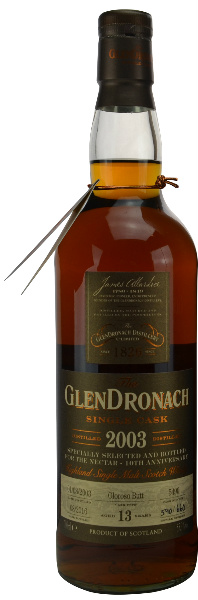
Glendronach 13yo 2003/2016 (55.2%, OB, for TasTToe & Drankenshop Broekmans, Oloroso Sherry Butt #5489, 705 bottles)

To my amazement, after all those years of writing Single Malt reviews, this is the first Glendronach on these pages. How did that happen? I’ll have to conduct a formal inquiry into this matter. Heads will roll. Lets hope this young Glendronach is a worthy expression of the distillery. Glendronach was founded in 1826, and has changed hands some nine times if I count correctly. In recent history the distillery was mothballed in 1996. Production resumed for a short while in 2002. In 2005 the distillery abandoned coal firing in favour of indirect firing with steam. After the change the distillery reopened in the portfolio of yet another owner, when Chivas Brothers (Pernod Ricard) acquires Allied Domecq. Almost there. In 2008 Pernod Ricard sells the distillery to a small consortium lead by Billy Walker, the owners of the Benriach distillery. Billy revamped the core range and started releasing Single Cask bottlings with the now common brown labels, as the one I’m about to taste. After Glendronach, Billy and his mates bought Glenglassaugh in 2013, but sold all three to Brown Forman in 2016 for a heft sum of money…

By the way, the picture below is wrong. I couldn’t find a proper picture of the bottle I tasted, and the picture I took of the label with my phone, well lets say it wouldn’t look professional. The picture below is for another Glendronach 13yo from 2003. In fact it is of a bottle filled from the cask filled in 2003 right after the one I tasted. Same distillate, same sort of cask, but still another single cask. The picture I used is for cask #5490 whereas I tasted cask #5489. Both were bottled for different customers from the same country: Belgium, so close enough, wouldn’t you say? Enough of the dry stuff, let’s get wet now!

Color: Copper gold.

Nose: Oloroso Sherry alright. Thick but right from the start some nice dusty woody notes and do I detect a hint of the S-element? Sweet raisins, fresh and pretty modern.  (which need some time to breathe to show themselves). Black and white licorice powder. Remember the 9yo Highland Park I recently reviewed? Well that is old style Sherry maturation, where the wood is softer, whereas this is more modern. Clean and sharp. Woodshop with oriental spices. Hints of fresh new oak and a wonderful floral and woody perfume, fragrant soap even, very nice. Very faintly meaty, like cold gravy. Great balance but not very complex. More wood notes in the form of pencil shavings. So, excellent wood, with less Sherry than expected. Wonderful nose.

Taste: Yep big wood alright, but again not in a bad way. Oriental Spicy wood with thin cherry liqueur. Reminds me a bit of Amrut. I really love the wood in this. Remember, someone is saying that the wood makes the Whisky, so wood should be a contributing factor. Again the wood has more to say than the Sherry. Starts half-sweet at best, where wood and Sherry share the attention, but quickly the wood demands center-stage for itself and dominates, without overpowering it though. Both contribute the right amount of aroma’s to make for a wonderful Malt. Hints of Italian laurel licorice and hard coffee candy. The body is even less sweet and for a moment turns in to an oaky acidity. Again, not bad. Medium finish and more of the same into the aftertaste, which after a while is gone completely.

This is well-balanced, not very complex, but very nice to drink. I feel no need to add water. It seems to be good to go as it is. Nice and likeable. A bottle you’ll like and finish quite quickly since it will be the one you’ll want to start the evening with. Unless you insist on starting with something at 40 or 43% ABV.

Points: 87


Thanx Nico!