Linkwood 18yo 1991/2010 (52.9%, Bladnoch Forum, Hogshead #10346, 252 bottles)

Another Linkwood then. Linkwood is quite a difficult distillery for me. Somehow I don’t seem to like Linkwood that much, and I don’t buy any of Linkwood without tasting it first. This one I did buy blind. First of all I like Raymond Armstrong (the former owner of Bladnoch Distillery) and just like Dutch independent bottlers The Ultimate were/are able to bottle some great Whisky at very fair prices. Luckily a lot of my tasting is done blind, so it’s not the name that makes for a lower score. Don’t get me wrong, I did come across some good Linkwoods as well. So with an open mind let’s have a got at this 18yo Linkwood.

Linkwood 18yo 19912010 (52.9%, Bladnoch Forum, Hogshead #10346, 252 bottles)Color: Light gold.

Nose: Acetone, unmistakable. Nail polish remover. Lots of sappy leaves too. Quite nutty as well. Well not dull isn’t it. This spirit jumps right out of my glass. The acetone seems to “remove” itself, but it’s just me not smelling it anymore since it tries to anesthetize me. Put it away for a minute and smell it again, and you’ll be hit in the head again. Even though some might like it, it most definitely is flawed. Nice wood underneath it all. Coffee, cloves and some mocha-cream. Hazelnut pastry. Vanilla, hints of lemon and even a bit perfumy after a while. If you factor out the solvent, this is quite a bold body from a highly active and spicy cask. Quite nice but with a rather unusual defect. No I don’t hate it. Maybe this needs to oxidize a bit?

Taste: For a brief moment there is a solvent. It is quite hot, but the solvent (not ethanol) is quickly replaced by a more woody and leafy aroma. Woody and nutty. Sweet, with a lot of vanilla. Even though the solvent part seems to dissipate for a while, the whole stays quite hot and overpowering, just as it did with the nose. Freshly painted wood and freshly sawn, not entirely dry, oak. The feeling something other than Whisky is going down my throat. Medium finish.

In a way this was difficult to score (but not really). First of all I liked it maybe a bit more than I scored it, but I don’t think this isn’t one to finish quickly. Quality wise this couldn’t score very high since it has some obvious flaws, not exactly from the middle cut maybe? (although hard to imagine).

Points: 79
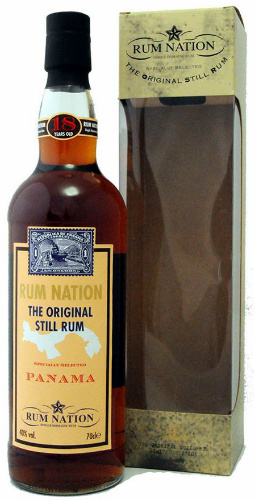
Rum Nation Panama 18yo (40%, Single Domaine Rum, Release 2010, Panama)

All four Ron Abuelo’s have been reviewed now, but there is still one ace up my sleeve. An independent release of an Abuelo Rum. Lance (The Lone Caner) reviewed this very same Rum and mentions this is an Abuelo Rum, so let’s go with that. Rum Nation is the Rum brand of Italia’s one and only Fabio Rossi, most of us also know from the Independent Whisky bottler Wilson & Morgan. Fabio also has a passion for Rum and is able to source some very special Rums for his own label. Besides this 18yo, Rum nation also has a 21yo Panamanian Rum, which according to Lance, even surpasses the Centuria in quality. I have the 21yo in storage somewhere, so I’ll probably review that one too in the near future.

Rum Nation Panama 18yoColor: Reddish orange brown.

Nose: Powdery and dusty. Radish (Rettich). Cold gravy and leather. Laid back, and yes, still middle of the roadish. Soft old oak. Soaked oak. Lots of toffee and custard. Some sulphur and a meaty note come flying by after a while in the glass. Next some smoky honey, white pepper and candied lemon skins and bitter oranges.

Taste: Half sweet toffee and some wood. Sweetish and the typical Abuelo red fruity acidity is in this one too. Better integrated than in the 12yo. The body has quite some wood and spicy wood, licorice. but the wood is still soft. The end of the body and the finish tell you more. The wood stays on and becomes more spicy, the Rum gets a bit hot for a while, finally some action! Red peppers, and somehow it lacks a bit of complexity. The finish itself is rather short. When I come to think of it, the spicy bite seems to be a bit sulphury. But the finish is about wood and its light walnut skin bitterness.

Quite soft and well-behaved for a 18yo Rum, and quite inexpensive to boot. You know Rums in the hot Caribbean age quite quickly, so when a Rum is still so smooth and easily drinkable after 18 years is quite a feat. I have made quite a dent in this bottle already, and I’m still trying to figure out what it’s all about. It is in part similar to the 7yo and 12yo Abuelo offerings. The heritage is apparent, but it is all a bit to anonymous for me, it doesn’t bring a smile to my face, as in great, I love this, I need more of this. I can easily live without the Añejo, the 7yo and the 12yo, heck, even the 18yo I can do without. The Centuria, however, is from another Panamanian planet and is the proof great Rums can also be made in Panama. I’m wondering about the Rum Nation 21yo now…

Points: 81

Abeille-Fabre Châteauneuf-du-Pape Blanc 2010 Vignoble Abeille

Lots of information about the wines marketed as Château Mont-Redon, but not a lot about this particular wine. Château Mont-Redon is owned by Jean Abeille and Didier Fabre, they are the third generation of wine-makers, but already the fourth generation is awaiting. This particular wine is from the Vineyards of Jean Abeille. Château Mont-Redon’s vineyards are 174 ha big, of which a nice 100 ha lies in the AOC Châteauneuf-du-Pape

This white Châteauneuf-du-Pape is a blend of 40% Grenache Blanc, 25% Bourboulenc, 20% Clairette, 10% Picpoul Terret and finally 5% Roussane. Well, not your every day Chardonnay or Sauvignon Blanc, isn’t it! By the way, these numbers may vary with every vintage. Around 450.000 bottles of Châteauneuf-du-Pape are produced annually, of which a hefty 100.000 is of the white variety.s

Abeille-Fabre Châteauneuf-du-Pape Blanc 2010 Vignoble AbeilleColor: Straw yellow, light.

Nose: Very aromatic, fatty, buttery and nicely fruity. White peach. Mineral but also fruity, white peach in sweet yoghurt. Very appetizing. What I especially like about this one is the slightly industrial, rubbery and maybe gout de petrol like quality this wine has.

Taste: Thick vanilla, wood and warming, what? Warm stones. Mineral and earthy. Slightly waxy and soft lemon juice on top. Gooseberries and grapefruit! Acidity kept in check. Nicely balanced Wine. Vanilla and wood in the nose and now again some vanilla and wood in the taste, this must have seen some wood. Slightly bitter finish, which passes through the mouth leaving a nice taste behind. Well made.

Starts very fruity and aromatic, changes into a more serious nose with petrol. Same with the taste, ending in a slightly wooden bitterness. Not harsh in any way. The finish is long and the bitterness passes into something more woody-fruity and fatty. Fresh butter. High quality. 13.5% ABV. Don’t drink this too cold, when it warms up in your glass it still gives of a lot of aromatics.

Points: 86

The English Whisky Co. 3yo 2007/2010 “Chapter 6” (46%, OB, American Standard Barrel #001-011)

Next stop is in Roudham, Norfolk, UK. Although close to the source, from a Scottish perspective, this is a World Whisky. The English Whisky Co. is the brand name and the distillery is called St. George’s Distillery. Founded by James and Andrew Nelstrop, its location was chosen because of clean and pure water, and well Barley and Norfolk, need I say more? Initially they wanted to build a micro distillery, but customs and excise wouldn’t have it, they wanted a big distillery, otherwise they wouldn’t bother giving off a licence. In december 2006, distilling commenced under the supervision of Laphroaigs one and only Iain Henderson. 29 barrels were filled. This particular Whisky was distilled two months after opening by Iain, aged for three years so it is barely legal…

The English Whisky Co. 3yo 20072010 Chapter 6 (46%, OB, First Fill American Bourbon Casks #001-011)Color: Light gold.

Nose: Extremely malty, and noses like new make spirit. White bread used for sandwiches dumped in water. I guess the eleven casks used weren’t very active. Grassy, lemongrass and sugar. Hay and all sorts of grass plants. Citrussy. It will remain the new make spirit it essentially is. Malt, bread and Vodka. That’s it. Sure, noses like this are part of the Whisky industry as a whole, so you “gotta love it”. But I don’t like it when I buy a bottle of a finished product. I’m not nosing this and enjoying myself, to be honest.

Taste: Soft and sweet. At least the taste shows some potential. Well rounded, and just the right amount of sweetness. Taste wise no off notes whatsoever, just plain young and massively un-complex. Enjoyable? Very! Toffee and vanilla. light and sunny. You get my drift.

Nosing this stuff I really asked myself why would anyone bottle this when it is clearly not ready. This is why they came up with the rule that Whisky must be three years old. Well, if you make stuff like this in a cold climate with inactive casks (first fill, really?) and it reaches three years of age, then it hardly meets requirement doesn’t it. Tasting it is a different story completely. Good potential, and I’ll be watching this Whisky grow. I hope they will succeed. Good luck!

Points: 75

Tamdhu 23yo 1987/2010 (46%, Mo Òr, Oloroso Sherry Butt #3649, 656 bottles, 500ml)

Earlier I reviewed two young Tamdhu’s, a 2004 and a 2005 bottled by dutch indie bottlers The Ultimate (Van Wees) and both turned out to be pretty good. This time we’ll have a look at a much older 1987 bottling by another dutch outfit, this time Mo Òr (The Whisky Talker). Tamdhu’s are usually pretty good when matured in Oloroso, so I’m guessing this also wil not be too wonky.

Tamdhu 23yo 19872010 (46%, Mo Òr, Oloroso Sherry Butt #3649, 656 bottles, 500ml)Color: Orange gold.

Nose: Lovely creamy Sherry. Nice alcoholic nuttiness. Clay and cask toast. Not too cloying and can be even called fresh, like in a breath of fresh air (carrying a little bit of dust). Licorice mixed with a hint of burnt leaves. Very aromatic, just move it around in your glass and lots of aroma leaps out of the glass. Creamy vanilla and some good oak. Nice balance and highly aromatic. Medium complexity but very appetizing.

Taste: Creamy with licorice and cask toast. Warming, and half-sweet. Clotted cream. However, already from the start this has a “thin” quality to it, which is remarkable since the nose was so aromatic and full. In stead of the creamy and honeyed sweetness, it starts with a sharpish burnt note. Charcoal and in the background a tiny hint of sulphur. The vanilla cream comes later. Smoky toffee. Warming with good creamy sherry and although the start was thin, the finish does linger on a bit.

I’m guessing this was better at cask strength. Very appetizing. good stuff and the kind of Whisky you’ll want to have first when this is in your collection, so easily drinkable. A bottle that will be empty soon, also because it’s only 500ml. Yup, not wonky at all.

Points: 88

Dailuaine 14yo 1995/2010 (43%, Gordon & MacPhail, Connoisseurs Choice, Refill Sherry Hogsheads, AJ/AAFI)

Gordon & MacPhail Private Collection UltraUnlike Benrinnes, Dailuaine has been featured a few times already on Master Quill, the last one just a month ago, so it doesn’t need a big introduction, nor does Gordon & MacPhail, the big Scottish independent bottler with an even bigger reputation doing things yet even bigger. We all know Gordon & MacPhail have a lot of series like the Distillery Labels, Connoisseurs Choice, Gordon & MacPhail Reserve and Private Collection, to name but a view. Now there is even a bigger choice with four new, very old, Whiskies in the Private Collection Ultra.

Hey, what’s in a name! I was fortunate enough to have been able to try, three of the four, recently: The 61yo Linkwood (88 Points), the 62yo Glenlivet (89 Points), the 57yo Strathisla (88 Points) and finally there is also a 63yo Mortlach. Well these four are obviously very expensive and extremely rare. For us “normal” people who can’t afford those Ultra’s, here we’ll be reviewing a hopefully very good Dailuaine, one of my favorite amongst the rather unknown distilleries…

Dailuaine 14yo 1995/2010 (43%, Gordon & MacPhail, Connoisseurs Choice, Refill Sherry Hogsheads, AJ/AAFI)Color: Gold

Nose: Floral and spicy. Dusty and spicy wood. Try to imagine the cask from the outside. Hints of mint. Icing Sugar and even some dried tall grass. Malt and honey. Quite some vanilla. After the Benrinnes I reviewed last here we have another refill Sherry cask that impairs a lot of vanilla to the Whisky. Sometimes it smells a bit like a rum with oranges. More fruit with apple skins. Apple pie, yes also cookie dough and with that the spice wood note. Acidic cinnamon. Very good!

Taste: Sweet. Apples, Apple skin, warm apple sauce. Spicy wood. Extremely nice. Well balanced stuff this is. Nutty wood. Nice hint of sweetness that complements the full aroma. I really like this one. I thought the Benrinnes was good, but this is even a little bit better. Spicy wood. Hints of nutmeg and plain oak. Sugared apple. Caramel. Sweet woody caramel and a tiny hint of bitter wood (sap). Not a very long finish, but very tasty. The finish resembles the body. Well made and very tasty stuff.

There you have it. A young and reduced Dailuaine, which when looking at scores is almost as good as the new Ultra’s. This is a new kid on the block, a teenager, and doesn’t have the experience and sophistication of the old Ultra’s. Although the price difference is staggering, there is something to say for both. (If you have the cash).

Points: 86

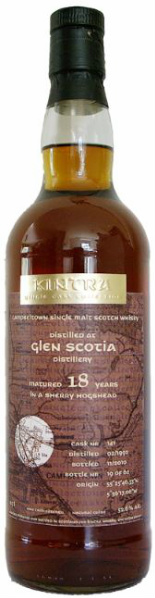
Glen Scotia 18yo 1992/2010 (52.6%, Kintra, Sherry Hogshead #141, 62 bottles)

These days some people pick their Whiskies by the color and, this one has color abundant. A nice dark Sherried Campbeltown Malt. Some Sherried Malts work wonders and some are too heavy. Judging by the color, you never know what you’re  gonna get. I almost sound like Forrest Gump here don’t I. Glen Scotia is hardly a working distillery and it hardly is a popular distillery. Well, what kind of Whisky is this then, was it a gamble picking this up, and is it worth the money? Let’s see…

Glen Scotia 18yo 1992/2010 (52.6%, Kintra, Sherry Hogshead #141, 62 bottles)Color: Copper gold

Nose: Smoky sherry with a nice touch of oak. Red fruits in alcohol. Nice cask toast (uniquely acidic) and also slightly tarry. Sweet. The red fruits make way for deeper black fruits. Excellent development! The combination of these three and the fashion they fit together does remind me a bit of Demerara rums, although without the sweetness. The way the burnt, woody and toasty parts of the nose fit together is excellent. All this from a Sherry Hogshead with Glen Scotia in it. Great. Who would have thought. With some air, also some powdery and floral notes pop up, with tiny hints of lavender soap.

Taste: Sweet and creamy, but (luckily) again helped by the character building qualities of the toasted wood of the Sherry cask and the right kind of Sherry that was in it. Mocha, milk chocolate and Demerara Sugar (on the lips). Not weak and also not cloying or heavy. Great balance and very, very tasty. The acidity from the nose, the wood and the burnt sugar stay on to form the finish. The finish is a wee bit to dry (wood and paper) and could have benefitted from a little bit of honey and slightly better balance. Still, that’s me nit-picking, this is excellent stuff.

A stunning pick by Erik Molenaar. He only bottled 62 bottles of this so I’m wondering where the rest of the cask has gone. Could he only get 62 bottles, was the rest of the cask already sold? Who knows. Just like his other 19yo Glen Scotia, this is an excellent Whisky and if anywhere encountered, don’t hesitate to pick one or both up.

Points: 88

Strathmill 17yo 1992/2010 (43%, Signatory Vintage, Refill Butt #40711, 873 bottles)

Strathmill 17yo 1992/2010 (43%, Signatory Vintage, Refill Butt #40711, 873 bottles)Strathmill was founded in 1891 in an old mill, that dates back to 1823. At first is was called Glenisla but when the distillery was sold to W&A Gilbey in 1895 they changed its name to Strathmill. Through some mergers along the way finally Strathmill becomes one of many distilleries in the Diageo portfolio. Strathmill is a big component in the J&B Blended Whisky. Not a lot of Strathmill was officially bottled by its owners. Best known of course, are the 12yo Flora & Fauna bottling, The Managers’ Dram and the Managers’ Choice that was released in 2009. This year Strathmill features in the highly priced annual releases from Diageo. A 25yo was released just recently…

Color: Full gold

Nose: Musty Sherry. Peanut oil and stale water. A little bit of old wood and almonds. Not sure this smells pleasant. Citrus oil from warm and soft tangerines. When the mustiness dissipates, a fresher apple skin note appears. Light apple compote. Still a sort of sidewalk after the rain smell stays. Maybe a trace of sulphur.

Taste: Sweet with a strange kind of sourness added to it. Pencil shavings, cardboard and dabs of licorice. Slightly waxy. Not quite balanced, but the sourness works refreshing and quite nice in its strangeness. Very malty later on with sugary sweetness and grassy and hay like notes. Not heavy on the sweets but it definitely tastes like sugar. Uncomplex.

Funky stuff, but its strangeness is interesting. Probably full of faults and to sweet to make it your daily drinker. I’m guessing this is a bottle that will stay open for a long time, but once in a while you take a sip and it becomes surprising and nice (for one glass only). To be enjoyed for a long time, although not the best stuff around. As I said, interesting.

Points: 80

Springbank “CV” (46%, OB, 10/12)

What does 10/12 mean, you might ask? Well, usually there are codes printed on the back of the front label, which you can read it through the glass. I was told the digits before the “/” depict the year of bottling, and the digits after the “/” is an operation number for that year, which in this case is a bottling run. Here 10/12 stands for the 12th operation of 2010, probably in January. In this case a bottling run. But also a marriage of casks or re-racking of casks get an operation number, so it’s not only bottling runs that get an operation number. There was at least one other bottling done of the Springbank CV in 2010 and it’s code is 10/123, probably somewhere from march through may of 2010.

Springbank CV (46%, OB)Color: Pale gold

Nose: Funky, raw and oily with added citrus notes. Reminds me of Kilkerran. Clay and yellow fruits. When concentrated, peppermint. Nice fresh oak, tree sap. Lemon curd and overall very intense and young aroma’s. Hint of unripe pineapple with vanilla and distant smoke. The wood also gives a nice spiciness to it, given some time to breathe. Good nose.

Taste: Less oily and seems peaty. Young, not completely balanced yet. peppery, paprika attack. Again this reminds me of Kilkerran. Oily and hidden sweetness. Traces of cardboard and oaky bitterness. It’s youth comes through in the simpleness of the dram, meaning that it’s not very complex and I was quite surprised by the weakish finish.

The initial mouthfeel is nice, so is the body. The nose shows a nice potential. Good Whisky just too young. Whisky like this needs some age to make it to the finish. I like Springbank and even here a lot is working for me, just the finish, thin, paper and watery, and that from a Whisky that was bottled at 46% ABV. Quality stuff, just bottled to early.

Points: 84

Ogier Caves des Papes Les Caprices d’Antoine Côtes du Rhône 2010

And here is already the last one of our trio of Ogiers. This time a more modern blended Côtes-du-Rhône made as a tribute to Antoine Ogier, the founder of the Ogier Caves des Papes Winery, located in Châteauneuf-du-Pape.

Les Caprices d’Antoine is made of classic Southern Rhone varieties like Grenache and Syrah, supplemented with smaller amounts of Carignan and Mourvèdre, making this a Southern Rhône blend (GSCM). Funny enough these are all to be found in a Châteauneuf-du-Pape wine except for Carignan, which isn’t allowed! Carignan is mostly found in Rioja-wines (in Spain it is called: Mazuelo). Carignan is mostly used to give extra body and a deep color to wines. The wine was aged somewhere between 6 to 8 months in French and American oak barrels. The wine has 14,5% ABV.

Color: Dark ruby-red with a purple and / or violet edge.

Nose: Recognizable nose of a Rhône-wine. Immediate balance and young. Again at first not very heavy. Typical of Ogier. It has vanilla from the American oak, and even a slight sourness like yoghurt. Warm earth, licorice (also from Carignan), spicy wood and lots of red fruits. Red apple skin, with raspberry and hints of strawberry. (I said it was modern didn’t I?)

Taste: Fruity and acidic. Soft tannins that hardly dry the palate. Again a light style Ogier. Licorice stays a wee bit longer on the palate. Medium finish that is quite simple. Definitely a simpler wine than the two I reviewed earlier. Very typical for this wine is the thick licorice note it has, and a slight hint of bitterness that gives the finish some character, but I would have preferred some more fruitiness.

Recommended with meat and cheese, well which red wine isn’t these days. For me it is more a sort of daily drinker type of wine that doesn’t need your attention all the time. It’s good, but nothing extraordinary. I hope Antoine wasn’t like this, although the wine is not bad.

Points: 80