Bimber “Pedro Ximenez” 2020 (50.9%, OB, Pedro Ximénez Sherry Cask #41, 335 bottles)

So earlier I reviewed three Bimbers, all matured in American Oak casks, one that previously held Rye, one that previously held Bourbon and one that previously held nothing. In those reviews I already told you that I felt those three types of casks worked best for the Bimber spirit, mostly quite similar but also at the same time quite different. I also mentioned that it would become clear in another review why those type of casks work best. Well here it is, this is that other review. This example was fully matured in an Ex-Pedro Ximenez Sherry Cask. Pedro Ximénez is a (very) sweet fortified Wine made from very ripe grapes of the same name. The grapes dry in the sun to obtain a must with a high concentration of sugar. Pedro Ximénez-casks are also very well known in the Whisky-world. Usually not for full maturation, but more for a finish. People do still feel that an ex-Oloroso Sherry casks works better for Whisky than a Pedro Ximénez cask. I understand the feeling, but this is no always true.

I once brought three Bimbers to a meet of my Whisky club. The Virgin Oak cask I reviewed earlier was somehow accepted, bust this Pedro Ximénez not so much. So proceed with caution. I might think Bimber is great, but that might not be true for you.

Color: Copper gold.

Nose: Very spicy. I know now this is quite common for Bimber. Smells like a pre-war shop selling spices. Hints of Pedro Ximénez, yet not fruity. An old leather bag. The whole is more dark and brooding. Also a thin veneer of lactic acid, acetone and a wee hint of horseradish, distant smoke and petrol. All in minute quantities (I didn’t pick upon these yesterday). Somewhat sweet smelling. Chocolate chip cookie dough. After a while in my glass, the aforementioned shop becomes somewhat more of a candy shop. Cinnamon sticks (lots of it) as well as the pink, raspberry flavoured ones? Still not fruity. The nose is quite raw and dry, like drawing in a breath of ice-cold air, yet the whole seems to be more warming, as can be expected from cookie dough and cinnamon. More of the old shop and an old book show up now as well. To be honest this is an amazing nose, with a small lactic acid fault, but the whole is pretty amazing smelling, amazing and classical. Quite a feat for yet another NAS. How do they do it? Dust and licorice powder, still this aura of sweetness in the smell. Smells like Christmas. Good balance, I like it.

Taste: Sweetish, spicy and woody on entry. Something prickly. Lots of licorice in many guises. The powdered stuff as well as the black bit of Licorice Allsorts. Sweetish and slightly sticky. Sweet wood and some raisins. The dry and the sweet work together well, not exactly cancelling each other out, thus reaching a nice synergy. Every new sip starts with wood, sometimes somewhat harsh maybe, but next comes this ever growing fruity sour note. Although Pedro Ximénez is very sweet, the Wine works well because of the underlying sour notes. Just like Laphroaigh is heavily peated, but quite sweet underneath, that makes it work wonderfully. The acidic fruit note is authentic for a Whisky that was (fully) matured in Pedro Ximénez, yet some might find it off-putting, as I found out the hard way. There is slightly less balance on the palate than there was in the nose. By the way, especially after sipping, the nose becomes even more beautiful, even after the first sip. The taste does show a slightly burnt character. Still pleasing stuff nevertheless. This bottle, more than others, got a lot of slack from some people, but now properly analyzing it, I don’t concur. Sure these are some small issues with it, as there always are (have you ever encountered an perfect Whisky, and if so did you score it a 100 points?). The whole is very tasty, elegant and pleasing. Or is it just me with a liking or fondness of Bimber? So the only faults I could find, if I’m looking for them, are the lactic acid right at the start I mentioned above, and the aftertaste being rather sticky, with sawdust and a slightly burnt note as well. The body of this Whisky is very good.

A lot is happening behind the scenes with Bimber these days, and the stories I hear, one even more crazy than the other. Still I hope they can sort it out and for things to fall into place. It would be a shame to lose Bimber. It’s a young distillery, and a young, well looking brand, yet the whisky, still all NAS is nothing short of amazing. This Pedro Ximénez one is not a casual sipper, but one for an armchair, a good book and a nice warming fire in the fireplace. A winter warmer. I can forgive it the few flaws it has, because the rest is more than making up for it. For a long time I believed that clean American oak was the way to go for Bimber. Bourbon, Rye and virgin oak, but this Pedro Ximénez is working for me as well, even though of the four mentioned it does scores the lowest. Maybe Bimber has such a nice spirit it will work well in anything. No don’t you break out the herring of Tabasco casks just yet, people. We’ll see what the next reviews of Bimber will show, but up ’till now I’m quite happy with Bimber, and I’m looking forward to the next one.

Points: 86

Deanston 24yo 1996/2020 (50%, Hunter Laing, Old Malt Cask, Sherry Butt HL 17661, 452 bottles)

Deanston is not a Whisky or distillery I was interested in for a long time, no Deanston came much later. I obviously knew Deanston existed, but I felt it didn’t get much love, and you hardly read about Deanston back in the day, so I didn’t bother even to buy it and others didn’t bring it to tastings I attended. So it flew a long time under everybody’s radar until… In 2015 Deanston released their 20yo matured in Oloroso casks. All of a sudden Deanston found itself on the Whisky map, and people started to like it. Today Deanston is seen as distillery that puts out great honest stuff, a bit of a go-to Malt if your local watering hole hasn’t much stock of Springbank, a distillery with a similar “feel”. I liked the 20yo as well (someone brought it to a tasting), but never got to buy one, instead I went for several expressions of their Organic Whiskies. I suspected these might be maybe a bit of their take on a similar series from Bruichladdich, only those are much younger, or even the recent Springbank Local Barley’s. However the first bottle I opened and reviewed here was a Bordeaux Finish I probably got a great deal on, since I am usually very careful with Wine finished Whiskies. This Independently bottled Deanston is only the second review of a Deanston on these pages, but certainly not the last, since Deanston turned on their transponder and Deanston is now on everybody’s radar.

Color: Orange Gold.

Nose: Elegant with nice clean oak notes. Fresh smelling, almost floral even, but at the same time also old and distinguished. A deep fruity, partly waxy and well aged smell (that’s the old style). This also might have to do with the glass and the Whisky warming up when holding the glass in my hand. Creamy vanilla dust with sweet barley. Excellent balance. The Sherry adds some red fruit, but not a lot, also a fresh sense of acidity pops up, next to a paper-note (paper without ink). Bigger role than expected is played by a sweet and minty aroma. I may have mentioned Menthos before. But it’s like eating those. Hints of citrussy dishwater liquid cut through the waxy fruitiness. Next more freshly shaven American oak, mixed in with some toffee and/or caramel. On occasion it smells slightly too dry, because of the fresh oak notes, to be a true dessert Whisky. Now it’s closer to an aperitif because of the lack of “bigness”, or is it? Remarkable nose, it seems like it phases in and out of different aromas and notes, phasing out and phasing back in again over time. It smells complex, but also like it won’t be big on the palate. We’ll see. Nice smell of red fruits like a good old Sherry cask would impair back in the day. Herbal and vegetal as well. Licorice with horseradish. Can’t really put my finger on it now, what this herbal bit precisely is, although there is some lavas in there, but wait there is more. Cumin with gravy, yet still more. I remember the smell of this wood from casks that held Red Wines. Creamy, so American oak ones. This Deanston has a lovely depth to it. Smell it with a low flow of air, but smell it for a longer while (in one go, without passing out that is) to unlock all the underlying beauty this nose has. More of this minty acidity, which seems to be not fully integrated. Its definitely there, this slight unbalance, but on the nose its a minor gripe. The back of the smell feels like rain on earth on a dull day.

Taste: On entry, fruity, less sweet than I thought. Nutty toffee with hints of cannabis, and yes a bit thin, but also very tasty, well balanced stuff. Quite waxy and fruity, again old style and warming. Watered down toffee. Good balance, especially if you let it breathe for a while. Definitely let it breathe! The start is very tasty indeed. It matches the nose. Wood has a soft, yet big presence, but not only. There is a sense of fresh oak as well. Somewhat prickly and spicy, wet wood yet also toasted cask, giving it structure. More than in other Whiskies, the wood plays quite a big role in this one. A lot of shades of wood are passing by, and most surprisingly, woody bitterness isn’t one of them. A lot of great stuff is going on. Pecan ice cream, with a tad of warm honey and the taste of perfumed wood. This Whisky would make for a fantastic ice cream flavour. A kind of wet bitterness to the wood. Toffee here as well. This is a very, very interesting Whisky, tasty as well, not for novices though, since you need to be somewhat experienced and open minded to fully “get” it and it would be a waste of money if you’re not there yet. It’s not cheap, nor is it an easy Whisky as well. Again one that works well now when analyzing, yet somewhat less so when casually sipping. I like it better now than when I try it when watching a movie.

This one you have to work a bit, most of the nice bits aren’t well noticed when casually sipped. This really needs your full attention. A few years back I tried a wonderful 25yo Deanston from Hunter Laing that was much easier (Thanks Paul!), Bigger, right out of the gate, and one that did not need work from the taster at all. I might have expected more of the same buying this one, but its different, is it worse? No probably not, this one is beautiful as well, maybe even more complex, it only needs your attention some more. To sum this one up: toffee, (red) fruit, and wood. By the way, this one definitely needs a lot of air, the second half of the bottle was most definitely better than the first.

Points: 89.

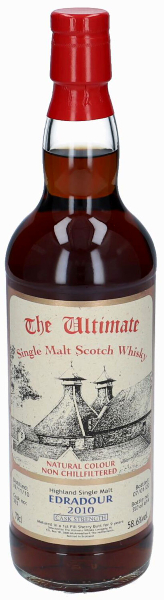
Edradour 9yo 2010/2020 (58.6%, Van Wees, The Ultimate, 1st Fill Sherry Butt #393, 614 bottles)

Seems to be some sort of a recurring theme on these pages to review a Whisky from a distillery I haven’t reviewed for a looooong time. This time around a Whisky from Edradour, which was last featured here in 2015. Edradour is a bit of a difficult Whisky. You don’t hear very often that someone calls it their favorite Whisky. Edradour is a picturesque distillery. As mentioned before, Edradour is owned by Andrew Symington, of Signatory Vintage Fame, since 2002. The distillery itself was founded by farmers in 1825 and who called it Glenforres. In 1837 the name Edradour is used for the first time. The distillery changed hands quite a few times. In a more recent history, 1982, the distillery is bought by Campbell Distilleries (Pernod Ricard), before being bought by Mr. Symington. Since Andrew is used to bottle quite a lot of Whiskies, quite a lot of Edradour Single Malts have been released since.

In 2018 Andrew commissioned a second distillery on site, So essentially Edradour isn’t just one distillery anymore. Interesting, interesting indeed. The Independent bottling at hand has been released by Van Wees of the Netherlands in their Ultimate range. Han van Wees himself has been a Whisky-icon since the sixties. The Ultimate range consists of Whiskies sourced from…yes you might have guessed it, from Signatory Vintage. The ultimate is bottled with almost always the same label, almost never in a box to keep prices reasonable. Because of this, (and the quality obviously), The Ultimate is a very popular range in The Netherlands. What did they always say about the Dutch, and the Scottish as well for that matter?…

Color: Orange brown.

Nose: Lets start by saying that initially this smells a bit metallic, a somewhat similar feel you get when tasting blood. Lots of warm, herbal and sometimes soapy wood. Dusty, dry dead leaves in the sun. Definitely somewhat vegetal, with sawdust and leather. Some raisins, honey and some indistinct red fruit aromas. Sometimes some whiffs of berry-like acidity are apparent. Coffee candy and mocha. Hints of water-based paint with some dish water, complete with some lemon-aroma. Sawdust again. Overall not really fruity, or it is masked by other stronger aromas. Some smoke and some rubber (orange air hose). Lots of fresh oak. Not really complex and not a lot of development over time, not in the bottle, nor in my glass. Overall pretty nice smelling though. For some maybe a bit to harsh, but the balance is unmistakably good.

Taste: Lots of wood, shrinking my oral cavity (a drying sensation). Right from the start, unbalanced and quite harsh. Sawdust from plywood. The nose left a way better first impression. Wood first and foremost, getting spicy and waxy with some licorice and tar next. It’s a bit punishing, but some of us like that. It’s like a Yorkie biting you in the ankles. It still hurts but you love it anyway, unless it’s not yours. Every sip starts very nice, but than the muscle comes in. A bit of a Jekyll and Hyde affair. The middle of the body fits the nose better, which is probably its true identity, yet the finish can be strangely acidic. Strange stuff this sometimes is. I’m actually amazed that for the amount of wood this shows, it isn’t bitter. The aftertaste is not the best part of the experience, yet acceptable and at times depending on the taster, it can be quite nice. Could have fooled me this is not molasses based, which obviously it isn’t.

Another difficult Edradour, which is definitely not for everybody. Works really well though right after robusto coffee. After a strong black coffee, the start is sweeter (toffee, caramel), more fruity (ripe red fruits), more tarry. Still an emphasis on wood, fresh oak, making for a very dry Whisky, somewhat peculiar after the initial sweetness.

Points: 84

The bottle was gifted to me by Auke, who thought it was just too much and is not a coffee drinker.

Bimber “Virgin Cask” 2020 (57.4%, OB, American Virgin Oak Cask #94, 263 bottles)

Earlier we reviewed two Bimbers matured in American oak casks that previously held another Whiskey. One Bourbon and one Rye. Both, together with American oak casks that previously held a Tennessee Whiskey, (like Jack Daniel’s and George Dickel), should be the type of casks that showcases the Bimber spirit best, especially when they are refill casks. This will become even more clear in my next Bimber review. That review is not yet planned, but I promise, you won’t have to wait all to long for it, just not right after this one. Just bear with me on this one.

But wait a minute, what about an American oak cask that previously held nothing more than air and maybe some water? What about a freshly made American oak cask, that has only been toasted, as they all are? Yes virgin oak. Using a new cask is not very popular in the Whisky world, and for a long time it was quite unheard of. Sure there were Whiskies made that in part used new cask, but not a lot per batch. When looking at Bimber, I was quite surprised virgin oak cask editions perform really well in the secondary market. Especially in the home (UK) market people seem to dish out some serious amounts of dough for a virgin oak Bimber. Well, since Master Quill is based in mainland Europe, the secondary market for virgin oak Bimbers has not yet reached the levels like that of the UK, so, as usual I snapped some up at a German auction. Yes I did pay somewhat more than for both the Belgium and The Netherlands editions, but nowhere near the current UK prices.

Color: Full gold, almost orange.

Nose: Creamy, buttery (Werther’s Original), with Bimbers marker: Cinnamon. Very fragrant stuff this is, slightly perfumy. Early on some hints of apple aroma close to Calvados, these are gone or overpowered lateron. Bigger and fatter than the Ex-Bourbon and the Ex-Rye reviewed earlier. Very fresh, pleasant and well balanced. Wood and sawdust. Vanilla ice-cream with a leafy and green note to it. Old cardboard and some pencil shavings. Even when smelling, the Whisky becomes less fatty. It’s dryer now. Less “big”. Still some dust, more cinnamon and some indistinct wood related spices which are easy to spot yet hard to identify. To me this one seems somewhat less complex and layered than both the Ex-Bourbon and the Ex-Rye. It is almost like the fruit wants to come out, but doesn’t manage to make it through the creamy cloak, (the vanilla, the butter and the ice-cream), that stretches over it. So this a pretty straight forward expression. Good again, yet a bit simpler. Sniffing this deeply, beautiful abundant wood notes and in no way does it smell of alcohol, similar with the other two. This is wood perfume (hints of vegetal oil and an old bar of soap). Hints of sandalwood, just less intrusive than the sandalwood coming off some men’s eau de toilette. The nose develops over time, becoming more complex with added notes of licorice combined with fresh butter. So all is good. Whereas in a tasting session with both others, the complexity just seems less, it does show multiple personalities over different sessions, so maybe this is a different way of complexity after all, or is it just me that is different?

Taste: Fruity onset, somewhat sweet. Wood, wax and some bitterness cloaked by the fruit and creaminess. The slight bitter note is paired with some licorice. Next the char and some masked (fruity) sweetness. Hints of cola? I expected it to be more creamy though, but the wood does dominate. Next some cookie dough, with a (fruity?), acidic note on top. Here I notice again that the nose seems more refined and developed after taking the first sip. Strange combination of sappy oak, sweet mint candy and carbon powder (the charred oak). A dishwater like bitterness. Usually it is the florality of dishwater that can be smelled/tasted, here it is the bitterness of soap. Just a hint, just making the whole more interesting rather than disgusting, because really, dishwater? Definitely less creamy and fatty than I’ve come to expect from the nose alone yet still bigger than “the other two”. By now the nose does evolve a lot, and again becoming more than just good.

Virgin oak casks are made of charred American oak, and since no other liquid has been interacting with the (charred) wood, a cask like this will always properly colour the Whisky. Virgin oak is often looked at with some concern, and thus it was never a common practice when it came to producing Single Malt Whisky. But after the Wine casks, the Port casks, the Rum casks and so on, it was just a matter of time to broaden the wood palette, and start experimenting with virgin oak. Why not? The market demands it, it wants choice! It is yet another marriage between spirit and “a wood” which is essentially what Whisky is. Is it better than the others, no it’s not, it’s different and it is yet another take, and often the results are mediocre at best, just like the early Wine casked Whiskies. Sgtill a lot to learn here I guess. For Bimber though, virgin oak seems to work pretty well, the quality and the character of the liquid just work with the virgin oak. Bimber aficionado’s know this, as I said earlier, because virgin oak Bimbers do very well in the secondary market, much better than its Bourbon and Rye counterparts. Is it better than those, no it is not, I say it again, but it is a welcome variant, but for a lot less you can purchase an Ex-Bourbon Bimber or an Ex-Rye one which are also much less scarce and offer at least the same amount of quality, just with a different overall feel.

Final remark. I’ve come to find that to get all out of a Bimber, you need to give it peace and quiet and also give it some time. Comparing the three: Virgin has the more straightforward nose, yet very chewy and likeable. Rye is the most complex, distinct and fragile. The Bourbon is somewhere in between the two, less fragile but much closer to the Rye than the virgin oak, so no surprises there really. The Virgin oak is actually a different puppy, and a big puppy at that. Based on the taste, the Virgin is again a different puppy, way more creamy and sweeter, and more about the cask than the other two, which show more of the (quality of the) spirit. And tasting all three back and forth, it seems to me the Rye seems to have the best balance of the three, as well as its delicate complexity. So If I had to buy just one: The Rye. If I could pick two: The Rye + The Virgin. They are not created equal, where the Rye and the Bourbon almost are. If I could only get the Bourbon, no problem whatsoever. Both the Bourbon and the Rye are quite similar, with enough to set them apart in the details, today I prefer the Rye, but tomorrow might be different. The virgin, however, is a welcome “distraction” or better: a variation on the Bimber theme. Especially after trying the Bourbon and the Rye back an forth to pick a favourite (emptying both bottles in the process), and actually, the Virgin is also a very good dram. All three are definitely worthy of their spot under the sun, and on my lectern.

Points: 87

Pulteney 15yo 2004/2020 (63.3% Gordon & MacPhail, Connoisseurs Choice, Cask Strength, Refill Sherry Butt No. 629, 20/092, 507 bottles)

Pulteney is the most northerly Distillery on the mainland of Scotland, just 30km shy of John O’ Groats. The distillery is situated in Wick and lies in a part of Wick that used to be called Pultney Town named after its founder Sir William Pultney. The distillery itself was built by James Henderson in 1826 and was initially called Pultney Town. I don’t think James built the entire distillery with his own two hands though. The distillery was owned by the family of James for nearly a decade, but the family had to sell off the distillery in 1920 due to financial hardship caused by WW I. The distillery was sold to James Watson & Co, owners of Ord and Parkmore. In 1923 James Watson & Co. dissolved into John Dewar & Sons (D.C.L.), which closed the distillery in 1925. The distillery in its closed state changed hands several times, and several owners were busy rebuilding the distillery. In 1951 production resumed and in 1959 new stills were installed. In 1995 Pulteney, together with Balblair (part of the same portfolio by then) were sold to Inver House Distillers, the current owners. The last review of an official (Old) Pulteney on these pages, was distilled in 1982, and must have been one of the early releases by said owner. This time however, we are going to have a look at a 2004 distillate bottled by good old Gordon & MacPhail in their new Connoisseurs Choice Cask Strength range.

Color: Light orange gold.

Nose: Very malty and lightly Sherried. Slightly sweet smelling, soapy and dull (and I don’t mean boring). Right from the start a classic smell. I would have never guessed this was distilled in the 21st century. Slightly off-balanced acidic fruity smell. (This is the Sherry influence). Old paper, hints of pencil shavings and spices (part of the “classic” smell). It doesn’t have perfect balance, but still I do like the nose of this dram a lot. Who cares about perfection? Old, dusty, at times waxy, yet fresh and vibrant. It has been a while, analysing something like this. I have to say, based on the nose alone, this was a very welcome buy. Just lay back and sip it, clear your mind and let everything go away for a while. No children, no work, just you, Norah Jones, and your dram with its classic feeling. Wonderful wood spices. Fruity and some distant meaty notes as well. Aromas of an old court yard, of old buildings. An usually busy place, but now quiet on a Sunday. More nice wood spices, yet now helped along with some old honey (which has some nice staying power), soft mocha and whipped cream. Soft licorice added to the spices already present. The balance regains itself after some breathing, and it doesn’t need a lot of time to get there. Occasionally more whiffs of old paper, toasted cask and breaths of fresh air. Yes very special, what this is able to bring up from my memory of old places I visited and classic drams I had before. Keep it moving around in your glass. Keep Matilda waltzing so to speak. After some more extensive breathing the (sweet) licorice note gains in strength. Yes, this has a wonderful nose. A fresh pour is definitely more closed, so there is quite some nice evolution going on in my glass.

Taste: Prickly and again initially somewhat unbalanced (or is it?), yet so tasty. Quite sweet now, perfectly balanced by the woody notes and cigarette ashes, so it doesn’t feel sweet overall. After the first sip, the nose of this Whisky is really excellent more. Right out of the gate, a lot of different things are happening. Different tastes shoot off in many different directions. Pepper, Peppermint, bamboo, cold dishwater, licorice and fruit to name but a few I just caught in the moment. I’m sure I’ll catch some more going forward. Second sip starts again somewhat sweet, yet less so than the first sip. It shows almonds and more creamy notes, as well as more dry wood. A medium Talisker-like white pepper attack, paired with the licorice and cigarette ashes I mentioned earlier, and some sweetness. All of this also paired with the almonds, wood and its medium bitterness, which is hidden well by the medium sweetness. I guess all these paired notes constitute a very good balance. The fruits here seem somewhat different, more acidic and lemony than the nose showed. The balance is good and the palette of tastes and aroma’s is just great. Give it enough time to breathe. I’m stopping writing notes now, but rest assured, this still has even more to give, it just keeps evolving like mad. Wonderful tasty and fruity finish, with some nice oak, just not a lot of it. Aftertaste is perfectly balanced and friendly. Amazing drinkablity at this ABV. This never needed any water.

Even though this might have some minor flaws across the board, it is also a very good and tasty Malt. I don’t even know why I’m pointing out these minor flaws all the time, because by now we also know this is an excellent malt. Both the nose and the taste of this Pulteney are complex, the layering (the evolution over time in my glass) is impressive. We’re definitely in the in the “you-should-have-bought-a-second-bottle” territory with this one. But as is always the case on these pages, this is only my personal opinion, and as we all know, tastes can differ a lot. Keep in mind that ones taste can shift over time and are highly dependent of the moment as well. Tasting is a subjective science. So for me this is really great stuff, and it might, it just might not be entirely true for you. It is for me!

Points: 90

Tomintoul 12yo 2007/2020 (65.7%, OB, Single Cask, Bourbon Barrel #11574, 235 bottles)

After all these years here we have another first on these pages. Recently Speyburn showed up here and now Tomintoul is featured here for the first time, so another old, yet not all that old distillery, since it was founded (only) in 1964. In this case, for me, Tomintoul is a very well known distillery and should have featured earlier, since I have already tried a lot of stellar bottlings from this distillery. Here we also have an official bottling. Not one of the core range, but one form the Single Cask series. I haven’t seen it here in shops in mainland Europe, so I guess this is some sort of an UK exclusive. I have managed to receive some drops of this at a Whisky festival. It were the last few drops from the bottle, so I hope it is enough for a full blown review.

Color: Light Gold.

Nose: Typical Bourbon cask, yet an especially very fragrant offering. Very big and aromatic, floral and nutty, making it quite special, setting it off from the typical Bourbon cask offerings. Appetizing. Fresh, like a cold day after lots of rain. Wood but in a soft way. No harsh oaky notes. So floral but also fruity. Quite citrussy. Seems like a simple refill barrel, but a very good one. Right out of the gate, quite big, aromatic and complex. There is a lot happening at once, as well as more than enough evolution, whilst sitting in my glass. The aromatic are a bit Christmassy. Bonfire and Christmas perfume. Toffee and caramel, yet also slightly woody and waxy. The fruity citric acidity sometimes drops out and comes back, like a turn signal or a neon sign. The nose is very good and also very interesting for a “simple” Whisky from a Bourbon barrel, well, let me assure you, simple it is not! The amazing complex floral aroma just keeps giving and expanding like a budding flower, but it is a big aroma, not a delicate small flower, but a big overpowering one, yet the smell is not overwhelming in this Whisky. The Whisky just keeps opening up, give more and more. This is a really big complex thing! Amazing stuff. I hope it is similarly great on the palate as well.

Taste: Fruity on entry, also sweet on entry. Very fruity and much more fresh and acidic than the nose alone promised, Sweet yoghurt with peach and some hints of licorice. Fresh, yet not really virgin oak. Yes at times it is a bit hot, but I wouldn’t give it the ABV it has. Wow! Hints of ashes and toasted cask. Vegetal and very well balanced. Slight woody bitterness in the finish and especially in the aftertaste. It starts fruity and sweet, turns dry quite quickly and then it shows its third tier with the woody bitterness, which sits a little bit outside of the balance for this Whisky. Layered. Nutty toffee. When finally tasting this (I smelled it for a long time), the nose just keeps evolving more and more. The profile and the ABV makes this a Whisky not entirely suitable for novices. I believe, experienced “drinkers” will appreciate it, and will appreciate it a lot. Medium length aftertaste, which is nice and tasty.

Not a lot more I can add to that. This is a remarkable Whisky, which is finished after only 12 years and coming from a “simple” Bourbon barrel. I want a full bottle!

Points: 89

Thanks Ben.

Royal Brackla 14yo 2006/2020 (59.5%, Gordon & MacPhail, Cask Strength Connoisseurs Choice, Refill Hogshead #310821, Batch 20/110, 281 bottles)

Wow, on it for a long time, and still I manage to review a Scottish Single Malt Whisky that has never been featured on these pages before. How nice, and it’s not a new distillery either. This distillery was founded back in 1812 and called itself Royal since 1835, a title awarded by King William IV. Today Royal Brackla is part of the Dewar’s portfolio, owned by Bacardi-Martini since 1998. Other Scottish Single Malts in this portfolio are Aberfeldy, Aultmore, Craigellachie and Macduff (marketed as Glen Deveron). Apart from Macduff that was owned by William Lawson Distillers as well as the William Lawson’s Brand, the other four distilleries, as well as the Dewar’s Brand, were bought from the newly formed Diageo to avoid a monopoly position. Of the five Single Malt Whiskies, Royal Brackla was the only one absent from these pages until now. As said, the company also owns two blends: Dewar’s and William Lawson’s, both big sellers, and since both are big sellers, Bacardi didn’t do a lot to market the five Single Malts at first. Only since 2014/2015 a big relaunch of the Single Malt portfolio was carried out. They called them The Last Great Malts, a bit of an ominous or sad name to be frank.

Color: Pale White Wine

Nose: Very appetizing, barley, barley sugar and yellow fruits. Very nice perfumed wood, hay, American oak, very elegant. I already love the nose. It reminds me of Whiskies like this that were bottled twenty years ago. Floral and fruity and both go together well. Soft, yet this still manages to leap out of my glass. Mocha and barley. Since the fruit is the dominant aroma, this also smells a bit fruity/sweet. Red fruit (raspberry) candy (again a sweet smell) mixed with some wet wood. The wet wood is a softer (greenish) wood aroma, setting it apart from more spicy dry oak. This is an extremely balanced smelling Whisky for a sunny day and a happy mood. This is not a melancholic drop, but in a way it also is, when it reminds me of Whisky from a while back. For a simple ex-Bourbon cask matured Whisky, this is really likeable and nice. Well made, aged in a good cask. Well done USA! Nice aroma’s and quite some complexity to it as well. There is a lot happening between the sprit and the active cask. Lots of organic and green notes. I would love to have this, when lying on a blanket in some quiet field on a hot, yet slightly windy, summers day. Far from everybody and everything. Yup, melancholic mood Whisky it is. After a while, slightly more oak, with a hoppy note, still green and wet though. Hints of vanilla and some indistinct dry kitchen spices. Hot butter and wax. Good stuff. The more air this gets, and time obviously, the fruitier it becomes. Definitely melancholic, or is it just me?

Taste: Sweet on entry. Very fruity, right from the start. A nice slight white pepper attack, with waxy and quite some wonderful woody and nutty aroma’s following suit. After the first sip, the nose even gets better than it already was. The Whisky evaporating inside your oral cavity, helps the smell further along. The fatty sweetness does dissipate quite quickly for a short acidic burst, leaving room for another yet shorter peppery attack and a somewhat thinner feel. The wood, still green and vegetal, now also shows an austere bitter note. Sappy, as in tree sap. After this happens, the balance can’t really match up with the wonderful balance of the nose. When the bitter note appears in the taste, aroma’s come to the fore, that aren’t really in harmony with each other. The nose itself remains wonderful though, maybe even better than before. Still a kind of bitterness in the finish that doesn’t match the whole, and even for an almost 60% Whisky, a light and shortish aftertaste. Whiskies like this need to be sipped in a high frequency.

So it comes apart a bit in the finish, but the nose is very good en even grows over time, so give it time. I will have fond memories of this one, even though it has this slight “defect” towards the end. Its a defect that can be sorted by upping your sipping speed. So at first you have to be slow, to let it breathe and after that the “race” begins. Like a stage in the Tour de France that ends in a sprint.

Points: 87

Cardhu 11 (56%, OB, Special Release, 2020, L0120CM004)

When I think of Cardhu, or Cardow as it was used to be called, I always remember the fond memories first. The official 22yo, a special release from 2005 was really good. So Cardhu is indeed able to make a Whisky worth noting. Sure, a lot of Cardhu is sold around the world, which doesn’t automatically mean it is very good. It can be, but often it is not. In the core range we have a 12yo, a 15yo and a 18yo, as well as “Amber Rock” and “Gold Reserve”. The Game of Thrones is a variant of the Gold reserve, and let’s not forget the Special Cask reserves which ran somewhere between 2007 and 2012. Most of these I have tried and none of them scored 80 points or higher. (I have yet to try the 18yo and the GoT edition, and surely the 18yo should be able to score in the 80 point range, don’t you think?). For Master Quill, I tried the 2010 Special Cask Reserve and that was a rather disappointing experience. I have tried some Cardhu from the 70’s, and even at 8yo and 43% ABV Cardhu could really rock. So even with this wonky reputation, I was really pleased to see a cask strength 14yo pop up as a special reserve in 2019 (and again in 2021), as well as this 11yo in 2020. This 11yo, was offered at a special price for a short while, and not having bought a Cardhu in a long long time, (and really digging the label), I went for it…

Color: White Wine

Nose: Malty, bread-like (toast), a bit waxy and with some yeast. Clean and fresh otherwise. Citrussy. Quite fruity actually, slightly sweet, with more of the (sugary) barley notes. Slightly milky, which to me is a note of underdevelopment. Luckily this note seems to dissipate after a while. Yellow fruit jam. Very friendly. Soft hints of wet wood, toasted oak and wet earth, combined with some mocha. Leafy and green. This is a lively and friendly Whisky. Floral perfume and slightly soapy. You’d imagine your grandmother liking this (if she drinks anything else beyond tea). Slightly dusty, with a tiny hint of heavily diluted apricot and peach syrup,as well as some (new) cardboard. Sometimes faint notes of a sweet White Wine crop up. As said above, this Malt has a (milky) youth to its nose, which is somewhat masked when you have it by itself (it is noticeable right before the fruity bit kicks in, and definitely more noticeable when the bottle was freshly opened). If you pour yourself another dram before or after this, this milky youth becomes apparent still. So, in the end, this Malt is fruity and floral and the two go together quite well in this Cardhu. This promises to be a highly drinkable Malt, lets see if that is the case here.

Taste: Sweet and peppery. Waxy, very, very fruity, fatty and nutty. Appetizing. Sometimes, this reminds me a bit of Bladnoch, but the fruit sets it apart. The nose does have this greenish note to it, lacking though on the palate. Dry compressed fruit powder candy, as well as canned syrupy yellow fruits. Peaches in sweet yoghurt. Again in the vicinity of the fruity aroma, this Malt also shows its youth here. Showing some slightly underdeveloped notes. The wet wood from the nose is here as well, complete with a slight bitter edge. This is not a problem at all, since the syrupy sweetness quickly takes care of any bitterness, although the feeling of a woody backbone remains. The wood morphs a bit into cold dishwater. Sounds worse than it actually is. Interesting combination of yellow fruits, (stingy) white pepper and the tiniest hint of sweet licorice. Chalk and fruit. Supple juicy fruit aroma’s with quite some alcohol, yet with a dry and chalky feel to it. Fruity sweetness and licorice in the finish and a tasty and warming aftertaste with quite some length.

This is a morning Malt to be had by itself. It is at its best by itself, because it is quite a good Malt, when it’s not compared to anything that might follow. Nevertheless be warned that this doesn’t have a morning ABV to match the feel of this Malt. Apart from that, this is quite a nice Cardhu to boot, with quite some balance to it as well. However, for me personally, it also shows a sort of underdeveloped side of itself, keeping me from scoring it even higher than I did. It is very good and very nice, just has some minor flaws to it. Still, one of the best official Cardhu’s I have tasted. A good buy and it went pretty fast, always a good sign.

Points: 87

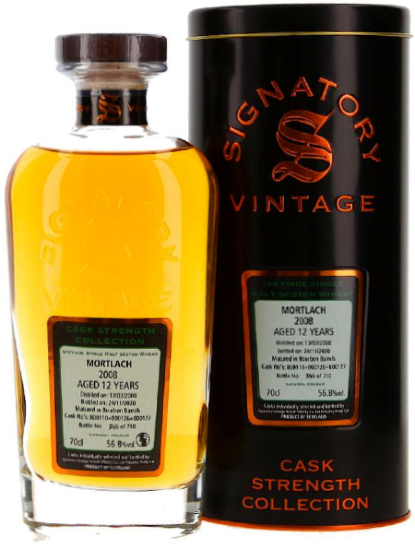
Mortlach 12yo 2008/2020 (56.8%, Signatory Vintage, Cask Strength Collection, Bourbon Barrels #800110, #800126 & #800127, 710 bottles)

After the wonderful and very interesting Loch Lomond, let’s try another Whisky fully matured in ex-Bourbon casks. This time one that was distilled at Mortlach. Mortlach has quite the reputation with Whisky Aficionado’s and rightly so. For instance, Mortlach 16yo was arguably the best offering in Diageo’s once extensive Flora and Fauna Range. Having this niche popularity, Diageo decided to do something more with the brand that is Mortlach and discontinued the 16yo around 2012 in favour of a Rare Old (NAS, not rare nor old, 80 points), an 18yo and a 25yo (84 points). All in 500 ml bottles! These three were released in 2014 and replaced in 2018 by more common age statement versions: 12yo, 16yo (a magic age statement for Mortlach) and 20yo. All three now in 700 ml/750 ml bottles. Mortlach is known for its Whiskies matured in Sherry casks. The 16yo Flora and Fauna is an example of this, and I thought an offering by Wilson & Morgan was even better than that. No surprise then, this has matured in a Sherry cask as well. I also reviewed a Provenance Mortlach earlier, I suppose was matured in Ex-Bourbon wood, which was not so interesting, so let’s see if this Signatory Mortlach is any good, or we should stick to Sherried versions of Mortlach altogether.

Color: Light gold.

Nose: Winey, clear glue, creamy and slightly acidic. Not your usual creamy vanillin kind of smell though. A moment later some more fruits emerge, as well as the creamy vanilla powder notes. Dusty and slightly smoky (probably from toasted oak, not peat). Hints of gravy and cold dishwater, and some soft sugared fruit notes. This is a big Malt, which already shows amazing complexity. Not a cloying smell, since a nice fruity acidity keeps playing its part. This is a Mortlach and Mortlach is a special distillate, and boy, does this smell special. For some this may be a simple kind of Whisky, just pour new make into Bourbon Barrels, mind you, they didn’t even turn those into hogsheads, lazy buggers, and job done, easy, simple, no hassle. Yet Mortlach in a Bourbon Barrel, comes out slightly different from Whiskies from other distilleries matured like this, there is always something different about Mortlach, richer, beefier, meatier, just bigger, special. It’s almost like the fatty acid chains are just longer with Mortlach (without becoming soapy). Hints of raspberry hard candy, next to the half-ripe yellow fruits. Just not as exotic as it can be in well matured Tomatin’s. However, keep in mind that this is only 12yo, and not 30yo like the Tomatin’s I just mentioned. I don’t even know why I brought that up, since Mortlach and Tomatin are very different from each other. So fruity it is, just not all that tropical.

Taste: Sweet and very, very nutty and fruity at the same time, much more fruity than expected actually. Some wood, more akin to pencil shavings than oak, to be honest. Including a slight harmless bitter note. Again, not cloying since the big body also has enough fruity acidity to help it along. Nice. What a wonderful start. Signatory have recently issued some Mortlach Sherry Monsters from the 2010 vintage, which are more or less the same age, but I can’t imagine those ones beating something like this. Licorice powder, some paper and some spices as well as a peppery backbone. Sometimes a sweet minty note pops up. Mocha, milk chocolate. Tastes like a dessert Malt now. Hints of hay, more paper and overall still quite complex. Nice finish and a long warm aftertaste, including the glue again, which you pick up on initially when smelling a freshly poured dram of this.

This is an excellent Mortlach that was not matured in a Sherry cask. Very big and tasty, with complexity and length. The quality is unmistakeable and this will please a lot of Whisky aficionado’s. Its a good example of the spirit of Mortlach and a good example of what “simple” American oak can do. The quality is right upfront, and easy to see for everyone. I scored the Loch Lomond from the previous review slightly higher than this Mortlach, but I also believe, that one might not be for everyone, and you can only find the true beauty of the Loch Lomond when you work it a bit. The Mortlach is more suitable for casual drinking, its always good. the Loch Lomond needs your full attention, otherwise it can be a grumpy old git and will Will-slap you across the face.

Points: 88

Talisker 8yo (57.9%, OB, Special Release, Carribean Rum Cask Finish, 2020)

Talisker is no stranger on these pages, and this 8yo is already the fifteenth Talisker reviewed, and why not, I ask you. Talisker has a lot going for it. It is an excellent distillate, has some peat, although not as much as some others on the market, and has a distinct and maybe unique feature, it is often considered to be peppery. A lot of wonderful aroma’s can converge in a Talisker. Works well in both Bourbon and Sherry, and the core range 10yo is already a very good Whisky. One other distillery manages to tick all these boxes save one. The distillery’s name is Springbank and the box not ticked is the box for pepper, I did say it was an unique feature, didn’t I?

In 2018 the first 8yo was released in Diageo’s annual special releases series. That “first” 8yo, was a very good one, and I remember back then, (and this is not that long ago), the talk of the town were the plethora of NAS releases (in general). At the time, there were many Talisker NAS bottles released as well. This 8yo was so good, a lower number like 8 suddenly became acceptable again, and the public always seem to prefer an age statement, so better a low number than none at all. I guess this took Diageo a bit by surprise, who knows, because there wasn’t an 8yo released in 2019. In 2020 this Caribbean Rum version saw the light of day (rushed maybe?) and earlier this year, another 8yo was released, from the smokiest stock they could find. Looks like the 8yo is here to stay. We’ll see what next year brings.

Color: White Wine.

Nose: Initially milky and young. Tasted blind, I would have guessed this was a Lagavulin, since it has some similarities with the 8yo and the 10yo, similarities, which, I didn’t like by the way. I really, really like Lagavulin, never came ‘cross one that was sub par. So when coming across the 8yo and the 10yo, it felt a bit like a sell-out by Diageo, and I was overly disappointed, damn, I didn’t think they would stoop so low as to mess with the ‘vulin. But I digress, back to the Talisker at hand. Sweet tea leaves (wet), rain water and dead dry leaves on the street in autumn. It shows more (quite nice) wood spices when the initial milky component wears off a bit. Spicy, with mild sulfury organics, sweet mint and orange powder. Smells of a distant wood fire whilst walking on a snowy street at night (by yourself). This bit is great. When drinking this Whisky casually, I have a hard time to find any notes of Rum, both in the nose and in the taste. I do now, but for me they are more similar to a Rhum Agricole than the Caribbean Rum that is stated on the label, and by the way, Caribbean Rum, that isn’t really narrowing it down now doesn’t it? So Rum yes, but there isn’t a lot of it though. I feel all the alien notes this Talisker shows us, maybe aren’t even coming from the Rum casks at all, but they probably are. Diluted smoky toffee notes and hints of Brazilian Rum (Epris 15yo). At times sharp. The wood turns towards, toffee, coffee, mocha and pencil shavings. This will improve a lot with air, so give it time, but if you pour yourself another dram, the whole experience starts anew, including the wait for the nose to improve. Recognizable as a Talisker though. Apart from the wonky start the nose is all-right.

Taste: Starts with coarse alcohol, like Wodka, right from the start, not balanced. Paper and cardboard and some residual (barley) sweetness. Not much later the wood and all the lovely aroma’s from American oak kick in, as well as a peppery attack, yes, there it is. The aroma’s are there but the balance still struggles, like its missing a component. The wood also impaired a healthy amount of bitterness onto this Whisky, but since this Whisky also has a bit of sweetness, the bitterness is kept in check. The bitter notes take residence right on the very back of your tongue. Smoky and thus a peppery attack as well, so it’s still a Talisker after all. Fresh almonds, wood and latex paint. Come to think of it, this one isn’t really all that complex. The body of the work is good, the ending a bit less, so the finish shows the unbalance again, and the aftertaste does so as well, and shows us again the bitter notes this has.

First piece of advice. Pour this dram and put it away, let the air do its job first, because the first aroma’s that escape from your glass are too close to new make spirit. And after a long wait the whole experience is much better. The nose improves a lot and therefore the taste is helped along. In the end it is an interesting Talisker, no regrets opening it and it wasn’t a nasty chore to finish it as well (not empty just yet, but it will be soon). I won’t be opening a second bottle anytime soon though. Buy the 2018 version in stead, and well see about the 2021 edition in the (near) future.

Points: 85