This is part three (of four) in Erik’s not-so-run-of-the-mill left behind bottles series. This time a super dark heavily Sherried offering from Cadenhead and Highland Park. Highland Park always went well with ex-Sherry casks. I used to be a big fan of Highland Park, one of the first I considered to be of the highest class available from Scotland. It is such a great tasting Whisky, honest, honeyed and humble. At least it used to be. It didn’t shout off the rooftops how great it is, and still managed to have a pretty solid fan-base around the world. Today however, Highland Park (and The Macallan) are part of a humongous marketing machine, which I tend to distrust. Sure the Whisky is still good, and there are still many, many, amazing bottles to be had (for a price), but the feeling is different, the feeling’s gone, sorry Highland Park. Just compare it to the way Springbank and Bruichladdich are marketed. The feeling is entirely different with these. Yet here we have an independent offering of Highland Park.
Cadenhead, by the way, thanks to Mr. Watt, seem to have reinvented themselves for many years to come. This bottling, it doesn’t say so on the label, seems to be the result of marrying two Sherry Butts together.

Color: Very dark orange brown, just shy of a mahogany hue.
Nose: Deep and dark, lots of oak, making it fresh. Toasted oak, and some warm plastic, which fades and disappears luckily. Fruity heavy Sherry. Meaty oak, and licorice. The wood also has quite a big floral component. Perfumy even. Next I got some Rhum Agricole “sweetness” mixed with dark chocolate. This one is neither red/black fruity, as old Longmorns nor thick and cloying. In the end it has more of the latter than the former. Elegant wood, yet definitely not old skool. Good Sherry, but modern. More and more whiffs of Rhum Agricole and cold gravy. Also drier spicy notes when you let it stand for a while.
Taste: Starts sweet and very nutty. With emerging bitterness when swallowed. A Doppler effect of bitterness. The bitterness is kept in check, so no problem here. Good tannins, not drying the mouth. Silky texture. Hints of vanillin and milk-chocolate pudding. Fruity and again this bitter end of the body. And a big body it is. Well it has been in rather active Sherry casks for 25 years, so no surprise here. Paper and clear glue. Honey, the stuff of bees, not your darling, I hear you ask? Nope, no not really, although it does remind me of licorice candy made with honey. Hardly a Highland Park. Its about the Sherry cask this one. Black tea bitterness, but with a nice edge of coal. Steam punk, but not old skool. The more this breathes in my glass the “older” it gets. More coal, and more steam (and motor oil). It may lack a tiny bit in complexity, but it makes up for it with development (in my glass). The finish is simple and again bitter (medium), but the body is very good (it finally does get into the realm of Longmorn after extensive breathing). Long aftertaste of oak, licorice and black fruits and yes, the bitter bit has the longest breath of all the notes. So it has its good and less good points. Maybe this should have been bottled a few years earlier?
Letting it breathe is a must for this Whisky, it makes all the difference.
Points: 87
 Color: Copper brown.
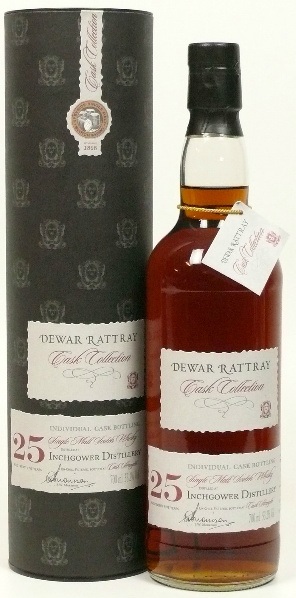 Color: Dark copper brown.
 The brand, as well as Malteco, is owned by Caribbean Spirits and worldwide distribution lies with Italian outfit
  Color: Copper brown orange.
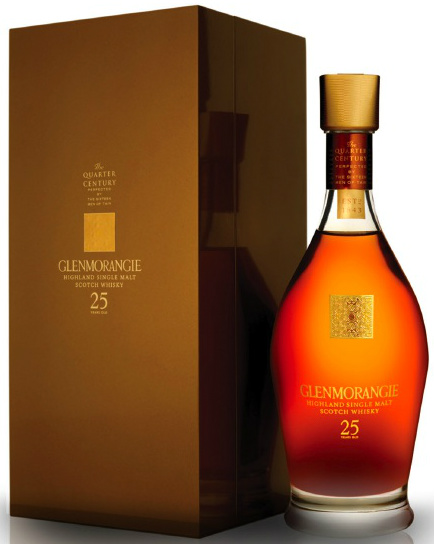 Color: Orange gold.
 Color: Almost full gold.
 Color: Copper gold.
 Color: White Wine.
 Well lets end this month with something different. Wow! Look at the label. Pure Grain Scotch Whisky! Today we call this a Single Grain Whisky. North British was founded in 1885 and lies near Edinburgh, on the site of a former pig farm. North British is a joint venture between Diageo and The Edrington Group. I don’t think Diageo needs an introduction, but the Edrington Group today is best known for their Highland Park and Macallan distilleries and The Famous Grouse and Cutty Sark blends.
 Most important is that this still operates continuously as opposed to a pot still. The alcohol from a continuous still is much cheaper to make. The spirit is made at a higher strength (ABV) and has less flavor, more neutral. This kind of whisky is made for blended whisky, and is not often bottled by itself. If bottled by itself, like this single grain, almost all of it is aged for a prolonged period of time, to get as much flavor as possible from the cask is matures in.
 Color: Gold
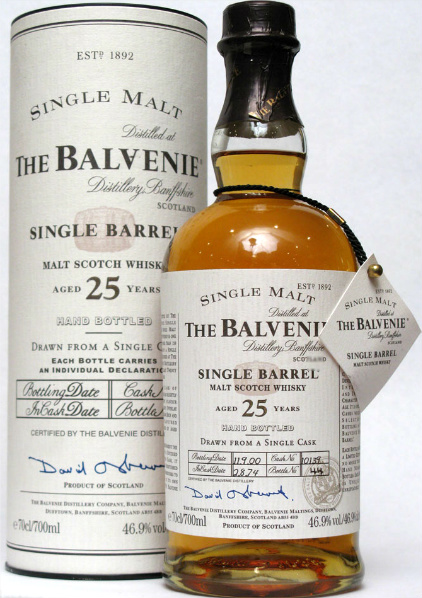 Color: Gold.
 It’s not only the bitterness that is obvious. Comparing these two there is infinitely more. That goes to show, how big the differences can be between two similar bottles, and how buying without tasting is so tricky. I would also like to point out that the reduction that obviously took place here isn’t a problem, this Whisky holds the fort. Actually it’s the best Balvenie I had in a very long time. Still no 90’s score though…
 Master Quill