Caol Ila was founded in 1846 and rebuilt in 1879 and 1972, and in 1974 six new stills were installed. As of 1999 also unpeated whisky is made, which is nice, but also makes you wonder about single casks sold to independents since that date. Mainly used for the Johnnie Walker blends, but more and more used as a single malt due to the popularity of Islay malts. If I’m not mistaken the first official bottlings were the Flora & Fauna 15yo and a few Rare Malt editions. In 2002 the 12yo, 18yo and a cask strength were released and a few years later a Moscatel finish Distillers Edition and Moch were released. During that time also three versions of a 25yo were released, I know were pretty good.
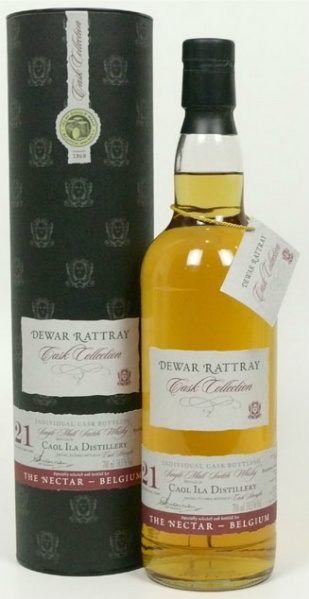 This whisky was distilled on December 12th 1984 and bottled 21 years later on September 6th, 2006, and was bottled for Belgian outfit, The Nectar.
Color: Light Gold.
Nose: Fat Peat with ash. Very leafy, as in fresh, non-musty wet leaves and crushed dried leaves. Sweet and balanced. Green apple skin. Sweaty, tarry and with distant flowery perfume. Hints of wood. Crushed beetles, (not Beatles). Sea with some smoke and late (dare I say unexpected) fruitiness.
Taste: Sweet and chewy, with elegant peat. Nutty, almonds and some walnut. Some white pepper and plants. Also the sweat returns which fits the profile. Nice balance. It has some unexpected fresh sourness in the warming finish. No wood to speak of, but it has the wood spice. Finally, some salt on the lips, during the yellow fruity finish (apricots and peaches obviously). Astonishing.
I quite like this. Due to its perfect sweetness this is dangerously drinkable. Not as complex as I might have hoped, but hey, it’s not a super old Islay, and we don’t drink those for their finesse do we? Caol Ila in al its guises is a very nice alternative to all the other (increasingly expensive) brothers from Islay.
Points: 90
 Let’s try another Tripel.
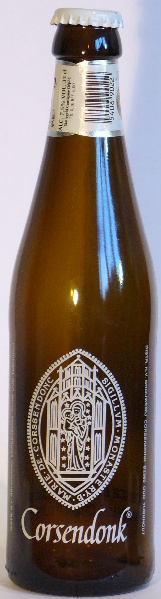
  As you know life is hard. For this review I had to drink three bottles of the Corsendonk Agnus. I bought a couple of bottles a long time ago that were brewed in august 2006. I tried one of those earlier when it was around three years old, and this time I’m trying two, of the same batch, that are now six years old. Yes you can drink Tripels well past their dont-drink-or-you’ll-die-of-food-poisoning-date. Finally I also bought a new one that was brewed in february 2012. Following notes are for the aged ones:
 Well first of all, after the prolonged ageing period, the beer turned a lot darker, than the same batch at a younger age. Originally it was radiant gold, now it turned a lot more copper. The meaty part on the nose disappeared, but it gained a lot of fruity esters. With this it gained a lot of complexity. The three-year old one was more refreshing (more lemon), but this still is refreshing. It gained more depth, but it didn’t even change that much, tastewise. It is easily recognizable as a Corsendonk Tripel. Personally, I find six years of ageing a bit too long. I think it is at it’s best, around three years old. The new batch was, in comparison, very light and really easy to drink, with an aftertaste you only know of your standard beers. After seeing it’s potential I would recommend ageing your bottles for three years. But if you’re interested, longer can be quite fun too. Drinking this right after you bought it is a waste of your money. Put it in your cellar and be patient!
 After the fabulous
  It’s all right. An example of a typical Tripel. I prefer other Tripels, which will be reviewed eventually. After the Pale Ale this is a bit disappointing. Maybe I had too high expectations for this? It reminds me a bit of a Duvel, but Duvel is better (for me). Don’t get me wrong, this still is a pretty decent beer, but for me it doesn’t add anything to the world of the Tripel. Actually, maybe this isn’t even an Abbey-style Tripel. But a heavy Blond Ale with a third fermentation in the bottle (which a lot of people call a Tripel). It just has to decide which one of the two it really is.
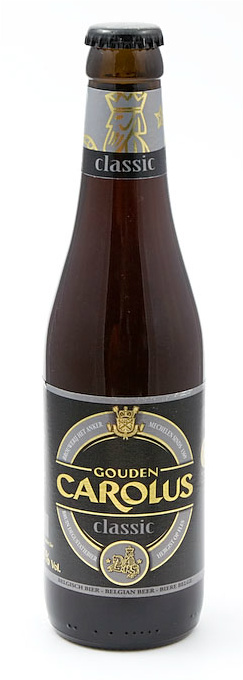 Gouden Carolus, once, only one beer, but since then a lot more versions of Gouden Caroli hit the market. Actually there was an emperor’s beer before 1960, but this is the year the name Gouden Carolus was given to it.
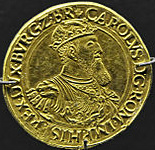 emperor Charles V on it, who spent his childhood in Mechelen. This beer is also from Mechelen, what a coincidence! It is even a protected regional product from Mechelen.
 What catches the eye with this beer is the statement: “bier met smaakevolutie” thus stating that this is a beer with an evolution in taste. Great! I love that in my drink. Evolution.
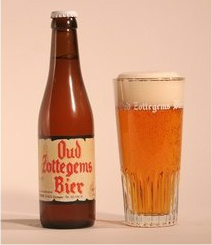 Color: Murky brown, not much foam.
 I would say. Drink this beer! It’s very nice ánd nearly extinct. It has become a very regional beer and deserves a lot of attention. Losing this would be a shame. I’m definitively buying this again, but sure am curious for the Grand Cru version of this. So thumbs up and a well-earned:
 Still nice weather and too hot for writing blogs, so hereby I apologize to my readers that it took a few days for a new review. This time a review of beer brewed by Bavik in Belgium called Petrus Aged Pale. This beer was initially intended only for the US market, hence the typical warnings on the label, even though I bought this bottle in
 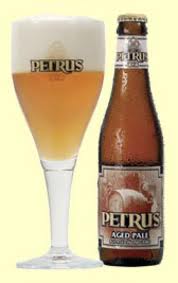 Color: Gold
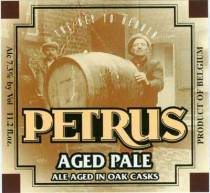 this simple beer let’s you know it has a lot more going for it. It awards you with a lot more complexity than you would say at first. It is close to a Rodenbach but in my opinion, better balanced and way more complex. You just have to work it a bit. For me this is better than the classic Rodenbach, but I’ll have to give the Rodenbach Grand Cru a go. This Petrus could be an acquired taste, but one I like a lot.
 Here’s something else to put in your mouth!
 Rodenbach Original or Classic is blended from aged (1/4) and young beers (3/4) and married for two years. There is also a Rodenbach “Grand Cru” (6%) wich also is blended from aged (2/3) and young beers (1/3). Besides these two, some less known special editions are released. The vintage 2009 springs to mind.
 This one is all right and could be savoured any time. It’s probably at its best on a terrace in the summertime. Really refreshing, thirst quenching. It has its place, and in comparison with other Belgian beers it shure is unique, but if you like more depth and more…well everything, you should go for the Grand Cru. This still is pretty decent and fresh, classic Rodenbach.
 Color: Orange Gold
 Master Quill