Benromach Contrasts: Cara Gold Malt 11yo 2010/2022 (46%, OB, First Fill Bourbon Barrels, 20/01/22)

I almost forgot to write this review, because I though I’d already done it. Here we have the first Benromach on these pages after they revamped the look in to this slightly bulkier glass bottle, more straightforward cardboard box (easier to store) and last but not least the usage of the colour red. I was a bit hesitant at first because I really liked the copper they used in the previous package, but the red stands out, looks fresh, smart and traditional. So I do like the new look a lot now, and love having them around. If this one’s empty, I’ll probably replace it with another (red) Benromach. Most likely another one from the contrasts series, since it offers interesting takes on Malt. Here it is because of the usage of Cara Gold barley.

Most Benromachs that are on the market now are fairly young, sure there are some older bottlings like the 15yo and the 21yo, which are different yet not necessarily better. The Whisky at hand is 11yo and a nice choice for starting a flight of Whiskies or as a casual sipper. Not expensive and an honest pour. Benromach produces a heavier more meaty spirit, often slightly peated and sits well with knowledgeable anoraky aficionados, you know who you are, and since you are reading this, you’re probably one of them. This particular offering is partly made with Whisky made from Cara Gold barley as well as the normal Benromach lightly peated malt, both matured in first fill Bourbon barrels.

Color: Straw.

Nose: Sweet barley first, very appealing and very aromatic. Clean, fresh, fruity and malty with malt sugars and a nice layer of dust and paper-like aroma’s adding to the whole. Nice fresh wood tones, but nothing overpowering or off. Straightforward without any frills. Candied wood and candied yellow fruit, with hints of sweet smelling smoke, as well as some licorice. Clean and modern, although some yesteryear comes through as well. More wood (perfumed, highly aromatic) and wax with ripe yellow fruits. The label claims tropical notes, and sure enough… My perception of the fruit depends on the moment I’m smelling this. The first time around I wasn’t all too sure about the fruitiness, but the second time around, yes, here it is. I recently recovered from a nasty variant of the flu, and now that the nose is working again, I certainly pick up more on the fruit now! I’m very pleased with this Benromach. It smells very nice, accessible, balanced and its very aromatic and appealing. Well made, wonderful stuff and very affordable as well. After smelling this on many occasions over time, the fruity bit does wear off if you keep this for a while in your glass, focussing on the dusty and woody notes. Still soft and friendly though.

Taste: On entry, sweet smoke and sweet licorice. More subdued fruits. Candied Barley. You could smell it already, but it is most welcome tasting it. 46% ABV is a very nice drinking strength, definitely better, for modern Malts, than 40% or 43% ABV. Back in the day 40% ABV worked well, think of very old Gordon & MacPhail bottlings, like early Connoisseurs Choice bottlings (brown label, map label etc.) Yet Malts from this century definitely need a higher strength, higher than 43% if you ask me. Sweet, woody, spicy, somewhat bitter and slightly fruity (less so than in the nose). Tropical, well maybe. The wood has more to say here than it did on the nose. So more wood, slightly harsh even and showing some bitterness. The smoke is here as well and in the triangle between the wood, the smoke and the bitterness, it does take away a bit from the balance of the palate. A new sip with a fruity start masks the bitter bit for a moment. The finish is not very long and not a lot of it carries over into the aftertaste. But almost all you get is good (it turns out the bitterness has the longest staying power). No off notes. A very pleasant, fairly simple (it doesn’t develop a lot) and affordable dram. There is some diluted vanilla present, proving the maturation on (first fill) American oak. By the way, due to the bitter note this has, it isn’t entirely a casual sipper. Good, but I preferred the nose over the palate.

By itself a (partial) Cara Gold offering isn’t saying very much, it would be really interesting to have several Benromach bottlings, like this one, made with different barley varieties, open at the same time, to be able to compare them to each other. I checked my stash, but there isn’t another one at hand. A bere barley version would be nice, come to think of it, because bottlings like this remind me of the rebooted Springbank Local Barley series, where the Bere Barley version bottled in 2017 is my favourite. Yes I often prefer it over the 16yo and the dark 10yo. Sure the 16yo and the dark 10yo are great and definitely stellar as well, but the 11yo from 2017 is so good! Don’t be fooled by higher numbers or the colour of Whisky! Final remark, this particular Benromach worked best for me in a small tulip glass, a narrow, long stemmed Riedel for instance as opposed to a bigger glass, like the Holmegaard Perfection Spirit Glass. Both are very good, yet different. Good glassware always shows you more sides of the Whisky you’re drinking, so I do recommend to invest in good and several different pieces of glassware. It makes exploring your dram a lot more fun!

Points: 85

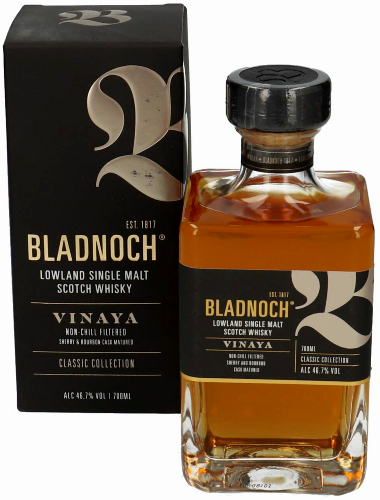
Bladnoch Vinaya (46.7%, OB, Classic Collection, 1st Fill Sherry & 1st Fill Bourbon casks, 2021)

Only the third review of a Bladnoch on these pages, I actually thought there would be more. I guess the first review of the 8yo Beltie Label was a true learning experience to get to know Bladnoch. Bladnoch had a bit of a reputation and that particular bottle when freshly opened just confirmed this reputation. If I’m not mistaken the 8yo fully came out of the production when Raymond Armstrong was the owner. He produced mostly between 2000 and 2009. However, the more I tried it and the more air went into the bottle, that’s when the magic started happening.

Fast forward all these years (since 2012) and now Bladnoch is one of those “obscure” Malts that I really like. Between that review and the next, Bladnoch Distillery changed hands, and the second review (in 2021) was the official 10yo bottled in 2018 by the new owner David Prior. David’s Bladnoch started production in 2017. Comparing both reviews you can clearly see I warmed up completely to Bladnoch. When I finished the 10yo I replaced it with the Vinaya, which is a NAS Bladnoch, again from the new owners, to see how I would feel about another young Bladnoch like the 8yo, now that I’ve become fond of Bladnoch. Would the Vinaya have a similar false start like the 8yo Beltie, or is it more like a NAS version of the 10yo I mentioned earlier. First of all the difference, apart from the age statement, is that Vinaya has in part matured in Oloroso Sherry casks, where the 10yo matured solely in Bourbon casks. Vinaya uses older casks from Raymond’s Bladnoch blended together with (probably 4yo) Whisky from David’s Bladnoch.

Color: Gold.

Nose: Malty, pleasant, with slight notes of diluted Red Wine, which is also noticeable as an added acidic note. Also candied lemon seems present. Fruity overall. Fruit syrup. Since we know that this has some young Whisky in the fold, I’m happy to report that there is no sign of new make spirit or anything that resembles that. Creamy notes from American oak also some notes of toasted oak. It has a slight “bite” to it, which is very nice in combination with the thick fruity aromas. Yet again a big smelling Lowland style Malt from Bladnoch. Lowlanders are often grassy and hay like (and so they should, its their heritage), yet Bladnoch in general are pretty creamy and Vanilla-like, and all of this in a big way. Maybe that’s why I always liked St. Magdalene (Closed) en thus Bladnoch (Very much alive again). So the nose is big, big on the traits of a Whisky matured in Bourbon casks. Bourbon definitely plays a larger part in the profile of this Whisky than the Sherry does. Quite surprising, since the Sherry casks are first fill as well. Candied pineapple, (yellow) fruity aroma’s emerge. Hints of paper as well as traces of burning paper, Wine again and warm butter. Dust and the wood of an old dried out cask. Pretty mature smelling for a NAS-Whisky. Very good nose this NAS-er has. Hints of old style Malt, which is a surprise considering the composition of this NAS. I foresee great potential in Bladnoch’s new production, which as mentioned above, started just in 2017.

Taste: Just like the nose this starts Malty. Warm super-ripe fruit mixed in with a lot of cardboard (Malt) and some young wood. Here the wood provides a “bite”. Warm apple compote in a soggy cardboard box. Yes, definitely a fruity Malt, just with this wood/cardboard edge to it, probably from the Malt of the younger production. Next sip, more of the cream and vanilla, as well as some sweetness, astringent wood and distant nuttiness. In a way dull, in a sort of basic Malt kind of way that is. Simple, without a lot of development (by the way, the nose does develop more than you would expect). Present also, luckily, this acidic note from the nose, only less so. The whole is definitely a lot simpler than the nose promised. Not very expressive to be honest, yet what you do get is nice. Dull is a fitting word, not to be confused with boring, although I can imagine some of you aficionados that are not (yet) into “back-to-basics” (again) would call this boring. Still, it is fatty, creamy. Not entirely sure this Whisky is 100% balanced though. I get the Sherry influence, but it doesn’t seem to be perfectly integrated. Medium to short finish (hey, it’s a NAS), again with this slight unbalance to it, somewhat paper-like. The aftertaste is slightly creamy with wood and warming, with something new: hints of gout de petrol. I wonder how much of the new production is in this and how it is on its own. By the way, don’t let this sit in your glass for too long, a fresh pour tastes the best.

An excellent nose for an NAS-Whisky, yet somewhat less thrilling to taste. It’s good, yet not spectacular. But hey, it isn’t very expensive now isn’t it? Definitely worth a go, I would say. Daily drinker kind of stuff. Personally I’m not a daily drinker, far from it, but if I would be, this will definitely be on the list, especially amongst others with a different profile. Sometimes one doesn’t feel like getting a peated Whisky or a Sherry-bomb, but something like this (lets call this a Bourbon+ profile, “+” for the added Sherry influence), is always good. I never grow tired of this back-to basics profile. I’m not sure the 10yo and 11yo Bourbon versions still are available, but I would recommend both over this one. The score might not reflect it entirely, but this is a fun Whisky nevertheless, so no regrets, worth the price of admission for sure.

Points: 84

“An Islay Distillery” 9yo 2008/2018 (54.9%, Cadenhead’s, Small Batch, One Bourbon Barrel & One Sherry Hogshead, 330 bottles)

Let’s kick in the open door: this is a Lagavulin (supposedly). It’s not on the label, but I have been assured this is a Lagavulin. However, we still can’t be a 100% certain now can we! Lagavulin used to be, and probably still is, my highest overall scoring Distillery from Scotland. There were hardly any bad or mediocre Lagavulins around. Even the affordable standard 16yo (The White Horse version) was stellar, the newer “Port Ellen version” is still very good. When the 12yo returned as an annual special release at cask strength, again very, very good. Right about the time, lets say 2021, maybe even earlier, signaled a noticeable downfall in quality. Picking up notes of a milky almost new-make spirit. Around 2019 with the release of the 10yo, the 9yo Game of Thrones and the 11yo Offerman Edition came the time that made me look elsewhere. Especially because of the 10yo (and the 8yo, come to think of it). The 9yo and the 11yo were still decent. So, in come the independents! Thank god for them! An indispensable lot. Diageo protects the Lagavulin name with their life, so that’s why companies like Cadenhead’s can’t put the Lagavulin name on the label without being shot, or worse. Hence “An Islay Distillery”. Some others at least think of a resounding name from which the public might or might not guess that it is a Lagavulin, or leave some subtle hits on the front and/or back label. I am buying some of these anonymous Lagavulins just to see if all these younger Lagavulins have the same milky taste I dislike like the 10yo and the latest batches of the 12yo’s have. I hope not. Here is an example from Cadenhead’s, but there will be more in due course.

Color: Orange Gold.

Nose: As expected, peaty and smoky, not even all that heavy, even though there is a lot to take in right from the start. This leaps out of my glass. Some nice wood, although quite masked. Menthos with floral vanilla and quite dusty. Perfumy kippers, salty and smoky. More notes of fresh oak. Vegetal wood, mature and appetizing, so not sappy wood which is more fresh. Hints of textile, melting plastic and wet dog. Silent yet deep dark peat. Smouldering (I love that word, have to use it more often if applicable) embers. Funky organics. There is quite a lot going on, that’s for sure. Something does remind me of matches a bit, but to be honest, I don’t really pick up on any sulfur right now. It has a fresh feel to it as well, like walking in the woods on a sunny and somewhat cool day. A temperature just right for walking. Next a sweeter, yet organic note, like smelling the left over stones from eating really ripe cherries (just before they go soft). Combine this with some light beech wood smoke and maybe a more smoked meat note. This smells entirely different from an officially released Lagavulin 9yo (The Game of Thrones version). The nose keeps developing in my glass showing more traits of red and black ripe fruits and vanilla in a thin coat of peat. Maybe I do pick up on some sulfur now (a fart?). Still in a minute quantity then. Some Iodine, now that’s detectable. Sea-spray? Nevermind. Bonfire on a good day. Big nose, slightly creamy and sweet if you let it breathe. I do like it quite a bit and can’t stop smelling it for the layers it shows.

Taste: Yes, holy moly. Big peat but also big on the warm plastic I also found in the nose. Just enough wood, nice. Also sweeter than expected. Licorice. Definitely not a weak Whisky like the 10yo, much bigger and bolder. The 10yo seems unfinished, milky, nothing of that here. This is 9 years old and it is done and dusted, it’s ready. Very big for a Lagavulin. Iodine and warming. You can think of Lagavulin as an elegant Islay Whisky in general, but mainly because of the 16yo, this 9yo is not, it is raw and unpolished, a different take if you will. You can even see some resemblance to the boldness of the 16yo, at least the 16yo from a while back. The Whisky is so big that the plastic bit, that usually is a big off note, killing even, only plays its part in the whole. It is in no way overpowering nor bad. Still the whole is in your face! Sweet, (burnt) wood, toast, peat, licorice and warm plastic. That’s it, those are the main markers. Luckily more is happening in this one, especially on the nose. You can pick up on the American oak, I’m pretty sure both casks are American oak. The sherry bit is similar to the Sherry you get from a good batch of the 16yo. Cow dung in the finish. Aftertaste is sweet, peaty and plastic-y and very low on bitterness, lets say soft tannins.

Well, this is a small batch and in this case combining two casks, a Bourbon barrel and a Sherry hogshead, together normally good for some 600 bottles at cask strength. However only 330 bottles have been bottled, why is that? Not all has been bottled, leaky casks? I wonder…

I took this bottle to Nico, who seemed to really dislike it, claiming it was too much and over the top. For him this was just wrong, so be warned, this might not be for everyone. Of the two, I am definitely the one who likes extremes more. I’m still actually amazed he feels this strongly about this Whisky he claims is wrong, since I do really like it. I wonder, is my palate shot? Luckily no, since most other Whiskies we both still tend to score pretty similarly, but sometimes something like this happens. For instance, I really like the Palo Cortado Springbank 10yo, I also got pretty enthusiastic about it on a Springbank society tasting (in public). Nico did not (he didn’t even order it). In the end, I feel this 9yo is some sort of a 16yo on steroids and after that even some more steroids. It also seems to have some off notes the 16yo doesn’t have, which in this case works for me just fine, but it might not work for you, as it did for Nico. It is definitely a big Whisky, I’ll say that, very big.

Points: 87

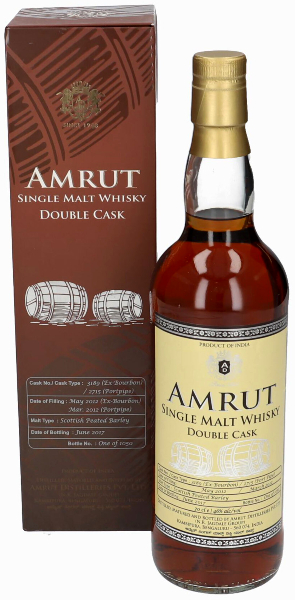
Amrut Double Cask 5yo 2012/2017 (46%, OB, Bourbon Cask #3189, Port Pipe #2716, Scottish Peated Barley, 1050 bottles)

Amrut Double Cask. In this case, Amrut just married two different casks together and reduced them to 46% ABV. In 2010 the first Double cask was released, marrying two Bourbon casks together, ehhhh, where is the fun in that? Later in 2016 and 2017 two more batches (both in two expressions) were released that seem to be a lot more exciting: batch 2, marrying Bourbon with PX (using unpeated Indian barley) and batch 3, marrying Bourbon with Port (using peated Scottish barley, most likely of the Aberdeen kind.), so I expect both later batches to differ quite a bit. I’m quite sad actually, because Double Cask seems to be a concept with many possible permutations, and I thought there would be a lot more batches than only these three. For completists here are the three batches/five expressions of Amrut Double Cask:

  • Batch 1 (2010-02-27): 2002-07-25 (Bourbon #2273) / 2003-02-27 (Bourbon #2874),
    The original Double Cask (7yo), 306 bottles
  • Batch 2 (2016, August): 2009, June (Bourbon #3451) / 2010, May (PX #3802),
    Unpeated Indian Barley (6yo), ??? bottles
  • Batch 2 (2016, August): 2009, June (Bourbon #3452) / 2010, May (PX #3803),
    Unpeated Indian Barley (6yo), 800 bottles
  • Batch 3 (2017, June): 2012, May (Bourbon #3189) / 2012, March (Port Pipe #2716),
    Scottish Peated Barley (5yo), 1050 bottles
  • Batch 3 (2017, June): 2012, May (Bourbon #3190) / 2012, March (Port Pipe #2717),
    Scottish Peated Barley (5yo), 900 bottles

Color: Dark orange brown.

Nose: Starts with peat and iodine. Very big and definitely bold. Animalesk, the acidic note of crushed beetle (don’t ask) and miscellaneous organics. Cola. Maybe too early to say, but I don’t think reduction to 46% ABV hurt this Whisky at all. Clean and tight. Port yes, but very much playing second fiddle behind the peat, adding a dimension and not really upfront or overpowering. Otherwise, as said, very fresh and tight. Definitely a winter type of affair. Because of the lack of Indian Six-row barley, this Amrut really misses its exoticness. If this was done with Indian barley, it would be highly unlikely this Whisky would come across as a winter-Whisky. So in that respect quite an unusual affair (for an Indian Whisky). I guess the other version, the 2016 one, that has been done with PX and unpeated Indian barley will be entirely different, probably back into the exotic realm. Next up some fatty clay and smoke. Scottish autumn at the bank of a river (with clay). Chocolate powder (Droste or Dutch Windmill) and warm plastic. Mocha and the tiniest hint of vanilla. Yeah, but all in all, this is yet another great smelling Amrut. As often with Whiskies that came into contact with Port casks, the nose is somewhat less complex. After the peat subsides a bit over time in my glass, the Port is able to show the fruitiness it is able to give to this Whisky. Good stuff. After a day or two, the empty glass smells of a lot of peat and a wee bit of polyester. I have smelled that before, but not in an Indian Whisky.

Taste: Starts thin. Where the nose was thick, bold and big, this thin texture comes a bit as a surprise, making me wonder how the unreduced Whisky would have been. Starts with berry like fruits, ripe red fruit and a lot of almonds. Nice. Its like eating unsalted roasted almonds with sweet dried cranberries. The almonds also have a lot of staying-power, and linger for a long time in my mouth. With the fruit comes also a nice sweetness. Just like the nose, not very complex. Cola here again. The cola, the fruits and the almonds put together, remind me of Cherry Coke. Needless to say this tastes highly drinkable. Haagsche Hopjes, a Dutch hard coffee candy. Well isn’t this turning into a treat? Very nice. With a taste like this, who needs complexity? In the end, this one is on the palate still a wee bit too thin. Could have done with slightly more points on the ABV-scale, 50% seems about right, but this is just a minor gripe. I haven’t tasted this at 50%, so I really don’t know if it would have been better. The finish and the aftertaste retain quite a lot of fruity sweetness. To be hones it could have done with slightly less of it. Highly drinkable every time, but not one keep pouring one after the other. If your glass is empty refill it with another Amrut. I’ll finish this like I started, really sad there aren’t any more Amrut Double-casks around. Please Amrut do some more, surprise us. I’ll even forgive you if you keep them at 46% ABV, for continuity purposes.

Well, well, well, Scottish Peated Barley. For me the strength of an Indian Whisky lies in the specialness, the “exoticness” of Indian six row barley, setting it apart from other Whiskies and carving more than only a niche for itself. A type of Whisky I really do like myself, if I may say so. There are already a lot of Amruts and Paul Johns on these pages, and also Indri is knocking at the Indian Whisky door with quite the drum-roll. Up ’till now I tried three expressions of Indri, and all are winners in my book. With this Amrut Double Cask however, don’t expect an Indian Whisky because the whole comes closer to a Scottish peated Whisky than any Indian Whisky. So in fact, what we have here is a Whisky with a bit of an identity crisis, and from now on, don’t underestimate the power and the character of Indian six-row barley.

Points: 86

Damoiseau Rhum Vieux 7yo “Millesime 2009” (66.9%, OB, Recharred Bourbon Barrels, Guadeloupe)

Guadeloupe is an overseas department and region of France and it consists of threes. It has three main islands and has three Bellevue distilleries. From west to east we first have the island of Basse-Terre, easy to recognize because of its mountains and an active stratovolcano called “La Grande Soufrière”. Last eruption: 1977 (phreatic eruption, steam). The last magmatic eruption was in 1580 (give or take 50 years, sice nothing was recorded). The soil of Basse-Terre, and this probably doesn’t come as a surprise any more, is volcanic and thus fertile, very suitable to grow many variants of sugarcane. More to the east lies the island of Grande-Terre, separated from Basse-Terre by a narrow body of water called Rivière Salée. Grande-terre is flat and has a limestone soil. A bit farther away to the east and more to the south lies Marie-Galante. Also flat with a limestone soil and thus akin to Grande-Terre.

As said above, then there are three Bellevue distilleries. Don’t worry, there are many more distilleries on the three islands that are not called Bellevue. The first Bellevue is Bellevue au Moule better known under it’s Rum-brand name: Damoiseau, located on Grande-Terre. The second Bellevue is Bellevue Sainte Rose, better known under it’s Rum-brand name: Reimonenq, located on Basse-Terre. And finally Bellevue Marie-Galante located on…do you really want me to spell it out for you? So we have three islands and all three have their own Bellevue Rhum Distillery. How’s that for order in the universe?
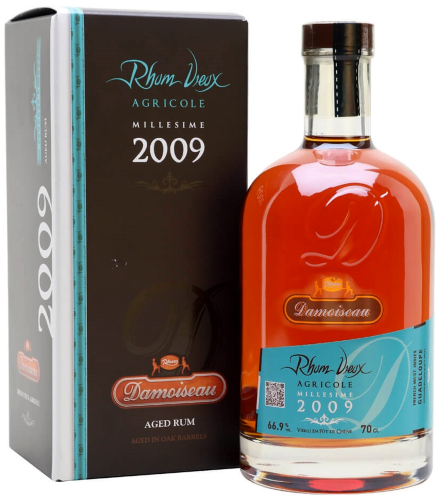
As is often the case with R(h)um, some sort of estate comes into play. The Bellevue au Moule estate, sugar refinery and distillery was founded somewhere near the end of the 19th Century by the Rimbaud family, (although 1914 is also mentioned somewhere). So history is a bit unclear here. All Rhum from these early days was Molasses based. In 1942 Roger Damoiseau bought the, by then abandoned and dilapidated, estate and distillery and rebuilt it. My guess now would be leaning more towards late 19th Century, because if founded in 1914 and already dilapidated and abandoned by 1942, well that’s rather quick now doesn’t it? Also, it must have been run down rather badly since the price of rebuilding was quite steep. Nevermind, usually when a new (or extensively rebuilt) distillery sees the light of day, owners tend to make some quick money by selling unaged spirit like, Wodka and/or Gin. So Roger rebuilt the sugar estate and the distillery and he decided to make some quick bucks by selling, wait for it, candies and jam, both made at the site. Luckily Rhum quickly followed suit and of course soon became the main business. The whole output is Rhum Agricole now (based on sugarcane juice), but in the old days, in the sugarcane off-season, also Rhum Industriel (based on molasses) was produced. This was the schtick of Roger Jr, who took over from his father in 1968, to pay off the debts made by Roger Sr. when buying and rebuilding the site. Roger Jr. had to do that for a long, long time. To finish the story of Damoiseau, today the children of Roger Jr. are now running the show. Herve as chairman of the company, Jean-Luc overseeing production as master-distiller and Sandrine promoting the brand.

Last but not least, the distillery has three column stills allowing for a continuous distillation regime. The first one was bought second hand from a closed Micro-Distillery called Bonne Mere. Both others were newly bought. The distillery processes circa 30.000 tonnes of sugar cane and producing circa 1.64 million litres of absolute alcohol per annum.

Color: Orange gold.

Nose: First thing that comes to mind when smelling this is that it doesn’t remind me of a Rhum Agricole from Martinique, or any Agricole for that matter. Don’t really know right now if this is because the Agricoles from Guadeloupe are much different or because this example is very high in ABV. Light acetone (glue-like) with thin toffee and caramel aromas. Chewy. Artificial orange as in Sinaspril tablets, some wood and some more toffee. Dusty and somewhat herbal desert wind. Slightly perfumy or soapy even, yet this dissipates quickly. Licorice pencil shavings with a nice ripe yellow fruit and vanilla note on top of it. If snorted vigorously, a minty sensation settles in my nose. No, this is not because of alcohol fumes from the high ABV this time. A layer of green and leafy aroma’s emerge next, well mixed in with a more sweet and chewy licorice note now. Some cigarette smoke. The whole smells rather elegant if I may say so, especially since I imagined this might be some sort of a brute, since the number of the ABV on the label is rather impressive. Some of the emerging aroma’s remind me of a Red Italian Wine. A fruity Amarone before settling back into toffee, caramel and almonds again. This must be its natural idle state I guess. Well balanced and very pleasing. The next day the empty glass smells a bit oaky, oily and industrial.

Taste: Yup, toffee, and caramel, and licorice, and some bitter sun toasted oak are right upfront here, what a treat! More oak and definitely a bit sharper and hotter than the nose. Spicy. The taste is not far away from how this Rhum smells. No mistake now to be made, this is definitely a Rhum Agricole, yet definitely not in the style of Martinique. The high ABV is in no way a problem and I don’t feel any need to let this swim for a bit. I usually don’t use water much, even with high ABV, although there are definitely some spirits out there that really improve by adding some water. I prefer to use a hypodermic needle even, as opposed to the plastic pipette so common to tasters of spirits. The needle ensures me to have the smallest droplets I can get. I know, I’m quite strange that way. A slightly soapy feel and a floral note emerges, I didn’t pick up on when smelling it. Still don’t actually, so it most likely isn’t there. The minty bit mentioned above, emerges here as well in the finish. Nice tasty and herbal oak. For me this is a hit. It might not be highly complex, but it is very rewarding nevertheless. Towards the end though, it is less outspoken of an Agricole than most Martinique Agricoles I know (and reviewed earlier).

This profile suits me, I have to get me some more Guadeloupe Rhum, if only to find out for myself how Guadeloupe Rhum differs from the Martinique ones and if I prefer, in general, one over the other.

Points: 88

Caol Ila 11yo 2008 (56.5%, Jack Wiebers Whisky World, Auld Distillers Collection, Bourbon Cask, 120 bottles)

Well here is Caol Ila #15 on Master Quill, once a scarcity and when officially bottled again, initially called a hidden Malt. Today it is probably the most abundant Whisky available, since Caol Ila is in operation 24/7. Diageo are putting out lots of expressions themselves and independent bottlers are going ape-shit with Caol Ila as well. It is probably the most readily available Islay Malt to them, and for a fair price to boot, since most independently bottled Caol Ila’s are quite affordable, although, I believe, not for long.

Caol Ila is always featured on my lectern, and after the Port Askaig-Caol Ila, which this one replaced, it is time to review the latest Caol Ila that found a spot on my lectern. Jack Wiebers is known for bottling parts of casks and bottling the rest later or bottling all at once and just slapping different labels on the same bottling. “Jack” loves making labels. This is likely to be one of those cases, since also in existence is this: Caol Ila 11yo 2008/2020 (56.5%, Jack Wiebers, The Old Pub Dogs, Bourbon Barrel #3071, 180 bottles). Just 300 bottles in total, at cask strength, from a barrel seems a bit much, so my guess would be, if all those 300 bottles were 70 cl, and if both bottlings came from the same cask, then it was probably from a hogshead. Nevermind though, lets see what’s in the bottle, shall we.

Color: White Wine

Nose: Peat upfront, almost heavy peat. Smoked and dried fish. Licorice and salty. Smells more like one of the three on the south shore to me. Slightly more meaty and somewhat bigger than the average Caol Ila. I think we have the relative youth of this offering to thank for that. I can smell this is fruity underneath, but all is well masked by the peat ‘n smoke. Well balanced. The fruity bit also plays a role in making the whole somewhat less “raw”. Lovely wood pops up, a more interesting smell than oak alone. Right after this a breath of fresh air. This is Islay on a cold and windy, yet sunny day. Peaty and smoky, yet not gloomy. After the “simple” Craigellachie, this is way more complex and a welcome change of pace. This Caol Ila has a lot to give. Hints of burning plastic, but it is a mere hint, only adding to the complexity. This level of complexity demands attention, this is not for casual sipping. You can do that obviously, but you’ll miss out on lots of the details this has. The fruity bit changes into a more citrus kind of aroma, making it more fresh (and even more sunny). The smell of wood changes into that of a century old cabinet. Wow, and this is only from 2008. This is just great, a must have by the nose alone. Only a few drops of water, right after pouring this dram, opens the nose right up.

Taste: The balance is the first thing on my mind after the first sip. Works really well this one. Fruity and soft to medium peat. The nose had definitely more peat to it, wait a minute, here it is, it just takes a little time to get there. Peat and iodine, check. Some acidity as well, After sipping, the nose gets even better. Also late to this party is a little sweetness. A thick toffee sweetness, so no sugar water. I’m distracted by the nose, it is so good, making it almost hard to write the notes for the taste of this Whisky. Go figure. The citrus acidity pairs up quite well with the sweet licorice note. There is also some nuttiness here, only it is a light note this time. After this, some pencil shavings emerge, as well as some dust (and do I detect a slight hint of soapiness now?). Fresh almonds, mixing well with the sweet bit. Well balanced, very well balanced in fact, the planets aligned for this offering bottled by Mr. Wiebers. Lucky Berliners!

I have to say, when casually sipping this one, I missed out on a lot of the wonderful details this dram has. Be sure to give it your full attention. This is a wonderful Caol Ila. Highly recommended, especially since this was a really affordable release to boot. Alas, I don’t have another 2008 vintage in my stash. It would have been really interesting to compare this to another one, oh well…

Points: 92

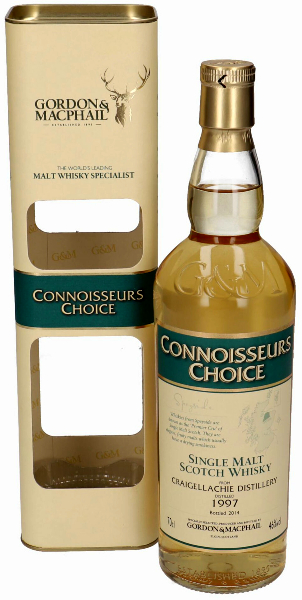
Craigellachie 1997/2014 (46%, Gordon & MacPhail, Connoisseurs Choice, Refill American Hoghead & Refill Bourbon Barrels, AD/JIIG, 01/07/2014)

Craigellachie is no stranger to Master Quill. Funky and meaty, with often some hints of sulphur. Seize the day people, time flies like never before! Last time I reviewed a Craigellachie was almost 10 years ago, yes you heard that right, almost TEN years ago. Just sayin’. Craigellachie is now bottled officially by John Dewar & Sons Ltd. which are part of the Bacardi – Martini drinks giant since 1998. With plenty of stock they decided to put out lots of Whiskies from their newly acquired Distilleries, all with age statements. That’s not very 21st century now isn’t it. Fun fact: this only happened in 2014, so it took them a while think up of this plan of bottling their own Whiskies.

Apart from the officially released Craigellachies, also some casks manage to find their way into the welcoming arms of independent bottlers. Nevertheless, most of the output of this distillery ends up in several blends, but primarily end up in Dewar’s White Label. The bottling for this review isn’t a blend, but a (reduced) independent Single Malt offering from Gordon & MacPhail. After the Glenallachie I reviewed last week, I thought why not, why not do another of those 46% ABV bottlings from the previous iteration of the Connoisseurs Choice range before it got revamped a few years ago.

Color: Light White Wine.

Nose: Waxy, woody and warming. Hints of paper and somewhat sweet smelling. The first thing to do is to keep an eye (or rather a nose) out for sulphur. Craigellachie is so associated with sulphur, one must be careful not to fool oneself and smell it when it’s not there. Still, I’m happy to report, at the moment there are only mere hints right at the start during the first nosing. Soft mocha and soft milk chocolate with an ever so slightly acidic fruity note, something in the vicinity of unripe pear. Next the nose turns sharper, fine by me, but yes this has a tad of sulphur, which is also somewhat peppery. A sharp, and specific deep smell. Personally I never had problems with hints of sulphur, only when it becomes more dominant I start to dislike it. Most often that kind of sulphur can be found in Whiskies matured in ex-Sherry casks. This fine example hasn’t seen Sherry and this sulphury bit that must be present in the Spirit is fine by me. In this form it suits the sprit, it’s a part of the distillery character. I believe Bacardi, who are the current owners, even mentioned sulphur when they introduced their new official offerings, like the 13yo in 2014. The nose if fine, really soft overall.

Taste: Hints of paper, some indistinct ripe fruit and some cannabis, similar to the cannabis notes I get in some older Bunnahabhains. All of this seem to fit together well, however at times it also comes across as a bit of an unbalance, here a really minor gripe, hardly worth the mention. Next sip, more of the same really, paper and cannabis, sugar water. Not complex, nor layered, yet tasty. I actually expected more after some 16 or 17 odd years this has been in a cask. Where the Glenallachie wasn’t simple, this one sort of is. More fruity sweetness comes through. This is actually a pleasant and soft Malt, where Craigellachies can be more beefy and meaty, bigger and sharper. Again, I guess that the reduction might have had something to do with this. The Cannabis note is omni-present. It defines this dram. I like it for it, I was tempted to up the score with one point for the cannabis note, but I won’t. As a daily drinker however, it might be just a tad too sweet. Medium finish, with a pleasant and friendly aftertaste.

This one is really different from the G&M Glenallachie I reviewed before. This is actually a nice Whisky from an independent bottler when you’re a novice. I actually has no off notes unless you are really allergic to sulphur and can’t even handle minute amounts. For the rest of us, the hint of sulphur is OK. Where both the Glenallachie and the Craigellachie are good, I would buy the Glenallachie if spotted in the wild, and this Craigellachie I would pass up on. The Glenallachie is also hands down better and the Craigellachie is nice, but also somewhat less challenging, therefore a Whisky more for a novice. Across the years, some cask strength Craigellachies from 1997 were bottled by G&M, maybe I’ll come across one of those to compare it to this one, one day, although I won’t be especially looking out for one.

Points: 84.

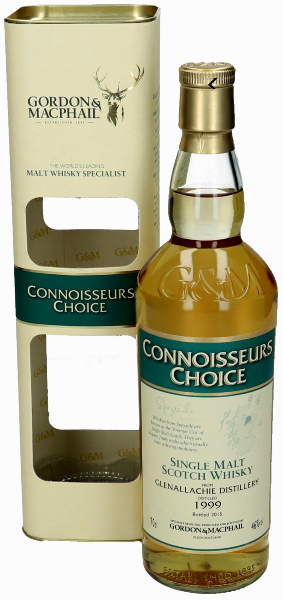
Glenallachie 1999/2015 (46%, Gordon & MacPhail, Connoisseurs Choice, Refill Bourbon Barrels, AE/JJCG, 23/01/2015)

So in earlier reviews I found out that Glenallachie probably isn’t one of my lesser known distilleries that really click with me. Some bottlings I tried were good, some a bit mediocre and some quite forgettable. Up ’till now nothing really stood out. I have a feeling though the newer Whiskies might prove to be better than ever, so Glenallachie might be on the way up again (for me). Nevertheless, Glenallachie is making quite a name for itself the last few years. Lots of official bottlings but also a lot of independent bottlings are coming to the marketplace, with quite a few people who like the output very much, so who am I to argue.

I have already reviewed some independently bottled Glenallachies: Dewar Rattray, Kintra, Beinn a’Cheo, Mo Òr and Cadenhead. Missing from this list is “the biggest and the baddest” of them all: Gordon & MacPhail. Here we have a 1999 distillate reduced to 46% ABV. Alas the only Cask Strength 1999 Gordon & MacPhail ever bottled was sent to Binny’s in the U.S. of A. Not really my neck of the woods. It was bottled way back in 2011. Hard to come across one of those now, since it doesn’t have a lot of collector value, so I can imagine the good people of the U.S. of A. drank most of them, an d rightly so! So without further ado, lets just dig into this reduced one from 2015, shall we?

Color: White Wine

Nose: Wow, very malty and sweet. Cookies, dusty oats and breakfast cereals. Dry grass and hay like. A brekkie Whisky. Sweet smelling cookie dough, with a green note, a fruity note and a cold dishwater note and thus quite appetizing and pleasant. Marzipan and ever so slightly nutty. After a while a tiny hint of licorice. This nuttiness is the closest it gets to wood, because the wood itself is hardly noticeable. It has quite an interesting and appealing perfume to it as well, which emerges somewhat later from my glass. This is real and honest stuff and maybe a bit back to basics, although it isn’t really basic nor simple for that matter. Just a very nice smelling Whisky. Excellent example what a spirit in some “basic and simple” Bourbon barrels can achieve, also proving that the Glenallachie spirit is a good one. Based on the nose alone this could be a very good Whisky, and based on the nose alone I would definitely buy it. Let’s move on.

Taste: Hmmm, quite different here on the palate. Starts fruity, with a surprising and definite bitter note. How strong this bitterness is perceived by the taster depends upon the taster. The first time around, I found this to be more better than the second time around. Runny, thin toffee, wood and thus its bitterness, yet also spicy with some black pepper. Dark chocolate, wood and an alcoholic note you get with those bonbons that contain alcohol. Based on the nose I didn’t expect this bitter note. I expected fruity caramel to be honest. Let’s take another sip. After a while I guess my palate just got used to the bitterness and it isn’t so dominant anymore. It’s hard to put my finger on it, but just like the nose, this palate has something really appealing and interesting which intrigues me. In this case the 46% ABV seems very soft. I may be used to, and prefer cask strength Whiskies to be honest, but this example seems very do-able in the alcohol department. Its neither harsh nor hot.

This will do very well as a daily drinker, or as an aperitif. However, do not make the mistake believing this is merely a simple, entry level Whisky. It is quirky, it is able to surprise you and I definitely like this one (especially after leaving it in my glass for a while to settle some more). Still, this has some bitter notes here and there, so buyer beware. Definitely noticeable is the reduction to 46%, sure quite a high ABV, but it is definitely different from a cask strength offering.

To me this smells and tastes like a classic ex-Bourbon casked Whisky, not modern at all. Would never have thought this was from 1999, which feels like yesterday to me. Maybe today it is a classic Whisky though. Personally I’m shifting my interest in Glenallachie. Where Mr. Walker puts out a lot of different casks, I will be, for the time being, sticking to ex-Bourbon Glenallachie. Again personally: I like this stuff way more than the heavily Sherried 15yo. Yeah, this is a nice surprise, have to find me one now somewhere.

Points: 86

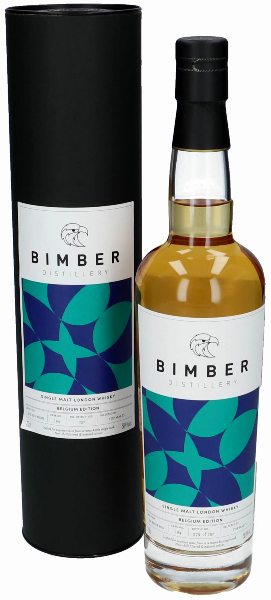
Bimber “Belgium Edition” 2021 (58.4%, OB, Bourbon Cask #194, for Top Malts, 257 bottles)

Bimber means Moonshine in Polish. You know, alcohol distilled by amateurs under amateuristic conditions. Home distilling is not a strange thing in (rural) Poland, and most distillates are fruit-based. The founders of Bimber, Darius and Ewelina, moved from Poland to London and started distilling. The first casks with Whisky were filled on the 26th of May, 2016. The apple often doesn’t fall far from the tree, so no surprise here that somewhere down Darius’ family tree there were men distilling alcohol under amateuristic conditions. Bimber tries to do as much as they can themselves, with traditional methods and always with the highest quality in mind. They have an on-site cooperage and they have their own yeast. Apart from that, they have a seven day fermentation period which is much longer than is usually the case. This long fermentation produces a light and fruity spirit.

As with any Whisky, I feel you get to know it best when it’s matured in an ex-Bourbon cask, preferably a refill one. So no surprise here that the first Bimber on these pages is matured in a cask like that. I only don’t know if this is from a first fill or a refill cask, although the amount of bottles produced seem to suggest it came from a hogshead, which makes it a refill cask. When the first cask has been filled in 2016 and this was bottled in 2021, this can be no more than five years old, and probably less than that. I came across Bimber for the first time at the Whisky Show in London and liked it very much, and after that, the first purchases, (five in total), were just a formality. This Belgium one is one of those first five.

Color: Pale White Wine

Nose: Holy moly what a wonderful nose. Soft, spicy (also soft), mineral and creamy. Slightly farmy with fresh rain water or water in a fast running stream. Barley, barley sugar, sweet fruits (in candy form) and more cream, clotted cream, powdered pudding. Candied cinnamon, fresh almonds, soft sawdust and somewhat leafy. It’s like being in a dusty mill where spices are being ground on a sunny day. Potent and light at the same time. Full on aroma’s. Hard candy raspberry stick, the ones you buy at a fun fair. More soft spices. Greenish and leafy again, almost like candied sawdust this time around (that’s a first). Sometimes hints of creamy horseradish (Chrzan cremowy). Already this Malt oozes utter quality. What a perfectly balanced blend of aroma’s, and at this age! Nothing short of amazing. I’m an instant fan of Bimber after Whiskies like this. Look, I believe this can’t be more than four years old and it has already nothing to do with new make spirit. Well sparsely the smell of Gin, but we do like the smell of Gin now don’t we? However, when sipping this, I often don’t smell the Gin to be honest, but sometimes I do. Today even Lagavulin, and for some years, some other bottlings from other distilleries in Diageo’s special releases, like the ever so popular smoky Cragganmore, still taste a bit of milky new make. What is that? And why do different Diageo distillates show the same markers. Markers I’m not really fond of, by the way. Point is, that this young Bimber seems to be more mature than some other Whiskies more than twice its age.

Taste: The onset is sweet, but already there are some nice amounts of sweetish wood spices and cardboard to be found. A minty and cola-like sparkle. So some wood, ever so slightly bitter and quite fruity, as well as some acidic lemony notes, which makes the whole more vibrant and less heavy (as in syrupy peaches). Mind you, it isn’t a really sweet Whisky this, but the sweetness does play its role. Mocha with brownie dough. Instant coffee granules. Taste-wise the youth of this Malt is easier to pick up on, because of the lack of complexity when compared to the wonderful nose. Even at this strength this is highly drinkable. I should try it before its gone, but I never found the urge to add water to this. Finally, in the finish some woody bitterness arrives, which, in moderate amounts, is needed by a Whisky, since it is aged in wood, so we want to notice the wood. We don’t like the bitterness to be overpowering though, and here it certainly isn’t. Nevertheless, the nose is better than the taste, but the whole is really good. I wonder what will happen when this becomes of age, I’m not even sure right now if that is going to be a good thing, since this youngster managed to pick up already quite a bit from the cask it was in. We’ll see.

Points: 88

Kilchoman 5yo 2008/2013 (59.4%, OB, Sherry Finish, Small batch for Germany, Cask #392-393-394/2008, 780 bottles)

Kilchoman, even though not that old (first distillation was performed in 2005), seems to be fully accepted as a full blown Islay Malt. Good when young, and it also matures well. Great people with great vision. Lots of variants around, however for me, Kilchoman still works best in a Bourbon cask or the occasional Sherry cask. That’s why my attention mainly goes out to the bottles with the red labels and boxes (pictured below). Often single casks at cask strength. By the way, worth a mention, the Sauternes I reviewed last was very nice as well. This time around, on our hands, seemingly the best of both worlds. Bourbon matured Kilchoman, finished in Sherry casks. I guess the mentioned cask numbers are for the initial Bourbon casks, and it probably has been finished in one Sherry butt (considering the amount of bottles in this release), since the label states this is a single cask release. What was the number of the Sherry cask I wonder. There are probably some SWA-rules for this, for which I’m now too lazy to look up. Anyone? All in all quite a confusing small batch/single cask release…

Color: Full Gold (slightly hazy).

Nose: Well, heavily peated indeed. Lots of luscious sweet, tarry and smoky notes. Salty kippers with crushed beetles, giving me salty dried out lips (after sipping it obviously). Tarry rope. Notes we know from Islay. Amazing balance for a five year old Malt. Mature stuff, and rightly accepted into the Islay fold. Nutty. Definitely not a sunshine Malt. Who needs sunny beaches when you can have this beach with grey skies and torrential rain in a bottle right here with you. Nothing bad about bad weather, with a dram like this in your glass. Sweet licorice powder and powdered sugar. Dare I smell a slightly floral note here? You might resent me for this, if you’re one of those brutal-Malt lovers. Mint candy (you know those with lots of sugar, a trace amount of mint, which is probably artificial). Not a lot of noticeable Sherry influence though. The Pulteney I reviewed before this Kilchoman, also wasn’t very Sherried, but at least it had some noticeable Sherry influence. Maybe the sherry influence in this Kilchoman lies within the slightly cherried fruity sweetness and the wonderful balance of the nose. However, when this Kilchoman heard me talk about a fruity note just now,  it responds with even more licorice powder and peat. Hints of warm mineral machine oil. The nose, especially after some extensive breathing turns into something really wonderful. OK, it is wonderful in a way a tank can be wonderful. The nose is really, really good.

Taste: Initially a sweet Beer-like quality. More licorice notes and definitely less peaty than the nose. WYTIWYG (What You Taste Is What You Get). It is Whisky like a peaty lemonade. One big taste. Where the Pulteney, was complex and layered, this tastes like one big thing. Salty kippers with crushed beetles, giving me salty dried out lips (yes, copy & paste indeed). Salty and peaty licorice All-sorts. The nose seems complex and somewhat layered, the taste isn’t. Don’t get me wrong, in general this isn’t a bad thing. It just isn’t complex at all. Even the finish is rather simple, yet very tasty, as is the aftertaste. Simple, yet very tasty and effective. Hey, and it’s only five years old, and in no way is it immature or “un-finished”. My tongue reveals (in the aftertaste), that this has some wood, which is completely masked by the licorice, the dominant note in this Malt. This one worked very well for me in the morning (on a day off from work for writing reviews). Ain’t that brutal, ‘eh?

Well one thing is sure, the nose of this Malt is better than the taste. The nose is actually truly amazin’, the taste is actually really very good (to put it in perspective for you). Simple or not this is great stuff. So it’s WYTIWYG and WITIRL (What I Tasted I Really Liked) or to paraphrase agent Cooper; “damn good Kilchoman!” Dear Readers (and Nico), you might want to consider picking this one up from an auction (just make sure to let this breathe for a while).

Points: 90 (yes I must be mad, second 90 points in a row).