As said before this distillery was briefly opened between 1966 and 1975. As far as vintages go not a lot were released. Officially a lot of 1973’s were released. This vintage was also released by Blackadder and Duncan Taylor. Signatory Vintage released a lot of 1975’s (and one 1974). Two of these 1975’s I have reviewed on these pages earlier. Last but not least in this case, Cadenheads had some releases from the opening year 1966, but that was a long time ago in 1979 and 1980. Besides these few ‘players” not a lot of Ladyburns are to be found. Now here pops up a 1974. As far as I know, there are three 1974’s released. Cask 2607 by Signatory @ 53.9% ABV (in 2011). Cask 2604 by Dutch bottler Van Wees @ 52.1% ABV, (also in 2011), and from 2010, Cask 2608 by fellow Dutch bottler Mo Òr @ 46% ABV. It’s not hard to guess how much (or how little) this got reduced. Rumour has it, these 1974 are pretty good.
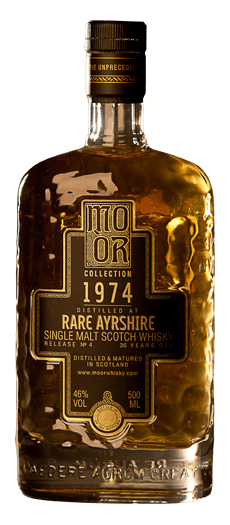 Color: Light Gold
Nose: Very aromatic. Sweet and clean. Pops out of the glass. Fruity and lively. Great combination of farmyness and fruity sweetness. On the nose it’s already a lot better than the 1975 Ladyburns I tried before. Nice wood too. Great greenish notes with gravy. If the taste will be anything like the nose, we’ll have a winner on our hands. When this get’s time to breathe the lively fruits make room for something more dark and broody. Meaty and some perfume. Very interesting.
Taste: Fresh, fruity (pineapple) and in nothing you would say this is such an old malt. Not as complex as the nose is. The initial fruits are very quickly replaced by caramelized wood. Finish is good and slightly woody. But considering it’s age you would definitively expect more wood in this.
Very likeable Ladyburn. The nose is very much better than the 1975 Signatories I tried before. Taste wise, maybe not so complex, but less woody than the Signatories. Very nice Ladyburn, one of the best that’s still around, ánd reasonably priced as well!
Points: 86
Thanks again to Henk for this sample.
 Color: Gold
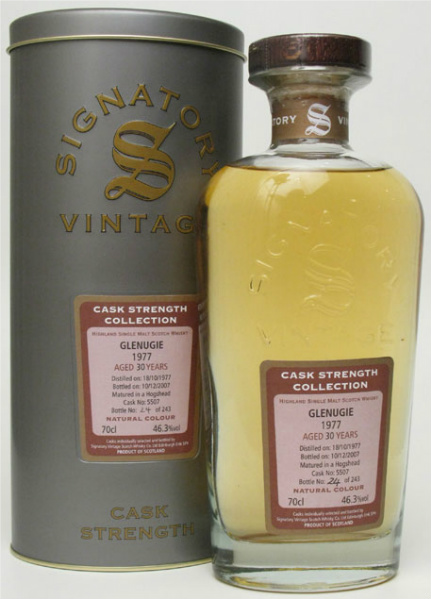 Color: White wine.
 Color: Gold
 For the Douglas Laing brand, It all started in 1998 with the Old Malt Cask series, to commemorate their 50 years in business. Therefore if possible the series is bottled at 50% ABV. Later a more luxury series was introduced called The Old and Rare series. Although it is better known as the Platinum Series.
 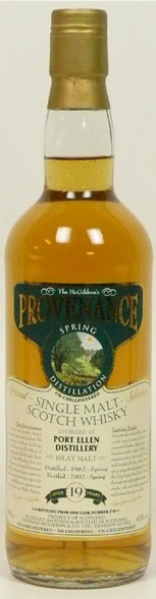 In fact there are a lot of ‘names’ on their labels. The third series I would like to mention here is the Douglas McGibbon’s Provenance series. A series placed under the Old Malt Cask series, also with lower ABV, usually 43% or 46%, but also cask strength and small batch versions exist. There are also some newer series, like the Director’s Cut, introduced in 2011 with cask strength single cask single malts and single grains. Other series by Douglas Laing are the Premier Barrel and Douglas of Drumlanrig.
 What could be more appetizing to you than the fact that the site of St. Magdalene in Linlithgow, West Lothian, housed a Lepper Colony in the 12th century, or that the water didn’t come from an ancient super pure melted snow mineral water source, but from the Union canal nearby. But enough facts. If you want more, have a look at
  Taste: Thick, grassy and medium sweet. Dried apricots and apple skins. It isn’t the same as the nose (for me the nose was not fruity), but it complements it very well. Again there is almost no wood. It’s there really, but it is hidden well and transports the body. You can taste the balancing spiciness or distant bitterness (again, hidden well) and the sourness in the finish is from the oak too. Great balance.
 Yes! Another example from the distillery that took its water from the Penwapple Reservoir, yes say it again, the Penwapple Reservoir. This time one of the many sister casks from the last year of operation, bottled by Signatory.
 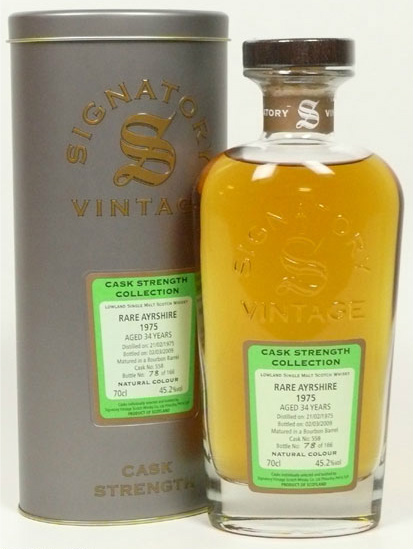 Color: Gold (slightly lighter than barrel #562)
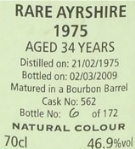 Ladyburn wasn’t long around. Opened in 1966 and already closed in 1975. It was built by W. Grant & Sons within their Girvan grain distillery complex. Not completely uncommon in those days, since there were more malt distilleries on a grain distillery site. Glen Flagler was added to the Moffat site and Ben Wyvis was added to Invergordon. All three didn’t last long and are pretty scarce these days. These Rare Ayrshire’s are still around, but there will be a time soon, they will not, and prices will soar. So is this worth your money? Lets see…
 Well officially there is no Ladyburn on the label, still it isn’t hard to guess what this must be. Out of the blue Signatory started to bottle a lot of casks from Ladyburn. Which is always nice since the place shut down in 1975 and whiskies from Ladyburn are getting more and more rare.
 Old Bothwell is a company from Bothwell, Lanarkshire Sur near Glasgow Scotland. It’s a company that specializes in bottling their own stock of wines and spirits with the possibility of personalized labels. In the whisky-world they became quite famous for bottling a series of great Port Ellen’s. Alas Old Bothwell just bottled their last cask of Port Ellen, so now they will move into other whiskies. First up are a Tormore 1988/2012 and Macduff 1980/2012.
 Again rummaging through my box with trophies collected on my travels, I found another Port Ellen. I like Port Ellen, so please forgive me, for yet another review. Port Ellen is the closed distillery from the immensely popular island of Islay, known for its peated whiskies. Always around in abundance, prices were ‘moderate’ for a closed distillery from Islay. Today stocks are depleting, and prices tend to rise sky-high, and it won’t be long untill there’s nothing left. Even if casks still lie around, Port Ellen isn’t getting better by ageing even longer. Maybe casks will be transferred into stainless steel holding tanks to stop ageing and fetching a lot of money when bottled is a few years’ time. Who knows. Since 2001 Diageo releases Port Ellen annually in their special release series. The first release fetching at least a 1000 Euro’s at auctions…
 Port Ellen was founded in 1825, and was sadly closed like many others in 1983. Although the distillery is dismantled, the site is still there. Today it’s home to Port Ellen Maltings. Where barley is malted and all the other distilleries of the island are customers…
 Master Quill