Highland Park Week – Day 2: Highland Park 18yo (43%, OB, 2014)

What are you doing Master Quill? Not too long ago you already reviewed one of those “newer” Highland Park 18yo‘s, did you forget? Are you drinking too much, making your memory slide? Nope not really, but with this one I want to tell you a short story…

A long time ago, the wide necks were replaced by the more feminine bottles, which in turn, in 2007, got replaced by this more manly look they have got today, well… Back in that day I felt Highland Park were a bit suffering from batch variation, something the industry is afraid of because it may put-off loyal drinkers of a particular expression. It must look, smell and taste the same every time around. It is a sort of mantra throughout the industry. Unless you are called Springbank and make exactly thát your strength. By “thát” I mean: batch variation. Just look at the success of the 12yo “Cask Strength” expressions. You see a lot of comparisons between batches on the internet. In the end everything at Springbank is released in batches that vary from one to the other. “Hello, I’d like a Springbank 18yo, released in 2016, no not the 2015, the 2016 please…”

I loved the old, wide neck, 18yo Highland Park to death and when that got replaced by the feminine looking 18yo I bought me a few of those, expecting more of the same. Well, the new one was pretty disappointing in comparison. I was sad the whole time drinking the bottle, and when I finished it, I sold the rest of the bottles, I bought, not buying the 18yo for a long, long time. Recently I got hold of a sample of the “new” 18yo (bottled in 2012) and was nicely surprised. Not as good as the wide neck, but certainly worth your time, effort and money. I liked the 2012 so I bought a few bottles of the “new” 18yo when it was on offer, and ended up with a batch that was bottled in 2014. (L0405S L4 16:09 14:53) (S=2014).

This is a story about batch variation, and something about a donkey hitting its head on a stone, so lets compare this 2014 with the 2012 I reviewed earlier.

Highland Park 18yoColor: Full gold (slightly lighter than the 2012).

Nose: Barley and pleasantly fruity. Definitely more fruity than the 2012 batch. Waxy, warming, heather, vanilla and honey, so it’s a Highland Park alright. Dusty and when smelled more intensely, some smoke emerges. Peat, not so much. Influences of dull smelling Sherry (as in not fruity), and even hints of a compound containing the element of S (Sulphur). Cookie dough and charred pencil shavings. However right from the start it also smells a bit thin. Watery. It’s also lacking some depth and I would almost say that it smells younger than the 2012 batch. Next, some paper-like and vegetal notes. More smoke and a fresher note of Belgian style Beer. Slightly less balanced as well, but also somewhat more complex. If I dare say so, this one has even some exotic notes reminding me of Amrut (matured in Bourbon casks).

Taste: Hmmm, the first thing I notice is definitely a discrepancy in the balance of this 18yo and an obvious weakness. Tiny notes of paper and cardboard. Warming. Hints of the Belgian Beer-notes are right there from the start. Cream and a hint of cold fresh butter. Sherry and hints of vanilla and cardboard. Not as complex as the nose. Watered down wax and heather and an unpleasant edge of bitterness, which has some staying power. After letting it breathe for a while, quite unexpectedly, some hints of red fruits pass by. Short to medium finish, with again a Beer-like quality to it. I was taken aback a bit by this when it was just opened, now the bottle is half full, got some time to breathe and it still isn’t getting any better. Change, yes, better, no. So this one really got several chances to redeem itself, but alas. It isn’t to be.

Where the nose was still good and complex, this definitely is a lesser batch of the “new” 18yo. The 2012 batch is way better than this 2014, and its an obvious difference as well. (I have them both before me). So it happened to me again. Donkey. I taste a 18yo Highland Park, like it, go out and buy several bottles at once, and I end up with a different batch, most definitely less good than the one I tasted before. Disappointing and annoying. Luckily I keep samples and can do proper H2H’s, proving to myself, I’m not going slightly mad. I still have some unopened bottles of this batch, bugger. Now I have to sell 18yo Highland Park bottles again.

Just to be sure I brought this bottle with me on an evening with my Whisky club, a seasoned bunch of experienced older fellows (I hope they don’t read this). I said nothing, just observed people drinking it and listen to their reactions and comments. Well people, it turns out it wasn’t only me…

This hurts. I have been a big, big fan of Highland Park since my beginnings in Single Malt Whisky, and that will never die, because I know it is a good distillate. However, the amount of mediocre bottlings put out by Highland Park today are scaring me (as does the emphasis on marketing). Bugger.

Points: 82
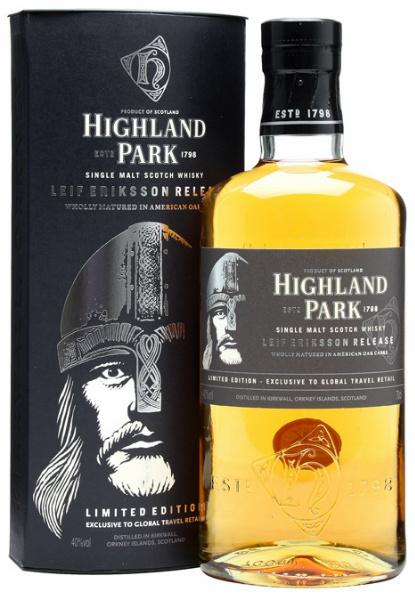
Highland Park Week – Day 1: Highland Park “Leif Eriksson” (40%, OB, Travel Retail Exclusive, 2011)

Time for another of Master Quill’s weeks. This time around we’ll focus on Highland Park. When rummaging through my stash of samples or bottles I sometimes come across a few which have some sort of common link, usually being made at the same distillery, but there can be many others. In no way should it be a true cross-section of the standard range or should it be all official or recent bottlings. Nope, the aim is to have fun with seven Whiskies, more or less picked at random. In this case Highland Park gets the honor. I have picked seven Highland Park Whiskies to have fun with and put them in some sort of logical order. We’ll start off with Leif Eriksson, one of many travel retail offerings. Usually reduced to 40% and usually bottled in a convenient litre bottle. This time however it is the standard 700ml bottle that can be easily picked up outside of an airport…

I may have mentioned this before, but Highland Park is owned by the Edrington Group. A company that also owns The Macallan. With both these distilleries, or brands, Edrington do a lot of marketing. There is an obvious core range made up of Whiskies with age statements, and some of them have already featured on these pages as well. Besides that Highland Park, as many others, loves travel retail outlets and are keen on issuing special series (aiming at collectors).

I am a big fan of the Highland Park distillate and when we look at Highland Park, pré marketing, you would have a hard time finding even a mediocre bottling. Just have a go at an older wide neck bottling and you’ll know what I mean, or even ask Olivier Humbrecht about Highland Park and you are set for the day.

The beginning of the special series craze, I mentioned above, started with the release of Earl Magnus in 2009 (5.976 bottles). It is part of a trilogy called the Inga Saga. Earl Magnus is a 15yo Highland Park of impeccable quality, and back then was released at a more than reasonable price. It was followed up in 2010 with a 12yo called Saint Magnus (11.994 bottles), which was a bit less interesting and the series was concluded in 2011 with an 18yo called Earl Haakon (3.000 bottles). It was a hybrid of the standard ages of 12yo, 15yo and 18yo, but also bore names of mythical figures from the history of Orkney. Today its hard to imagine a company releasing only one special bottling a year! By the way, this 18yo was top-notch again. Many series like this were created since.

However Leif Eriksson is not part of any series I know of. It’s a bottling commemorating the Viking Eriksson who was the first European to set foot in North America. So it shall be no surprise this Highland Park was matured wholly in American Oak casks (probably all ex-Bourbon).

highland-park-leif-erikssonColor: Gold.

Nose: Starts with a hint of smoke and heather, and a nice funkiness I know from older Highland Parks. Initially also quite sweet. Nice sweet barley notes, honey and also quite fruity. Cold butter. A very appealing, and slightly dirty, nose. Lots of vanilla and creamy latex paint, as could be expected. Less expected was the coal dust and Aspirin powder I got next. Highland Park is a distillate that does well in any cask. Excellent nose.

Taste: Oh no. Aiii, sweet honey and sugar-water. What a shame. This one is definitely ruined by reduction. Maybe they felt it was too hot at cask strength and since it had to be bottled for travel retail they automatically reduced it to the lowest strength possible, 40% ABV. Sweet, creamy vanilla again. Hints of almonds. Lots of creamy notes as well as lots of vanilla. That’s the main marker of the taste. Not a lot of wood though, although there is a nice toasted cask edge to it. The palate matches the nose very well. This should have been a litre bottle, since to get the max out of this you need to drink this in big gulps and roll it around a lot in your mouth (needs a lot of air as well). Funny enough a slightly bitter oak note emerges in the aftertaste…

You can still taste the potential of this. It is almost as if has to be suitable for pilots who still have to fly. I hope not. The nose is wonderful and the taste does show the potential. It is not a bad Whisky. It could have been a very good Bourbon expression of Highland Park, but it was ruined by one bad decision. The amount of reduction. Still, it sometimes can hit a soft spot, and is still an example how Highland Park can be without the (big) Sherry.

Points: 81

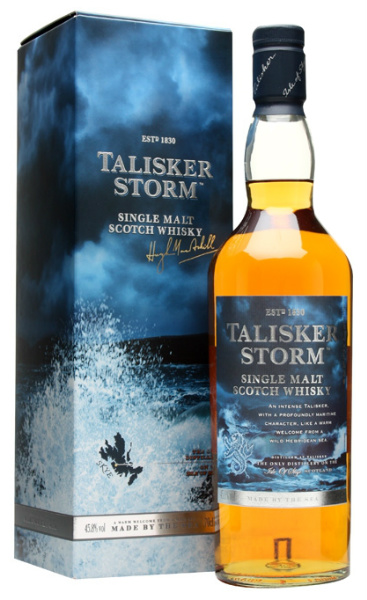
Talisker “Storm” (45.8%, OB, 2013)

Time for another Talisker, and quite a controversial one. Talisker have a very competitive 10yo on offer. One that did change over time. Just compare recent ones to those of ten years ago or twenty, or thirty… Nevertheless, it’s always good and always affordable. Then the time arrived for the NAS expressions, and for Talisker, this Storm was one of the first, and certainly the first that got some big marketing behind it. I remember you could go to your local Port where you could get a dram of “Storm” for free and whilst you were trying it, they aimed their wind-machine at you and threw buckets of water in your face. Talisker is probably the biggest Single Malt brand Diageo own, so a lot seems to be riding on this.

When in 2013 “Storm” arrived, as did “Dark Storm” in travel retail and The Port finished “Port Ruighe”, fans of Talisker were fearing for their beloved 10yo. Surely it would be discontinued? But the faithful 10yo soldiered on. In 2015 Talisker “Skye” arrived, yet another NAS offering, again priced slightly above the 10yo. Are they now going to kill off the 10yo? Nope, it’s still around, although I do still fear for it a bit, and occasionally buy the odd 10yo that is even  on sale quite often. Quite strange, considering discontinuing it would be caused by scarcity. Nevermind.

Earlier I reviewed ‘Neist Point”, a travel retail expression that wasn’t very cheap in some markets. Out came a rant against NAS, but I finished the bottle rather quickly and I have to say I liked it a lot, although a bit overpriced.  “Storm” got a lot of heat from Whisky-drinkers for being more expensive than the 10yo and definitely worse overall. Some even called it the worst whisky they have tasted in a particular year. Today I’m going to have a look at the first batch of “Storm” bought just when it was released. Often first batches tend to be the best…

talisker-stormColor: Light gold.

Nose: Barley, whiffs of new make spirit. Only whiffs, so no cause for alarm. Not bad, but there is some youthfulness noticeable. Nice smoke mixed with some sweetness. Quite lovely. Soft, wet, green and vegetal peat. Not coastal or iodine driven peat. Not Islay. Nutty, a bit of cardboard and fresh. Sweetened black tea, with peach and fern, growing on the forest floor. Quite fruity underneath. Nope, not very complex at first, but it is appetizing and does evolve a lot with some breathing. It is less powerful than the 10yo, although that one also lost some oomph through the years. Nevertheless a quite appealing storm. I like it. It may be younger than the 10yo, but it is well made and balanced. However after giving this Talisker its bold name, the brutal images of heavy waves pounding on jagged rocks and a lion with a fish-tail made of lightning, I expected something of a heavy hitter with lots of heavy young peat, but actually it could be a Talisker, you buy a dram off, at the local ballet school bar. Still beautiful and nice, but Storm? No, a warm breeze at best. Which is excellent, only different. When you smell it proper, it does tick all the boxes. Smoke, peat, fruit, sweetness, well-balanced. Nice development with air, very nice. Excellent nose.

Taste: Barley and cardboard. Sweet and mouth coating. Very nutty, fruity, nutty again and slightly peaty, band from the start, already some balance, but not as much as the nose has. Behind this, quite a lot of sweet, ripe yellow fruits and some minor cardboard again. Not heavy, but the aroma’s are quite big and warming. Just like the nose, it definitely tastes like a Whisky with a good portion of young Whisky blended in. It has an edge tasting like new make. Where the nose reached complexity after breathing and was well-balanced, towards the end of the body the balance is getting a bit, ehhh, unbalanced. Luckily the sweet and fruity aroma’s are big enough to carry it, those are the ones with staying power and make for a nice finish, but the finish itself is not very long. Yes, there is a baby-pepper attack in the finish, typical for Talisker. Especially near the end of the body, and in the finish, the NAS-element shows it’s (ugly) head. I guess it’s this some people scoff at, but calling it their worst? Please dilate your mind!

The 10yo is on offer lots of times, making it even less expensive than all other NAS offerings put on the market by Diageo. So, should you even consider buying one of these NASses? I read a lot of posts on social media of people scoffing at the “Storm”. Well for me this isn’t about winter storms it more of a Whisky for the first colder nights on the end of summer. Sure different from the 10yo, but I’m not sure if it is worse. I actually believe this is a well made Whisky. Compare this to a youthful Springbank and it is maybe just as good. However Springbank as a family owned operation, do get a lot of love from the public. I love Springbank because of its history but also because them make one of the best Whiskies in this modern age. Talisker are owned by Diageo, which is a big, very big, huge money-making drinks giant, and because of that, they don’t get a lot of love. Just look at my reviews of “Neist Point” and this “Storm”, there is a lot of sepsis. When Talisker is viewed by itself, seen apart from the marketing, just looking at the history and the place it comes from, it also is a very good distillery making good Whisky and easily another of my favorites. Both distilleries mentioned use some peat and the profile fits me just right. So I’m not going to criticize this Talisker because there is no need to. It maybe NAS (and easily recognizable as a NAS, especially if you try it after a few other and older Whiskies). It maybe Diageo and it maybe heavily marketed, but the Whisky itself is definitely worth it, especially when you drink it by itself or if it is the one to start you off, but if I had to choose, and considering the price I would prefer…the other one.

Points: 83

Tobermory 1995/2006 (55.6%, Berry Brothers & Rudd, Cask #744)

The last Tobermory I reviewed was one of the stellar 32yo’s that have quite a reputation. How to follow-up on one of those? Today we’ll be looking at and independently bottled Tobermory. The bottler being Berry Brothers & Rudd and the year of distillation 1995. Tobermory has a rocky past and for a while even was converted into a power station. The reputation of the distillate was even shakier. In the past this stuff could really be hit or miss, so not something you would buy untasted. It could be really bad and funky, strange even. On the other hand, if it was good it could be really good, surpassing most other Whiskies, so the potential is there. Today that reputation is different. Tobermory and Ledaig are getting better by the year, and every new release is something that interests me a lot. Still no easy Malt, but if you get it, you’ll get it. In the day where everything starts to taste a bit similar and official bottlings are becoming younger and NAS-ser, an independently bottled Tobermory or Ledaig could very well be your best choice. At least it often is different from the rest. What more could you want these days?

Tobermory 744Color: White wine.

Nose: Heaps of barley. Damp hay. Citrussy fresh. Lowland style. Lemon grass, lemon curd, all kinds of sweet lemon, without being overly present and thus overly acidic. Hints of new-made spirit even. Old vanilla. Very light. Hints of a salty sea breeze. Very light peat as well. Smells chewy. Sappy, spicy, fragrant and vegetal wood in the background. Garden bonfire, burning off some dry grass. The initial barley note wears out, for a more coherent smell. I’m not sure if this is perfectly made Whisky, but after I got used to the Bladnoch 8yo I reviewed earlier, I seem to like this one as well. Just like the Bladnoch, this profile grows on me.

Taste: Very sweet entry. Sugary sweet. Sweet barley. Most definitely some hints of Grappa. Toffee, but also a sharper and drier element. All sorts of lemon again, combined with toffee and some dry wood. Otherwise not very fruity. A plethora of different dry grasses. Fatty and hints of cold dish water you forgot. Faint soapyness, like the paper wrapper that came off a bar of soap years ago.

Excellent entry and body, aided by this very typical profile. Nice stuff. The finish is not so strong and concentrates around two or three distinct markers from the body. Slightly soapy barley, wood and paper. As well as a tiny bitter note. The sweetness is gone, although hints of toffee reappear in the aftertaste.

Not a very easy Malt, but definitely one you would like to try, since it is different from many other malts. Quite the learning experience, because it’s almost like an unpeated, peated Malt. It’s how a peated Malt could be underneath. Although this is also no Lowlander, it is nice to have since it has a second face as a Lowlander. True Lowlanders like Rosebank and others are becoming more and more scarce and expensive. Besides this Tobermory, I hope for a bright future for Bladnoch as well, but if not, try something like this before the profile becomes extinct.

Points: 85

Talisker 1989/2002 “Distillers Edition” (45.8%, OB, TD-S: 5DP)

Since the 2002 Distillers Edition of Lagavulin was such a success, I managed to unearth the 2002 Distillers Edition of Talisker as well. This 2002 version is the direct successor of the 2001 I reviewed a few years ago. This is only the fourth Distillers Edition since with there wasn’t a Talisker DE released in 1999. Both the Talisker and the Lagavulin DE’s were first released in 1997. In 1999 the Second Lagavulin was released and since 2000 both were released annually.

Talisker DE 2002Color: Light copper orange.

Nose: Compared to the Lagavulin this can be called elegant, which is obvious, since Talisker is peated to a lower level and the Whisky itself is much younger. Lightly peated, more fruity and fresh. Fresher, younger and livelier. Slightly grassy. Creamy overall feel. Hints of pudding and vanilla. Nice soft wood. Although this has been finished in a Sherry cask, the finish is quite sparse. It’s typical peatiness is recognizable as a Talisker. Slightly oily and waxy, like an elegant distant relative of Springbank. Hints of old herbs from an old wooden grocery shop. Tiny hint of Islay-esk tarry rope. Hints of yellow fruits even. Sometimes this reminds me of white peach in sweet yoghurt, with some soft, slightly burnt wood added to it. Where the Lagavulin was very in-your-face, this Talisker is not. It’s even less so than the 10yo (from 2002).

Taste: Here the wood comes first after which a toned down little peppery attack announces it’s a Talisker all right. Fatty soft peat. Lovely. Cute almost. With some air, quite nutty. Again a slightly burnt note, which must be from the inside of the Sherry casks. Towards the finish a more smooth and sweet note appears, which I feel is not completely right for Talisker. Creamy towards the finish. Sure the peat is here, but most if it seems hidden by the unexpected sweetness. Medium finish with indeed a fishy part, and alas not much going on in the aftertaste…

Where Whisky buffs will almost always prefer Oloroso Sherry casks over PX Sherry casks. Just look how quickly the Oloroso versions of the vintage Glendronach’s sell out before the PX-versions. In the wine world, Oloroso is not considered the best of Sherries. The PX finish for Lagavulin seems to be a perfect match and nobody would even wonder, at least I didn’t, how a Oloroso finished Lagavulin would be. (Alright, plenty of them around), but for the DE-version at least, I didn’t wonder. For this Talisker however, I’m less happy about the choice of Sherry cask. For me it’s slightly off, so I’m wondering now how other finishes would have worked for Talisker in the DE-series.

Points: 85

Same score as “Neist Point” and a quick comparison between the two warrants the score of both. If offered at the same price, I would go for the Distillers Edition.

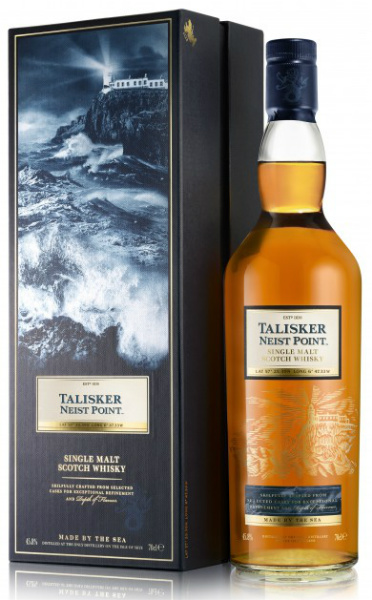
Talisker “Neist Point” (45.8%, OB, for Travel Retail)

Just a few weeks ago this new Talisker was released, not by Diageo, but by Diageo Global Travel and Middle East (GTME). What? I don’t know why, but why do I have the feeling I’m being more and more conned? First, lets back up a bit. Not so long ago you had Talisker’s with age statements like 10yo, 12yo, 20yo, 25yo and 30yo, I said, not so long ago. Longer ago we had a stellar 8yo as well. At a certain point, again, not so long ago, the 18yo was released. All of a sudden, the stocks were depleted and the owners saw that Whisky was fetching silly money all across the board. I get that, because you’re in business to make a lot of money, hopefully, so I get the prices that are asked today. It’s a question of simple economics, supply and demand. Supply, somewhat unknown, the demand high.

Screen-Shot-2015-04-09-at-9.59.34-AMConned I said. Now, we are getting NAS Whiskies, and I tell you why. We need a lot of stock of older Whiskies to make high-priced Whiskies with an age statement again for the future. Well the price I mention is uncertain, because you never know what we the public are willing to pay for our Talisker 18yo in ten years’ time. Thus a lot of young Whisky must be released with some added older Whiskies for taste, because Diageo found out that the traveller is mainly concerned with taste and not age.
So we saw a lot of young Whiskies enter the market place and top money is spent to convince us that it’s all about taste and not age, well, we are made to forget that age matters a lot when it comes to taste! As I said above, I understand that I have to shell out some serious money for my Talisker 18yo, 25yo and 30yo, but that’s my choice, since I do love those expressions, but I can decide myself if I want to spend that kind of money, now or in the future. Diageo doesn’t really care because if I won’t spend that money, someone else will, because we see a lot of people paying a lot of money for Whiskies these days. And it’s almost no use looking elsewhere (other distillates), since those prices are soaring as well.

So conned I feel (Yoda speak), because the latest Taliskers don’t have numbers anymore, but names. Storm, Skye, Dark Storm and now Neist Point. As I said before, there used to be a stellar 8yo, a stellar (Tomatin) 5yo, etc. Today those numbers are not wanted, not because they are low, lower than the modern standard, the 10yo, no. Those numbers are unwanted because they are still too high and still too much a restriction. And since we already made a leap in yield per field of barley, today’s young Whisky can’t be compared to the 5yo of yesteryear. The quality od Sherry cask today is also different from the old ones. So lots and lots of young Whisky is sold to us through NAS bottlings. Yes it’s about taste, but no, not that much young Whisky can be so good as is claimed, and that’s my conned feeling right there. I’m indoctrinated and I’m made feeling stupid by claiming that age doesn’t matter (never did) and hiding behind the statement that only taste matters.

Conned some more I say: Why the mystery? Making up a name, fine, give your Whisky the name of a lighthouse or a Hyundai car. It’s fine, I like the names and I like the screen printed lighthouse on the Neist Point bottle. We all know it’s mostly young Whisky, with some added older casks to meet a desired flavour profile. Diageo claims that the traveller doesn’t care for age, but does care for taste, but the traveler speaks some more, the traveller also wants smooth Whisky, the traveller wants smooth Talisker. But why? Talisker smooth? Laphroaig is also being made smooth. Why? Can’t we have anything not smooth anymore? Didn’t we like Talisker and Laphroaig rough? wasn’t Talisker called the lava of the Cuillins? Lava as in not smooth? Hot and peppery!

Even more conning: It was said that Neist Point (The Whisky, not the lighthouse) has a huge depth of flavour and showcases a wider range of Talisker characteristics. Combining precisely selected flavoured Whiskies with some of Talisker’s rarest and smoothest mature stocks. Yeah right. Will those of you that believe this raise their hand? Am I really to believe the rarest of all Talisker stock went into this and are not released as super-duper premium Whiskies now and especially in the future?

So instead of a nice rambling about the new Talisker I started ranting, sorry for that, it never happened to me before. Critical yes, ranting, nope. Why not try this new expression of Talisker and see if it still has some lava in it. By the way, in the past Douglas Laing bottled some smooth Talisker’s. Back then, these casks didn’t match the Talisker profile and were sold off to be used in blends, now they are especially sought out and used for Talisker Neist Point… [fanfare music is playing and curtain rises…]

Talisker Neist Point (45.8%, OB, for Travel Retail)Color: Gold.

Nose: Some light smoke. Barley sweetness, and some old Sherry wood. Tiny hint of cask toast, but very mellow altogether. Hints of citrus. There is some sweetish freshness in the back, lemon and unripe tangerines. Crushed fresh almonds, mixed with some sweet and fatty peat. Mind you not a lot. When you close your eyes and someone pulls the glass away, a more fruity note stays behind and not a peaty one. Slightly warming.

Taste: Sweet, barley and nutty, again lots of almonds. Sweet lovely peat. (Springbank style). Extremely drinkable, but even after the first sip it is lacking some power and doesn’t hang around in the mouth for too long. Fruity, but more about yellow fruits. Dried apricots and pineapple. A little bit of toasted wood. Thick clay in the finish, which is nice, but the rest of the finish is about immature and young Whisky. Young can be mature, immature just isn’t mature. No pepper attack, so how’s this a Talisker? Short and a bit unbalanced finish, with a beer like note and fresh barley as the last of the aroma’s.

After the rant above, some of you maybe expected I would hate this Talisker, but in fact I wrote the piece above before even tasting Neist Point. It is how I feel, maybe I’m wrong, who knows. Neist Point is what I thought it would be, nice, smooth, extremely drinkable, but also a bit immature, and the rarest of Talisker casks didn’t hide that. Maybe more of those casks should have gone in?

In the end it’s not bad, but not spectacular either. If they really want to sell this for 150 euro’s, pounds or dollars, I feel it’s too expensive. I paid half of that for my bottle and that would seem more than enough. Sometimes it reminds me of Springbank 18yo and obviously the smooth 1980 Tactical from Douglas Laing. Both are better Whiskies with much longer finishes. Spend your money on that I would say, although the Tactical is hard to get these days.

Points: 85

Arran “Batch 4” (52%, That Boutique-y Whisky Company, 1270 bottles, 2014, 50 cl)

After the Bruichladdich that was bottled more than ten years ago, we move on to a more recent bottling distilled on a different Scottish Island. It’s an Arran. Well that’s about it, we don’t know a lot more. OK, let’s try a little harder then. It’s obviously an NAS Arran, that was bottled at 52%. It might be cask strength or not. Anything goes I guess. looking at the whole range, some big names, like Macallan, have pretty low ABV’s. We also don’t know the distillery date, but we do know this was bottled in 2014. We also don’t know if it’s a single cask bottling or not and what kind of cask was used, but I understand that most, if not all come from multiple casks. We also know that this was bottled by That Boutique-y Whisky Company, yes that’s its name. We’ll call it TBWC to reduce the chance of getting RSI. TBWC can be linked to UK drinks retailer Master of Malt (MoM), just click on the link and you’ll see why. Since 2012 MoM started with their TBWC, issuing a lot of Single Malts and some other stuff in nice looking 50 cl bottles with comic book labels. This Arran reminds me of Tin Tin.

Arran Batch 4 (52%, That Boutique-y Whisky Company, 1270 bottles, 2014, 50 cl)Color: White wine.

Nose: Malty and unusually fresh. Sweetish and fruity. Yellow fruits you get from candy. synthetic pineapple. Grainy and gritty, which gets less over time. Some citrus, lemon and lime, mixed in with a more creamy vanilla note. Already thinking refill Bourbon, are you? The whole seems pretty light and a bit young, but not in a way it should remind you of new make spirit. It’s overall pleasant, but not very complex nor does it evolve a lot, but yes its nice. Given some time and movement, to aireate the Whisky, more spicy notes from oak presents itself, as well as some floral notes, so now its nice and lovely. Whiffs of alcohol you get from smelling a well made wodka, and that is not the same as the new make spirit I mentioned earlier. So no off notes, and also nog big bomb in your glass. Restrained and elegant. Feminine if you allow me to say it.

Taste: Again fresh and fruity, malty and fresh. Toffee and vanilla, but also a sappy and leafy vegetal quality. Young wood? Paper and dried peach with ice-cream. Licorice and hazelnuts, with a hint of Cappuccino and mocha. I like the strength of this, especially combined with the profile it has, but it is a bit hot. It reminds me a bit of old bottlings of young Lowlanders.

Sure this may be from re-re-refill Bourbon casks, hence the color. Hell, maybe even the casks were tired. Sure, in many ways its simple and smells of alcohol. It doesn’t show a lot of evolution and so forth, but it’s so damn drinkable! OK, I’ll stop swearing now. I especially like the fact it does remind me of old Lowlanders, that is something that took me by surprise.

The bottle looks great, but sometimes that means that what’s inside is not so nice. This time however, TBWC have managed to source a very interesting and different take on Arran. Highly drinkable and in a way reminds me of yesteryear. Maybe its a profile for aficionado’s since the lowland style is almost gone, and is getting extinct. Therefore I can imagine a lot of people not liking this. Having said that, this is also not a typical Lowland style Whisky. It lacks a more pronounced citrussy feel and especially the grassy notes to be a true Lowlander. To be on the safe side: yes I know Arran is an Island and not part of Lowland.

Points: 85

Highland Park 18yo (43%, OB, 2012)

Nerdy anorak types like me still shed some tears when we think back to the “wide neck 18yo” Wow what a piece of work that was. That one was replaced by a new 18yo in the more feminine bottle. Since that replacement I tasted some less interesting batches which made me lose my faith in my beloved 18yo. I have never bought an 18yo since. Today I got an opportunity to try one batch of the “newer” 18yo’s, a look that is already with us since 2007.  Rumours are this 18yo will stay in the fold of Highland Park, so it’s not all NAS for the forseeable future, but prices will rise by 20%. So lets find out if this 18yo is good enough to stock up on. (L0470P L4 07/11)

Highland Park 18yoColor: Orange full gold.

Nose: Fresh, coastal. Hints of Sherry, Heather, clay and honey, yes recognizable as a (modern) Highland Park. Almonds and a small hint of peat and pencil shavings. I have to say I still remember this nose from a long time ago. Reminds me a bit of the “wide neck” 12yo. Quality stuff, although for me the E150 is noticeable too. Nice nuttiness.

Taste: Waxy, fruity and very likeable.  Hot butter and peat. Lots of fruit yellow and red, but also a peppery attack I don’t remember from earlier bottlings. Fern. It’s very aromatic and well made. Warming (beer like) finish with hints of smoke ánd a small amount of clay and peat. Excellent balance and overall tastes good. All-round ‘eh!

All goes well untill the finish. The finish is good but just too weak. If Highland Park are really planning to up the price of this I would most certainly hope they will give it some extra ABV to help the finish along. Still I’m happy to recognize this still as a classic Highland Park, it’s nice to still taste the typical Highland Park profile. I hope the 12yo is also still up to par too.

Looking at the present range of Highland Park, and I tasted quite a lot of them, some are a bit underwhelming and some are not reasonably priced anymore. When playing the game of elimination this 18yo is the last one standing…

Points: 87

Highland Park 19yo 1984/2003 (50%, Douglas Laing, Old Malt Cask, Sherry, DL REF 406, 636 bottles)

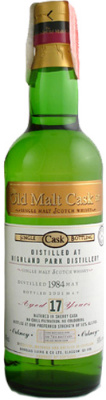
I saw some prices for official Highland Parks the other day, and I just had to try this one. It wanted to be picked. It’s and eighties Highland Park by Douglas Laing. A sherried one that was released almost ten years ago, and the cost then was next to nothing. (around 50 Euro’s). Well a lot has changed in the Whiskyworld the last decade. So Highland Park 19yo. Alas I wasn’t able to recover a picture for this bottle so I will show here a brother of the 19yo, the 17yo that was released two years earlier (Also a 1984). The 19yo I’ll review here will more or less look the same.

Color: White wine.

Nose: Apple sauce, very clean, a little bit of wood and a little bit of spice. Dusty but overall fruity. Lot’s of toffee and again warm sweet apple sauce. Although pleasant, it doesn’t seem quite right. There is something like coal smoke in the distance, maybe even some sulphur. A slight hint of burnt wood and paper and cardboard. The longer this breathes the better it gets. The apple bit wears off.

Taste: Short attack that dissipates quickly and falls again into a fruity sweetness. Alongside the apple there also is some blackcurrant. It’s nice, it’s a lemonade at first, that drinks nicely away. Prickly smoke in the back of your mouth. The 50% ABV delivers good oomph.  Licorice and a hint of wood with a lighter acidic and slightly bitter finish, after the ‘full’ body. The finish is the weakest part.

Likeable, but nothing special. It has its merits, but if I had tasted this blind, I would have never guessed this was a Highland Park. It’s quite far from the official Highland Park’s. I’m guessing Fino Sherry, but also a tired cask. In almost 20 years the Whisky hardly picked up any color, a not a lot of character from the wood itself. No use to compare, but the other Whisky from Orkney, Scapa, I reviewed for Master Quill’s 1st Anniversary was a lot better!

Points: 86

By the way. The depicted 17yo scored 85 Points.

Scapa 23yo 1979/2002 (54.7%, Ian MacLeod, Chieftain’s, Sherry Butt #6632, 567 bottles)

I broke the corkSo it’s time to celebrate the first anniversary of Master Quill and I’ve picked this bottle of 1979 Scapa, bottled in 2002. Well, things got off really good! Like I said, I would rip open this bottle and so I did accidentally. I broke off the cork! Bugger!

Like with the Dun Bheagan range these Chieftain’s bottles are by Ian MacLeod. A few years ago I tasted its sister cask (#6633) blind and liked that one a lot, since I scored it 92 Points. Reason enough to look for this one for quite some time and snap it up at an auction.

Scapa is the lesser known distillery from The Island of Orkney. The better known obviously being Highland Park. Well actually, Scapa is one of the lesser known distilleries from Scotland! Scapa was founded in 1885. The distillery was closed a few times. The first time between 1934 and 1936 and the second time between 1994 and 1997. From 1997 on Scapa distilled Whisky again for a few months per year using staff from the nearby Highland park distillery. In 2004 the distillery is refurbished, and one year later Chivas Brothers (Pernod Ricard) buys the distillery. Scapa is now known for their 16yo that replaced the 14yo, that replaced the 12yo, that replaced the 10yo. Are you still following me?

Scapa 23yo 1979/2002 (54.7%, Ian MacLeod, Chieftain's, Sherry Butt #6632, 567 bottles)Color: Copper

Nose: Very musty Sherry, but already some black fruits are shining through. The initial musty smell wears off (a bit), and shows some spice and some coastalness (is there such a word?). Gets deeper and deeper, with a very balanced fruitiness. I guess this is one that needs to breathe for a while, but already is shows it’s potential. It does have some balls! What I like about this one that is has multiple facets, it changes on you if you give it time.

Taste: Yeah, this will be no punishment to drink all! Nice going. perfect combination of sweetness and fruits and in the mouth there is no hint of the sewer-like smell that was there in the beginning, (I may be exaggerating a bit). It has some wood, but the whole is so bold, it needs this spice and wood to pull it together. There is also some bitterness from the wood, but again this one needs it. At this point in time (freshly opened and needing to breathe) it’s not completely balanced, but it will get there in the end. Complex, well, not exactly. It shows some sourness from the oak, but after half an hour it is pulling together, and it has a great and long finish. This again is a stunner!

Well I can say this, because I love this whisky (and it’s sister cask). It sweet and fruity, has a nice finish and this is well counteracted by several effects from the wood. Like Frank Drebin said; “I love it” (He actually said it several times…)

Points: 91