 And here is Ardbeg. Last of the Islay whiskies to feature on Master Quill. The first Ardbeg is also the last one being released. Ardbeg Galileo. A Whisky that in part was matured in Marsala Casks.
Ok, two difficult words. Marsala? Galileo?
Marsala is a Sicilian red wine which mostly is sold for export as an fortified wine. Port and Sherry are also fortified wines. By the way, the Sicilians themselves drink it as… well a normal wine. We all know the Whisky market is booming, but the Sherry market isn’t. We also know that Sherry Butts and Puncheons made of european oak, are the best casks for maturing Whisky, and that good cask are getting scarse, because we, the consumer, don’t like Sherry too much. Sherry casks made of American wood, but foremost other casks, like Marsala, are used to see if they work.
 Galileo Galilei was born on February 15th, 1564 and departed from this earth on the 8th of January, 1642. Galileo was an Italian physicist, mathematician, astronomer, and philosopher who played a major role in the Scientific Revolution [Wikipedia]. In the case of Ardbeg, Galileo was best known as an astronomer.
This bottling also commemorates the fact that Ardbeg is part of an Whisky experiment in space. On ISS some Ardbeg (and I guess it’s not the Galileo Whisky) in MixStixs are subject to experimentation on the topic of molecular maturation. (Can we mature whisky more quickly and thus make more money, by maturing it in space or at zero gravity? Or am I just being negative?)
Color: Reddish Gold
Nose: Obviously Peat and a lot of smoke. Non fishy, yet clean and almost industial smelling peat. Winey and wine related ash. Flowery and fresh wall paint. Sweet caramels, dried apricots and a hint of peaches on syrup.
Taste: Sweet. Ashy again. Wood and winey and a quick sour note. A little bit of liquorice and foffee. It actually tastes the same as it smells. Strange unbalanced soury finish with the cold contents of an ashtray and some mint lateron. There is not a lot happening in the finish. Astonishingly simple and short. The wine brings a sort of sourness that is all over the palate and isn’t doing the probably standard bourbon casked Ardbeg any good.
 I hate to say it, but aren’t “Ardbeg” putting more money into marketing than in the actual Whisky? Don’t get me wrong, I love Ardbeg, just look at my top 25. Alas, this isn’t my Ardbeg anymore. It became some kind of hype, a brand, a handbag. It’s not bad, but I’m gonna pass on this. It makes my head spin.
I haven’t had any Marsala on it’s own yet, but tasting this Ardbeg, Marsala should be closer to Port than it is to Sherry. When using Marsala casks, don’t overdo it please!
Points: 82
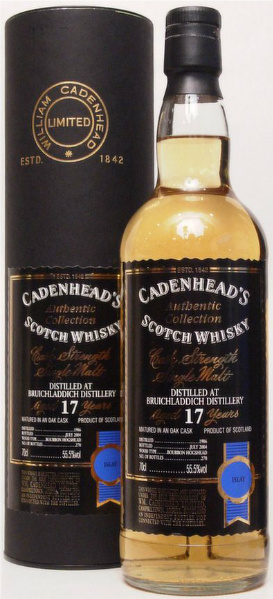 Also from 1986 but several years younger, a 13yo to be precise. Even though it was younger, this bottle showed more character to it. The 13yo was almost empty and maybe these Bruichladdich’s need a lot of air. Let’s have a look in my controlled environment and using my glass of choice, how this Bruichladdich really is. (This bottle, just open).
 Bunnahabhain is known for being the least peated of the island, still like a lot of others, raising to the occasion by answering the call of the public for more ppm’s. Burn Steward therefore started to bottle a “Moine” expression, with more peat, mimicking pre sixties Bunnahabhain.
 Also from 2009 the second release became “Autumn 2009” next up was “Spring 2010” and after that the fourth release was this “Summer 2010”. Also in 2009 the first Single Cask releases were released at cask strength. From 2011 the Single Cask bottles were released with red labels. In 2012 a Sherry Cask release at 46% ABV was released with a black label. Also from 2012 a new addition to the core range was released called “Manchir Bay”. Last but not least there are a few releases of 100% Islay at 50% ABV, where all ingredients of the whisky were sourced form the island itself. Now it’s time for “Summer 2010” solely from Bourbon Barrels from Buffalo Trace.
 Kilchoman then. The newest addition to the immensely popular Islay Whisky family. This new small farm distillery was built in 2004 near Kilchoman in the west of Islay, and therefore named Kilchoman. Operations started in 2005 and their first disaster struck in 2005 also. No distillery can call themselves a real Scottish distillery without a big fire. Well history was in the making so let’s do the fire thing quickly, they might have thought. Not hinting at any foul play of course. In 2005 the kiln burned down. Rebuild in 2006 and operations recommenced. As of 2009 but foremost 2010, Whisky started to be released. In 2009 the first release in the new core range was the “Inaugural Release”. Next up was “Autumn 2009” Let’s try our “Spring 2010” that was the third release.
 Like with many Gordon & MacPhail bottlings, it is reduced, this time to 45% ABV. I am a fan of cask strength Whiskies, but I learned to appreciate these reduced Whiskies more. Is it age? I’m a bit held back only by the fact that not every Whisky likes to be reduced. Let’s hope it’s not the case with this one.
 Even though it’s supposed to be summer, looking outside you could have convinced me of something different. I see people outside wearing coats and jackets. Yesterday I reviewed an Islay malt,
  On Monday, July 23 2012 it was announced that Bruichladdich of Islay was sold to Remy Cointreau for £58.000.000 to enrich their high-end portfolio of brands and to
 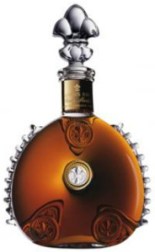 confirm their strategy in the luxury spirits segment. If I’m not mistaken it’s their first distillery, and maybe there is more to follow? We’ll see what happens next. In stead of picking one of their numerous official bottlings by the old owners, first a Sherried example from independent bottlers Gordon & MacPhail.
 Taste: Ok, half sweet. Tarry and thick. Toffee with some ash. Nice body and good balance. The nose and taste seem to match. It has the sourness of oak. There is some peat in the depth, but as with the nose, it has more smoke. Wycam’s cough drops! Very nice not over the top Sherry, but also not all to complex.
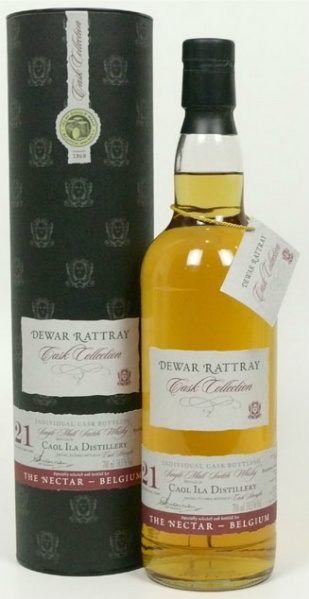 This whisky was distilled on December 12th 1984 and bottled 21 years later on September 6th, 2006, and was bottled for Belgian outfit, The Nectar.
 Well, after all those old, sometimes priceless, but always hard to get, independent bottles I reviewed recently, it’s now time for something more easy to get. A standard bottle, even sold, in some countries, in your local supermarket, at reasonable prices to boot. Add to that, it’s usually decent quality, so this is a bang-for-your-buck type of malt.
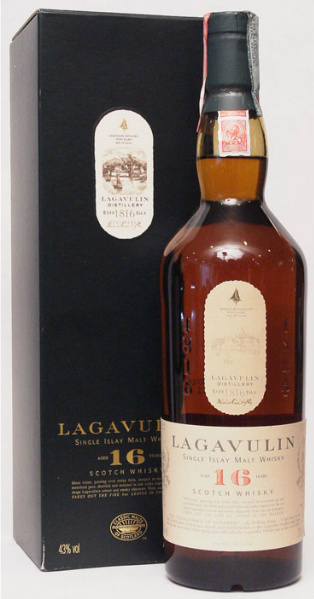 Many stories surround these Lagavulins. First of all that, when the royal warrant disappeared from the label, the quality went down. In fact the quality was dwindling even before that. Last year or maybe in 2010 I heard that the quality level is picking up again. This year I hear again that the recent bottlings are not as good as they were once before. So lot of debate about this one, and considering the interest, we know this is a popular one.
 So Lagavulin 16yo isn’t what it used to be, but how does it do on its own, not compared to the older ones? Well that’s another story, even today it’s a pretty special dram, that still scores pretty high, but I like the
