Port Morant 6yo (46%, Renegade Rum Company, GYA, Tempranillo Finish, Guyana)

Why review only one Renegade when you can do two for twice the price? The previous review was about a Jamaican Rum finished in Tempranillo casks. Tempranillo is a blue grape variety used for an excellent Spanish Red Wine. We know that Jamaican Rums have a big or heavy style, a. k. a. high ester Rum, however, we found that it just barely coped with the Tempranillo finish, which was able to hijack the Rum a bit. We know of another big and heavy Rum-style. Demerara. how would that perform? Today we’ll have a look how an almost similarly young Demerara will do. It’s not just any Demerara, it’s a Port Morant! So another Renegade, another big young Rum and another Tempranillo cask, those will be the ingredients of this review. Again, I expect an interesting Rum, out-of-the-box just like the Renegade Monymusk. Will this one taste better?
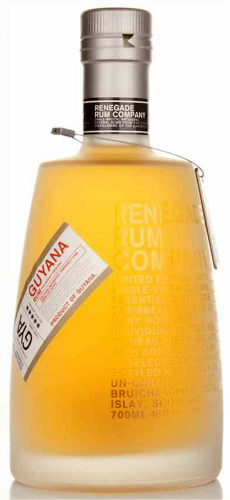
port-morant-6yo-42-renegade-rum-company-gya-temperanillo-finish-guyanaColor: Light gold.

Nose: Right out of the gate, this is Port Morant alright. Typical Demerara. From memory, but for a brief moment only, somewhat similar smelling to the Plantation Guyana I reviewed earlier. Where that one seemed to have a sweeter start (added sugar), this one has a big dusty, nutty and vegetal component added to it. Changing instantaneously. It seems to me already, both the Jamaican Rum and the Demerara I have in my glass now, react quite differently to the Tempranillo cask. Here it gives off a clear Grappa aroma. Know your distillates people. Venture off the beaten path sometimes. It will make for a better experience. Interesting. Both turn dry in no time at all. Some oak and vanilla, so I’m guessing that, at least one of the casks used was made from American oak. Being the original cask the Rum was matured in or the cask that held the Tempranillo Wine. Probably both. Quite fruity. Fresh pineapple for sure and some less pronounced, yet creamy, citrussy notes as well. Spicy oak combined with thick and juicy almonds and pudding. After letting this breathe for a while it almost smells like a Single Malt Whisky matured in a Bourbon cask. Just like the Jamaican Renegade, this is a nice, although a bit out of the ordinary, smelling Rum. I hope the palate will be better this time around, compared to the Monymusk.

Taste: Not very sweet Demerara, not in a big way, well, quite dry actually. Again a Rum that chances quickly in the glass. The Tempranillo is immediately a bit overpowering and I can’t say it does wonders for this Rum. Next a flinty note that doesn’t seem right. Paper, cardboard and Grappa come next. Lots of Grappa actually, with some fruity and Wine-like notes. So expect hay, dry grass and a very dry taste. Definitely still recognizable as a Port Morant on the nose, but in no way, here in the taste. As I said earlier, overpowered by the Wine finish.Funky Wine cask finish you also got from the first batch of Whiskies being finished in Wine casks. By now in the Whisky-world they have mastered finishing in ex-Wine casks, but Rum is a different puppy ‘eh Jim? Quite big into the finish, but a quick break-down afterwards, making the finish medium at best. I hoped that this one would taste better than the slightly disappointing Monymusk I reviewed before this one, alas, here the experiment is even less interesting, although not a totally failed effort. There is something to be learned here, but I’m not sure what exactly…

Well, I hoped this would do better, but in fact it worked even less for me. If you know your Grappa’s than this one will interest you for sure. I know a lot of people raise their eyebrows when tasting (their first) Grappa. Definitely an acquired taste, even more so than a Rummy, acquiring the taste of Rhum Agricole. When I tried to taste the Port Morant right after the Monymusk, well all I can say, don’t do that. Doesn’t work either…

Points: 78

Monymusk 5yo (46%, Renegade Rum Company, JMA, Tempranillo Finish, Jamaica)

Renegade Rum Company. What might that be? If you are familiar with Single Malt Whiskies, then the name Bruichladdich should mean something to you. In fact it will mean the world, since it is one of the famous Whiskies from the Isle of Islay. Home of the best peated Whiskies in the world, only historically, Bruichladdich is more famous for its unpeated Whiskies than for their peated Whiskies. To put an end to that, master distiller Jim McEwan started to make Port Charlotte, a heavily peated Single Malt Whisky (around 40 ppm phenols) and the astronomically peated Octomore (up to 258 ppm, which is a lot more than 40 ppm). There is no normal way to peat Whisky that high, so in comes the skill of Jim. Bruichladdich is also the home of The Botanist Gin, made up with botanicals from Islay, and also of Renegade Rum. Jim supposedly hand-picked casks of Rum and hand-picked Wine casks to finish those Rums in. Expect relatively young Rums, all finished in some sort of Wine cask. All reduced to 46% ABV, in my book better than the usual 40% ABV. Anything below 40% I don’t even consider buying if I have to be honest. In everything Jim does he pushes the envelope, so prepare yourself, as will I, for an unusual Rum experience…

monymusk-5yo-42-renegade-rum-company-jma-temperanillo-finish-jamaicaColor: Light gold.

Nose: Yep, funky Jamaican style. I love the high ester quality it has to it. Easy to recognize. Fresh cookie dough. Extremely creamy. Already the promise of a cloying syrupy Rum. Wait a minute… A drier note emerges. Old raisins and some wood. There is a note here I struggled for a while to identify, so common, but what is it? Its Grappa! The Temperanillo cask infused a Grappa note to this Rum. Grassy, hay-like. Clay, butter candy and a more vegetal note. If you have ever sticked your nose in the hole of an empty Red Wine cask, you’ll recognize its strong spicy notes in this Rum as well. Nice and quite unusual for a Rum. Amazing how the finish is taking over the Rum when you let it breathe for a while. When nosing this the high ester Jamaican smell is retreating quickly (move it around a bit so it gets some more air, and it briefly returns). With the Grappa nota also a more nutty aroma emerges as well as some warm butter. So it starts big, funky and creamy but after a while it has this well-balanced dryness combined with a nice warm butter note. This is the most two-faced Rum I have smelled untill now. A bit unusual, but I like it. Pushing the envelope a bit. If you love Grappa, you’ll love this nose.

Taste: Here the funky part is even shorter. Upon entering your mouth, for a brief moment, you think you are drinking a typical and clean and simple example of a Jamaican Rum, but it turns around rather quickly. Lots of wood and heaps of acidic woody notes followed by strange red fruit acidity from stale Wine. It doesn’t have the taste of wood itself though. It also lacks the bitterness of clean wood. No, its different. What it also lacks is the Grappa I found on the nose, for some that is a good thing, but it also makes for a somewhat unbalanced Rum. Well it’s not really a Rum either, especially a Jamaican Rum. What it does have is some nice exotic spices, dare I say Indian again? Also slightly soapy and floral, and it has some notes of Foursquare as well, which is a Rum, although not Jamaican. A long time after swallowing, a very discrepant winey, acidic and fruity note re-appears, combined with toasted cask, well hidden into the background. Can’t really say that the finish is well-balanced. It’s like a race where all the competitors cross the finish well apart from each other, running different distances as well. So unbalanced it is, and definitely the weakest part of the whole experience.

This bottle is clearly an experiment. Where for me it works wonders on the nose, it doesn’t actually work that well when tasting it. Somehow the finish overpowers the young Jamaican Rum. Maybe this experiment would have worked better if the Jamaican Rum was older, bigger, more of a match to the Tempranillo?

So there it is. I love Jamaican Rum to death, I love Jim McEwan and I love a good experiment, and that is what experiments are for. You try something that is usually out-of-the-box. It might work or not. Here it clearly works on the nose, but less so on the taste. So not the best of Rums around, and the score will reflect that, but because of its out-of-the-box-ness I still would buy one, although many of the Renegades are sold out by now…

Points: 81

Presidente Solera 23 Años (40%, Dominican Republic)

There are probably more Rum brands in the world than there are people, which makes the Rum world less transparent than, lets say, the Scottish Single Malt Whisky industry. Remember the reviews I wrote about Malecon? Malecon is a brand and not a distillery. Malecon is a Brand of PILSA. A Panamanian company which is known for its Cuban master blender: Francisco “Don Pancho” Fernandez Perez. Malecon is Rum made in the Cuban tradition. Well, something like this is also true for the Presidente brand. Presidente is made the Cuban way in the Dominican Republic by Oliver & Oliver and just like PILSA, Oliver & Oliver make, and own, a lot of brands of Rum, like Cubaney, Opthimus, Puntacana and Quorhum, to name but a few. They also make Rums like Atlantico and Tres Hombres, for other brand owners. Oliver & Oliver will make even Rum for third-party brand owners. If you and me want to put out a Rum together, Oliver & Oliver will be happy to oblige, but so would PILSA and many others around the world.

We’ll encounter many Rums in the future that are made by Oliver & Oliver, so more about them next time. Their website is more down than up these days, so lets find out who this guy on the label is. It is José Julián Martí Pérez (1853-1898), a big national hero in Cuba. Amongst other things he is known as a writer, poet and journalist, but foremost as a political activist. He fought for Cuba’s independence against Spain, traveling the world to spread the gospel of political and intellectual independence and was the architect of the Cuban Revolutionary Party. The Cubans fought three wars against Spain for independence, and in the third and final war (1895-1898), during the battle of Dos Ríos, Martí was killed. Martí helped planning and execution of this war. After his death one of his poems was turned into the song Guantanamera (which is probably a Rum brand by now).

Presidente 23Color: Dark brown, slightly mahogany.

Nose: Big, initially sweet and syrupy, but quickly some dry woody aromas emerge as well. Old cabinet with faint smell of dried out lavender soap. Hints of cured meat, dust and toned down sawdust. Very closed actually and it comes across as one big aroma which makes it hard to detect distinct markers for this Rum. I have seen that before in Whisky when a lot of caramel colouring is done. I’m guessing from the smell that this has seen some sugar added to it. Sweet biggish smell with some dry spicy wood. Sweet black tea. Yet overall lacking some depth, so not all that old I guess. In fact it smells a bit like a El Dorado 12yo light, which also saw some added sugar. If you need to refresh your knowledge about the Solera System at this point, please read the introduction to this review. Nevertheless a very nice smelling Rum.

Taste: Sweet caramel, dry wood, slightly bitter spicy wood and plywood. Sitting near the fireplace in winter, when the air outside is crisp and sharp. Toffee, lots of vanilla and sugared cacao. Burnt sugar, and the aroma of burning paper. A touch of glycol. Because this has hints of burnt sugar and burnt wood, the sweetness is well hidden but unmistakably there. Big aroma. On top a nice well-integrated, slightly acidic fruitiness, which balances out the Rum. Just enough. Honey and licorice. The finish is rather cloying, another sign of added sugar, and surprisingly sees the soapy note from the nose return. The finish is of at least medium length, with quite a warming quality to it. Again a Rum that suffered a bit by reduction to 40% ABV.

This Rum is pretty sweet and these days, added sugar is like swearing in the church of Rum. And rightly so. Although Rum is made from molasses and sugar cane, adding sugar is something else. Sure, lots of Rum drinkers love their Rums sweet, but for that we have liqueur. Calling Rums like these just “Rum” is a bit confusing and to be honest, misleading. We already have the Spiced Rum category, why not add a Sugared Rum category. As a Sugared Rum this is not bad. It does taste nice, and although it has its flaws, I do quite like it.

Points: 85

Malecon Seleccion Esplendida 1979 (40%, Panama)

Why not make it a Malecon, double bill? In the previous review I had a look at the 25yo brother/sister of this Rum, called the Reserva Imperial, and was surprised by its youthful, vibrant quality, I somehow didn’t expect of a 25yo Rum. The label mentions: Rum made in the Cuban style (a light style), although hailing from Panama. For me the Rum also suffered a bit by its reduction to 40% ABV, where clearly this should have been a bit higher to “carry” the Rum. Today we’ll have a look at an Seleccion Esplendida from 1979, what should be an exceptional vintage Rum. This one was bottled in 2008, but I am not sure. I gather, Las Cabres de Pese wasn’t working in 1979 so I’m guessing this was distilled at Varela Hermanos S.A. as well. My only fear is again the 40% ABV…

Before I set off, if you are interested more about the Malecon brand and some of its history, I ask you to read the lengthy introduction to the previous review of the Malecon 25yo.

malecon-1979Color: Orange brown, slightly lighter than the 25yo.

Nose: Drier. Spicy and reeks of higher quality. After only smelling it once I already like it a lot better than both Malecons I reviewed earlier. Thus, we are going into the right direction. Nice fruity acidity, better balanced and integrated compared to the 25yo. Hints of Aspirin powder and nice dry oak. Again a meaty quality like the 25yo, but this time it makes my mouth water. Dry cured meat, beef jerky and some cold gravy. Vanilla is next and quite present. Oak driven vanilla. This smells so good, I’d almost wear it as a perfume.

Taste: Well this doesn’t seem so reduced as the 25yo. Alas the fruity acidity is present, but in a less integrated way as the nose. Fruity black tea? Quite some dry wood spiciness as well, and from the start you see this has some sweetness to it, but that is well overpowered by the dry aroma’s. I don’t think they sugared this one up, guys! If so, its masked rather well. it has some bitter notes as well, but they help the whole. Even the bitterness in the finish is not hurting the Rum at all. Apart from this, some nice toffee notes stay behind next to the woody and bitter notes. Again, just like the 25yo, the finish is short, and again, this was probably reduced too much. Bugger!

We are entering super premium territory now, since today this 1979 costs about tree times more than the 25yo. Is it worth that kind of money? It is definitely a step up from both other Malecons, but for a Rum in general, it lacks complexity. It’s basically a bit too simple, to be honest. The nose promised a lot, but the taste didn’t deliver what could have been. Stop diluting it so much! I feel both the 25yo and especially the 1979 are a bit overpriced for what you are getting. Nice just isn’t enough anymore, especially at these prices, so I can’t really recommend both of them.

Points: 84

Malecon Reserva Imperial 25yo (40%, Panama)

Malecon was featured almost four years ago on Master Quill with a very light 12yo Reserva Superior. We’re four years on and still it is quite hard to find any information about the brand. What we know is that the Rum comes from Panama and that it is made in the cuban style, as stated on the Malecon labels. So its safe to hazard a guess and say that the Rum is probably made by the people behind the Abuelo brand, although they themselves don’t put “Cuban style” on their labels, so maybe they make this in a different way, or is it just a matter of cask selection?

don-panchoThe brand, as well as Malteco, is owned by Caribbean Spirits and worldwide distribution lies with Italian outfit Savio s.r.l. owned by jet-setting spirits importer Marco Savio. Although the Savio website isn’t completely clear, I’m guessing that Caribbean Spirits is also owned by Savio. We can also read that Marco hooked up with the legendary Cuban Rum-maker, Francisco “Don Pancho” Fernandez Perez. We know Don Pancho is Cuban, and we also know that he worked a long time as master blender at Varela Hermanos S.A. in Panama (Abuelo). So now you can do the math about Malecon.

Don Pancho is also the blender for Ron de Jeremy (and probably many other Rums). Since 2000, Don Pancho oversees production in the resurrected Panamanian distillery, Las Cabres de Pese, owned by Proveedora Internacional de Licores, S.A. (PILSA), located not far from the distillery of Varela Hermanos, so it is possible that younger expressions of Malecon are produced at Las Cabres than at Varela, but I’m only guessing here.

PILSA is also responsible for Panama Red, Caña Brava, Selvarey and the Origenes Rums and boast producing Rums in the Cuban style. Rums like Zafra, Panamonte, Debonaire and Bohemio are also produced at Las Cabres de Pese although the brands are owned by other companies than PILSA. PILSA’s Origenes Rum is marketed as “the ultimate expression of Don Pancho´s vision and a lifetime dedicated to the production of the world´s finest rums”, So cheers to that and Don Pancho, who seems to be responsible for our Malecon 25yo as well…

malecon-25-reserva-imperialColor: Copper brown orange.

Nose: It starts out with glue, and yes this does remind me more than a bit of Abuelo. Fruity and also the Abuelo 7 yo’s acidity. Next some cereal and vegetal notes. Cookies and fudge. Dry leaves and a little bit of hay. Sawdust. Hints of gravy even. Maybe herein lies the age? A very vibrant Rum nevertheless, because I expected a more dark and brooding Rum after 25 years in wood. It doesn’t even have a particularly woody aroma and does smell a bit sweet and syrupy. Toffee and runny caramel.

Taste: On entry a decent but very diluted taste. This type of Rum does need a bit of strength to it, but at 40% ABV. It completely lost its oomph. I hope this isn’t the way they want to reach cuban lightness, because it doesn’t taste like a Cuban Rum at all. If I want a Cuban Rum right now, I’d rather have me a Cubay. Its obvious right now that the Metodo Tradicional Cubano mentioned on the label refers to Don Panchos schooling! Back to Panana then, as did Don Pancho. Again I smell this Rum has a lot in common with Abuelo, but not with the Abuelo Centuria, which also consists of some pretty old Rums. No it smells and taste younger than the 25yo it is. There are some burnt notes, burnt wood (cask) and burnt sugar, giving the Rum a nice backbone and some character. Still, the Abuelo fruity acidity lies on top. Short finish, leaving hardly any aftertaste.

Tasting this I would definitely say Abuelo, although not such an old one. How funny would it be if it wasn’t an Abuelo! It tastes like an Abuelo to me, just watered down too much. Did they think they would scare the public with some more alcohol, or was it an economical decision? At least it not very expensive for the age.

Points: 82

Flor de Caña Centenario 25 (40%, Nicaragua, 2013)

Sometimes I get lucky, and somebody steps forward and sends me samples of (potentially very good) Rums. Not from the industry, but from a fellow Rum-lover, just to read my opinion. Samples are welcome indeed, since I’m actually running a bit low on my stash of samples for reviewing, and there is only a certain amount of open bottles I can have around the house, and at the same time, maintaining a certain level of normality, or at least, faking normality towards the rest of the world. Well Rik, thank you very much indeed, so here is the first one!

Looking back at older posts, I already reviewed two expressions of Flor de Caña. The 12yo and the 18yo, so how fitting is it to get this 25 (yo). Both earlier reviews were written about Rums still in the old bottle. The labels back then mentioned the age of the Rum. 12 years and 18 years. Since 2014, the Flor de Caña range is bottled in new big, flat, and square bottles. However, this time they only have a number on them: “12” and “18”. The word “years” has vanished. On the company website, they mention that the 18 is almost two decades in the making. So still an 18yo? Do we smell a rat? We know about numbers without a true age statement from Solera Rum producers. No, they haven’t, haven’t they? No. Another surprise is the price. You can easily say that the 12 (yo) and the 18 (yo) are very reasonably priced. The 25 (yo) costs the same as two bottles of the 18 (yo) ánd a bottle of the 12 (yo). It was always said that Flor de Caña ages their Rums for the full amount of time, as mentioned on the bottle, although I remember a 21, that actually was 15 years old and the 21 referred to the century we live in. For now, lets give them the benefit of the doubt, shall we?

Or shouldn’t we? Early 2015 saw a report by Nina Lakhany, and near the end of 2015, a report by Clarissa Wei, showing that it is not healthy to work for the Nicaraguan Sugar and Rum industry. During the harvest season, the La Isla Foundation held a survey under workers from Chichigalpa showing workdays of 12 hours under extremely hot conditions, without proper hydration and time to recuperate. Workers are poor and are paid per tonne cut, so they work as much as they can to provide for their families under abysmal conditions. A study performed by the Boston University, following workers in Chichigalpa, shows that alarming numbers of planters and cutters are dying of Chronic Kidney Disease from nonTraditional causes (CKDnT). As a response, many bars started boycotting Flor de Caña products.

I urge you, dear reader, to click on the links above and read the corresponding articles, for you to see the dark side of Rum making.

Flor de Caña 25If you still are interested, here is the review of what turns out to be a very good Rum, alas made with blood…
Color: Full gold.

Nose: Yeah funky with a dry, spicy and woody backbone. Very chewy smelling and high on esters. Isn’t this Jamaican? Definitely well-integrated banana, coconut, vanilla and a whiff of lavas, dried salty vegetal mix and mint. Slightly burned (brown) sugar and fresh, slightly moist brown sugar. The sugar seems to be attached to the wood aroma. Nice. Love this smell. These brown sugar notes combined with the wood notes make it an absolute dream to smell. If this tastes anything like it smells, this will be an amazing Rum. Nutty and waxy. If smelled blind I would have never thought this was a Flor de Caña, especially with the experience of the old 12yo and 18yo behind my belt. Give it some time to breathe, and this will give off some fruity and floral notes as well. Wonderful. Well balanced and well made.

Taste: Sugary, but not overly sweet. A bit thin on entry, although the mouthfeel is syrupy. The way down takes some time and there are some wonderful burnt notes emerging. It has hints of burnt spicy wood, cask toast, maybe even some charcoal and tar. The spicy and peppery wood note stays with you throughout the whole of the body. Burnt sugar as well, but the amazing part is how toned down these notes are. Nothing overpowering, just well blended together. Not to sweet too. Nutty and again some hints of banana and sugared yellow fruits, but again so well-integrated, that the point this Rum tries to make isn’t about fruitiness. By the way, I don’t get the florality from the nose here. There are definitely some old Rums in the mix, but I doesn’t taste like everything is 25 years old. Medium long finish, but not a lot stays behind for the aftertaste. Sure, the nose is stellar, but the taste isn’t far behind. Marginally weaker and simpler, but still very good, even when reduced to 40% ABV.

I wasn’t blown away by the old 12yo mentioning that is was “not for me” and luckily, the old 18yo was already a bit better “Pretty light yet well-balanced”. More than a year and a half have passed since writing the review of the 18yo, and more than three and a half years since writing about the 12yo. A lot of Rum has flowed under the bridge since then and a lot of experience gained, I hope.

At this price-point, this should have been higher in ABV. I feel it is a direct competitor to the Abuelo Centuria, which is even a bit higher in price. Yes, the jump from the 18yo to this 25 is quite big, mind the gap, but compared to the competition, the price may not even be that bad. All things considered, this should have been way more expensive than it is… Don’t buy it…

Points: 90

Heartfelt thanks go out to Rik, for providing this and several other samples soon to be reviewed on these pages. Cheers mate!

Foursquare 9yo Port Cask Finish (40%, R.L. Seale, Foursquare, Blend No. 162, Exceptional Cask Selection, 2014, Barbados

I had planned to open a bottle of Plantation St. Lucia Rum after I finished both the Plantation Jamaica and Guyana, but after the Doorly’s 12yo I reviewed last, I just had to open a bottle of the Port Cask Finish as well. I just couldn’t help myself, I was so curious, especially after all the rave reviews. The St. Lucia just will have to wait a little longer. Port cask finish? The Rum is 9 years old, of which the “finish” took a whopping 6 years. The start was carried out in a Bourbon cask.

But first we have to get back to 1926. Back then, Reginald Leon Seale started the R.L. Seale & Co. Ltd. A company that is of interest to us since it was trading Rums. Sir David and now his son Richard are the Seale’s that also started distilling their own Rums in 1996 after they bought a defunct sugar factory a year earlier. Simply because it is better to trade Rum you made yourself, than constantly sourcing other Rum’s.

Although Foursquare is a Bajan Rum distillery, molasses are mainly imported from Guyana and the yeast used for fermentation is South-African. Foursquare Rums are blended from a pot still and a two (or three?) column stills. The copper pot still even has a copper column fitted on top, which looks funny for one that is used to Pot Stills with lyne arms on them.

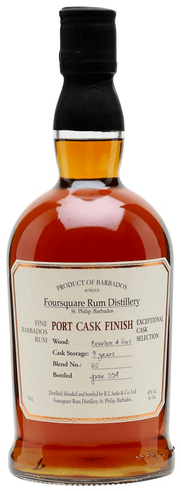
ColoFoursquare Port Cask Finishr: Orange gold. A tiny fraction darker than the Doorly’s 12yo. No red hue.
Nose: Toffee and caramel. Fresh wood, sappy and spicy. A breeze across a dry grass field on a hot and silent summer’s day. Distant fruit (more red this time) and a definite winey note, with slightly burned wine cask notes). On top of the medium sweetness lies a nice acidic red fruit aroma which is different from the 10% Madeira (a sweet fortified white wine) you can find in Doorly’s 12yo. The fruit is redder. The is also a nice nuttiness and dustiness surrounding this Rum, which mixes well with the medium sweetness and (red) fruity acidity. This Rum isn’t about finding lots of aroma’s and complexity. No, this one shines because of its balance. Well constructed, but is a bit middle of the road. It does its best to be liked by everyone. Although the label is pretty anorak, it really is a Rum for everybody, hence the reduction to 40% ABV. Luckily this Rum can handle the reduction, at least on the nose.

Taste: Ahhh here is the greatness. Spicy Indian feel, Cinnamon and exotic wood. This reminds me a bit of an Amrut I reviewed last. It’s still Rum by the way. Even though six of the nine years this was matured, was spent in Port casks, it hasn’t become Port of even Port dominated, but obviously the Port impaired some nice flavours to the Rum. I recognize the nuttiness and the hint of glue from the 12yo (the 12yo has more glue). Wow, amazing balance between the sweet and the dry. It is actually more dry than sweet, influence of the wood of both casks, again a bit virgin oaky, but the wood doesn’t dominate here as it does in the 12yo. Slightly longer finish than the 12yo, but still not very long. The Port starts to really assert itself way into the aftertaste, with the wood of the cask it came in. Nice fruity acidity. Very accessible and extremely drinkable.

This one is younger than the Doorly’s 12yo and therefore less heavy on the wood aroma’s. It seems perfect. Enough to give it character and a backbone, but never dominating the spirit like in the Doorly’s 12yo. Having this, it’s nice to have the woody 12yo open next to it. Personally I don’t have a problem with the wood in the 12yo. It fits the profile Richard went for blending the 12yo.

Highly drinkable, and well made. Not as complex as I expected, but good nevertheless. Again a bottle that will be gone soon I fear. 40%, yeah all right, it will do, but I would prefer a higher ABV. I understand the next Exceptional Cask Selection, The Zinfandel finish is 43% ABV and there will be a Vintage 2004 that will be much higher. I can’t wait. Good stuff especially considering the price. Daily sippers (at 40% ABV), both the Port finish as well as the Doorly’s 12yo, which is a bit more chewy, woody and somewhat sweeter and imho a bit bolder. I did several H2H’s with both and sometimes it’s hard to pick a favorite. Both are equally good. On some days I prefer the 12yo, and on others I like the Port better.

Points: 83

Doorly’s 12yo (40%, R.L. Seale, Foursquare, 2016, Barbados)

I am incredibly keen on reviewing this particular Rum. Why you might ask? It’s only a 12yo Rum from Barbados, nothing fancy, nothing super-ultra-premium and one that is very inexpensive to boot. How can that be? Wouldn’t you rather review an ancient Velier bottling then? Sure, but this one has a story to it. I write about Whiskies for quite some time now, and essentially kept my Rum-adventures to myself. I always liked Rum, but a few years back I really started to love the stuff, especially when I “got” Rhum Agricole and found out that the Rum spectrum is very wide and shows lots of variation.

A long time ago, when I got interested in Whisky I started to surf the interweb looking for information. Back then not a lot of it was around, and there were hardly any books as well. Whisky blogging was just about starting. More recently, when I started to look for information about Rum, I came across some very good Rum bloggers. There are more which I read on a near-daily basis, but for my story here, I have to mention two or three in particular. First I read this review by thefatrumpirate and this one on Inu A Kena.Although I have heard of Foursquare I wasn’t aware of the Port finish Rum. Both reviewers are very happy with the bottling, so my interest was “aroused”.

Next, I started looking for an official un-finished Foursquare bottling to compare it with, and came across this post and especially this post from Lance. “Weak, pussilanimous wuss of a rum. It’s so low key that its piano seems to lack keys altogether” So the Port finished product seems to be stellar and the un-finished XO seems a bit less than perfect. Nevertheless, my interest was now even aroused some more. Being warned, because a smart person learns from the experiences of others, I skipped the XO. Recently I found out there is this newly released 12yo as well. Back in business so to speak. I bought the Port finish as well as this new 12yo, so let’s see first if this 12yo is something Lance should buy.

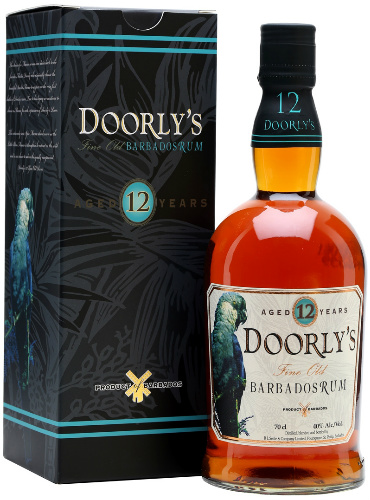
Doorly's 12yoColor: Copper gold.

Nose: First of all, this smells great right from the start. Modern and tight. Woody, some clear glue and spicy. Typical Bajan Rum, with hints of orange and fresh fruits in the morning market. Definitely also the wooden crates fruit is shipped in. Fresh virgin wood, not necessarily oak at this point. An expected, deep caramel and medium sugar syrupy sweetness. Yes you can smell sweetness, or maybe I should say, smells associated with sweetness. The smell is fruity, but on top of the syrupy part is another fruity smell. It’s the red berry acidity I didn’t like that much in some Abuelo offerings, but that quickly dissipates. Warm sawdust, definitely oak now and a small hint of gunpowder and honey, which is great. The wood aroma is growing stronger with time, which does wonders for the nose. Hints of an unlit Havana Cigar, a combination of Bolívar (spice) and Hoyo de Monterrey (cream). It smells fresh and even slightly winey, which is no surprise since 10% of this Rum was matured in ex-Madeira casks, the other 90% in ex-Bourbon casks. I believe Foursquare uses a lot of casks from Jack Daniels, which would make it ex-Tennessee Whiskey casks rather than ex-Bourbon casks. Whichever cask were used, both are made with American oak, giving off a vanilla aroma.

Taste: On entry a bit thin, but the aroma’s take over quickly. Hints of glue (from the nose) and almonds. It starts out with the woody flavours from the nose. Good balance, it matches the nose perfectly. Tiny hint of soap now, but nothing to worry about. Toffee is next, although the wood is still the dominant factor. Not too sweet. The back-label states 12 years of maturation in American white oak. If not all, then at least part must have been virgin white oak. If not, it may have been ex-Bourbon casks, which must have been very active then. It has so much fresh oak flavour. Chewy toffee is next, even though the Rum is quite thin. The finish is medium at best (probably due to the reduction to 40%), but the aftertaste does have some staying power. Sure not the most complex Bajan Rum around, but I’m not disappointed. The 10% Madeira work wonders without taking center stage. I would say well blended, this one. It’s a friendly nice Rum I’ll probably finish more sooner than later. Good for every (sipping) occasion and that is what you want a nice little OB to do.

It has been ages since I opened a bottle with a screw cap. It only happens when I open an old bottle of Whisky from Gordon & MacPhail and such. It’s all cork now. Screw caps were once a sign of cheapness, for me it’s not. I like the screw cap. It’s retro. They work well, although screw caps on miniature bottles are a lot worse. Corks can dry out, crumble or have holes and other weak spots. So no beef with the screw cap, unless it rotates for ever. “Screw cap” is even nicer to pronounce than cork, and it looks better on T-shirts. Just say it several times at loud, just not if you’re reading this at work and want to keep the respect of your co-workers. “Je suis screw cap”

Lance, it is safe (from “Marathon Man”) and Richard, well done!

Points: 83

Rum Nation Martinique AOC Hors d’Âge (43%, Single Domaine Rum, EMB 97209J, 2008, Martinique)

And here is Rum number three of Fabio Rossi’s Rum Nation Single Domain series. Earlier I reviewed the Panama 18yo and the Barbados 10yo from this series, both very likeable, enjoyable and very affordable. Third time lucky and this third one is a Martinique Hors d’Âge and an official AOC. Don’t be fooled, this is not a Wine, but a Rhum Agricole, made from Cane Juice. Rum’s like this are different from other types of Rum, made from molasses. So don’t go out buying the aforementioned Panama 18yo and this one, expecting two similar Rums, because they aren’t.

First of all I would like to mention, and I may have done that (several times) already, that Rhum Agricole is an acquired taste, especially for those who started out with sweet, molasses based Rum’s. It may take you a while to like something like this. I can’t stress this enough. Although I came from Whisky, which is something different entirely, I also needed some time to “get it”. I assure you, it will be worth your while, because after a while you also might “get it” or find out it never was meant for you in the first place., which is possible too. In that case I apologize. For the first group who “gets it”, what did I tell you? Isn’t it great!

The version I’ll be reviewing has a code EMB 97209J on it, and was released in 2008, there exists an earlier batch coded: EMB 97230, which was released in 2006. To complicate things a bit, It seems that parts of the EMB 97209J batch were also released in 2010 and 2011. Finally a new version, bottled in the dumpy bottle, was released in 2013. I don’t have confirmation yet, but I understand this Rhum Agricole was distilled by Habitation Saint Etienne (HSE), but I also don’t know if all batches were distilled by HSE, if distilled by them at all. I’ll let you know when I find out.

Rum Nation Martinique AOC Hors d'Âge (43%, Single Domaine Rum, EMB 97209J, 2008, Martinique)Color: Copper brown.

Nose: Nice Agriciole nose. Grassy, some orange skins, and a promise of a full body with maybe some more sweetness than usual from an Agricole. Dusty, drying and full of nice spices. Half warm, fresh black tea with sugar in it. Maybe not very complex, but very nice smelling. Hints of a grass and hay note I know from Grappa. Licorice and a wee bit of tar, but also a slight hint of burnt sugar, a very Caribbean smell. Add to that the smell of an unpainted hot metal roof. Hints of dry oak, like smelling the outside of the cask.

Taste: Light on entry, but with a nice half-sweet attack. It shows sweetness and dryness in quick succession. Again a hint of orange skins combined with dried out leather. Fresh, untreated almonds.  The luke-warm black tea shows itself in the taste too. Gelatine and a small hint of floral soap towards the finish. The finish is of medium length and not much stays around for long in the aftertaste. The hot metal roof is the last note standing, essentially.

I did an extensive H2H2H with this Rum Nation Martinique, which is between 5 and 8 years of age, the J.M Vintage 2002 (11yo) and the 100% Canne Bleue Clément Single Cask (9yo) I reviewed earlier. First of all, these three are not similar, but do resemble each other. The Rum Nation offering is definitely younger, than both others. A clean Agricole taste, not very complex, but very nice and highly drinkable. The Clément has an amazing colour after only 9 years in a Bourbon cask. Uncanny. It must have come from a very active cask. It is a Rum of broad strokes and primary colours. A bit raw, and everything that lies on top, overpowers any subtleties that lie underneath. The J.M is a bit like this Rum Nation with an added dimension. Here Bourbon maturation, did what you would expect. The American oak added sappy wood and vanilla to the mix, as well as a creamy and sweet-corn distillate note. You might say that the J.M is easily the best of the three, but keep in mind that the Rum Nation Martinique costs about half of both others, and keep in mind as well, that the Clément comes in a half litre bottle only. Rum Nation again shows its incapability of bottling a dud, and if you get the chance to talk to Fabio and he starts to talk about his entry-level Rums, just slap him over the head. He doesn’t bottle entry-level Rums, he only bottles Rums at entry-level prices. So if you get the chance to buy one…what are you waiting for?

Points: 85

Plantation Jamaica 2000 (42%, Old Reserve, 2013, Jamaica)

Some two months ago I reviewed the first Plantation Rum bottled in the Old Reserve Series, time for another one. The first one was made in Guyana, an easy choice since I do love Demerara’s. Same with Jamaica. Jamaican Rums tend to be big and bold, high on esters and funky! Actually Jamaica 2000 (in the old bottle, like the review of the Guyana), was my first Plantation Rum ever. That one was stunning. Here we have probably the first batch, released in the new bottle. There is a laser edged code on the bottle stating this one was bottled on April 18, 2013. I know both batches already, and there is some batch variation. I found the earlier one even bigger than the one I’m about to review here…

Plantation Jamaica 2000 (new bottle)

Color: Full gold.

Nose: Extremely buttery start. Lots of caramel and toffee aroma’s. Big, big, big, compared to other Rums from this range. It smells sweet, candy-like and so funky. I love the smell of stuff like this. Sugared yellow fruits in alcohol. Buried deep down below, there is this wine-note, so Cognac is noticeable. Ex-Cognac casks were used to finish the Rum in. Leather, nuts, nougat, chocolate. Hazelnuts, wood and sawdust. It’s all in here and for you to smell, so the big Rum didn’t even overpower it all, so no heavy thick cloak of toffee lies over this Rum, or is it? Next, because these is an evolution going on, a more nutty aroma emerges. Wood, almonds and cold black tea. The whole seems to become drier, which I like. Smells great, as often with Jamaican Rums.

Taste: Not as thick as one would expect, and certainly not as chewy. Fruity, yes. It is not overly sweet as well, but the sweetness is your typical refined sugar taste, as well as some burnt sugar. Right from the start quite some influence from the wood, combined with the defining Jamaican funk from the smell. Toffee, wax and nuts. Vanilla Ice-cream with Rum and raisins, which I also remember from Christmas. No big toffee from the nose as well. Liquid toffee and alcohol. Without smelling it, I repeat, without the smell, tasting this blind I would almost call this an Abuelo expression (the 7yo), only less sweet and more powerful. How strange. It has a nice woody backbone, with a slight bitter edge to it. Cask toast, burnt sugar, something like that. Warming. letting this “melt” on your tongue, a more fruity aroma emerges and even some fresh artisanal cola notes, which aren’t so damn sweet as those sold to you by the US sugar mafia. Whatever the aroma, it will always be slightly woody accompanied with a woody and waxy bitterness. I guess in this case the finish did some work on the typical Jamaican profile.

Just try something like this from Jamaica and try to compare it to a Rhum Agricole, I bet you can’t do that in the same tasting without losing something that both Rums offer. That far apart are both distillates, and so broad is the scope of Rum.

Since I still have it around, I compared it directly to the Guyanan offering I reviewed earlier: The Guyana seems more organic. More smells from the earth in that one. Flora and fauna and a wee hay-like Grappa note. Both share the same waxy notes though. In the taste the Guyana is a bit sharper and hotter. The Jamaica is definitely sweeter, and the sweetness overpowers the finish. Both are influenced by wood. In fact, both are similar but not similarly good, and if you have one of them, you don’t really need the other as well. Yes the smell is different, but the treatment both have received by their owners have brought them closer together.

Points: 81