I had a craving for a nice fruit bomb, so I pulled this Tomatin by indie bottlers Mo Òr out of its hidingplace. As many of you might know. 1976 is a pretty famous year for Tomatin. Lots of (Independent) bottlings from this year are considered amongst the best around. Bottles from this year by The Whisky Agency or by Duncan Taylor fetch amazing prices when sold at auctions. Just not a lot of Tomatin 1976 around at shops anymore…
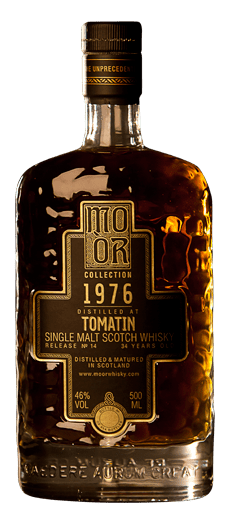 Color: Copper Gold.
Nose: Yeah! is the first word that comes to mind, nosing this. Waxy and fruity, but also a nice kind of old dustiness. Chocolate, mocha and old laid back Sherry, more of the Fino kind if you ask me. Very structured and refined. Probably a refill cask. A little bit creamy. Distinguished, but not the famous 70’s (exotic) fruits in this, like we know from the 30yo. Very elegant wood, combined with an acidic kind of smell. Mocha again and a little hint of vanilla.
Taste: Nice peppery and woody attack at first and then yes, a mouth coating layer of tropical fruit cocktail, that pushes everything aside for a while. The pepper stays, but the wood vanishes for a moment, but returns. Great effect! Papaya, pineapple and passionfruit. Maybe some mango (maybe not). What a nice cloying finish of fruits, wood, paper and chocolate. The pepper is gone by now, but an added note of Gewürztraminer finishes the whole off. Nice.
This is again a perfect example of how great Tomatin’s from 1976 are. It may not be the most over-complex distillate around, but the way the fruits shines through is truly amazing. This is sooo nice. I love this!
Points: 91
Thanks go out to Henk for the Sample.
 I caught a cold last week, which is very unfortunate when you try to write tasting notes. Fortunately my nose is back in business now, and in the process ‘got a rest’. Let’s start whisky reviewing again, with an example of a whisky that should be light and is ‘low’ in ABV.
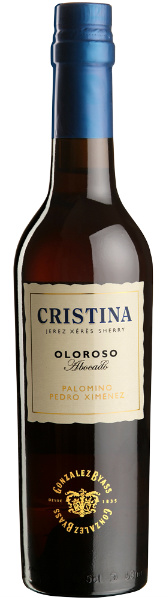 Essentially, there are three types of Sherry:
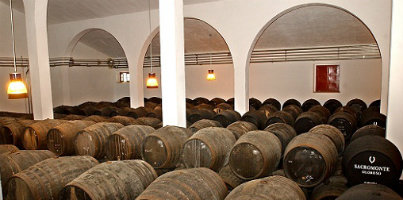 Valdivia was founded by a supplier of building materials in 2003. He bought an old property in Jerez and completely renovated it. Next was locating some old stock to be able to release a series of old Sherries. This Series is called Sacromonte and are made up of 15 year old Sherries. Here we will try a PX from the ‘standard’ series. The modern look is aimed at the new trend-conscious generation. In its young history, Bodegas Valdivia already has its third owner.
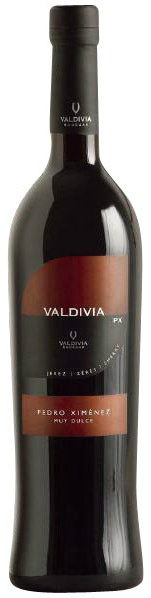 Color: Mahogany. Dark brown with a fabulous red hue.
 For me the nose is fabulous, and the taste a bit thin and short. Lacks a bit of complexity. When I finish this bottle, I will try the 15yo Valdivia.
 Early November I started a series to support the drinking of sherry to get more good sherry casks for the whisky industry. For reasons not even science can wholly explain, I picked PX Sherries as a starting point. As mentioned before, PX or Pedro Ximénez is the most syrupy and sweet Sherry around, and is considered an after dinner Sherry or one to accompany a nice (sweet) dessert. Goes well with ice-cream.
 Yes the apricots are there and some vibrant freshly made raisins and maybe some dates. Very lively and never dull, heavy or dusty.Very well balanced. Actually, this is blended so well to a nice harmony, that it’s almost hard and not even fair to look for separate markers or hints of it. The sum is so great.
 Next up Glen Scotia, also a first on these pages. Glen Scotia hails from Campbeltown, once a big place for whisky with regional status (again). Try to imagine a place that has almost 30 distilleries working at one time in the 19th Century. Not so long ago this Glen Scotia was the ‘other one’ from Campbeltown after the well-known Springbank. Today Springbank makes also Longrow and Hazelburn. And from the same owners the recent ‘addition’ that is Glengyle Distillery (Kilkerran). Let’s say that Glen Scotia is the only Campbeltown distillery not owned by the people of Springbank. Owner today is Loch Lomond Distillery Co. and the place is fairly run down. When the distillery was mothballed in 1994, the staff of Springbank restarted intermittent production in 1999, not to lose the regional status of Campbeltown. A status lost eventually, but eventually reinstated.
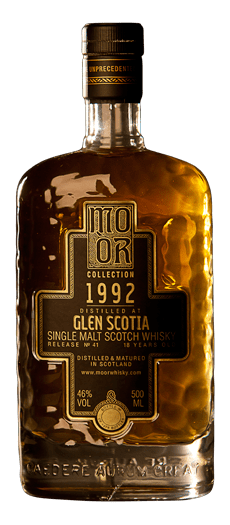 The distillery was founded in 1832 by the Galbraith family. For one reason or another the label on the bottles state 1835. Lots of changes of ownership during the years and even some closures in 1928 and 1984. Since 2000 Loch Lomond has taken over Glen Scotia and runs the distillery with its own staff.
 I was asked to keep an eye out for sulphur in this one. It’s there slightly on the nose (as a burning match). But it is more pronounced on the palate (the bite here comes not only from the wood, but also from the sulphur. Usually there is some sulphur in Sherried Glen Scotia’s. Lots of it in a 1991 Cadenheads offering if I remember correctly. It’s there on the palate and even more so in the finish (late). Is it ruining the balance or the palate? Does it disturb me? No, it’s some kind of good sulphur. it’s somewhat hidden. It’s there but not in the usual obvious way. That happens sometime, that’s why I called it good sulphur. Still, overall there isn’t a lot of sulphur in this one, so don’t worry. And hey, sulphur is good for the skin!
 Here’s an appeal to all. Start drinking Sherry. NOW! Because it may be too late already. Let’s face it people. We love our whisky and we particularly love it when it’s from a good Sherry Cask. But as can be seen, prices are soaring when a nice sherry casked whisky is released these days. I’ll be reviewing some Pedro Ximenez (PX) Sherries the following days, but there is a lot more out there. You might want to try a nice Oloroso (maybe the best performing casks for whisky).
 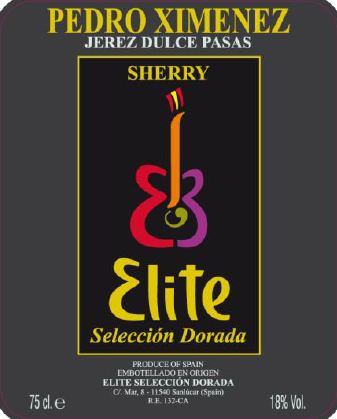 Some of you might like a dry Fino. But there is a lot out there, and a lot of differences in quality too. One thing is sure, when trying out some nice Sherries you won’t break the bank.
 Burned creamy sugar as in the top layer of Creme Brulée. The acidity is a very nice addition to the taste of this PX. It doesn’t seem to be as sweet as the competition, and it is certainly not as thick. The finish therefore, is not the longest in the business.
 Hello November! Looking outside, this month seems to bring us damn close to winter. Here we have a bottle of Brora 1981 bottled by indie bottlers Ian Macleod in their Dun Bheagan range. Ian MacLeod have a few other brands you might know. The Chieftains Range or “As we get it” for instance. The company is also the owner of the Glengoyne distillery, which is one of my favourites. Go!
 Color: Orangey Gold
 Color: Orange Gold.
 Like with many Gordon & MacPhail bottlings, it is reduced, this time to 45% ABV. I am a fan of cask strength Whiskies, but I learned to appreciate these reduced Whiskies more. Is it age? I’m a bit held back only by the fact that not every Whisky likes to be reduced. Let’s hope it’s not the case with this one.
 Master Quill