Benromach Contrasts: Cara Gold Malt 11yo 2010/2022 (46%, OB, First Fill Bourbon Barrels, 20/01/22)

I almost forgot to write this review, because I though I’d already done it. Here we have the first Benromach on these pages after they revamped the look in to this slightly bulkier glass bottle, more straightforward cardboard box (easier to store) and last but not least the usage of the colour red. I was a bit hesitant at first because I really liked the copper they used in the previous package, but the red stands out, looks fresh, smart and traditional. So I do like the new look a lot now, and love having them around. If this one’s empty, I’ll probably replace it with another (red) Benromach. Most likely another one from the contrasts series, since it offers interesting takes on Malt. Here it is because of the usage of Cara Gold barley.

Most Benromachs that are on the market now are fairly young, sure there are some older bottlings like the 15yo and the 21yo, which are different yet not necessarily better. The Whisky at hand is 11yo and a nice choice for starting a flight of Whiskies or as a casual sipper. Not expensive and an honest pour. Benromach produces a heavier more meaty spirit, often slightly peated and sits well with knowledgeable anoraky aficionados, you know who you are, and since you are reading this, you’re probably one of them. This particular offering is partly made with Whisky made from Cara Gold barley as well as the normal Benromach lightly peated malt, both matured in first fill Bourbon barrels.

Color: Straw.

Nose: Sweet barley first, very appealing and very aromatic. Clean, fresh, fruity and malty with malt sugars and a nice layer of dust and paper-like aroma’s adding to the whole. Nice fresh wood tones, but nothing overpowering or off. Straightforward without any frills. Candied wood and candied yellow fruit, with hints of sweet smelling smoke, as well as some licorice. Clean and modern, although some yesteryear comes through as well. More wood (perfumed, highly aromatic) and wax with ripe yellow fruits. The label claims tropical notes, and sure enough… My perception of the fruit depends on the moment I’m smelling this. The first time around I wasn’t all too sure about the fruitiness, but the second time around, yes, here it is. I recently recovered from a nasty variant of the flu, and now that the nose is working again, I certainly pick up more on the fruit now! I’m very pleased with this Benromach. It smells very nice, accessible, balanced and its very aromatic and appealing. Well made, wonderful stuff and very affordable as well. After smelling this on many occasions over time, the fruity bit does wear off if you keep this for a while in your glass, focussing on the dusty and woody notes. Still soft and friendly though.

Taste: On entry, sweet smoke and sweet licorice. More subdued fruits. Candied Barley. You could smell it already, but it is most welcome tasting it. 46% ABV is a very nice drinking strength, definitely better, for modern Malts, than 40% or 43% ABV. Back in the day 40% ABV worked well, think of very old Gordon & MacPhail bottlings, like early Connoisseurs Choice bottlings (brown label, map label etc.) Yet Malts from this century definitely need a higher strength, higher than 43% if you ask me. Sweet, woody, spicy, somewhat bitter and slightly fruity (less so than in the nose). Tropical, well maybe. The wood has more to say here than it did on the nose. So more wood, slightly harsh even and showing some bitterness. The smoke is here as well and in the triangle between the wood, the smoke and the bitterness, it does take away a bit from the balance of the palate. A new sip with a fruity start masks the bitter bit for a moment. The finish is not very long and not a lot of it carries over into the aftertaste. But almost all you get is good (it turns out the bitterness has the longest staying power). No off notes. A very pleasant, fairly simple (it doesn’t develop a lot) and affordable dram. There is some diluted vanilla present, proving the maturation on (first fill) American oak. By the way, due to the bitter note this has, it isn’t entirely a casual sipper. Good, but I preferred the nose over the palate.

By itself a (partial) Cara Gold offering isn’t saying very much, it would be really interesting to have several Benromach bottlings, like this one, made with different barley varieties, open at the same time, to be able to compare them to each other. I checked my stash, but there isn’t another one at hand. A bere barley version would be nice, come to think of it, because bottlings like this remind me of the rebooted Springbank Local Barley series, where the Bere Barley version bottled in 2017 is my favourite. Yes I often prefer it over the 16yo and the dark 10yo. Sure the 16yo and the dark 10yo are great and definitely stellar as well, but the 11yo from 2017 is so good! Don’t be fooled by higher numbers or the colour of Whisky! Final remark, this particular Benromach worked best for me in a small tulip glass, a narrow, long stemmed Riedel for instance as opposed to a bigger glass, like the Holmegaard Perfection Spirit Glass. Both are very good, yet different. Good glassware always shows you more sides of the Whisky you’re drinking, so I do recommend to invest in good and several different pieces of glassware. It makes exploring your dram a lot more fun!

Points: 85

Glenrothes 2007/2021 (64.3%, Berry Brothers & Rudd, Sherry Butt #1120, for Kirsch Import Germany, 646 bottles)

Glenrothes, I always liked the look of those bulky cannon ball bottles. Many of the highly reduced vintage offerings weren’t really all that interesting. Earlier written reviews of Glenrothes prove this. Just have a look at these vintages: 1979 (85 points), 1987 (83 points), 1989 (84 points) and 1992 (79 points), not to mention this Select Reserve (81 points), a NAS, not even a vintage. Where is the world coming to? Nope, I still somehow believe in the distilled spirit of Glenrothes, so I sometimes buy one at auction. I do prefer Independent bottlings at cask strength (and officially released cask strength versions as well). Until now, all independent offerings on these pages scored higher than their official counterparts. Although I have to admit that I tasted quite a few older vintages in my beloved cannon ball bottlings that were actually quite good (even after reduction), maybe that’s why I still believe? This time around we’re going to have a look at a Glenrothes bottled by indie bottler Berry Brothers and Rudd.

Those of you with a talent for reading every letter on labels, front and back, especially those that have one of those official cannonball bottlings at home, will have noticed that Berry Brothers and Rudd are also mentioned on the front label in fine print. In 1999 the Edrington Group (mainly known today for The Macallan and Highland Park) acquired Glenrothes. I have to specifically mention right now, that I mean the distillery ánd the brand by this. Since the main Single Malt focus was on the two aforementioned distilleries (and brands), and times were different back then, Edrington sold the Glenrothes brand to Berry Brothers and Rudd in 2010, yet retaining the distillery and the cooperage. Edrington acquired Cutty Sark (The Blended Whisky) from Berry Brothers in return. In 2017 Edrington bought the brand back and thus acquired a well known Speyside brand they could give the Macallan and Highland Park ultra premium treatment to. Funny then (or sad), that their old business-partner couldn’t even use the Glenrothes name (or should I say, brand) on the label…

Color: Copper Gold.

Nose: Initially milky, very a-typical and definitely not what you would expect. Vegetal and big raisins next. Modern, slightly sharp oak. Tea and old, worn down vanilla powder. The initial “strangeness” wears off quite quickly, making room for a more herbal feel. By now I would have expected more red fruits, but still not the case. This is more dusty, tobacco like with old sawdust. More black tea notes emerge. I’m quite happy with this nose, because it develops a lot in the glass, and it shows traits you don’t smell all that often. The longer you have it in your glass, the drier it gets. Cold Cuban tobacco and standing on the edge of a forest in the mist. After a while a more creamy nose emerges and dissipates again. Well I’m sure you all now feel this is a complex piece of work. Old books, dust. Very distinguished. Hints of cocktail cherries in the distance, followed by a fantastic mix of cold tobacco and herbs. Sometimes a dry smell of orange whiffs by, almost artificial orange. Definitely not from the freshly peeled fruit. Like a dried out tangerine. The dust now moves into the territory of dry grass and hay, and some more elegant wood. A truly wonderful and layered nose. A warm indoor fire in the back of the room.

Taste: Hot, yes, who would have thought at almost 65% ABV, nudge, nudge, wink, wink. Initially this reminds me a bit of Damoiseau Millesime 2009, and not only because of the ABV. Next comes the wood and I’m happy to report, it is again the lovely elegant wood from the nose. I’m already really liking this one, now that I have tasted it. Here some more red fruits. Combining quite nicely with the wood. Second sip very similar. Here it doesn’t have the complexity of the nose, nope, it’s simpler than that. However, this is still a Whisky with a high fun factor. Nothing off, and the taste in combination with the high ABV turns out to be a pleaser (for me), but not everybody copes well with Whiskies with a high ABV. The color gave it away, this is not a Sherry monster, but it did come from Sherry and it is a bit of a monster. A friendly giant. Warm (sea) sand, well I have never tasted that, but it does remind me of that. I lived near the beach once, so maybe I did taste sand, one’s subconscious works in mysterious ways. It surely reminds me of it. Next some fruity sweetness becomes noticeable. Great balance to this. Puts some color on your cheeks.

Yet another good example of a Whisky that is not an easy one. The ABV is high and you need some experience and patience to get all out of it. Come to think of it, I even never tried this one with water. Novices would be put off by the initial aromas from the nose. This is not for casual sipping, but you need to work it and give it a lot of time. I bought this at auction and probably forgot about it, because I got myself second one at auction again (both were quite affordable). Definitely not regretting it, but then again, I also hardly ever open a bottle for the second time, always more interested in the next thing than going back. But it does happen, and sometimes one gets into this melancholy mode many years later, and than it is nice to have the possibility to get back to this one.

Overall a great deal. The bottle and the label look nice. The nose is very special, the taste is very well balanced and the high ABV works well. I should get me another one, ah, yes, I already got one, nudging and winking again. On my lectern I have a Macduff of similar ABV. The Macduff is closed as I’ve never encountered before, and this Glenrothes definitely is not. Final remark. Work this one, casually sipping you will never get everything out of all that it has to offer. Final remark, a disclaimer of sorts, nowhere on the bottle of the packaging is it ever mentioned this is a Glenrothes. The label states: “A Secret Speyside Distillery”, I’ve been assured this is a Glenrothes, and it surely does taste like Glenrothes, however there is always this small chance it is not, which would surprise me a lot.

Points: 88

Longmorn 1967/2003 (52.2%, Scott’s Selection, Speyside Importing Company, Duxbury MA USA, 750 ml)

Longmorn is a distillery with a huge reputation with Whisky aficionados. If you encounter a person who identifies as a Whisky aficionado and you start talking about Longmorn from 1971, chances are quite big that a person like that will start talking enthusiastically, not stopping for at least half an hour. Reason for this is that there are a lot of really, really good Longmorns from 1971. Actually, there are lots of really, really good Longmorns from the sixties and the seventies. The highlight of the Longmorn-era, although some feel that Longmorn still is very good. Sure, there are a lot of good Longmorns in more recent decades as well, yet those from the sixties and seventies are in a class of their own. Really, really good. Focusing now on Scott’s Selection, there are two dark sherry bottlings from 1971 bottled by Scott’s Selection that are amazing. One bottled @ 58.6% and the other one @ 57.8%. Both bottled in 1999, but there are two (?) others, one bottled in 2000 bottled @ 52.3% (one that I have never ever seen in the wild, no clue is this another dark one or not and if it actually exists to boot). In 2004 one was bottled for the US market, this one is definitely not dark. In 2003 and 2004 several more, “lighter”, Longmorns from 1967 and 1968 have been bottled for the US-market. Let’s have a look and a taste one of those, the 1967 Longmorn bottled in 2003.

Color: Full Gold.

Nose: Waxy (almond wax, if that exists) and super fruity. Soft warm fruit and candied fruit both mixed with a little bit of sweat. Old style. Old style is often riddled with funky organic aroma’s, which might be quite negative to read for some, like sweat for instance, yet those funky aroma’s are always very nice in an old style Whisky. Old clothes cabinet. Old, time-worn, smelling wood. Great complexity. Chewy with hints of black coal. Nope they don’t make them like this anymore. Soft, wet wood. Not spicy nor harsh. More wax mixed in with the wood. Old style dust and lots of old style yellow fruits. Deep and brooding. Hints of white chalk and white latex wall-paint. Old bottle effect combined with a minty note. Hints of peach, dried apricots and ripe, yet not overpowering, banana. Cherries on syrup. I don’t pick up on the banana every time I smell this though. Steam, also with hints of latex. Well balanced. Vegetal and green, especially after some time of breathing. Late to the mix: pencil shavings as well as some cold dish water. Maybe even a tiny hint of smoke, but this also can be the toasted bit from the cask-char. The whole nose has this promise of a sweet Whisky. The colored bits of Licorice Allsorts. If you leave the (not empty) glass standing around for a bit, notes of honey emerge (as well as some plastic). The empty glass the next day has even more of this plastic aroma. However, needless to say, but the whole is very nice, very nice indeed.

Taste: Starts powerful and spicy. Very fruity and a lot more wood-influence than expected form the nose. Where the nose finished on Licorice Allsorts, here on the palate it starts with it. Candied anise seeds. So yes it starts out sweet, but not overly so, especially when the wood kicks in. Slightly soapy. Green again with half-bitter hops and some cannabis. Waxed nuts and waxed wood with a decent amount of bitterness. Just enough for the whole taste of it. This has a beer-like quality to it. Half-sweet and very fruity again. Not only yellow fruits, but some red fruits as well. Sweetish strawberry and cherry juice combined with hints of vanilla. The minty bit comes through here as well as again the slightly soapy bit. Just like the bitterness, the minty taste comes from the wood. This is a Whisky that grows even more complex on the nose when you finally start sipping it. You’ll probably take a while taking in the complexity of the nose anyway. Finish shows some more cask toast and retains the soapy taste, which strange enough works well this time. Very fruity with a slightly bitter aftertaste from the woody backbone, especially if it got time to breathe. Great dram, just not as good, but also very different, as the darker 1971’s.

Hard to say really in what kind of cask this was matured in. First guess would be a Bourbon hogshead, not a barrel and also not a first fill. (Second) refill Sherry, could be.

Points: 91

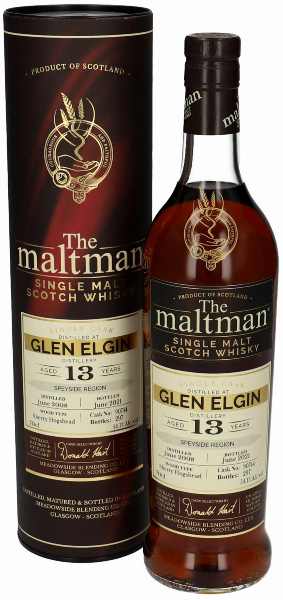
Glen Elgin 13yo 2008/2021 (54.1%, Meadowside Blending, The Maltman, Sherry Hogshead #90744, 297 bottles)

Seven years between the first review of Glen Elgin and the second one. That has to change, so what about two weeks between the second and the third review? Now, that’s a lot better now, isn’t it? Third review and again it is an offering by an independent bottler. The company’s name is Meadowside Blending, based in Glasgow, and specializing in Single Malt Whiskies, and run by the Hart Family. I don’t know why, but initially I thought this was a German outfit, probably because a lot of their bottlings are imported into Germany. My bad. This is a Scottish firm and they have several ranges on the market. Foremost is the range called The Maltman. These are all single cask releases. Next interesting range is The Grainman. Yes, you guessed it, all single cask, Single Grains. Other brands carried by the firm are The Granary (Blended Grain) and Royal Thistle. The bottle at hand, and this is no surprise if you are a regular on these pages, comes from The Maltman, yes a single cask, Single Malt Whisky from Glen Elgin. And yes imported into Germany by Alba Import, not sure if all of it went to the German market though…

Color: Orange gold.

Nose: Spicy sherry. Wood-spice and rather fresh and appealing, yet also some black coal with tar and right after that a more sharp and acidic fresh note. I have to say, all fits together quite well, so nothing wrong in the balance department. Lovely oak. The nose as a whole is thus rather appealing, fruity with half ripe sour cherries and maybe somewhere in there a more yellow fruit-note (indistinct). Breaths of fresh air run through the Sherry bits as well as some gravy? This is not a Sherry monster in the style you now often get with all these 10yo first fill Oloroso Sherry monsters. No, this is way more refined and still has quite a lot of colour to it. Tiniest hint of sulphur which I don’t even pick up on every time I nose this. Right after that some honey and maybe even some cigarette smoke. Warming and actually helping the whole of the nose. This has some fresh wood right from the start, but it’s not overpowering and actually very nice. Reminds me a bit of being outside near a sweet water lake on a nice and sunny day. Fresh winds, and the sherry bit could almost be some nice floral aromas blooming in nature. I guess this will not be a bad weather Whisky.

Taste: Half sweet yet also spicy (wood). Runny caramel or warm toffee. The coal, the tar and the wood are present right from the beginning. Sweetness seems building already. Quite some toffee now. All of this right before some fruit sets in. Warm apple compote? Nutty (yet different than in other Sherry bottlings), soft and supple leather. Leather as in belts and trousers, not thick saddle leather. Aftertaste is toffee and caramel again. Hints of plastic and warm wood. Again well balanced. I wouldn’t call the nose better than the taste of the other way around. No, this is one nice complete package indeed. Yet if I had to… yeah the nose is slightly better.

This one differs obviously from the Bourbon hogshead one by the Sherry influence. Apart from that, the Sherry influence didn’t actually overpower the traits of Glen Elgin, so there is still a family resemblance to be noticed between the two. I have to say, I like both Glen Elgins a lot, and both have their own moments. This one scores slightly higher (one point), because it is just a little bit more appealing and definitely better suited for a larger audience than the Bourbon hogshead one, which is more of an anorak-y Whisky. This one is also a little bit lower in ABV, which helps the drinkability. I like this one a lot, and would definitely it pick up again if I weren’t that adventurous and prefer to see what else is out there!

Points: 87

Glen Elgin 11yo 2009/2021 (58.8%, Elixir Distillers, The Single Malts of Scotland, Hogshead #807777, 238 bottles)

Actually, Glen Elgin is one of my favourite lesser known Whiskies. Being somewhat partial to the stuff, mostly from independent bottlers, I’m actually amazed this is only the second review on these pages. The only other review of Glen Elgin I did, was in 2017, being a 19yo Signatory Vintage bottling, that wasn’t as special as I expected, especially for its age. Hmmmm, never mind, I still stand with what I just said. Building started in 1898 just months before the Pattison Crash and it was also the last Distillery designed by Charles Doig (the foremost distillery architect of the time).

After the Pattison Crash, Whisky found itself in a sort of 50 year long slump, that more or less ended in around 1949 when William Delme Evans built the first distillery after Glen Elgin: Tullibardine. Fast forward a bit and cutting this history lesson short; Glen Elgin is now owned by Diageo and mainly used for its White Horse blend and currently is investing heavily in it by rejuvenating it. Back to the Whisky at hand, since this time around we have a bottling from Sukhinder’s outfit Elixir Distillers. Being a independent bottler foremost, I wonder what they actually distil. Elixir distillers is mostly known for their Single Malts of Scotland range of independent bottlings but also for their Port Askaig bottlings of undisclosed Islay bottlings (often Caol Ila).

Color: Pale White Wine.

Nose: Barley and biscuity. Cereal, crackers and bread. Dusty with hints of cardboard. Starts big and in your face. Good and honest Whisky, no frills, no funny business. The next wave is more fruity (dry citrus skins), with the tiniest hint of cask toast and pencil shavings. Warm wind in summer, slightly grassy and vegetal. Hints of rainwater. The third wave adds a more perfumy note as well as grandma’s old soap note, never losing sight of the fruits though. Quite fresh overall due to a slight minty and green nose. Well balanced and straightforward. A very effective and highly drinkable Glen Elgin. It may be somewhat simple, but don’t be fooled by this, since there is quite a lot happening in this one, and as said earlier, its also quite big. It’s layered, so it might be even more complex than I initially thought. I always liked Glen Elgin and this is definitely an example why. The fruity note becomes sweeter, not only ripe fruit sweetness yet also a more honey-like aroma. I know sweetness is something for the palate to discern, but I hope you know what I mean here. In the end this is quite a nice (not modern) nose. I like it a lot.

Taste: On entry half-sweet but easily overpowered by a spicy and woody note. Prickly oak, only ever so slightly bitter and soapy. Maybe an odd red chilli pepper found its way into the cask? Nah. Warming going down. After the first sip, the soapy note on the nose becomes more like cold dishwater. Second sip shows a more complex sweetness, fruity and honeyed. (The nose is now more old-skool and melancholic). Less syrupy than expected. Some peach emerges as well, retaining the relative hotness from the first sip. Lots of paper and cardboard comes next which does get in the way a bit of the fruity notes. Where this is a miss on the palate, the nose, even now, keeps developing further still. Hold on now, after a while it does become slightly more bitter and slightly acidic as well, which in the case of the paper and cardboard do less for the palate than it sometimes can do. It also shows some new make spirit notes now (that fit the colour of this Whisky well if I might say so). Next some sun-tan lotion, you didn’t see that one coming now didn’t you? Although not a biggy, this part of the palate is not the best. By the way, I get some cheese on the nose now, how is that? This turns out to be quite a surprising Glen Elgin. Definitely not boring this one. Still, this one has much nice things going for it, so the score is warranted. Peach yoghurt in the finish as well as a peppery note, some might call hot. The finish as a whole is of medium length and especially the minty bit seems to have some staying power here. It’s alright, it’s good, but the nose was better.

Yes the Mortlach I reviewed just before scores slightly higher, but in comparison this Glen Elgin is slightly more drinkable. Even though this one has a very diverse, unusual and layered nose it is even more accessible than the Mortlach. Mortlach has always been a more anorak-y kind of Whisky anyway. Still, I wouldn’t recommend this one either if you are a novice, just like the 19yo Glen Elgin I reviewed in 2017.

Points: 86

Mortlach 10yo 2011/2021 (57.3%, Signatory Vintage, Finished in 2nd fill Sherry Butt #3, A Farewell Dram bottled for Walter Schoberts Final Tastings, 527 bottles)

What can I say, Mortlach is a special distillate with a special profile. First of all, Mortlach is known for its unique distilling regime where the spirit has been distilled 2.6 times. Mortlach is also known for its big and meaty Sherry profile, like the 16yo Flora & Fauna bottling or this 10yo Wilson & Morgan bottling. But even the lighter (ex-Bourbon) versions of Mortlach always bring something special to the table, like this 11yo Provenance bottling, not a high scorer, yet very interesting indeed, or this small batch 12yo Signatory bottling from 3 Bourbon Barrels. This time around however, we’ll have a look at a Mortlach that has its initial maturation in, most likely, American oak Bourbon casks and a finish in a second fill Sherry butt. As usual, no info about the type of Sherry, and we all know there are a lot of different types of Sherry around. Oloroso is no Palo Cortado, ain’t it! Nevertheless, this Whisky seems to be more on the light side, so at this point I don’t expect a meaty Sherry expression.

Color: Light gold.

Nose: Nice entry. This immediately reminds me of good Whiskies I tried in the early noughties (if you let it breathe for a minute or so), definitely brings back memories. A slightly mineral and somewhat Sherried barley note. Wow, really old-skool nose. Quite organic at first with hints of sugary sweetness, cardboard and white bread. Slightly biscuity. Fresh and vibrant nevertheless, since bread is not a vibrant aroma. Very classy and well balanced for a 10 year old dram. Some fruity notes emerge next. Initially some unripe cherries. More fruits in general, more syrupy yellow fruits actually. Peach syrup and candied pineapple. Sweet peachy yoghurt. Together with this a fresh and warm barley wind bringing a Gin-like freshness. Warm old wood in the sun. Slightly dusty and powdery. Not floral at all although it is slightly perfumy. It has quite a lot of different aroma’s going for it. For me personally Mortlach often has this meaty quality to it (especially when aged in a Sherry cask), but I’m struggling to find that here. It is definitely more fruity than meaty. Don’t think the fruit is masking it, I feel the meatiness just isn’t here. The longer this breathes, the fruitier and sweeter it becomes. Very appetizing fruity fresh and vibrant Mortlach this time. After some time a more soapy note emerges as well as some more freshness. Not in a bad way though. Definitely a quality nose. Maybe a little bit light, and this might have been ruined (a bit) if it would have been reduced. All in all definitely a quality and classy nose.

Taste: Nutty first, almonds, hazelnuts and fruity second yet not far behind. Big, sweetish and balanced. Did I mention that its nutty? Notes of burnt or toasted oak, and some cold dishwater to be honest. Big aroma initially which quickly becomes somewhat thinner. Definitely a fruity Whisky with lots of ripe yellow fruits and some red berry acidity. After the layered and complex nose, the taste is simpler and more straightforward. Notes of a yellow fruity beer and ever so slightly soapy. Even though the nose is way more complex, the nose and the taste of this Whisky are well balanced and suit each other well. Since this was finished in a Sherry butt, I guess this initially aged in probably two or three ex-Bourbon casks (barrels and/or hogsheads), and where I struggled to pick up on the Mortlach meatiness, I also struggle to pick up on vanillin from the American oak, so, probably not first fill. A vanilla note or ice-cream note, yeah, maybe, gets lost a bit in the slight thin-ness of the body. And maybe somewhat overpowered by the fruity acidity. Let’s say this is a summer expression of Mortlach. The aroma’s are transported well, so 57.3% ABV, yes indeed, but it doesn’t really show this much alcohol. More woody towards the finish, warming, with a bonfire like toastiness, as well as some paper and cardboard notes. Dirty and fruity, yet not meaty.

A Good summery Mortlach. The nose is really good. Sometimes the taste seems thin, but that also depends a bit on you yourself. For this review I tasted it twice on different days, and the second time around it wasn’t as thin as the first time. Very good Mortlach again, and this particular expression has some similarities to Bimber that has matured in Bourbon casks, Like this cask #194.

Points: 87

P.S:(I). This one is very nice after a cup of coffee…

P.S:(II). In case you are not German and you want to know who Walter Schobert is:

Walter Schobert (* 1943 in Erlangen) is a German museum director and author. Schobert studied Protestant theology and theatre studies. He then worked as a priest and as a film speaker for three years each. From 1974 to 1985 he was chairman of the working group for community film work. From 1979 to 2003 he was the founding director of the German Film Museum in Frankfurt am Main. He is the author and editor of numerous writings on film and film history and has taught film history at various universities. Since 1994 he has been an honorary professor at the Institute for European Art History at the University of Heidelberg. In 1995 he was awarded an honorary doctorate from the University of Edinburgh. In addition to his work on film history, he has published numerous publications on the subject of Scottish whiskey and regularly conducts tastings. He is a member of the “Keepers of the Quaich”, an association that looks after the whisky culture in Scotland [Source: Wikipedia].

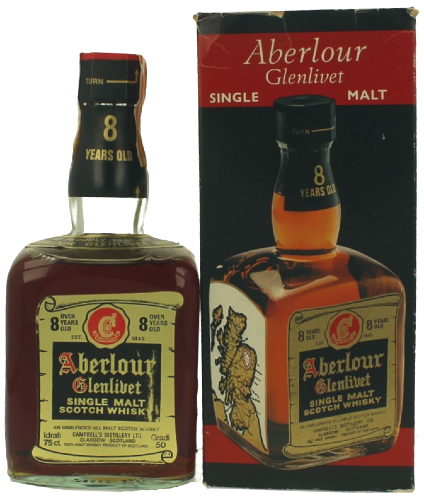
Aberlour 8yo (50%, OB, Unblended all malt, EST. 1845, 75 cl)

So the last Aberlour review posted in October 2022 was of a modern 13yo officially bottled single cask. Modern, since it was distilled in the 21st century. This review of the 8yo was supposed to follow the 13yo right on its heels, but it didn’t. Autumn, or fall, started happening when I started to write the review, and it was suddenly time for peat. Fast forward to Spring. Winter has ended and although the time for peat still hasn’t ended, time has finally come for a nice old skool Sherried Speysider. No, it didn’t. Spring came and went and this review was again further postponed. When I picked up this review again it was summer, yet again the review remained in its draft state. Now finally when looking outside, summer is most definitely over. Maybe we’ll still get some days that look pretty good, but I guess autumn started happening. So no use any more for the desk fan and the air outside is cold. We might as well prepare ourselves, because winter is coming again, and peat already started lurking at me.

Never mind. After the Aberlour 13yo bottled in 2017, here we have an 8yo from the seventies, an oldie and hopefully a goldie, from a different century as well. There are a lot of permutations of this Aberlour bottled in the square bottle, and there can be quite some differences between the Whiskies, or so I’m told. Up ’till now I have only tried one other. Like with so many things in life, not all 8 year old Whiskies are created equal, I guess.

Color: Light orange gold.

Nose: Old skool Sherry nose. Waxy, toffeed, some fresh butter and funky. Like coal fired stills including some petrol fumes and exhaust gases from outside the still house. And like real petrol fumes and exhaust gases, they dissipate in the wind. Cola, cold motor oil and coal dust. Dusty old furniture. It seems as if some sugar sets down in the back of my throat, only from smelling it. Doesn’t smell like an 8yo Whisky at all. Initially some hints of Rhum Agricole, but this dissipates rather quickly and I also don’t pick up on it every time I smell this. We all have our better and worse days you know. Smells nothing like a modern 8yo Whisky as well. Much softer. Very mature for a standard 8yo. Things have changed since then, wasn’t everything better in the old days? Still dusty with this wonderful coal dusty Sherry nose, like we know from all the greats. Whiffs of sweet yellow fruit yoghurt and cookie dough. All is good. It smells nice and comes without any off-notes. After a while quite fresh for an old skool malt. Like a breath of fresh air (in an old earthen floor warehouse) and yet still sweet smelling.

Taste: Nutty and waxy sherry. Also some dry and active wood, slightly bitter as well. Drying my tongue and palate. Slightly spicy (cinnamon), fruity (dry bits of peach and apricot) and definitely old skool. Hints of cola and especially licorice. that wasn’t present in the nose. Besides that it is slightly prickly as well. Is this from the wood or some sort of liquid smoke? Crushed caterpillar (don’t ask). Slightly cloying Sherry,but I wouldn’t say this is all that sweet. I expected it to be way more sweet since this Whisky is so sweet smelling. All the specialness is in the beginning. It shows its age by halting its development halfway through and not being all that complex. Not in my glass nor in my mouth. It is a wonderful old skool Sherried Malt, but it is thus also a bit simple. At this age it was probably aimed at, amongst others, the Italian market, so no surprise here that it is highly and dangerously drinkable. Next some creamy and buttery notes are able to escape, albeit briefly, from the grasp of the Sherry. The bitterness shows some stamina with its staying power. It is not dominant yet quite noticeable. Well balanced though, since the taste matches the nose, and for me, it tastes slightly better than it smells, and don’t get me wrong it smells wonderful. By the way on some days I prefer the nose over the taste. On those days the taste seems a bit thin. Black coal and licorice in the finish and aftertaste. This actually works well, hiding the residual bitterness.

In the end this is a well made old malt, yet also a bit simple and regularly shows some fragility. Highly drinkable, definitely old skool, and there is no reason to keep this around for a long while, just enjoy it, since you never know what oxidation will do (or already did) to such an old Malt. By the way, the roof of my mouth is slightly anaesthetized, so definitely a higher ABV. Empty glass smells very nice by the way! Don’t sip it, bigger gulps are the secret to unlock this Malt to its full potential.

Points: 87

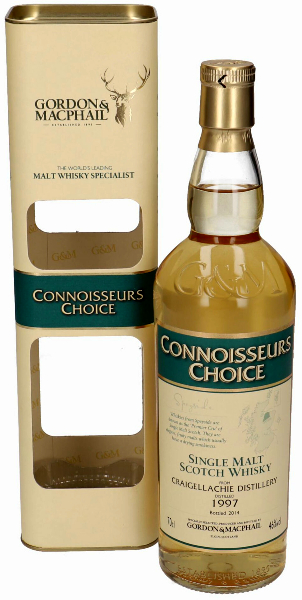
Craigellachie 1997/2014 (46%, Gordon & MacPhail, Connoisseurs Choice, Refill American Hoghead & Refill Bourbon Barrels, AD/JIIG, 01/07/2014)

Craigellachie is no stranger to Master Quill. Funky and meaty, with often some hints of sulphur. Seize the day people, time flies like never before! Last time I reviewed a Craigellachie was almost 10 years ago, yes you heard that right, almost TEN years ago. Just sayin’. Craigellachie is now bottled officially by John Dewar & Sons Ltd. which are part of the Bacardi – Martini drinks giant since 1998. With plenty of stock they decided to put out lots of Whiskies from their newly acquired Distilleries, all with age statements. That’s not very 21st century now isn’t it. Fun fact: this only happened in 2014, so it took them a while think up of this plan of bottling their own Whiskies.

Apart from the officially released Craigellachies, also some casks manage to find their way into the welcoming arms of independent bottlers. Nevertheless, most of the output of this distillery ends up in several blends, but primarily end up in Dewar’s White Label. The bottling for this review isn’t a blend, but a (reduced) independent Single Malt offering from Gordon & MacPhail. After the Glenallachie I reviewed last week, I thought why not, why not do another of those 46% ABV bottlings from the previous iteration of the Connoisseurs Choice range before it got revamped a few years ago.

Color: Light White Wine.

Nose: Waxy, woody and warming. Hints of paper and somewhat sweet smelling. The first thing to do is to keep an eye (or rather a nose) out for sulphur. Craigellachie is so associated with sulphur, one must be careful not to fool oneself and smell it when it’s not there. Still, I’m happy to report, at the moment there are only mere hints right at the start during the first nosing. Soft mocha and soft milk chocolate with an ever so slightly acidic fruity note, something in the vicinity of unripe pear. Next the nose turns sharper, fine by me, but yes this has a tad of sulphur, which is also somewhat peppery. A sharp, and specific deep smell. Personally I never had problems with hints of sulphur, only when it becomes more dominant I start to dislike it. Most often that kind of sulphur can be found in Whiskies matured in ex-Sherry casks. This fine example hasn’t seen Sherry and this sulphury bit that must be present in the Spirit is fine by me. In this form it suits the sprit, it’s a part of the distillery character. I believe Bacardi, who are the current owners, even mentioned sulphur when they introduced their new official offerings, like the 13yo in 2014. The nose if fine, really soft overall.

Taste: Hints of paper, some indistinct ripe fruit and some cannabis, similar to the cannabis notes I get in some older Bunnahabhains. All of this seem to fit together well, however at times it also comes across as a bit of an unbalance, here a really minor gripe, hardly worth the mention. Next sip, more of the same really, paper and cannabis, sugar water. Not complex, nor layered, yet tasty. I actually expected more after some 16 or 17 odd years this has been in a cask. Where the Glenallachie wasn’t simple, this one sort of is. More fruity sweetness comes through. This is actually a pleasant and soft Malt, where Craigellachies can be more beefy and meaty, bigger and sharper. Again, I guess that the reduction might have had something to do with this. The Cannabis note is omni-present. It defines this dram. I like it for it, I was tempted to up the score with one point for the cannabis note, but I won’t. As a daily drinker however, it might be just a tad too sweet. Medium finish, with a pleasant and friendly aftertaste.

This one is really different from the G&M Glenallachie I reviewed before. This is actually a nice Whisky from an independent bottler when you’re a novice. I actually has no off notes unless you are really allergic to sulphur and can’t even handle minute amounts. For the rest of us, the hint of sulphur is OK. Where both the Glenallachie and the Craigellachie are good, I would buy the Glenallachie if spotted in the wild, and this Craigellachie I would pass up on. The Glenallachie is also hands down better and the Craigellachie is nice, but also somewhat less challenging, therefore a Whisky more for a novice. Across the years, some cask strength Craigellachies from 1997 were bottled by G&M, maybe I’ll come across one of those to compare it to this one, one day, although I won’t be especially looking out for one.

Points: 84.

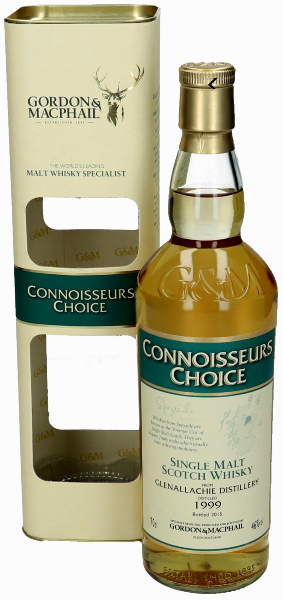
Glenallachie 1999/2015 (46%, Gordon & MacPhail, Connoisseurs Choice, Refill Bourbon Barrels, AE/JJCG, 23/01/2015)

So in earlier reviews I found out that Glenallachie probably isn’t one of my lesser known distilleries that really click with me. Some bottlings I tried were good, some a bit mediocre and some quite forgettable. Up ’till now nothing really stood out. I have a feeling though the newer Whiskies might prove to be better than ever, so Glenallachie might be on the way up again (for me). Nevertheless, Glenallachie is making quite a name for itself the last few years. Lots of official bottlings but also a lot of independent bottlings are coming to the marketplace, with quite a few people who like the output very much, so who am I to argue.

I have already reviewed some independently bottled Glenallachies: Dewar Rattray, Kintra, Beinn a’Cheo, Mo Òr and Cadenhead. Missing from this list is “the biggest and the baddest” of them all: Gordon & MacPhail. Here we have a 1999 distillate reduced to 46% ABV. Alas the only Cask Strength 1999 Gordon & MacPhail ever bottled was sent to Binny’s in the U.S. of A. Not really my neck of the woods. It was bottled way back in 2011. Hard to come across one of those now, since it doesn’t have a lot of collector value, so I can imagine the good people of the U.S. of A. drank most of them, an d rightly so! So without further ado, lets just dig into this reduced one from 2015, shall we?

Color: White Wine

Nose: Wow, very malty and sweet. Cookies, dusty oats and breakfast cereals. Dry grass and hay like. A brekkie Whisky. Sweet smelling cookie dough, with a green note, a fruity note and a cold dishwater note and thus quite appetizing and pleasant. Marzipan and ever so slightly nutty. After a while a tiny hint of licorice. This nuttiness is the closest it gets to wood, because the wood itself is hardly noticeable. It has quite an interesting and appealing perfume to it as well, which emerges somewhat later from my glass. This is real and honest stuff and maybe a bit back to basics, although it isn’t really basic nor simple for that matter. Just a very nice smelling Whisky. Excellent example what a spirit in some “basic and simple” Bourbon barrels can achieve, also proving that the Glenallachie spirit is a good one. Based on the nose alone this could be a very good Whisky, and based on the nose alone I would definitely buy it. Let’s move on.

Taste: Hmmm, quite different here on the palate. Starts fruity, with a surprising and definite bitter note. How strong this bitterness is perceived by the taster depends upon the taster. The first time around, I found this to be more better than the second time around. Runny, thin toffee, wood and thus its bitterness, yet also spicy with some black pepper. Dark chocolate, wood and an alcoholic note you get with those bonbons that contain alcohol. Based on the nose I didn’t expect this bitter note. I expected fruity caramel to be honest. Let’s take another sip. After a while I guess my palate just got used to the bitterness and it isn’t so dominant anymore. It’s hard to put my finger on it, but just like the nose, this palate has something really appealing and interesting which intrigues me. In this case the 46% ABV seems very soft. I may be used to, and prefer cask strength Whiskies to be honest, but this example seems very do-able in the alcohol department. Its neither harsh nor hot.

This will do very well as a daily drinker, or as an aperitif. However, do not make the mistake believing this is merely a simple, entry level Whisky. It is quirky, it is able to surprise you and I definitely like this one (especially after leaving it in my glass for a while to settle some more). Still, this has some bitter notes here and there, so buyer beware. Definitely noticeable is the reduction to 46%, sure quite a high ABV, but it is definitely different from a cask strength offering.

To me this smells and tastes like a classic ex-Bourbon casked Whisky, not modern at all. Would never have thought this was from 1999, which feels like yesterday to me. Maybe today it is a classic Whisky though. Personally I’m shifting my interest in Glenallachie. Where Mr. Walker puts out a lot of different casks, I will be, for the time being, sticking to ex-Bourbon Glenallachie. Again personally: I like this stuff way more than the heavily Sherried 15yo. Yeah, this is a nice surprise, have to find me one now somewhere.

Points: 86

Glenrothes 19yo 1997/2017 (58.7%, Cadenhead’s, Sherry Butt, 528 bottles)

Glenrothes is not an unknown on these pages. I come across a lot and on occasion I do buy some. However, somehow it never really became one of my favourite Whiskies. Sure, its good and I do by them and it does the job very well and so on, but it never passed that particular epic status for me. As I said, it’s very good, but it never pops up in any top 10. This Cadenheads expression, I have tasted before at a Whisky Festival, and by accident I bought two at auction in stead of the planned one. The second time around I forgot I already had one from the previous auction. Believe it or not, this happened to me twice recently, with yet another Glenrothes, strange enough. Go figure. I will probably replace this Cadenhead’s bottling, when its empty, with the other “doubly-bought” Glenrothes. I hope both are pretty decent though since I got two of both. This particular Cadenhead’s bottling, was picked by Mark to commemorate Cadenhead’s 175th anniversary, and if Whiskybase is anything to go by (very wonky scoring there), these 175th anniversary picks are usually better than the sister casks bottled by Cadenhead.

Color: Orange gold.

Nose: Soft Sherry notes. Creamy, slightly tarry and meaty. Nice soft wood, almost a bit paper-like. Quite fruity. A very well balanced dram without any flaws. Soft and smooth smelling, yet also a bit boring? Apple skins, warm apple compote. Red berry syrup with sugared lemon. Warm dishwater (a soft note), mocha and milk chocolate. Boring, because nothing really sticks out. All aroma’s flatlined, like a sleepy afternoon in warm wind. After some extensive breathing, some wood pops up. Not a lot, but just enough to make it slightly more interesting. However, this is a 19yo fully Sherry butt matured Whisky and it’s so soft, that it is in no way a Sherry bomb, it is not even a Sherry grenade. It has more colour than oomph, yet, as I stated above, it is flawless. It smells like an easily drinkable Whisky. It doesn’t even smell alcoholic, even though this has more than 58% ABV. A freshly poured dram smells better than one that sat in my glass for a while. A freshly poured dram has more notes like a Rhum Agricole, which dissipates with time.

Taste: Fruity with a white pepper kick, well, the latter came a bit as surprise. In a way it is syrupy, yet a somewhat thin syrup. The kick still lasts and stays a while to manhandle the back of my tongue. Black fruits as in very good Sherried bottlings from yesteryear. Apart from fresh fruit, also (again) the syrupy black fruits are here. If you give it more time and you keep the dram in your mouth for a while, the classic black fruit note becomes even more pronounced. I guess this is why it was picked for the 175th anniversary, because this is the note that makes this Whisky tick. On top of this, a slightly more acidic, fresh and fruity note, reminding me of sugared lemons again. Towards the finish a more tarry note, with its slight bitterness. Still not a lot of wood notes or any of its derivatives, so seemingly this wasn’t a very active cask. Hints of warm solid licorice. The chewy candy type licorice if left in the sun for a while. Vanilla powder. Just like the nose, on the palate a very well balanced Whisky. Since on my palate the Whisky is less soft and dares to show some spices, I do like the taste better than the nose, which is pretty good as well in its own right.

So, pretty good it is, with a nice, yet slightly boring nose. Tastes better than it smells, which is a big plus. Other than that, I still do like it. it’s good. ’nuff said. Moving on…

Points: 87