 Even though it’s supposed to be summer, looking outside you could have convinced me of something different. I see people outside wearing coats and jackets. Yesterday I reviewed an Islay malt, Bruichladdich to be precise, and it didn’t taste too bad on these cold summer nights. So why not try another one. This time one by Italian independent bottler Wilson & Morgan, or Fabio for his friends. Earlier I reviewed a young Mortlach that Fabio bottled, that turned out to be pretty damn good! Let’s see if this Caol Ila is something down similar lines.
Color: Gold
Nose: Nice subdued elegant peat combined with fresh succulent grass. A really held back Islay. Apples and nice malty flavours. Nice old fat clay and bonfire smoke. Salty, absolutely very wow this is! Some powdery dryness and wet wood. Wet earth with a hint of some undefined sour fruit and dried meat. There is definitively some rain in this. What? Rain. I love Islay whiskies that smell like this.
Taste: Thinner than I had expected. Sweet with apple flavoured coffee. Grassy peat again. Cardboard and wet hay. The sweetness fits the fatty peat and is cloying. It’s a strange kind of sweetness. Again, the nose exactly fits the taste here. Salty lips. The finish doesn’t seem to have a lot of staying power.
Although its heritage is pretty obvious, for me it’s not a typical Caol Ila. Maybe I’m more used to Caol Ila’s from 1979 through 1984, so this could be typical for a Caol Ila from just after the rebuild. We’ll see. Still a very interesting dram. I know, usually that doesn’t sound good, interesting, but here it is used in a positive way, so this scores…
Points: 89
 On Monday, July 23 2012 it was announced that Bruichladdich of Islay was sold to Remy Cointreau for £58.000.000 to enrich their high-end portfolio of brands and to
 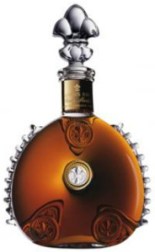 confirm their strategy in the luxury spirits segment. If I’m not mistaken it’s their first distillery, and maybe there is more to follow? We’ll see what happens next. In stead of picking one of their numerous official bottlings by the old owners, first a Sherried example from independent bottlers Gordon & MacPhail.
 Taste: Ok, half sweet. Tarry and thick. Toffee with some ash. Nice body and good balance. The nose and taste seem to match. It has the sourness of oak. There is some peat in the depth, but as with the nose, it has more smoke. Wycam’s cough drops! Very nice not over the top Sherry, but also not all to complex.
 What could be more appetizing to you than the fact that the site of St. Magdalene in Linlithgow, West Lothian, housed a Lepper Colony in the 12th century, or that the water didn’t come from an ancient super pure melted snow mineral water source, but from the Union canal nearby. But enough facts. If you want more, have a look at
  Taste: Thick, grassy and medium sweet. Dried apricots and apple skins. It isn’t the same as the nose (for me the nose was not fruity), but it complements it very well. Again there is almost no wood. It’s there really, but it is hidden well and transports the body. You can taste the balancing spiciness or distant bitterness (again, hidden well) and the sourness in the finish is from the oak too. Great balance.
 After reviewing one of the most popular official releases by Springbank, the
  Later some mint and furniture wax. Nice throat coating finish.
 Well here is an example of the mother of all Single Malts. No it’s not the oldest distillery in Scotland, nor is it the first in anything. The oldest being Ferintosh at Ryefield (from 1689). The oldest still working distillery is Glenturret (1775). But once there was a time a lot of others added the “Glenlivet” to their own name to benefit from the success, and the known quality of Glenlivet, and who doesn’t know Glenlivet? Started in 1817 and ‘founded’ in 1824 when George Smith was one of the first to obtain a licence for his distilling. All of his illicit distilling neighbours, wanted him dead for it. Traitor!
  In 1845 George leased Minmore farm, which he bought in 1858. Minmore was renamed Glenlivet a year later and is the site of the current distillery. Funnily enough, Cadenheads also state the name “Minmore” on their Glenlivet offerings. George died in 1871. Long live George and to his health we raise the glass with this Berry Brothers & Rudd Glenlivet. Slainthe George.
 Yes! Another example from the distillery that took its water from the Penwapple Reservoir, yes say it again, the Penwapple Reservoir. This time one of the many sister casks from the last year of operation, bottled by Signatory.
 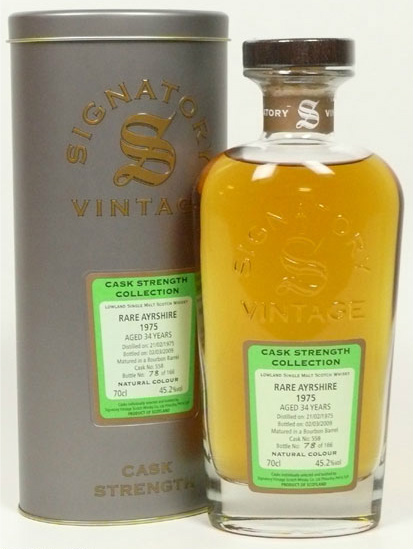 Color: Gold (slightly lighter than barrel #562)
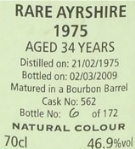 Ladyburn wasn’t long around. Opened in 1966 and already closed in 1975. It was built by W. Grant & Sons within their Girvan grain distillery complex. Not completely uncommon in those days, since there were more malt distilleries on a grain distillery site. Glen Flagler was added to the Moffat site and Ben Wyvis was added to Invergordon. All three didn’t last long and are pretty scarce these days. These Rare Ayrshire’s are still around, but there will be a time soon, they will not, and prices will soar. So is this worth your money? Lets see…
 Well officially there is no Ladyburn on the label, still it isn’t hard to guess what this must be. Out of the blue Signatory started to bottle a lot of casks from Ladyburn. Which is always nice since the place shut down in 1975 and whiskies from Ladyburn are getting more and more rare.
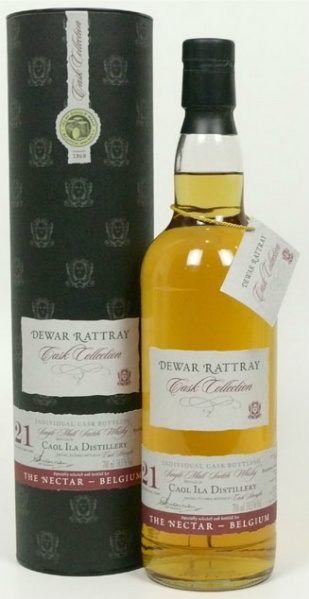 This whisky was distilled on December 12th 1984 and bottled 21 years later on September 6th, 2006, and was bottled for Belgian outfit, The Nectar.
 Well, after all those old, sometimes priceless, but always hard to get, independent bottles I reviewed recently, it’s now time for something more easy to get. A standard bottle, even sold, in some countries, in your local supermarket, at reasonable prices to boot. Add to that, it’s usually decent quality, so this is a bang-for-your-buck type of malt.
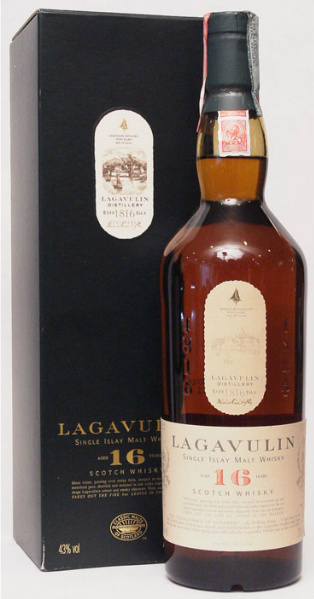 Many stories surround these Lagavulins. First of all that, when the royal warrant disappeared from the label, the quality went down. In fact the quality was dwindling even before that. Last year or maybe in 2010 I heard that the quality level is picking up again. This year I hear again that the recent bottlings are not as good as they were once before. So lot of debate about this one, and considering the interest, we know this is a popular one.
 So Lagavulin 16yo isn’t what it used to be, but how does it do on its own, not compared to the older ones? Well that’s another story, even today it’s a pretty special dram, that still scores pretty high, but I like the
  New Lochnagar was founded in 1845. New Lochnagar? Yes. First Lochnagar was built in 1823, and burnt down by “the competition” just three years later. The distillery was rebuilt, only to burn down again in 1841. So the distillery was rebuilt again in 1845 as New Lochnagar. Lochnagar became Royal in 1848 (it lies very close to Balmoral Castle). No more fires burning down the house, but still a lot of construction going on. In 1906 the distillery was rebuilt yet again and in 1963 completely renewed.
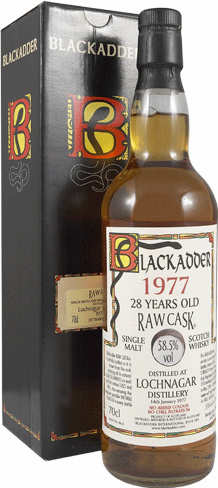 Here we will try an independent Lochnagar, again a Blackadder Raw Cask with cask sediment in the bottle. This time no powdered char, but only small chunks of charred wood.
 Master Quill