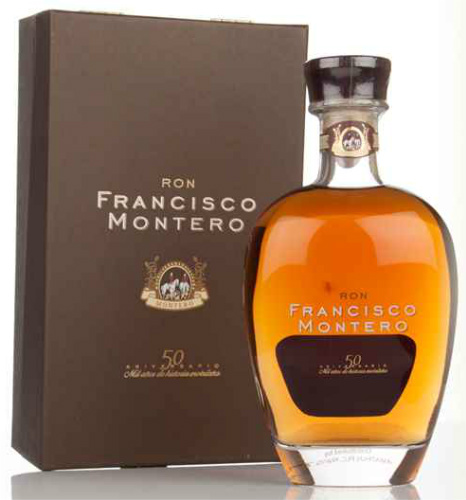
Francisco Montero “50th Anniversary” (40%, 7.000 bottles, 2013, Spain)

Francisco Montero Martin was born on April fools day 1929 in Motil, Grenada, Spain. Motil is unsurprisingly also the place Spanish sugar cane came from. For a long time Francisco dreamed about making Rum, or Ron as it is called in Spain. Finally when in his thirties, in 1963, the year of the demise of JFK, Francisco decided that life is short and started his own Rum-distillery called the Azucarera Montero distillery. Quite a bold move since (domestic) Rum was still unknown in Spain. In 2006, Sugar cane cultivation was seized and one year later, Joaquín Martín Montero, nephew of the founder buys the distillery. His daughter Andrea Martín Targa manages the place, so the business remains in the hands of the family.

Although there is a lot of history concerning sugar cane, the Rum is not distilled from sugar cane juice, but rather from the molasses from the locally grown sugar cane. The cultivation of sugar cane seized in 2006, so the distillery imports molasses made from sugar cane, from Brazil, Egypt, India or Mexico. Sometimes nice molasses from other countries can be brought in as well.

The Rum of Francisco Montero is a light style Rum. Fermentation is done for only 24 to 30 hours and the distillery uses four continuous column stills, of which the first operates under vacuum. This allows for distillation at a lower temperature, claiming less flavour is “boiled off”. However, nothing is said about the conditions provided in the other three columns and their effect on flavour of the final product. Ageing is done exclusively in 500 liter, new American oak casks, configured in a Solera system. And last but not least, in the blending process caramel coloring is done.

Francisco Montero 50th AnniversaryColor: Full Gold.

Nose: A breath of fresh air and a nice floral touch. There is a nice elegant woody nose with an edge of scented paper. Fruity black tea with a little bit of sugar in it. Definitely a molasses based Rum, bot nowhere near the thick and syrupy big Rums. No, it smells refined and elegant without being a completely different Rum, like Agricole. Hints of licorice and more fresh air, but also some wood pulp and breakfast cereals. Sweetness becomes more like a warm liquid of diluted refined sugar. Development in the glass stops rather soon, so after a short while WYSIWYG (What you smell is what you get). I like the floral tough that stays throughout.

Taste: Thin toffee and caramel. Aided by some liquid wood in the background. Lots of warming toffee, vanilla and caramel candy notes. Hints of waxy apple skins and a bitter walnut skin note, but these hints are pushed way back. You have to work for them. Quite unexpected, because the very smart and luxury packaging as well as the speciality of a “50th Anniversary” made me expect something very deep, in part old, and special, just like Abuelo Centuria stands out from the rest of the Abuelo range. This comes across as quite young. Initially very appetizing, with the toffee notes. Towards the finish the taste breaks down a bit. The nice toffee note gets weaker and thinner, and isn’t really replaced by something else. The finish is quite short, and you’re left behind with only an echo of a Rum.

Considering the packaging and the occasion, I was quite disappointed really. I expected a lot more. By its own merits I am disappointed as well. Sure, its a lighter style Rum, but just look at the Cuban Rums I reviewed earlier. The same lighter style but way more happening there. It is all right to sip, but if I would place this according to its merits it would sit right next to the most inexpensive of Abuelo’s, the Añejo, making this Montero way to expensive for what you would get. If you like the style, go for a Cuban.

Points: 78

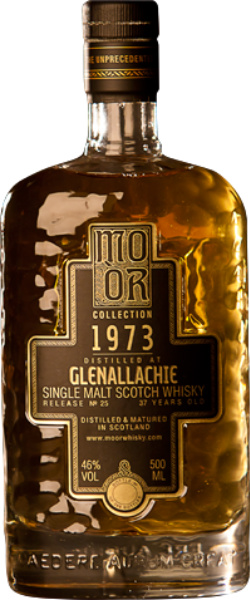
Glenallachie 37yo 1973/2010 (46%, Mo Òr, Bourbon Hogshead #6746, 266 bottles, 500 ml)

After all those fairly recent distillates, I guess its time to look at something older. This time we’ll have a look at a 37 year old expression of Glenallachie bottled by the Dutch Whisky Investors: The Whisky Talker. The Mo Òr line of Single Malt Whiskies was thought of as an investment, or as a luxury gift for business people. Sometimes you can even encounter a bottle like this in a super-duper hotel bar. Yes, Whisky is the new Swiss Watch or a premium golf-set. Glenallachie though, is one of the workhorses of Pernod Ricard, a laborer, meant for the Clan Campbell blend, not really a luxury brand isn’t it? But if you are worrying about the size of your next yacht, who cares? Ignorance is bliss. Let’s see if this old Glenallachie is any good.

Glenallachie 37yo 1973/2010 (46%, Mo Òr, Bourbon Hogshead #6746, 266 bottles, 500 ml)Color: Almost gold.

Nose: Soft and fruity. Next, some old bottle effect and great Speyside seventies fruity wax. Anoraks know this from Caperdonichs from 1972 and Tomatin’s from 1976, to name but a few. Vanilla plays a nice part in keeping the whole together. Definitely a (second) refill Hogshead. The cask wasn’t very active, but over almost 40 years, the wood did play it’s part in ageing this Whisky. Just let this breathe and it gets even better and better. Hints of old soft (sugared) mint in the background. Almond cookies with a bit of dust on them. Old wooden floor and a very distant smoky touch. The mint holds its ground and keeps accompanying the rest of the aroma’s from the nose. Great old malt, but it has its limitations. Lacks a bit of development compared to some of the (non-Sherried) greats from that era, but the whole is still fantastic and a treat to nose. Don’t get me wrong. Maybe this one shouldn’t have been reduced, although at 46% it’s still no dud.

Taste: Quite light and fruity. Sure, Speyside peach from old American wood. Hints of paper. Slightly sweet black tea with raspberry flavour. Especially here tasting it, the reduction shows itself. Making the whole a bit thin and shortening the finish. Also the cask seems to have been a bit tired. Hints of wood and sawdust and a hint of white wine. Sweaty high quality Sauvignon Blanc from the Loire. The wood shows a more soft mocha note now. Sawdust and pencil shavings. The mint from the nose stays behind in the back of my throat.

Whisky from a great time, but not the best expression from that time though. Probably a bit too tired a cask, and certainly should have not been reduced. It may have been already a bit frail and reducing it may have dulled it down. However, it still is an example of aged Speyside Whisky from the era, with this wonderful fruitiness and lighter style. I don’t know why, but this screams for some Roxy music from 1973. “The Bogus Man” sounds just right.

Points: 87

Followed this up with the 1976 Benromach. Both are 46% ABV, and both score 87 points, but the The Glenallachie is lighter, and smells more like a Whisky from another time. I would prefer the Glenallachie, especially for its nose.

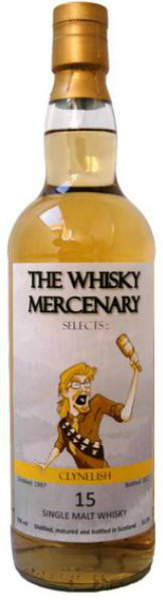
Clynelish 15yo 1997/2012 (51.5%, The Whisky Mercenary, Bourbon Cask, 59 bottles)

A few days ago I reviewed another Clynelish from 1997, and I just stumbled across this one, bottled by the Whisky Mercenary a.k.a. Jürgen Vromans. Since this is bottled in 2012, I guess Jurgen sent it to me a few years back as well. Only 59 bottles did once exist, but we know the Belgians to be enjoying life quite a bit, so I don’t think a lot of bottles of this have survived. I guess its will be even harder to find one of these today. I’ve reviewed quite a lot of Jürgen’s bottlings, and I have to give it to him, he has quite the nose for picking them, as well as being allowed to pick “dem Whiskies!” You might not know, but it’s not easy to be an independent bottler. You just don’t go into a warehouse trying all of the casks lying around and picking the best you can find, unless you have a bit of a reputation…

Clynelish TWMColor: White wine.

Nose: Buttery and malty. Fresh. Like a breath of fresh air, yet also citrus fresh. Creamy toffee barley. The cask seemed to be quite inactive, maybe the color also gives that away a bit already, but the sweetness is more like toffee and not big on vanilla you get from more first fill and more active casks. Another hint is the lack of a pronounced wood aroma. Cold apple compote with a bit of warm apple sauce, laced with a splash of calvados. All those apply associations are noticeable, but in no way overpowering. The fruity sweetness gets more and more dusty and dry, with a tiny bit of surface wood, oak obviously, with a little bit of mint. Apple pie, after some breathing the apple is joined by some freshly made dough. Nice balance with more than usual distillery character. Typical example where the wood did less to make the Whisky. It shows its other side. Fruity fresh, with shallow depth, dough aroma instead of wood, but at the same time lacking real depth and complexity. This isn’t a fault. It’s just different, and with this it shows another side of Single Malt Whisky in general.

Taste: Well, what a surprise. Sure it is fruity, but way more wood in here than in the nose. It starts with wood and paper as well as quite the peppery note. Sugary sweetness and creamy. I didn’t expect that at all. Toffee and bread. Caramel. The aroma’s grow a bit bigger with more breathing, so don’t be to hasty with this one. The lack of activity from the cask is noticeable by the weakness of the finish. It starts with a little attack, for a brief moment shows a nice body, but then it comes down very quick and leaves you a bit with a light, short and unremarkable aftertaste, which at some point in time even gets a bit bitter. Cedar wood bitterness. This bitterness even grows bigger, if you drink this Whisky after a prolonged time of breathing.

In my opinion, not the best of Clynelishes around, but there are many other who like it even better. This is from 2012, right at the start of his career as The Whisky Mercenary. Its hard then to get to pick the very best of casks, and it is a shared cask as well. Only 59 bottles was his share, but I guess at this ABV there was more Whisky in the cask, bottled or blended by others. Nevertheless educational, because here you can see that it’s more about the spirit, than it is about the wood.

Compared to the 1997 Wemyss Clynelish I reviewed a few days ago, the family resemblance is quite remarkable, but the Wemyss is definitely the more aromatic and polished expression of the two.

Points: 81

Talisker 1989/2002 “Distillers Edition” (45.8%, OB, TD-S: 5DP)

Since the 2002 Distillers Edition of Lagavulin was such a success, I managed to unearth the 2002 Distillers Edition of Talisker as well. This 2002 version is the direct successor of the 2001 I reviewed a few years ago. This is only the fourth Distillers Edition since with there wasn’t a Talisker DE released in 1999. Both the Talisker and the Lagavulin DE’s were first released in 1997. In 1999 the Second Lagavulin was released and since 2000 both were released annually.

Talisker DE 2002Color: Light copper orange.

Nose: Compared to the Lagavulin this can be called elegant, which is obvious, since Talisker is peated to a lower level and the Whisky itself is much younger. Lightly peated, more fruity and fresh. Fresher, younger and livelier. Slightly grassy. Creamy overall feel. Hints of pudding and vanilla. Nice soft wood. Although this has been finished in a Sherry cask, the finish is quite sparse. It’s typical peatiness is recognizable as a Talisker. Slightly oily and waxy, like an elegant distant relative of Springbank. Hints of old herbs from an old wooden grocery shop. Tiny hint of Islay-esk tarry rope. Hints of yellow fruits even. Sometimes this reminds me of white peach in sweet yoghurt, with some soft, slightly burnt wood added to it. Where the Lagavulin was very in-your-face, this Talisker is not. It’s even less so than the 10yo (from 2002).

Taste: Here the wood comes first after which a toned down little peppery attack announces it’s a Talisker all right. Fatty soft peat. Lovely. Cute almost. With some air, quite nutty. Again a slightly burnt note, which must be from the inside of the Sherry casks. Towards the finish a more smooth and sweet note appears, which I feel is not completely right for Talisker. Creamy towards the finish. Sure the peat is here, but most if it seems hidden by the unexpected sweetness. Medium finish with indeed a fishy part, and alas not much going on in the aftertaste…

Where Whisky buffs will almost always prefer Oloroso Sherry casks over PX Sherry casks. Just look how quickly the Oloroso versions of the vintage Glendronach’s sell out before the PX-versions. In the wine world, Oloroso is not considered the best of Sherries. The PX finish for Lagavulin seems to be a perfect match and nobody would even wonder, at least I didn’t, how a Oloroso finished Lagavulin would be. (Alright, plenty of them around), but for the DE-version at least, I didn’t wonder. For this Talisker however, I’m less happy about the choice of Sherry cask. For me it’s slightly off, so I’m wondering now how other finishes would have worked for Talisker in the DE-series.

Points: 85

Same score as “Neist Point” and a quick comparison between the two warrants the score of both. If offered at the same price, I would go for the Distillers Edition.

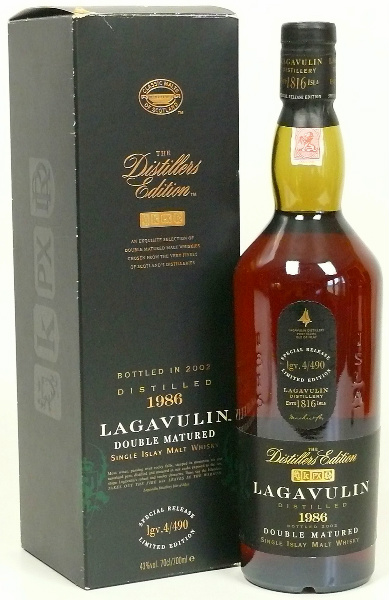
Lagavulin 1986/2002 “Distillers Edition” (43%, OB, lgv. 4/490)

Lagavulin is one of my all time favorite distilleries. It’s almost impossible to encounter a bad Lagavulin. I can’t believe this is just the third review of Lagavulin on these pages the other two being the other two from the current standard range. The 16yo and the 12yo. The 16yo is the modern classic (It used to be the 12yo with the cream label) and right at the time there was a rumour the 16yo would be quite scarce, the new cask strength 12yo was released. As I said, the current standard range is the 16yo, this distillers edition I’m about to review, and the 12yo cask strength version. The latter two come to us as “annual releases”. Just like Springbank, this means that there is some batch variation. A wanted batch variation, to buy more of the same and compare them to other releases, identified by  bottling year.

Just like NAS today, batch variation was always a dirty phrase, it’s not a word isn’t it. But marketing turned that around, just as they are trying with NAS. For me NAS means younger, less matured Whisky, so less contact with wood and as Gordon & MacPhail so aptly put it: “The wood makes the Whisky”. I’m not really happy about NAS, but I never disliked batch variations (again, look at Springbank), unless if the only way seemed to be down. There always has been a lot of discussion about our very Lagavulin 16yo, losing power, balance and character, but I hear the latest batches are becoming better and better again. Today Laphroaig seems to suffer from that…

This is the fifth Lagavulin Distillers Edition (DE). The first was distilled in 1979, the second in 1980, the third in 1981, and the fourth in 1984. Just like all the other distillers Editions, this Lagavulin has undergone a second maturation (a finish) in Pedro Ximénez (PX) casks.

Lagavulin DE 2002Color: Copper orange.

Nose: Fantastic peat. Lagavulins from the eighties can have this excellent peat, I never get tired of. Peat, tar, seashore, you name anything maritime and its in here. Sure the more recent DE’s are still pretty good, but they don’t smell like this. That’s why Whisky lovers still pay a great deal of money for these older bottlings. Smoke comes next and it smells a bit electrical. It has vanilla and a slight fruity nose. You know it’s there, but so hard to distinguish what it is. Ahhh lots of smoked (dry) sausage and slightly dried out onions and pear. Excellent, what a combination. Where have you smelled that last in a Whisky? This Lagavulin is all about balance (again some kind of dirty word for some). The whole is so fantastic, and goes on and on. Wonderful. Hard to put down. With time the fruit, still distant, finds it’s place in the whole and adds a more fresh and fruity part to the whole. Just smelling it is quite the experience, and still getting better. Lagavulin is such a big aroma, that even the thick and sweet PX can’t overpower it, just add a little something. I guess the finish was done intelligently. I’m putting off tasting it for just a while longer to put on my fisherman’s sweater…

Taste: …in the end it would be a shame not to taste this, so here goes. Well somewhat less special than the nose is the first thing that comes to mind. The PX is more upfront as well. It starts out chewy. Nice licorice, black and white powder and a thick sweet Sherry without most of its sweetness. Does that even make sense? Waxy and again very coastal and raw. Masculine. Puffer’s smoke. Burning hay. Fishy, as it should be. Smoked fish of course. Smearing tar on the hull of a boat. Get yourself something like this, because modern peated Whiskies are nowhere near this profile. I wouldn’t add water to it, because reducing it to 43% shortened the finish already. Big body, with only a medium finish. In the aftertaste the balance is slightly gone. It could have been even better than it already is! Wow.

It’s been a while, but I do understand why Whisky lovers in general pay lots of money for Whiskies like this. This is great and they sure can’t make them like this anymore. Drinking this put you in a different place and time altogether. It changes you as a person (for a while). Sure it puts you back a few hundred euro’s pounds or dollars, but try to imagine what a trip to Islay in 1986 would cost you now. It’s a time-machine and time-bomb in one. A must have.

Points: 91

Clynelish 1997/2014 “Cayenne Cocoa Bean” (46%, Wemyss Malts, Hogshead, 373 bottles)

You get only one chance to make a first impression, and that is what he did, William Wemyss. Carrying around my bottle of Strathisla I ran into William in London and I offered him a dram. Talking about the Whisky Business in general and Wemyss in particular, he sniffed it for a while, and sniffed it some more, talked a bit, and then…chucked the whole stuff in a spittoon claiming that it was great stuff. He probably had to drive home later or was late for a meeting or something. People around me were shocked a bit, but I know this is how memories are made. Maybe just not right away!

Wemyss is known for naming their Whiskies. The Clynelish I’ll be reviewing today is called Cayenne Cocoa Bean, since it reveals bittersweet cocoa beans mingled with cayenne pepper.

Cayenne Cocoa BeanColor: Somewhere in between white Wine and light gold.
Nose: Sweetish and fruity. Definitely some barley, but also a dry grassy note. The color gave it away a bit, this is from a refill hogshead, so it lacks the in your face vanilla and toasted cask aroma’s. It’s more refined. It has a creamy and fatty element. Vanilla pudding, but it is all very restrained and well-balanced. Fatty not waxy, what it usually the marker for Clynelish. Dusty oak. Dry old vanilla powder. Dried peach and pineapple. Semi sweet black tea. Leavy and hints of a dying out small garden bonfire. Burning off old branches. The sweetness throughout is toffee not sugar. Lovely stuff.

Taste: Nice thick fruit with toffee. The toffee substituting the wax you’d expect to find in a Clynelish. It starts out almost chewy. The whole it held up by a toasted wood note, with the faintest hint of bitterness and tree sap. On entry very good, from the start a lot is happening. After that a mixture of mint, sugar and a small amount of licorice. It is big and holds up. Finish starts prickly, and swiftly whiffs away, only the toffee stays behind as well as some warmth. Medium finish with a warming aftertaste. A good Clynelish and I’m guessing for those of you who didn’t like it as much, the leafy quality is a bit off, and the finish is a bit too short. So it has its flaws and weaknesses. But it has its big aroma and the start is almost spectacular. The body starts well, but breaks down too soon. The finish should be better and the aftertaste has some pineapple but not much more. It is reduced to 46%, and maybe that’s the culprit for the finish and aftertaste. The beginning is great, and for that part of the experience the 46% ABV seems just about right.

I’ve encountered quite a lot of people on festivals who say they don’t like these names. They say it creates a certain expectation and with that they can’t taste it objectively anymore. A very anorak-y statement from people lacking humor? I for one, like the names, it gives them an identity, even though I might not encounter the aroma’s from the name in the Whisky. Everyone tastes differently, depending on time of day, upbringing and associations with tastes. Clynelish is an excellent example. I like Clynelishes just as the next guy, but I always seem to like different Clynelishes. When I was a member of the Malt Maniacs, I really liked a 12yo Clynelish bottled by Adelphi. I didn’t know it was a Clynelish, since it was part of a blind competition we know as the Malt Maniacs Awards. At another blind tasting session, at least a year later, I tasted another wonderful Clynelish, which turned out to be the sister cask of the first Adelphi Clynelish. I mention those since, a lot of people didn’t care for those two Clynelishes. Same with this Wemyss expression. I first encountered it at a Wemyss tasting, led by Ginny, and I absolutely loved it, where most of the public preferred other Wemyss expressions. So never take anyone’s word for it, make up your own mind, although I have to say that all the Clynelishes I mentioned above, were casks picked by Charles MacLean, even this Wemyss one…

I managed to forget the name during the writing process. I did get the bittersweet part, but couldn’t say if it’s from cocoa beans. Definitely didn’t get the cayenne though, but I still like the name. It’s only a name, nothing more.

Points: 85

Cadenhead Demerara Rum 12yo (46%, Green Label, Laphroaig Cask Finish, Guyana)

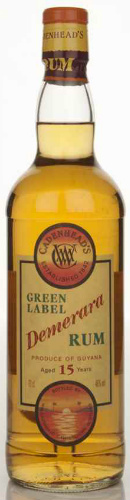
First of all I’d like to start telling you that this review won’t be about the Cadenhead 15yo Demerara Rum that’s in the picture. It’s actually about the Cadenhead 12yo Demerara Rum, and not just any 12yo, but one that was finished in an ex-Laphroaig cask. Laphroaig being one of the most famous of peated Islay Whiskies. Of course Ardbeg and Lagavulin are equally as famous, but that’s beside the point. I couldn’t find a suitable picture of the bottle (I don’t have it here), so I put in this one, since it looks pretty similar. The 12yo has an additional sticker over the neck and cork, starting this is from an ex-Laphroaig cask. The 12yo Rum is even lighter in color, than that of the 15yo in the picture. Cadenhead of course, is an Scottish independent bottler whose main business is bottling Single Malt Whiskies, who also bottle some pretty good Rums as well. I’m sure, more of those will feature on these pages in the future, especially the cask strength ones.

Cadenhead Green Label 15yo DemeraraColor: White wine. Very pale gold.

Nose: Sweet and funky. Thick and unmistakable Demerara. I know peated Whiskies very well, but I can’t detect any peat in this yet. Distant hint of yellow fruits, white peach. The fruit interacts very well with a mystical hot dry wind note. Sweet peach yoghurt (not the acidity, there is no acidity in the nose whatsoever) and sweet black tea. Creamy. Small hint of nice smelling paper, which adds to the wonderful balance this Rum emits from my glass. All aroma’s go together very well. At this point I have to stress that this Rum has had plenty of time to “settle” with air. Maybe one to decant as well. (I’ve written about the benefits of decanting Whiskies earlier). Still no peat, nor smoke, but I do get some toasted wood. A more than wonderful nose that seems to go on and on. Exceptional. Just give it time to breathe!

Taste: I get the tea note first. Starts sweet, but the sweetness is quickly gone, to be replaced by a prickly woody note, which strips most of the sweetness out of my mouth like it’s been done with sandpaper. This makes room for the strange combination of acidity from unripe berries, milk chocolate and earwax. Wow, this is getting strange fast. Is this the effect of the peat? It still doesn’t remind me of peat though. Lets take another sip. When the dryness takes over, the balance deteriorates a bit. Not everything seems to be in check, and the aroma’s feel a bit uncomfortable. Something new moved into the building and the older residents don’t know yet what to make of it. More toasted cask now, with even some bitterness from one, or both casks. The finish seems short at first but when it turn into the aftertaste a smoky prickly sensation starts to happen mixed with mustard and the typical aroma’s of Demerara that were pushed out of the body and finish of the Rum. The Laphroaig cask did have an effect on this Rum, just not as I expected.

Maybe you Rum buffs don’t know this, but Laphroaig is actually a very sweet Whisky underneath. It’s sweetness is just well hidden underneath heaps of peat and iodine. Well, Laphroaig used to taste like that. More modern Laphroaigs are more obviously sweet, and the peat became more accessible, and the iodine, well, you can get that at your local pharmacy. How strange it is then, that a sweet Whisky with a sweet and heavy Demerara Rum make for such a dry Rum?

I always passed on the Green Labels when buying Rum from Cadenhead in favour of the dumpy bottles with Cask Strength Rum’s in them. Somehow a dumpy bottle with 36yo Uitvlugt (PM Mark!) Demerara Rum from 1966 bottled at 69.3% ABV, had more appeal to me than a 12yo Laphroaig finished Demerara. It still does, but this Green Label is no punishment to drink either. Maybe a bit unusual but also a very interesting experiment. I like it, and its even better than I thought it would be. Beyond the obvious, I’m not sure what the Laphroaig cask did for this Rum, but I do feel that the Demerara Rum, before it was finished, was already good to start with. I’m pretty sure it is Enmore (VSG Mark).

Points: 86

Linkwood 15yo (43%, Gordon & MacPhail, Distillery Label, First Fill & Refill Sherry Casks, Circa 2006)

Gordon & MacPhail release Whiskies in many series. Gordon & MacPhail Reserve, Gordon & McPhail Cask Strength, Gordon & MacPhail Exclusive to name but a few. Whisky Geeks call the series like this Linkwood the “Licenced Bottlings”, but I have heard the people of Gordon & MacPhail calling it the “Distillery Labels”, though both names aren’t anywhere to be found on the label. Bottlings in this series consist of Whiskies, where there isn’t (really) an official bottling of, again, like this Linkwood, and to a lesser extent Strathisla and Longmorn, like the 1971 I reviewed not so long ago, of which an official bottling did exist, although not many. If memory serves me correctly, Whiskies in this series were always reduced to 40% ABV and later 43% ABV.

Linkwood 15yo G&MColor: Light copper gold.

Nose: Dusty and funky Sherry. Slightly raisiny. Deep, dark and brooding. Nutty not fruity, so lacking the Sherry cherry of fresh and fruity Whisky. This is all but lively. Its darker and more brooding than I’ve come to expect. Very old calvados. It is apply but in a dense and syrupy kind of way. It’s some kind of hybrid between old Calvados and raisins. It is quite old and unusual smelling and definitely does not smell like a distillate from the early nineties. Hints of charred oak and vanilla powder. Nice, deep and complex. Oily baking paper. Dull brown sugar and some soft wood spices, and sometimes a short whiff of old soap.  More a sort of floral note than a real soapy note.

Taste: Paper and wood, again deep and all but fresh. Old raisins. Dried apples. Red apple skins and definitely from Sherry casks. Quite restrained. This does not shout out its presence, it more sort of sits in the corner quietly. Distant burnt note. Apart from the (burnt) woody (paper) and Sherried traits, this is also has qualities of refined sugar without being very sweet. Does that make sense? Hidden sweetness overpowered by the aroma’s described above? Second half lacks a bit of development and the finish concentrates around the wood and paper notes, with hints of old Sherried Whiskies ending in a medium walnut bitterness and of medium length. It end with the finish, there is no noteworthy aftertaste.

Actually this particular bottling, and beware there are more batches of this, is quite restrained and is unlike many of the Whiskies that are on the market today. This also makes it less likely choice for a daily drinker. Although it is alright at 43% ABV, I wouldn’t have minded some extra 3%, just to carry and strengthen the aroma’s that are presented to us.

Points: 83

Amrut 4yo 2009/2013 (60%, OB, Single Cask, for Europe, Virgin Oak & First Fill Bourbon Barrel #3445, 172 bottles)

Maybe Amrut is a true Malternative, because it’s another Malt Whisky. If you love Scottish Single Malts best, why look at other distillates? They are just different. Other distillates can broaden your horizon, but will not replace your Single Malt that has become too expensive. For instance look outside of Scotland.

Looking back I seem to like Amrut. This is now the third review, and after the Intermediate Sherry (87 points) and the Portonova (88 points), this is something of a speciality. Maybe I should take that back. Most Amruts are in fact specialities. Something out of the box is often done. Maturing on two continents, or blending many different casks together, to name but a few of things Amrut does.

This time a single cask bottling. Often, you will have a Whisky that has matured in a first fill or second fill Bourbon cask, barrel or hogshead, but no, Amrut had to do it differently. This particular example was first matured in charred virgin oak and then transferred into a first fill Bourbon barrel. Barrels being the original casks Bourbon matures in, where hogsheads are remade casks from the staves of barrels. Hogsheads are bigger than barrels. Most barrels are shipped in staves anyway.

There is some additional useful information on the label as well. I like that. In the four years this Whisky has been maturing, 42% has evaporated over time, as compared to around 8% in that evaporates is Scotland over the same period of time. By the way, unpeated (six row) Indian barley was used.

Amrut Single Cask #3445Color: Gold.

Nose: The first whiff that enters my nose is of virgin oak. Creamy sawdust and vanilla. Although only four years old, at the fast forward maturation rate, this can be called a woody Whisky. The typical American oak notes are here, but I actually miss the typical Amrut spiciness. Amrut is indian, and Indian Whisky should be a bit exotic, not just another copy of Scottish Whisky. This Amrut does hide it Indian. After some vigorous movement in the glass and some patience, there is exotic spice emerging and apart from that the Whisky becomes a bit dusty.

Taste: Initially hot and then an explosion of sweet Vanilla. When the thick vanilla, travels down, quite some (virgin) oak, emerges here in the taste as well. So we have wood and vanilla. What else? Over the top vanilla combined with hot butter. Just as with the nose this needs air to show some exotic spices. Luckily it’s Indian-ness is here at last. Spicy hot sawdust from Massaranduba. A very hard tropical wood. It’s so hard in fact that you can’t cut it without the saw charring the wood. This slightly sour odour is very similar to the spiciness of this Whisky, especially in the taste of it.

I mentioned decanting Whisky before. This Amrut is one that needs a lot of air as well to fully blossom. This is still a pretty full bottle, but already there is a difference to the first taste of the freshly opened bottle. I will score it now (after lots of air in the glass), but I feel this will grow even better and more balanced over time. This may very well be an example of a Whisky where the last drop from the bottle will be the best drop.

Points: 88

The initial score was 86 points, but as I expected, this got only better over time. The bottle is gone now, but the last third scored an easy 88 Points. Again lesson learned. Give it time to breathe…

Frapin V.S.O.P. (40%, Grande Champagne, 1er Cru de Cognac)

The beginning of the year saw the launch of Cognac as a distillate to be reviewed on the pages of Master Quill. Serge calls it a Malternative and I think I understand why. Sure it’s another distillate, that’s not made from distilling Beer, like Whisky, but made from distilling Wine. A different distillate altogether. Is it an alternative to (Single Malt) Whisky? It’s not an alternative in taste, it’s too different, and I don’t come across a lot of cask strength Cognac’s to name but a difference. I do feel it can be an alternative to Whisky considering price. Most Single Malts are becoming more and more expensive (or younger a.k.a. the NAS phenomenon), and the consumer is looking for different distillates that are just more affordable. I always was interested in Bourbon’s and Rum’s but never considered them as alternatives, just different. But even those distillates are becoming more and more expensive.

In the case of Whisky, just look at the rise in price of your beloved eighteen year olds. Highland Park, Springbank, Longrow etc. You could buy Highland Park 18 for a lot less than it is sold for today, and I’m not talking about a decade ago, just look what happened in the past two years. You and I, who remember the old pricing, might not be willing paying double for it in the space of one year, but that’s no problem for the distillery. A new customer is willing to pay that amount, first fo all, because he or she can afford it or did not get used to the old price. This brings us right back to an alternative for Malts. This Frapin costs as much as a good blend, but as I said above, it tastes like something completely different. Personally I see it as a different distillate, with its own particular taste, love it or not, but it won’t make me trade in my bottles of Whisky, so in that sense it’s not an alternative at all…

I believe if you are looking for an alternative for your Whisky, you should look at other producers of Whisky, wo still can produce a nice and affordable Whisky. Sure if you love Whisky, you won’t find a replacement unless it’s a Whisky as well, but more on that later…

Frapin V.S.O.P. (40%, Grande Champagne, 1er Cru de Cognac)Color: Orange gold.

Nose: Quite woody. Orange skins. Fresh lacquer. Old bakelite. Cocktail Cherries. Definitely some oaky vanilla. Dry earth and woodchips, just like smelling Orchids. Sweetish. Sweet vanilla, but this time only hints of (sweet) licorice, something I get in a lot of Cognacs. Dry and dusty, like listening to Gheorghe Zamfir. Quite aromatic, but not very fruity or floral. Smells nice overall.

Taste: Wood, caramel toffee and lots of almonds, Quite sweet actually. Vanilla ice-cream. Hints of whipped cream. Some more fruit, but its hard to point out which. It’s like sweet yellow fruit yoghurt. Sweet, yoghurt, without any of the acidity or dryness. Quite light. The finish is the weakness here. Not a lot is happening over there. Only the candy cherry taste somehow lingers on a bit.

Baffling difference between the nose and the actual taste. It’s almost like the nose shows the potential, but the taste has been in part ruined. Added sugar maybe? Anyway, the whole is too light, and leaves next to nothing behind.

Points: 77