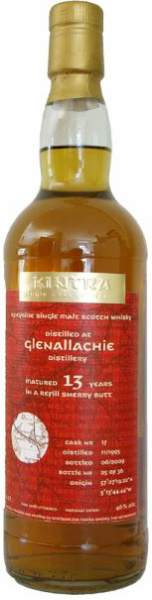
Linkwood 18yo 1991/2010 (52.9%, Bladnoch Forum, Hogshead #10346, 252 bottles)

Another Linkwood then. Linkwood is quite a difficult distillery for me. Somehow I don’t seem to like Linkwood that much, and I don’t buy any of Linkwood without tasting it first. This one I did buy blind. First of all I like Raymond Armstrong (the former owner of Bladnoch Distillery) and just like Dutch independent bottlers The Ultimate were/are able to bottle some great Whisky at very fair prices. Luckily a lot of my tasting is done blind, so it’s not the name that makes for a lower score. Don’t get me wrong, I did come across some good Linkwoods as well. So with an open mind let’s have a got at this 18yo Linkwood.

Linkwood 18yo 19912010 (52.9%, Bladnoch Forum, Hogshead #10346, 252 bottles)Color: Light gold.

Nose: Acetone, unmistakable. Nail polish remover. Lots of sappy leaves too. Quite nutty as well. Well not dull isn’t it. This spirit jumps right out of my glass. The acetone seems to “remove” itself, but it’s just me not smelling it anymore since it tries to anesthetize me. Put it away for a minute and smell it again, and you’ll be hit in the head again. Even though some might like it, it most definitely is flawed. Nice wood underneath it all. Coffee, cloves and some mocha-cream. Hazelnut pastry. Vanilla, hints of lemon and even a bit perfumy after a while. If you factor out the solvent, this is quite a bold body from a highly active and spicy cask. Quite nice but with a rather unusual defect. No I don’t hate it. Maybe this needs to oxidize a bit?

Taste: For a brief moment there is a solvent. It is quite hot, but the solvent (not ethanol) is quickly replaced by a more woody and leafy aroma. Woody and nutty. Sweet, with a lot of vanilla. Even though the solvent part seems to dissipate for a while, the whole stays quite hot and overpowering, just as it did with the nose. Freshly painted wood and freshly sawn, not entirely dry, oak. The feeling something other than Whisky is going down my throat. Medium finish.

In a way this was difficult to score (but not really). First of all I liked it maybe a bit more than I scored it, but I don’t think this isn’t one to finish quickly. Quality wise this couldn’t score very high since it has some obvious flaws, not exactly from the middle cut maybe? (although hard to imagine).

Points: 79

Linkwood 13yo 1990/2003 (43%, Jack Wiebers Whisky World, Castle Collection, Cask #1922, 120 bottles)

This time we will have a look at a Linkwood from the rather obscure Castle Collection by one of Germany’s finest: Jack Wiebers Whisky World. Not a lot of pictures can be found of any bottle from this series. I still have the Linkwood bottle, but it is rather empty, so not so nice for a picture. Alas no true picture of this particular Linkwood. Most Whiskies for this series were reduced to 43%, although the odd cask strength version does exist. Besides reduction it doesn’t seem to me, that the whole cask was bottled. Usually only around 105 to 120 bottles are bottled per bottling. Yes I did that on purpose. It’s rather hot today.

Castle CollectionColor: Light gold.

Nose: Spicy oak and vanilla. We know already what that means don’t we? Next aroma is quite meaty. Diluted gravy combined with a salty caramel or toffee note, Just like the previous Linkwood this has some sort of herbal smelling wood. This also has a freshness that borders on ozone. Have you ever been in an ozone cleaned pool? Right after that the Whisky becomes more floral and retains its freshness. Creamy, powdery, not spectacular but at least very decent and reliable.

Taste: Light, very light, slightly alcoholic and fatty. Still meaty though and right after that some water diluted licorice. The wood turns slightly acidic and even a bit bitter. A kind of bitterness that is not welcome every time around, if you ask me, especially when combined with a floral note. But hey, that’s Whisky. It’s spirit aged in wood, and sometimes the wood impairs wonderful flavours to the spirit and sometimes not so great. Vanilla and watered down, molten vanilla ice cream and flower-water. Spicy and herbal again. Simple, so not a big body on this one. Short finish too. For me a bit too light and weak, but I’m not convinced it would be better after less reduction, or even at cask strength.

This Linkwood is pretty simple and straightforward and it is sold that way in a reasonably priced series and reduced to 43% ABV, to cut the cost even more. Not great, even with this nice nose, but not bad either. I imagine this to be emptied in one evening over a game of poker. It beats a lot of overpriced NAS bottlings of today though.

Points: 78

Edradour 23yo 1983/2006 (52.1%, OB, Port Cask Finish, Cask #06/0554, 743 bottles)

Since Edradour is owned by Andrew Symington, this might as well have been a Signatory Vintage bottling. Lots and lots of Edradour have also been bottled as Signatory Vintage bottlings. 1983 is the oldest vintage of Edradour ever bottled by one of the owners, apart from two 1973 bottlings of which one was bottled by Andrew himself in 2003 (as an official Edradour). By the way, all the 1983 bottlings are Port Cask Finishes. Onder the flag of Signatory Vintage, Andrew bottled one 1968 Edradour and a small batch of 1976 bottlings, so the 1983 might not be the oldest Vintage after all.

Edradour 23yo 19832006 (52.1%, OB, Port Cask Finish, Cask #060554, 743 bottles)Color: Full Gold.

Nose: Dusty, flour and dry. Seems Sherried. Vanilla and cream. Powdered coffee creamer. Spicy oak. Spicy and fruity, but still with some hints of integrated wood. Cold butter, right out of the fridge and the fatty smell you get from a cold BBQ one month after its last use. So old fat and hints of burned stuff. Next are the first whiffs of baking white bread. Mixed with the odour of printed newspaper. Leafy and fresh. Small hints of (dark) chocolate with cherry liqueur, but not entirely black. This even has tiny hint of tar, giving the whole some depth. Not bad at all.

Taste: Much more fruity than the nose was. Creamy vanilla pudding with a red fruit acidic aftertaste. After that some bitter tree sap and bitter oak. The oak isn’t overpowering, but it’s there in broad strokes, making up the body of the Whisky. Quite complex wood, so it doesn’t come across as a young Whisky, which it in fact isn’t. Some hidden, fruity sweetness and again the paper of newspapers. Nice and well-integrated oaky bitters in the finish. It’s signature is carved in wood.

To sum things up. This is a wood driven old vintage Edradour finished in a Port pipe. The finish is done sparsely, since it isn’t an overpowering typical Port Finished Whisky. Nice, but not something I would go out of may way for to get it. Let’s call it an experience.

Points: 83

Edradour 10yo 1994/2004 (46%, Signatory Vintage, The Unchillfiltered Collection, Cask #349, 783 bottles)

In 2004, 2005 and 2006 most of the 1994 vintage were released by Signatory Vintage in the Straight from the cask series. You must remember the 50 cl bottles in the colored wooden boxes with all kinds of (fortified) wine finishes. However a few of those were rescued from that sometimes ill fait and released as is, under the unchillfiltered moniker, reduced to 46% ABV. Here we have one such cask that didn’t undergo a wine finish, simply because the Whisky at hand came from a Sherry cask.

Edradour 10yo Cask #402Color: Orange gold.

Nose: Quite creamy and already lots of aroma. Very dry with enough influence from the wood. It does remind me of cherry liqueur, without it being overly sweet. The Whisky also has a more vegetal side to it as well as some good Sherry funk. Fruity. Watered down red fruit juice, with toffee, chocolate butter and (milk) powder and some herbal smelling wood. Quite spicy when I come to think of it.

Taste: Paper, pepper and sometimes a bit hot. Artificial hard red candy juice. Remember those little raspberry ones? Warming and in the distance quite sweet. Candied citrus fruits (predominantly oranges) and the zestier note is provided by some lemon curd. After that the lengthy finish starts with some burnt newspaper ashes, cheap chocolate powder and some soft dark wood, not necessarily oak. Nutty coffee (Inca).

This is quite a Whisky, but I can’t help to feel that something is not quite right. That is probably personal, because I get that a lot with Edradour. Probably a typical Edradour marker, I still have to get used to. Still, this is quite quaffable. Go for one if you come across it. Maybe the 1994 vintage is sold out by now, but there should be still some 10yo’s from 2004 around. The picture is from one of the 2004 vintages, the 1994 looks the same.

Points: 82

Bruichladdich Classic Laddie Scottish Barley (50%, OB, 2014)

In the more recent past when Bruichladdich had different ownership, a lot of bottlings saw the light of day and a lot of bottlings comprised the standard range. Now that the distillery has changed hands and tries to be a fashion accessory, the stanf=dard range is reduced to only two NAS bottlings. Scottish Barley and Islay Barley. If my memory serves me well, all standard bottlings with an age statement have been dropped.

In 2013, this same Whisky was released with a somewhat different “label”. The first release had big lettering for “Scottish Barley”, whereas the 2014 release I’m about to try, has “Classic Laddie” in big lettering. I have tasted the 2013 version and scored that one 85 points. Let’s see if this newer version is equally as good.

Bruichladdich The Classic Laddie Scottish Barley 2014Color: Light gold.

Nose: Well this is a nose that screams Barley. Very young smelling and even has some Bladnoch-butter. Fatty, with a citrussy edge. Hints of new make spirit, and given some time to breathe, a more bread like, coffee and milk chocolate note appears. The whole is quite soft. Wet. fresh wood. Virgin oak. Nevertheless it is also recognizable as a Bruichladdich. It does remind me sometimes of the Cadenhead Bruichladdich 17yo I reviewed earlier.

Taste: Soft paper like wood and an extremely creamy taste. Coffee with a lot of milk. Chocolate milkshake. When the higher ABV flows down my throat a short flash of hotness flies by, but also dissipates quickly. Cream with a hint of ashes. Bourbon and vanilla, but also dark chocolate and a faint fruity note. Cherry liqueur bon-bon? Virgin oak again. Lots of barley (and sugar?) in the finish. Barley, oak and cream are the three words that describe this Whisky best I guess.

As consumers we are compensated. We get less ageing and less complexity, but we get more ABV. 50% to be precise.

Here we go again, another NAS bottling that will split the Whisky world in two. Definitely a young, crude and uncomplex Whisky, but at the same time a nice and designed sophisticated soft taste that a lot of people will like. The Bruichladdich spirit is a good spirit, but this spirit didn’t get a whole lot of time to develop. It’s like a child asked to drive a bus. Some would even say that this isn’t really Single Malt Whisky. If someone had invented this about a 1000 years ago, he or she, may have called it Barley Wine. Not bad, but not my NAS of choice.

Points: 81

Grappa Week – Day 7: Nardini Grappa Riserva (50%, 70 cl, L.08/07)

Grappa Week LogoAlready the last day of the Master Quill Grappa Week, and we’ll close this off with a Grappa of one of the oldest and most important Grappa Distilleries around today. Nardini has a market share of 25% and produces 4 million bottles per annum.
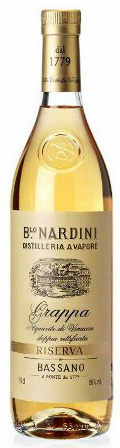
The Nardini distillery was founded by Bartolo Nardini in 1779. Bartolo bought an inn (Osteria al Ponte) near the Bassano bridge a.k.a Ponte Vecchio, across the Brenta river. This inn became the Grapperia Nardini and still exists today. Nardini is still run by members of the Nardini family, by now the seventh generation. Today Nardini has two distilleries: one in Bassano del Grappa and one in Monastier where besides Grappa also Liqueurs and Amaros are made.

This Nardini grappa has been distilled two times in a traditional, a discontinous and a vacuum steam still, across both distilleries. The Grappa from both distilleries are then blended and aged for at least three years (according to the Italian site) or five years (according to the UK site), in Slavonian oak barrels. The grape pomace is taken only from the foothills of north-eastern Veneto and Friuli.

Nardini Grappa RiservaColor: White wine

Nose: Old dried grass. Apple skin and cold, lightly sweet apple compote (as opposed to an acidic one). Very restrained. Brooding, you sense a lot underneath. Vanilla and oak, licorice and juniper. Unlit cigar, excellent Havana Tobacco. Warm the glass up in your hand, very important for this liquid. The smell is natural, lightly fruity, perfumy and the usage of wood is apparent. Lots of Grappa’s are “enhanced” with sugar, but this one hasn’t got the sweet nose like many others. Extremely lovely stuff, this Grappa.

Taste: Cigar box and tobacco. Lightly sweet, but all in good balance. The sweetness, that is mostly apparent when entering the mouth, is balanced with tannins from the wood (can’t imagine it coming from the grapes). Pine and cedar. The higher ABV of 50% really delivers the aroma’s of this Grappa perfectly. Underneath the cigar (box) and the Tobacco lies a great fruitiness. Fresh green apple.

From a Whisky drinkers perspective a very nice Grappa. Balanced, dry, noticeable wood influence without the predominant hay and grass notes. What a stunning nose. It gives off layers and layers of niceties. Easily the best Grappa I’ve tasted. Great product. I’m impressed by the nose, I just hope all batches are at least as good as this one, (L.08/07). This is a must!

With this Nardini we conclude our (ad)venture in the world of Grappa. Grappa had, and maybe still has a troublesome reputation. Lots of people consider it to be a not-so-nice and harsh distillate. I guess the lesser gods of Grappa making are trying to do something about that by adding lots and lots of sugar to their products as could be seen with the first few reviews from this week. I for one do not like that. Luckily also good and very good Grappa is made, although outside of Italy we only know the big brands, but insiders from Italy know there are lots and lots of artisanal Grappa producers who make very good Grappa’s, so maybe it is time to plan a holiday to Italy. Still there are a few very good Grappa’s around that are widely known, like this Nardini. Not breaking the bank and making a very good Grappa. Salute!

Points: 88

Grappa Week – Day 6: Sibona La Grappa Di Barbera (42%, 50 cl, 2011)

Grappa Week LogoToday we’ll have a Grappa made by Sibona. Looking at the picture below you might think it doesn’t look like much, but holding the adorable half litre bottle in your hand, makes you want to have a whole row of bottles like this, with Grappa’s made from every single grape variety that grows in the Piedmont region of Italy. The bottle itself has markings, warning you when another 10 cl has gone, and has a little extension preventing you from dripping the precious liquid, so not a drop gets lost. For this “Linea Graduata”, the label looks like someone typed it in his shed. Looks fantastic though. Even without tasting, I would like to have them all!

Barbera is a red grape variety that has grown very common to Italy. It is the most planted grape variety just after Sangiovese and Montepulciano. Sibona hails from the Piedmont region, and over there, Barbera is the most used grape variety. Both Sangiovese and Montepulciano are not (really) planted in the Piedmont at all.

Sibona La Grappa Di BarberaColor: Light citrus yellow, straw.

Nose: Lots of hay, warm, basking in the sun. In the distance crickets are chirping and you are living the live of a God with an Italian beauty by your side. At least you are enjoying yourself very much. Hay, dry grass, dust, cereal, honey and some deep fruity notes and some nice citrussy notes as well. With some time, creamy notes develop with hints of vanilla coming from the oak ageing. Black tea, with a flowery note to it as well as some black fruits. Dry and very well-balanced. Hints of rural organics. Maybe not at first, but this has become a dream to nose.

Taste: The hay and dry grass return big time in the taste as well as some virgin oak. A sappy and tannic bitterness with grape skin aroma. It would be funny now, to say this isn’t sweet enough, but yes, it is on the dry side, which won’t make it your daily drinker, nor will it be a Grappa for everyone (starting to drink Grappa). Nevertheless, I’m glad this hasn’t been ruined by sugar. Having said that, apart from the honey, there is some hidden sweetness to this Grappa, and it is sugary in quality, not saying that this is sweet at all. So slightly sweetened black tea it is. The more it breathes the more black (and red) fruits emerge. very appetizing. A connoisseurs aperitif I would say. It’s far to elegant or subtle to function as a digestif even though Grappa is really a digestif, and this particular example is quite powerful. With extended breathing the naturally occurring sweetness becomes more and more noticeable.

I remember when I opened the bottle I didn’t like it very much, because all of the hay and it seemed not to be pleasant to smell as well. But even then, I had the feeling I would grow into it. At this point in time I really don’t know for sure which of us has changed, me or the Grappa, which got some air into the bottle to breathe and develop. This is a high quality Grappa showing off a single grape variety from the Piedmont. Not an easy Grappa, and something to savour once in a while. But when you need it, it’s great. The role the wood played is easily discernible. The Barbera has been aided by some ageing in oak, in fact, this is the darkest of all the Grappa’s from the “Linea Graduata”.

Points: 81

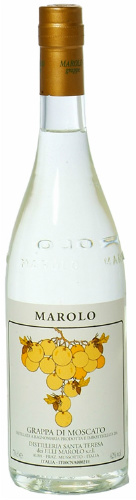
Grappa Week – Day 5: Marolo Moscato (42%, 70 cl, 2005)

Grappa Week LogoAfter the Villa Isa Moscato which showed us what a Moscato Grappa is, I still feel it can be done better. The Villa Isa is a very accessible Grappa made from Moscato grapes. It’s friendly, fruity and easily drinkable. Today’s Marolo is a Grappa company with quite a reputation, so lets see if this Marolo can beat the Villa Isa (as if it were a competition).

Marolo is all about Paolo Marolo and his successor, and son, Lorenzo. Paulo started in 1977 because he wanted to turn the rustic product into art! Anybody still wondering if Paolo is Italian?

Grappa Moscato MaroloColor: Colorless.

Nose: Hay and dry grass. But not so heavy and over the top. Soft. Small hints of fresh-cut grass or the smell you get when pruning a tree. More sappy and “wet”. From the start some more nice fruit, in part citrussy. Lemon (not lime). This is a more toned down version and cleaner, since this wasn’t aged in oak. Slow and laid back. No hurry, we’ll get there. Besides some spiciness, there is a vegetal and powdery note as well, which seems a very watered down mixture of lavas, licorice and toffee. When I nose it with some more vigour, the Moscato grape variety pops out in a dry and dusty way.

Taste: Fruity and sugary. Sugar water. Not thick, syrupy, fruity and heavy on the Moscato as I expected. In fact this matches the nose better. It is again laid back in style, soft and toned down. Very young, clean and clear, just like the look of the Grappa. In the background there is a more heavy note, something like diluted burnt caramel. Mixing with the heavy note, is a short stint of fruity acidity quickly overtaken by spice (white pepper, thyme and maybe some others). Lovely fruity finish and the more time passes after swallowing the better the finish gets, (it gets more spicier). Of course, when you wait too long, its gone. Making it the right moment for another sip.

A very quiet and elegant Moscato. It has its sweetness and in part it even is sugary. But this time, it’s all right. Easily drinkable and it seems to be the right distillate for some good introspection. I like the Marolo better than the Villa Isa, but they are also quite different from each other. One a bit loud and fruity, the other more introvert. One with ageing in wood the other young and clean. Even though the Marolo is also quite accessible, it still is a Grappa you have to get to know, to get the most out of it.

Points: 83

Grappa Week – Day 4: Villa Isa Grappa Moscato (42%, Roberto Dellavalle, 700 ml)

Grappa Week LogoNext up another Grappa by Roberto Dellavalle, but this one is from his Villa Isa range of Grappa’s. The range consists of single-vine varieties from the Piedmont, obtained through the distillation of fresh Marcs. This Moscato is an oak aged version but there is also a clear version that wasn’t aged in oak. Barbera and Nebbiolo da Barolo also exist in an 18 month oak aged version within the Villa Isa range.

Villa Isa Grappa MoscatoMoscato is a sweet grape with a very recognizable aroma, both in smell and taste. It is one of the oldest and widely planted white grape varieties in Italy. A well-known Wine made with this grape variety for instance is Moscato d’Asti. Lots of variants of this grape are planted all over the world. Unlike many grape varieties used for Wines, the Moscato grape variety is very nice to eat too.

Color: Light gold

Nose: Toned down hay note, fatty grass and candy and Moscato sweetness and above all, Moscato aroma’s abundant. Old wooden storage house. Very likeable. Nice elegant and fruity nose with typical muscat grapes and peach. Very likeable indeed. Small hints of lavas, flowers and a tiny backbone of oak.

Taste: Fruity sweet with toffee, but also a little winey. Muscat or Gewürztraminer. Definitely not sweetened with heaps of sugar, although a little bit has probably been added. Here the Grappa is aided with a grape variety that by itself is sweet and this kind of sweetness comes across as more integrated and less sugary sweet which overpowers everything. Not very deep or complex, but very nice and easily drinkable.

If you want to introduce people to Grappa, don’t choose a Grappa that has been extra sweetened with (heaps) of sugar, although I do understand that information is hard to come by. Let them try a Grappa di Moscato. The first two Grappa’s I reviewed earlier in this Grappa Week were lesser known brands, and hardly any information can be found on the internet at all. Maybe only on Italian websites? Roberto Dellavalle though, is no stranger to the internet.

Points: 73

Grappa Week – Day 3: Terre Antiche Grappa Amarone Riserva (42%, Roberto Dellavalle, 70 cl)

Grappa Week LogoWell this is a first. Starting a Master Quill week and really disliking the first two entries. I was hoping to show you that Grappa is a lot better now than it used to be, and the bad reputation is now false and far behind us. Where is this going? Since Amarone is such a stellar Wine, why not return to a, hopefully better, Amarone Grappa. Third time Lucky? By the way the picture is from Terre Antiche’s Grappa Moscato, but the reviewed Grappa Amarone looks pretty similar.

Terre Antiche Grappa AmaroneColor: Light sparkling gold.

Nose: Hay and dry grass. Like a good grappa should be. Warm haystack and oozes of summer. Wet cold tea leaves. Next the fruit. Hints of cherries and warm cherry compote. (not the sharp acidic smell, no, the soft and sweet part of the cherry smell). Citrus fruits, but like the cherries, not very acidic, but more the sweet and aromatic side of citrus fruits. Orange and tangerine. Nice balance and I like the overall smell. Compared to some other Grappa’s the smell gets more and more accessible. Hints of spicy wood. Lovely.

Taste: Yes it’s very sweet again! The taste matches the nose. Hay, grass, leafy and cherries are all over this Grappa as well, but not as much as the sugar is! It has a sugary sweetness you might remember from dissolving too many sugar cubes in your tea (when you were a kid). When the sugar film leaves your mouth, not a lot is left behind underneath the sweetness. Again a sort of Grappa Liqueur to make it more accessible and have a larger appeal to a wider public. Lots of the finer elements of the original Grappa are lost because it is drowned by sugar.

Easy to drink, but yet again lots of sugar. As a Liqueur it’s not even that bad this time. Better than the two previous Grappa’s in this Grappa Week, so we’re moving up. Although quaffable, I wouldn’t buy something like this. I’m very interested in Grappa and would like to have some top-notch stuff on my lectern. I do like the smell of this Amarone Grappa though, although nothing reminds me of Amarone at all. This sweet style is not something I’m looking for personally, and the amounts of added sugar is something, I guess, that is done to hide a lack in quality or make the product more interesting for lovers of Liqueurs. I think in this case, the latter is true, since this Grappa has a wonderful nose, so the quality is certainly there. Three rather inexpensive, and sweet Grappa’s down, four more to go…

Points: 69