Flor de Caña Centenario 25 (40%, Nicaragua, 2013)

Sometimes I get lucky, and somebody steps forward and sends me samples of (potentially very good) Rums. Not from the industry, but from a fellow Rum-lover, just to read my opinion. Samples are welcome indeed, since I’m actually running a bit low on my stash of samples for reviewing, and there is only a certain amount of open bottles I can have around the house, and at the same time, maintaining a certain level of normality, or at least, faking normality towards the rest of the world. Well Rik, thank you very much indeed, so here is the first one!

Looking back at older posts, I already reviewed two expressions of Flor de Caña. The 12yo and the 18yo, so how fitting is it to get this 25 (yo). Both earlier reviews were written about Rums still in the old bottle. The labels back then mentioned the age of the Rum. 12 years and 18 years. Since 2014, the Flor de Caña range is bottled in new big, flat, and square bottles. However, this time they only have a number on them: “12” and “18”. The word “years” has vanished. On the company website, they mention that the 18 is almost two decades in the making. So still an 18yo? Do we smell a rat? We know about numbers without a true age statement from Solera Rum producers. No, they haven’t, haven’t they? No. Another surprise is the price. You can easily say that the 12 (yo) and the 18 (yo) are very reasonably priced. The 25 (yo) costs the same as two bottles of the 18 (yo) ánd a bottle of the 12 (yo). It was always said that Flor de Caña ages their Rums for the full amount of time, as mentioned on the bottle, although I remember a 21, that actually was 15 years old and the 21 referred to the century we live in. For now, lets give them the benefit of the doubt, shall we?

Or shouldn’t we? Early 2015 saw a report by Nina Lakhany, and near the end of 2015, a report by Clarissa Wei, showing that it is not healthy to work for the Nicaraguan Sugar and Rum industry. During the harvest season, the La Isla Foundation held a survey under workers from Chichigalpa showing workdays of 12 hours under extremely hot conditions, without proper hydration and time to recuperate. Workers are poor and are paid per tonne cut, so they work as much as they can to provide for their families under abysmal conditions. A study performed by the Boston University, following workers in Chichigalpa, shows that alarming numbers of planters and cutters are dying of Chronic Kidney Disease from nonTraditional causes (CKDnT). As a response, many bars started boycotting Flor de Caña products.

I urge you, dear reader, to click on the links above and read the corresponding articles, for you to see the dark side of Rum making.

Flor de Caña 25If you still are interested, here is the review of what turns out to be a very good Rum, alas made with blood…

Color: Full gold.

Nose: Yeah funky with a dry, spicy and woody backbone. Very chewy smelling and high on esters. Isn’t this Jamaican? Definitely well-integrated banana, coconut, vanilla and a whiff of lavas, dried salty vegetal mix and mint. Slightly burned (brown) sugar and fresh, slightly moist brown sugar. The sugar seems to be attached to the wood aroma. Nice. Love this smell. These brown sugar notes combined with the wood notes make it an absolute dream to smell. If this tastes anything like it smells, this will be an amazing Rum. Nutty and waxy. If smelled blind I would have never thought this was a Flor de Caña, especially with the experience of the old 12yo and 18yo behind my belt. Give it some time to breathe, and this will give off some fruity and floral notes as well. Wonderful. Well balanced and well made.

Taste: Sugary, but not overly sweet. A bit thin on entry, although the mouthfeel is syrupy. The way down takes some time and there are some wonderful burnt notes emerging. It has hints of burnt spicy wood, cask toast, maybe even some charcoal and tar. The spicy and peppery wood note stays with you throughout the whole of the body. Burnt sugar as well, but the amazing part is how toned down these notes are. Nothing overpowering, just well blended together. Not to sweet too. Nutty and again some hints of banana and sugared yellow fruits, but again so well-integrated, that the point this Rum tries to make isn’t about fruitiness. By the way, I don’t get the florality from the nose here. There are definitely some old Rums in the mix, but I doesn’t taste like everything is 25 years old. Medium long finish, but not a lot stays behind for the aftertaste. Sure, the nose is stellar, but the taste isn’t far behind. Marginally weaker and simpler, but still very good, even when reduced to 40% ABV.

I wasn’t blown away by the old 12yo mentioning that is was “not for me” and luckily, the old 18yo was already a bit better “Pretty light yet well-balanced”. More than a year and a half have passed since writing the review of the 18yo, and more than three and a half years since writing about the 12yo. A lot of Rum has flowed under the bridge since then and a lot of experience gained, I hope.

At this price-point, this should have been higher in ABV. I feel it is a direct competitor to the Abuelo Centuria, which is even a bit higher in price. Yes, the jump from the 18yo to this 25 is quite big, mind the gap, but compared to the competition, the price may not even be that bad. All things considered, this should have been way more expensive than it is… Don’t buy it…

Points: 90

Heartfelt thanks go out to Rik, for providing this and several other samples soon to be reviewed on these pages. Cheers mate!
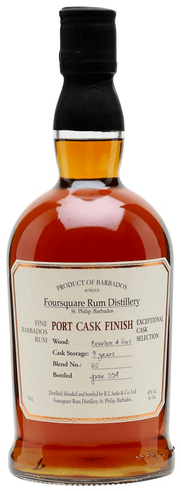
Foursquare 9yo Port Cask Finish (40%, R.L. Seale, Foursquare, Blend No. 162, Exceptional Cask Selection, 2014, Barbados

I had planned to open a bottle of Plantation St. Lucia Rum after I finished both the Plantation Jamaica and Guyana, but after the Doorly’s 12yo I reviewed last, I just had to open a bottle of the Port Cask Finish as well. I just couldn’t help myself, I was so curious, especially after all the rave reviews. The St. Lucia just will have to wait a little longer. Port cask finish? The Rum is 9 years old, of which the “finish” took a whopping 6 years. The start was carried out in a Bourbon cask.

But first we have to get back to 1926. Back then, Reginald Leon Seale started the R.L. Seale & Co. Ltd. A company that is of interest to us since it was trading Rums. Sir David and now his son Richard are the Seale’s that also started distilling their own Rums in 1996 after they bought a defunct sugar factory a year earlier. Simply because it is better to trade Rum you made yourself, than constantly sourcing other Rum’s.

Although Foursquare is a Bajan Rum distillery, molasses are mainly imported from Guyana and the yeast used for fermentation is South-African. Foursquare Rums are blended from a pot still and a two (or three?) column stills. The copper pot still even has a copper column fitted on top, which looks funny for one that is used to Pot Stills with lyne arms on them.

ColoFoursquare Port Cask Finishr: Orange gold. A tiny fraction darker than the Doorly’s 12yo. No red hue.
Nose: Toffee and caramel. Fresh wood, sappy and spicy. A breeze across a dry grass field on a hot and silent summer’s day. Distant fruit (more red this time) and a definite winey note, with slightly burned wine cask notes). On top of the medium sweetness lies a nice acidic red fruit aroma which is different from the 10% Madeira (a sweet fortified white wine) you can find in Doorly’s 12yo. The fruit is redder. The is also a nice nuttiness and dustiness surrounding this Rum, which mixes well with the medium sweetness and (red) fruity acidity. This Rum isn’t about finding lots of aroma’s and complexity. No, this one shines because of its balance. Well constructed, but is a bit middle of the road. It does its best to be liked by everyone. Although the label is pretty anorak, it really is a Rum for everybody, hence the reduction to 40% ABV. Luckily this Rum can handle the reduction, at least on the nose.

Taste: Ahhh here is the greatness. Spicy Indian feel, Cinnamon and exotic wood. This reminds me a bit of an Amrut I reviewed last. It’s still Rum by the way. Even though six of the nine years this was matured, was spent in Port casks, it hasn’t become Port of even Port dominated, but obviously the Port impaired some nice flavours to the Rum. I recognize the nuttiness and the hint of glue from the 12yo (the 12yo has more glue). Wow, amazing balance between the sweet and the dry. It is actually more dry than sweet, influence of the wood of both casks, again a bit virgin oaky, but the wood doesn’t dominate here as it does in the 12yo. Slightly longer finish than the 12yo, but still not very long. The Port starts to really assert itself way into the aftertaste, with the wood of the cask it came in. Nice fruity acidity. Very accessible and extremely drinkable.

This one is younger than the Doorly’s 12yo and therefore less heavy on the wood aroma’s. It seems perfect. Enough to give it character and a backbone, but never dominating the spirit like in the Doorly’s 12yo. Having this, it’s nice to have the woody 12yo open next to it. Personally I don’t have a problem with the wood in the 12yo. It fits the profile Richard went for blending the 12yo.

Highly drinkable, and well made. Not as complex as I expected, but good nevertheless. Again a bottle that will be gone soon I fear. 40%, yeah all right, it will do, but I would prefer a higher ABV. I understand the next Exceptional Cask Selection, The Zinfandel finish is 43% ABV and there will be a Vintage 2004 that will be much higher. I can’t wait. Good stuff especially considering the price. Daily sippers (at 40% ABV), both the Port finish as well as the Doorly’s 12yo, which is a bit more chewy, woody and somewhat sweeter and imho a bit bolder. I did several H2H’s with both and sometimes it’s hard to pick a favorite. Both are equally good. On some days I prefer the 12yo, and on others I like the Port better.

Points: 83

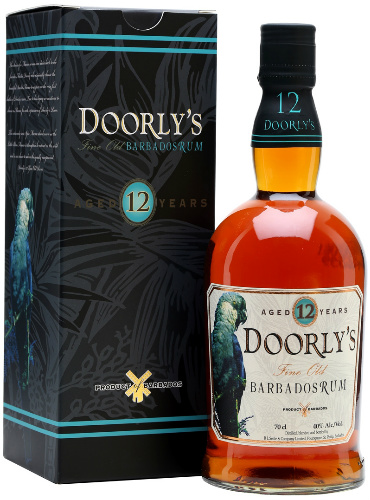
Doorly’s 12yo (40%, R.L. Seale, Foursquare, 2016, Barbados)

I am incredibly keen on reviewing this particular Rum. Why you might ask? It’s only a 12yo Rum from Barbados, nothing fancy, nothing super-ultra-premium and one that is very inexpensive to boot. How can that be? Wouldn’t you rather review an ancient Velier bottling then? Sure, but this one has a story to it. I write about Whiskies for quite some time now, and essentially kept my Rum-adventures to myself. I always liked Rum, but a few years back I really started to love the stuff, especially when I “got” Rhum Agricole and found out that the Rum spectrum is very wide and shows lots of variation.

A long time ago, when I got interested in Whisky I started to surf the interweb looking for information. Back then not a lot of it was around, and there were hardly any books as well. Whisky blogging was just about starting. More recently, when I started to look for information about Rum, I came across some very good Rum bloggers. There are more which I read on a near-daily basis, but for my story here, I have to mention two or three in particular. First I read this review by thefatrumpirate and this one on Inu A Kena.Although I have heard of Foursquare I wasn’t aware of the Port finish Rum. Both reviewers are very happy with the bottling, so my interest was “aroused”.

Next, I started looking for an official un-finished Foursquare bottling to compare it with, and came across this post and especially this post from Lance. “Weak, pussilanimous wuss of a rum. It’s so low key that its piano seems to lack keys altogether” So the Port finished product seems to be stellar and the un-finished XO seems a bit less than perfect. Nevertheless, my interest was now even aroused some more. Being warned, because a smart person learns from the experiences of others, I skipped the XO. Recently I found out there is this newly released 12yo as well. Back in business so to speak. I bought the Port finish as well as this new 12yo, so let’s see first if this 12yo is something Lance should buy.

Doorly's 12yoColor: Copper gold.

Nose: First of all, this smells great right from the start. Modern and tight. Woody, some clear glue and spicy. Typical Bajan Rum, with hints of orange and fresh fruits in the morning market. Definitely also the wooden crates fruit is shipped in. Fresh virgin wood, not necessarily oak at this point. An expected, deep caramel and medium sugar syrupy sweetness. Yes you can smell sweetness, or maybe I should say, smells associated with sweetness. The smell is fruity, but on top of the syrupy part is another fruity smell. It’s the red berry acidity I didn’t like that much in some Abuelo offerings, but that quickly dissipates. Warm sawdust, definitely oak now and a small hint of gunpowder and honey, which is great. The wood aroma is growing stronger with time, which does wonders for the nose. Hints of an unlit Havana Cigar, a combination of Bolívar (spice) and Hoyo de Monterrey (cream). It smells fresh and even slightly winey, which is no surprise since 10% of this Rum was matured in ex-Madeira casks, the other 90% in ex-Bourbon casks. I believe Foursquare uses a lot of casks from Jack Daniels, which would make it ex-Tennessee Whiskey casks rather than ex-Bourbon casks. Whichever cask were used, both are made with American oak, giving off a vanilla aroma.

Taste: On entry a bit thin, but the aroma’s take over quickly. Hints of glue (from the nose) and almonds. It starts out with the woody flavours from the nose. Good balance, it matches the nose perfectly. Tiny hint of soap now, but nothing to worry about. Toffee is next, although the wood is still the dominant factor. Not too sweet. The back-label states 12 years of maturation in American white oak. If not all, then at least part must have been virgin white oak. If not, it may have been ex-Bourbon casks, which must have been very active then. It has so much fresh oak flavour. Chewy toffee is next, even though the Rum is quite thin. The finish is medium at best (probably due to the reduction to 40%), but the aftertaste does have some staying power. Sure not the most complex Bajan Rum around, but I’m not disappointed. The 10% Madeira work wonders without taking center stage. I would say well blended, this one. It’s a friendly nice Rum I’ll probably finish more sooner than later. Good for every (sipping) occasion and that is what you want a nice little OB to do.

It has been ages since I opened a bottle with a screw cap. It only happens when I open an old bottle of Whisky from Gordon & MacPhail and such. It’s all cork now. Screw caps were once a sign of cheapness, for me it’s not. I like the screw cap. It’s retro. They work well, although screw caps on miniature bottles are a lot worse. Corks can dry out, crumble or have holes and other weak spots. So no beef with the screw cap, unless it rotates for ever. “Screw cap” is even nicer to pronounce than cork, and it looks better on T-shirts. Just say it several times at loud, just not if you’re reading this at work and want to keep the respect of your co-workers. “Je suis screw cap”

Lance, it is safe (from “Marathon Man”) and Richard, well done!

Points: 83

Rum Nation Martinique AOC Hors d’Âge (43%, Single Domaine Rum, EMB 97209J, 2008, Martinique)

And here is Rum number three of Fabio Rossi’s Rum Nation Single Domain series. Earlier I reviewed the Panama 18yo and the Barbados 10yo from this series, both very likeable, enjoyable and very affordable. Third time lucky and this third one is a Martinique Hors d’Âge and an official AOC. Don’t be fooled, this is not a Wine, but a Rhum Agricole, made from Cane Juice. Rum’s like this are different from other types of Rum, made from molasses. So don’t go out buying the aforementioned Panama 18yo and this one, expecting two similar Rums, because they aren’t.

First of all I would like to mention, and I may have done that (several times) already, that Rhum Agricole is an acquired taste, especially for those who started out with sweet, molasses based Rum’s. It may take you a while to like something like this. I can’t stress this enough. Although I came from Whisky, which is something different entirely, I also needed some time to “get it”. I assure you, it will be worth your while, because after a while you also might “get it” or find out it never was meant for you in the first place., which is possible too. In that case I apologize. For the first group who “gets it”, what did I tell you? Isn’t it great!

The version I’ll be reviewing has a code EMB 97209J on it, and was released in 2008, there exists an earlier batch coded: EMB 97230, which was released in 2006. To complicate things a bit, It seems that parts of the EMB 97209J batch were also released in 2010 and 2011. Finally a new version, bottled in the dumpy bottle, was released in 2013. I don’t have confirmation yet, but I understand this Rhum Agricole was distilled by Habitation Saint Etienne (HSE), but I also don’t know if all batches were distilled by HSE, if distilled by them at all. I’ll let you know when I find out.

Rum Nation Martinique AOC Hors d'Âge (43%, Single Domaine Rum, EMB 97209J, 2008, Martinique)Color: Copper brown.

Nose: Nice Agriciole nose. Grassy, some orange skins, and a promise of a full body with maybe some more sweetness than usual from an Agricole. Dusty, drying and full of nice spices. Half warm, fresh black tea with sugar in it. Maybe not very complex, but very nice smelling. Hints of a grass and hay note I know from Grappa. Licorice and a wee bit of tar, but also a slight hint of burnt sugar, a very Caribbean smell. Add to that the smell of an unpainted hot metal roof. Hints of dry oak, like smelling the outside of the cask.

Taste: Light on entry, but with a nice half-sweet attack. It shows sweetness and dryness in quick succession. Again a hint of orange skins combined with dried out leather. Fresh, untreated almonds.  The luke-warm black tea shows itself in the taste too. Gelatine and a small hint of floral soap towards the finish. The finish is of medium length and not much stays around for long in the aftertaste. The hot metal roof is the last note standing, essentially.

I did an extensive H2H2H with this Rum Nation Martinique, which is between 5 and 8 years of age, the J.M Vintage 2002 (11yo) and the 100% Canne Bleue Clément Single Cask (9yo) I reviewed earlier. First of all, these three are not similar, but do resemble each other. The Rum Nation offering is definitely younger, than both others. A clean Agricole taste, not very complex, but very nice and highly drinkable. The Clément has an amazing colour after only 9 years in a Bourbon cask. Uncanny. It must have come from a very active cask. It is a Rum of broad strokes and primary colours. A bit raw, and everything that lies on top, overpowers any subtleties that lie underneath. The J.M is a bit like this Rum Nation with an added dimension. Here Bourbon maturation, did what you would expect. The American oak added sappy wood and vanilla to the mix, as well as a creamy and sweet-corn distillate note. You might say that the J.M is easily the best of the three, but keep in mind that the Rum Nation Martinique costs about half of both others, and keep in mind as well, that the Clément comes in a half litre bottle only. Rum Nation again shows its incapability of bottling a dud, and if you get the chance to talk to Fabio and he starts to talk about his entry-level Rums, just slap him over the head. He doesn’t bottle entry-level Rums, he only bottles Rums at entry-level prices. So if you get the chance to buy one…what are you waiting for?

Points: 85

Plantation Jamaica 2000 (42%, Old Reserve, 2013, Jamaica)

Some two months ago I reviewed the first Plantation Rum bottled in the Old Reserve Series, time for another one. The first one was made in Guyana, an easy choice since I do love Demerara’s. Same with Jamaica. Jamaican Rums tend to be big and bold, high on esters and funky! Actually Jamaica 2000 (in the old bottle, like the review of the Guyana), was my first Plantation Rum ever. That one was stunning. Here we have probably the first batch, released in the new bottle. There is a laser edged code on the bottle stating this one was bottled on April 18, 2013. I know both batches already, and there is some batch variation. I found the earlier one even bigger than the one I’m about to review here…

Plantation Jamaica 2000 (new bottle)

Color: Full gold.

Nose: Extremely buttery start. Lots of caramel and toffee aroma’s. Big, big, big, compared to other Rums from this range. It smells sweet, candy-like and so funky. I love the smell of stuff like this. Sugared yellow fruits in alcohol. Buried deep down below, there is this wine-note, so Cognac is noticeable. Ex-Cognac casks were used to finish the Rum in. Leather, nuts, nougat, chocolate. Hazelnuts, wood and sawdust. It’s all in here and for you to smell, so the big Rum didn’t even overpower it all, so no heavy thick cloak of toffee lies over this Rum, or is it? Next, because these is an evolution going on, a more nutty aroma emerges. Wood, almonds and cold black tea. The whole seems to become drier, which I like. Smells great, as often with Jamaican Rums.

Taste: Not as thick as one would expect, and certainly not as chewy. Fruity, yes. It is not overly sweet as well, but the sweetness is your typical refined sugar taste, as well as some burnt sugar. Right from the start quite some influence from the wood, combined with the defining Jamaican funk from the smell. Toffee, wax and nuts. Vanilla Ice-cream with Rum and raisins, which I also remember from Christmas. No big toffee from the nose as well. Liquid toffee and alcohol. Without smelling it, I repeat, without the smell, tasting this blind I would almost call this an Abuelo expression (the 7yo), only less sweet and more powerful. How strange. It has a nice woody backbone, with a slight bitter edge to it. Cask toast, burnt sugar, something like that. Warming. letting this “melt” on your tongue, a more fruity aroma emerges and even some fresh artisanal cola notes, which aren’t so damn sweet as those sold to you by the US sugar mafia. Whatever the aroma, it will always be slightly woody accompanied with a woody and waxy bitterness. I guess in this case the finish did some work on the typical Jamaican profile.

Just try something like this from Jamaica and try to compare it to a Rhum Agricole, I bet you can’t do that in the same tasting without losing something that both Rums offer. That far apart are both distillates, and so broad is the scope of Rum.

Since I still have it around, I compared it directly to the Guyanan offering I reviewed earlier: The Guyana seems more organic. More smells from the earth in that one. Flora and fauna and a wee hay-like Grappa note. Both share the same waxy notes though. In the taste the Guyana is a bit sharper and hotter. The Jamaica is definitely sweeter, and the sweetness overpowers the finish. Both are influenced by wood. In fact, both are similar but not similarly good, and if you have one of them, you don’t really need the other as well. Yes the smell is different, but the treatment both have received by their owners have brought them closer together.

Points: 81

Gardel 1992/2003 (42%, Fassbind, The Secret Treasures, Barrels #4, #8 & #121, 1401 bottles, Guadeloupe)

We are going to visit Guadeloupe again! This time I have more room for some geography, since the previous review was already a bit long as it is. Guadeloupe lies in the Lesser Antilles in the Caribbean. Guadeloupe is not one island. What usually is considered to be the main island is in fact two islands with a narrow strait in between. Grande-Terre in the east and Basse-Terre in the west. To the south lies Marie Galante. There are more islands to Guadeloupe, but those don’t have Rum distilleries on them. From Guadeloupe comes this Rum I’m about to review. What else could it be? The Rum was made by Gardel, which was founded in 1870 by “General Sucriere”. After working for almost 130 years the distillery is now closed, but the Gardel sugar company still exists. The sugar factory is the sole remaining sugar factory on Grande-Terre, and still one of the largest in the world. Depending on the harvest, it crushes around 500.000 tonnes of sugar cane, produces 50.000 tonnes of sugar and 25.000 tonnes of molasses per annum.

GuadeloupeThis Rum is from 1992, the same year the column still was supposedly exchanged for a pot still. As far as I know, Gardel never bottled Rums themselves, but Gardel was bottled by numerous independent bottlers, although I don’t think a lot of Gardel is still around, so If you like Rhum Agricole and if you like Gardel, be quick. This particular Gardel was bottled by Swiss distiller and spirit importer Fassbind. We already know them from the Linkwood I reviewed earlier. I have seen quite some Rums from them, but most of them have been bottled in 2003. The most recent bottling of Whisky was from 2007, so I don’t believe they are active anymore, although The Secret Treasures bottlings are still not extremely difficult to find. Just like Plantation and many bottlings of Rum Nation, this series was never really expensive, so lets see if this is a hidden gem.

Secret Treasures Guadeloupe 1992Color: Copper brown.

Nose: Very nice and aromatic. I love how this smells. Big, and very fruity. Banana and wax. Lots of heavy esters. Black tea. Leafy and green. Easily recognizable as a sugar cane distillate. Hints of burnt wood and burnt caramel. Sweet tea, flint and gunpowder. Fireworks. New wood, and overripe fruit. Papaya and passion fruit. Creamy vanilla pudding. Very appetizing and very complex. There is a lot happening here. Biscuits and to a lesser extent, fresh cookie dough. Sugared orange skins. Well balanced with lots of complexity.

Taste: Starts with diluted (ear) wax, but is less bitter than that. The bitterness is more of the sappy wood kind. Don’t be worried, the bitterness is quite faint. Some toffee and vanilla, but the Rum still is dry. I guess, If you don’t know the stuff you might not like it at first. Funky toffee, with an acidic touch, intertwined with banana. Warming. Much drier than the nose suggested. Thinner yet chewy. You always get something exciting from a sugar cane distillate. Different and special, although simpler than the nose. Hints of plastic in the finish. Maybe this should have been bottled at a higher ABV? We’ll never know.

Sure it has its faults. The taste is not all that well-integrated. You get several layers of aroma’s and not every layer fits on top of the other nor does it pass on the baton that well either. It even has notes of plastic in the finish, and the finish itself isn’t one of great length. You hardly can say it has a noticeable aftertaste. So this is not so good then? Nope, au contraire, I would say. The nose is really very special. Sure, it lacks a bit in the taste department, but it is also a distillate that puts a spell on you. Hard to put my finger on it, but it is mesmerizing and wonderful. I guess when on Guadeloupe it would be next to impossible to leave this stuff alone. This is particularly a very typical example of a cane juice distillate and definitely is not for everybody. I urge you to develop your palate, because when you get it, this is secretly wonderful (yet faulty).

Rum is a very diverse product. Most of us know Rum to be a molasses based sweet distillate, and like it. After a while you might encounter a Rhum Agricole, which can be quite a challenge. I often hear of people disliking Rhum Agricole at first, but warming up to it a while later (probably a few years, actually). Not an easy distillate, but when you get into it, you might be hooked for good. Rhum Agriciole or maybe I should say, Rum made from sugar cane juice in general, is something different.

Points: 85

Bellevue 15yo 1998/2014 (52.6%, Isla del Ron, IdR 011, 169 bottles, Guadeloupe)

The market for good Rum is on the rise, especially in markets where Single Malt Whisky is king. In the last couple of years the run on good Whisky was bigger than life, depleting the stocks considerably. Today we face not a shortage as such, but a shortage in older matured Whiskies. In part because there isn’t any, in part because it is simply not bottled because one can fetch a better price later on down the road. Hence we see an ever-growing number of Whiskies without an age statement and with a funky little name. Nothing bad here, but putting two and two together, the Whiskies must be younger and younger to be able to keep the new bottlings coming for a hungry (read: thirsty) public.

Whisky people in general are not happy with the youth of their Whiskies, nor are they happy with the development of prices of their beloved aged Whiskies. Just look at Highland Park 18yo, Talisker 18yo and Laphroaig 18yo, producers simply don’t have the time anymore to wait that long and subsequently sell it for a not so super-premium price. It’s not all romance you know, it still is a business. Happy times for Whisky producers in warm climate countries such as Taiwan and India, where very good Whisky is made today in much less time than in Scotland and the other traditional Whisky countries.

In comes Rum. Whisky people are open to trying other distillates that are nice and/or aged, and/or affordable. One of those alternatives for Whisky is Rum. Guadeloupe Sainte Anne Grande-TerreThe old Rum community is enriched with Whisky people fishing in the pond of Rum and getting to know the product and a different kind of romanticism. Where Scotland is beautiful, but also cold and wet, Rum predominantly comes for the Caribbean and especially the image of paradise islands comes to mind. Older Rums are becoming scarce very quickly and just like Whisky, will become almost extinct, Prices are on the rise as well. Where have we seen this before?

Lots of independent bottlers of fine Single Malt Whisky are turning to Rum. Some did that many, many years ago, Like Cadenhead and Berry Brothers & Rudd, and some more recently like Wilson & Morgan (Rum Nation), Kintra and David Stirks outfit Exclusive Malts, but there are many more. Today we’ll have a look at another one. Isla del Ron is the Rum brand of Thomas Ewers’ outfit, Malts of Scotland.

Thomas EwersThomas bottled a Rum from Guadeloupe from a distillery nobody has heard of, South Pacific (as stated on the label), not to be confused with the South Pacific distillery of Fiji, which is entirely different place altogether. Thomas explained to me he was offered a cask of South Pacific, which turned out to be Bellevue instead, so in this case the label is wrong. Casks like this are sold to bottlers through brokers, so it’s not a surprise there are a lot more Bellevue casks from 1998 bottled by different parties. And with brokers there lies a problem. Brokers only want to sell on casks, not really caring informing the buying party what really is in the cask if they have the information at all.

Thomas believes this to be from the Bellevue distillery on Marie Galante Island, but looking at information of many other “Bellevue’s” from 1998, it can also be Damoiseau’s Bellevue Distillery (Le Moule, Grande-Terre), which would be even more probable, since it is a larger producer. So we’re not sure about the exact distillery, nor can we be about the ingredients. It can be either distilled from molasses or from sugar cane juice. It can even be a blend of both, since some distilleries produce both. Sugar cane when it is harvested, and molasses the rest of the year. Questions, questions.

Isla del Ron GuadeloupeColor: Orange brown.

Nose: Big aroma, lots of different spices. It’s like a spice mix from Indian Whisky. Vanilla, chewy. Dry, spicy and fatty but not sweet. Hint of sweet peppermint. Butter and coffee with milk. Mocha and hot butter as well. Cinnamon, cocoa powder, leather and hints of soft wood. Damp earth and after that rather dusty. Hints of licorice mixed with a nice dry and clean woody note and slightly burned sugar, molten plastic (don’t worry) and creamy banana. Very well-balanced and a nose of great complexity. Especially when the heavier elements are snorted out of the glass, the fun starts. Wow!

Taste: Starts out with a short, sweet and aromatic burst, but quickly becomes dry and very aromatic, with again the Indian spice-mix so predominant in the nose. Nutmeg and lavas, but there is a whole lot more. When it goes down the hatch it becomes even drier. The lighter elements start to evaporate in my mouth and engulfs it with lots of beautiful aroma’s. Milk chocolate, dry leather and a slight bitter edge of wood. Hints of licorice, tar and charred oak. Hot chocolate. After getting used to the spicy dryness, it becomes creamy hot chocolate style. Lovely development as well, especially since the aftertaste is stronger than the finish. Wow, what an amazing Rum!

I like the bottle used for Isla del Ron, it’s the same bottle used for Pusser’s 15yo, HSE from Martinique and last but not least, for Bruichladdich and Port Charlotte. I only have a beef with the label, its dark, dull and depressing. Rum comes from places where life is colorful. I hope Thomas will continue to bottle a lot more Rum’s, but I hope he’ll spice up the looks a bit!

In the end, after I tasted this in the shop, I needed a whole 10 seconds to snatch one up. This stuff makes me happy!

Points: 88

Thanks go out to Rik for the sample.

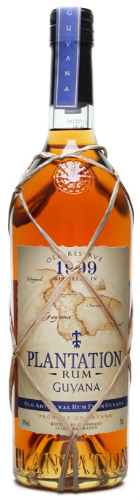
Plantation Guyana 1999 (45%, Old Reserve, 2009, Guyana)

Walk into a spirits shop which sell quite a few Rum’s, you have a big chance to find at least a shelf worth of Plantation Rums. I don’t know if this is true in all the corners of the world, but here in Europe it is. There are several reasons for this. They look quite interesting, quite a lot of Rum producing countries are available, and the price is quite nice. Especially if you are a novice it ticks all the boxes you care about. Having tried some of those, I can also say that they seem to be not bad.

Who is Plantation? Plantation is the Rum brand of Cognac Ferrand. Cognac Ferrand being the mother company that has quite a few brands in its portfolio. If you punch in Cognac Ferrand in your browser, you are quickly transferred to Maison Ferrand and there you can see that Ferrand is definitely more than Cognac alone. Back to Plantation Rum then. Plantation buys casks of Rum and ages them where they have found them. At the end of maturation, the casks are transferred to France, where they receive a second maturation for up to 18 months in small oak casks. Although it is not said that the cask previously held Cognac, we do assume that’s the case most of the time.

Here, we’ll be looking at one of the vintage releases from the Plantation Old Reserve. This particular example comes from Guyana, but according to the website there are six more Old Reserves available: Barbados, Grenada, Jamaica, Nicaragua, Panama and Trinidad. I don’t know if they discontinued some versions, but I do have a St. Lucia version as well. All are vintage releases, so there are multiple vintages available. I have tried several of the vintages of the Jamaican version and found that not only is there some batch variation between the vintages, but also that there can be more than one batch of only one vintage. Jamaica 2000 comes to mind…

Plantation Guyana 1999Color: Full Gold

Nose: Big, fatty and yet not entirely Demerara (yet). Initially, and momentarily, it has this high ester quality and funkiness like a Jamaican Rum, but in a slightly different way. With some more breathing this becomes more like a Demerara and the funkiness disappears completely, or is this my nose getting used to it? Quite fruity and has a very mild acidity to it. Is this the Cognac? Yes, maybe. The slightly off-acidity reminds me a bit of standing in the produce section of an outdoor market in the cold. Hmmm, never saw that before in a tasting note, Crazy Quill. Since these bottlings have seen wood that previously held Cognac, I’m guessing, that must be its origin. Slightly dusty with some paper-like qualities and yes some wood obviously. Hot oak. Old oak planks, yet freshly sawn. Soft. Hints of orange juice (the acidity mentioned above) and maybe banana (it does have a deeper layer, close to concentrated banana aroma). Dry soft wood and old toned down sawdust. yes, its dusty. Black, slightly sweet, tea and hints of licorice. The fruity notes start to integrate better after prolonged breathing and move back a bit, giving way to a more thicker, nutty, funky and waxy toffee character. Ok, letting this breathe seems to be the crux.

Taste: Wood, nutty, fruity and extremely syrupy (syrupy, not necessarily only sweet) at first. Yellow fruits on light syrup, so not thick or cloying. Sugar and burnt sugar (nice) and more nutty notes. A bit hot. Chewy and tasty, in a complex way. It’s not typically toffee of caramel, more like a combination of earwax and toffee. Slightly bitter. It’s in there but its more complex than that. Fresh oak notes and some licorice. Now its (sweetish) Demerara. The second Cognac cask maturation suits the original Rum. Wax with bitter notes of burnt sugar and burnt wood. The body is thick and in your face, but towards the finish that loses ground. It breaks down a bit in the finish, which otherwise has quite some length to it. It feels like a cloaking effect of added sugar. Nice note of almond in the aftertaste and the more breathing, the bigger the licorice note. Not bad, but Demerara can be better, but you will be hurting your wallet these days to try some really good ones. At this price point, it might be hard to find a better deal, but definitely not impossible. Even the El Dorado range of the 12yo, the 15yo and the 21yo do come to mind. Which also has some sugar added, but probably to a lesser extent than the Plantations.

This Plantation offering is in no way perfect, does have a good drinkability, and seems fairly priced. Good ABV as well (at 45%). Not every Plantation Old Reserve is bottled at 45% ABV though. This is an older bottle, from, April 9, 2009 (laser printed on the bottle), and has a slightly different look from current bottlings, which have a thicker glass base and a different icon on the shoulder. It’s also slightly higher in ABV (45% ABV). I fear that subsequent releases may be a bit sweeter than this one, I have already tasted some of them, and 42% ABV. might be the new strength.

Points: 84


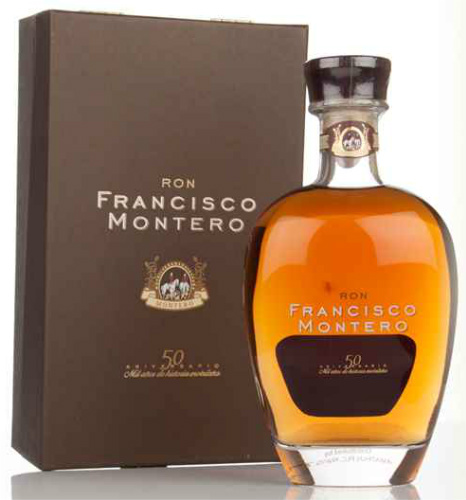
Francisco Montero “50th Anniversary” (40%, 7.000 bottles, 2013, Spain)

Francisco Montero Martin was born on April fools day 1929 in Motil, Grenada, Spain. Motil is unsurprisingly also the place Spanish sugar cane came from. For a long time Francisco dreamed about making Rum, or Ron as it is called in Spain. Finally when in his thirties, in 1963, the year of the demise of JFK, Francisco decided that life is short and started his own Rum-distillery called the Azucarera Montero distillery. Quite a bold move since (domestic) Rum was still unknown in Spain. In 2006, Sugar cane cultivation was seized and one year later, Joaquín Martín Montero, nephew of the founder buys the distillery. His daughter Andrea Martín Targa manages the place, so the business remains in the hands of the family.

Although there is a lot of history concerning sugar cane, the Rum is not distilled from sugar cane juice, but rather from the molasses from the locally grown sugar cane. The cultivation of sugar cane seized in 2006, so the distillery imports molasses made from sugar cane, from Brazil, Egypt, India or Mexico. Sometimes nice molasses from other countries can be brought in as well.

The Rum of Francisco Montero is a light style Rum. Fermentation is done for only 24 to 30 hours and the distillery uses four continuous column stills, of which the first operates under vacuum. This allows for distillation at a lower temperature, claiming less flavour is “boiled off”. However, nothing is said about the conditions provided in the other three columns and their effect on flavour of the final product. Ageing is done exclusively in 500 liter, new American oak casks, configured in a Solera system. And last but not least, in the blending process caramel coloring is done.

Francisco Montero 50th AnniversaryColor: Full Gold.

Nose: A breath of fresh air and a nice floral touch. There is a nice elegant woody nose with an edge of scented paper. Fruity black tea with a little bit of sugar in it. Definitely a molasses based Rum, bot nowhere near the thick and syrupy big Rums. No, it smells refined and elegant without being a completely different Rum, like Agricole. Hints of licorice and more fresh air, but also some wood pulp and breakfast cereals. Sweetness becomes more like a warm liquid of diluted refined sugar. Development in the glass stops rather soon, so after a short while WYSIWYG (What you smell is what you get). I like the floral tough that stays throughout.

Taste: Thin toffee and caramel. Aided by some liquid wood in the background. Lots of warming toffee, vanilla and caramel candy notes. Hints of waxy apple skins and a bitter walnut skin note, but these hints are pushed way back. You have to work for them. Quite unexpected, because the very smart and luxury packaging as well as the speciality of a “50th Anniversary” made me expect something very deep, in part old, and special, just like Abuelo Centuria stands out from the rest of the Abuelo range. This comes across as quite young. Initially very appetizing, with the toffee notes. Towards the finish the taste breaks down a bit. The nice toffee note gets weaker and thinner, and isn’t really replaced by something else. The finish is quite short, and you’re left behind with only an echo of a Rum.

Considering the packaging and the occasion, I was quite disappointed really. I expected a lot more. By its own merits I am disappointed as well. Sure, its a lighter style Rum, but just look at the Cuban Rums I reviewed earlier. The same lighter style but way more happening there. It is all right to sip, but if I would place this according to its merits it would sit right next to the most inexpensive of Abuelo’s, the Añejo, making this Montero way to expensive for what you would get. If you like the style, go for a Cuban.

Points: 78

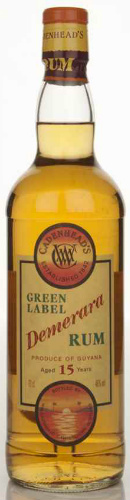
Cadenhead Demerara Rum 12yo (46%, Green Label, Laphroaig Cask Finish, Guyana)

First of all I’d like to start telling you that this review won’t be about the Cadenhead 15yo Demerara Rum that’s in the picture. It’s actually about the Cadenhead 12yo Demerara Rum, and not just any 12yo, but one that was finished in an ex-Laphroaig cask. Laphroaig being one of the most famous of peated Islay Whiskies. Of course Ardbeg and Lagavulin are equally as famous, but that’s beside the point. I couldn’t find a suitable picture of the bottle (I don’t have it here), so I put in this one, since it looks pretty similar. The 12yo has an additional sticker over the neck and cork, starting this is from an ex-Laphroaig cask. The 12yo Rum is even lighter in color, than that of the 15yo in the picture. Cadenhead of course, is an Scottish independent bottler whose main business is bottling Single Malt Whiskies, who also bottle some pretty good Rums as well. I’m sure, more of those will feature on these pages in the future, especially the cask strength ones.

Cadenhead Green Label 15yo DemeraraColor: White wine. Very pale gold.

Nose: Sweet and funky. Thick and unmistakable Demerara. I know peated Whiskies very well, but I can’t detect any peat in this yet. Distant hint of yellow fruits, white peach. The fruit interacts very well with a mystical hot dry wind note. Sweet peach yoghurt (not the acidity, there is no acidity in the nose whatsoever) and sweet black tea. Creamy. Small hint of nice smelling paper, which adds to the wonderful balance this Rum emits from my glass. All aroma’s go together very well. At this point I have to stress that this Rum has had plenty of time to “settle” with air. Maybe one to decant as well. (I’ve written about the benefits of decanting Whiskies earlier). Still no peat, nor smoke, but I do get some toasted wood. A more than wonderful nose that seems to go on and on. Exceptional. Just give it time to breathe!

Taste: I get the tea note first. Starts sweet, but the sweetness is quickly gone, to be replaced by a prickly woody note, which strips most of the sweetness out of my mouth like it’s been done with sandpaper. This makes room for the strange combination of acidity from unripe berries, milk chocolate and earwax. Wow, this is getting strange fast. Is this the effect of the peat? It still doesn’t remind me of peat though. Lets take another sip. When the dryness takes over, the balance deteriorates a bit. Not everything seems to be in check, and the aroma’s feel a bit uncomfortable. Something new moved into the building and the older residents don’t know yet what to make of it. More toasted cask now, with even some bitterness from one, or both casks. The finish seems short at first but when it turn into the aftertaste a smoky prickly sensation starts to happen mixed with mustard and the typical aroma’s of Demerara that were pushed out of the body and finish of the Rum. The Laphroaig cask did have an effect on this Rum, just not as I expected.

Maybe you Rum buffs don’t know this, but Laphroaig is actually a very sweet Whisky underneath. It’s sweetness is just well hidden underneath heaps of peat and iodine. Well, Laphroaig used to taste like that. More modern Laphroaigs are more obviously sweet, and the peat became more accessible, and the iodine, well, you can get that at your local pharmacy. How strange it is then, that a sweet Whisky with a sweet and heavy Demerara Rum make for such a dry Rum?

I always passed on the Green Labels when buying Rum from Cadenhead in favour of the dumpy bottles with Cask Strength Rum’s in them. Somehow a dumpy bottle with 36yo Uitvlugt (PM Mark!) Demerara Rum from 1966 bottled at 69.3% ABV, had more appeal to me than a 12yo Laphroaig finished Demerara. It still does, but this Green Label is no punishment to drink either. Maybe a bit unusual but also a very interesting experiment. I like it, and its even better than I thought it would be. Beyond the obvious, I’m not sure what the Laphroaig cask did for this Rum, but I do feel that the Demerara Rum, before it was finished, was already good to start with. I’m pretty sure it is Enmore (VSG Mark).

Points: 86