Rum Week – Day 4: El Dorado 12yo (40%, Guyana)

Next up a true Demarara Rum from Guyana. Guyana is a south-american country next to Surinam. Guyana had a lot of great Demerara distilleries. One by one they got closed, but most of the equipment was saved and moved to the next distillery that was kept open for a while, and when that one was closed this all happened again. Today, all the stills that survived are in one place. Diamond. So rums distilled in a few of these stills find their way into El Dorado Rum. In this 12yo, I’m happy to report, are Rums made in the original wooden Enmore Coffey still and predominantly, the original Diamond two column metal Coffey still. All the El Dorado Demerara Rum is aged in American Bourbon barrels.
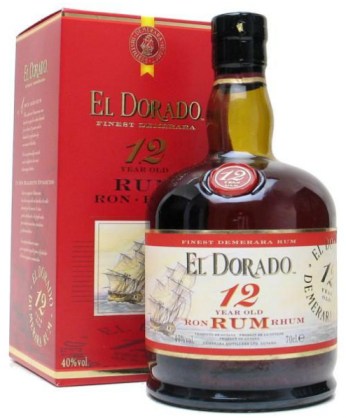
Color: Copper.

Nose: Very perfumy and very mature. Hints of caramel and burned sugar. Leafy and tarry. Heavy organics and crude oil. Wow, such a lot of character and so thick. A stunner this! Licorice all sorts. Lots of it! It takes a while to let the wood take a little spot in the whole. Utter balance in the nose which keeps on developing. If the taste will be anything like the nose, we’ll have a winner!

Taste: Well this is pretty sweet, but not as sweet as I seem to remember. At first opening this was extremely sweet and I didn’t like it for it. It’s more or less the nose in a toned down version, with added sweetness. Cough Syrup and syrupy altogether, with a very nice acidity that comes through the sweetness. For me this is a bit too sweet.

Again we have a rum that has a fantastic nose, but doesn’t seem to put that quality into the taste as well. Still this is a very good rum, and compared to a lot of Single Malts, this is dirt cheap. Having said that is this a replacement for overpriced Single Malts? No, not really, this is a completely different kind of sport. It should be added to your palate not to replace something else.

Points: 85

Chateau Saint-Paul 2005 Haut-Médoc

I used to drink a lot of reds and for the last six years or so I love to drink a lot of whites. Alsace was probably what set that off. But as you might have guessed, being the frequent reader you are, I drink foremost Scottish Single Malts nowadays. But it’s not all Scotch that lights our world, so I’ll definitely have to try some different things here too. This time the first red wine on Master Quill.

Haut-Médoc is the large southern part of the Médoc district of Bordeaux in the south-west of France. The famous wines from this region are Margaux, Pauillac, Saint-Estephe and Saint-Julien. You might have heard of those.

The wine of choice for today is Chateau Saint-Paul of the 2005 vintage. Saint-Paul is a Cru Bourgeois from the Haut-Médoc (St. Seurin de Cadourne). 2005 was a good year for Haut-Médoc, as it was for the whole of the Bordeaux region. The soil is mostly gravel, chalk and clay. The wine is made of 50% Cabernet Sauvignon, 48% Merlot and 5% Cabernet Franc. ABV is 13%.

Color: Ruby red.

Nose: Meaty and sour. Red and dark fruits, berries, black currants and blackberries. Plums maybe? Dust and moist dirt. Floral. In fact it tasted quite thick and sweet (raisins), which it probably is not, still it reminds me a bit of sniffing a ruby port.

Taste: It has depth and is a little sour and powdery. Definitely some wood in here too. Wet leaves, but not earthy. Elderberries, but not bitter. Good tannins which do not take over the wine, still you’ll know from your tongue. It isn’t overly complex, but is has good balance and is a very nice wine to drink. Medium body and medium to long finish.

This one is at it’s best decanted for an hour or so, maybe two. When I tasted this from the just opened bottle, it was quite closed, but a few hours later it showed a lot more. So age this maybe a little longer, decant it properly, then this will be at it’s best.

Points: 85

Dailuaine 17yo 1980/1997 (43%, Hart Brothers, Sherry)

Dailuaine is a distillery that also is around for a long time. Founded in 1852 and rebuilt into a big distillery, for the time, in 1884. Just five years later Dailuaine became a landmark since it got Scotland’s first Pagoda roof, from Charles Doig. Also noteworthy is the fact that Dailuaine and Talisker distilleries merged in 1898. Again the year of the Pattison Crash. Mind you, Dailuaine and Talisker aren’t exactly across the street from one another.

Again we have here a distillery with a fire. But this fire forced the distillery to close for three years! This happened between 1917 and 1920. After that, like with many others, the years of expansion. Today Dailuaine is in the portfolio of Diageo and mainly used for the Johnnie walker blends.

Color: Light Gold.

Nose: Musty, vaguely sherried and sweet. Rather thin. Floral and perfumy, which do not necessarily go together. The nose is quite elegant. Vanilla. Nice clean sour oak. Barley and apple compote. Given some time, the floral part is overshadowed by the sour oak. Otherwise quite nice and good balance.

Taste: Well I got cannabis in there again! Typical sweet and sourness from applesauce. Honey. Very clean otherwise. The woodyness doesn’t need a lot of time to rear its head, pencil shavings. This isn’t bad. Without it, its character would be even less interesting. Still this has a lot of body. The sourness of the oak, dominates this finish. Reduction is ok on the palate, but makes the finish a bit weak and short.

A bit anonymous this one. Taking this blind it could have been anything.

Points: 85

Thanks go out to Serge for handing me this sample a long time ago.

Glenrothes 1979/2002 (43%, OB)

Glenrothes was founded in 1878 by James Stuart & Co. and some partners. James Stuart was the man who at that time also had The Macallan (since 1868). James soon developed some financial troubles, so he was thrown out of the partnership and returned, with his tail between his legs, to Macallan. The rest of the partners formed William Grant & Co. and finished the building of the distillery. The first spirit ran off the stills just one year after its foundation. The rest of the history seems rather volatile, having suffered several explosions and fires. (1897, 1903 and 1922). After this period of ruining the place, came the period of expansion. From the sixties through the eighties, consecutive pairs of stills were added. Now there are 10 in total. Today The Edrington group is the owner of Glenrothes, just as they do with The Macallan.

Color: Copper Gold

Nose: Sherried, Very round and sweetish. Toffee and caramel. Seaside freshness. A bit creamy and no off notes. Smells young like lots of other of these Glenrothes’ cannonballs. Dark chocolate. Reminds me of those cherry bonbons with liqueur. Distant hint of toasted wood.

Taste: Sweet and slightly sherried. The cherry bonbon is here too. Nice toffee flavour and syrupy texture. More character evolves in the glass after letting it breathe. Here come some hints of oak, bitterness and some woody spices. Menthol. Still it remains sweet and syrupy. Also, in my opinion, not a lot of development. Give it more time and the wood kicks in some more. More wood and bitterness that stay and define the finish. Quite unusual for a Glenrothes OB.

At 85 points this is the best OB I’ve tasted from Glenrothes, and look at this extra special luxury packaging!

Points: 85

Japanese Whisky Week – Day 1: Taketsuru 17yo (43%, Nikka)

In june I did my first ‘week’, called the Bourbon Week. Lot’s of Bourbons yes, but not all were actually Bourbons. I threw in the odd Rye as well. After the success of that week, and I have to admit, the fun I had by doing such a ‘week’, I thought it was time to do another week. So here is the first day of the Japanese Whisky Week! Again I’ll try to review seven Whiskies in seven days, and this time they are all from Japan. I thought that Japan was untill now a bit underexposed on Master Quill’s pages having reviewed none! But that’s about to change…
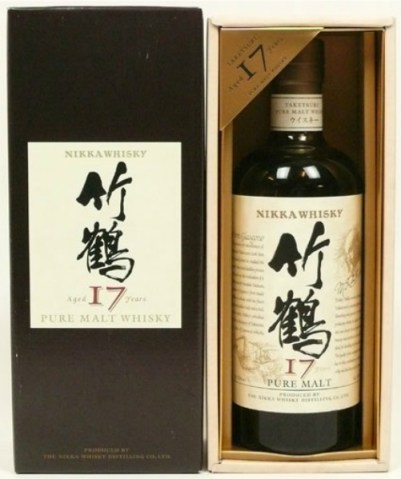
In 1918 one Masataka Taketsuru went to Scotland to learn the whisky trade at Longmorn, Ben Nevis and Hazelburn distilleries. During this time he met his soon to be wife Rita, and both returned to Japan. There Taketsuru founded Nikka with the building of Yoichi Distillery on Hokkaido Island in 1934.

Yoichi was built on the north island of Hokkaido considered by Taketsuru to be close to the natural environment of Scotland. Also copied was the way of distilling, two times in copper pot stills. In contrast to their Scottish counterparts is the use of new wood and slow-growing Japanese oak.

A lot of years later the Nikka company named a small series of pure malts after it’s founder. The series comprises of a 12yo, a 17yo and a 21yo. All Pure Malts are made up of only two components. Yoichi and Miyagikyo. The latter was founded in 1969 in Honshu. Both singles are great, so this Taketsuru should be no lemon.

Color: Full Gold (slightly pink).

Nose: Musty gravy. Nice slightly burnt wood. Sweetish fruits with pineapple. Sweat ánd men’s cologne. Powdery, almost like sawdust. Greenish. It smells a bit like those hard candies made out of fruity powder pressed into little pills. Sometimes a whiff of soap. All in all, very nice.
Taste: Spicy esters. Toast and a hint of tar. Tastes a bit dirty actually. Grainy with vanilla ice cream. Reminds me a bit of vodka. Greenish hints here too. Definitively not as sweet as the nose predicted. Half long sour wood finish which is a bit unbalanced. The toast and tar stay on for the, therefore bitter, finish. Alas too low in ABV.

Although this is quite a nice Pure Malt, for the money you can get a Yoichi or a Miyagikyo, that are (marginally) better. Still I do like this Taketsuru, and combining the two is an experience of its own. Just beware, because there is talk about batch variations.

Points: 85

Bruichladdich 17yo 1986/2004 (55.5%, Cadenhead, Bourbon Hogshead, 270 bottles)

This Bruichladdich was my entry for the September Genietschap session. I bought this some time ago after a tasting and rather liked it then. At the Genietschap this bottle actually didn’t do so well at our Bruichladdich tasting (we tasted it outside). It was compared to another Cadenhead Bruichladdich that was from a Bourbon Hoggie as well. Also from 1986 but several years younger, a 13yo to be precise. Even though it was younger, this bottle showed more character to it. The 13yo was almost empty and maybe these Bruichladdich’s need a lot of air. Let’s have a look in my controlled environment and using my glass of choice, how this Bruichladdich really is. (This bottle, just open).
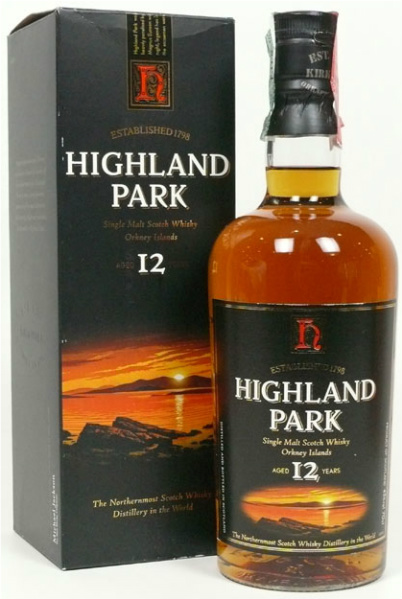
Color: White wine.

Nose: Sweet and grassy. Butter and green malts. Little hint of oak. Clean. Crushed bugs with dry black tea. Even though it’s from a Bourbon hoggie, it does have some characteristics of a Fino Sherry cask. Lemons (as in lemonade) with a hint of smoke. Not a lot of evolution in the nose. Rather easy and simple. Unoffending.

Taste: Sweet. Licorice (as in the twigs you can chew, probably something we only have here in The Netherlands). Spices from the oak. Ear wax. Green and beer like. Great half-long finish though, where the finish tends to turn sour, but luckily it doesn’t.

This may not be very complex, but it does have nice balance, and I do still like it. Still I can understand why it didn’t do well. It may be simple, and maybe a bit of a whisky lemonade. Very easy drinkable.

Points: 85

Bruichladdich 13yo 1986/2000 (57.9%, Bourbon Hogshead, Cadenhead, 270 bottles), scored 86 points

Highland Park 12yo (43%, OB, Circa 2003)

Remember this one? Before this came the nice broad-shouldered bottle with the big knob cork. And somehow they changed it into this. We hated the looks of it back then, but looking at it today it doesn’t look that bad. Well this version of the bottle is also no more and again they changed the looks completely into something that looks oval from above.

For me the ditching of the wide neck bottle also seemed to be the ditching of the plain old good quality. With this bottle came the downfall of the standard Highland Parks. The 12yo, the 18yo and all the others that came after that. A lot of single cask versions were released around that time, so we all can take a guess why the standards got pretty weak don’t we? Well let’s have a look back and see if this was any good.

Color: Slightly Orange Gold (Caramel)

Nose: The obvious heather and honey. Nicely floral. Almonds. Quite sweet (sherried) and nice balance. Sometimes dusty and powdery. Nice balance, still a good recognizable Highland Park. Lovely.

Taste: Sweet, nutty, slightly sour, chewy, with small hints of smoke and tar. Yeah, this still is very good whisky. Creamy mocha, green apple and a little bit of wood. Alas it breaks down a bit in the end, and the finish is a bit weak. Gone quickly. That’s a shame, but I’m happy it still is a Highland Park, and taste wise that’s very good news. Still if you want an even better one, have a go at a wide neck bottle. Still a lot of those around.

I’ve already claimed this isn’t as good as it once was. Actually compared to a lot of official bottlings they are churning out today, this was pretty good, but still the downfall is marked. This one got weak in the finish and later releases also suffered in the taste department. This brings tears to my eyes because Highland Park used to be fabulous, please come back!

Points: 85

Glen Grant 34yo 1975/2009 (50%, Douglas Laing, Old Malt Cask, Refill Hogshead, DL REF 5597, 278 bottles)

I did some rummaging in my boxes with samples and found another Glen Grant. Well I actually found several of them, but I just chose this one. You know Glen Grant, the place that was the first distillery that was illuminated without burning fuel by themselves. This time we have a Glen Grant bottled in the Old Malt Cask series by Douglas Laing. Again in the new tall bottle, just like the Glenfarclas and the Port Ellen reviewed earlier. We know that there are some stellar Glen Grants issued by Gordon & MacPhail. Yesterday we had a Berry Brothers & Rudd version from 1972 that didn’t impress me very much, lets see if Douglas Laing bottled a better Glen Grant. This time from 1975.

Color: (Light) gold.

Nose: This is sweet and fruity, apples and warm apple sauce, a profile that suits 70’s Glen Grants and Caperdonich’s. The next whiff was less balanced and shows some mustiness. Almost herbal, as in herbs that were in water too long. It still smells sweet and musty with some hints of cigarette smoke. Seems strange but isn’t bad. Another very strange smell that reminds me of the acid and estery smell of crushed beetles (not Beatles, have you never stepped on a beetle, when you were a kid?). There was definitively something wrong when distilling this, drunken maltman maybe? After some time some spicy wood comes through the sweet and sour sauce and even later hot butter. All in all it’s not thát horrible as it may read. But on the nose definitively not one of their best casks.

Taste: Sweet and sour again and little wood and ash. Very strange sensation in the back of my mouth when swallowing. Minty apple gravy? (if that makes sense?). It an experience this malt is (Yoda intended). It starts thin and volatile when this enters my mouth, and quickly becomes ‘thicker’, with an attack like pepper from Talisker, and turns into pineapple! The finish picks the wood up again, combines it with spice (pepper), almonds and a kind of sour bitterness from the wood itself.

This is one to remember, and is right behind the Signatory Teaninich that seemed to be carbonated.

A Glen Grant that is obviously flawed and seems much younger than it actually is, but the strange bits were indeed an experience, I wouldn’t want to miss. Luckily though, I bought only a 3 cl sample of this, because a whole bottle wouldn’t be funny…

Points: 85

Craigellachie 1982/1999 (61.6%, Scott’s Selection)

And here is another whisky from my lectern. This time an old (bottled in 1999) Craigellachie from Scott’s Selection. The people who brought us the fabulous Longmorns from 1971. Therefore I always have a soft spot for these guys. This Craigellachie was opened on our whisky trip to Switzerland. What I will never forget was the foul smell this whisky gave off when the bottle was first opened, (but tasted good). That was unbelievable. Very soon after that I found that the bad smell was quickly gone and getting better with time. The bottle has some 30 cl left now, so let’s see how this will perform now. The initial score was 83 points.

Color: White wine.

Nose: fresh, dirty ánd clean. Dirty in the sense that it has some hints of asphalt, tar, sweat and mud from a moat. I hesitate to say it, but it has hints of a good fart. But after all those niceties it shows to be a very clean bourbon cask smell. Lemons and some hay with a nice body to it, and no, it’s not a Lowlander. Still all of this fits together well, so you might want to call this ‘balanced’. I like it (now). To me it does not smell too much alcoholic considering the high ABV.

Taste: Sweet and something like Kirsch with some mocha. Spicy but not woody. Apples. Stays sweet, but fortunately not that sickening heavy sugary sweetness you sometimes encounter, no, this sweetness is just perfect. Maybe not the most complex whisky around but still very enjoyable. Just slightly unbalanced in the finish. Fortunately it has some great staying power.

A great one to drink when playing cards, even with this ABV. Don’t bring too much money to the table though, because some shots of this will lose you your money. At least you enjoyed a nice whisky in the process. The ‘stink’ that was there when opening the bottle is now completely gone, or maybe turned in something more fitting to the taste. So here’s another lesson for us all. A lot of whiskies do need time ánd air. A lot of them just benefit from some oxidation. So be brave and leave the cork off for a while…

Points: 85