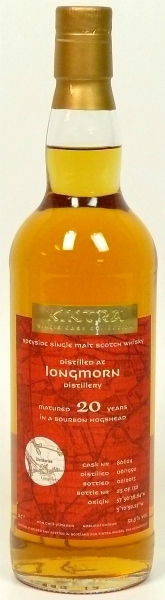
Longmorn 20yo 1992/2013 (52.3%, Kintra, Bourbon Hogshead #86624, 132 bottles)

Longmorn probably was one of the best Whiskies coming out of the sixties and seventies of the previous century. There are so many remarkable bottlings coming from that time, it’s nothing but amazing. Because of this, it also might be its curse. It is almost impossible to drink something like this (a Longmorn from the eighties and later), without having high expectations and looking back to the old stuff instead of comparing it to its contemporaries. Sure we all know stuff from “back then” is different from the stuff today, but still, Longmorn, has a special place with me…
Color: Gold.

Nose: Fruity, biscuity and malty. Fruity it is. Passion fruit and some pineapple, mixed with vanilla powder. Sugared and dried yellow fruits, but also a more waxy note. Meaty as well. Old warm dusty warehouse, more like a Kentucky warehouse than a cold and damp one in Scotland to be honest. So a lively, sunny, and dusty Whisky, from a dry warehouse with a summery feel to it. Nice fruity aromatics aided by a more creamy and vanilla note, backed by dust and oak. Character building. Nutty, with hot water. Overall laid back with a quiet disposition.

Taste: A sweet, nutty and spicy entry. Sometimes with a beer-like and hoppy note to it. The woody bit can taste this way when you try this early in the morning, when your palate is till fresh. In the evening its woody and spicy, nothing more. Typical Bourbon Hogshead Whisky. Funky green sweetness from the start, and even though not extremely high in alcohol, it does exert itself. Definitely fruity and nuttier than the nose. passion fruit again with old apricots next. Hints of toasted oak, this time more warming than sharp. Hints of clear glue and lots of fruits, apricot and to a lesser extent: peaches, even dried pineapple comes to mind. Nice touches of sweet vanilla and ice-cream, but never turning overly sweet and dessert-like by the backbone of spicy oak and toasted oak. Nice development though. It evolves over time.

Nice Longmorn, nice Whisky, but also almost anonymous. It could have been anything, apart from the amount of fruit in this one, which gives it away a bit. Keep in mind that this is from a Bourbon hogshead, so the distillate hasn’t been masked by Sherry or some kind of finish. This is pure Whisky. Its good, it does the job, however it’s almost not a ‘Longmorn” to me. Maybe I’m a bit harsh, maybe I’m a bit prejudiced and maybe I’m not truly objective as well. Am I capable to let the memories of old Longmorn go, for a review like this? I don’t know. This is a good one, but not a must buy for me, sorry. Come to think of it, this does have some similarities to the profile of the old Longmorn 15yo OB. That one is good as well, but also a bottling I don’t neccesseraly need to have. it doesn’t completely click with me. So If you really like the 15yo, by all means get this one as well when it pops up at an auction somewhere. For me, I’m glad I’m taking notes here, because after some time, I might forget how this tasted like, but thinking of the 15yo I’d probably remember.

Points: 85

Ardmore 1996/2014 (43%, Gordon & MacPhail, Distillery Label, Refill Sherry Hogsheads)

Why review one Ardmore, when you can review two? Hidden far away in a wooden box, where I keep my odd-shaped sample bottles, I found this more recent Ardmore. All Ardmores I reviewed up ’till now, were somewhat older bottlings, and this one is more recent. 2014 is not that long ago isn’t it? Gordon & MacPhail released 1996 Ardmores in 2013 and 2014, and both are still available, so I guess they hold off a new release, untill both of these sell out. Where on one side we have official bottlings (OB’s), in this case the range released by Beam Suntory (the owners of Ardmore), on the other side we have independent bottlers (IB’s). Usually, firms that buy casks of Whisky and bottle them as a single cask (usually).

However, this particular Gordon & MacPhail bottling lies somewhere in between. This series is known as the licensed bottlings, but are also known as the distillery labels. This comes from the time the owners of certain distilleries allow Gordon & MacPhail to bottle a Whisky and market it as the “official” release, since back then the owners didn’t release an official bottling themselves, probably using the output from that distillery for blends.

Gordon & MacPhail do their own wood management (The wood makes the whisky). They bring in their own casks and fill them at a distillery. Sometimes they leave the cask to mature at the distillery, but more often they take it with them to their own warehouses.

Color: Copper gold.

Nose: Creamy, vanilla and ice-cream, oh and Sherried as well. On top some smoke. Right from the start this is very well-balanced. Everything is where it’s supposed to be. Sherry casks from American oak. Very sweet, big and thick smelling. Nutty. Almonds, with hints of clay. Add to this a fruity cloying sweetness with an edge of perfect peat, with sometimes some burnt match-stick aroma’s, with only a tiny hint of the sulphur. The sulphur is a mere trace, and I don’t pick it up every time I try this. Next to this the Sherry gives off a funky note which should be an off-note, but here, it works well in the construct of the nose. Almost like artificial orange powder (Sinaspril). Fire-place in the middle of winter. Almost christmas. Lots of vanilla comes next and the smoky note stays. Works very nice together. As I said, very well-balanced indeed. Medium complexity though, and it shows its hand quite quickly. After that, not a lot of development is happening.

Taste: Ahhh, yes. Nice (simple) sweet, creamy, nutty and (red) fruity Sherry nose, mixed in with vanilla and big toffee. Cold black tea. It’s big on the Sherry, the almonds and the cream this is. Also a slightly bitter oaky edge. Peat, but it’s aroma is different from the nose. Stricter and more modern. The fruit evolves in acidity. Excellent smoky note. Come to think of it, where is the wood influence? The wood may have made this Whisky (imho, the Sherry did), but where is the wood itself? Sure it has a lot of vanilla and creamy notes, so American oak was used, I believe, this one would have been better in European oak. A similar thing happens as it did with the nose. Everything is there right from the start and hardly any evolution happens after that. Balanced, yes, sure, but not as much as the nose. Lacks even more complexity than the nose.

Right from the start I thought it was nice, and it is. The journey, however, I was about to take with this Ardmore didn’t happen. Alas. A good Whisky, but it is what it is. The start was promising, and it started with a nice statement from the nose. After that it all went a bit downhill and simple. The Ardmore I reviewed last, also has its flaws, and I can’t say this one is better, hence the similar score. Both are good, but I expected a bit more, especially since in this one, the Ardmore distillery character is obvious in the nose, but not on the palate.

Points: 85

Bowmore 1996/2014 “Aniseed Pastille” (46%, Wemyss Malts, Single Cask Release, Hogshead, 344 bottles)

This is not the first Wemyss bottling on Master Quill, but it is definitely the second and most certainly not the last. In the previous review I mentioned something about William Wemyss, so I won’t repeat that here.

Wemyss Malts (Edinburgh) was established in 2005 by William, who previously made a name for the Wemyss family in the wine business, producing Fonty’s Pool (Western Australia) and Rimauresq (Provence, France). Wemyss is Scottish and owns land where in the early 19th century John Haig’s first distillery, Cameronbridge, was built. Wemyss also grows barley there, that is used by several Scottish Malt Whisky distilleries, so historically the interest in Whisky has always been there.

Wemyss Malts releases vintage single cask Whiskies from many different distilleries as well as a few Blended Malts (since 2005), a Blended Whisky called Lord Elcho (since 2012) and through another company, a Gin (Darnley’s View, since 2010). The single cask bottlings are reduced to 46% and get a “name” in a similar way SMWS uses a flavour descriptor on their Whiskies. In 2013 William entered a new phase in their Whisky-adventure by purchasing the Kingsbarns distillery project at East Newhall Farm in Fife from Douglas Clement, who had problems raising money to fund the building of the distillery. The distillery is managed under Wemyss Distillery Ltd. which is a separate company from Wemyss Malts. Kingsbarns produces spirit since January 2015, so maybe we can expect their first Single Malt very soon. Since it is supposed to be a light and fruity Whisky, I expect it during summer. At first Douglas stayed on as founding director and as manager of the visitor centre. However, Douglas eventually left the distillery by the end of 2016 to ‘pursue other projects’.

Color: Light citrussy gold.

Nose: Big and fresh. This jumps out of my glass, like a young dog, full of life, wanting to lick you in the face. I hope this makes you understand, that this doesn’t smell like a heavy hitting Islay Malt, but a more friendly one. Nice soft peat, with a spiral of smoke rising from our bonfire. Fresh almonds, but it’s not a nutty Whisky. Apart from that, it’s quite citrussy, fresh and thus fruity, hence the friendliness of this Malt. Salty smoked fish with hints of sea-spray. Yes a bit of creamy vanilla, but no real woody notes. Only a tiny bit of wood and an even tinier hint of liquorice. Cigarette ashes? Proper refill hogshead. If smelled longer and more vigorously, I also get some more soft red fruits, ripe raspberry’s come to mind mixed in with some mud and a black pepper edge. Dirty friendly stuff. Smells excellent!

Taste: Sweet on entry. Toffee and runny caramel. Here comes sticky sweetness. Waxy and quite some soft peat. Ashes and slightly tarry. Already suffers a bit from reduction. Orange skins (bitter) and a bit of paper. Nutty notes again, not much though, followed by more smoky notes embedded in the sticky sweetness, giving some sharpness. Paper-like note keeps coming back to me. On the sides of my tongue there is this slight bitter note of aniseed. The power of suggestion? Yes I do get aniseed, but the sweetness is different. Not the dry, hard sugar of the pastilles, but rather soft toffee. Otherwise, I find this Bowmore a wee bit too simple in the taste department. Lacks development as well. It doesn’t have a long finish, nor a lot of aftertaste, which is built around sweetness and smoke (and secretly some black fruits I love in Bowmore), but where is the wood? Again, easy to drink, but a bit too simple. Depending on your day, because you, the taster, are far from being objective, the bitterness shifts in or out of focus. The second time around I tasted this for this review, on another day, I found it to be more bitter than the first time around (more fruity). Isn’t that complexity?

Comparing this Wemyss version of Bowmore, to Bowmore’s own take on Bowmore, I decided to do a head-2-head with “White Sands” an official 17yo travel retail Bowmore reduced to an even more un-modern 43% ABV. This bottling comes with the special recommendation of Eddie MacAffer, and yes, the “White Sands” is a bit more special, read: different. First of all it has development on the nose and more depth. More industrial, oily, smoky and burning notes. Brooding and more woody. However, if I had both bottles open at the same time, the Wemyss would be finished sooner…

Points: 85

Elements Eight Gold (40%, St. Lucia)

Elements Eight. Named after the eight elements needed for the production of (this) Rum: Terroir, Cane, Water, Fermentation, Distillation, Tropical Ageing, Filtration and Blending. Funny, since the base of this Rum are molasses from Guyana, which paints a somewhat different picture than the handpicked cane mentioned on the bottle. The Rum is marketed, no, Marketed with a capital M, by The Elements Eight Rum Company based in London, England which was founded in 2005 by Carl Stephenson and Andreas Redlefsen. Earlier, both have worked at J. Wray & Nephew. Remember Appleton from Jamaica? Right!

The Rum itself is produced at the St. Lucia Distillery, we know from Admiral Rodney, Chairman’s Reserve, 1931 or even the Plantation St. Lucia I reviewed earlier. Besides this Gold, there were three other Rums offered in the original line-up from 2006: Platinum, Spiced and Criollo Cacao. In 2016, after ten years the brand was completely revamped with four “new” expressions: Exotic Spices (aka Spiced), Vendôme (aka Gold), Platinum (aka Platinum, dûh) and Republica (new). The latter one a 5yo blend of one Rum from Cuba and one from Panama, so the Criollo Cacao got dropped, but might return at a later date. Apart from the Republica, the Rums are blended together from eight (although ten was the number mentioned on the old bottles) different Rums produced at the St. Lucia distillery, which has a John Dore double retort copper pot still for the heavy, flavourful components, depth and finish; a Vendome Kentucky Bourbon copper pot still, which gives the rather unique flavour profile and a steel columnar still for the lighter components (sentence stolen from Lance), apart from that, three different yeast strains were used for the production of these eight Rums. By the way, the oldest Rum used in this blend is 6yo, although marketing states that the whole was aged for 6 years. Luckily no sugar was added during production of this Rum, for a unadulturated experience.

Color: Light gold.

Nose: Sugar cane. Fresh and clean. Mocha, milk chocolate with a nice wooden edge. Dusty. Vanilla powder and coffee creamer. With some air, more spicy, with notes of lavas (Maggi), black pepper and lots of dry grass. Cold tea. Tiny hint of fresh (unlit) cannabis and licorice. In a way, meaty. Pancake syrup and powdered sugar. Excellent nose. Dry, complex and with good balance. The nose develops nicely with air and time, and it develops over a long period of time. Warming with hints of sea breeze. Not a middle of Summer nose, but one for autumn, with wind and rain, the moment you understand summer is over…

Taste: Aiii, rather thin and definitely suffers from too much reduction. What a disappointment after the wonderful nose. Hints of toasted cask. A good bitter woody edge, with enormous staying power. Some caramel and toffee, but still not sweet. Almonds! The spices from the nose, finally show themselves, trying to save what can be saved. Well, when I let this stand for a while it definitely gets better than the initial disappointing sip. It really needs to stand around for a while. More complexity and definitely a bit industrial. Water based paint. Nice finish, with the bitterness forming tha mainstay of the aftertaste.

I do like St. Lucia Rums but this might not be on top of my list. If you let this breathe for a while it is able to show its heritage and the quality it must have had at a higher strength. Excellent example of a Rum that was reduced too much. Although this comes from the same distillery as the aforementioned Plantation, both couldn’t differ more. Having said that, there are some similarities too, and it is not hard to tell, when tasted blind, this is an offering from the island of Saint Lucia. This has a wonderful nose and taste-wise it starts weak but will grow on you,  if you let it. If you’re really patient with it, it will redeem itself. Interesting stuff and nice to see another example of this distillery. One that definitely grew on me.

Points: 85


Paul John “Bold” (46%, OB, Batch 1, 2016)

To finish off the trilogy of entry-level Paul John’s, here is Bold. Bold was the last addition to the standard range, bottled at 46% ABV. Earlier I already reviewed the other two, “Brilliance” is the base-model so to speak. Just well made Indian Whisky, no peat used. “Edited” is like the base model, only this time tweaked with a little peat, achieved by blending in up to 30% casks of peated Whisky. Today we’ll have a look at “Bold”, introduced in 2015 and made from peated Whisky alone (35 ppm). For this edition, all peat was sourced from Islay.

Color: Pale gold.

Nose: Lots of butter and vanilla, youth, and I’m guessing quite some first fill casks. Nice clean peat upfront, smoke second. Enticing stuff. The peat might be recognizable, and it definitely comes across as a young smelling Whisky, but add to that an uncommon floral bit, which sets it apart from Scottish or even Islay peated Whiskies. Slightly waxy. Lacking a bit in the balance department. Sometimes there are whiffs that are too close to new make, but the next breath can be excellent. After a while, still creamy, the peat dumbed down a bit, and the smoke has almost gone. Some green notes, mainly (almost new) oak. If you smell this very calmly, it’s all about the butter, the vanilla, the cream, the toffee, but when you “smell hard”, yeah, that’s where it all comes together. More spicy, dusty and better balanced. Nice peat, latex paint, mocha and nutty as well. The nose lures you in. It’s seductive.

Taste: Sweeter than expected and initially not very peaty, let alone smoky. Lots of warming notes going down though, with nice development in my mouth. All nice aroma’s, but initially not very bold. A wee bit too young again, moving into the direction of new make. Not a lot, but enough to notice. Hints of orange skins and bread, that must be the influence of indian six-row barley. Terroir is happening! Hey, now apart from the floral bit, I also get a slightly soapy note. Fruity and friendly notes appear next. Very easily drinkable. Please do not expect a heavy hitter, it’s not a heavily peated malt in appearance. Its fruity and floral. Sunny with a slight peaty bite.

I would package it in pink and yellow with some black mixed in for the peat used, but it is more a happy Whisky than a brooding one. It’s not gloomy, misty and Scottish, it’s bright, colorful and Indian. So for me not so bold, and the anthracite packaging is way to dark. It’s like your dog, its your best friend and its happy when you get home, wagging its tail trying to lick your face. It’s not a bad-tempered pit bull with a spiky collar, that growls at you when you get home, disturbing its sleep, passing gas, chewing on your beloved furniture.

I preferred the second batch of “Brilliance” over the first, and I’m sure the second batch of “Bold” will be better than the first as well. It’s coming along nicely and I guess all the initial casks at Paul John were rather new. So, a great effort for a first batch, it’s pretty good, but I’m eagerly awaiting the second batch. With more experience and more time, I’m guessing that one will be at least as good as the second batch of “Brilliance”. Paul John is definitely on the way up!

Points: 85

Worthy Park 8yo 2006/2015 (50%, Rum Nation, Pot Still, Oloroso Sherry Finish, Release 2015, L-15-020, Jamaica)

I just finished both bottles from Foursquare, Doorly’s 12yo and Foursquare 9yo Port Finish. Both close connected and although the latter is an exceptional cask selection, I did not really prefer it over the 12yo. Both were (too) easy drinkers @ 40% ABV. After trying whole bottles of both, I have to admit, I also got a bit bored with them, lacking in strength and development in the glass. For me it was clear, both suffered from too much reduction, since the potential was there. Sure, hot, cask strength Rums aren’t for everyone, but for a (sipping) Rum to carry its aroma’s well and excite, I would say 46% (to 50%) ABV is better, if you want to reduce it. Forget about 43%, just skip it and go straight for 46%. Both were enjoyable nevertheless because the Foursquare spirit is a good one, with lots of potential, so I will definitely seek out other expressions of Foursquare in the near future. Preferably cask strength ones, like the official 2004 vintage or one from an independent bottler, because Foursquare is hot these days.

Well, empty bottles calls for replacements, so one of the new ones I picked from my stash is this Rum Nation Jamaica Pot Still Rum 8yo, which, in the shops, has already been replaced by a 5yo expression, again with a Oloroso Sherry finish. Look, here we have a reduced Rum bottled at 50% ABV. I expect a better aroma transport system (ATS). since this seems to me to be the ideal drinking strength for a sipping Rum. With Jamaican Rum being a favourite (style) of mine and this one is seemingly not reduced to death, I expect quite a lot actually. Not sure about the Oloroso finish just yet. It works for Whisky, but we’ll see if that works for this Rum as well.

Color: Copper orange.

Nose: Big Jamaican funk shooting out of my glass, bold and eager. Nice dry woody notes and overall it doesn’t come across as very sweet and creamy. Dark chocolate and sandal wood. Images of sand and pan flute music. That’s a good start. Medium cream then and also a bit dusty and yes, a bit alcoholic as well, but that’s what we wanted, right? Hints of a well-integrated acidic wine-note on top. Nutty. It seems to me the Oloroso was matured in European oak. Licorice, toasted cask, black coal and hot asphalt. Wow, I love that! Lots of toffee combined with hidden vegetal notes. Dry leaves and even some burning leaves. Indian spices. Love how this smells. There is and indescribable and extremely appetizing note I recognize from a Cadenheads bottling of Enmore I have. This strikes a chord with me, because that was the first real Rum I bought based on its nose alone. Amazing nose on this Jamaican, where many different aroma’s just switch on and off, all the time.

Taste: Initially quite hot and funky, but that is only a short burst. Vegetal right from the start. Nice beginning with vanilla, toffee, honey and caramel, with the leafy bit in here as well. Cigarette ashes and cinnamon. Not as funky and big as the nose promised though, which is a bit of a shame really, especially after a few seconds. Turns quite dry with a paper-like quality. Less balanced as well. Medium sweet, or even less than that, since the dryness (wood) starts to dominate. Definitely less boring than both Foursquare bottlings mentioned above. Hints of wood sap, soap and blue ink with an additional bitter edge. The body dries out, and the finish is quite short, with hardly anything staying behind in the aftertaste, amazingly. If anything, I would say a small sour note from the Sherry. Character building stuff though. 50% ABV really helps this Rum forward. A shame though, the Jamaican funk got lost in the body and finish of this Rum. Take small sips in short succession to deal with this “problem”.

I understand this got replaced with a similar 5yo. Worthy Park again, as well as the Oloroso finish. It is said that the younger Rum is even more funky, which should be able to deal with the Oloroso finish better. It should also be more typically Jamaican on the palate. I guess this will help the taste reach a better balance, but we’ll have to see how the nose worked out. For me the Oloroso finish on this 8yo worked wonders on the nose, but was maybe a step too far on the taste. Probably the reason to repeat the experiment with a younger, bolder, Rum from the same distillery. Maybe they also tweaked the amount of time of finishing.

Points: 85

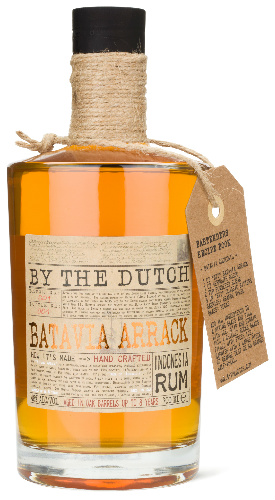
Batavia Arrack (48%, By The Dutch, Batch Nr: 001, Indonesia)

Here we have a bottle of Batavia Arrack. Batavia tells us this Arrack is Indonesian made. On the island of Java to be precise. However, the label classifies this as Indonesian Rum, and although I understand the claim, it is not entirely true. (Batavia) Arrack is similar to (Indonesian) Rum in the same way Tennessee Whiskey is similar to Bourbon. So not identical twins.

Arrack is made in Southeast Asia and is something entirely different from Arak (Anis flavoured drink from the Middle East). Arrack, as it is made in Indonesia, is made from sugar cane molasses and distilled twice in Pot Stills. Fermentation of the wash is started with yeasts found on local red rice. This particular Arrack is aged in Indonesia as well as in Amsterdam (The Netherlands), where it was also blended. Indonesia being a former Dutch colony, most of the Arrack produced there is exported to the Netherlands and passes through the hands of E. & A. Scheer, Dutch importers of large amounts of many different Rums. (For those of you who don’t know about E. & A. Scheer, but do have an interest in Rum, please have a look at Matt’s excellent piece when he got a chance to visit the company).

Color: Light gold.

Nose: Initially sugary (from a distance), but when you put your nose in, you know you don’t have a typical Rum in your hands. Funky Worcestershire sauce on paper. Dry, dusty and nutty. Influence of oak. Grain Whisky and Old Genever. It also reminds me of Rhum Agricole. Amazing how this changes in the glass with some breathing. Short ozone attack with warm caramel (as in creamy without the sweetness). Fresh air after the rain. It’s the closest to Whisky of any Rum I tried, apart from some initial alien notes, that is. The ozone turns into a breath of fresh air. Warm food, and the metallic part of blood. Sounds strange but it works well. With enough air, this reaches a nicely balanced state and all the ‘strange’ notes somehow dissipate. Mild spicy oak and a mere floral hint. Peach yoghurt. Soft with something herbal I can’t put my finger on just yet. Cold tea and cold gravy comes to mind. Dry, creamy and quite complex.

Taste: Wood comes first, quickly succeeded by a more creamier feel. Toffee and latex paint. Honey without the intense sweetness. Definitely sweeter than I’ve come to expect from the nose though. Throughout the body there is this backbone of medium bitterness. Bitter oak and chalk. Wood driven. The bitterness even grows towards the finish. More hints reminiscent of Rhum Agricole (even though this is made from molasses). Still creamy and without any hint of acidity whatsoever. So, no sweet yoghurt in here, but there are some oriental spices. The sweetness turns out to be something from the first part of the taste, because soon, under the leadership of wood, the dryness takes over. Late to the party (again) is a floral note, which seems to turn into a more soapy note towards the end (and is gone when its time for the aftertaste). Another note comes up reminding me of the ozone from the nose. However I have never tasted ozone before, so again something hard to put a finger on.

Definitely of sipping quality and definitely a (Batavia) Arrack and not a Rum, by how we know them. Sure, it’s related to Rum, but also a class of its own, just like Rhum Agricole and Cachaça are. It’s not an easy sweet sipping Rum, but it did grow on me, just like I had to adjust to Rhum Agricole. This Arrack is good stuff and worth your money, if you are willing to work with it a bit. It gains a lot from some extensive breathing. If you are still reading this, you must be an aficionado, so you might want to have a go at this. It is still around and I’m sure there will be more batches available in the near future. It’s well made, elegant, but also a bit bitter at times, so expect something with a backbone and character. For a molasses based product it is amazing how this has a lot in common with Rhum Agricole.

Points: 85

Paul John “Brilliance” (46%, OB, Batch 2, 2016)

Today the Paul John range of Whiskies has three entry-level Malts. The unpeated “Brilliance” of which I’m about to review batch #2 (released in 2016). The very lightly peated (8-10 ppm) “Edited” of which I already reviewed batch #1 way back in 2013. The lightly peated style is achieved by blending peated and unpeated Whisky. For Edited, Aberdeen & Islay peat was used. Both Brilliance and Edited were introduced in 2013. In 2015 the third expression was released, called “Bold”, where all Whisky used in the blend is peated. The names speak for themselves. Edited is a slightly tweaked version of Brilliance, tweaked with a little peat (8-10 ppm in the final product), and Bold is bolder in the use of peat (25-30 ppm in the final product). Where Edited contained Aberdeen & Islay peat, Bold is made with Islay peat only). When I wrote the last review, there was not a lot more Paul John around besides “Brilliance” and “Edited”. Back then only three single casks were issued (The P1’s).

Today the core range has more members than the original two. Apart from the addition of “Bold”, in come two more additions; The Classic Select Cask and the Peated Select Cask, both are cask strength Whiskies (released in 2013), so not really entry-level any more. All other bottlings, and there are quite a few by now, are single cask bottlings, some of which were released for particular countries alone.

Color: Pale gold.

Nose: Fruity and fresh. Nice barley aroma. Fruit cake. Sugared yellow fruits with a hint of smoke. Very, very appetizing. Extremely fruity and floral as well. Fruity first, floral second. Vanilla third. Dry powdered vanilla. Dusty and silent. I imagine a hot day. Next some glue and paint which only broadens the aromatic palate. Warm soft wet wood. Definitely summer in the air. What a wonderful nose. This works perfectly for me. Sure this may be a young Indian Whisky, but it already shows a lot of evolution. Ghanging and growing in my glass.

Taste: Barley and some sweetness, again with a bit of smoke. Incence, smoke from burning herbs. More exotic than the nose. Nice soft wood again and a bit of cardboard. Vanilla, so definitely American oak. Oak bitterness (and herbs) come next, giving the Whisky character and backbone. Both aroma’s are coated with vanilla ice-cream. How’s that for balance?

So this is entry-level Whisky. Wow! I’m not sure about you, but this is right up my alley. It differs from other Whiskies. Its exotic and it is definitely high quality stuff. Amrut already has a fan-club (Amrutfever), but I believe its time someone should start a fan club for Paul John as well.

By the way, reading back my review of the first batch of Paul John “Edited”, also shows me how much the Whisky world has changed in the three and a half years that have passed since then. In 2013, it seems, Whisky was just starting to get global, and today it seems every country in the world already has at least ten distilleries producing Whisky.

Points: 85

Many thanks go out to Shilton (Paul John brand ambassador), for your patience answering all my questions, and for the quickest response-time in the industry!

Glen Elgin 19yo 1991/2010 (53.9%, Signatory Vintage, Cask Strength Collection, Refill Sherry Butt #2324, 412 bottles)

After the amazement of the Glendronach I recently reviewed, here is another shock (at least for me it is). I’m actually baffled I didn’t throw in Glen Elgin earlier on these pages, since it is one of my secret loves. Every Single Malt aficionado knows which Malts are just the best, but one always has a secondary, more personal, list of Single Malts. Everybody just loves Brora, or at least knows its one of the best around. However, not a lot of people would pick f.i. Teaninch as such, which is one of my other favorites. Usually it is a Malt with a less “easy” profile that somehow manages to tickle one’s fancy. It’s personal.

Glen Elgin. I love it. Many times it just floats my boat, and this one is no different. I brought it with me as a favorite to my Whiskyclubs gathering in Hamburg, where it failed to get the applause, I thought, it deserves. Yes, again, my opinion. The same club presented me a while back with a sister cask of this one, bottled something around the 61% ABV mark, and since then, I was looking out for a bottle of my own. This cask #2324, in Hamburg, was deemed too extreme and hot by many, but after a 1990 Family Cask of Glenfarclas, the Elgin was retried and deemed more accessible and creamy. So, remember, when tasting a lot of Malts in short succession, it is important where it is placed in the line-up, what you had to eat, how tired you are, and understand how your palate works. It all depends…

Color: Copper orange.

Nose: Sherry, nutty, creamy with lots of soft vanilla notes. Soft wood fiber, but right from the start, not the usual oak aromas. I get hints of Rhum Agricole. Storm by the waterfront. Waterfront organics. Reed. Old air-dried oak (the outside of the cask). Vanilla, cream and wood, but not very fruity yet. Spicy and slightly grassy (wet). Sometimes hints of licorice (wood). Otherwise thick and syrupy with the sugar smell you get from a freshly opened sugar packet. The Rhum Agricole notes stay around, rendering the smell more dry. Add to this another layer of an acidic red berry smell (and some gravy) for complexity. Greek yoghurt? Only hints of sugared and dried yellow fruits now, but I couldn’t tell you which ones (dried papaya and pineapple come to mind).

Taste: Short attack. Big. Starts with some vanilla sweetness mixed with paper or cardboard. Wood, nuts and fruit. Fresh almonds (chewed). Creamy and dusty. Nutty and a medium wax aroma. Altogether a medium and very pleasurable body. The big start soon gets smaller. Fruity acidity on top, from red fruits. Berries. The acidity is quite unexpected and doesn’t fit the nose all that well, or the Whisky as a whole for that matter. Hints of Beer. Finishes (long) on the fruity acidity adding some light bitterness for the first time. The bitterness makes up the aftertaste as well.

I have to be honest. I don’t like it as much now as I did in the beginning. It is definitely one you have to work with, but you also need to forgive some minor flaws (like the acidic top note). I also fear this suffers a bit from oxidation. This is a bottle I often grab when I want a few cask strength Sherry expressions, so it is already 2/3 down, lots of air to play with.

Points: 85

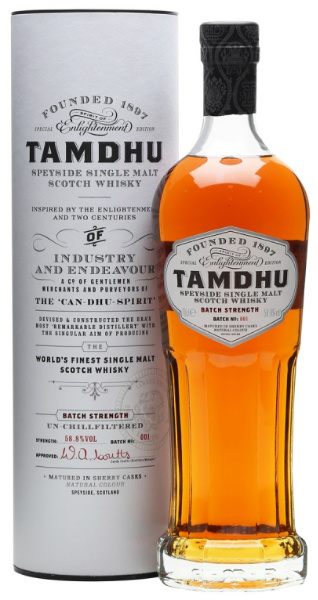
Tamdhu “Batch Strength” (58.8%, OB, Batch 001, Sherry Casks, 2015)

In our series of NAS Cask Strength Whiskies, here is number three. After the nice Glengoyne and the surprisingly good Tomatin, here is Tamdhu. Tamdhu is since 2011, the new jewel in the crown of Ian MacLeod, who have managed to save yet another distillery from the hands of the Edrington Group. The group chose to focus on the highly marketable Macallan and Highland Park brands, so no use for this low profile, but high quality distillery Tamdhu is. Over the years all previous owners haven’t done a lot with the Tamdhu brand, so there aren’t a lot of Tamdhu expressions around. Ian MacLeod, being the new owners, came up with a nice retro design and up ’till now have released four expressions. A 10yo that is widely available, blended from first and second fill Sherry casks. A limited edition 10yo, blended from first fill Sherry casks only, which has sold out rather quickly. And last but not least, two batches of the Batch Strength expression. Today we’ll have a look at the first batch, although last year the second batch saw the light of day.

Color: Orange gold.

Nose: Funky bread-like notes. Cereal and smelly, brooding Sherry. Quite spirity and paper-like at first. Cold dish-water. After a short while of breathing a more likeable fruity note emerges, but not much. Hints of gravy, Beer and menthol. Butterscotch and a rather strange burnt note, with an acidic top note (that’s why its strange). I’m not alarmed though, because the previous two NAS cask strength expressions started out funky as well, but turned out to be really tasty in the end. Next a more vegetable and woody note. Spicy but not in a big way. Still some paper, (slightly scented toilet paper comes to mind), as well as some jasmine tea. Pencil shavings start to emerge. Soft with a hint of sweetness. Creamy and nutty. The more it breathes the more toffee it shows. The strangeness mentioned above never really disappears.

Taste: Big on toffee and pencil shavings. Wow. Nice. Sweet. Hot. Big. Brash. I like it! Here too a funky note. Even some orange skin. Different from the other two, but one that screams yes! Its good. Where the nose had some off-putting aroma’s, the taste is very inviting. If you like cask strength, this is immediately likeable. Sure a bit raw and at times a wee bit under-matured, but not much. It won’t be twenty years old, but it won’t be three years either. Well made, you can taste a lot of care went into this. Lots of nutty Sherry notes, so I’m guessing some Sherries that matured under flor were used as well. Wonderful woody elements adding to the whole. Medium finish at best. The big aroma’s turn dry and then disappear altogether, which invites you to take another sip.

First of all, this is all Sherry casks, as the plan is for all Tamdhu releases, but way different from the all Sherry cask Aberlour A’Bunadh, blended solely from Oloroso Sherry casks. Compared to the other two I reviewed recently, or even to the A’Bunadh, this is maybe priced a tad to high, but I suspect this liquid was also quite pricy to produce.

However, if I had to choose on smell alone I would pick the Tomatin, which is also less expensive than this Tamdhu, but since Ian MacLeod made the bold move to buy this distillery, which isn’t known to the big public, I understand the pricing and the Whisky is definitely worth its price. In a direct comparison with the Tomatin Cask Strength, it is obvious both are equally good, and both show something about the distilleries they’re from. The difference in taste is a matter of opinion, as well as your mood. You can’t go wrong with either of them, including the Glengoyne which did score one point less.

Points: 85

Thanks Alan!