The Glenlivet 13yo “Zenith” (57.9%, OB, Single Cask Edition, Cask #8024, 2013)

It was that other well-known Speyside distillery which between 1999 and 2004 released a few Exceptional Single Cask bottlings. Some of which I tasted and were very…exceptional indeed. Alas the bottles were a mere 500ml. The Glenlivet liked that idea and somewhere around 2005, started bottling their own exceptional single cask bottlings. For the first decade, releases were kind of sparce, but more recently, many more bottlings have seen the light of day. I’ve tasted quite a few by now, and some are really exceptional and some are less so. Still good, but nevertheless, not all that exceptional in my book. Proceed with caution I would say, especially when most of them are pretty costly even the young ones.

Another remark. Although it seems quite some information is put on the label I still miss a lot. Although the label does show a cask number (here: #8024), not stated is what kind of cask it came from. And what a about distillation year? pretty basic information most other single cask bottlings show. By the way, since most of these bottlings are quite expensive to boot, where is the wooden coffin? Even the Glenlivet 21yo has that and costs less than half. Sure you can’t drink the wooden box, but it would look nice wouldn’t it. Just look at the picture below. The bottle looks great, but the cardboard box next to it… not so much (at this price point).

Color: Gold.

Nose: Fresh with nice citrus notes countered by some smooth vanilla and soft oak. Very pleasant right from the start. Some distant fruit. Dusty mocha, aspirin powder and spicy oak. Yes the oak definitely asserts itself. Typical notes for a Whisky from a refill hogshead made from American oak, and as such, reminds of many fairly young Cadenheads bottlings from ex-Bourbon casks (remember those tall green bottles?). However, this one is not that hot. Again, there is some dried yellow fruit in the back. Well hidden but definitely noticeable. Hints of salt and pepper. By now the citrus notes have gone.

Taste: Here the fruit is more upfront, but the oak is as well. Not an instant-pleasure fruit-bomb you’ll like right away. After the initial fruity aroma, it has a sharp and slightly bitter attack of oak. Slightly soapy as well. Floral without ruining it. Just like the Glen Elgin I just reviewed, this seems to be one of those Whiskies you’ll have to work with. Definitely not a casual Whisky. It needs your full attention. So don’t distract yourself with loud music or some reading, since you would miss the essence of this Whisky. Spicy and bitter wood definitely take over from the initial aroma. Nutty as well. Fresh soft almonds. If you are patient and let the Whisky breath a while in your glass, the spicy oak, and especially the bitterness get softer, leaving more fruit to develop and reach a better balance. Still, the more this breathes the better it gets. Surprisingly it only has a medium finish, with a tad of  bitterness. Peanut butter and walnut skins in the aftertaste.

If you have a collection of these Single Cask bottlings, this one can serve as a contrast to some others, but if you buy just the one, I don’t think this is exceptional enough. What might be exceptional is that this is a non-Sherried, cask strength Whisky, which stays soft almost all the way through.

This one was bottled in 2013 and resurfaced in The Netherlands in 2016 with quite a discount. No wonder it sold out rather quickly. I guess it might be worth the price I paid (less than a 100 euro’s), but I would be very unhappy if I bought this, without tasting it first, for the initial price. Recent single casks, age notwithstanding, cost more than the very good XXV bottling. Something worth to consider.

When comparing similar bottlings I have open, sure the Lochside and the Caperdonich are better but also older and more rare. Compared to readily available Malts with a similar profile that I have, I would rather go for the Glen Keith, but this Glenlivet is nothing to scoff at though.

Points: 85 (original score)

Added note (September 10, 2018): I’m now drinking the last drops from this bottle, and man did it come around. This needed a lot of air, and time to open up, but it did come up trumps. The nose is utterly wonderful, on the palate it didn’t change as much. Sweeter, more malty, very well balanced. Comes close to the Glen Keith mentioned above, which i still prefer.

Points: 86 (new score)

Highland Park Week – Day 3: Highland Park 20yo 1995/2015 (50%, Gordon & MacPhail, Exclusive, for The Whisky Mercenary, Refill Hogshead #1485, 325 bottles)

Day three of Master Quills Highland Park Week and after two OB’s, its time to see what the IB’s are up to with Highland Park. Here we have a special one since it is one independent bottler, Gordon & MacPhail, bottling a Highland Park for another independent bottler, The Whisky Mercenary. This may very well be the best of three worlds, first Highland Park make a great distillate. Second I love how G&M work, where they try to have as much in their own hands as possible, The wood, the maturation, the selection and the bottling to mention but a few. Third, Mercenary Jurgen has a good nose, and is able to pick some nice stuff, and believe me it’s hard to get what you really want as an independent bottler. So here we have a 20yo Highland Park from a refill hogshead. When looking at the colour it seems to be at least a third refill remade hogshead from staves taken out of Bourbon barrels. Now forget what I said, because looks can often be deceiving and it is actually very dangerous to do so. My bad, and I hope you won’t make the same mistake like me.

Highland Park 20yo 1995/2015 (50%, Gordon & MacPhail, Exclusive, for The Whisky Mercenary, Refill Hogshead #1485, 325 bottles)Color: Light gold, almost White wine.

Nose: Right from the start, not even smelling from the glass, but whilst pouring, a nice creamy vanilla smell passes by. On top some Calvados. Quite some aromas that have to do with apples. Fatty red apple skin, but mostly warm apple sauce. In the background it has some more scarce notes of other distillates, other than Whisky. Can’t put my finger on it yet. Nutty chocolate paste with a trace of red fruit acidity. Warm soft wood with hints of semi-sweet yellow fruit and some dust. Underneath this has some smoke combined with soft woody spices and cold butter. American oak alright, and definitely not first fill or the next fill. So I guess my dangerous assumption plays out all right this time. So overall quite nice, good balance, but not very complex though. Adding to my feeling the cask may have been a bit tired already. I don’t think it was filled yet again.

Taste: The first note is that of wood. Soft wood. Next some sweetness. Honey, smoky toffee and caramel at first but the wood takes over again adding some dryness. Vegetal. Same as the nose. Good balance but not very complex. Tired cask again, even though the biggest influence seems to be that of wood. Medium finish and hardly any aftertaste. When its gone, its gone. No honey or wood stays behind. After some breathing and taking sips again, the Calvados notes emerge on the taste as well. The diluted toffee notes seem to grow not bigger, but wider, like butter candy with hints of lemon skin shavings or lemon curd, since that is sweeter. Also distinct notes of almonds. The smoky notes present themselves here as well now. So with extensive breathing there seems to be more (complexity) to this Whisky than I initially thought. See, how you have to be patient? Don’t fill up your glass too much, give it room for air, and be patient if you want to enjoy its full potential.

Connoisseurs, there is that dreadful word again, dislike tumblers or any other “wrong” glass. They are adamant about it. They don’t allow for flavour development, of which this Highland Park is an excellent example. This Highland Park needs a good glass. Personally I equally dislike it when one buys the “right” glass but then fill it up too much (and then post  a half full Glencairn glass on social media). This again doesn’t allow the Whisky to develop in the glass. You need a lot of room for air. Try it. Be patient, be smart!

The hint of smoke is actually very nice and makes it resemble Talisker and, to a lesser extent, Springbank a bit. So if I had to taste this blind I would have gone for Talisker, without the pepper though. Good distillate, reasonable cask and a nice profile. Needs some time, so don’t be hasty. Good Highland Park and just like the Leif Eriksson, again one without Sherry, and another thing becomes clear, 50% ABV > 40% ABV.

Points: 86

Arran 19yo 1996/2016 “The Chosen One” (54.7%, OB, Limited Edition, for Whiskysite.nl, Sherry Hogshead #1390, 312 bottles)

One of the finer places to buy Whisky in the Netherlands is Whiskysite based in the town of Leiden. Excellent, wonderful looking store, good people, fair prices and a very handy Website which services the whole world. For me one of the go-to places. The same guys also host a Whisky festival called Whisky in Leiden. This years edition is next saturday on april 1st. No joke. If you are interested, I’m sure they will have room for you next year since this years edition is long sold out. Just like any real good festival, or retailer, the guys have special bottlings done for them. One of last years bottlings was a very old Arran. I can still remember Arran starting up, and here we have already a 19yo example of the Malt. I’m getting old.

Color: Gold.

Nose: First sniff and I’m guessing Fino Sherry casks. Nice Sherry note combined with nuts and wood. Mocha and a sweeter component in the background. Chewy toffee. As I said before, I never was a big fan of Fino cask Whiskies but just like Rhum Agricoles it is an acquired taste, and today, wow, I get it. They are very special. Vanilla and dried lemon powder, in part like in artificial sweets. Hints of high winds at sea, combined with cold dish water. Strange èh? But in reality not strange at all. Hints of wood come next, as well as some pencil shavings with floral notes and wood from cigar boxes. This smells very distinguished and luxury. Next a layer of cold fruitiness. Green and red apple skins, dried apricots and some dried basil as well. Sweet yoghurt. A promise of some fruity sweetness. Crushed beetle and rotting flower bulb, both a childhood memory. I’m sorry for the animal, I only did it once, by accident. Well balanced and none of the aromas presented here are overpowering. A quiet Arran. Toned down. Whispering. A sort of connoisseurs Whisky maybe. You need some experience to discover it all, as well as appreciate it fully. I hope I don’t sound arrogant now. If you are a novice, please buy it if you come across it, but wait a few years before opening it.

Taste: Half sweet and spicy. Nice wood-notes and soft nevertheless. Sweet fruit yoghurt. The stuff with peaches in it. White peach with a spicy bite. Warming. Mocha and hard coffee candy. Butterscotch and some aspartame sweetness. Pencil shavings. Again, well-balanced stuff and very tasty. If this would have been 5% lower in ABV, this would be dangerously drinkable and you’d finish the bottle way too quickly. Now it is slightly hot, which makes you appreciate it better and follow it up with a different Whisky. It’s almost as if the sweetness and the dryness of the wood are competing. one sip, and one manages to get all the attention, and in the next sip the other. Hints of Belgian Beer towards the finish. The finish itself is quite long.

Good cask strength Whisky from a nice (Fino) cask. No typical distillery character if you ask me, but also no particular aroma that manages to take the lead. Well balanced but with nothing really sticking out, making for a bit anonymous yet well-balanced Whisky.

Points: 86

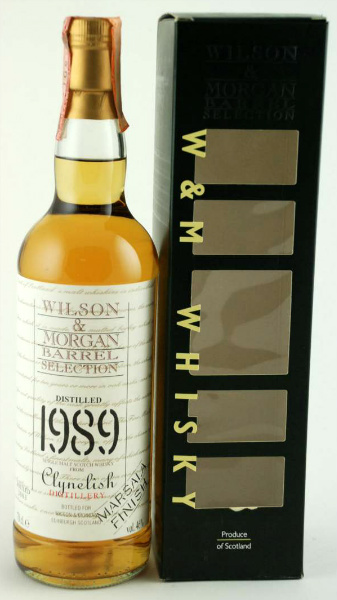
Clynelish 1989/2003 (46%, Wilson & Morgan, Barrel Selection, Marsala Finish)

This will be interesting. Experience learns me that I have tasted a lot of good Clynelishes from 1989, although one might ask oneself how far vintages work for Whisky as they do with Wine. An other interesting point is, although todays Wine finishes are quite common, back in 2003, when this was released, Wine finishes weren’t all that hip. Remember that the demand for Whisky was a lot less than it is today, so the sentiment, back then was, if it’s finished in an odd cask (not Bourbon or Sherry), than there must have been something wrong with the original Whisky. This has been finished, by the bottlers, in a cask that previously held Marsala Wine. Marsala is a fortified Wine from Sicily Italy. Marsala can be dry or sweet, and can be white or red, or something in between. Just like Sherry and Port which also comes in lots of different versions, so the word Marsala alone only narrows it down a bit what to expect. It would have been nice to know exactly what kind of Marsala was in the cask. No surprise that we have an “early” experiment with a Wine finish, since Fabio (the man behind Wilson & Morgan) is Italian and already a Wine buff before getting interested in Whisky and Rum. Remember Rum Nation? That’s also his.

By the way, there are other 1989 W&M Clynelishes around. At least one Sherry and one Bourbon expression exist as well. Just look at the bottom right corner of the front label. By the way I have tried this Bourbon expression and it wasn’t as good as other 1989 Clynelishes. Maybe the reason for finishing this one.

clynelish-1989-wm-marsala-finishColor: Gold.

Nose: Dry, restrained and not “thick”. Elegant. Well balanced. Lightly fruity and appetizing. Peaches. Nutty and dusty. Pushed way back some notes of creamy vanilla, so I’m guessing American oak, and probably the previous maturation was done in a Bourbon cask. Don’t be fooled, a lot of Sherries are matured in American oak as well, since it gives off a more creamy, vanilla feel, whereas European oak has more tannins to it. Next some spicy notes. Hints of sweetish basil. Nice one to smell and in no way does the Marsala overpower the Whisky. Fabio was on to something here, and maybe the Clynelish itself wasn’t too bad as well? Hints of dusty dark (friendly) cocoa powder. Good. Give it some time to breathe and the nose does show it has some origins in Wine, but still in a very restrained manner. Hints of Calvados even.

Taste: At first some wood, dusty and spicy but soon a wave of utter fruit passes by, although the fruity sweetness is almost nonexistent, the initial sip has definitely some sweetness to it. Nutty and nice. It has some fruity acidity though, not much but it does help the balance. Two distinct layers after which the finish sets in. A pretty good Whisky with a nicely done finish. It is a treat on entry and has a nice balanced body. The finish has some moderate staying power, and is easily the weakest point of this Malt. It doesn’t have enough length, and is actually not very complex. luckily the rest of the experience is very positive, so definitely a malt one can enjoy. I guess this experiment can be called a success.

The middle has some heat to it so the 46% ABV seems appropriate. I can be easily disappointed when a Whisky has been reduced too much, but I’m also easy in admitting that reductions often work out. In this case I’m not wondering how a cask strength version would have been. I’m happy as it is.

Points: 86

Cadenhead Demerara Rum 12yo (46%, Green Label, Laphroaig Cask Finish, Guyana)

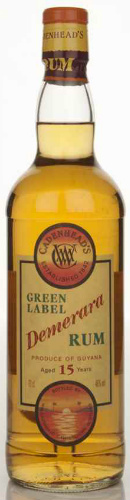
First of all I’d like to start telling you that this review won’t be about the Cadenhead 15yo Demerara Rum that’s in the picture. It’s actually about the Cadenhead 12yo Demerara Rum, and not just any 12yo, but one that was finished in an ex-Laphroaig cask. Laphroaig being one of the most famous of peated Islay Whiskies. Of course Ardbeg and Lagavulin are equally as famous, but that’s beside the point. I couldn’t find a suitable picture of the bottle (I don’t have it here), so I put in this one, since it looks pretty similar. The 12yo has an additional sticker over the neck and cork, starting this is from an ex-Laphroaig cask. The 12yo Rum is even lighter in color, than that of the 15yo in the picture. Cadenhead of course, is an Scottish independent bottler whose main business is bottling Single Malt Whiskies, who also bottle some pretty good Rums as well. I’m sure, more of those will feature on these pages in the future, especially the cask strength ones.

Cadenhead Green Label 15yo DemeraraColor: White wine. Very pale gold.

Nose: Sweet and funky. Thick and unmistakable Demerara. I know peated Whiskies very well, but I can’t detect any peat in this yet. Distant hint of yellow fruits, white peach. The fruit interacts very well with a mystical hot dry wind note. Sweet peach yoghurt (not the acidity, there is no acidity in the nose whatsoever) and sweet black tea. Creamy. Small hint of nice smelling paper, which adds to the wonderful balance this Rum emits from my glass. All aroma’s go together very well. At this point I have to stress that this Rum has had plenty of time to “settle” with air. Maybe one to decant as well. (I’ve written about the benefits of decanting Whiskies earlier). Still no peat, nor smoke, but I do get some toasted wood. A more than wonderful nose that seems to go on and on. Exceptional. Just give it time to breathe!

Taste: I get the tea note first. Starts sweet, but the sweetness is quickly gone, to be replaced by a prickly woody note, which strips most of the sweetness out of my mouth like it’s been done with sandpaper. This makes room for the strange combination of acidity from unripe berries, milk chocolate and earwax. Wow, this is getting strange fast. Is this the effect of the peat? It still doesn’t remind me of peat though. Lets take another sip. When the dryness takes over, the balance deteriorates a bit. Not everything seems to be in check, and the aroma’s feel a bit uncomfortable. Something new moved into the building and the older residents don’t know yet what to make of it. More toasted cask now, with even some bitterness from one, or both casks. The finish seems short at first but when it turn into the aftertaste a smoky prickly sensation starts to happen mixed with mustard and the typical aroma’s of Demerara that were pushed out of the body and finish of the Rum. The Laphroaig cask did have an effect on this Rum, just not as I expected.

Maybe you Rum buffs don’t know this, but Laphroaig is actually a very sweet Whisky underneath. It’s sweetness is just well hidden underneath heaps of peat and iodine. Well, Laphroaig used to taste like that. More modern Laphroaigs are more obviously sweet, and the peat became more accessible, and the iodine, well, you can get that at your local pharmacy. How strange it is then, that a sweet Whisky with a sweet and heavy Demerara Rum make for such a dry Rum?

I always passed on the Green Labels when buying Rum from Cadenhead in favour of the dumpy bottles with Cask Strength Rum’s in them. Somehow a dumpy bottle with 36yo Uitvlugt (PM Mark!) Demerara Rum from 1966 bottled at 69.3% ABV, had more appeal to me than a 12yo Laphroaig finished Demerara. It still does, but this Green Label is no punishment to drink either. Maybe a bit unusual but also a very interesting experiment. I like it, and its even better than I thought it would be. Beyond the obvious, I’m not sure what the Laphroaig cask did for this Rum, but I do feel that the Demerara Rum, before it was finished, was already good to start with. I’m pretty sure it is Enmore (VSG Mark).

Points: 86

Cognac Week – Day 6: Ragnaud-Sabourin Alliance N° 20 Reserve Speciale (43%, Grande Champagne, 1er Cru du Cognac, Circa 2006)

Cognac Week LogoAlready the sixth day of Master Quill’s Cognac Week, and we’ll finish off this week with Ragnaud-Sabourin. In no way is this week representative of the huge Cognac World, but I already found out I like quite some Cognacs from Ragnaud-Sabourin, that’s why I’ll finish off with two of their expressions. Today we’ll start with the Alliance N° 20 Reserve Speciale. First we see that this Cognac doesn’t have the 40% ABV. of most others I reviewed up ’till now. Most had a watery taste, so like me Ragnaud-Sabourin felt it could benefit from some more alcohol to transport the aroma. My kind of thinking! This is a Cognac made from grapes grown in the Grande Champagne region, and it is an older bottle. Todays version looks a lot less stuffy.

Cognac is a distillate of White Wine. To be called a Cognac (a Cru), it must be distilled twice and 90% of the grapes used must be Ugni Blanc, Folle Blanche and Colombard. The last 10% may be Folignan, Jurançon Blanc, Meslier St-François, Montils, Sélect and Sémillon. When the Cognac won’t be a Cru, the rules are a bit less strict. Percentages differ as well as the use of different grape varieties. Ageing must be done in Limousin oak for at least two years.

Color: Orange gold.

Nose: Very aromatic. A wealth of depth and no so unbelievably smooth. This has a lot more going for it than only that smoothness most Cognacs have. Sure it’s smooth, but it also has a hint of petrol, like a good Riesling. Hints of mushrooms, lavas and dust. Licorice, fruity with thick toffee ice-cream. A breath of fresh air and some nice spicy oak in the background. Definitely French oak since this is lacking the vanilla of american oak. Slightly tarry and a tiny hint of soap and burnt caramel. Wonderful stuff. A really good nose.

Taste: Licorice and just after that some thick caramelized cherries. Warming. Already a nice woody attack. Slightly bitter hint of wood passing by mixed with a hint of sweetness. Toffee again, but also the burnt caramel. Hints of licorice and paint. Vegetal. Although not as complex as the nose, still a lot happening here, with some nice surprises. The bitterness stays on well into the finish. If only it would have been slightly more complex (like the nose). If the bitterness would have worn of towards the finish, this would have been near perfect.

This is 43% ABV and it shows. In style it is much rougher than your usual Cognac, but the slightly higher strength is doing its part as well. Fabulous Cognac, especially for me being an avid Single Malt fan. If you’re a distinguished Cognac gentleman, this may be a little bit to rough ’round the edges (and slightly too high in alcohol), but I love this one, so…

Points: 86

Cognac Week – Day 4: Château Montifaud XO (40%, OB, 1981/2011)

Cognac Week LogoJust like I promised yesterday, Today we’ll return to Château Montifaud, and this time we will have a look at their XO expression. (Extra Old). By law an XO should be at least 6yo, but again we see that Montifaud age their Cognacs longer than necessary. This XO is 30yo! In 2016 however law will be changed, and an XO should be 10yo, but I don’t think Montifaud will age their 30yo XO Cognac even longer, now the law will change. Just like the VS, this is made with grapes from the Petite Champagne region. It maybe a “lesser” region than the Grande Champagne Region, but Montifaud will know what to do with these “inferior” grapes, if the VS is anything to go by.

Chateau Montifaud XOColor: Orange copper gold (ever so slightly lighter than the VS.)

Nose: Winey and with some added acidity, which smells as “age”. Deeper and more brooding. Old bottle effect and powdery. It’s different from the VS which already had a beautiful nose. This XO is really a fantastic Spirit to smell. It’s so nice, that I completely forgot to take notes when I was nosing this!

Taste: Winey and sweet. It’s even more winey than the VS and lacks the licorice, its younger brother has. Honey and green apple skins. Fragile old age. This one has more depth, (but not as much as I’ve come to expect from a 30yo Cognac). It does have much more staying power compared to the VS The finish has a well hidden burnt wood note that’s hardly there. When that dissipates it shows a slightly translucent acidic note that also quickly dissipates. The sweetness is less of a honey quality and more of plain sugar, and it’s always present. If the sweetness would be more refined, it would have been an even better Cognac.

Coming from a Whisk(e)y background, I find these Cognacs to be very…lovely and light. Even these old blended stuff of 25yo like the Jean Fillioux, and this 30yo Montifaud come across as a bit too simple in the taste, and I do believe the lowest possible ABV. for a Cognac is hurting the wealth of aroma’s these kinds of Cognac should have. So age isn’t everything when you start adding a lot of water. In fact I don’t want to write about this again. With this one I want to sit back and enjoy.

Points: 86

Springbank 15yo (46%, OB, Circa 2003)

So the Springbank 10yo is always a nice dram and really affordable to boot. Springbank 15yo is usually quite a different dram, never simply only an older version of the 10yo. We already know there always is quite some batch variation with Springbank, and we love that. Not every consecutive 15yo is similar to the previous one, and now the 15yo is not a mere step up of the 10yo. Apart from the taste of it, probably the reason a lot of anoraks love Springbank. So without further ado lets finish off this rotten year 2015 (at least for me it was) and aim for a better year in 2016. So I’ll see you again next year, in good health. Slainthe!

Springbank 15yo (circa 2003)Color: Orange gold.

Nose: Funky Sherry, right from the bat, mixed with fresh air. Something completely different from the 10yo. More fruity with fruity acidity from all kinds of different fruits. Apply acidity as well as acidity from dark fruits. Dry and dusty. Lean and sharp, as opposed to the fatty vanilla from the 10yo. It’s not just an older version of the 10yo. Small hints of peat as well as (only) a small hint of the clay and wax from the 10yo at first, but these aroma’s, as well as the sweetness, develop a lot over time, so give it time to grow. Wonderful stuff.

Taste: Sweetish, red fruits, cloying syrup. A bit Port like. Toasted cask. Peatier than the 10yo, but the peat is well hidden behind the Sherry notes. Definitely a lot drier and fruitier from the 10yo. Alas, just like the 10yo, this has not the longest of finishes and the aftertaste is not particularly big as well. Lovely development towards more fatty peat and oil and sweet tar and a hint of licorice and sugared black tea. Extremely well made and balanced.

I remember when this was released, it wasn’t a very popular bottling. Sure it deviated quite a bit from the usual Campbeltown profile. Even today the 15yo isn’t the most popular Springbank. People seem to dish out more for the old 10yo than for this old 15yo. I’m just happy it is here and it is different from the 10yo. I love both, but for me the Sherry brings something new to the Springbank table, and therefore will score this slightly higher (and because I like it more).

Points: 86

Borgoe 15yo “Single Barrel” (40%, Suriname)

After the pride of the SAB company why not move on and have a look at their Grande Dame. Where the 8yo was released in 2006 to commemorate the 40th anniversary of SAB, this 15yo “Single Barrel” was released in 2011 to commemorate the 45th anniversary. Maybe next november we’ll see the next anniversary bottling, a 20yo maybe? The 8yo and the 15yo thus are specials, but there is also a more standard range Borgoe. The first one of those is called the Borgoe ’82 “The Jubilee Blend”, the second is called the Borgoe “Extra”  and the third and last one is the Borgoe 5yo “Vintage”. By the way, all White Rums made by SAB have different brand names, so Borgoe only exists as a Golden (or Dark) Rum, whichever word you prefer. Borgoe uses both simultaneously.

Borgoe 15yoColor: Orange gold.

Nose: Very funky smelling. Still caramel and toffee, but there is a lot more going on. Very nutty. Organic clay. After the fatty and creamy introduction, Wood and deep sugared fruits. Honey with dark brown banana skin. This is completely different from the 8yo, not just an older version of it. I’m not completely sure everything is as it should be , but whatever it is, I love it. Fresh cigar box wood. Pencil shavings and dust. Just like the 8yo, the aroma’s it started with take a back-seat and it turns more dry. Smells like a worthy super premium Rum to me.

Taste: It starts out with the simple sugary sweetness, like the 8yo, as well as the fresh woody bit. After that, everything changes and it becomes incomparable to the 8yo. Where the 8yo went down in a hurry, this 15yo sticks to your throat and takes a long time to get down, developing along the way. Perfect balance between the nose and the taste. Again the thick creamy and nutty aroma. Tiny hint of burnt wood bitterness, but that only aids the wonderful taste. Excellent length in the wonderful tasting finish and a good aftertaste. Some tiny acidic wood note appears in the aftertaste, but that is hardly a problem, when so much other aroma’s keep lingering on. This one is far from tasting “thin” even when it shares the low ABV of the 8yo: 40%.

One thing strikes me as odd. The website mentions: “Our own master blender created this special Rum along with the best Rum makers of the Caribbean” and on the back label it states: “The golden rum was selected from each single barrel by our master blender and blended to ultimate perfection”. So several Rum professionals created this Rum or only their master blender? How can this be from a single barrel and be blended? Did they blend the Rum, put it back into a barrel, marrying it and then bottling it from a single barrel? Strange…

Twice the age of the 8yo, twice the price of the 8yo but also twice the taste of the 8yo. Definitely worth the money, if you can find it, because it seems quite hard to get lately.

Points: 86

Glen Scotia 14yo 1991/2006 (61.6%, Adelphi, Refill Hogshead #1071, 258 bottles)

After two more Wheated Bourbon’s it’s only a short hop across the pond to land in the west of Scotland. Campbeltown to be precise. Today we’ll spend some time with a Whisky from the “other” distillery from Campbeltown Glen Scotia. Well. it used to be the “other one”, But today Springbank isn’t just Springbank anymore, with their Glengyle distillery producing the excellent Kilkerran. Here we have an almost 15 year Single Malt Whisky that managed to stay at 61.6% ABV, quite a feat. Let’s see where this will take us…

Glen Scotia 14yo 1991/2006 (61.6%, Adelphi, Refill Hogshead #1071, 258 bottles)Color: Very light gold.

Nose: Spicy, smoky, grassy and extremely fruity. Warm in its appearance, maybe because of the cookie dough? Lots of barley and a hint of rubber. Not your ordinary Bourbon matured Whisky. Very nutty and waxy, but again a kind of industrial waxy rubber. Rubber bands mixed with gravy. Next is a lemony fresh fruitiness wich in turn mixes with the smell of a freshly printed newspaper, warmed up a bit on the radiator. Hints of warm water you used to cook mussels in. Dis I say this was a bit unusual? I did? All right. Salty and sweet barley I imagine with a snuff of white pepper, ashes, and smoke. Warm custard, but very restrained. Quite complex and special.

Taste: Lemony paper. Warm Chivas Lemon Curd. Lots of sweet barley and here too a whiff of rubber passes by. Band aid I would say. The taste is definitely less unique that the nose was, but still not your usual suspect from a Bourbon Hoggie. Hints of nuts and lemon, and a little bit of cookie dough. Hints of rettich and a tiny, tiny amount of woody bitterness in the aftertaste.

An excellent nose you almost never come across. It’s easily understood, why this Glen Scotia got selected by Adelphi. Especially the nose is quite complex. Balanced stuff, the nose matches the taste. They belong together although the nose was more complex. Not everything from the nose was to be found in the taste. The beauty lies in the detail with this one. And I’ve said this before, give this time to breathe.

Points: 86