“An Islay Distillery” 9yo 2008/2018 (54.9%, Cadenhead’s, Small Batch, One Bourbon Barrel & One Sherry Hogshead, 330 bottles)

Let’s kick in the open door: this is a Lagavulin (supposedly). It’s not on the label, but I have been assured this is a Lagavulin. However, we still can’t be a 100% certain now can we! Lagavulin used to be, and probably still is, my highest overall scoring Distillery from Scotland. There were hardly any bad or mediocre Lagavulins around. Even the affordable standard 16yo (The White Horse version) was stellar, the newer “Port Ellen version” is still very good. When the 12yo returned as an annual special release at cask strength, again very, very good. Right about the time, lets say 2021, maybe even earlier, signaled a noticeable downfall in quality. Picking up notes of a milky almost new-make spirit. Around 2019 with the release of the 10yo, the 9yo Game of Thrones and the 11yo Offerman Edition came the time that made me look elsewhere. Especially because of the 10yo (and the 8yo, come to think of it). The 9yo and the 11yo were still decent. So, in come the independents! Thank god for them! An indispensable lot. Diageo protects the Lagavulin name with their life, so that’s why companies like Cadenhead’s can’t put the Lagavulin name on the label without being shot, or worse. Hence “An Islay Distillery”. Some others at least think of a resounding name from which the public might or might not guess that it is a Lagavulin, or leave some subtle hits on the front and/or back label. I am buying some of these anonymous Lagavulins just to see if all these younger Lagavulins have the same milky taste I dislike like the 10yo and the latest batches of the 12yo’s have. I hope not. Here is an example from Cadenhead’s, but there will be more in due course.

Color: Orange Gold.

Nose: As expected, peaty and smoky, not even all that heavy, even though there is a lot to take in right from the start. This leaps out of my glass. Some nice wood, although quite masked. Menthos with floral vanilla and quite dusty. Perfumy kippers, salty and smoky. More notes of fresh oak. Vegetal wood, mature and appetizing, so not sappy wood which is more fresh. Hints of textile, melting plastic and wet dog. Silent yet deep dark peat. Smouldering (I love that word, have to use it more often if applicable) embers. Funky organics. There is quite a lot going on, that’s for sure. Something does remind me of matches a bit, but to be honest, I don’t really pick up on any sulfur right now. It has a fresh feel to it as well, like walking in the woods on a sunny and somewhat cool day. A temperature just right for walking. Next a sweeter, yet organic note, like smelling the left over stones from eating really ripe cherries (just before they go soft). Combine this with some light beech wood smoke and maybe a more smoked meat note. This smells entirely different from an officially released Lagavulin 9yo (The Game of Thrones version). The nose keeps developing in my glass showing more traits of red and black ripe fruits and vanilla in a thin coat of peat. Maybe I do pick up on some sulfur now (a fart?). Still in a minute quantity then. Some Iodine, now that’s detectable. Sea-spray? Nevermind. Bonfire on a good day. Big nose, slightly creamy and sweet if you let it breathe. I do like it quite a bit and can’t stop smelling it for the layers it shows.

Taste: Yes, holy moly. Big peat but also big on the warm plastic I also found in the nose. Just enough wood, nice. Also sweeter than expected. Licorice. Definitely not a weak Whisky like the 10yo, much bigger and bolder. The 10yo seems unfinished, milky, nothing of that here. This is 9 years old and it is done and dusted, it’s ready. Very big for a Lagavulin. Iodine and warming. You can think of Lagavulin as an elegant Islay Whisky in general, but mainly because of the 16yo, this 9yo is not, it is raw and unpolished, a different take if you will. You can even see some resemblance to the boldness of the 16yo, at least the 16yo from a while back. The Whisky is so big that the plastic bit, that usually is a big off note, killing even, only plays its part in the whole. It is in no way overpowering nor bad. Still the whole is in your face! Sweet, (burnt) wood, toast, peat, licorice and warm plastic. That’s it, those are the main markers. Luckily more is happening in this one, especially on the nose. You can pick up on the American oak, I’m pretty sure both casks are American oak. The sherry bit is similar to the Sherry you get from a good batch of the 16yo. Cow dung in the finish. Aftertaste is sweet, peaty and plastic-y and very low on bitterness, lets say soft tannins.

Well, this is a small batch and in this case combining two casks, a Bourbon barrel and a Sherry hogshead, together normally good for some 600 bottles at cask strength. However only 330 bottles have been bottled, why is that? Not all has been bottled, leaky casks? I wonder…

I took this bottle to Nico, who seemed to really dislike it, claiming it was too much and over the top. For him this was just wrong, so be warned, this might not be for everyone. Of the two, I am definitely the one who likes extremes more. I’m still actually amazed he feels this strongly about this Whisky he claims is wrong, since I do really like it. I wonder, is my palate shot? Luckily no, since most other Whiskies we both still tend to score pretty similarly, but sometimes something like this happens. For instance, I really like the Palo Cortado Springbank 10yo, I also got pretty enthusiastic about it on a Springbank society tasting (in public). Nico did not (he didn’t even order it). In the end, I feel this 9yo is some sort of a 16yo on steroids and after that even some more steroids. It also seems to have some off notes the 16yo doesn’t have, which in this case works for me just fine, but it might not work for you, as it did for Nico. It is definitely a big Whisky, I’ll say that, very big.

Points: 87

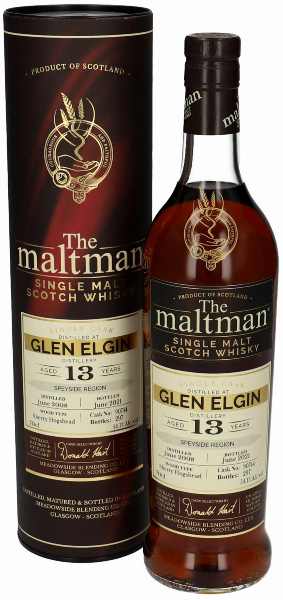
Glen Elgin 13yo 2008/2021 (54.1%, Meadowside Blending, The Maltman, Sherry Hogshead #90744, 297 bottles)

Seven years between the first review of Glen Elgin and the second one. That has to change, so what about two weeks between the second and the third review? Now, that’s a lot better now, isn’t it? Third review and again it is an offering by an independent bottler. The company’s name is Meadowside Blending, based in Glasgow, and specializing in Single Malt Whiskies, and run by the Hart Family. I don’t know why, but initially I thought this was a German outfit, probably because a lot of their bottlings are imported into Germany. My bad. This is a Scottish firm and they have several ranges on the market. Foremost is the range called The Maltman. These are all single cask releases. Next interesting range is The Grainman. Yes, you guessed it, all single cask, Single Grains. Other brands carried by the firm are The Granary (Blended Grain) and Royal Thistle. The bottle at hand, and this is no surprise if you are a regular on these pages, comes from The Maltman, yes a single cask, Single Malt Whisky from Glen Elgin. And yes imported into Germany by Alba Import, not sure if all of it went to the German market though…

Color: Orange gold.

Nose: Spicy sherry. Wood-spice and rather fresh and appealing, yet also some black coal with tar and right after that a more sharp and acidic fresh note. I have to say, all fits together quite well, so nothing wrong in the balance department. Lovely oak. The nose as a whole is thus rather appealing, fruity with half ripe sour cherries and maybe somewhere in there a more yellow fruit-note (indistinct). Breaths of fresh air run through the Sherry bits as well as some gravy? This is not a Sherry monster in the style you now often get with all these 10yo first fill Oloroso Sherry monsters. No, this is way more refined and still has quite a lot of colour to it. Tiniest hint of sulphur which I don’t even pick up on every time I nose this. Right after that some honey and maybe even some cigarette smoke. Warming and actually helping the whole of the nose. This has some fresh wood right from the start, but it’s not overpowering and actually very nice. Reminds me a bit of being outside near a sweet water lake on a nice and sunny day. Fresh winds, and the sherry bit could almost be some nice floral aromas blooming in nature. I guess this will not be a bad weather Whisky.

Taste: Half sweet yet also spicy (wood). Runny caramel or warm toffee. The coal, the tar and the wood are present right from the beginning. Sweetness seems building already. Quite some toffee now. All of this right before some fruit sets in. Warm apple compote? Nutty (yet different than in other Sherry bottlings), soft and supple leather. Leather as in belts and trousers, not thick saddle leather. Aftertaste is toffee and caramel again. Hints of plastic and warm wood. Again well balanced. I wouldn’t call the nose better than the taste of the other way around. No, this is one nice complete package indeed. Yet if I had to… yeah the nose is slightly better.

This one differs obviously from the Bourbon hogshead one by the Sherry influence. Apart from that, the Sherry influence didn’t actually overpower the traits of Glen Elgin, so there is still a family resemblance to be noticed between the two. I have to say, I like both Glen Elgins a lot, and both have their own moments. This one scores slightly higher (one point), because it is just a little bit more appealing and definitely better suited for a larger audience than the Bourbon hogshead one, which is more of an anorak-y Whisky. This one is also a little bit lower in ABV, which helps the drinkability. I like this one a lot, and would definitely it pick up again if I weren’t that adventurous and prefer to see what else is out there!

Points: 87

Mortlach 10yo 2011/2021 (57.3%, Signatory Vintage, Finished in 2nd fill Sherry Butt #3, A Farewell Dram bottled for Walter Schoberts Final Tastings, 527 bottles)

What can I say, Mortlach is a special distillate with a special profile. First of all, Mortlach is known for its unique distilling regime where the spirit has been distilled 2.6 times. Mortlach is also known for its big and meaty Sherry profile, like the 16yo Flora & Fauna bottling or this 10yo Wilson & Morgan bottling. But even the lighter (ex-Bourbon) versions of Mortlach always bring something special to the table, like this 11yo Provenance bottling, not a high scorer, yet very interesting indeed, or this small batch 12yo Signatory bottling from 3 Bourbon Barrels. This time around however, we’ll have a look at a Mortlach that has its initial maturation in, most likely, American oak Bourbon casks and a finish in a second fill Sherry butt. As usual, no info about the type of Sherry, and we all know there are a lot of different types of Sherry around. Oloroso is no Palo Cortado, ain’t it! Nevertheless, this Whisky seems to be more on the light side, so at this point I don’t expect a meaty Sherry expression.

Color: Light gold.

Nose: Nice entry. This immediately reminds me of good Whiskies I tried in the early noughties (if you let it breathe for a minute or so), definitely brings back memories. A slightly mineral and somewhat Sherried barley note. Wow, really old-skool nose. Quite organic at first with hints of sugary sweetness, cardboard and white bread. Slightly biscuity. Fresh and vibrant nevertheless, since bread is not a vibrant aroma. Very classy and well balanced for a 10 year old dram. Some fruity notes emerge next. Initially some unripe cherries. More fruits in general, more syrupy yellow fruits actually. Peach syrup and candied pineapple. Sweet peachy yoghurt. Together with this a fresh and warm barley wind bringing a Gin-like freshness. Warm old wood in the sun. Slightly dusty and powdery. Not floral at all although it is slightly perfumy. It has quite a lot of different aroma’s going for it. For me personally Mortlach often has this meaty quality to it (especially when aged in a Sherry cask), but I’m struggling to find that here. It is definitely more fruity than meaty. Don’t think the fruit is masking it, I feel the meatiness just isn’t here. The longer this breathes, the fruitier and sweeter it becomes. Very appetizing fruity fresh and vibrant Mortlach this time. After some time a more soapy note emerges as well as some more freshness. Not in a bad way though. Definitely a quality nose. Maybe a little bit light, and this might have been ruined (a bit) if it would have been reduced. All in all definitely a quality and classy nose.

Taste: Nutty first, almonds, hazelnuts and fruity second yet not far behind. Big, sweetish and balanced. Did I mention that its nutty? Notes of burnt or toasted oak, and some cold dishwater to be honest. Big aroma initially which quickly becomes somewhat thinner. Definitely a fruity Whisky with lots of ripe yellow fruits and some red berry acidity. After the layered and complex nose, the taste is simpler and more straightforward. Notes of a yellow fruity beer and ever so slightly soapy. Even though the nose is way more complex, the nose and the taste of this Whisky are well balanced and suit each other well. Since this was finished in a Sherry butt, I guess this initially aged in probably two or three ex-Bourbon casks (barrels and/or hogsheads), and where I struggled to pick up on the Mortlach meatiness, I also struggle to pick up on vanillin from the American oak, so, probably not first fill. A vanilla note or ice-cream note, yeah, maybe, gets lost a bit in the slight thin-ness of the body. And maybe somewhat overpowered by the fruity acidity. Let’s say this is a summer expression of Mortlach. The aroma’s are transported well, so 57.3% ABV, yes indeed, but it doesn’t really show this much alcohol. More woody towards the finish, warming, with a bonfire like toastiness, as well as some paper and cardboard notes. Dirty and fruity, yet not meaty.

A Good summery Mortlach. The nose is really good. Sometimes the taste seems thin, but that also depends a bit on you yourself. For this review I tasted it twice on different days, and the second time around it wasn’t as thin as the first time. Very good Mortlach again, and this particular expression has some similarities to Bimber that has matured in Bourbon casks, Like this cask #194.

Points: 87

P.S:(I). This one is very nice after a cup of coffee…

P.S:(II). In case you are not German and you want to know who Walter Schobert is:

Walter Schobert (* 1943 in Erlangen) is a German museum director and author. Schobert studied Protestant theology and theatre studies. He then worked as a priest and as a film speaker for three years each. From 1974 to 1985 he was chairman of the working group for community film work. From 1979 to 2003 he was the founding director of the German Film Museum in Frankfurt am Main. He is the author and editor of numerous writings on film and film history and has taught film history at various universities. Since 1994 he has been an honorary professor at the Institute for European Art History at the University of Heidelberg. In 1995 he was awarded an honorary doctorate from the University of Edinburgh. In addition to his work on film history, he has published numerous publications on the subject of Scottish whiskey and regularly conducts tastings. He is a member of the “Keepers of the Quaich”, an association that looks after the whisky culture in Scotland [Source: Wikipedia].

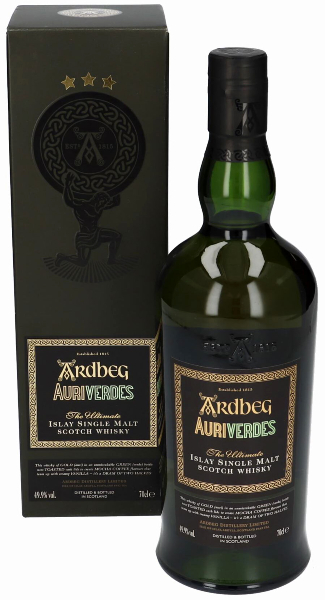
Ardbeg Auriverdes 12yo 2002/2014 (49.9%, OB, American oak casks with toasted virgin oak lids, 6660 bottles)

I have to say that many of Ardbeg’s “special” releases aren’t getting a lot of love. It almost seems to be in fashion to slam these releases. Maybe a combination of NAS and silly marketing or the combination of NAS and the pricing of these “specials”, because obviously these Whiskies could be containing pretty young stuff. Maybe people dislike the posh new owners LVMH. How can a leather bag and a mediocre Champagne be the owners of the mighty beast that is our Ardbeg. Whisky is romantic and better than all other alcoholic beverages! Another explanation might be that the core range is actually quite good. Especially Uigeadail and Corryvreckan if you ask me, both better than the 10yo, An Oa and the 5yo Wee Beastie. All five are more affordable than all these special releases. Most of which are often NAS Whiskies (Hence the funny names) and also are a bit more experimental in nature as well.

In 1997 Ardbeg was bought by Glenmorangie, so the experimental nature of these releases comes as no surprise when, since 1995, they have Bill Lumsden on the payroll (Head of Distilling & Whisky Creation at The Glenmorangie Company). For those who don’t know Dr. William “Bill” Lumsden (The Mad Scientist), he previously experimented quite a bit with Whiskies at Glen Moray before experimenting on an even higher level at Glenmorangie and Ardbeg. Online, two of the most disliked Ardbeg expressions are Perpetuum and the Auriverdes at hand. Perpetuum in fact wasn’t even very experimental. Old en Young Whiskies from Bourbon and Sherry casks. Still, I found it was a decent expression and I never had a dull moment with it. I scored it 86 points which is certainly not bad at all. But the two aforementioned cheaper ones from the core range: Uigeadail (2018 batch) scored 87 and Corryvreckan (2014 batch) scored a whopping 89 points, so both outdid the “special” release. As mentioned above , this time around we’ll have a look at another unloved Ardbeg: Auriverdes. Is it experimental? The Whisky matured in second fill Bourbon barrels. The original lids were removed and replaced with new virgin oak ones, which were toasted using a very special secret toasting process, which accounts for the experimental bit.

Color: Light gold, not pale.

Nose: Nice funky peat, soft smoke with some notes of crushed beetle. A fireplace in December. The smell of Christmas in a log cabin. Hints of black coal and glowing embers. Old bicycle inner tubes. Less salty and fishy than expected from a south shore Malt, even though more than enough organics are happening in this nose. After a while, a more fresher approach starts, with breaths of fresh air, and more citrus-like aroma’s without being overly fresh or acidic, just adding to the perfume. After this fresh phase, we’re back in the realm of black coal and chimney smoke in winter, preferably on a dark evening after a snowy day, only lit by street lights, by odd coloured sodium lamps. Tiny hints of sweetish licorice powder, a Licorice-Menthos combo and some dust for old-times sake. Ooooh, the rubber comes back. I think this is a really nice smelling Ardbeg. Maybe some experimentally and specially and secretively toasted cask ends, but other than that, no funny business and nose-wise quite a successful experiment. I really do like the nose on this.

Taste: Sweet licorice comes first, as well as the crushed beetle. Somewhat vegetal and tea-like. The texture seems a bit thin initially. An indistinct fruity note is also present. Citrus, only more sweet, more sugared, than it is acidic and maybe some other ripe yellow fruits as well. Warming going down. Somewhat sweet, somewhat peaty and more of the Menthos feel that came rather late in the nose. It tastes somewhat like a minty licorice powder. Whisky-candy. The sweetness works very well in this Whisky. After swallowing, a nutty note emerges as well as some distant vanilla. Initially not big-bodied at all, maybe this is what people dislike in this expression. It is definitely simpler than the nose. The nose is really good and melancholic, the taste is initially a bit watered down, or maybe not mature enough. Is this the youth a NAS Whisky allows for? Yet it has great balance. Everything fits and works together well. Mind you, this is still not bad, but the nose carried some sort of a promise of things to come, a promise that hasn’t been kept entirely. I expected more complexity. During sipping, the nose still keeps on evolving, and truth be told, the taste does collect itself, which makes for a highly drinkable Ardbeg. I’m not having a beef with this one at all. Well, well, well, the taste really does develop after a while. This needed some time as well, time I might have saved, if I had added some water (but why hurry). It did gain even more balance and the body and especially the finish are bigger now, still not very complex though.

If really analysed well, with more than enough time, it is much easier to pick up on the true Ardbeg underneath. Maybe these specials aren’t for casual sipping at all, and if you try to be patient and give it some time, these special releases might be better than I was lead to believe by the internet. Maybe you got to work them a little, and since you are reading this, you as an experienced taster, are very able to do so, so please do.

People can be so judgemental these days, living fast, judging fast, too self confident. That’s human nature in the 21th century Whisky world or maybe even the world in general. I’m actually amazed how negative some people are and how vocal about it as well, and a lot of less experienced people just run with this and claim the same, unsure about their abilities to smell and taste. I see around me that even experienced aficionados fall into this abyss. If this is you, maybe you should learn to relax a bit, sit back some more, take some more time to smell the roses, (or Ardbeg in this case). Don’t be biased that Ardbeg is trying to pull one over your eyes and dupe you, because they probably aren’t. Not from the Whisky makers perspective anyway. Marketing may be another story entirely. Bill may be a mad scientist who tries to explore, often with an idea and sometimes by trial and error. This is definitely not a bad Ardbeg and don’t believe anyone telling you this. I feel this is a decent malt if you only let it. Don’t fool yourself and don’t let yourself be fooled, make up your own mind, and if after this you don’t like it, it must be true. Only then.

Points: 87

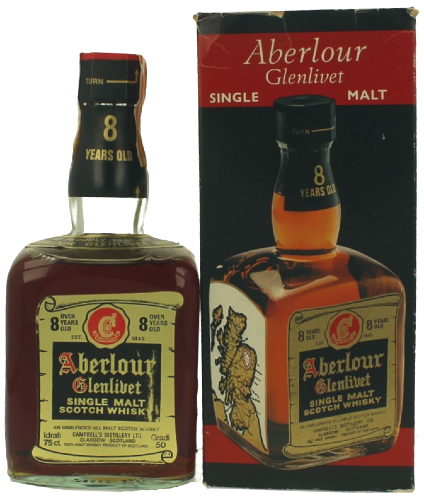
Aberlour 8yo (50%, OB, Unblended all malt, EST. 1845, 75 cl)

So the last Aberlour review posted in October 2022 was of a modern 13yo officially bottled single cask. Modern, since it was distilled in the 21st century. This review of the 8yo was supposed to follow the 13yo right on its heels, but it didn’t. Autumn, or fall, started happening when I started to write the review, and it was suddenly time for peat. Fast forward to Spring. Winter has ended and although the time for peat still hasn’t ended, time has finally come for a nice old skool Sherried Speysider. No, it didn’t. Spring came and went and this review was again further postponed. When I picked up this review again it was summer, yet again the review remained in its draft state. Now finally when looking outside, summer is most definitely over. Maybe we’ll still get some days that look pretty good, but I guess autumn started happening. So no use any more for the desk fan and the air outside is cold. We might as well prepare ourselves, because winter is coming again, and peat already started lurking at me.

Never mind. After the Aberlour 13yo bottled in 2017, here we have an 8yo from the seventies, an oldie and hopefully a goldie, from a different century as well. There are a lot of permutations of this Aberlour bottled in the square bottle, and there can be quite some differences between the Whiskies, or so I’m told. Up ’till now I have only tried one other. Like with so many things in life, not all 8 year old Whiskies are created equal, I guess.

Color: Light orange gold.

Nose: Old skool Sherry nose. Waxy, toffeed, some fresh butter and funky. Like coal fired stills including some petrol fumes and exhaust gases from outside the still house. And like real petrol fumes and exhaust gases, they dissipate in the wind. Cola, cold motor oil and coal dust. Dusty old furniture. It seems as if some sugar sets down in the back of my throat, only from smelling it. Doesn’t smell like an 8yo Whisky at all. Initially some hints of Rhum Agricole, but this dissipates rather quickly and I also don’t pick up on it every time I smell this. We all have our better and worse days you know. Smells nothing like a modern 8yo Whisky as well. Much softer. Very mature for a standard 8yo. Things have changed since then, wasn’t everything better in the old days? Still dusty with this wonderful coal dusty Sherry nose, like we know from all the greats. Whiffs of sweet yellow fruit yoghurt and cookie dough. All is good. It smells nice and comes without any off-notes. After a while quite fresh for an old skool malt. Like a breath of fresh air (in an old earthen floor warehouse) and yet still sweet smelling.

Taste: Nutty and waxy sherry. Also some dry and active wood, slightly bitter as well. Drying my tongue and palate. Slightly spicy (cinnamon), fruity (dry bits of peach and apricot) and definitely old skool. Hints of cola and especially licorice. that wasn’t present in the nose. Besides that it is slightly prickly as well. Is this from the wood or some sort of liquid smoke? Crushed caterpillar (don’t ask). Slightly cloying Sherry,but I wouldn’t say this is all that sweet. I expected it to be way more sweet since this Whisky is so sweet smelling. All the specialness is in the beginning. It shows its age by halting its development halfway through and not being all that complex. Not in my glass nor in my mouth. It is a wonderful old skool Sherried Malt, but it is thus also a bit simple. At this age it was probably aimed at, amongst others, the Italian market, so no surprise here that it is highly and dangerously drinkable. Next some creamy and buttery notes are able to escape, albeit briefly, from the grasp of the Sherry. The bitterness shows some stamina with its staying power. It is not dominant yet quite noticeable. Well balanced though, since the taste matches the nose, and for me, it tastes slightly better than it smells, and don’t get me wrong it smells wonderful. By the way on some days I prefer the nose over the taste. On those days the taste seems a bit thin. Black coal and licorice in the finish and aftertaste. This actually works well, hiding the residual bitterness.

In the end this is a well made old malt, yet also a bit simple and regularly shows some fragility. Highly drinkable, definitely old skool, and there is no reason to keep this around for a long while, just enjoy it, since you never know what oxidation will do (or already did) to such an old Malt. By the way, the roof of my mouth is slightly anaesthetized, so definitely a higher ABV. Empty glass smells very nice by the way! Don’t sip it, bigger gulps are the secret to unlock this Malt to its full potential.

Points: 87

Bimber “Virgin Cask” 2020 (57.4%, OB, American Virgin Oak Cask #94, 263 bottles)

Earlier we reviewed two Bimbers matured in American oak casks that previously held another Whiskey. One Bourbon and one Rye. Both, together with American oak casks that previously held a Tennessee Whiskey, (like Jack Daniel’s and George Dickel), should be the type of casks that showcases the Bimber spirit best, especially when they are refill casks. This will become even more clear in my next Bimber review. That review is not yet planned, but I promise, you won’t have to wait all to long for it, just not right after this one. Just bear with me on this one.

But wait a minute, what about an American oak cask that previously held nothing more than air and maybe some water? What about a freshly made American oak cask, that has only been toasted, as they all are? Yes virgin oak. Using a new cask is not very popular in the Whisky world, and for a long time it was quite unheard of. Sure there were Whiskies made that in part used new cask, but not a lot per batch. When looking at Bimber, I was quite surprised virgin oak cask editions perform really well in the secondary market. Especially in the home (UK) market people seem to dish out some serious amounts of dough for a virgin oak Bimber. Well, since Master Quill is based in mainland Europe, the secondary market for virgin oak Bimbers has not yet reached the levels like that of the UK, so, as usual I snapped some up at a German auction. Yes I did pay somewhat more than for both the Belgium and The Netherlands editions, but nowhere near the current UK prices.

Color: Full gold, almost orange.

Nose: Creamy, buttery (Werther’s Original), with Bimbers marker: Cinnamon. Very fragrant stuff this is, slightly perfumy. Early on some hints of apple aroma close to Calvados, these are gone or overpowered lateron. Bigger and fatter than the Ex-Bourbon and the Ex-Rye reviewed earlier. Very fresh, pleasant and well balanced. Wood and sawdust. Vanilla ice-cream with a leafy and green note to it. Old cardboard and some pencil shavings. Even when smelling, the Whisky becomes less fatty. It’s dryer now. Less “big”. Still some dust, more cinnamon and some indistinct wood related spices which are easy to spot yet hard to identify. To me this one seems somewhat less complex and layered than both the Ex-Bourbon and the Ex-Rye. It is almost like the fruit wants to come out, but doesn’t manage to make it through the creamy cloak, (the vanilla, the butter and the ice-cream), that stretches over it. So this a pretty straight forward expression. Good again, yet a bit simpler. Sniffing this deeply, beautiful abundant wood notes and in no way does it smell of alcohol, similar with the other two. This is wood perfume (hints of vegetal oil and an old bar of soap). Hints of sandalwood, just less intrusive than the sandalwood coming off some men’s eau de toilette. The nose develops over time, becoming more complex with added notes of licorice combined with fresh butter. So all is good. Whereas in a tasting session with both others, the complexity just seems less, it does show multiple personalities over different sessions, so maybe this is a different way of complexity after all, or is it just me that is different?

Taste: Fruity onset, somewhat sweet. Wood, wax and some bitterness cloaked by the fruit and creaminess. The slight bitter note is paired with some licorice. Next the char and some masked (fruity) sweetness. Hints of cola? I expected it to be more creamy though, but the wood does dominate. Next some cookie dough, with a (fruity?), acidic note on top. Here I notice again that the nose seems more refined and developed after taking the first sip. Strange combination of sappy oak, sweet mint candy and carbon powder (the charred oak). A dishwater like bitterness. Usually it is the florality of dishwater that can be smelled/tasted, here it is the bitterness of soap. Just a hint, just making the whole more interesting rather than disgusting, because really, dishwater? Definitely less creamy and fatty than I’ve come to expect from the nose alone yet still bigger than “the other two”. By now the nose does evolve a lot, and again becoming more than just good.

Virgin oak casks are made of charred American oak, and since no other liquid has been interacting with the (charred) wood, a cask like this will always properly colour the Whisky. Virgin oak is often looked at with some concern, and thus it was never a common practice when it came to producing Single Malt Whisky. But after the Wine casks, the Port casks, the Rum casks and so on, it was just a matter of time to broaden the wood palette, and start experimenting with virgin oak. Why not? The market demands it, it wants choice! It is yet another marriage between spirit and “a wood” which is essentially what Whisky is. Is it better than the others, no it’s not, it’s different and it is yet another take, and often the results are mediocre at best, just like the early Wine casked Whiskies. Sgtill a lot to learn here I guess. For Bimber though, virgin oak seems to work pretty well, the quality and the character of the liquid just work with the virgin oak. Bimber aficionado’s know this, as I said earlier, because virgin oak Bimbers do very well in the secondary market, much better than its Bourbon and Rye counterparts. Is it better than those, no it is not, I say it again, but it is a welcome variant, but for a lot less you can purchase an Ex-Bourbon Bimber or an Ex-Rye one which are also much less scarce and offer at least the same amount of quality, just with a different overall feel.

Final remark. I’ve come to find that to get all out of a Bimber, you need to give it peace and quiet and also give it some time. Comparing the three: Virgin has the more straightforward nose, yet very chewy and likeable. Rye is the most complex, distinct and fragile. The Bourbon is somewhere in between the two, less fragile but much closer to the Rye than the virgin oak, so no surprises there really. The Virgin oak is actually a different puppy, and a big puppy at that. Based on the taste, the Virgin is again a different puppy, way more creamy and sweeter, and more about the cask than the other two, which show more of the (quality of the) spirit. And tasting all three back and forth, it seems to me the Rye seems to have the best balance of the three, as well as its delicate complexity. So If I had to buy just one: The Rye. If I could pick two: The Rye + The Virgin. They are not created equal, where the Rye and the Bourbon almost are. If I could only get the Bourbon, no problem whatsoever. Both the Bourbon and the Rye are quite similar, with enough to set them apart in the details, today I prefer the Rye, but tomorrow might be different. The virgin, however, is a welcome “distraction” or better: a variation on the Bimber theme. Especially after trying the Bourbon and the Rye back an forth to pick a favourite (emptying both bottles in the process), and actually, the Virgin is also a very good dram. All three are definitely worthy of their spot under the sun, and on my lectern.

Points: 87

Glenrothes 19yo 1997/2017 (58.7%, Cadenhead’s, Sherry Butt, 528 bottles)

Glenrothes is not an unknown on these pages. I come across a lot and on occasion I do buy some. However, somehow it never really became one of my favourite Whiskies. Sure, its good and I do by them and it does the job very well and so on, but it never passed that particular epic status for me. As I said, it’s very good, but it never pops up in any top 10. This Cadenheads expression, I have tasted before at a Whisky Festival, and by accident I bought two at auction in stead of the planned one. The second time around I forgot I already had one from the previous auction. Believe it or not, this happened to me twice recently, with yet another Glenrothes, strange enough. Go figure. I will probably replace this Cadenhead’s bottling, when its empty, with the other “doubly-bought” Glenrothes. I hope both are pretty decent though since I got two of both. This particular Cadenhead’s bottling, was picked by Mark to commemorate Cadenhead’s 175th anniversary, and if Whiskybase is anything to go by (very wonky scoring there), these 175th anniversary picks are usually better than the sister casks bottled by Cadenhead.

Color: Orange gold.

Nose: Soft Sherry notes. Creamy, slightly tarry and meaty. Nice soft wood, almost a bit paper-like. Quite fruity. A very well balanced dram without any flaws. Soft and smooth smelling, yet also a bit boring? Apple skins, warm apple compote. Red berry syrup with sugared lemon. Warm dishwater (a soft note), mocha and milk chocolate. Boring, because nothing really sticks out. All aroma’s flatlined, like a sleepy afternoon in warm wind. After some extensive breathing, some wood pops up. Not a lot, but just enough to make it slightly more interesting. However, this is a 19yo fully Sherry butt matured Whisky and it’s so soft, that it is in no way a Sherry bomb, it is not even a Sherry grenade. It has more colour than oomph, yet, as I stated above, it is flawless. It smells like an easily drinkable Whisky. It doesn’t even smell alcoholic, even though this has more than 58% ABV. A freshly poured dram smells better than one that sat in my glass for a while. A freshly poured dram has more notes like a Rhum Agricole, which dissipates with time.

Taste: Fruity with a white pepper kick, well, the latter came a bit as surprise. In a way it is syrupy, yet a somewhat thin syrup. The kick still lasts and stays a while to manhandle the back of my tongue. Black fruits as in very good Sherried bottlings from yesteryear. Apart from fresh fruit, also (again) the syrupy black fruits are here. If you give it more time and you keep the dram in your mouth for a while, the classic black fruit note becomes even more pronounced. I guess this is why it was picked for the 175th anniversary, because this is the note that makes this Whisky tick. On top of this, a slightly more acidic, fresh and fruity note, reminding me of sugared lemons again. Towards the finish a more tarry note, with its slight bitterness. Still not a lot of wood notes or any of its derivatives, so seemingly this wasn’t a very active cask. Hints of warm solid licorice. The chewy candy type licorice if left in the sun for a while. Vanilla powder. Just like the nose, on the palate a very well balanced Whisky. Since on my palate the Whisky is less soft and dares to show some spices, I do like the taste better than the nose, which is pretty good as well in its own right.

So, pretty good it is, with a nice, yet slightly boring nose. Tastes better than it smells, which is a big plus. Other than that, I still do like it. it’s good. ’nuff said. Moving on…

Points: 87

Lagavulin 12yo (56.5%, OB, Special Release, Refill Casks, 2021)

All of a sudden summer is over (on my side of the planet anyway) and now we are in this, still sunny, yet colder autumn season. After the 13yo Aberlour, I was planning to do another Aberlour review, yet a human can be very predictable. A change of season and the body started to crave some…peat! All of a sudden I found myself reaching for peated Malts. So no Aberlour, let’s do a Lagavulin in stead. Don’t worry, the Aberlour will surface eventually. Back to the Lagavulin at hand. More than ten years ago… wait a minute, I have to let that sink in for a while… ten years. Wow! Well in 2012 I did the last review of a Lagavulin 12yo Special Release, in that case the 2007 edition. These special releases continue to be very good, so I have no reason whatsoever to believe this might be any different. Well, Master Quill is still around and the 12yo Lagavulin is still around as well. So without further ado, let’s dip into this Lagavulin straight away.

Color: Pale White Wine.

Nose: Sweet and soft peat and delicate smoke. This is somewhere between rough and elegant. Fruity with citrus, apple (Calvados), very soft vanilla, some iodine and a somewhat milky acidity I got from the 8yo and the 10yo as well as, to a lesser extent, in the 9yo GoT and the 11yo Offerman editions (all three of them actually). Initially this resembles new make a bit and gives this Malt a youthful edge. However, luckily I might add, in here this milky note is much less pronounced than in the other two/four/six Lagavulin’s I mentioned. Yes this one is again slightly older, but also bottled at cask strength, and this probably makes a difference as well. I don’t like this milky characteristic in Lagavulin. For me Lagavulin is dropping the ball with these newer expressions, and unfortunately this element is now becoming apparent in this 12yo Special Release as well. I hear some rumours of Lagavulin overcooking for a higher yield if that makes any sense? Maybe 2008/2009 is some sort of pivotal point for Lagavulin, trying too hard to meet demand? After some breathing this milky note, dissipates or maybe my nose gets used to it and doesn’t smell it any more. (I tried it again later and the milky bit is gone. Pouring me a new one brings it back, so nothing wrong with my nose after all). A short while later, the nose (of the Whisky, not my nose) becomes more balanced. Still fruity and sweet (and youthful), with added dishwater and warm plastic (both fitting the whole). Quite prickly clean smoke and tarry licorice. A slightly spicy smoke maybe, crushed beetle and the tiniest hint of oak, late saltiness and iodine again. It smells refined and this is definitely not your hard hitting peated Whisky. I will have to compare this one to a Laphroaig 10yo Cask Strength in the future, as well as to the previous version of the 12yo Special Release.

Taste: Again sweet and fruity on entry, but also quite creamy and right out of the gate again quite youthful. A very friendly rendition this time. Not a hard in your face Malt, lacking even any bitterness from the wood. Some well integrated smoke, licorice and ashes. Tarry rope, sweet mint (Menthos) and salty. After all that fruit I didn’t expect all these Islay notes any more, but it’s still here. Lacks a bit of development and complexity, although un-complex it is not. The whole is more a banks of the Thames kind of Whisky than shores of Islay, and that probably isn’t a coincidence, but probably by design. Ashes, some iodine and wet marshland wood. Nope, not a lot of wood in this one. Part of these casks must have been at least second refills or otherwise somewhat inactive. The colour seems to suggest that as well, because it is quite pale for a Diageo bottling, a company know for their love for chill filtering and caramel colouring. Still very balanced and equally tasty though. The quality is on a slippery slope, but I still do like it, yet in a different way than I used to with these 12yo’s. It’s tasty and highly drinkable. Every aroma is neatly stacked upon another, like blocks of Lego. And every block is clear of a different colour and easily discernable. This Lagavulin is definitely more minty and modern. Still a nice expression though, just different. No need for water, but feel free to do so. The finish is of medium length and balanced throughout. No bad markers at all, apart from the milky youth bit mentioned above. The finish is sweet and smoky, the aftertaste is medium at best, warming, fruity and ever so slightly smoky. A good way to remember it, because the finish as well as the aftertaste don’t contain the questionable bits.

This is a friendly and tasty Malt, yet not exactly the high quality we are used to for the 12yo Special Release. It doesn’t even feel like a 12yo (it feels younger). Maybe lacks some strength, but in part it makes up for this with its accessibility and likeability throughout. Still good stuff but comparing it, from memory, to the 2007, it definitely is a different puppy altogether, which can be good, since it gives us another choice, and a way to match the Lagavulin 12yo Special Release to your mood. A good reason to have several editions open at the same time, if you needed one. However it unfortunately is also a bad thing, since I feel the quality is also a bit less. I worry about the future (in general as well as for the 12yo Special Release). Nevertheless, this one will split opinions. People who know the Lagavulin 12yo’s from the past will not be impressed by this one whereas others might like the new friendlier direction, and will have no clue why I’m on about sliding quality. For me, even though I do recognize its faults, I also do quite like it (to a certain extent). I’m curious about how the next few editions will be.

Points: 87

Port Askaig 10yo “10th Anniversary” (55.85%, Elixir Distillers, P/000247, 2019)

As far as I know there is no distillery called Elixir nor is there a Port Askaig distillery. Maybe there will be in the future? Nope, this Elixir distillers is a brand of the people behind The Whisky Exchange (London, UK). When creating an Single Malt Islay brand, you have some more room than a single distillery, because you have the opportunity to use the output from more than one distillery, as long as you keep it a Single Malt. So one distillery at a time in a particular bottling. I haven’t got any other Port Askaig’s lying around at the moment, but on the back label of this particular bottle it is mentioned that this comes from a distillery on the north-east coast of Islay. Historically Bunnahabhain and Caol Ila, and more recently also Ardnahoe is situated there. The back label also mentions that the distillery is close to Port Askaig, so geographically it is most likely this Whisky was distilled by Caol Ila. This Whisky was blended from just 33 casks (distilled in 2008). 20 refill American hogsheads, 8 first fill Bourbon barrels and 5 ex-solera Sherry butts. If these are true solera casks, then the casks could have been used for Sherry for quite some time. Last but not least, this hasn’t been chill-filtered and no caramel colouring has been added. Why should they when the glass bottle is this dark. So why 55.85% ABV I hear you ask. Well, The latitude of Port Askaig is 55.85º N. The longitude is -6.11º W, and to be honest, -6.11% is quite useless for an ABV.

Color: White Wine.

Nose: Soft fruity and tea-like peat. Elegant indeed. A special mix of fruitiness and florality (and dust). Citrus mix and a wee note of sweet red fruits. Friendly and elegant. For some, this might be slightly too perfumy and the fruity bit slightly too fruity (sweet), but personally this all sets it apart from other modern Islay Malts, making it rather unique in that respect. Very interesting blending result. Even though this mostly has been in contact with American oak, something did overpower the vanilla note one would expect. I wonder what the 5 Solera casks could do to this Whisky. The peat is soft and elegant as well, without smelling salty or tarry. Extremely well balanced. This bottle is now almost 90% empty and since it didn’t get the attention it clearly needs (more about that below), I couldn’t even tell you how it compares to a freshly opened bottle. After pouring, the nose still develops over time, getting better (as in, it shows more of itself). The development becomes apparent when re-pouring this dram. The freshly poured Whisky seems a quite different from the Whisky after breathing for a while and constantly sipping it. So it has a lot to give. Slight notes of burnt herbs, warm dry earth and freshly peeled almonds. Hints of old Malt, so for a 10yo, quite a feat. A worthy anniversary bottle. After a long while and after extensive tasting, the nose produces an iodine note combined with soft oak. The next day, the empty glass simply oozes with Iodine, and when cleaning with only water, even more Iodine notes come to the fore. Amazing.

Taste: Less fatty and fruity than the nose, so quite a surprise here. Seems thinner and sharper yet still soft. Prickly (sweet) smoke, slightly sweet chocolate powder and plenty of warm tar. Chewy and sweetish licorice in many guises. Warming. Less complex and quite different from the nose. Here the vanilla is present. Even though it seems less fruity at first, there still is a lot of nice fruits to behold. Acidic fruits well integrated with the smoke and peat. Again nicely balanced. The finish seems medium to short initially, but there is a lot that stays behind, and comes back for a nice and lingering, warm aftertaste. All in all a very interesting and well made Malt. Good job, showing a different side to an Islay Malt.

Again a Whisky that needs your attention to get the most out of it. I had a lot more fun and picked up on a lot more now when analysing it for this review, than I had when carelessly and randomly pouring it for a dram in the evening. It has a lot to offer, so make sure you focus a bit on it. Just give it the attention it needs and deserves. However, in this also lies its fault. If you don’t give it this attention, and you do carelessly sip it (as we usually do), this might pass a bit anonymously. This has probably to do with its softness and elegance, so maybe a bit too much of that?

Points: 87

Royal Brackla 14yo 2006/2020 (59.5%, Gordon & MacPhail, Cask Strength Connoisseurs Choice, Refill Hogshead #310821, Batch 20/110, 281 bottles)

Wow, on it for a long time, and still I manage to review a Scottish Single Malt Whisky that has never been featured on these pages before. How nice, and it’s not a new distillery either. This distillery was founded back in 1812 and called itself Royal since 1835, a title awarded by King William IV. Today Royal Brackla is part of the Dewar’s portfolio, owned by Bacardi-Martini since 1998. Other Scottish Single Malts in this portfolio are Aberfeldy, Aultmore, Craigellachie and Macduff (marketed as Glen Deveron). Apart from Macduff that was owned by William Lawson Distillers as well as the William Lawson’s Brand, the other four distilleries, as well as the Dewar’s Brand, were bought from the newly formed Diageo to avoid a monopoly position. Of the five Single Malt Whiskies, Royal Brackla was the only one absent from these pages until now. As said, the company also owns two blends: Dewar’s and William Lawson’s, both big sellers, and since both are big sellers, Bacardi didn’t do a lot to market the five Single Malts at first. Only since 2014/2015 a big relaunch of the Single Malt portfolio was carried out. They called them The Last Great Malts, a bit of an ominous or sad name to be frank.

Color: Pale White Wine

Nose: Very appetizing, barley, barley sugar and yellow fruits. Very nice perfumed wood, hay, American oak, very elegant. I already love the nose. It reminds me of Whiskies like this that were bottled twenty years ago. Floral and fruity and both go together well. Soft, yet this still manages to leap out of my glass. Mocha and barley. Since the fruit is the dominant aroma, this also smells a bit fruity/sweet. Red fruit (raspberry) candy (again a sweet smell) mixed with some wet wood. The wet wood is a softer (greenish) wood aroma, setting it apart from more spicy dry oak. This is an extremely balanced smelling Whisky for a sunny day and a happy mood. This is not a melancholic drop, but in a way it also is, when it reminds me of Whisky from a while back. For a simple ex-Bourbon cask matured Whisky, this is really likeable and nice. Well made, aged in a good cask. Well done USA! Nice aroma’s and quite some complexity to it as well. There is a lot happening between the sprit and the active cask. Lots of organic and green notes. I would love to have this, when lying on a blanket in some quiet field on a hot, yet slightly windy, summers day. Far from everybody and everything. Yup, melancholic mood Whisky it is. After a while, slightly more oak, with a hoppy note, still green and wet though. Hints of vanilla and some indistinct dry kitchen spices. Hot butter and wax. Good stuff. The more air this gets, and time obviously, the fruitier it becomes. Definitely melancholic, or is it just me?

Taste: Sweet on entry. Very fruity, right from the start. A nice slight white pepper attack, with waxy and quite some wonderful woody and nutty aroma’s following suit. After the first sip, the nose even gets better than it already was. The Whisky evaporating inside your oral cavity, helps the smell further along. The fatty sweetness does dissipate quite quickly for a short acidic burst, leaving room for another yet shorter peppery attack and a somewhat thinner feel. The wood, still green and vegetal, now also shows an austere bitter note. Sappy, as in tree sap. After this happens, the balance can’t really match up with the wonderful balance of the nose. When the bitter note appears in the taste, aroma’s come to the fore, that aren’t really in harmony with each other. The nose itself remains wonderful though, maybe even better than before. Still a kind of bitterness in the finish that doesn’t match the whole, and even for an almost 60% Whisky, a light and shortish aftertaste. Whiskies like this need to be sipped in a high frequency.

So it comes apart a bit in the finish, but the nose is very good en even grows over time, so give it time. I will have fond memories of this one, even though it has this slight “defect” towards the end. Its a defect that can be sorted by upping your sipping speed. So at first you have to be slow, to let it breathe and after that the “race” begins. Like a stage in the Tour de France that ends in a sprint.

Points: 87