 Well, after all those old, sometimes priceless, but always hard to get, independent bottles I reviewed recently, it’s now time for something more easy to get. A standard bottle, even sold, in some countries, in your local supermarket, at reasonable prices to boot. Add to that, it’s usually decent quality, so this is a bang-for-your-buck type of malt.
We’re talking this time about the Lagavulin 16yo. The bottle I’m reviewing is from 2006, and I guess because of the high turnover, it is probably bottled in 2006 as well. I don’t know exactly when the bottles with the royal warrant were succeeded by the “Port Ellen” ones, but this could be one of the first.
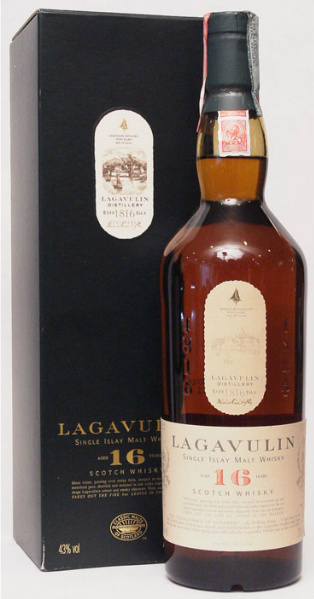 Many stories surround these Lagavulins. First of all that, when the royal warrant disappeared from the label, the quality went down. In fact the quality was dwindling even before that. Last year or maybe in 2010 I heard that the quality level is picking up again. This year I hear again that the recent bottlings are not as good as they were once before. So lot of debate about this one, and considering the interest, we know this is a popular one.
I tasted once a bottle from 1992, and scored that 92 points, so lets see how this one from 2006 will compare to that.
Color: Full Orange Gold.
Nose: Smoke and burnt wood (the next day). Black and white powder. It’s less peaty than I remembered, creamy peat. Animalesk and spicy, which makes it a bit ‘dirty’. Salty, sea and seaweed. After a while only smoke and bonfire remains.
Taste: Sweet, licorice with some peat and a slight hint of milk chocolate, almonds and wood. Sugar water. Black and white powder again. Not as rounded as earlier expressions. Smoke towards the slightly spicy and sweet finish that isn’t heavy at all. Salty sensation on the lips. In comparison, this is less complex.
I love Lagavulin, and I understand the producers statements that it isn’t true that Lagavulin 16 got worse. That memory doesn’t serve us well. Well that’s not the case. Earlier bottles are still around in big numbers so it’s not hard to do a head to head between older and more recent expressions. All I can say is they don’t make Lagavulin 16 anymore as they used to, but with all those efficiency regimes and when only the amount of alcohol yielded per tonne of barley counts, you can hardly be surprised.
 So Lagavulin 16yo isn’t what it used to be, but how does it do on its own, not compared to the older ones? Well that’s another story, even today it’s a pretty special dram, that still scores pretty high, but I like the new 12yo better, although a completely different dram.
Points: 87
 Moving on into day two of this Japanese Whisky Week. The next one might not come as a complete surprise, because this time we’ll have a look at the elderly brother of Taketsuru 17yo, namely Taketsuru 21yo. Did they make this just an older version of the 17yo or did they do a completely different profile for this one? If you want to warm up to Taketsuru 21yo, please have a look at the review of Taketsuru 17yo.
 Color: Full gold, almost copper.
 The last reviewed beer,
  Heatwave over here, so a nice day to sit outside on the porch. I had a craving for a Robusto sized cigar and I noticed I haven’t reviewed a Hoyo de Monterrey yet. Therefore getting an Epicure No. 2 out wasn’t a hard task at all. My aged Epicure No.2 must be pre 2008, since it doesn’t have the second band that modern Epicures have. yes Epicures. The are a few around. There is an Epicure No. 1 (Corona Gorda), an Epicure Especial (Gordito) and in 2010 there was a Double Epicure (Doble) and in 2012 an Epicure de Luxe (Mágico) saw the light of day. Some of those were first a Edición Limitada. Hoyo de Monterrey was established in 1865 and is a Global brand selling lots and lots of cigars. There also is a plethora of choice, and all are known to be light yet for the connoisseur.
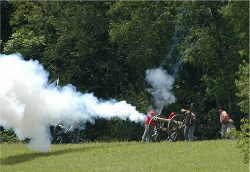 After some time with this the amount of smoke is really incredible. I’m sitting outside with a little wind and I’m still able to generate a sort of private cloud around myself. Overall this cigar could have been creamier, and for a Hoyo it has a atypical sharp and spicy edge to it. Definitively an after dinner cigar, even though it is light. You can smoke this one untill it burns your lips, isn’t that good value!
 For the Douglas Laing brand, It all started in 1998 with the Old Malt Cask series, to commemorate their 50 years in business. Therefore if possible the series is bottled at 50% ABV. Later a more luxury series was introduced called The Old and Rare series. Although it is better known as the Platinum Series.
 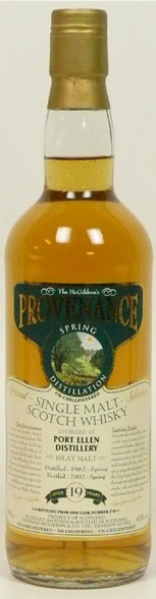 In fact there are a lot of ‘names’ on their labels. The third series I would like to mention here is the Douglas McGibbon’s Provenance series. A series placed under the Old Malt Cask series, also with lower ABV, usually 43% or 46%, but also cask strength and small batch versions exist. There are also some newer series, like the Director’s Cut, introduced in 2011 with cask strength single cask single malts and single grains. Other series by Douglas Laing are the Premier Barrel and Douglas of Drumlanrig.
 On Monday, July 23 2012 it was announced that Bruichladdich of Islay was sold to Remy Cointreau for £58.000.000 to enrich their high-end portfolio of brands and to
  confirm their strategy in the luxury spirits segment. If I’m not mistaken it’s their first distillery, and maybe there is more to follow? We’ll see what happens next. In stead of picking one of their numerous official bottlings by the old owners, first a Sherried example from independent bottlers Gordon & MacPhail.
 Taste: Ok, half sweet. Tarry and thick. Toffee with some ash. Nice body and good balance. The nose and taste seem to match. It has the sourness of oak. There is some peat in the depth, but as with the nose, it has more smoke. Wycam’s cough drops! Very nice not over the top Sherry, but also not all to complex.
 Convalmore is one of those distilleries that is no more. Thinking of closed distilleries I alway think about Monty Pythons dead parrot sketch: It’s not pinin’! It’s passed on! This distillery is no more! It has ceased to be! It’s expired and gone to meet ‘its maker! It’s a stiff! Bereft of life, it rests in peace! If you hadn’t nailed it to the perch it’d be pushing up the daisies! ‘Its chemical processes are now ‘istory! It’s off the twig! It’s kicked the bucket, it’s shuffled off its mortal coil, run down the curtain and joined the bleedin’ choir invisibile!!
  Convalmore was founded in 1893. A large part of the distillery was destroyed in a fire in 1909. It was rebuilt with an added continuous still to make whisky at a lower cost. This didn’t work so the stills were discontinued in 1916. In 1962 the stills were heated indirectly with steam. Convalmore was mothballed in 1985 and the buildings were sold to William Grant & Sons in 1990, who use them for storing their own malts.
 The beer returns, with the wood, in the finish. Well its safe to say that this one is all about the wood. you don’t hear me say that it’s too much of overpowering. No. it is a woody whisky, but it is one of those that really should be woody. Wood is its strength. The rest of the body is firm enough to counterpart the wood. Again very interesting, but no easy dram. I hate the word, but this may be for connoisseurs only.
 Sadly the Bourbon week is almost over. I had a lot of fun with it and (re)discovered some true gems of American Distilling. I’ll definitively do another Bourbon Week again. So, to close this week off, here is the first edition of the Parker’s Heritage Collection of Heaven Hill. Distilled in 1996 the year of the fire, so we can’t be sure where this is distilled. If it is from before the fire, than it’s from the original distillery in Bardstown. If it is from after the fire it can be sourced from anywhere or even distilled by Heaven Hill distilled in another distillery where they rented time to distill. It’s not from the new plant (the old Bernheim plant in Louisville), since they started to distill there from 2000 onwards.
 Color: Brown
 smells. Also a food-like sourness that seems to be partnered with the gravy and the Hopjes.
 This is one where the word savoring was invented for. Just give this a lot of time, and you’ll thoroughly enjoy this. Just drink this when you have a moment alone for some contemplation. Don’t let it be interrupted by noise or by the feeling you still have to do something. A bedtime dram, when you’re the last one to go to bed. Top, have fun with it!
 A’bunadh, as it’s called, has no age statement (NAS) on the bottle, but is believed to be between 8 and 10 years old, and comes solely from Spanish Oloroso Sherry Butts. Well, if you could smell it now, or see it’s colour you would know this is true.
 Even though it’s young, strong and harsh I still like this neat. Water takes away the little sweetness it has and makes it a bit more harsh. Drinking this at cask strength, makes me happy. It’s a bit of a drug that way. Recommended. There are a lot of batches which have their differences. More than you would have thought. So it can be a lot of fun comparing different batches from different years. Some are less harsh, or more sweet or…You guessed it, come back often to A’bunadh, and you’ll be welcomed back every time by a very nice whisky. By the way, who said there weren’t any good sherry casks anymore, and who said those sherried whiskies aren’t affordable anymore?
 Master Quill