 In this day and age of battles, battles for oil, battles in politics, and even dance battles, now there are also battles in Whisky. The guys in the picture are Jan Beek (right) and Dennis Mulder (left). They do tastings/battles to see who bottles the best Whisky, the distilleries themselves or the Independent bottlers. Jan represents the independent bottlers and Dennis the official bottlers. Time for my own battle. Well not a battle with axes and swords. Earlier I reviewed an official Highland Park 12yo and scored it a decent 85 points. Here we have a this independent 12yo Highland Park, bottled by Gordon & MacPhail and selected by Van Wees, so mostly sold in the low counties. Let’s see if this Gordon & MacPhail 12yo can beat the official 12yo, and score more than 85 points…
 Color: Lively orange brown.
Nose: Extremely sweet, spirity, spicy and woody. Raisins, lots of raisins. This smells exactly like a PX-Sherry. Apart from the thickness of it all, it does smell dryer later on because of the wood and spice. Gravy and meaty, something that fits the Sherry profile too. Definitely some honey and heather in the nose. Which surprises me since the Sherry cask might be very overpowering. Tar and sulphur come late into the mix. I love the coal and tarryness of sherried single cask Highland Parks. Burnt wood. Bonfire from a distance at night. The opposite of elegant I would say. The longer it breathes in the glass the better this gets. It reminds me of some of the better early seventies good sherried Whiskies.
Taste: This is sweet PX-Whisky with a bite. It starts out sweet and quickly turns into spicy wood. Syrupy sweet. But the initial sweetness terns into dryness because of the woody attack. Again coal, tar and even some licorice. Fireworks and a cold freshly half burnt log. Demerara Rum with a lot of smoke. It’s sweet but not quite honeyed. And no heather to be tasted too. Some dark chocolate and cola. Do I really taste a hint of soap?
OK, it’s a 12yo Highland Park all right, but this version has nothing to do with the official 12yo of today or any day for that matter. It’s a beast, but a lovely beast. If you can handle heavy Sherry, than this is one for you (and me). In the end I like this one better than the official 12yo, so this battle is won by Jan Beeks axe. But the whiskies are completely different and both have their moments. One is elegant and light(er), the other a beautiful beast at high strength. Still, I like the older official bottlings of Highland Park.
Points: 87

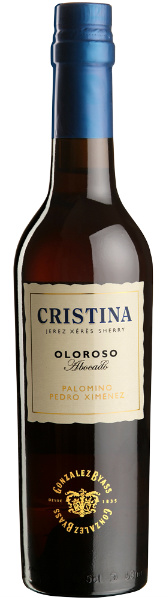 Essentially, there are three types of Sherry:
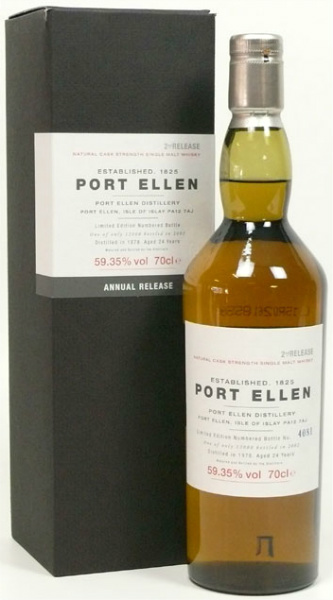 How nice it is to have another Port Ellen on these pages. This one in particular plays a strange role in the Port Ellen annual release series. First of al this strange ABV. 59,35%. New Japanese measuring equipment on loan? No it’s not that. This one is known to be a little closed. Very closed in fact. I had the chance to try this expression when it was freshly opened and it was really hard to taste this. Very hard to tell what is in there. It was nice, but nothing you’ve come to expect from such a Port Ellen. This time around the bottle is open for a while and less than half full. Is this, one of those whiskies that has to be put on the shelf without its cork, to maximize its breathing? Lets see…
 Well it does demand of you that you’ll work on it since it doesn’t give away its treasures easily, especially on the nose. Probably not the best from the series, but still it oozes Port Ellenness. It is an experience. Freshly opened bottle scored 87 Points, but after extensive breathing I’ll score this:
 A week ago “Het Genietschap” had its first ever tasting at my house. I’ve been a member for quite some time, but it took a while to get my ‘location’ added to the agenda. Well finally it was my turn. The organizer gets to choose a ‘theme’, and mine was “Talisker”. When I sent out the E-mail I got a lot of Talisker 10’s as entries, and even some replies implying that there wasn’t a Talisker in the house. Well that got me worried for a moment. My guest of the evening, Erik, asked if he could bring his
  Best bottle in the tasting was a young Port Ellen 15yo bottled by Cadenheads in 1996, Stunning! It was just a tiny bit better, or better: different, than the also stunning Talisker 20yo 1981/2002 (62%, OB, Sherry, 9000 bottles). Also the pre Classic Malts Talisker 10yo was fabulous. Even today’s 10yo is pretty good, but can’t be compared to the taste of the old bottle. This ‘Tactical’ wasn’t bad either…
 Hello November! Looking outside, this month seems to bring us damn close to winter. Here we have a bottle of Brora 1981 bottled by indie bottlers Ian Macleod in their Dun Bheagan range. Ian MacLeod have a few other brands you might know. The Chieftains Range or “As we get it” for instance. The company is also the owner of the Glengoyne distillery, which is one of my favourites. Go!
 Color: Orangey Gold
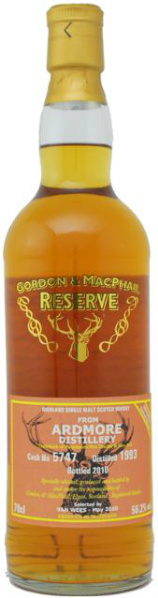 Let’s do another Ardmore and compare it to the day before yesterday’s offering by The Whiskyman. We all know that 1992 is somewhat of a good vintage for Ardmore. So let’s see what happened in the distillery a year later. This 1993 was bottled by Gordon & MacPhail and they were so kind to do that for Van Wees of The Netherlands.
 Founded in the year of the Pattison crash 1898 and located on the outskirts of the ancient market town of Forres. Mothballed between 1931-1937 and 1983-1998. Since 1993 the distillery is owned by Gordon & MacPhail. Yes, the bottlers. The first Benromach that was released and made by the new owners is Benromach Traditional, that was released in 2004. The year they started with the new look and bottles in tin tubes we know today. During the G&M years more and more new released see the light of day. Today the distillery is known to be Speyside smallest working distillery and is operated by just two people…
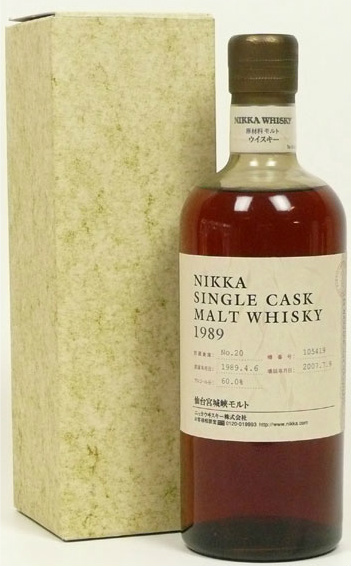
 On the third day of the Japanese Whisky Week, I tried a fairly standard Miyagikyo 15yo at the reasonable strength of 45% ABV. That one turned out to be very good. Today we’ll have another look at this distillery, but this time a single cask at the more samurai strength of 58% ABV. As I said before, Miyagikyo is one of my favorites from Japan, ánd I’ve stated before that Japanese whiskies need to be cask strength to show their…ehhh strength. So here we go!
 Color: Copper
 Color: Gold
 Color: Orange gold.
 Master Quill