A.H.Riise X.O. Reserve Christmas Rum (40%, 875 bottles, 2013, Saint Thomas, U.S. Virgin Islands)

Albert Heinrich Riise was born on the 11th of September 1810 on the Danish Island Ærø. In 1932 he graduated as a pharmacist in Copenhagen. In 1838 he followed his dream to work as a pharmacist in the Danish West Indies in St. Thomas. In 1842 he married Henriette Marie Worm (1821-1889) on St. Croix. The couple had 13 children. I guessed he felt at home in the Carribean! In 1843 he had his own pharmacy which he turned into a succesful business. Being an excellent pharmacist Riise used Caribbean plants and herbs for the manufacture of pharmaceutical alcohols and cosmetics. He especially was succesful in selling Riises Bay Rum, yes you guessed it, a perfume! He also started distilling Rum and bitters as medicine. Way to go Albert. In 1868 an epidemic broke out of cholera, yellow fever and smallpox. No Rum would cure that, so the family decided to go to Denmark for a year, but in the end never returned to live on St. Thomas. Albert passed away in 1882 and his wife Henriette followed him in 1889.

A.H. Riise X.O. Reserve Christmas Rum has aged up to 20 years, and was finished in PX Sherry casks. Each bottle comes from a single cask.

A.H.Riise X.O. Reserve Christmas Rum (40%, Saint Thomas, U.S. Virgin Islands)Color: Brown with an amber hue.

Nose: Nice Demerara type of Rum nose with notes of cloves in (partly dried) orange skin and cinnamon. Old wood, speculoos cookies and very festive smelling. Its like visiting and old distillery museum where a lot is done with spirits and spices or a bakery museum where all the spices are stored for making cookies. Vanilla, hot butter and fruity acidity. Very aromatic. Also hints of ginger, cardamom, dust and nutmeg. Very nostalgic, appetizing and tasty. Based on the nose alone a must-have so lets see if it also tastes as good…

Taste: Thick and sweet. Syrupy. Sugared red fruits. White pepper and some wood. Fresh cookie dough. The orange skins are present too, but without the cloves. Noticeable is the finish in PX casks. Not the longest of finishes, but warming and just right. The part that stays on the longest is the fruity acidity, but wait…the cloves return for the finish, excellent!

The nose alone puts me in a melancholic mood and puts me in a bakery or Jenever distillery where spices and botanicals are used for the spirit. It makes me feel like it’s the 1930’s again (or so I imagine, since I wasn’t born yet in the 1930’s). The nose is very nice and suits the Christmas name they use for this Limited Edition. The taste is somewhat simpler and the finish shows that 40% ABV was  a little too light for this kind of rum. On the website the claim is made, or maybe that’s just how I read it, that the typical aroma’s come from the PX casks that were used for the finish and not by added spices, so it should not be a spiced Rum. In the end that’s not entirely important, since it is a very nice Christmas Rum, and even if it was spiced, isn’t Christmas a time to forgive? Wink, wink, nudge, nudge. Merry Christmas everybody!

Points: 87

John Jameson & Son 7yo “Three Star Pure Old Pot Still” (43%, Bow St. Distillery, Dublin Whiskey, 75 cl, Circa 1965)

Who would have thought I’d still have an ace up my sleeve considering Jameson’s? The title seems a bit of a mouth full, but when you are identifying old bottles like these, you have to identify minute differences on the labels to carefully date them. I don’t know when exactly they started to use this exact label, but I do know the last year they used it was in 1968. So “circa 1965” is a carefull guess.

The Bourbon world has adopted the old “Stitzel-Weller” distillery as the ultimate Bourbon heaven on earth. Similarly, the Irish have the old “Bow Street” distillery that was/is situated in Dublin. The Bow Street distillery started working in 1780 with John Jameson acting as General manager. John bought the distillery in 1805. The distillery was eventually was closed in 1971. Since 1997 it is opened again, but alas only as a “tourist” attraction.

John Jameson & Son 7yo Three Star Pure Old Pot Still (43%, Bow St. Distillery, Dublin Whiskey, 75 cl, Circa 1965)Color: Light gold.

Nose: Extremely fruity steam punk kind of Whisky. Hints of old paint. Even if I would have tried this blind, you know when you have an old Whisky on your hands. I’ve said it before and I’ll say it again; They don’t make them like this anymore, and the other Jameson reviews just prove that. Wonderful old dried fruit intertwined with almonds and wax. It really smells of steam and coal and a bit of old engines. Warm machine oil and vanilla. Very appetizing. When you let it breathe the fruit gets less pronounced and a more dusty creaminess starts to emerge. A dustiness which seems to be coming from wood. A wonderful experience.

Taste: Quite different. It starts with old newspaper and luckily the waxy fruitiness hold it up. Still, somewhat lighter than the nose. The nose is special and quite “thick” this is less so. paper and wood but both are light and well-balanced with the rest of the aroma’s. Slightly warm apply note comes next. Those of you who are regular Calvados drinkers will recognize this apply note, and now that I recognize it, it’s there in the nose too. Hints of caramel and slightly burned caramel emerge, which is noticeable on the tongue. Not everything stays behind for the finish, but still a nice, but short finish, but we are left with a nice aftertaste. Good, but not as special as the nose was. The nose really oozes with times long gone.

The current Jameson and this Jameson are both tasted early in the morning before breakfast. The current Jameson is a nice aperitif. It’s niceness is in the detail, which is much easier to pick up in the morning, than in the evening, when you have just eaten and your palate is tired. The current Jameson has lost much of it charm when I tried it in the evening, after finishing the previous review. Tasting this, I fear this one will be better in the morning too…

Points: 87

Caol Ila 13yo 1990/2003 (55.6%, Gordon & MacPhail, Reserve, Cask #1114, 283 bottles, JC/GF)

I got up this morning seeing that it is a nice and sunny day, just with a chill in the air. Ice on the windscreen, and couldn’t be bothered de-icing the car, so I did the school run on foot. Luckily no wind so it wasn’t so bad. Walking towards the winder I did pick up the inspiration to review some Islay Whisky. Yeah! Rummaging a bit in the sample bank I dug up two Islay babies, that will together well, or make for interesting comparison. Once not so readily available, today impossible to miss. Caol Ila is the name and peat is the game. I love Caol Ila because it ages really well. So lets educate myself and have a look at a younger example of Caol Ila. This 1990 Caol Ila was bottled by Gordon & MacPhail in 2003. The outturn was 283 bottles at cask strength, and considering the color and wood management policies at G&M, I would be surprised if this wasn’t matured in a remade Bourbon Hogshead although a Fino or Manzanilla Sherry hogshead is also possible. Two of its sister casks were also bottled in 2003: #1115 (JC/AEG) and # 1116 (JC/CEB). More sister casks exist. In 2011/2012 at least three more were bottled: #1120 (for La Maison Du Whisky, France), #1121 and #1122 (both for Van Wees, The Netherlands).

Caol Ila 13yo 1990/2003 (55.6%, Gordon & MacPhail, Reserve, Cask #1114, 283 bottles)Color: White wine.

Nose: Dry and smoky peat, with an underlying sweetness. So it’s not the fatty peat you sometimes get. This is drier and a wee bit more spicy. Cow organics in cold weather. With hints of hay and quite some buttery and lemony notes as well as hints of shiny aromatic apple skin (not acidic). Some flowery elements were present in the peat, lavender as well as there is some crushed beetle (sounds strange doesn’t it?). Vanilla and more creamy, fresh buttery notes. The wood smells a bit meaty and well aged, so not young and sappy. Hints of cured meat. Smells a bit toned down and maybe older than it actually is. Very well-balanced. More about fresh and fruity notes than heavy peat. Accessible. Garden bonfire burning off old branches combined with powdered vanilla and powdered coffee creamer. It’s not really a big Whisky, but a well constructed one. Wonderful nose, especially by the wonderful vanilla and floral nose. I would say Fino Sherry hogshead. made from American oak.

Taste: More peat and quite sweet, which works quite well this time. There is enough going around to balance the sugary sweetness out. Burned leaves and a lot of vanilla and clotted cream, custard, pudding. These notes are quite big and it takes a while for those to pass, to let a more paper and (spicy) wood note through. Distinct hints of soap. It breaks down a bit in the finish, with a creamy note that goes down my throat, but in the same time a more acidic wood note stays behind in the roof of my mouth, the soap also has some staying power under my tongue. These flaws are easily forgivable, looking at the whole. Good Caol Ila.

This went under the radar a bit when it came out, as well as its sister casks, but what a treat this is. Definitely American oak and probably Sherry that aged under flor instead of Bourbon. All aroma’s work together well. I wish I had more of this, but at least I had the experience of a whole bottle of this. Worth seeking out at auctions, but a lot of it was probably drunk back then.

Points: 87

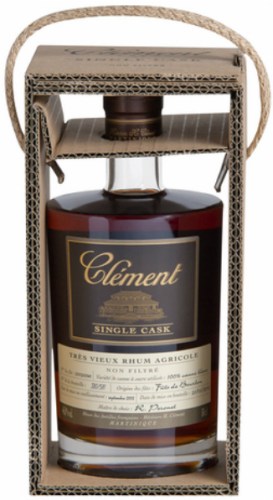
Clément 9yo 2002/2012 Trés Vieux Rhum Agricole (46.8%, Bourbon Cask #20070077, 100% Canne Bleue, 587 bottles, 50 cl, Martinique)

After the excellent offerings from J.M it would be a blasphemy not to recognize Homère Clément, the godfather of Rhum Agricole on Martinique. In 1917 Homère started his distillery on the domaine he acquired in 1887. With the death 0f Homère in 1923, the property with its distillery is taken over by Charles Clément. Charles started making Rhum under the Clément Brand in 1940. The Cléments were already making Rhum for about ten years but under the brand name of the domaine itself: Rhum du Domaine d’Acajou. Charles died in 1973 and the next generation Clément is taking over. It is the generation of George and Jean-Louis-José Clément who saved J.M from bankruptcy but don’t interfere with its Rhum making and management. Investing in the property and distillery, to allow the people behind J.M to make the best Rhum possible.

From Clément’s prestige range comes this single barrel. This “100% Canne Bleue”, non filtré is the first of two single barrel releases. Canne bleue is a cane variety that, apart for its blue color, is known to be the best sugar cane variety for producing Rhum Agricole. Not so long ago a second version in this series saw the light of day, called “Vanille Intense”. Not to be mistaken for a spiced Rhum. No vanilla and/or vanillin was added. Only casks were selected that had the natural potential of releasing slightly more than usual amounts of vanillin from the American oak, as opposed to European oak, which tends to release more tannins.

Clément 9yo 2002/2012 Trés Vieux Rhum Agricole (46.8%, OB, Bourbon Cask #20070077, 100% Canne Bleue, 587 bottles, Martinique)Color: Dark orange brown.

Nose: Fresh and smells of new wood. Also a leafy, plant-like quality. Caramel. Big, hefty aroma, sometimes a whiff of this reminds me of Jamaican high ester Rum, although the whole profile is quite different from that. In the distance even a red fruity aroma. Mostly berries. Burnt sugar with hints of spicy White Wine. Gewürztraminer. Sweet spices. Oregano and to a lesser extent thyme. Toned down vanilla ice-cream.

Taste: A very nice subdued sweetness. It’s like the sweetness has depth in part because its burnt sugar. Milk chocolate, some vanilla and a hint of a paper-like quality, cardboard, cola and lots of cask toast. Just like a great wine, this Rhum Agricole has perfect balance between the sweetness and acidity. The sweet is obvious, the acidity is from the oak. Just like the nose it has this great woody flavour, without it being too sappy or bitter, although the bitterness that is there stays on well into the finish, and even the hoppy aftertaste. The finish is long and has a tiny amount of soapiness to it as well as a bit of red berries and the burnt sugar. The burnt sugar retreats and lets a more creamy and toffeed layer take over for the aftertaste.

It’s really amazing how much color this Rhum Agricole got from only nine years in a Bourbon barrel. It looks like a stunning dark brown Rhum. That must have been very active casks. This is good stuff. Big aroma, big body, long finish. For some a bit too much of the burnt wood and sugar notes, but it comes with the territory. Good ‘un this is. Usually more is more, but I somehow do like the 50 cl size of this. It’s easier that way to get another “100% Canne Bleue” single cask, from a different cask naturally, for comparison. This is a big one. The J.M 2002 shouldn’t be tasted right after this.

Points: 87

J.M 11yo 2002/2014 Vieux Rhum Agricole “Millésime 2002” (46.3%, Bourbon Cask Matured, Martinique)

Reviewing the dirt cheap La Mauny “1749” already opened my eyes to Rhum Agricole from Martinique, but especially after reviewing the J.M XO, I started to really like the stuff. Followed quickly by the La Mauny XO. There is a difference in ABV though, the La Mauny is bottled at 40% ABV, and suffers from it, the J.M XO is bottled at 45% ABV, which seems to be a much better strength. Apart from the difference in ABV, I somehow clicked more with the taste of the J.M. Soon after, I went out and bought this 11yo J.M Millésime 2002. (Two of them actually, since I had high hopes for this one, and I got a pretty good deal on them as well). Aged in Jim Beam Bourbon casks, just like the XO, but almost twice the age. Having already tried the 2002, this time it’s not about comparing it to the XO, because both earn a place in any drinking collection. You know, a collection of bottles destined to be drunk, bottles that will be actually opened to be enjoyed. The XO is younger, has less depth but is also a high quality Rhum Agricole. Having said all that, I have to warn some people. A lot of (sweet) Rum drinkers are a bit put off when starting with Rhum Agricole. Its different. Just like heavily peated Whiskies differ from Bourbons and so on. Proceed with caution, acquire the taste, and if you put some effort into it, you’ll be rewarded with some great Rhums (If you choose wisely).

J.M 11yo Vieux Rhum Agricole Millésime 2002 (46.3%, Bourbon Cask Matured, Martinique)Color: Full gold.

Nose: Fresh, half sweet and industrial. Wax. Red fruit sweetness and acidity. Cherries, dust and toffee. Soft wood and old leather. With some air more fresh leather combined with a little bit of clear glue. Ground roasted coffee that has been around for a while. Pecan nuts with a hint of cola, brown sugar and cane juice. Hints of menthol which leaves a long minty feel in your nose and throat (already after smelling, I haven’t tasted it yet). Hints of good oak aged Calvados.

Taste: Brown sugar and slightly burnt sugar and maybe even some cask toast. Starts with a small amount of sugary sweetness, but it quickly becomes more dry. Warm apple juice and Calvados (de Querville, the older ones). Leather and more notes of apple. Hints of licorice towards the end. Although this wasn’t reduced, the ABV is natural cask strength, this doesn’t have a very long finish. Medium finish which concentrates around the burnt sugar note combined with some bitter wood. Although the Rhum as a whole is very good, the finish lets it down a bit.

Wonderful Rhum with lots of complexity which releases layer upon layer. It great, but even better if you are patient with it, since it develops a lot in the glass. Great balance too. I have to say that the way I perceive the bitterness of the finish, has also a lot to do with me and the moment when I drink it. It’s more a digestif than an aperitif. The bitterness is less obvious in the evening, than it is in the morning, so don’t let this put you off, since the bitterness is in no way overpowering.

Points: 87

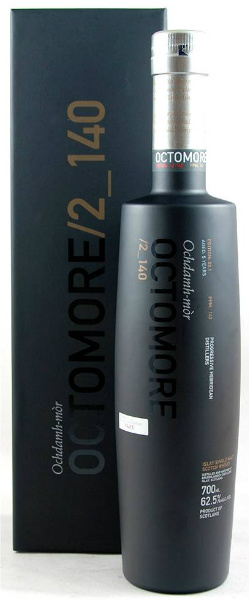
Octomore 5yo “Edition 02.1 / 2_140” (62.5%, Bruichladdich, Ochdamh-mor, American Oak, 140 ppm, 15.000 bottles, 2009)

After the sweet and weak Glenfiddich, time for a potential beast. This Octomore, the brainchild of Jim McEwan was, when it was released, the most heavily peated Whisky in the world. Today we look a little bit differently at 140 ppm, since Octomore 06.3 is peated to a level of 258 ppm! Octomore 06.3 is a lovely Whisky and shows quite some fruits and the peat doesn’t even seem that heavy as it sounds. But time to rewind a bit and have a look at Octomore 02.1 that was already released in 2009. The first Octomore that was released is known to the world as 01.1, peated to a level of  131 ppm and bottled in 2008. The first ever Octomore distilled by Jim has never been released, but a small group of people had the chance to try it at the Whisky Show 2015 in London earlier this month, and Jim has probably brought it with him elsewhere too. The first ever Octomore was distilled in 2002 and peated to a level of 80.4 ppm. Filled into a first fill Oloroso butt and bottled at 62.3% ABV. I didn’t take notes since I was listening to Jim, but managed to score it 91 Points.

Octomore Edition 02.1 / 2_140 (62.5%, Bruichladdich, Ochdamh-mor, American Oak, 140 ppm, 15.000 bottles)Color: Very light gold.

Nose: Fatty peat and hints of red fruits, mostly berries. Peated barley and slightly medicinal, iodine. Smoky. Actually this smells like a lot of Whiskies from Islay do. In nothing you get that it is more than heavily peated. When you let it breathe for a while, a more (yellow fruity) sweetness emerges. Altogether for this to reach a more balanced state, you must give it some time. More meaty, smoky, tarry and salty aroma’s emerge. Burning off dry plants. Licorice, sweet wood and smoke in the mist. Wait even longer and hints of menthol and lemon can be smelled. the whole gets even softer. Old furniture and even creamy. Vanilla Ice cream with pepper and salt. Old paint and some nuttiness emerge late. Cotton candy. If you handle it well, if you are patient with it and use a glass that can handle air well, you’ll be rewarded. Wonderful nose which keeps on giving and giving.

Taste: Again  very creamy. Peppery and lots of it. Peppery attack with lots of licorice and sweet wood. Matches the nose perfectly. Quite sweet, but the rest of the aroma’s are pretty “there” as well so it handles the sweetness perfectly. Hints of old wood integrated with the licorice. Lots in common with Port Charlotte (obviously). Taste is very balanced, but less complex than the nose. It will be great to see Octomore (and Port Charlotte) mature.

Excellent example of a Whisky you have to work hard for, to be rewarded. It needs a lot of time and air to be at it’s best and show you all it’s got. Use the wrong glass or being impatient with it, will degrade this to nothing special at all. This is a wonderful yet modern spirit, which already is great if you know where to look. Lots of potential. The aroma’s are so big it even hides the high strength. I didn’t try it with water, but I’m sure it will take water well. Pour yourself a dram and then drink something else first, come back to this later.

Points: 87

St. Magdalene 1981/1999 (40%, Gordon & MacPhail, Connoisseurs Choice, II/BJ)

If you thought both Cragganmores were bottled a long time ago, then you must have a look at this St. Magdalene. This one was bottled one century ago. The 20th century to be precise. Nope its not antique yet since this was only bottled in 1999. Remember Prince? St. Magdalene itself is alas no more. Closed in 1983, it’s buildings now housing people ins stead of casks. An eternal shame led by economics of the eighties. In those days we had a Whisky loch (lots of unsold Whisky), and today almost a shortage. Big disappointment here, since St. Magdalene is my favorite Lowland distillery. Just have a look at my review of the legendary 1979 Rare Malt edition. By the way, bottles of this 1981 Gordon & MacPhail that were sold in Germany had stickers on the back that informed the public about caramel coloring…

St. Magdalene 1981/1999 (40%, Gordon & MacPhail, Connoisseurs Choice, II/BJ)Color: Gold.

Nose: Nice, grassy and citrussy. Quite nice and elegant after all those heavy hitters I reviewed before. Waxy and fruity, again in sugared and dried apricots. Quite grainy too, it’s almost like an old blend from the sixties. Vegetal, less grassy actually but more like fern and almost flowery. Sweetish and waxy apple skins. Marmalade. With some air mare grassy and vegetal. Dry grass and hints of hay, making this an easily recognizable Lowlander. Distant white pepper and some slightly rotting wet wood or bad breath. (not bad here). Not un-complex, and very pleasant to smell. A shame this style is almost disappearing. Do cherish your old Magdalenes and Rosebanks people!

Taste: Sweet (paper) and fruity. Pleasant stuff. Yes, quite light and fragile, but that is helped along by the sweetness. After the sweetness comes wax, paper and cardboard, still quickly overthrown by a delicious fruitiness. Warm apple juice with apricots, Short peak of prickly black pepper. Hidden behind the fruity (not sugary) sweetness a hint of black coal. Highly drinkable. Decent finish with a nice fruity aftertaste.

I thought this would be killed by reduction and caramel coloring, but no. It still has a lot of life in it, just like the ancient Gordon & MacPhail Strathisla 30yo I have on my lectern. That’s also elegant, brittle and light, but still giving a lot. I feel old malts could “take” a lot more than today’s modern Malts.

Points: 87

Chichibu 3yo 2009/2013 (53.5%, OB, Ichiro’s Malt, Chibidaru, Quarter Cask, 3900 bottles)

Chichibu is the first new Japanese distillery since the seventies, built near the city of the same name by Ichiro Akuto. Akuto started building the distillery in 2005 and in 2008 the first spirit ran off the stills. But 2005 is not the start of this story. No, this story starts in Chichibu in 1626 when the Akuto family started brewing Sake. In 1941 Ichiro’s grandfather, Isouji Akuto, built another distillery near the town of Hanyu, for making Sake and Shochu. Five years later a licence was obtained for distilling Whisky, initially a continuous still essentially making Grain Whisky. This still was eventually replaced by a copper still.

In 1980 Ichiro’s father, Yutaka Akuto, started to make Single Malt Whisky instead of the more common Blended Japanese Whisky (Scottish Malt Whisky blended with Japanese Grain Whisky). In 1983 the first spirit became Whisky but by 2000 Hanyu stopped making Whisky due to the severe lack of profitability. Ichiro, who worked at Suntory at the time, was brought in to save the company. He had to sell Hanyu to do just that. Hanyu was dismantled in 2004, but Ichiro bought the remaining Whisky stock as well as the distilling equipment. The equipment is still stored at Chichibu, but was never used since Ichiro´s new distillery was fitted with new equipment.

Chichibu Chibidaru 2009/2013Color: Full gold.

Nose: Fresh entry, elegant and flowery. Toned down, dried Jasmin leaves (tea and soap). Slight hint of powdery and spicy oak, alcohol and quite fruity. Pear and a hint of menthol and red fruit jello. Old dried ginger and sawdust. It smells pretty mature and complex for a 3yo Single Malt.

Taste: Quite woody, good aroma and even a bit sweet. Vegetal and much less fruity than the nose. It tastes even less complex than the nose, and with this it shows its youth. It’s easy to “see” that this one does needs its higher strength. Creamy vanilla, some candied yellow fruits enter the mix after (a lot of) air. Fabulous creamy custard paper pudding aftertaste with proper length. Lovely stuff especially considering its age.

This is an excellent 3yo Japanese Whisky, but it will only show its full potential if you let it breathe a lot. This is the kind of bottle you open and leave in the closet for a week or two without its cork. In the glass just let it sit around for half an hour before you even nose it. This needs air.

Now all the Karuizawa’s and Yamazakis are gone and Nikka struggles to release even a Whisky with an age statement I give you a glimpse of the future of Japanese Whisky. This is high quality stuff with massive potential, but as long as Ichiro is releasing Malts at barely the minimum age, that taste as well as this, it will tie us over as we wait for the Japanese Whisky to mature. My only fear will be that when a Whisky will reach its adulthood, it will be extremely expensive as the Karuizawa’s and the Yamazaki’s of today.

Points: 87

Benromach 1976/2012 (46%, OB, First Fill & Refill Sherry Hogsheads)

This is a 1976 Benromach, bottled in 2012. So it’s either 35 or 36 years old. Said to be from First fill and refill Sherry hogsheads. Just compare it to the 1969 vintage, which is from refill Sherry hogsheads only. The 1969 is much darker in color. So what kind of Sherry was this from? Sherries exist in lots of different styles, and just like a “normal” wine, Sherry has lots of different colors, and aroma’s, too.

Benromach 1976-2012Color: Gold with a slight reddish glow.

Nose: Oak and vanilla. Spicy, dry and vegetal. The smell you get when you break a fresh twig. Slightly burnt wood and a tiny hint of peppermint. It smells younger than it actually is and despite the 100% Sherry statement it is not far away from an older Bourbon matured Whisky (at first). The isolated oak flavour is there, but when this is not from American oak, there is less vanilla to go around. That seems to be the case. So European oak it is. Lovely wood notes, elegant and fine. The wood seems to hold some bitter orange skins in its aroma. Also noticeable is a slight (white) winey note, but also some nuttiness which leads me to believe these casks also held some Fino’s and/or oxidized white Sherries. Not a lot of fruitiness which sets it apart from the famous Tomatin’s from the same vintage.

Taste: Well hello there. This starts with the fruits the nose lacks, but also the wood plays a nice role in here too. Even at 46% ABV, this is quite hot and peppery. Dark chocolate. Nice. The initial fruits quickly disperse which leaves more room for the wood. Not a lot of sweetness, and the wood brings a slight bitterness that suits this exercise in wood (and the nuttiness of dry white Sherries) well.  The finish carries hidden notes of flor. This one needs lots of air to settle and to get the balance right (Depeche Mode), but when it does, it shows you its high quality. Still not an easy one and this one will only reward you if you keep an open mind and work at it a bit.

The contrast between this lighter Sherry bottling and the darker 1969 Sherry bottling probably isn’t a coincidence. They go together like the Glengoyne Summer (dark) and Winter (light). Sure this is high quality stuff, and you have moments in your life when you really need a Whisky like this. The aforementioned Glengoyne Winter is a similar Whisky. (The only differences being that the Winter is more funky and less elegant, but slightly sweeter and much higher in ABV). Having said that, in my case, there just aren’t a lot of days like that, so a Whisky like this lasts very long. Every time I need it, I thoroughly enjoy it, but when I have it at the wrong moment, it’s a difficult Whisky. So choose wisely, first when you buy it, it’s quite expensive, and second when to sip it. One thing for sure, or actually two, its great stuff and it will last long.

Points: 87

Pusser’s British Navy Rum “Nelson’s Blood” 15yo (40%, 2013, British Virgin Islands)

To make it a trio of Navy Rums over here at Master Quill is easy. At arm’s length I have the wonderful Pusser’s 15yo, a small batch Rum. Yes a Rum that has actually matured for at least 15 years in Bourbon Barrels. Or so they say. Pusser’s make the claim that (part of this Rum for sure) comes from century-old wooden stills and that the Rums are sourced from Guyana (Port Mourant is made with wooden stills), but also Rums from Barbados, Jamaica and Trinidad (all three not from wooden stills). Another claim made by Pusser’s is that some of the Rums were fermented in open vats where naturally occurring yeasts ferment the sugars in around 72 hours. Pusser’s 15yo contains added sugar.

Pusser's British Navy Rum 15yoColor: Orange Brown.

Nose: Thick fatty nose. High ester Rum from Jamaica meets Demerara Rum from Guyana. Add to that some brown sugar. Those two are pretty obvious. Just like the Red Label I reviewed the day before yesterday, both heavy types of Rum  don’t stay around too much. They just popped in to say hi and sort of left. Caramel, dark chocolate with sugared mint. (After Eight). Vanilla powder, raisins and slightly herbal. Sweet smelling and well-balanced. Brown sugar and milk chocolate. Definitely from the same family as the Pusser’s Red Label, but heavier and overall even “better” smelling. Again farmy notes. Elegant wood, old shop interior. Charred wood. Great complexity, this keeps on giving and giving. Wonderful.

Taste: Sweet and syrupy at first, followed by a dry Jamaican style high ester Rum. Hints of vanilla and do I detect some cola and ahorn syrup? Here we don’t have a heavy Demerara note. This is just too easily drinkable and just a bit too smooth. This really needs a higher ABV sister version. It’s also quite sweet, maybe they’ve added a bit too much extra sugar. Demerara and Jamaica should bring enough sweetness (or aroma) to the mix. This somehow almost seems like an addictive taste to me. It’s hard to put down, despite its sweetness. There is something about this Rum. I still can’t quite put my finger on it, but I like it very much. If a gun was put to my head and I had to think of something I would say its the Jamaican bit in this Rum…

I adore this 15yo, it’s an amazing blend. When I start with a Rum like this, it’s hard to put down. Everything seems right, everything is well-integrated, and even the bottle it comes from looks great. It’s just a wee bit too smooth and a wee bit too sweet. This should have been bottled at a higher strength. Even the simpler version I just reviewed is bottled at 42%. There even exists a higher strength version, bottled at 54.5% ABV. Please make a higher strength version of this blend too, please!

Points: 87