The Benriach 21yo 1984/2006 (55%, OB, Batch 3, Oloroso Butt #1438, 658 bottles)

Earlier I tried a 1968 Hogshead from the next door neighbour of Longmorn. Here is another Benriach from Batch 3. The hoggie scored 89 points, so let’s see if this peated and sherried Benriach can match that score. This one being a lot younger and probably completely different. That’s a plus for Benriach anyway. They always tried out a lot, so there is a lot of variation going on…

Color: Orange Gold.

Nose: Smoke and licorice. Nice wood in the fireplace. Clean sea air and peat. Also a slight hint of soap. Black and white powder. Musty Sherry and salty tar. Deep down syrupy apricots and even deeper down a floral note. Given some time, the very dominant heavy wood fire notes luckily die down a little to show more of what’s underneath.

Taste: Sweet and prickly cannabis. Don’t do drugs, do a Benriach! Peat and spicy wood. Musty moss. Red fruits, fresh and candied. Toffee and nougat. Very big body that’s chewy with a little bit of hidden (soapy) banana in here. Finishes a bit like a Kriek Lambic, slightly bitter.

Quite nice big bodied malt. The peat and smoke are great here and there is just enough sweetness here to balance that out. If the fruityness would be able to show its face some more this would have been excellent. Still very good nonetheless. And yes, another great Benriach in batch 3.

Points: 88

Bowmore 16yo 1989/2006 (45%, Gordon & MacPhail, Secret Stills 4.1, Sherry Hogsheads #7049 & 7050, 650 bottles)

To be honest, there is no Bowmore on the label, but it’s somewhat like the SMWS bottles with codes, everyone knows that in this case, distillery number four is Bowmore and this is the first Bowmore released in this series. Probably a way to market the Whisky or as usual, they weren’t allowed to use the distillery name. This year, the seventeenth Bowmore was released in this series.

Like with many Gordon & MacPhail bottlings, it is reduced, this time to 45% ABV. I am a fan of cask strength Whiskies, but I learned to appreciate these reduced Whiskies more. Is it age? I’m a bit held back only by the fact that not every Whisky likes to be reduced. Let’s hope it’s not the case with this one.

Color: Full Gold

Nose: Nice peat. Spicy and rather perfumy. Malty and fresh. Almonds and clay, and for such a ‘young’ whisky, the peat smells rather old. Hints of smoke. There’s also some strange ‘smelly meaty sweetness’ happening here, I can’t quite put my finger on. Not bad actually.

Taste: Sweet with cardboard and some peat. No smoke? Tar, sweet licorice and some sour wood. Anis seeds and ash. Not in your face and even milder than the nose predicted. It’s quite sweet actually. It lacks a bit of complexity, that would have fitted the nose.

A decent sherried Islay Whisky, that probably suffered from reduction. Again one I would have loved to taste before reduction, because it is always interesting to try the combination of an Islay Whisky from Sherry casks. It’s also a bit too sweet

Points: 86

St. Magdalene 19yo 1979/1998 (63.8%, OB, Rare Malts Selection)

As mentioned before St. Magdalene is my favorite Lowland distillery. Compared to the others it seems St. Magdalene always was willing to show some muscle ánd being faithful to the Lowland style. I like lowlanders with a big body. A few days ago I reviewed a Douglas Laing Platinum Linlithgow from 1970, but for ages now this 19yo Rare Malts edition has been my favorite. I know this is only one style of St. Magdalene because there are also some really great St. Magdalenes from the 60’s bottled by Gordon & MacPhail. Those bottles look completely different (dark) and are bottled at 40% ABV, and still can be fabulous. As some of you might know I’m a member of “Het Genietschap” and luckily there’s also a whisky madman there (come to think of it, they all are whisky madmen and women over there), who has the tendency bringing those 60’s St. Magdalenes quite often. André thanks! I hope he lets me take a little sample home someday, so I can review it here…

Color: Gold

Nose: Sweet and full with hints of smoke and very nice wood. Caramel with a some cream and vanilla. Flowery quality, not so much grassy. Yellow fruit. Powder, slightly toasty and spicy again. Bonfire on a damp evening, after a drizzle. And after a while, a second wind. The is another explosion of aroma’s. This time more like sweet lemongrass vanilla yoghurt. The wood turns from spicy to sour. It’s a different ballgame now. More green components now. Plants after watering. Dry summer wind, laden with pollen. Vanilla Ice cream, clay. More smoke…It just goes on and on. One of the best lowlanders I know.

Taste: Sweet and here it is grassy, well more like hay. Big fruity body. Yeah this is my baby! it has some oak, but that’s far away and complements, transports the big bold body. Yellow fruit, hints of peach and a bit more than just a hint of pineapple. Like with the nose, this grows to. The body becomes even more big, with hints of rubber even, can you imagine that, in a Lowlander? The wood taste that emerges is just fabulous. Perfect sweetness that is kept on a leash by a new acidity. Fruity acidity, lime maybe? Not only the acidity, more and more a nice component from the wood makes this a three unity. Also, and this comes very late into the fold: a nutty component. Almonds and chestnuts. This whisky will never end…

I’ve had this lots of times and the fact everything happens in beautiful layers is what makes this whisky unique. Give it lots of time to let it all happen. Use a big copita they use for brandy or cognac. Forget about the strength and forget about water for the first hour you have this in the glass. Give it time, waltz it around in your glass, play with it, sniff it in tiers. Give it a chance and you’ll be rewarded. What a whisky, what an unusual great balance. WOW!

You know about those deserted islands questions? Well, I bring this and a Brora 1972 (and a glass), and worry about the rest later.

Points: 96

Old Pulteney 15yo 1982 (60.9%, OB, Millennium, Single Cask, Sherry Cask #1305, 229 bottles)

Two months ago I tried a rather young Old Pulteney from a Bourbon cask bottled by indie bottlers Cadenhead. That one was already quite nice for such a young whisky. As could be expected, the whole was rather clean and probably showed the characteristics of the Old Pulteney spirit. Rummaging through my stash, I found a sample of another Old Pulteney. This time one bottled by the distillery itself. Twice as old as the afore-mentioned 8yo ánd from a single Sherry cask. Thus some similarities and some differences. Both are super high strength Whiskies.

Color: Copper Gold

Nose: Creamy sherry. Very rounded out. Mild ánd spicy. Nice perfumy wood, that isn’t announcing obvious sourness, but smells like it will be sweet. Milk chocolate, powdery and some sea air. Very good balance.

Taste: Yeah! Hints of wood, with toffee, caramel, menthol and perfect sweetness, but there are some raw edges here and there. Mild woody spiciness completes the whole experience, where the whole is definitively more than the sum of its parts. Great warming touch in the finish. By the way the finish is also drier than one would expect. But still, this is really a stunner! The balance returns in the taste as well, so the whole is pretty fabulous.

This is so tasty that at this strength it is just to easy drinkable, dangerous stuff.

One point of criticism though. This bottle shows how great Old Pulteney can be. For me several Old Pulteneys bottled by independents also show this. Why then don’t I like the standard bottlings? I tried the 12yo and the 17yo (no notes available yet) and I didn’t like both that much. The first higher strength Isabella Fortuna bottling was a bit better, but still…

I’ll keep trying, but for the time being I will be more interested in the single cask bottlings of Old Pulteney, than their standard range.

Points: 91

Port Ellen 19yo 1982/2002 (43%, Douglas McGibbon, Provenance, Spring/Spring, Cask #2733)

For the Douglas Laing brand, It all started in 1998 with the Old Malt Cask series, to commemorate their 50 years in business. Therefore if possible the series is bottled at 50% ABV. Later a more luxury series was introduced called The Old and Rare series. Although it is better known as the Platinum Series. In fact there are a lot of ‘names’ on their labels. The third series I would like to mention here is the Douglas McGibbon’s Provenance series. A series placed under the Old Malt Cask series, also with lower ABV, usually 43% or 46%, but also cask strength and small batch versions exist. There are also some newer series, like the Director’s Cut, introduced in 2011 with cask strength single cask single malts and single grains. Other series by Douglas Laing are the Premier Barrel and Douglas of Drumlanrig.
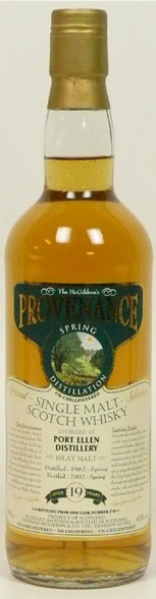
So let’s try an oldie but probably goldie. Yes another Port Ellen. One bottled in 2002. You remember there are a lot of names and stuff on the labels. On this label it is also stated that the whisky was distilled in spring 1982 and bottled in spring 2002.

Color: Gold

Nose: Fresh, lightly peated sea air. Yeasty. Sour fruit, sour cherries and lemons. Small amounts of complex rubber. For me there are two types of rubber here. The orange rubber air tubes you encounter in a laboratory ánd the black inner tube of a bicycle. Slightly sweetish nose and the whole is a bit dirty. Total smell is light, probably through reduction.

Taste: Very grassy, malty and some sweetness. Lemon curd, black and white powder and just now the peat. Bicycle tyre rubber. No laboratory tube. There is also a biological side to it. Hard green leaves and crushed bugs. There is also some bitterness here. There is a lack of balance in the nose. It does have a few distinctive markers but they don’t necessarily work together perfectly.

A bit of a shame this got reduced. For me the ‘rubbers’ would have been great without reduction. Still this is an example of the uniqueness of Port Ellen. It doesn’t compare to all its sisters on Islay. Eternal shame the distillery seized making Single Malts.

Points: 87

Caol Ila 24yo 1975/2000 (54.3%, Wilson & Morgan, Barrel Selection, Millenium, Cask #2981, 259 bottles)

Even though it’s supposed to be summer, looking outside you could have convinced me of something different. I see people outside wearing coats and jackets. Yesterday I reviewed an Islay malt, Bruichladdich to be precise, and it didn’t taste too bad on these cold summer nights. So why not try another one. This time one by Italian independent bottler Wilson & Morgan, or Fabio for his friends. Earlier I reviewed a young Mortlach that Fabio bottled, that turned out to be pretty damn good! Let’s see if this Caol Ila is something down similar lines.

Color: Gold

Nose: Nice subdued elegant peat combined with fresh succulent grass. A really held back Islay. Apples and nice malty flavours. Nice old fat clay and bonfire smoke. Salty, absolutely very wow this is! Some powdery dryness and wet wood. Wet earth with a hint of some undefined sour fruit and dried meat. There is definitively some rain in this. What? Rain. I love Islay whiskies that smell like this.

Taste: Thinner than I had expected. Sweet with apple flavoured coffee. Grassy peat again. Cardboard and wet hay. The sweetness fits the fatty peat and is cloying. It’s a strange kind of sweetness. Again, the nose exactly fits the taste here. Salty lips. The finish doesn’t seem to have a lot of staying power.

Although its heritage is pretty obvious, for me it’s not a typical Caol Ila. Maybe I’m more used to Caol Ila’s from 1979 through 1984, so this could be typical for a Caol Ila from just after the rebuild. We’ll see. Still a very interesting dram. I know, usually that doesn’t sound good, interesting, but here it is used in a positive way, so this scores…

Points: 89

Bruichladdich 1989/2004 (57.9%, Gordon & MacPhail, Reserve, Cask #1957, 275 bottles)

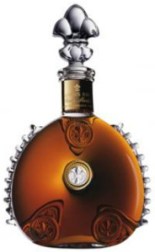
On Monday, July 23 2012 it was announced that Bruichladdich of Islay was sold to Remy Cointreau for £58.000.000 to enrich their high-end portfolio of brands and to confirm their strategy in the luxury spirits segment. If I’m not mistaken it’s their first distillery, and maybe there is more to follow? We’ll see what happens next. In stead of picking one of their numerous official bottlings by the old owners, first a Sherried example from independent bottlers Gordon & MacPhail.
Color: Orange Brown.

Nose: Thick raisiny sherry, and fresh sea air (not salty). I guess some smoke, but peat? No, not yet. Mocha, coffee with tarry toffee. Strangely enough I detect some lime on this nose. Old ladies stationary. Yes, wood also. Altogether it doesn’t promise to be sweet.

Taste: Ok, half sweet. Tarry and thick. Toffee with some ash. Nice body and good balance. The nose and taste seem to match. It has the sourness of oak. There is some peat in the depth, but as with the nose, it has more smoke. Wycam’s cough drops! Very nice not over the top Sherry, but also not all to complex.

Pretty decent independent Bruichladdich. Although the Sherry isn’t too overpowering, the distillery character got lost here. Still it’s a very nice dram, with no obvious flaws but low complexity. Recommended

Points: 87

Linlithgow 31yo 1970/2002 (52.4%, Douglas Laing, Platinum, 139 bottles)

This was staring me in the eye for a while now, and since this is my favorite Lowland distillery, no, one of my favorite distilleries of them all, it is time to try out a very old Linlithgow. Well Linlithgow’s on the label, but it is better known as Saint Magdalene.

What could be more appetizing to you than the fact that the site of St. Magdalene in Linlithgow, West Lothian, housed a Lepper Colony in the 12th century, or that the water didn’t come from an ancient super pure melted snow mineral water source, but from the Union canal nearby. But enough facts. If you want more, have a look at Tomas Karlsson’s site.

Founded in 1798 and closed like many (good) others in 1983. The distillery is no more and there are no casks maturing there anymore, only people. It’s an apartment building now. What a shame. Didn’t they know then, it was this good, am I wrong, or isn’t it about the quality anymore…

Color: Light Gold.

Nose: Malty. Light citrus freshness and seems very clean at first. It doesn’t take long for a lot more to show up. Grass on a hot day. Dust and hay. It has a touch of floral sweetness to it. Given some time, there is a new depth to this. Or a “growing” depth you see in Hitchcock’s Vertigo. Oily, fatty, toffee, licorice and hot tar (all in tiny amounts). No wood. Very special.

Taste: Thick, grassy and medium sweet. Dried apricots and apple skins. It isn’t the same as the nose (for me the nose was not fruity), but it complements it very well. Again there is almost no wood. It’s there really, but it is hidden well and transports the body. You can taste the balancing spiciness or distant bitterness (again, hidden well) and the sourness in the finish is from the oak too. Great balance.

For some people these whiskies are to light, or more of an acquired taste, but if you work on this a bit, it will be really rewarding.

It’s a first for me, but this is one, I’d recommend, you enjoy in absolute silence and by yourself. Almost any other Single Malt is best shared with friends, but this is a private one, maybe because the beauty lies in the details. But that’s not all. This has a lot to give and it doesn’t give it all at once. Again time is a friend here. I’m quite stunned also that this is a 31yo and that it’s from 1970, because it can come across much younger. For me it resembles some of the 1982 expressions also bottled by Douglas Laing. I’m a fan!

Points: 91

Springbank 36yo 1970/2006 (53.1%, Signatory Vintage, First Fill Oloroso Sherry Butt #1629, 461 bottles)

After reviewing one of the most popular official releases by Springbank, the 10yo at Cask Strength, this time a Single cask bottled by Signatory Vintage in their heavy glass decanter series that are hard to handle (the Cask Strength Collection). The fourth already on these pages. Hard to handle maybe, but so pretty. This time it isn’t in one of those clumsy tins, but in a beautiful, probably fake mahogany box. Even if the whisky is mediocre, the packaging is stunning. Let’s hope the contents measures up, because that’s what you’re paying for.

Color: Radiant Orange Brown, with powdery sediment.

Nose: Wow. Buttery. Very old wood with lots of spices. Nutmeg and ginger. Dusty toffee. Sherry as in raisins. Deep sugary raisins, not fruity. After some breathing it gets some lovely spicyness to it. Toasted wood and warming. Really great nose, with a developement to it. So packaging great, nose great, high hopes for the taste now.

Taste: Woody and dry. But there is some chewy sweetness to it. Roundness is maybe a good word. Also some bitterness from the wood. Coffee (Espresso), Warming chocolate. It really is a hot brandy spiked cupa coco. Also some cough bonbons. Not especially as complex as the nose is. What you see is what you get. Later some mint and furniture wax. Nice throat coating finish.

This definitively got way better when the bottle got time to breathe. Both the nose and taste got better. It shifts its focus from the wood and nice bitterness to something more rounded out and lets you see more of what’s underneath. Not the best old Springbank around but still a very nice one if you give it time and an open mind. I enjoyed it thoroughly.

Points: 91

Glenlivet 1975/2006 (54%, Berry Brothers & Rudd, Cask #10846)

Well here is an example of the mother of all Single Malts. No it’s not the oldest distillery in Scotland, nor is it the first in anything. The oldest being Ferintosh at Ryefield (from 1689). The oldest still working distillery is Glenturret (1775). But once there was a time a lot of others added the “Glenlivet” to their own name to benefit from the success, and the known quality of Glenlivet, and who doesn’t know Glenlivet? Started in 1817 and ‘founded’ in 1824 when George Smith was one of the first to obtain a licence for his distilling. All of his illicit distilling neighbours, wanted him dead for it. Traitor! In 1845 George leased Minmore farm, which he bought in 1858. Minmore was renamed Glenlivet a year later and is the site of the current distillery. Funnily enough, Cadenheads also state the name “Minmore” on their Glenlivet offerings. George died in 1871. Long live George and to his health we raise the glass with this Berry Brothers & Rudd Glenlivet. Slainthe George.

Color: Orange Brown.

Nose: Fresh and spicy. Lots to smell here. Sour oak and honey, very “Bourboney”. Later on more elegant, refined, not very bold, even though there is a lot coming out of the glass. Distant smoke with powdery dryness. Apples and cloves. And something meaty, steak, gravy.

Taste: Initially, thick and spicy, minty and sweet. Later some tar, acetone with cookies (dough and baked chocolate chip cookies together). Medium wood, with its bitterness in place. Fine and elegant. Applesauce, almonds and cherried rubber tyres. Finishes dry.

A grand old whisky with a lot of quality to it and with a woody punch. This is unique for me since it is bold and chewy at first but quickly transforms into something more fine, refined and elegant. Just a wee bit too bitter for me, hence no score into the 90’s. probably was aged for too long.

Points: 89