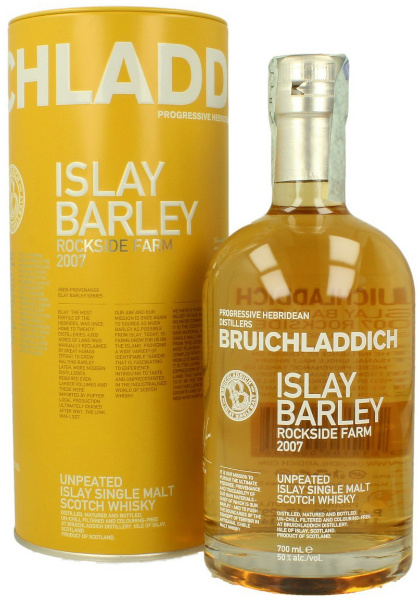
Bruichladdich 6yo Islay Barley 2007 (50%, OB, Rockside Farm, 13/126, 2013)

If you click on Bruichladdich in the right column, you’ll find that the last few reviews of “Bruichladdich” were written about an Islay Gin and two Rums. Yes, Bruichladdich is quite a progressive and busy operation, not only distilling three different kinds of Whiskies (The unpeated Bruichladdich, the heavily peated Port Charlotte and the insanely peated Octomore). They also bottle a range of Rums under the moniker of the Renegade Rum Company, mostly if not all finished in a wine casks. Yes, before I forget, they make a Gin as well, and not any Gin, it’s Gin made with botanicals from the Island of Islay. So a local Gin, and as Bruichladdich say themselves, Terroir matters. A now I have a chance for a bridge, al be it a terribly un-smooth one. Since we are on the subject of terroir…

Where Springbank lead the way with Whisky made from “Local Barley” Bruichladdich takes it one step further. Whisky-nerds always want a lot of information about their dram and Bruichladdich is sure one of those who are happy to provide, combine this with the “terroir” philosophy here we have a Whisky of which we now know it’s not only made from local Barley, but we also know how local. The barley used, Optic, was grown on Mark & Rohaise French’s Rockside farm, and not on the whole 2,500 acre farm, no, it was grown exclusively on one particular field called ‘Minister’s Field’. Two years after this 2007 Islay Barley was released, the French’s decided to sell their farm to Kilchoman, which is built on Rockside Farm land, and leave the Island…
Color: Light Gold.

Nose: Barley, bread and cereal. Warm and sweet-smelling. Vanilla, custard and pudding. Although supposedly unpeated, this still has some peat, paper and smoke. Fresh and fruity, and quite honest. A lot happening already after 6 years. Develops in my glass. Hay, citrus and fresh ripe Cherries. Appealing and appetizing. Depending on the moment, sometimes, and it’s not often, I pick up some petrol. Brings back moments of a warm silent summer in the countryside. No wind and being alone. On top of the fresh and fruity notes lies this sharper smoky note. The whole experience is less broad than the 2006 Bere Barley offered by Bruichladdich as well. Sure this is 6 years old and I guess this makes lots of people thinking it is probably simple or doesn’t offer a lot of complexity. Bollocks. I feel, this offers an amazing complexity. Yes it’s 6yo and it has youthful elements to it, but not typical youth, as in hints of new make. A nice drinker, but this time an even better one for comparison to others like it from Bruichladdich (different vintages of Islay Barley and Bere Barley), Kilchoman 100% Islay, or even the likes of the aforementioned new Springbank Local Barley’s. Yes you need more of these open at the same time. a terrible thought indeed!

Taste: Sweet, with cookies, cereal, and very fruity right out of the gate. Tiny hint of soap and wax. Nothing to worry about. Big, dirt, soil, oil and rural notes, but also creamy with vanilla powder and old dried out toffee bits. Sweet. Hard to imagine now that the Bere Barley was even more aromatic than this one. Just like Springbank, this needs some breathing before showing its true potential, but when it does, it delivers nicely. Nice presentation too by the slightly higher ABV. 50% instead of the new standard which seems to be 46% ABV. Both are great improvements over “old” 40% ABV. Yes, the alcohol is noticeable people. Mocha and milk-chocolate come next. Vegetal, grassy, linseed oil and butter. A healthy sensation gets over me now. The finish could have been better balanced and longer. First of all the Alcohol (sometimes) slightly anasthetizes my tongue and the roof of my mouth. Secondly it gives off a slightly acidic aftertaste which somehow doesn’t really fit the profile. It’s not an off-note but it just doesn’t fit in this picture. It gives too much separation (of tastes and balance) and leaves the finish in a bit of confusion. (gets better with more air). Hardly any aftertaste, which means youth I guess… This luckily doesn’t spoil the fun though, and I still love this dram. Not as complex as the nose but more than enough, especially considering, again, that this is a mere 6yo. It’s a way to go with modern Whiskies. I love this series as well as I do the Bere Barley series. Well done Bruichladdich.

It is quite nice to try several different releases from the Islay Barley series side-by-side. The differences are bigger than one would expect beforehand. In my Whisky Club we also compared this 2007 Islay Barley to the 2006 Bere Barley 2nd Edition. Both are in their own right quite good Whiskies (can we get some older examples too please?), but trying the one right after the other was for me te true way to try these, hence I feel you need several of these open at the same time. They complement each other quite well. The differences are big enough to warrant this…

Points: 86

Benrinnes 15yo “Flora & Fauna” (43%, OB, L15P00535367, Circa 2001)

Long time no see! I took a month off, since a lot happened lately. First of all, a new job, which is nice, takes up a lot of time though, and the moments I did have left for writing reviews, were also spent differently than I initially expected. Apart from that, also The Whisky Show in London happened. Today, instead of reviewing something new from that show, I chose an oldie from my lectern.

Just like the Flora & Fauna Mortlach bottling I reviewed earlier, this is a bottle I brought with me to a gathering of my Whisky club, and as can happen when opening old bottles, the cork broke quite easily, crumbled to a pulp. You gotta love those corks now don’t you? Of all the Flora & Fauna bottlings, Mortlach, Dailuaine and this Benrinnes are the really Sherried ones (but there are more). Experience also shows us there is definitely some batch variation going on in the Flora & Fauna series. Here we have an oldie, supposedly bottled in 2001 (or 2002), so not a recent one, which might be entirely different.

Color: Orange brown.

Nose: Heavy on the Sherry. Nice and earthy. Meaty, cold gravy. Thick aroma. Coal and steam. Is it already a sherried bottling from a different time than ours? How would a more recent example compare? This was distilled in the eighties, which was a different era compared to a Gordon & MacPhail Longmorn from 1971. So heavy on the Sherry. Thick and astringent. Dry and not as fruity as Longmorn. If you ask me, this compares more to the style of Glenfarclas, drier and not-so-fruity. Funky, tarry, musk, brown sugar, coffee creamer and definitely Vanilla. American oak. Still not a lot of fruit though. Hints of very ripe cherries mixed in with oak. Dry, dusty and quite spicy. Hints of cask toast including the smell of molten plastic. Meaty, cooked vegetables with more oak and spices. Hard to tell which spices though, although anise and cloves come to mind, as well as some crushed beetle (that’s not a spice isn’t it?). I can’t help but feel there are some older casks used for this particular expression. Good and interesting, but also a bit “strange”. A hint of soap (not of the perfumy kind) and mocha.

Taste: On entry, a brief light moment, almost like a underproof Whisky (which it is not). Soft, but luckily not “smooth”. It has wonderful raw edges and does show some bitter (and soapy) notes as well, which do work well. Fruitier than the nose, and already one that needs to breathe. Somewhat sweeter than expected, caramel but also the brown sugar I got from the nose, all in good measure though. Tar and plastic yes, cherries? yes as well, but that’s about it. Does it matter? No, since it is a different kind of Sherried Whisky. Lots of (sweet) licorice (and toffee) in stead, it almost tastes salty. Again, a very interesting and tasty experience. Wonderful body, but it sometimes falls apart a bit in the finish (depending on the moment). Finish isn’t as long as one would think, but still has enough length. Well, if it’s a problem, take another sip then. Tar and coal make up the aftertaste, and Sherry of course.

For me, another gem in the Flora & Fauna range. Especially looking at those earlier bottlings, there were quite a few more than wonderful examples there. Mortlach, Blair Athol, Rosebank, all excellent. Worth looking for. I really need to have a look at more recent bottlings in this range to compare them to the older ones…

People start to pay silly money for the Flora & Fauna Mortlach, and it doesn’t even seem to matter if it’s an older one or one of the last. Granted, they are very good, but really, this 2001 bottling of Benrinnes is equally as good!

Points: 88

Bowmore 17yo “White Sands” (43%, OB, for Travel Retail, Bourbon Casks, 2014)

As announced in the previous post about the Bowmore “Deep & Complex”, here is the review for the Bowmore “White Sands”, the top offering from the previous travel retail trio. Where “Deep & Complex” has something to do with Sherry casks, this one is said to have been matured only in Bourbon casks. This 2014 travel retail release is somewhat odd though. Of the three, it is the only one not in a litre bottle, the only one bottled at the higher strength of 43% ABV, and the only one with an age statement. 17yo is also an unusual age, although there used to be a oficial 17yo that was replaced by the 18yo.

Color: Full gold.

Nose: Sweet, syrupy and some very nice, medium strength, smoke. Slightly vegetal, but mostly fruity with sweet orange oil mixed in with sweet, soft peat. Papaya and mango are noticeable too. Hints of cardboard and earwax. Cold black tea. Very accessible. Creamy vanilla and hints of soft oak. It’s almost like sugar-coated oak. I fear caramel coloring is at work here. I’m already getting slightly annoyed, and I haven’t even tasted it yet. I have tasted this bottling before, and on that occasion I found the smoke to be more up-front. That’s important for this bottling since the smoke-bit is really delicious and defining this Whisky (for me). That bottle was half full, by the way, so I’m hoping this only needs some more breathing. (I just opened this bottle). It may very well be from a different batch as well. Letting it breathe right now, already brings out some more wonderful notes from the smoke-department, so I’m confident that if you work this a bit, all will be fine in the end. This will turn out to be a hidden gem, I’m sure. Just let it breathe. Leave the stopper off for a while.

Taste: On entry; sweet (Rum) and waxy. Oak and fruit. Definitely a tad simpler than the nose and most definitely lacking some oomph. This needs at least 46% ABV. Please Bowmore, please. Cereals, soft wood and caramel. Almonds and mango chutney. Milk-chocolate powder. Nesquick. Hints of smoke and some sweet peat. A tiny hint of bitterness from the peat and oak, but not much, not much of that at all. Vanilla, vanilla ice-cream. Soft and creamy. Custard and pudding. You get the picture don’t you? It isn’t hard to taste, this suffers a bit from caramel coloring. Its aromas are glued together, a property of caramel coloring. I wonder what the chill filtration did to this expression? Is the complexity of the nose over the taste a sign of this?

Dangerously drinkable. Talisker Neist Point (a NAS bottling), is another of those peated, dangerously drinkable, travel retail Whiskies. I would love to hate both, since they are obviously flawed, but somehow they turn out better than expected. Never stellar, but good and likeable.

Although this is a good one, it still is one, I feel, has been tampered with. Chill filtered and colored, and as with the other Bowmore, reduced too much. Again a potentially stellar Whisky ruined, (at least in part it is), for the sake of how it looks on the shelves, and how money can be made, at airports. What kind of heartless, soulless people make these kinds of decisions? Do marketeers have so much to say, or are people, like us, who truly like their Whiskies, actually the odd ones out, complaining when we shouldn’t?

I can confidently recommend this Bowmore, I will give you another recommendation as well. Seek out an independent bottling of Bowmore, to find out how Bowmore actually tastes like without the tampering I mentioned.

Points: 86

Bowmore 18yo “Deep & Complex” (43%, OB, for Travel Retail, Oloroso & Pedro Ximénez Sherry Casks, 2017)

Lets start this review with a confession. I’m a faulty human, and I admit to having prejudices. I don’t know where they come from, I didn’t invite them into my mind, but still they are there and I am battling them. The prejudice I have is that I have a more than healthy suspicion towards travel retail bottlings. Compared to this, my feelings towards NAS-bottlings are pretty mild, since there are enough good NAS bottlings around. Bowmore travel retail bottlings are an excellent example why I have this prejudice. A few years back I wrote a review about the Bowmore “Black Rock“, and it is travel retail at its finest. First it comes in a big litre bottle and second, it was almost reduced to death by bottling it at 40% ABV. So to celebrate your trip you bring back a souvenir of a weak Whisky and a lot of it. When tasting bottles like this, I just knew I had to stay away from such bottles, and I still will steer clear of litre bottles bottled at 40% ABV.

In comes Nico. Nico is one of the founding fathers of the Whisky club I am a member of, and he invited me over to bathe in the excellence of one of the latest batches of The Balvenie “Doublewood“. Taking about ruining a perfectly good Whisky! Since we both are very keen on Whisky, obviously the evening didn’t end with several Balvenies. We had plenty more adventures in Whisky. Funny enough, the surprise of the evening (for me) was a Bowmore travel retail bottling! Nope not this 18yo Deep & Complex but the 17yo “White Sands” of the previous travel retail series.

In 2014, Bowmore released a trio called “Black Rock” (litre, 40% ABV), “Gold Reef” (litre, 40% ABV) and “White Sands” (70 cl, 43% ABV) and I should have known better. “White Sands” wasn’t a litre bottle, was the only one of the three with an age statement (17yo), and the ABV was slightly higher as well. Tell-tale signs that there was a possibility it would be a good one. Good? I loved it! I have met (the wonderful) Eddie MacAffer (voted Whisky distillery manager of the year at Whisky Magazine’s 2013 Icons of Whisky Awards) and “White Sands” is a favorite of his, so I definitely should have known better!

So why isn’t this review about “White Sands” then? Relax, I’ll get to that shortly. Probably in the next post. When I found out how good “White Sands” was, I ordered a few of those. At the same time, I got a pretty good deal on this “Deep & Complex” (What’s in a name), and knowing now that the top offering in Bowmore’s travel retail series might be quite good, I ordered it as well. So, let’s do this new one first and we’ll get to the old one later…

Color: Copper.

Nose: Sherry all right. I would say the PX is upfront. It smells sweet and dessert-like. Caramel. Cherries on syrup. Candied orange skins. Sweet alright. Raisins and dates (freshly dried). Fresh macadamia nuts. A nice typical smokiness (birch) I get from “White Sands”as well, although that is an entirely different bottling. Garden bonfire. Wood smoke. Lovely smoke aroma’s all over. Charred wood. Nice ripe black and red fruits and definitely more smoke than peat. Excellent balance. Vanilla and dust. Islay in the summer. Tar with hints of peppermint and menthol.

Taste: Sweet and fruity. Round, they call it. Half-sweet Cherries and only some wood and peat. It has an even deeper lying smoky bit, but again a nice smoky bit. A bit thinner (and fruitier) than expected. Burning newspaper. Nice warming quality though. Warm wet earth and the fresh macadamia’s are here as well. Not too bitter dark chocolate, wood and toffee. Tar and coal. Licorice. Surprisingly short to medium finish and not a lengthy aftertaste as well. What happened over those 18 years? I’m trying this before breakfast so I have a fresh and eager palate, but still the Whisky is too weak. It’s lovely, but too weak, so don’t drink this in small sips, it won’t work as well that way.

It is somehow suggested and assumed this was matured solely in Oloroso and PX-casks, but I do have my doubts. In a way it’s almost like a “White Sands” with a Oloroso and PX-finish. Wonderful stuff, but like the 40% ABV travel retail versions. It’s a bit too thin. Even at 43% ABV, it doesn’t quite cut the mustard. It has the potential of being a wonderful Malt (scoring in the lower 90’s). It is actually a wonderful malt as is, but it could do so much better if it had some more oomph, something more to carry it. Now its like (white) sand running through my fingers…

Points: 87

P.S. In a head to head (H2H) with the 1995 Lagavulin its easy to see what I mean. The Lagavulin has only 5% ABV more, but it does so much more for the Malt. It gives it power and length. It even brings out the aroma’s more. I’m not afraid to say that this Bowmore, if it was 46 or 48% ABV like the Lagavulin, would even be better than it. Now, the Lagavulin beats it (just). Nevertheless both are damn good drams and easily worth your money. I’m enjoying them both.

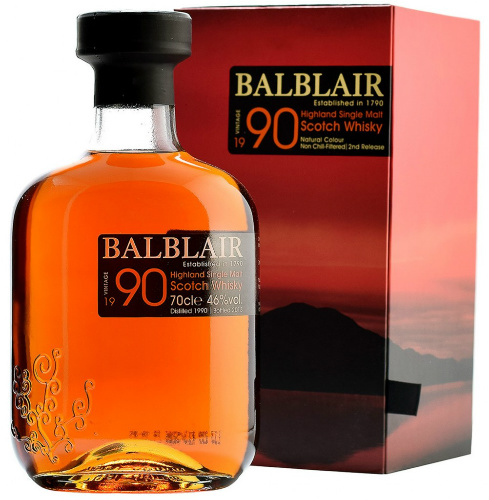
Balblair 1990/2014 (46%, OB, 2nd Release)

Unbelievable! Here we have another Distillery that has never featured on these pages before. Balblair. Just like Glenrothes, Balblair is a distillery that has gone down the road, laid out by Wine. The long and winding road of releasing their products as vintages (in a reduced state, ABV-wise, that is). On the back of the bottle, in rather small print one can find the statement: “2nd release”. It implies that there has been an earlier 1st release, yes? Well, yes, but…

Since 2008 there has been an 1990 release which was a lot lighter in colour and which was only released in litre bottles for travel retail. That one was matured solely in ex-Bourbon barrels. It was released annually untill 2011. So there was a 1990/2008, a 1990/2009 etc. Since 2013 the first 2nd release, was released. the second in 2014, the third in 2015 etc. So what we have here are multiple, annual, batches from different bottling years of the 1st release, as well as of the 2nd release. So not only Glenrothes style vintages, but also Springbank style batches. Again the industry seems to consider batch variation to be a dirty word(s), yet I hope there is some adventure in these different batches. This will be a review of the 2014 batch (the 2nd batch of the 2nd vintage 1990, can you still follow? However, if a different batch falls into my hands, I’ll compare it to this one. By the way the 2nd release comes from the same casks and the same vintage as the 1st release, the only difference being this second release has spent about two years in ex-Oloroso Sherry butts. Oh, and with each new batch, it gets older as well.

Color: Copper gold.

Nose: Quite creamy, with sweet vanilla, ice-cream, fresh cold butter and Sherry. Hints of oak, fresh and toasted. Dry (scorched) leaves and herbal. Hints of coal even. Hints of paper, cardboard, toffee and honey. Cough syrup. This smells so sweet and syrupy that it is easy to conclude it lacks a bit of the woody backbone to keep it standing. This Whisky smells like a dessert by itself. The wood that is here, smells like pencil shavings.

Taste: Quite big, matching the nose. Sweet (Sherry) and syrupy. A bit too sweet imho. Maybe these casks didn’t contain the highest quality Sherry in the first place. Sweet milk chocolate, vanilla and vanilla ice-cream. (Now the honey in the nose becomes more pronounced as well.) Butter and more chocolate. Almonds with fruity acidity on top, as often this fruity acidity doesn’t blend in all that well. There seems to be a little problem with balance as well.  This acidity also has quite some staying power well into the finish only to dissipate in the aftertaste.

One sunny afternoon I tasted this 1990 2nd release and I loved it. Now, when giving it almost too much attention and analyzing it, there are some flaws that distort the balance a bit. It’s a bit too sweet and I don’t think the Sherry finish worked quite as it should. It’s completely fine when you have a casual dram and that is precisely where it’s for. I really liked it on that sunny afternoon, outside, with nice food and friends. When sitting at home, analyzing it, in a controlled environment, these flaws become more obvious, but I still like the Whisky very much. I wish I had the first release for comparison.

Ok, now I ask you to look past the flaws I described above, because as a whole this is definitely a good Whisky, so I stand by my score, which might be higher than you might expect from the text alone, and yes, at a good price, I would even buy it again. How is that for a recommendation. Just pick your moments to drink this, wisely…

Points: 87

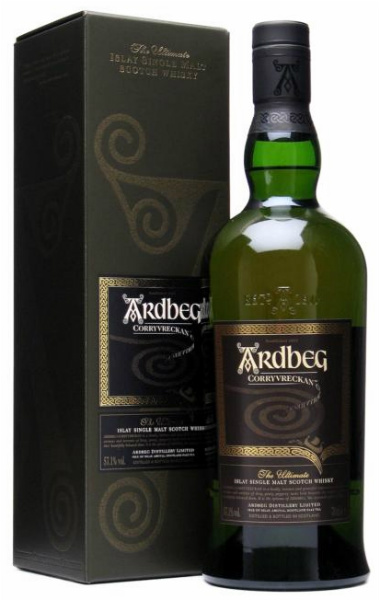
Ardbeg “Corryvreckan” (57.1%, OB, 2014, L59815)

Well, here is an Ardbeg of which nothing is known, apart that it was first released in 2009, following up on Airigh Nam Beist, which ran from 2006 -2008. I won’t bore you with my take on the marketing jazz about Corryvreckan being a whirlpool. You can read about that on the box and on many sites across the interweb. Here the golden nugget from Ardbeg’s own site: “Corryvreckan takes its name from the famous whirlpool that lies to the north of Islay, where only the bravest souls dare to venture. Swirling aromas and torrents of deep, peaty, peppery taste lurk beneath the surface of this beautifully balanced dram”. Well, what can I add to that!

What I’d like to know is, how this Whisky came to be, and that is definitely more difficult to find out. Every bottling of Ardbeg has some sort of unique twist. Casks that were burnt to a crisp before using, or casks that were forgotten in a swamp, or casks that were kept in space for a while. The unique twist this time seems to that part of the Whisky was matured in new French oak casks, (as opposed to the sole use of the immensely popular American oak). The rest of the Whisky was, of course, matured in first fill and refill American oak casks. American oak became so popular since it gives off a friendlier aroma of vanilla, making any liquor softer, creamier and more accessible. European oak, or French oak in this case, is less of the vanilla kind, but more about tannins. All the great Sherried Whiskies from yesteryear were matured in European oak Sherry butts and puncheons. Today the Sherry industry prefers American oak as well for reasons mentioned above. French oak is used a lot in the French Wine industry, so rumour has it, used Burgundy Wine casks were used for this Ardbeg as well. However we don’t know if they were virgin oak, first fill or not and what kind of Wine they contained (if any). A Chardonnay cask will result in a different Whisky, than a Pinot Noir cask…

Color: Full gold (no red or pink nuance though).
Nose: Very ashy and smoky right out of the gate. Licorice wood and sweet smoke. Garden bonfire. Sweet and soft peat. Citrussy, herbal and meaty. Crushed beetle and old tarry rope lying around in the sun. Fresh oak combined with some lemon (not the oil from the skin). Distant vanilla, but it is here. Ripe and sweet strawberry and vanilla ice-cream. More hints of red fruits and more promises of sweetness. Nice soft oak. Dusty. Very well made Ardbeg if it tastes as good as this smells, this will be a keeper!

Taste: Ashy again. Sweet, crushed beetle again, how odd. Big aroma, big body. Lots happening. Initially sweet but it is a good sweetness balanced out with sweet peat and dryness of the smoke. Definitely a type of fruitiness you don’t get from (Bourbon) oak alone, which would support the Wine cask claim. Fat peat and slightly tarry. Empty, off-season, fishing boat in the sun. Visions of an abandoned port. Not hot, only for a moment is shows some higher ABV, but I would have never guessed it is as much as 57.1% ABV. Well balanced, with only a medium, but decent, length. This is where it’s average age is noticeable.

Excellent standard bottling, and a damn good NAS as well, if I may say so. It can be done after all! I’m wondering which of the special releases, which are all more expensive, can beat this one? The 10yo is the entry-level Ardbeg and for me it has lost the most compared to the earlier tens since it has become way too sweet. I guess, that one has to appeal to a larger public, than this Corryvreckan and Uigeadail. I guess the latter are more for connoisseurs and anoraks like me and you. Now I will have to get me a new Uigeadail to compare it to this Corryvreckan. I have high hopes now…

Points: 89

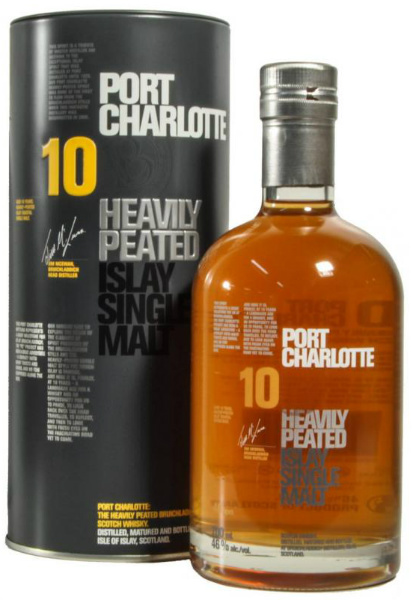
Port Charlotte 10yo (46%, OB, 13/153)

Many people like Springbank very much and some of those people, the likes of bloggers and vloggers and die-hard aficionados, call out to other distilleries to look more at Springbank as an example how they feel things have to be done. In that respect, hiding in plain sight is Bruichladdich, who are doing things like Springbank but in their own way. For one they have multiple brands: Bruichladdich, Port Charlotte and Octomore and more interestingly they are doing the “Local Barley” thing as well (f.i  the Bere Barley and Islay Barley bottlings). Both series contain rather young Whiskies, which are surprisingly good. Personally, even more exiting is the batch variation, which I find, adds to the adventure in Whisky, although I don’t think they change the composition as much as Springbank between batches. They even code like Springbank (here: 13/153). The first official Port Charlotte 10yo was bottled in 2012, so this is not the first batch of the first release, but it is still the first release, since in 2016 an official second release came out bottled at 50% ABV.

Color: Light gold.

Nose: Nice fresh peat, and dare I say it has a Sherried note? Honest and slightly sweet. Full-on aroma. Slightly sweaty and floral at the same time. Soft as well. Dusty. Clay and finger paint. Pencil eraser. Medicinal. Cold gravy. For me, very special stuff with quite some unusual markers. This big synergetic aroma easily overpowers the soft peat. Maybe not overpowers, but it sure works well in tandem with it. Nice development and evolution of the nose. Every sniff seems different from the last, unless you are sniffing continuously. Appetizing stuff.

Taste: Peat, wood and some fruit in the background. The fruit shows quite some acidity. Starts out sweet, caramel, toffee, but that isn’t here to stay. Well, the aromas stay but the sweetness retreats a bit. Licorice wood. More (different kinds of) licorice combined with milk chocolate mousse. Some soap in my toffee now, as well as some mints (mint candy). Is this the taste of the floral part? Where the nose had a big aromatic presence, the body of this Whisky isn’t as big. Alas the taste cannot keep up with the nose, but the potential is there. If the quality of any of the younger distillates is anything to go by I’m predicting the future of the 10yo to be a bright one. Just compare it to, the sweeter by the batch, offerings of Laphroaig and Ardbeg 10yo’s.

Yes even by today’s standard, 40 ppm phenols is heavily peated, even though by now we are used to the insane peating levels of Octomore, where 167 ppm is just the start.

Bruichladdich might not be the most original distillery around, although Octomore sure is as original as it gets, but it might very well be the most progressive of the bunch today. Springbank is a main stay for me and I guess Bruichladdich can be added to that list now as well. Don’t worry, these two aren’t the only ones on that list. Not by a long shot.

Points: 86

The Glenlivet 13yo “Zenith” (57.9%, OB, Single Cask Edition, Cask #8024, 2013)

It was that other well-known Speyside distillery which between 1999 and 2004 released a few Exceptional Single Cask bottlings. Some of which I tasted and were very…exceptional indeed. Alas the bottles were a mere 500ml. The Glenlivet liked that idea and somewhere around 2005, started bottling their own exceptional single cask bottlings. For the first decade, releases were kind of sparce, but more recently, many more bottlings have seen the light of day. I’ve tasted quite a few by now, and some are really exceptional and some are less so. Still good, but nevertheless, not all that exceptional in my book. Proceed with caution I would say, especially when most of them are pretty costly even the young ones.

Another remark. Although it seems quite some information is put on the label I still miss a lot. Although the label does show a cask number (here: #8024), not stated is what kind of cask it came from. And what a about distillation year? pretty basic information most other single cask bottlings show. By the way, since most of these bottlings are quite expensive to boot, where is the wooden coffin? Even the Glenlivet 21yo has that and costs less than half. Sure you can’t drink the wooden box, but it would look nice wouldn’t it. Just look at the picture below. The bottle looks great, but the cardboard box next to it… not so much (at this price point).

Color: Gold.

Nose: Fresh with nice citrus notes countered by some smooth vanilla and soft oak. Very pleasant right from the start. Some distant fruit. Dusty mocha, aspirin powder and spicy oak. Yes the oak definitely asserts itself. Typical notes for a Whisky from a refill hogshead made from American oak, and as such, reminds of many fairly young Cadenheads bottlings from ex-Bourbon casks (remember those tall green bottles?). However, this one is not that hot. Again, there is some dried yellow fruit in the back. Well hidden but definitely noticeable. Hints of salt and pepper. By now the citrus notes have gone.

Taste: Here the fruit is more upfront, but the oak is as well. Not an instant-pleasure fruit-bomb you’ll like right away. After the initial fruity aroma, it has a sharp and slightly bitter attack of oak. Slightly soapy as well. Floral without ruining it. Just like the Glen Elgin I just reviewed, this seems to be one of those Whiskies you’ll have to work with. Definitely not a casual Whisky. It needs your full attention. So don’t distract yourself with loud music or some reading, since you would miss the essence of this Whisky. Spicy and bitter wood definitely take over from the initial aroma. Nutty as well. Fresh soft almonds. If you are patient and let the Whisky breath a while in your glass, the spicy oak, and especially the bitterness get softer, leaving more fruit to develop and reach a better balance. Still, the more this breathes the better it gets. Surprisingly it only has a medium finish, with a tad of  bitterness. Peanut butter and walnut skins in the aftertaste.

If you have a collection of these Single Cask bottlings, this one can serve as a contrast to some others, but if you buy just the one, I don’t think this is exceptional enough. What might be exceptional is that this is a non-Sherried, cask strength Whisky, which stays soft almost all the way through.

This one was bottled in 2013 and resurfaced in The Netherlands in 2016 with quite a discount. No wonder it sold out rather quickly. I guess it might be worth the price I paid (less than a 100 euro’s), but I would be very unhappy if I bought this, without tasting it first, for the initial price. Recent single casks, age notwithstanding, cost more than the very good XXV bottling. Something worth to consider.

When comparing similar bottlings I have open, sure the Lochside and the Caperdonich are better but also older and more rare. Compared to readily available Malts with a similar profile that I have, I would rather go for the Glen Keith, but this Glenlivet is nothing to scoff at though.

Points: 85 (original score)

Added note (September 10, 2018): I’m now drinking the last drops from this bottle, and man did it come around. This needed a lot of air, and time to open up, but it did come up trumps. The nose is utterly wonderful, on the palate it didn’t change as much. Sweeter, more malty, very well balanced. Comes close to the Glen Keith mentioned above, which i still prefer.

Points: 86 (new score)

Glen Elgin 19yo 1991/2010 (53.9%, Signatory Vintage, Cask Strength Collection, Refill Sherry Butt #2324, 412 bottles)

After the amazement of the Glendronach I recently reviewed, here is another shock (at least for me it is). I’m actually baffled I didn’t throw in Glen Elgin earlier on these pages, since it is one of my secret loves. Every Single Malt aficionado knows which Malts are just the best, but one always has a secondary, more personal, list of Single Malts. Everybody just loves Brora, or at least knows its one of the best around. However, not a lot of people would pick f.i. Teaninch as such, which is one of my other favorites. Usually it is a Malt with a less “easy” profile that somehow manages to tickle one’s fancy. It’s personal.

Glen Elgin. I love it. Many times it just floats my boat, and this one is no different. I brought it with me as a favorite to my Whiskyclubs gathering in Hamburg, where it failed to get the applause, I thought, it deserves. Yes, again, my opinion. The same club presented me a while back with a sister cask of this one, bottled something around the 61% ABV mark, and since then, I was looking out for a bottle of my own. This cask #2324, in Hamburg, was deemed too extreme and hot by many, but after a 1990 Family Cask of Glenfarclas, the Elgin was retried and deemed more accessible and creamy. So, remember, when tasting a lot of Malts in short succession, it is important where it is placed in the line-up, what you had to eat, how tired you are, and understand how your palate works. It all depends…

Color: Copper orange.

Nose: Sherry, nutty, creamy with lots of soft vanilla notes. Soft wood fiber, but right from the start, not the usual oak aromas. I get hints of Rhum Agricole. Storm by the waterfront. Waterfront organics. Reed. Old air-dried oak (the outside of the cask). Vanilla, cream and wood, but not very fruity yet. Spicy and slightly grassy (wet). Sometimes hints of licorice (wood). Otherwise thick and syrupy with the sugar smell you get from a freshly opened sugar packet. The Rhum Agricole notes stay around, rendering the smell more dry. Add to this another layer of an acidic red berry smell (and some gravy) for complexity. Greek yoghurt? Only hints of sugared and dried yellow fruits now, but I couldn’t tell you which ones (dried papaya and pineapple come to mind).

Taste: Short attack. Big. Starts with some vanilla sweetness mixed with paper or cardboard. Wood, nuts and fruit. Fresh almonds (chewed). Creamy and dusty. Nutty and a medium wax aroma. Altogether a medium and very pleasurable body. The big start soon gets smaller. Fruity acidity on top, from red fruits. Berries. The acidity is quite unexpected and doesn’t fit the nose all that well, or the Whisky as a whole for that matter. Hints of Beer. Finishes (long) on the fruity acidity adding some light bitterness for the first time. The bitterness makes up the aftertaste as well.

I have to be honest. I don’t like it as much now as I did in the beginning. It is definitely one you have to work with, but you also need to forgive some minor flaws (like the acidic top note). I also fear this suffers a bit from oxidation. This is a bottle I often grab when I want a few cask strength Sherry expressions, so it is already 2/3 down, lots of air to play with.

Points: 85

Highland Park Week – Day 2: Highland Park 18yo (43%, OB, 2014)

What are you doing Master Quill? Not too long ago you already reviewed one of those “newer” Highland Park 18yo‘s, did you forget? Are you drinking too much, making your memory slide? Nope not really, but with this one I want to tell you a short story…

A long time ago, the wide necks were replaced by the more feminine bottles, which in turn, in 2007, got replaced by this more manly look they have got today, well… Back in that day I felt Highland Park were a bit suffering from batch variation, something the industry is afraid of because it may put-off loyal drinkers of a particular expression. It must look, smell and taste the same every time around. It is a sort of mantra throughout the industry. Unless you are called Springbank and make exactly thát your strength. By “thát” I mean: batch variation. Just look at the success of the 12yo “Cask Strength” expressions. You see a lot of comparisons between batches on the internet. In the end everything at Springbank is released in batches that vary from one to the other. “Hello, I’d like a Springbank 18yo, released in 2016, no not the 2015, the 2016 please…”

I loved the old, wide neck, 18yo Highland Park to death and when that got replaced by the feminine looking 18yo I bought me a few of those, expecting more of the same. Well, the new one was pretty disappointing in comparison. I was sad the whole time drinking the bottle, and when I finished it, I sold the rest of the bottles, I bought, not buying the 18yo for a long, long time. Recently I got hold of a sample of the “new” 18yo (bottled in 2012) and was nicely surprised. Not as good as the wide neck, but certainly worth your time, effort and money. I liked the 2012 so I bought a few bottles of the “new” 18yo when it was on offer, and ended up with a batch that was bottled in 2014. (L0405S L4 16:09 14:53) (S=2014).

This is a story about batch variation, and something about a donkey hitting its head on a stone, so lets compare this 2014 with the 2012 I reviewed earlier.

Highland Park 18yoColor: Full gold (slightly lighter than the 2012).

Nose: Barley and pleasantly fruity. Definitely more fruity than the 2012 batch. Waxy, warming, heather, vanilla and honey, so it’s a Highland Park alright. Dusty and when smelled more intensely, some smoke emerges. Peat, not so much. Influences of dull smelling Sherry (as in not fruity), and even hints of a compound containing the element of S (Sulphur). Cookie dough and charred pencil shavings. However right from the start it also smells a bit thin. Watery. It’s also lacking some depth and I would almost say that it smells younger than the 2012 batch. Next, some paper-like and vegetal notes. More smoke and a fresher note of Belgian style Beer. Slightly less balanced as well, but also somewhat more complex. If I dare say so, this one has even some exotic notes reminding me of Amrut (matured in Bourbon casks).

Taste: Hmmm, the first thing I notice is definitely a discrepancy in the balance of this 18yo and an obvious weakness. Tiny notes of paper and cardboard. Warming. Hints of the Belgian Beer-notes are right there from the start. Cream and a hint of cold fresh butter. Sherry and hints of vanilla and cardboard. Not as complex as the nose. Watered down wax and heather and an unpleasant edge of bitterness, which has some staying power. After letting it breathe for a while, quite unexpectedly, some hints of red fruits pass by. Short to medium finish, with again a Beer-like quality to it. I was taken aback a bit by this when it was just opened, now the bottle is half full, got some time to breathe and it still isn’t getting any better. Change, yes, better, no. So this one really got several chances to redeem itself, but alas. It isn’t to be.

Where the nose was still good and complex, this definitely is a lesser batch of the “new” 18yo. The 2012 batch is way better than this 2014, and its an obvious difference as well. (I have them both before me). So it happened to me again. Donkey. I taste a 18yo Highland Park, like it, go out and buy several bottles at once, and I end up with a different batch, most definitely less good than the one I tasted before. Disappointing and annoying. Luckily I keep samples and can do proper H2H’s, proving to myself, I’m not going slightly mad. I still have some unopened bottles of this batch, bugger. Now I have to sell 18yo Highland Park bottles again.

Just to be sure I brought this bottle with me on an evening with my Whisky club, a seasoned bunch of experienced older fellows (I hope they don’t read this). I said nothing, just observed people drinking it and listen to their reactions and comments. Well people, it turns out it wasn’t only me…

This hurts. I have been a big, big fan of Highland Park since my beginnings in Single Malt Whisky, and that will never die, because I know it is a good distillate. However, the amount of mediocre bottlings put out by Highland Park today are scaring me (as does the emphasis on marketing). Bugger.

Points: 82