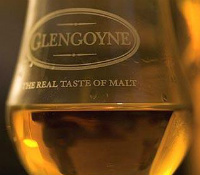
 So, after three ‘Mashman’s choices’ from 2006, we now move into even (c)older bottlings. Next up is this Glengoyne “Winter” that was distilled in the winter of 1984, and bottled in 2004. This bottle is a limited edition of 576 bottles so most probably a Sherry Butt (or Puncheon). 1984 is also a year not a lot of official Glengoynes come from, I actually know of only one other, Sherry Cask #790, that was bottled already in 1998.
The label reads the following fabulous text: “Distilled in winter 1984, this limited edition has captured the essence of the season. A bouquet of snowdrops and pears. A frosty and clean palate that exudes honey and mellow spices reminiscent of a hot toddy”. A hot toddy is a hot drink made with rum, star anise or cloves, lemon and cinnamon. Well I can’t wait to try a Whisky that has all these ingredients in it!
 Color: Light gold.
Nose: Very “Fino” Sherry. Clean. Little hint of smoke and hot butter. Salty bacon. The meaty component moves in and out of the picture. It’s also fresh, with a little bit of menthol. Give it some time and warm it up in your hand, some neat organics develop. A little bit of wood, but less than expected with a 19yo malt. Cold butter too, perfumy and elegant.
Taste: Sweet. Clay and a little bit hot (It’s almost 60% ABV.) Here some toasted wood and again that distinct saltiness. Bitter orange marmalade. There is a lot of sweetness to this, to counterpart the wood and it’s influences. Near the end quite a lot of spicy wood, with matching bitter and slightly soapy finish, with lots of malt. Still this Whisky has a lot of complexity to it and shows many faces. A quality work of art.
My first guess would have been Fino Sherry, but going further I would say Manzanilla Sherry. Manzanilla’s are also made in the Fino way, but have a salty touch, and due to the smoke and hints of saltiness in this Whisky, I would say Manzanilla. For me Fino or Manzanilla casks are pretty good casks for Whisky, but they never are easy. This one too, it’s not a you-like-it-immediately malt, but you have to work on it a bit, as opposed to, lets say, Oloroso cask. Work it, warm it, let it move a lot inside the glass and a wonderful complexity emerges. For me a sort of connoisseurs malt. I will score this the same as the last two choices I reviewed earlier, but no need to inform you again that this Sherry cask is way different from the two darker ones, but equally as good. Beauty is in the eye of the beholder.
 The fabulous list of ingredients: Rum? Nope. Star Anise? Nope. Lemon? Well, no. Cinnamon? Not really. Cloves? Again no. Snowdrops? I haven’t tried snowdrops yet, have you? Pears? Nope. Honey, nope it’s more sugary sweet. As I said, a wonderful piece of literature, by someone who obviously had a cold, or maybe I have a cold right now? I wish it was summer already.
Points: 87
 First of all, the picture below is a picture of a similar bottle that was bottled at Cask Strength for Switzerland a year later. The picture is for cask #4726. Glenfarclas is great, it’s family run and most of the make is going into Single Malts, so no room for error, everything must be good. Second, it’s at its best as a Sherried Whisky and even in these times the Grants are able to make a very good Sherried Whisky. The self-proclaimed kings of the Sherried Whisky, namely The Macallan, gave up on this practice. For reasons only the marketing department will know. Good luck to them, Glenfarclas may very well be Speyside’s finest!
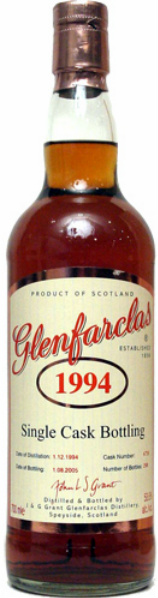 Color: Lively orange brown (like a Bourbon)
 So it’s time to celebrate the first anniversary of Master Quill and I’ve picked this bottle of 1979 Scapa, bottled in 2002. Well, things got off really good! Like I said, I would rip open this bottle and so I did accidentally. I broke off the cork! Bugger!
 Color: Copper
 it’s not completely balanced, but it will get there in the end. Complex, well, not exactly. It shows some sourness from the oak, but after half an hour it is pulling together, and it has a great and long finish. This again is a stunner!
 In this day and age of battles, battles for oil, battles in politics, and even dance battles, now there are also battles in Whisky. The guys in the picture are Jan Beek (right) and Dennis Mulder (left). They do tastings/battles to see who bottles the best Whisky, the distilleries themselves or the Independent bottlers. Jan represents the independent bottlers and Dennis the official bottlers. Time for my own battle. Well not a battle with axes and swords. Earlier I reviewed an official
  Color: Lively orange brown.
 Color: Full Gold.
 A few days ago my whisky club had a tasting of Aberlours. Quite a unique one to boot since these were almost all exclusively official bottlings. We only had one independent Aberlour. It was from a Bourbon Cask and did show the distillery profile for a while, but that was quickly gone. We had a few out of the standard range and a few from the standard ranges from the past. A few bottles stood out. We liked one old 12yo double cask matured for its high dark Oloroso Sherry content (and costing next to nothing). An old 21yo from 2000 was very good and this odd one out. The 1988 Distillers Selection, that was released exclusively in Spain. After this one 1988 came only one other Distillers Selection, the 1989. Again for Spain only. For Aberlour this is quite special. It is said that instead of the usual Oloroso, for this bottling Fino and/or Manzanilla is used!
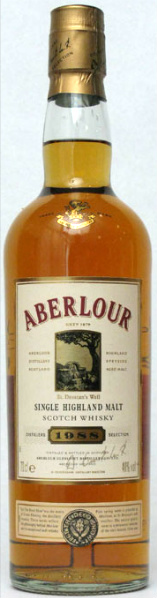 Color: Full Gold
 Happy new year! I wish all my readers a great year full of fulfillment, health and great drams. please don’t settle for mediocrity. Try to broaden your horizons for true beauty that can be put in your mouth, but do it in moderation, we don’t want to create modern drunks.
 Well what would be a better start, than with an old Strathisla! In the past I tried some nice old Gordon & MacPhail Strathisla’s from this series. The review for the 25yo can be found here, but together with this 25yo I tried the 21yo and that was similarly spectacular. Mind you these are the old 80’s bottlings for the italian market, and whiskies with these labels were issued for a couple of decades, so every batch will differ (massively). The 21yo and the 25yo were quite dark, and hopefully not colored, and being from the early eighties, the distillate is early sixties or maybe even late fifties.
 Short finish. The 21yo and the 25yo performed better in that respect. Treat this elderly Whisky with respect, but be bold and take bigger gulps. The whisky itself, maybe is a tad fragile and subdued, but hey, the stuff was made some 55 years ago and along the way was reduced to a mere 40%, so give it a break will you?
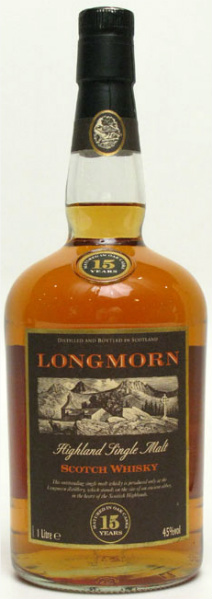 I just found out that Longmorn isn’t on Master Quill yet! Longmorn is one of my absolute favorites. Just have a go at a sixties or seventies fruitbomb or heavily sherried expressions from the days the stills were heated with coal. Sometimes it almost tastes like the coal went into the whisky too. A liquified locomotive. But no use crying over spilt whisky and let’s start-up with this old 15yo. This 15yo is no more and was replaced in 2007 by the current 16yo. So it’s off the market for five years now, but bottles are found in some shops and are still fairly cheap at auctions. Also the packaging has dramatically changed. The 16yo new bottle has metal and leather glued to it, and has an intricate box. This 15yo looks fairly simple. Surely Longmorn are capable of making a pretty good standard whisky? Lets find out how this eighties distillate behaves, and maybe we get a chance in the future to compare this to the new 16yo expression. I tasted the 16yo once in 2009, and scored it a measly 81. I hope it got better in the mean time.
 A week ago “Het Genietschap” had its first ever tasting at my house. I’ve been a member for quite some time, but it took a while to get my ‘location’ added to the agenda. Well finally it was my turn. The organizer gets to choose a ‘theme’, and mine was “Talisker”. When I sent out the E-mail I got a lot of Talisker 10’s as entries, and even some replies implying that there wasn’t a Talisker in the house. Well that got me worried for a moment. My guest of the evening, Erik, asked if he could bring his
  Best bottle in the tasting was a young Port Ellen 15yo bottled by Cadenheads in 1996, Stunning! It was just a tiny bit better, or better: different, than the also stunning Talisker 20yo 1981/2002 (62%, OB, Sherry, 9000 bottles). Also the pre Classic Malts Talisker 10yo was fabulous. Even today’s 10yo is pretty good, but can’t be compared to the taste of the old bottle. This ‘Tactical’ wasn’t bad either…
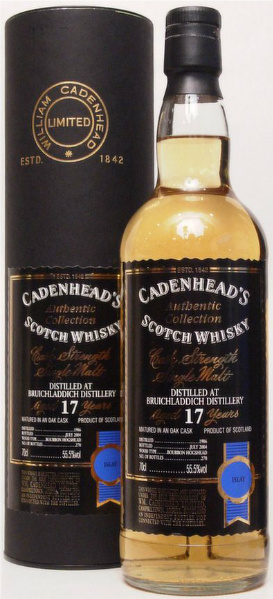 Also from 1986 but several years younger, a 13yo to be precise. Even though it was younger, this bottle showed more character to it. The 13yo was almost empty and maybe these Bruichladdich’s need a lot of air. Let’s have a look in my controlled environment and using my glass of choice, how this Bruichladdich really is. (This bottle, just open).
 Master Quill