The Benriach 10yo “Curiositas” (46%, OB, Peated, Circa 2006)

After all those very special expressions of “The” Benriach, it’s finally time to have a look at a more mundane Benriach. The standard 10yo, with peat, carrying the less mundane name of “Curiositas”, since it must have been very, very strange for Benriach to use peat? One just has to love the names they give their Whiskies. Curiositas was released in 2004. The expression I’m about to review was bottled in 2006 or earlier, so this is one of the firsts. Today the Curiositas is still a part of Benriachs core range, so it has proven itself to be quite a success.

Color: Light gold.

Nose: Fat peat, creamy and fruity. It’s peat alright, but elegant peat, if there is such a thing. Sounds a bit like an elegant Hummer or like claiming a pair of muddy Wellington’s can ever be called elegant. Compared to scruffy and iodine laden peated Whiskies from Islay, this is peated alright, but also very different. Crushed bugs (you had to be there), dabs of mud and gentle smoke. Big aroma at first, and also soft. However, the “bigness” gets less with breathing. Floral and soapy notes emerge. Cold dish water with a plethora of spices. Not really “farmy” but definitely a vegetable garden, Were Rabbit style.

Taste: Wow, this wasn’t what I expected. This starts out fruity and sugary. Very fruity in fact. One might ask, where is the peat? Cardboard and paper, soft wood and even more fruit turn up. A tiny smoky prickling sensation comes next, quickly followed by nice licorice notes. Creamy vanilla pudding with hints of coffee candy. Not a big body though, and to be frank, (not Dave), this has quite a short finish as well. This peated Whisky isn’t about power at all (alas), but more about the Speyside fruitiness, maybe rightly so. Ain’t that curious, yet logical too, when you think about it for a while. You gotta love the name now.

Peated Whiskies are very interesting, since especially “young” peated Whiskies can be very good without long ageing. Although I understand the Whisky, it’s not an expression I like best within the peated category. It’s nice, but from the body onwards. I feel, lacks too much oomph. I would have liked it much better if it would build more on the groundwork laid out by the nose., which seemed more peaty and smoky, but also more complex. Maybe it got better with the later batches.

Points: 82

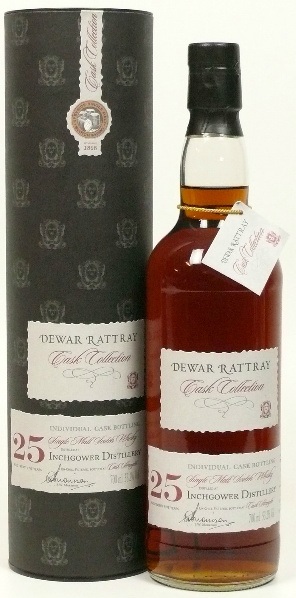
Inchgower 25yo (1980/2006 (53.2%, Dewar Rattray, Sherry Cask #14161, 486 bottles)

After the “old” Teaninich, let’s have a look at something else from the attic that was also bottled a long time ago. Just like Teaninich, Inchgower is another lesser known Distillery owned by Diageo. And for me one of the better ones as well. I’ve come across quite a few really good Inchgowers. Long time no Inchgower though on these pages. It’s almost six years since I reviewed another Inchgower. One from 1982 bottled by Raymond Armstrong, remember Bladnoch? The 1982 was quite hefty and although very good, it was another Whisky, like the Teaninich F&F I reviewed just now, that needs a lot of attention, wearing you out if it didn’t get the attention it wanted. If carelessly sipped, it will kill you, so even though it is a very good Whisky with a quite a high score, I was glad when the bottle was finally finished. Strange ‘eh? Here we have another Inchgower from the beginning of the eighties, so I’m already bracing myself, especially since this is a Sherried one as well…

Color: Dark copper brown.

Nose: Boiled eggs (not rotten). Very buttery and milky. Luckily, these off notes dissipate quite quickly. I have to say right off the bat that this Whisky got a lot of time to breathe. When it was freshly opened this had a lot of Sulphur. When the milky, baby vomit notes dissipate, it shows more woody notes. A minute amount of sulphur and some bitter black tea. Underneath (sniff hard), brown sugar and even some honey. Sulphur still detectable and now it rears its head (is it ugly?) like swamp-gas. Although a lot seems wrong with this, I seem not to dislike it. I never belonged to the I’m-allergic-to-sulphur-police, so I’m able to deal with it. In the depth, where the brown sugar is, are also the more soft woody notes. Some whiffs smell like Rum actually. Sulphur seems to be dying down, but when you move the Whisky around in your glass vigorously, you’ll be able to get some more. Spicy, yet not woody. Vanilla powder and altogether funky. Give it time to breathe. In the end the Sulphur is kept in check and all the remaining wonderful aroma’s get their room to shine. What a wonderful nose this is. The sulphur didn’t bother me that much, but the milky part did, this must breathe before sipping.

Taste: Big, woody and slightly soapy. After swallowing, the first sip, the soap, again, this time around, no too bad, is followed by a wave of liquid bitterness (and fruity acidity). I know, a strange sentence indeed. Fruity underneath and mouthcoating. Sweeter than expected, very, red, fruity. Cold black tea. And the bitterness seems ok. Very funky floral notes which mix well with the red over-ripe fruits. Berries, raspberry, little ripe forest strawberries. Mouth coating, very, mouthcoating indeed, leaving behind some bitterness, but more important, some priceless black fruits as well. For me the black fruits are the holy grail of Whisky. Nice finish, but who cares, if the long aftertaste shows you all those black fruits, dark chocolate and some wood. Sure it isn’t able to shed all of the soapyness, but with fruits like these, I’m happy to forgive it it’s soapyness and the many other flaws it shows. Special stuff.

Some Whiskies like this, over-the-top, can be bad. This one has a lot wrong with it but it’s not bad, There is a lot of fun to be had, if you like the extreme ones, if you are able to deal with a Whisky like this. If you are a novice, steer clear, please. If you are an anorak, a whisky-geek with tendencies towards SM, please pick it up at an auction, because as I said, it is not a bad Whisky. Too much of a lot, but therein lies the fun. A guilty pleasure. Aficionados like it, that’s why this doesn’t pop up a lot at auctions. I’m sure that when I’m going to clean my glass, it will foam like crazy! (It did). For me a no-brainer if it shows up somewhere. Don’t bid against me please!

Points: 91

(Freshly opened, without breathing, the score would be 84, so you’d better let it breathe, long time!)

Ardmore 1996/2014 (43%, Gordon & MacPhail, Distillery Label, Refill Sherry Hogsheads)

Why review one Ardmore, when you can review two? Hidden far away in a wooden box, where I keep my odd-shaped sample bottles, I found this more recent Ardmore. All Ardmores I reviewed up ’till now, were somewhat older bottlings, and this one is more recent. 2014 is not that long ago isn’t it? Gordon & MacPhail released 1996 Ardmores in 2013 and 2014, and both are still available, so I guess they hold off a new release, untill both of these sell out. Where on one side we have official bottlings (OB’s), in this case the range released by Beam Suntory (the owners of Ardmore), on the other side we have independent bottlers (IB’s). Usually, firms that buy casks of Whisky and bottle them as a single cask (usually).

However, this particular Gordon & MacPhail bottling lies somewhere in between. This series is known as the licensed bottlings, but are also known as the distillery labels. This comes from the time the owners of certain distilleries allow Gordon & MacPhail to bottle a Whisky and market it as the “official” release, since back then the owners didn’t release an official bottling themselves, probably using the output from that distillery for blends.

Gordon & MacPhail do their own wood management (The wood makes the whisky). They bring in their own casks and fill them at a distillery. Sometimes they leave the cask to mature at the distillery, but more often they take it with them to their own warehouses.

Color: Copper gold.

Nose: Creamy, vanilla and ice-cream, oh and Sherried as well. On top some smoke. Right from the start this is very well-balanced. Everything is where it’s supposed to be. Sherry casks from American oak. Very sweet, big and thick smelling. Nutty. Almonds, with hints of clay. Add to this a fruity cloying sweetness with an edge of perfect peat, with sometimes some burnt match-stick aroma’s, with only a tiny hint of the sulphur. The sulphur is a mere trace, and I don’t pick it up every time I try this. Next to this the Sherry gives off a funky note which should be an off-note, but here, it works well in the construct of the nose. Almost like artificial orange powder (Sinaspril). Fire-place in the middle of winter. Almost christmas. Lots of vanilla comes next and the smoky note stays. Works very nice together. As I said, very well-balanced indeed. Medium complexity though, and it shows its hand quite quickly. After that, not a lot of development is happening.

Taste: Ahhh, yes. Nice (simple) sweet, creamy, nutty and (red) fruity Sherry nose, mixed in with vanilla and big toffee. Cold black tea. It’s big on the Sherry, the almonds and the cream this is. Also a slightly bitter oaky edge. Peat, but it’s aroma is different from the nose. Stricter and more modern. The fruit evolves in acidity. Excellent smoky note. Come to think of it, where is the wood influence? The wood may have made this Whisky (imho, the Sherry did), but where is the wood itself? Sure it has a lot of vanilla and creamy notes, so American oak was used, I believe, this one would have been better in European oak. A similar thing happens as it did with the nose. Everything is there right from the start and hardly any evolution happens after that. Balanced, yes, sure, but not as much as the nose. Lacks even more complexity than the nose.

Right from the start I thought it was nice, and it is. The journey, however, I was about to take with this Ardmore didn’t happen. Alas. A good Whisky, but it is what it is. The start was promising, and it started with a nice statement from the nose. After that it all went a bit downhill and simple. The Ardmore I reviewed last, also has its flaws, and I can’t say this one is better, hence the similar score. Both are good, but I expected a bit more, especially since in this one, the Ardmore distillery character is obvious in the nose, but not on the palate.

Points: 85

Laphroaig ‘Quarter Cask’ (48%, OB, Circa 2006)

Well, it has been a while since The 2015 Laphroaig Week here on Master Quill, that a Laphroaig graced our pages. This is one of the earlier and better known examples of a NAS bottling that can still be had today. Laphroaig Quarter cask was introduced in 2004, so it almost celebrates its 15th birthday, how about that. Quarter Casks are casks of approximately 80 litres. The idea behind this bottling is that smaller casks make the Whisky age more quickly, since smaller casks have a higher surface to liquid ratio, than larger casks. And the higher the ratio the quicker the Whisky matures. However, this Laphroaig wasn’t entirely aged in Quarter casks, but is supposed to have a normal maturation in American oak bourbon barrels for 5 years (up to 11 years) and only then receive a 7 month finish in quarter casks, so essentially this Whisky is still only 5 years old, hence the price. It is very friendly priced and since it is almost 15 years available to us, this must be a recipe to success, and another way in showing the critical and discerning public that young whiskies can be very good. As I already showed in several of my previous recent reviews. Remember Bruichladdich, Cotswolds and the Kilkerran Work in Progress #2 and #3 bottlings? But let’s not get ahead of ourselves just yet, lets first find out if this Laphroaig Quarter Cask is any good. However, this won’t be a review of a more recent Quarter Cask, but an earlier example. As can be seen on the picture below, the design of the label has somewhat changed since the earlier bottlings…

Color: Light gold.

Nose: Nice peat, clean, fruity and fresh, ozonic. Meaty, with hints of sweetness. Rural. Soft and hard at the same time. If you try hard, some spicy oak is detectable. Vanilla and gravy notes emerge at the same time. Ashes, paper and citrus. Wonderful combinations. Amazing how appetizing the peat is (mixed in with Vanilla notes from the American oak). The whole is utterly balanced and every bit of aroma, every note seems to belong to the next one. There is also a very sweet, fresh “other” note present, like a fruity-floral hybrid, an added layer to the darker peaty side. Like light in the darkness. Let it stand in your glass for a while and development starts. Based on the nose alone I definitely understand its broad appeal. Young, inexpensive but with very high quality. A present for Laphroaig aficionado mourning the loss of their beloved 10yo, which simply isn’t what it was. The 10yo suffers from Alzheimer’s, but this Quarter cask, yeah, úp, steps the new generation to take over the reigns. Oh, wait a minute, I have yet to taste it!

Taste: Sweet on entry (tea with lots of sugar), with citrus notes and wonderful peat. Simple and short, very short burst of pepper and quite some ashes. Add to that lemonade-like sweetness and fruitiness, and you have a young but wonderful Whisky on your hands. Add to that some “wrong” notes of (lemon) dishwater and fruity acidity (lemon) and you still have a wonderful Malt with added complexity. Lemon can be a very nice aroma to have. It is so good it can deal with these odd notes very well. Clay and more ashes. Pencil shavings. Paper is here too. Bugger, ’till now, I mentioned peat only once when tasting it. It is simply not upfront here, which is quite odd for a young Malt. (Peat breaks down a bit with age). Anyway, also not the longest of finishes around. Aftertaste, hardly there, tiny hint of peat maybe, and here it shows its youth I guess. Still, nice stuff this is.

Since the old 10yo is no more, I guess this is its true replacement. Its higher ABV. of 48%, its peaty profile and the fact it’s not chillfiltered make this the replacement of the 10yo for Whisky geeks like me (for writing stuff like this, and you (for even bothering reading this). Mind you the old 10yo was even much better than this, but compare this to the new 10yo and you know why this is so good. If you’re not a Whisky geek and are easily scared by the medicinal and peaty notes, and yet still like to start with the big Laphroaig, try the Select or the new 10yo. They are more suited for starters. Sweet, toned down peat etc. etc. This Quarter Cask is a wonderful early bottling. I have to buy me a more recent one, to see if they managed to keep the high standard. If so this is one of the best priced peated Whiskies around.

Points: 86

Cotswolds Single Malt Whisky “Inaugural Release” 2014/2017 (46%, OB, First Fill Bourbon Barrels, 4000 bottles)

Every year our team attends the Whisky Show in London, and every year we come across something that surprises us. Usually it is a particular distiller. One time it was the range of Tomatin, and more recently we really liked the stuff of Indian Distiller Paul John. For example, last year, the only bottle I bought was a single cask Paul John. This year we found that the crux of the festival seemed not to be a particular distiller or brand, rather than the high quality of young Whiskies and/or new distilleries. Sure, there was a plethora of amazing old Whiskies on the Gordon & MacPhail stand and there is always nice super-premium stuff at the Diageo stand, but for us this year was about very nice young Whiskies. And guess what, they all came with age statements! Yes, it can be done! Funny enough, also young Whiskies coming from distilleries, people, (including me), tend to ignore. So, this year, I returned home with an 8 year old Tamnavulin, an 8 year old Glen Moray, a 10 year old Glenlivet and finally a 12 year old Tormore. All young, age stated, single casks and all from independent bottlers. Highly affordable as well. Before I forget, equally amazing was the Ailsa Bay and the man behind it. Today we are going to look at another young Whisky. The first release of an English Single Malt Whisky from the Cotswolds.

In my mind when a new distillery opens, it’s the brain child of two blokes who think they can do things better and try to conquer the world. Yes, I’m a romantic. Not true here, the two blokes thing, that is. This Whisky isn’t made in a shed in the Cotswolds. No, the Cotswolds distillery is the brain-child of Daniel Szor. A New York banker from Polish descent. Unfortunately his parents never learned him the language. Believe me, I tried, nope, Cotswolds is definitely not a shed. It’s a full fled distillery with tours and everything and a lot of staff, a lot, so I guess mr. Szor has some big plans, and is here to stay!

Color: Gold.

Nose: Floral, zesty, young and very perfumy. Big aroma. Cinnamon, cinnamon (again), more cinnamon and bread, cereal, sawdust and lots of notes from first fill Bourbon casks. Vanilla pods and Sinaspril pills. So yes, a nice acidic note as well. Insence sticks. No off-notes whatsoever and hardly any trace of new-made spirit. Nice wood, beautiful wood actually. Dry leaves and toasted toffee. Hints of candied yellow fruits in the distance. Spicy like an Indian Malt. Not sure this comes from the wood or are they using indian six-row barley at Cotswolds? The florality reminds me of Indian Whisky as well. Very appetizing. Well balanced and again a very big nose. Wonderful aroma’s coming together nicely. Still young and it already shows a lot of potential, which doesn’t mean this inaugural release isn’t worth it, because it is! Well done team!

Taste: On entry a wee bit thinner than expected and after that, an elegant and mouth coating young Malt emerges. Slightly sweet, slightly bitter, with toffee and caramel notes, and a lot of aromas coming from the first fill Bourbon casks. Making the body “bigger” than the entry was. Not as sweet as the nose promised. Already some nice yellow fruits though, as well as a hint of latex paint and machine oil? Wow. A desert in itself. Sweetish. Vanilla with a spicy note added to it. Just like the nose, quite Indian in style. Very appetizing stuff. The wood is almost virgin now, with a sharp spicy edge to it. Oats and crackers. Cigarette ash and toasted oak mixed with light fruity acidity. Again, lots of balance for such a young malt from a new distillery. Nice aftertaste.

Amazing inaugural release of Cotswolds. I’m told this is three years old plus one day, (some mentioned four days, but who is counting days in Whisky?). Amazing Indian style nose reminding me of some Paul John releases but foremost of this Amrut.

As mentioned in the introduction. Distilleries these days, are able to put out some very nice young Whiskies, even the ugly ducklings of yesteryear, you know, those anonimous distilleries distilling for blends only, like the aforementioned Tamnavulin. Amazing stuff, but on the other hand, we the consumer, we also had some time, by way of NAS-Whiskies, to get used to the taste of younger Whiskies. Maybe we just needed some time to adjust, and accept the times they are a-changing? Really old Whiskies these days cost the same amount of money as a new car, and something a bit younger still costs about the same as a nice vacation. So yes, we did get used to the taste of younger Whiskies, but nevertheless, there is much good stuff going around, just different from the stuff we bought 10 or 20 years ago…

Points: 84

The Balvenie 15yo 1989/2004 ‘Single Barrel’ (47.8%, OB, Bourbon Barrel #7581)

2003 will for ever be the year when The Balvenie 15yo aka ‘The Single Barrel’ from the masters of reduction, was even further reduced. Where this bottling, which often was older than the stated 15yo, used to be reduced to a nice 50.4% ABV, from 2003 on, was further reduced to 47.8%. Bugger, less tax, mo’ money? Never mind. Balvenie is always a nice distillery to review. The company usually puts much effort in reaching consistency between batches, but fails miserably, when comparing this 12yo ‘Doublewood’ to this one and this one. The 15yo however, was intended to have (some) batch variation, since they were the results of one Bourbon cask (I’m not sure if all are Barrels though). Funny enough subsequent releases, and there are many, were pretty similar, when you expected some more emphasis on the difference between casks. I guess, there is more difference when comparing two from (quite) different distilling dates. Well how convenient. Five years back I wrote a review of a 15yo ‘Single Barrel’ that was distilled in 1983, and released in 1999 @ 50.4% ABV, and now we are going to have a look at a “newer” example distilled in 1989, and released in 2004 @ 47.8% ABV. (The picture is of a similar bottling from cask #7633).

Color: Light gold.

Nose: Initially fruity and fresh. Very accessible. Vibrant and happy I would say, Summer, it’s like sunshine in a glass. Barley, some butter and brown sugar. Vanilla powder and white oak. Dusty mocha. Hint of gun powder and soap. Next a more vegetal note emerges. Half dried weeds lying around in the sun and some fresh almonds in the background. Soft rhubarb. The more it breathes the weaker it gets. Simpler as well. Pretty easy Whisky, typical of the cask it came from.

Taste: Sweeter than expected, and bigger as well. Lots of fruit, dried apricots, peach in sweet yoghurt, but also vanilla and coffee creamer notes. Pudding and custard. Milk chocolate. Chocolate mousse. This cask gave off lots of vanillin. Very green and vegetal. Nutty, almonds again. A hint of christmas spices. Cloves, that kind of thing. Apart from this, a strange cold dishwater note and add to that a burnt note as well as a slightly floral note. Green. The nose definitely was cleaner. Ice-cream and fruity liqueur (alcohol).

It is strange and typical at the same time. Typical in the way that it is where it came from (Bourbon Barrel), but some strange notes appear as well. The sweetness and the notes mentioned above make this not really a daily drinker. With this one you need some down-time or follow it up with something else. One at a time is enough, and yes this makes it different from other examples of the 15yo I have tasted, so a succesful exercise in getting some batch variation. Not my favourite of the 15’s though.

Points: 84

Paul John “Bold” (46%, OB, Batch 1, 2016)

To finish off the trilogy of entry-level Paul John’s, here is Bold. Bold was the last addition to the standard range, bottled at 46% ABV. Earlier I already reviewed the other two, “Brilliance” is the base-model so to speak. Just well made Indian Whisky, no peat used. “Edited” is like the base model, only this time tweaked with a little peat, achieved by blending in up to 30% casks of peated Whisky. Today we’ll have a look at “Bold”, introduced in 2015 and made from peated Whisky alone (35 ppm). For this edition, all peat was sourced from Islay.

Color: Pale gold.

Nose: Lots of butter and vanilla, youth, and I’m guessing quite some first fill casks. Nice clean peat upfront, smoke second. Enticing stuff. The peat might be recognizable, and it definitely comes across as a young smelling Whisky, but add to that an uncommon floral bit, which sets it apart from Scottish or even Islay peated Whiskies. Slightly waxy. Lacking a bit in the balance department. Sometimes there are whiffs that are too close to new make, but the next breath can be excellent. After a while, still creamy, the peat dumbed down a bit, and the smoke has almost gone. Some green notes, mainly (almost new) oak. If you smell this very calmly, it’s all about the butter, the vanilla, the cream, the toffee, but when you “smell hard”, yeah, that’s where it all comes together. More spicy, dusty and better balanced. Nice peat, latex paint, mocha and nutty as well. The nose lures you in. It’s seductive.

Taste: Sweeter than expected and initially not very peaty, let alone smoky. Lots of warming notes going down though, with nice development in my mouth. All nice aroma’s, but initially not very bold. A wee bit too young again, moving into the direction of new make. Not a lot, but enough to notice. Hints of orange skins and bread, that must be the influence of indian six-row barley. Terroir is happening! Hey, now apart from the floral bit, I also get a slightly soapy note. Fruity and friendly notes appear next. Very easily drinkable. Please do not expect a heavy hitter, it’s not a heavily peated malt in appearance. Its fruity and floral. Sunny with a slight peaty bite.

I would package it in pink and yellow with some black mixed in for the peat used, but it is more a happy Whisky than a brooding one. It’s not gloomy, misty and Scottish, it’s bright, colorful and Indian. So for me not so bold, and the anthracite packaging is way to dark. It’s like your dog, its your best friend and its happy when you get home, wagging its tail trying to lick your face. It’s not a bad-tempered pit bull with a spiky collar, that growls at you when you get home, disturbing its sleep, passing gas, chewing on your beloved furniture.

I preferred the second batch of “Brilliance” over the first, and I’m sure the second batch of “Bold” will be better than the first as well. It’s coming along nicely and I guess all the initial casks at Paul John were rather new. So, a great effort for a first batch, it’s pretty good, but I’m eagerly awaiting the second batch. With more experience and more time, I’m guessing that one will be at least as good as the second batch of “Brilliance”. Paul John is definitely on the way up!

Points: 85

Paul John “Brilliance” (46%, OB, Batch 2, 2016)

Today the Paul John range of Whiskies has three entry-level Malts. The unpeated “Brilliance” of which I’m about to review batch #2 (released in 2016). The very lightly peated (8-10 ppm) “Edited” of which I already reviewed batch #1 way back in 2013. The lightly peated style is achieved by blending peated and unpeated Whisky. For Edited, Aberdeen & Islay peat was used. Both Brilliance and Edited were introduced in 2013. In 2015 the third expression was released, called “Bold”, where all Whisky used in the blend is peated. The names speak for themselves. Edited is a slightly tweaked version of Brilliance, tweaked with a little peat (8-10 ppm in the final product), and Bold is bolder in the use of peat (25-30 ppm in the final product). Where Edited contained Aberdeen & Islay peat, Bold is made with Islay peat only). When I wrote the last review, there was not a lot more Paul John around besides “Brilliance” and “Edited”. Back then only three single casks were issued (The P1’s).

Today the core range has more members than the original two. Apart from the addition of “Bold”, in come two more additions; The Classic Select Cask and the Peated Select Cask, both are cask strength Whiskies (released in 2013), so not really entry-level any more. All other bottlings, and there are quite a few by now, are single cask bottlings, some of which were released for particular countries alone.

Color: Pale gold.

Nose: Fruity and fresh. Nice barley aroma. Fruit cake. Sugared yellow fruits with a hint of smoke. Very, very appetizing. Extremely fruity and floral as well. Fruity first, floral second. Vanilla third. Dry powdered vanilla. Dusty and silent. I imagine a hot day. Next some glue and paint which only broadens the aromatic palate. Warm soft wet wood. Definitely summer in the air. What a wonderful nose. This works perfectly for me. Sure this may be a young Indian Whisky, but it already shows a lot of evolution. Ghanging and growing in my glass.

Taste: Barley and some sweetness, again with a bit of smoke. Incence, smoke from burning herbs. More exotic than the nose. Nice soft wood again and a bit of cardboard. Vanilla, so definitely American oak. Oak bitterness (and herbs) come next, giving the Whisky character and backbone. Both aroma’s are coated with vanilla ice-cream. How’s that for balance?

So this is entry-level Whisky. Wow! I’m not sure about you, but this is right up my alley. It differs from other Whiskies. Its exotic and it is definitely high quality stuff. Amrut already has a fan-club (Amrutfever), but I believe its time someone should start a fan club for Paul John as well.

By the way, reading back my review of the first batch of Paul John “Edited”, also shows me how much the Whisky world has changed in the three and a half years that have passed since then. In 2013, it seems, Whisky was just starting to get global, and today it seems every country in the world already has at least ten distilleries producing Whisky.

Points: 85

Many thanks go out to Shilton (Paul John brand ambassador), for your patience answering all my questions, and for the quickest response-time in the industry!

The Balvenie 12yo “Doublewood” (40%, OB, Circa 2016)

Remember Master Quill’s Highland Park Week? Remember day two? I went completely bonkers by reviewing a different batch of a recent Highland Park 18yo. Why would one do that when they are supposed to be quite similar? First I reviewed a 2012 batch and a bit later I reviewed a 2014 batch. We all know the industry is always insuring consistency between different batches. Consistency is the magic word, and at least in color, and color only (or so they say), consistency is achieved by adding caramel coloring. If you read both Highland Park 18yo reviews you’ll see there is quite a difference between both batches. The difference being five points! My last two Balvenie reviews were also of two different batches of the 12yo Doublewood. First I reviewed a 2014 batch and a bit later I reviewed a 2004 batch. I found that even though the batches were ten years apart, at least quality-wise, the difference was not that great, although the 2014 showed that some Sherry-influence was traded in by sweetness. The difference being only one point.

This triggered a response of Nico, one of my readers claiming there is a larger negative shift in the quality of his 2016 batch Balvenie 12 Doublewood. He invited me over try find out for myself. Well, Master Quill is an adventurous guy, so an appointment was made, and I drove over, but not without a bottle of a very early Balvenie 21yo Portwood in my bag and this 17yo. After a very nice dinner with white gold (asparagus) and a wonderful piece of salmon, the Balvenie tasting begun…

Color: Orange gold.

Nose: Sweet Sherry on a bed of sugared yellow fruits. Caramel and toffee sweetness, but this time with lots of fruits and even a floral bouquet. Extremely friendly and accessible, but strange enough it also reminds me a bit of a sugared Rum. Vanilla from American oak. Cereal and oat cookies. All seems to blend well together, it’s almost one big aroma. No off notes, but you have to work on it to detect some separation between the different constituents of the aroma. I’m missing some wood actually. The chewy sweetness seems to hide it. Hints of warm (not burnt) plastic and some toasted wood and cardboard. Smells you get when ironing clothes. Hey, there is the wood-word! Hint of cherries. But yes, there is a blanket of dumbing “sweetness”, dulling the whole. Initially its friendly and likable, but there is also something not quite right. Maybe dull is a word I should use again?

Taste: After Nico’s notes, I expected it to be sweeter, but that’s how expectations work. Still, it has the taste of sugar-water. Worse, the same is noticeable as in the nose. It seems to be some sort of mono-aroma. When I was a member of the Malt Maniacs we encountered this “effect” when adding caramel coloring (E150-a) to four otherwise unadulterated Whiskies (link below). It shaves off highs and lows from the original Single Malt Whisky, making it taste more like a Blended Whisky. When the Whisky is entering my mouth, al seems to be ok, but the body already starts to disintegrate right after that, focussing on an oaky and acidic note. Later the cereal and sweaty cookie notes make a short appearance. Again no separation between the aroma’s. Short finish and no aftertaste worth mentioning. Well cookies, smelly socks maybe and something burnt. Toasted White Wine cask. This is not good. Unbalanced. Whisky like this is no fun. Avoid. (I washed the taste down with the wrong batch of Highland Park 18 (82 points), and that was (now) amazing, at least it smelled amazing…

I could deal with the sweetness. I guess I don’t think it is as sweet as Nico mentions, but I was surprised with the mono-aroma, the complete lack of complexity and development and the quick break-down. I believe this has definitely suffered from too much added caramel. It has all the life squeezed out of it. The nose sort of shows what kind of Whisky this used to be/could have been. Claiming adding caramel does nothing but changeling the color is pretty ignorant. If you don’t believe me, I urge you to conduct your own caramel experiment and see (taste) for yourself.

Points: 72 (eleven whopping points below the 2014 batch and ten whopping points lower than the wrong batch of Highland park 18yo)

Thanks go out to Nico for obvious reasons, and Michel again for the excellent E-pistle.

Glendronach 13yo 2003/2016 (55.2%, OB, for TasTToe & Drankenshop Broekmans, Oloroso Sherry Butt #5489, 705 bottles)

To my amazement, after all those years of writing Single Malt reviews, this is the first Glendronach on these pages. How did that happen? I’ll have to conduct a formal inquiry into this matter. Heads will roll. Lets hope this young Glendronach is a worthy expression of the distillery. Glendronach was founded in 1826, and has changed hands some nine times if I count correctly. In recent history the distillery was mothballed in 1996. Production resumed for a short while in 2002. In 2005 the distillery abandoned coal firing in favour of indirect firing with steam. After the change the distillery reopened in the portfolio of yet another owner, when Chivas Brothers (Pernod Ricard) acquires Allied Domecq. Almost there. In 2008 Pernod Ricard sells the distillery to a small consortium lead by Billy Walker, the owners of the Benriach distillery. Billy revamped the core range and started releasing Single Cask bottlings with the now common brown labels, as the one I’m about to taste. After Glendronach, Billy and his mates bought Glenglassaugh in 2013, but sold all three to Brown Forman in 2016 for a heft sum of money…

By the way, the picture below is wrong. I couldn’t find a proper picture of the bottle I tasted, and the picture I took of the label with my phone, well lets say it wouldn’t look professional. The picture below is for another Glendronach 13yo from 2003. In fact it is of a bottle filled from the cask filled in 2003 right after the one I tasted. Same distillate, same sort of cask, but still another single cask. The picture I used is for cask #5490 whereas I tasted cask #5489. Both were bottled for different customers from the same country: Belgium, so close enough, wouldn’t you say? Enough of the dry stuff, let’s get wet now!

Color: Copper gold.

Nose: Oloroso Sherry alright. Thick but right from the start some nice dusty woody notes and do I detect a hint of the S-element? Sweet raisins, fresh and pretty modern.  (which need some time to breathe to show themselves). Black and white licorice powder. Remember the 9yo Highland Park I recently reviewed? Well that is old style Sherry maturation, where the wood is softer, whereas this is more modern. Clean and sharp. Woodshop with oriental spices. Hints of fresh new oak and a wonderful floral and woody perfume, fragrant soap even, very nice. Very faintly meaty, like cold gravy. Great balance but not very complex. More wood notes in the form of pencil shavings. So, excellent wood, with less Sherry than expected. Wonderful nose.

Taste: Yep big wood alright, but again not in a bad way. Oriental Spicy wood with thin cherry liqueur. Reminds me a bit of Amrut. I really love the wood in this. Remember, someone is saying that the wood makes the Whisky, so wood should be a contributing factor. Again the wood has more to say than the Sherry. Starts half-sweet at best, where wood and Sherry share the attention, but quickly the wood demands center-stage for itself and dominates, without overpowering it though. Both contribute the right amount of aroma’s to make for a wonderful Malt. Hints of Italian laurel licorice and hard coffee candy. The body is even less sweet and for a moment turns in to an oaky acidity. Again, not bad. Medium finish and more of the same into the aftertaste, which after a while is gone completely.

This is well-balanced, not very complex, but very nice to drink. I feel no need to add water. It seems to be good to go as it is. Nice and likeable. A bottle you’ll like and finish quite quickly since it will be the one you’ll want to start the evening with. Unless you insist on starting with something at 40 or 43% ABV.

Points: 87


Thanx Nico!