Every year our team attends the Whisky Show in London, and every year we come across something that surprises us. Usually it is a particular distiller. One time it was the range of Tomatin, and more recently we really liked the stuff of Indian Distiller Paul John. For example, last year, the only bottle I bought was a single cask Paul John. This year we found that the crux of the festival seemed not to be a particular distiller or brand, rather than the high quality of young Whiskies and/or new distilleries. Sure, there was a plethora of amazing old Whiskies on the Gordon & MacPhail stand and there is always nice super-premium stuff at the Diageo stand, but for us this year was about very nice young Whiskies. And guess what, they all came with age statements! Yes, it can be done! Funny enough, also young Whiskies coming from distilleries, people, (including me), tend to ignore. So, this year, I returned home with an 8 year old Tamnavulin, an 8 year old Glen Moray, a 10 year old Glenlivet and finally a 12 year old Tormore. All young, age stated, single casks and all from independent bottlers. Highly affordable as well. Before I forget, equally amazing was the Ailsa Bay and the man behind it. Today we are going to look at another young Whisky. The first release of an English Single Malt Whisky from the Cotswolds.
In my mind when a new distillery opens, it’s the brain child of two blokes who think they can do things better and try to conquer the world. Yes, I’m a romantic. Not true here, the two blokes thing, that is. This Whisky isn’t made in a shed in the Cotswolds. No, the Cotswolds distillery is the brain-child of Daniel Szor. A New York banker from Polish descent. Unfortunately his parents never learned him the language. Believe me, I tried, nope, Cotswolds is definitely not a shed. It’s a full fled distillery with tours and everything and a lot of staff, a lot, so I guess mr. Szor has some big plans, and is here to stay!
 Color: Gold.
Nose: Floral, zesty, young and very perfumy. Big aroma. Cinnamon, cinnamon (again), more cinnamon and bread, cereal, sawdust and lots of notes from first fill Bourbon casks. Vanilla pods and Sinaspril pills. So yes, a nice acidic note as well. Insence sticks. No off-notes whatsoever and hardly any trace of new-made spirit. Nice wood, beautiful wood actually. Dry leaves and toasted toffee. Hints of candied yellow fruits in the distance. Spicy like an Indian Malt. Not sure this comes from the wood or are they using indian six-row barley at Cotswolds? The florality reminds me of Indian Whisky as well. Very appetizing. Well balanced and again a very big nose. Wonderful aroma’s coming together nicely. Still young and it already shows a lot of potential, which doesn’t mean this inaugural release isn’t worth it, because it is! Well done team!
Taste: On entry a wee bit thinner than expected and after that, an elegant and mouth coating young Malt emerges. Slightly sweet, slightly bitter, with toffee and caramel notes, and a lot of aromas coming from the first fill Bourbon casks. Making the body “bigger” than the entry was. Not as sweet as the nose promised. Already some nice yellow fruits though, as well as a hint of latex paint and machine oil? Wow. A desert in itself. Sweetish. Vanilla with a spicy note added to it. Just like the nose, quite Indian in style. Very appetizing stuff. The wood is almost virgin now, with a sharp spicy edge to it. Oats and crackers. Cigarette ash and toasted oak mixed with light fruity acidity. Again, lots of balance for such a young malt from a new distillery. Nice aftertaste.
Amazing inaugural release of Cotswolds. I’m told this is three years old plus one day, (some mentioned four days, but who is counting days in Whisky?). Amazing Indian style nose reminding me of some Paul John releases but foremost of this Amrut.
As mentioned in the introduction. Distilleries these days, are able to put out some very nice young Whiskies, even the ugly ducklings of yesteryear, you know, those anonimous distilleries distilling for blends only, like the aforementioned Tamnavulin. Amazing stuff, but on the other hand, we the consumer, we also had some time, by way of NAS-Whiskies, to get used to the taste of younger Whiskies. Maybe we just needed some time to adjust, and accept the times they are a-changing? Really old Whiskies these days cost the same amount of money as a new car, and something a bit younger still costs about the same as a nice vacation. So yes, we did get used to the taste of younger Whiskies, but nevertheless, there is much good stuff going around, just different from the stuff we bought 10 or 20 years ago…
Points: 84
 Color: Light gold.
 Color: Pale gold.
 Color: Pale gold.
 Whisky world has changed in the three and a half years that have passed since then. In 2013, it seems, Whisky was just starting to get global, and today it seems every country in the world already has at least ten distilleries producing Whisky.
 Color: Orange gold.
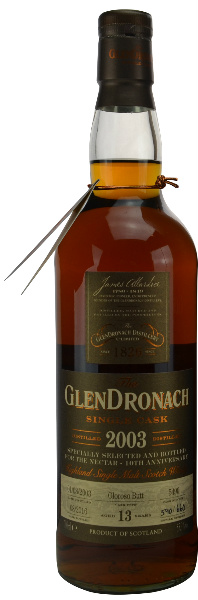 Color: Copper gold.
 Wow, it’s already the seventh and last day of Master Quill’s Highland Park Week. How time flies when you’re having fun, but I say that after every Master Quill Week. Somehow it is always nice to concentrate on one subject and try several examples in quick succession. This week may have been a bit heavy on the Independent side, since only two offerings released by the distillery themselves were reviewed. Beforehand I would have thought the 18yo OB would be a worthy opponent to the five Independent offerings, but it turned out otherwise. We know the 18yo can be (very) good, but we also know that it does suffer from batch variation. So quite a surprise there. Another surprise was the sheer quality of the 9yo Signatory bottling. A Whisky not even in its teens! If only all of todays NAS offerings would be this good… Yesterday we had a very nice Highland Park bottled by Douglas Laing, which churned out quality Whisky one after the other. So it wasn’t a hard decision to end this Week with a 1972 bottling by Douglas Laing again, especially since it was bottled in 1999, early on in the Old Malt Cask series (OMC). Early OMC bottlings were always right up there, so lets see if this is any different, and therefore a worthy example to finish off this week.
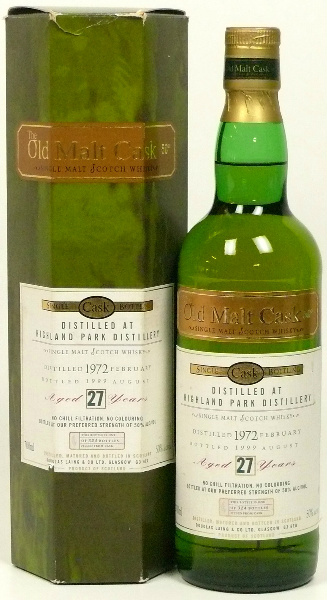 Color: Gold.
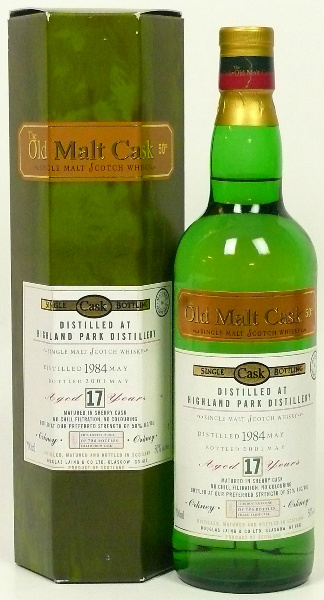 Color: White Wine.
 Color: Copper gold.
 Color: Gold.
 Master Quill