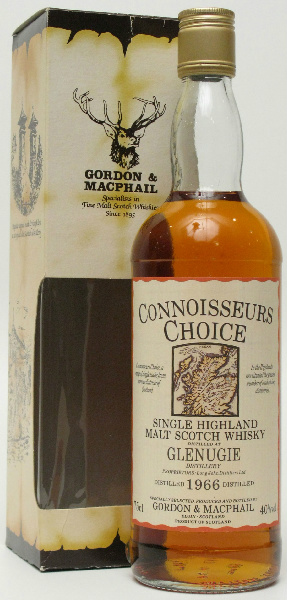
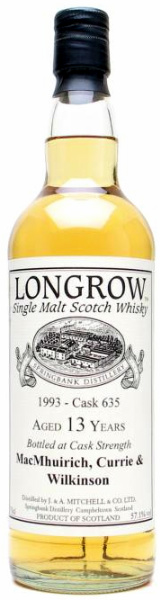
Longrow 13yo 1993/2006 (57.1%, OB, Private Bottling, for MacMhuirich, Currie & Wilkinson, Cask #635)

This is a sample I have lying around for a very long time. I last tasted it last some ten years ago, and there was definitely something wrong with this. Just have a look at the review posted by Serge. yes, he’s a big fan of this one! Ten years ago I found it pretty odd as well, but come to think of it, Springbank make such good Whisky, what must have happened for it to be so “strange”, and for it to be bottled? Today I’m becoming more and more a fan of Springbank, feeling they can’t do anything wrong. In these days of NAS (some bad, some good), Springbank are able to churn out one good bottling after another. NAS or no NAS. So this less than half full sample got plenty of time to balance itself out with some air, so let’s see how this private cask of MacMhuirich, Currie & Wilkinson will do in 2016. Sounds like a law firm, doesn’t it?

Longrow 1993 Private Bottling Cask #635Color: Light gold.

Nose: Light peat, but not much and some burning plastic. Herbal lemon. Deeper down a more buttery note. Fatty with hidden sweetness. Slightly burnt wood (toasted cask), fresh dried oak and an acidic off-note. Bread, butter, paper, cardboard (they all go together) and caramel. Toffee even. Next some crushed beetle. In my case an accident, because I’m not cruel to animals, but once I’ve gained the experience, I’ll never forget the smell. Well, it’s in this Whisky. (Tobacco) smoke and cold charcoal. Hints of menthol. It is a nose that wants to be dry and spicy, not fruity. It’s not floral, but may very well have been. Add to that a creamy, butter and toffee and you have this in a nutshell. Very well hidden is the aroma of new make spirit, a sweetish Vodka aroma. Sure, this is (still) lacking in balance a bit, but it’s not as bad as it was ten years ago. It did get better with “some” air. I actually like how it smells now.

Taste: Sweet, but with a lot of bread and paper notes. Floral plastics and vegetal. The initial sweetness works well with the relatively high ABV. Sweet sugared yellow fruits. Sugared apricots. the body itself is not so sweet. Interesting. Damn, this is really about vegetal paper. Paper, cardboard, wet paper, pulp. It’s hard to impossible to get past this. The paper notes overwhelm the entry and the better part of the body. When this dissipates, an acidic note shows itself which just is wrong. Towards the end of the body, the Whisky also becomes slightly soapy. Yeah, lets add to the plastic pleasure. Hey, now I get some smoked eel skin as well as the aroma of an ash-tray and sweet jasmine powder. What a Whisky. This has quite a few flaws, so maybe it’s good the finish is not very long (and hardly an aftertaste).

If after Serge’s review (and mine) you still want to buy it, be advised that you should let this breathe extensively. And I do mean extensively this time. It will help the nose along, the taste however is beyond repair. I wonder what went wrong here. It probably wasn’t the spirit going into the cask, but was the cask somehow contaminated? Rotting bung cloth? A fungus maybe? In the end not a complete dud, so I won’t be scoring this 55 Points like Serge, but for a Longrow this is not a good score either…

Points: 80

Millstone 12yo “Sherry Cask” (46%, OB)

Non Scottish Single Malts a.k.a. world Whiskies are taking over the…uhhh…world. Sure, Scottish Single Malts are still in high demand, especially in countries that are fairly new to them. They are embracing them with much love, as long as the local government permits them to. However, there isn’t enough well aged Whisky to go around the world. Thus, opportunity knocks for the rest of the world to step up their game. Add to that the growing interest of local products and you know where this is heading. Some countries already had a prosperous Single Malt culture, but were ahead of their time, and almost didn’t manage to stay afloat for the current boom. Just look at the history of Irish and New Zealand Whisky to name but a few.Luckily most of them have survived and see a bright future ahead. Then there is a second group. Whisky from countries that didn’t have a blooming local Whisky culture, like Sweden and The Netherlands, again to name but a few, because there are many, many others. I already reviewed a Rye Whiskey from Millstone (Zuidam) from the Netherlands and this time we’ll have a look at a proper Single Malt Whisky. I still have an old expression with the cream label. As far as I know there were two small batches of this, one made up from only two casks, and one made up with three. I only don’t know which of the two I have here…

Millstone Sherry Cask 12yoColor: Orange brown.

Nose: Sherried, definitely Oloroso, but quite dry and elegant as well. Spicy with nice wood, but also some honey sweetness. Wonderful fresh (and slightly soapy) fruity acidity. Good spirit in good casks. I also get some licorice, quite surprising for a Dutch malt. Creamy vanilla, maybe from American oak. Towards the end some nice red fruit notes appear as well as some lavas. Nice development.

Taste: Very creamy but less integrated than the nose suggested. Some light raisins and warming. Almonds and a bigger nutty aroma altogether. The Sherry cask bestows even a winey note to the Whisky. On entry, the cream has a sweet edge to it, although the wood and the Sherry quickly overpower it with a nice and spicy dryness, never to let the sweetness take over again. I’m guessing Oloroso again, but probably a high quality one. A two-faced Malt. Towards the finish a medium kind of bitterness emerges, but in a soft way. It like chewing on a pencil. The finish itself is of medium length. In the aftertaste a slight burnt note, with even a hint of tar.

A Whisky which is great already and still shows lots of potential and is definitely something The Netherlands should be proud of. Kudo’s for Patrick and the Van Zuidam family.

Points: 84

Bunnahabhain 8yo (43%, Gordon & MacPhail, The MacPhail’s Collection, Refill Sherry Butts, Heavily Peated)

Let’s continue with a Margadale. You might have never heard of Margadale, but that is how the heavily peated Bunnahabhain spirit is actually called. Margadale has a peating level between 35 and 40 ppm. Bunnahabhain means “mouth of the river”, now guess the name of the river itself… I would have liked it if they really would have called it Margadale, just like Tobermory and Ledaig. Now, the peated spirit Bunnahabhain produces is called Margadale, but when the spirit becomes Whisky, the bottled peated Bunnahabhain is called Moine. That’s probably a name you have encountered before. Only Berry Brothers & Rudd have once bottled a peated Bunnahabhain with a mention of Margadale. Bunnahabhain used to be an (almost) unpeated Islay Whisky, even the water used didn’t ever flow over peated land, but when the going got tough, aided by some changes in ownership, they started to make peated Whisky as well…

Bunnahabhain 8yo The MacPhails CollectionColor: Straw, light gold.

Nose: Fatty and buttery. Nice Islay peat. Sea breeze, salty and warming, but also with a soft quality to it. Peat, smoke, crushed beetle and tar. Burning newspaper. Hidden sweetness and florality. Effective and typical. Everything is there, but nothing is overpowering the rest. I would say elegant, as far as heavily peated Whiskies can be called elegant. Nice citrussy note, giving some freshness on top of the peat, smoke, tar and saltness. The floral and fruity notes are deeper and heavier and lie more on the bottom, or in the depth of the nose. Balanced and fine. With some more air it dumbs down a bit. Hints of (burning) paper (again), and the fruits come more to the fore. Dried apricots and white grape. Here you can see how the Sherry casks worked. It adds fruit and a nice woody spiciness. It somehow lacks the obvious vanilla you get from American oak Bourbon casks, although most Sherry casks these days are made with American oak as well. Sometimes you could guess its relative youth, but on the other hand, this shows enough complexity to be considered and older Whisky. Good ‘un. Nice distillate.

Taste: Right from the start we get some separation. The aroma’s aren’t very well-integrated. Interesting. Starts off with smoked salt and creamy butter and a nice White Wine acidity. Fatty peat, very fatty and buttery indeed. Licorice, sweet wood and honey sweetness. Sweetness there is, but not your regular white sugar sweetness. Yes runny thin honey it is. All the way through it keeps not integrating well. The acidity is displaced and hangs around too long in the back of my mouth, and the sweetness is trying to get too much to say underneath. Not sure this Sherry is a perfect match for the peated spirit. The more it breathes, the more it actually develops in the wrong way.

Nice stuff at 43% ABV. Sure, in times it is a bit thin, but I have no problem with the reduction. It makes this Islay Whisky very accessible. Don’t let it breathe though. It allows the acidity to develop and hold it hostage. The wood makes the Whisky, but in this case the wood broke the Whisky. It’s not terrible, but especially in the details this Whisky fails a bit.

Points: 80

Tobermory 1995/2006 (55.6%, Berry Brothers & Rudd, Cask #744)

The last Tobermory I reviewed was one of the stellar 32yo’s that have quite a reputation. How to follow-up on one of those? Today we’ll be looking at and independently bottled Tobermory. The bottler being Berry Brothers & Rudd and the year of distillation 1995. Tobermory has a rocky past and for a while even was converted into a power station. The reputation of the distillate was even shakier. In the past this stuff could really be hit or miss, so not something you would buy untasted. It could be really bad and funky, strange even. On the other hand, if it was good it could be really good, surpassing most other Whiskies, so the potential is there. Today that reputation is different. Tobermory and Ledaig are getting better by the year, and every new release is something that interests me a lot. Still no easy Malt, but if you get it, you’ll get it. In the day where everything starts to taste a bit similar and official bottlings are becoming younger and NAS-ser, an independently bottled Tobermory or Ledaig could very well be your best choice. At least it often is different from the rest. What more could you want these days?

Tobermory 744Color: White wine.

Nose: Heaps of barley. Damp hay. Citrussy fresh. Lowland style. Lemon grass, lemon curd, all kinds of sweet lemon, without being overly present and thus overly acidic. Hints of new-made spirit even. Old vanilla. Very light. Hints of a salty sea breeze. Very light peat as well. Smells chewy. Sappy, spicy, fragrant and vegetal wood in the background. Garden bonfire, burning off some dry grass. The initial barley note wears out, for a more coherent smell. I’m not sure if this is perfectly made Whisky, but after I got used to the Bladnoch 8yo I reviewed earlier, I seem to like this one as well. Just like the Bladnoch, this profile grows on me.

Taste: Very sweet entry. Sugary sweet. Sweet barley. Most definitely some hints of Grappa. Toffee, but also a sharper and drier element. All sorts of lemon again, combined with toffee and some dry wood. Otherwise not very fruity. A plethora of different dry grasses. Fatty and hints of cold dish water you forgot. Faint soapyness, like the paper wrapper that came off a bar of soap years ago.

Excellent entry and body, aided by this very typical profile. Nice stuff. The finish is not so strong and concentrates around two or three distinct markers from the body. Slightly soapy barley, wood and paper. As well as a tiny bitter note. The sweetness is gone, although hints of toffee reappear in the aftertaste.

Not a very easy Malt, but definitely one you would like to try, since it is different from many other malts. Quite the learning experience, because it’s almost like an unpeated, peated Malt. It’s how a peated Malt could be underneath. Although this is also no Lowlander, it is nice to have since it has a second face as a Lowlander. True Lowlanders like Rosebank and others are becoming more and more scarce and expensive. Besides this Tobermory, I hope for a bright future for Bladnoch as well, but if not, try something like this before the profile becomes extinct.

Points: 85

Ardbeg 10yo “Ten” (46%, OB, 2012)

Earlier we had another Ardbeg 10yo, but that one was bottled by independent bottler, Cadenhead. Here we have an official 10yo bottled by the distillery itself. I wonder which one will be best. More than “ten” years ago I had another official “ten” on my lectern, and I liked that one very much. Rumour has it however, that the current “ten”, or those of the last few years, are significantly different. More sweet and accessible and less oomph, just like the road taken by Laphroaig. Together with Lagavulin, those were always the heavy hitters from the south shore of Islay. Today it’s Bruichladdich (once unpeated), that makes the peatiest of Whiskies on Islay with Port Charlotte and the Octomore monster.

Ardbeg TenColor: White Wine.

Nose: Well peat first, but is seems to me a very accessible, creamy and fresh, almost citrussy peat. No big oomph, but almost elegant peat. It behaves like a good kid. Reliable. It smells like a very luxury Ardbeg now, since it also has some lovely floral notes with well hidden sweet barley. Wet earth, nice smoke, yet no real barley nor wood. Only of you really want it, you can detect some soft wood. Smelling this for a while, it still does remind me of an Ardbeg, so it hasn’t lost its identity (yet), and I hope it never will.

Taste: It really is the sweetness that first hits you. No crisp dry peaty and smoky dram. It’s peat lemonade. First impression. Yup, in business to sell a brand, and to win over lots of people you don’t want to scare away. Yeah, wonderful. Another sip. I want to taste what comes after the sweetness, but it is so distracting. Lets try again. Sweet yes, we’ve covered that, but what else. Toffee, citrus freshness, lemon curd and vanilla pudding. Almonds, fresh and lightly roasted. Luckily the acidity is just right for this profile. Nutty, yes, but not a lot. What else? This fruity peat, not waxy. It starts sweet, so it takes some time to get the rest, but also the body as not that long, nor is the finish. It does have a warming and likeable aftertaste. A bit thin but fruity nevertheless. Only in the aftertaste I recognize to Ardbeg form not so long ago.

From the smell alone, this is not the Ardbeg 10yo, or “Ten” as it’s officially called, I remember from ten years ago. I don’t think my palate has gone to ruins, because I can still recognize heavy hitting drams that are out there, but this Ardbeg isn’t one of them anymore. But it’s not Ardbeg alone. All the big boys from the past seem to have less oomph these days. Don’t get me started on Laphroaig for that matter. Laphroaig today has nothing to do with the Laphroaig that got me into peated single malt Whisky in the first place. The export strength “10yo” and the “Cask Strength” (green stripe). Those days seem to be gone for good.

So I already feel lots of protests, as if I’m disliking this classic Ardbeg 10yo. That’s not true. This is still very likeable, and still a good dram. If you like your peat but you’re not into heavy peat, than this is for you. It shows quality, and worth your money. It isn’t all that expensive. Good dram.

The problem here is that I know, and have, older bottlings of the Ardbeg “Ten”, so for me comparison in inevitable, and going down that road, well, there is no other conclusion. It has changed a lot. It used to be a crisp, dry and clean heavily peated malt, almost a real young masterpiece, nicely battling it out on the store shelves with Laphroaig 10yo, which had a much longer history. Both having avid fans defending it with their lives. Not me, I loved them both, just like The Beatles and the Stones. This Ardbeg is not that Ardbeg anymore, but today’s Laphroaig most certainly isn’t that Laphroaig anymore too, just like The Stones really. I kid you, but the real problem is that I can’t come up with a real alternative if you want the old heavily peated Ardbeg or Laphroaig back, so I have really high hopes for the new 8yo Lagavulin!

Points: 84

Brora 22yo 1981/2004 (56.4%, Signatory Vintage, Cask Strength Collection, Sherry Butt #1561, 611 bottles)

600Post number 600, so lets break out something special. Special for me is Brora. Sure Port Ellen, Ardbeg, Lagavulin, they all are Cohiba’s, but Brora is Trinidad. Brora is extra special (to me). 600 is a round number but it’s not 1.000, 10.000 or even a million. It’s 600, so I won’t be reviewing a 1972 Brora, which for me is the pinnacle of them all. The 30yo OB from 2004 contains lots of 1972 Brora, so look at that review how great 1972 Brora can be. Back to this Signatory bottling from 1981. In 1981 Brora was in production, obviously, but were all over the place. Some expressions are full of peat and some are not. I wonder if this one has some peat to it…
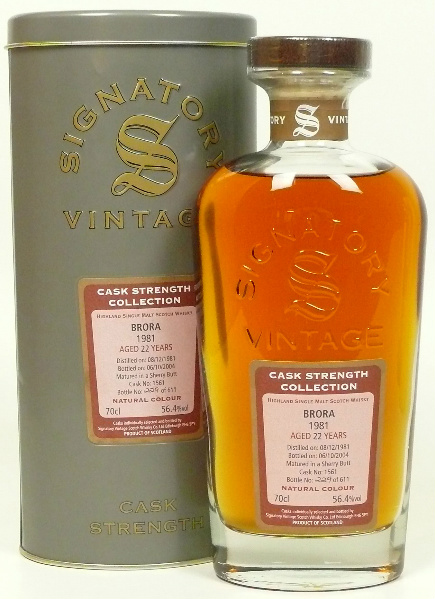
Brora 22yo 1981/2004 (56.4%, Signatory Vintage, Cask Strength Collection, Sherry Butt #1561, 611 bottles)Color: Copper gold.

Nose: Fresh and vivid. Definitely Sherry, but in no way funky. Quickly a fresh creamy and toffee note develops and only a mere hint of peat, just inhale vigorously. Needs to breathe a bit. Nice soft woody note, which sometimes take a turn towards old paper turned yellow. A bit dusty as well, (with whiffs of white peach). In no way dry. Quite spicy. I tickles the nose, and again toffee mixed with wax. Chewy would be the word. Mild yellow fruit notes appear, adding some acidity and yet more freshness to the nose. It’s not typically peach, white or other, but some whiffs come across as peach in semi-sweet yoghurt. The wood stays soft and is part of the fruity and creamy mix, instead of giving it a spine. Its nice overall, and does develop al lot, where initially it didn’t seem very complex. Hardly any peat at all and just a splash of smoke.

Taste: Thick, waxy and fruity. Definitely a profile we get from fruity Speysiders from the seventies. Nice soft wood. Toffee, without being very sweet. It has some fruity sweetness, but just the right amount. It has more than 56% ABV, but it’s still friendly. Not hot, nor burning my throat. Very drinkable. To my amazement, a lot disappears towards the finish and the finish itself is medium at best. Only in the aftertaste it starts to come apart a bit, fading out. Just the right moment to take another sip.

This one isn’t about the peat and the smoke, and the ruggedness of highlands, and sea storms after which you need warming. This one is for those moment you need an old Speysider, Bourbon matured, with lots of fruit and wax. Remember this isn’t from a Bourbon cask, but is from a Sherry butt. It has hints of peat and smoke. It’s a bit like the profile Benromach is going for today with the new 10yo and 15yo.

Points: 89

Benromach “Traditional” (40%, OB, 2004)

This is quite a unique bottling. In 1993, Gordon & MacPhail acquired the distillery, but it took them ’till 2004 to release this “Traditional”. The very first Benromach made by the new regime. Alas, today the traditional is no more, it has been replaced, last year, by the 5yo. For me this is a unique bottling, whereas everybody is coming up with, sometimes, silly names for their Whiskies, Gordon & MacPhail decided otherwise. They mothballed the “Traditional” name and replaced it with the 5yo, yes an age statement, so it’s not a NAS anymore. For some, “5” is a pretty low number, but at least you get a better sense of what to expect. Luckily this trend is gaining momentum as well, since there will be a Lagavulin 8yo shortly, and I expect quite a lot from that one. Back to the “Traditional”. It is said to be 20% first fill Sherry and the rest comes from first fill Bourbon. All first fill casks, so they must have impaired quite some aroma to this young Whisky.

Benromach TraditionalColor: Straw.

Nose: Barley, butter and lemon water. Very light and does not want to come out of the glass. Hints of Sherry and spicy oak. More barley and grassy notes come next. A bit dull, restrained, as in it doesn’t greet you, popping out of the glass with lots of fresh and citrussy notes. No, it’s restrained, like an English butler. By now, we have gotten used to the slightly peaty and waxy notes, but here it was something of a first. For those of you who know the new 10yo, both the reduced or the 100 proof version, this is definitely family. The peat is typical, and the waxyness of the spirit as well, so for me this is easily recognizable as a modern Benromach. The Cragganmore I reviewed last, had Fino Sherry written all over it, but I have to say, this one has some notes of that kind of Sherry as well. Hints of new make spirit, so a bit immature. There is also something missing here. This is said to be 80% first fill Bourbon, but where then is the vanilla? It’s there but the peaty notes overpower it. Nice.

Taste: Barley again and definitely sugar-water, with some hidden vanilla and paper underneath, did I mention that it is a bit restrained? At first that’s all there is. Soft. Pudding and paper again. Paper-like and peaty bitterness. Fatty. Diluted liquid honey. Hints, really only mere hints of red fruits (from the Sherry I guess). Slightly warming finish, with peat and again a lot of sweetness. Although it has a very light and uneventful (restrained) finish, it does have some staying power. Totally un-complex, which has a slightly different meaning than “simple”. A first offering but not quite there yet. The bitterness stays behind for the aftertaste.

This brings me to the subject of blind tasting, believed to be the most fair of all ways of tasting spirits. First of all, blind tasting is not entirely objective, since the taster is not objective, and not blind for that matter. You also have different moods and different expectations. Second, a blind tasting is usually done with several Whiskies, so you tend to compare the one to the other, both interact with each other, you like one over the other, but what if in a particular flight is this NAS Benromach as well as a Lagavulin 37yo, which would you prefer? I first tasted this in such a flight and my initial score was 65 Points. This time I’m tasting it by itself, and I know what it is. If I’m in the mood for a Whisky like this, I wouldn’t grab the Lagavulin 37yo now would I? Just like every other Whisky out there, every one has their time and place, but yes the Lagavulin is a way better Whisky, with a way better price-tag as well…

This Benromach is young and simple (un-complex). And not every aroma seems to fit, especially in the taste, but it is also light, grassy, citrussy and fresh, as well as peaty and bitter (and sweet). So it has its moment. Some would call it their summer Whisky. Its nice, simple and…restrained.

Points: 72

Cragganmore 14yo 1989/2003 (46%, Cadenhead, Original Collection, Sherrywood, 696 bottles)

Early on in my “Whisky career” I used to be a “regular” at one of the few Cadenhead Shops that were around. Amsterdam had one of the first shops outside of Scotland. I tried quite a few Cadenhead bottlings in those days and bought maybe even more, so I still have quite a few of those older bottlings. However, almost all the Cadenhead bottlings I brought home were cask strength versions, called Authentic Collection. At the same time Cadenhead bottled part of the same cask at 46% ABV, calling it the “Original Collection”, although I suspect, sometimes the whole cask was reduced and bottled at 46%. I’m not sure if there exists a cask strength version of this Cragganmore. I have to admit I hardly own an “Original Collection” bottling (if any). Cragganmore of course is one of the Diageo Distilleries, and is represented in the Classic Malts range. Since Diageo hugely promotes these Malts, it is always nice to compare that to one of the independent bottlings. I’ve already reviewed some of them on these pages. The 12yo, the 1988 Distillers Edition and the 29yo Special Edition. I also had a great 1993 Sherried Cragganmore, bottled by Duncan Taylor. Lets see how this 1989 Cadenheads offering will do.

Cragganmore Cadenhead 1989/2003Color: Copper gold.

Nose: Rich and sweet. Fruity. Waxy apple skin. Funky raisins, honey and cherry water. The initial fruity acidity is quite thin so after a while you don’t smell it anymore. If you use a lid for a while, the acidity gets concentrated and is noticeable again. Without this acidity, this is a dark and brooding offering. A bit goth I would say. Damp earth and slightly rotting leaves on forest floor. Still smells quite toffee-sweet and underneath there is some vanilla as well. Dusty with notes of dull wet wood mixed in with more toffee and caramel. Quite aromatic but at the same time sweet and syrupy. A two-faced puppy this is. Put a lid on it, and its more fruity and acidic, let it breathe and it becomes more brooding. Very interesting malt though. Smells nice and appetizing.

Taste: Almond and toffee sweetness (which dissipates quickly). Lots of toffee. Short licorice attack. Apple skins and apple aroma’s more akin to Calvados. Very nutty (Sherry) this is. Probably a Sherry that aged under flor, so not from our usual Oloroso and PX casks. No, this is more Fino or Amontillado. Wine people believe this is Sherry royalty, much better than Oloroso and PX, which are the most popular casks for ageing Whisky these days. Just check out the bottlings of Glendronach. Having said that it, obviously doesn’t automatically mean the Whisky is better off as well. This has some wood, with a slight bitter edge, but also vegetal bitterness, like you get from biting fresh leaves. Strange? Get out of your chair then and spend some more time in nature! The body starts big, but gets light quickly and the finish isn’t as long as expected, and the aftertaste, with a strange chemical fruitiness to it, is otherwise, with, paper, sweet toffee and caramel, quite anonymous too. One to take in in big gulps, to maximize the flavour. Seems likeable, but also a bit unbalanced and short. Many flaws, but still likeable.

Personally, I find Fino Sherry casks can produce very nice, but different Whiskies. For me it was something I had to grow into, and I guess I’m not finished growing just yet. I really do recognize the quality of the result, but it somehow is not something that like right off the bat. It needs some work. On the other side, I believe, this profile suits a nice Cuban cigar, if you are able to pick the right one for it.

Points: 82

Glenallachie 37yo 1973/2010 (46%, Mo Òr, Bourbon Hogshead #6746, 266 bottles, 500 ml)

After all those fairly recent distillates, I guess its time to look at something older. This time we’ll have a look at a 37 year old expression of Glenallachie bottled by the Dutch Whisky Investors: The Whisky Talker. The Mo Òr line of Single Malt Whiskies was thought of as an investment, or as a luxury gift for business people. Sometimes you can even encounter a bottle like this in a super-duper hotel bar. Yes, Whisky is the new Swiss Watch or a premium golf-set. Glenallachie though, is one of the workhorses of Pernod Ricard, a laborer, meant for the Clan Campbell blend, not really a luxury brand isn’t it? But if you are worrying about the size of your next yacht, who cares? Ignorance is bliss. Let’s see if this old Glenallachie is any good.

Glenallachie 37yo 1973/2010 (46%, Mo Òr, Bourbon Hogshead #6746, 266 bottles, 500 ml)Color: Almost gold.

Nose: Soft and fruity. Next, some old bottle effect and great Speyside seventies fruity wax. Anoraks know this from Caperdonichs from 1972 and Tomatin’s from 1976, to name but a few. Vanilla plays a nice part in keeping the whole together. Definitely a (second) refill Hogshead. The cask wasn’t very active, but over almost 40 years, the wood did play it’s part in ageing this Whisky. Just let this breathe and it gets even better and better. Hints of old soft (sugared) mint in the background. Almond cookies with a bit of dust on them. Old wooden floor and a very distant smoky touch. The mint holds its ground and keeps accompanying the rest of the aroma’s from the nose. Great old malt, but it has its limitations. Lacks a bit of development compared to some of the (non-Sherried) greats from that era, but the whole is still fantastic and a treat to nose. Don’t get me wrong. Maybe this one shouldn’t have been reduced, although at 46% it’s still no dud.

Taste: Quite light and fruity. Sure, Speyside peach from old American wood. Hints of paper. Slightly sweet black tea with raspberry flavour. Especially here tasting it, the reduction shows itself. Making the whole a bit thin and shortening the finish. Also the cask seems to have been a bit tired. Hints of wood and sawdust and a hint of white wine. Sweaty high quality Sauvignon Blanc from the Loire. The wood shows a more soft mocha note now. Sawdust and pencil shavings. The mint from the nose stays behind in the back of my throat.

Whisky from a great time, but not the best expression from that time though. Probably a bit too tired a cask, and certainly should have not been reduced. It may have been already a bit frail and reducing it may have dulled it down. However, it still is an example of aged Speyside Whisky from the era, with this wonderful fruitiness and lighter style. I don’t know why, but this screams for some Roxy music from 1973. “The Bogus Man” sounds just right.

Points: 87

Followed this up with the 1976 Benromach. Both are 46% ABV, and both score 87 points, but the The Glenallachie is lighter, and smells more like a Whisky from another time. I would prefer the Glenallachie, especially for its nose.

Clynelish 15yo 1997/2012 (51.5%, The Whisky Mercenary, Bourbon Cask, 59 bottles)

A few days ago I reviewed another Clynelish from 1997, and I just stumbled across this one, bottled by the Whisky Mercenary a.k.a. Jürgen Vromans. Since this is bottled in 2012, I guess Jurgen sent it to me a few years back as well. Only 59 bottles did once exist, but we know the Belgians to be enjoying life quite a bit, so I don’t think a lot of bottles of this have survived. I guess its will be even harder to find one of these today. I’ve reviewed quite a lot of Jürgen’s bottlings, and I have to give it to him, he has quite the nose for picking them, as well as being allowed to pick “dem Whiskies!” You might not know, but it’s not easy to be an independent bottler. You just don’t go into a warehouse trying all of the casks lying around and picking the best you can find, unless you have a bit of a reputation…

Clynelish TWMColor: White wine.

Nose: Buttery and malty. Fresh. Like a breath of fresh air, yet also citrus fresh. Creamy toffee barley. The cask seemed to be quite inactive, maybe the color also gives that away a bit already, but the sweetness is more like toffee and not big on vanilla you get from more first fill and more active casks. Another hint is the lack of a pronounced wood aroma. Cold apple compote with a bit of warm apple sauce, laced with a splash of calvados. All those apply associations are noticeable, but in no way overpowering. The fruity sweetness gets more and more dusty and dry, with a tiny bit of surface wood, oak obviously, with a little bit of mint. Apple pie, after some breathing the apple is joined by some freshly made dough. Nice balance with more than usual distillery character. Typical example where the wood did less to make the Whisky. It shows its other side. Fruity fresh, with shallow depth, dough aroma instead of wood, but at the same time lacking real depth and complexity. This isn’t a fault. It’s just different, and with this it shows another side of Single Malt Whisky in general.

Taste: Well, what a surprise. Sure it is fruity, but way more wood in here than in the nose. It starts with wood and paper as well as quite the peppery note. Sugary sweetness and creamy. I didn’t expect that at all. Toffee and bread. Caramel. The aroma’s grow a bit bigger with more breathing, so don’t be to hasty with this one. The lack of activity from the cask is noticeable by the weakness of the finish. It starts with a little attack, for a brief moment shows a nice body, but then it comes down very quick and leaves you a bit with a light, short and unremarkable aftertaste, which at some point in time even gets a bit bitter. Cedar wood bitterness. This bitterness even grows bigger, if you drink this Whisky after a prolonged time of breathing.

In my opinion, not the best of Clynelishes around, but there are many other who like it even better. This is from 2012, right at the start of his career as The Whisky Mercenary. Its hard then to get to pick the very best of casks, and it is a shared cask as well. Only 59 bottles was his share, but I guess at this ABV there was more Whisky in the cask, bottled or blended by others. Nevertheless educational, because here you can see that it’s more about the spirit, than it is about the wood.

Compared to the 1997 Wemyss Clynelish I reviewed a few days ago, the family resemblance is quite remarkable, but the Wemyss is definitely the more aromatic and polished expression of the two.

Points: 81