Rum Nation Peruano 8yo (42%, Single Domaine Rum, 2011, Peru)

For one reason or another, many Rums that were on my lectern were emptied around the same time. No, not down the sink, just finished them the proper way, enjoying them. Meaning, lots of new Rums got their corks pulled out lately! This Rum Nation Peruano 8yo is the indirect replacement of the Rum Nation Martinique Hors d’Âge I reviewed earlier. An indirect replacement in the sense that it is just a bottle from the same bottler. The true direct replacement is obviously another Rum from the island of Martinique. Which one? Well, we’ll get into that in due course.

Here we have a Rum from the-not-so-caribbean-island of Peru, yes I mean the South American country. Just goes to show that Rum is made all over the world, and why not, there are more South-American countries known for having a sugar-industry and subsequently making Rum, or Ron as they call it. You must have heard of Guyana, Brazil and Surinam? The Rum I’m about to review, was made at the Cartavio plant in La Libertad, where mainly sugar is made as well as ethanol. The facility is built and guarded like a fortress. Looking at the plant, I have never seen so much barbed wire since WW II. So, don’t climb over the wall, because you will be shot! I’m not kidding people, this message is painted on their wall. I guess they don’t like corporate espionage at Cartavio. I’m amazed Fabio got out of there alive, especially since they make their own brand of Rum called Cartavio. Soleras yes, but also with a minimum, yes, a minimum age statement. Not only did Fabio get out of there alive, he got out of there with enough Ron to produce his own brand of Ron Millionario, with the Solera 15 (no age statement intended) and the XO. Since both are quite the success, in 2008 Fabio issued a true 8yo fully matured in Bourbon barrels. So let’s have a look at the 2011 model, shall we?

Color: Copper gold.

Nose: This one starts out with a mix of fruit, paper, wood, leather and loads of fresh air. Underneath already a deeper, warmer more brooding note. Hot rainforest with some florality to it as well. Will it be sweet? I say this because the nose presents itself as a whole, rather than (many) distinct aroma’s. Usually this happens when a Rum has sugar added somewhere in the production process. Syrup and it even smells a bit sticky. Corn syrup with a refreshing vegetal note and some more fresh oak and an unexpected peppery note. More spices show themselves as well as wood and even some slightly scorched wood. Well integrated red fruit notes, like children’s lemonade. So again, I fear the sweetness this might have. Not very complex yet well-balanced.

Taste: Initially, and luckily, not as sweet as I feared, although it does taste sugary. It has some sweetness, and that may very well be (in part) added. Is it a problem? No, not really. Right after the sweeter more smooth part, there is a slightly bitter, oaky backbone, which stays around for a while. Some sugared yellow fruits. I struggle a bit to pick up the aroma’s in this, since, like the nose, this Rum presents itself as one whole. So added sugar, it must have. It’s friendly and nice. Simple, but definitely a sipper. I did use this recently to make my first brownies ever, which says more about the other Rums on my lectern than this particular one.

This is considered to be yet another entry-level Rum from Rum Nation and that is what it is. It’s might be rather simple, lacking a bit of complexity if you are a true aficionado. On my lectern this is the Rum I start with. It’s the easiest sipper, it’s good but it is also a bit unadventurous, smooth (usually spells sugar) and actually at times a bit boring as well. Due to a lack of complexity I like to follow this up with the El Dorado 15yo, which has more complexity (and definitely more sugar), but both go together remarkably well. Enough said.

Points: 83

Plantation St. Lucia 2003 (43%, Old Reserve, 2014, St. Lucia)

Last year I reviewed two other Plantation Old Reserves. One from Guyana, and one from Jamaica. Both were quite good, and very well priced. Both were quite sweet as well, since both have some sugar added. Plantation calls it dosage, enhancing Rum with sugar, in the same way you use salt for your food. Cane sugar (syrup) is added to the Rum before ageing. They do it because they really believe it makes for a better Rum.

Most of the Rum-world lacks regulations, although efforts are being made, but on the other hand, Rum also has a history based on the production of sugar. Rum in a way is a by-product of sugar, so why shouldn’t a little bit of sugar be allowed to use?. In my early days, getting to know Rum, I somehow assumed Rum should be sweet, must be sweet, at least half-sweet. Only when I encountered high quality Rums, and single casks Rums, preferably bottled at cask strength, which obviously aren’t laced with added sugar, that I really came to know about Rum! So some believe Rum has a particular sugar-history, and some believe Rum gets better with adding some sugar in the early stages of production. Others are more militant and will kill you if you add sugar anywhere in the production of Rum. Rum should be pure. No mention though of Rums being to dry or to woody.

Looking back on its history, and its use in cocktails, I’m not against adding sugar to Rums in general, as long as it enhances the final product, making it really better. There is a market for it, just like there is a market for Spiced Rums. There is a market for mixers and there is a market for sippers. Nothing wrong with Spiced Rums, it is a subdivision of Rum. As an aficionado though, a Rum sipper, I would like to know upfront, from the label on the bottle, not by searching the internet that a particular Rum contains added sugar, and especially how much was added. I have experience enough to know how much sugar I can “handle”. Because, dear reader, too much added sugar in Rum can taste really bad! (It reminds me of the discussion around caramel coloring in Whisky, which I found makes the final product not only darker, but also taste rounder, more mono, more flat. Too much sugar will flatten your Rum). I won’t kill you, but for me, many Rums are too damn sweet. On the other hand if used sparsely and with taste, why not?

Since the intro is already quite lengthy, I never got around to say much about this bottle. So in a nutshell, if you want to know more about Plantation, I invite you to read my other reviews of Plantation Rums. It is no secret this Rum comes from the St. Lucia Distillery located on the St. Lucia island. It is a distillery with a few different stills. For this Plantation expression, 80% John Dore Pot Still, 15% Vendome Pot Still and finally 5% Column Still rum was blended together. Initial ageing took place in American oak casks on St. Lucia, shipped to France where the Rum was transferred into Ex-Cognac casks made from French oak for a secondary maturation for, I believe, 18 months.

Color: Full gold.

Nose: An explosion of aroma, almost like a Jamaican high ester Rum, but with many differences as well. Rummy and very fruity. Rum-raisins. A lot of sugared yellow fruits as well as some ripe banana skins, aided by some wood, paper and a fantastic burnt note. Vegetal oak mixed with sweet black tea. Creamy dried apricots with powdered coffee creamer and a slightly acidic note on top. Toffee with something extra. Chocolate with caramel. Nutty. Unripe red berries, old ginger and ripe plums. Grape seeds with some wood and rubber. Hints of smoke. Herbal and grassy. Next, a nice floral part emerges, sweet perfume with hints of rose and juniper. Cold black tea with a slightly smoky edge. Bonfire combined with burning cables. Almonds and butter. Fresh air after rain. Wonderfully complex, it never ends. I adore this one, a wonderful (tamed) beast. Perfect nose.

Taste: The slightly burnt note comes first. Big Rum. Fruity and floral, almost Gin-like. Sweetish but in no way cloying and hardly disturbing due to the humongous body this has, however this might very well be a bit too sweet. Luckily a minor problem this time, but a problem nevertheless. Next, an aroma of sugar-water. Big. big Rum. Nutty and leafy. Burning newspapers with hints of sweet peppermint and sweet chlorine. Medium bitter wax. I know this sounds weird, but it works. Medium, slightly bitter, finish, but with a long aftertaste. Very nice. Not as complex as the nose, but still top-notch. This may very well have some added sugar, but I don’t care, I love this one to death. Easily the best of the Old Reserves. I wonder how a good cask strength St. Lucia tastes like…

This Rum is a labour of love. In 2003 the master distiller of St. Lucia Laurie Bernard, who sadly passed away in 2012, challenged Alexandre Gabriel to blend a St. Lucia Rum choosing from the many Rums produced with the many stills on site, making it the best of the Old Reserve range. The result of that challenge is this very bottle, and I have to say. Job well done! This Rum is great in many ways. When placed in a Rum line-up, it doesn’t matter where you fit it in, it can cope with anything put before it, even heavy hitting Jamaican or Demerara Rums. Amazing. Second, it is really good, it is delicious and smells fantastic. Where the aforementioned Plantation Guyana and Jamaica were ok, or even good, this one is wow!

Points: 86

Worthy Park 8yo 2006/2015 (50%, Rum Nation, Pot Still, Oloroso Sherry Finish, Release 2015, L-15-020, Jamaica)

I just finished both bottles from Foursquare, Doorly’s 12yo and Foursquare 9yo Port Finish. Both close connected and although the latter is an exceptional cask selection, I did not really prefer it over the 12yo. Both were (too) easy drinkers @ 40% ABV. After trying whole bottles of both, I have to admit, I also got a bit bored with them, lacking in strength and development in the glass. For me it was clear, both suffered from too much reduction, since the potential was there. Sure, hot, cask strength Rums aren’t for everyone, but for a (sipping) Rum to carry its aroma’s well and excite, I would say 46% (to 50%) ABV is better, if you want to reduce it. Forget about 43%, just skip it and go straight for 46%. Both were enjoyable nevertheless because the Foursquare spirit is a good one, with lots of potential, so I will definitely seek out other expressions of Foursquare in the near future. Preferably cask strength ones, like the official 2004 vintage or one from an independent bottler, because Foursquare is hot these days.

Well, empty bottles calls for replacements, so one of the new ones I picked from my stash is this Rum Nation Jamaica Pot Still Rum 8yo, which, in the shops, has already been replaced by a 5yo expression, again with a Oloroso Sherry finish. Look, here we have a reduced Rum bottled at 50% ABV. I expect a better aroma transport system (ATS). since this seems to me to be the ideal drinking strength for a sipping Rum. With Jamaican Rum being a favourite (style) of mine and this one is seemingly not reduced to death, I expect quite a lot actually. Not sure about the Oloroso finish just yet. It works for Whisky, but we’ll see if that works for this Rum as well.

Color: Copper orange.

Nose: Big Jamaican funk shooting out of my glass, bold and eager. Nice dry woody notes and overall it doesn’t come across as very sweet and creamy. Dark chocolate and sandal wood. Images of sand and pan flute music. That’s a good start. Medium cream then and also a bit dusty and yes, a bit alcoholic as well, but that’s what we wanted, right? Hints of a well-integrated acidic wine-note on top. Nutty. It seems to me the Oloroso was matured in European oak. Licorice, toasted cask, black coal and hot asphalt. Wow, I love that! Lots of toffee combined with hidden vegetal notes. Dry leaves and even some burning leaves. Indian spices. Love how this smells. There is and indescribable and extremely appetizing note I recognize from a Cadenheads bottling of Enmore I have. This strikes a chord with me, because that was the first real Rum I bought based on its nose alone. Amazing nose on this Jamaican, where many different aroma’s just switch on and off, all the time.

Taste: Initially quite hot and funky, but that is only a short burst. Vegetal right from the start. Nice beginning with vanilla, toffee, honey and caramel, with the leafy bit in here as well. Cigarette ashes and cinnamon. Not as funky and big as the nose promised though, which is a bit of a shame really, especially after a few seconds. Turns quite dry with a paper-like quality. Less balanced as well. Medium sweet, or even less than that, since the dryness (wood) starts to dominate. Definitely less boring than both Foursquare bottlings mentioned above. Hints of wood sap, soap and blue ink with an additional bitter edge. The body dries out, and the finish is quite short, with hardly anything staying behind in the aftertaste, amazingly. If anything, I would say a small sour note from the Sherry. Character building stuff though. 50% ABV really helps this Rum forward. A shame though, the Jamaican funk got lost in the body and finish of this Rum. Take small sips in short succession to deal with this “problem”.

I understand this got replaced with a similar 5yo. Worthy Park again, as well as the Oloroso finish. It is said that the younger Rum is even more funky, which should be able to deal with the Oloroso finish better. It should also be more typically Jamaican on the palate. I guess this will help the taste reach a better balance, but we’ll have to see how the nose worked out. For me the Oloroso finish on this 8yo worked wonders on the nose, but was maybe a step too far on the taste. Probably the reason to repeat the experiment with a younger, bolder, Rum from the same distillery. Maybe they also tweaked the amount of time of finishing.

Points: 85

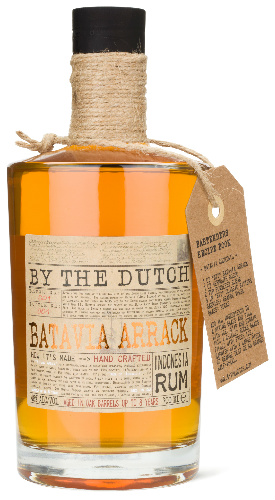
Batavia Arrack (48%, By The Dutch, Batch Nr: 001, Indonesia)

Here we have a bottle of Batavia Arrack. Batavia tells us this Arrack is Indonesian made. On the island of Java to be precise. However, the label classifies this as Indonesian Rum, and although I understand the claim, it is not entirely true. (Batavia) Arrack is similar to (Indonesian) Rum in the same way Tennessee Whiskey is similar to Bourbon. So not identical twins.

Arrack is made in Southeast Asia and is something entirely different from Arak (Anis flavoured drink from the Middle East). Arrack, as it is made in Indonesia, is made from sugar cane molasses and distilled twice in Pot Stills. Fermentation of the wash is started with yeasts found on local red rice. This particular Arrack is aged in Indonesia as well as in Amsterdam (The Netherlands), where it was also blended. Indonesia being a former Dutch colony, most of the Arrack produced there is exported to the Netherlands and passes through the hands of E. & A. Scheer, Dutch importers of large amounts of many different Rums. (For those of you who don’t know about E. & A. Scheer, but do have an interest in Rum, please have a look at Matt’s excellent piece when he got a chance to visit the company).

Color: Light gold.

Nose: Initially sugary (from a distance), but when you put your nose in, you know you don’t have a typical Rum in your hands. Funky Worcestershire sauce on paper. Dry, dusty and nutty. Influence of oak. Grain Whisky and Old Genever. It also reminds me of Rhum Agricole. Amazing how this changes in the glass with some breathing. Short ozone attack with warm caramel (as in creamy without the sweetness). Fresh air after the rain. It’s the closest to Whisky of any Rum I tried, apart from some initial alien notes, that is. The ozone turns into a breath of fresh air. Warm food, and the metallic part of blood. Sounds strange but it works well. With enough air, this reaches a nicely balanced state and all the ‘strange’ notes somehow dissipate. Mild spicy oak and a mere floral hint. Peach yoghurt. Soft with something herbal I can’t put my finger on just yet. Cold tea and cold gravy comes to mind. Dry, creamy and quite complex.

Taste: Wood comes first, quickly succeeded by a more creamier feel. Toffee and latex paint. Honey without the intense sweetness. Definitely sweeter than I’ve come to expect from the nose though. Throughout the body there is this backbone of medium bitterness. Bitter oak and chalk. Wood driven. The bitterness even grows towards the finish. More hints reminiscent of Rhum Agricole (even though this is made from molasses). Still creamy and without any hint of acidity whatsoever. So, no sweet yoghurt in here, but there are some oriental spices. The sweetness turns out to be something from the first part of the taste, because soon, under the leadership of wood, the dryness takes over. Late to the party (again) is a floral note, which seems to turn into a more soapy note towards the end (and is gone when its time for the aftertaste). Another note comes up reminding me of the ozone from the nose. However I have never tasted ozone before, so again something hard to put a finger on.

Definitely of sipping quality and definitely a (Batavia) Arrack and not a Rum, by how we know them. Sure, it’s related to Rum, but also a class of its own, just like Rhum Agricole and Cachaça are. It’s not an easy sweet sipping Rum, but it did grow on me, just like I had to adjust to Rhum Agricole. This Arrack is good stuff and worth your money, if you are willing to work with it a bit. It gains a lot from some extensive breathing. If you are still reading this, you must be an aficionado, so you might want to have a go at this. It is still around and I’m sure there will be more batches available in the near future. It’s well made, elegant, but also a bit bitter at times, so expect something with a backbone and character. For a molasses based product it is amazing how this has a lot in common with Rhum Agricole.

Points: 85

Epris 15yo 1999/2014 (45.4%, Cadenhead, Column Still, BMC, Brazil)

So Brazilian Rum eh? Is there such a thing? Sure, Rum made in Brazil, or is this maybe a Cachaça? What is Cachaça? Cachaça is made from fresh sugarcane juice that is fermented and distilled. Hmmm, isn’t that the same as Rhum Agricole? Yes it is similar, just made in a different part of the world. There is a major difference though. When Rhum Agricole is aged it is aged in Oak. Cachaça can be aged in any type of (native) wood allowing for more diverse aroma’s. Adding even more difference to the aromas of Cachaça, is that fermentation is done with wild yeast cells as opposed to single, highly controlled yeast strains used elsewhere in the Rum industry. Every Rum producer has their own specific strains, so to me there seems to be more adventure to Cachaça.

The (huge) Epris distillery is located in São Roque near São Paulo, Brazil. Back in 1999 the distillery made Rum for Bacardi and other types of alcoholic beverages. Well informed sources tell me Epris never made a true Cachaça, nor does the label mention the word. So the Epris distillate we have here is a Rum made from fresh cane juice, probably not adhering completely to the production methods and rules for Cachaça. So maybe close to, but not a true Cachaça. We also know this distillate is made in a column still. Today Epris doesn’t do “Rum” anymore. Today they focus on making fermented rice and Sake! Who would have thought. Brazil!

Color: White Wine.

Nose: Clean and elegant. Grass and hay. Powdery and green, mixed in with some vanilla. Some sweetness with nice wood influences. Distant red fruits, yet well in the back. Hints of pencil shavings and bamboo. Cane juice. Vegetal. Slightly perfumy but also whiffs of a more sweaty kind, pass by. Mocha and vanilla. Medium fresh on top. I’m sure I’m not objective here, but I think I smell some cooked brown rice now! Tea with sugar. Clean and very soft. Spicy with a tiny hint of smoke (toasted cask). yes, cold black tea. Leafy. Smelling this, it seems to me this isn’t made from molasses. In a way it is a bit simple. I have this in my glass for a while now, but I don’t get a lot of development (yet). I guess this may very well need a whole lot of air, and this is a freshly opened bottle I have here. Already quite appealing though.

Taste: Semi sweet, sugar, caramel and toffee. Very friendly and soft. A bit light, thin and simple. Small bitter edge, with some yellow sugared fruits. Greenish, vegetal and grassy, but in no way does this resemble a Rhum Agricole. Maybe it is somewhat closer to a diluted Rum or Arrack (we’ll get to that quite soon actually, stay tuned). Flavoured tea with some sugar-water. Medium finish with sometimes some peppermint. Alcoholic at times. Whiffs of (vanilla) Wodka. Not very active casks if you ask me. Not a lot stays around for the aftertaste, but also no off-notes. Easy to drink, and definitely growing on me.

I love this series of Cadenheads Rums, but in a way this particular one starts out a bit as a disappointment. I’ve tasted many others from this series that were stellar, this one just is too simple, and sligtly too sweet. In no way would I have thought this has aged for 15 years. Not very adventurous, so probably not a Cachaça made with wild (boys) yeast and aged in a funky wood type cask. Here the beauty lies in the details. Enjoyable and definitely worth my money. I wouldn’t buy a second one just yet, but you should buy your first one, just like me, because it is different from the rest and it’s definitely enjoyable. Having said all this, the Epris does start to grow on me, so it may very well get better with time, air and some care.

Points: 83

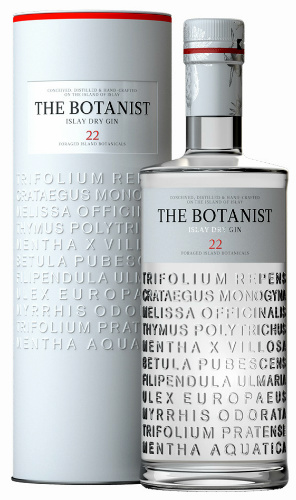
The Botanist Islay Dry Gin (46%, OB, Scotland)

It has been a long time since reviewing a Gin. How is that possible? In fact, all the Gins I have on my lectern now haven’t been reviewed yet, so I’d better get a move on, before they are gone! Like Hendrick’s, the The Botanist hails from Scotland, better still, both are made by distillers of the finest tipple of Scotland, Whisky! Where Hendrick’s is made by the people behind Glenfiddich and The Balvenie, The Botanist is made by the people of Bruichladdich. The Botanist is made with 9 rather common botanicals found across most Gin’s: juniper berries, cassia bark, coriander seeds, angelica root, dried lemon peels, dried orange peels, licorice, cinnamon and orris root. However, that was not enough. What makes this Gin about terroir, a big thing for Bruichladdich, is the addition of 22 botanicals found on the Island of Islay: apple mint, chamomile, creeping thistle, downy birch, elder, gorse, hawthorn, heather, juniper (again), lady’s bedstraw, lemon balm, meadowsweet, mugwort, red clover, spear mint, sweet cicely, bog myrtle, tansy, water mint, white clover, wild thyme and wood sage. So the focus of this Gin is actually on the details, the Islay botanicals, hence the red number 22 on the label.

The Botanist has one of the most comprehensive websites I have ever seen considering Gin, or any other drink for that matter. Beautifully made and very informative. However, reading that much and absorbing that much information makes thirsty, and you only can taste the Gin by trying it, not by reading about it. Same goes for this review obviously! So without further ado, here are my thoughts about The Botanist.

Color: Clear water.

Nose: Classic piny, juniper dry Gin aroma’s are up front. Lots of citrus with orange overpowering the lemon. Fresh smelling, with some menthol, almost clinically clean at first. Nevertheless, the nose has also a deeper sweetish note to it (licorice and cinnamon). I even get whiffs of an unexpected briny note. Unexpected in a Gin maybe, but considering this is an Islay Gin, maybe I should have known better. Underneath a warm, well-balanced, big floral scent emerges, aided by a more woody note (pencil shavings). When nosing the Gin by itself, a lot comes to the fore, I never picked up in a chilled Gin & Tonic. Excellent nose, no doubt about it, perfect!

It actually is rather strange that a distillate containing so much fine details, from many different botanicals, is used for a G&T with lots of ice, masking all those fine details. If you want to pick up on those finer details, I invite you to try your Gins neat as well (at room temperature). I do it for these reviews and it is certainly an eye-opening experience. I actually have a friend who had never heard of G&T, but likes Gin. He always drinks it neat at room temperature as a fresher alternative to Whisky. When I told him about G&T, he actually was quite surprised people do that to with their Gins.

Taste: Much drier than expected, yet not lacking sweetness. Again well-balanced stuff. Appetizing. Lots of juniper (but less piny than on the nose) and citrus notes. Here lemon almost overpowers orange. Camomile, paper and apple juice. Hints of vanilla and cream. Creamy orange. Next, some more green or vegetal notes. For the plethora of botanicals in this Gin, this is not a Gin for those who want to recognize all 31 botanicals individually. The components used are designed to work together, and they do that very well. This may very well be the best sipping Gin I know. Oily, chewy. Extremely well made. 46% ABV seems to be just right as well.

Comparing the Zuidam to the Botanist neat, the latter has definitely the more classic (juniper) Gin nose. The difference is so great, it almost seems like the Zuidam isn’t a Gin at all! Sure, if you work a bit harder the juniper and the citrus notes are definitely there, so don’t panic. The nose of the Zuidam is more mellow, less defined and fresh, but also less complex, compared to the Botanist. Tasting both, the roles seem reversed. The taste of the Botanist is remarkably mellow compared to its nose, whereas the Zuidam, seems a bit bigger, less complex again, yet fruitier (and somewhat sweeter), with a fantastic orange aftertaste. Hard to pick a favourite sipping Gin between these two!

Strange enough though, of all the Gin’s I know and/or have, (not all have been reviewed yet), the Botanist is not my favourite in a G&T. Lesson learned, not all excellent Gins work perfectly in a G&T. Personally I’m more about making G&T’s with Gin, rather than sipping them neat. Maybe I should follow the example of my friend mentioned earlier. On the other hand, The Botanist also deserves a more extensive search for the best matching Tonic.

Every time I make a Gin & Tonic at home, I always make two different ones for a proper H2H. It’s a sad thing to drink Gin & Tonics alone, so I always do that with my wife. We’ll do some proper comparisons, at least I do, and then I let her pick her favorite for her to finish. She often picks a different one than I, so it is not as bad as it sounds. Especially one time I remember we both preferred the same one, and up ’till now the combination of the aged Zuidam Gin paired with Indi Tonic is our favorite. It also shows you that taste is personal, so don’t take my word for it, make your own mind up, which is definitely more fun!

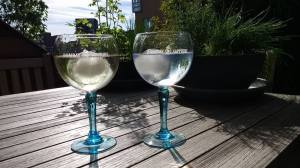
One recent nice spring day, hot, so could have been the middle of summer, I made two different G&T’s with “The Botanist”. One with Syndrome Velvet Tonic (left, with bitter oranges and thyme) and the second one (on the right) with Schweppes Premium Mixer Ginger & Cardamom. The difference was larger than expected. With Syndrome, the G&T was good, yet very soft and quite sweet as well. Rounded out, soft and sweet, toned down, covered up and a bit too sweet for my tastes. The thyme was definitely noticeable in the Tonic. The combination with the ginger and cardamom Tonic, both noticeable in the Tonic itself, was more true to the juniper driven, Dry Gin style of The Botanist and maybe Gin in general. It was more refreshing, sharper and definitely more focussed, well-defined, making it the one I preferred. Needless to say my wife preferred the other one!

Points: 82

Paul John “Brilliance” (46%, OB, Batch 2, 2016)

Today the Paul John range of Whiskies has three entry-level Malts. The unpeated “Brilliance” of which I’m about to review batch #2 (released in 2016). The very lightly peated (8-10 ppm) “Edited” of which I already reviewed batch #1 way back in 2013. The lightly peated style is achieved by blending peated and unpeated Whisky. For Edited, Aberdeen & Islay peat was used. Both Brilliance and Edited were introduced in 2013. In 2015 the third expression was released, called “Bold”, where all Whisky used in the blend is peated. The names speak for themselves. Edited is a slightly tweaked version of Brilliance, tweaked with a little peat (8-10 ppm in the final product), and Bold is bolder in the use of peat (25-30 ppm in the final product). Where Edited contained Aberdeen & Islay peat, Bold is made with Islay peat only). When I wrote the last review, there was not a lot more Paul John around besides “Brilliance” and “Edited”. Back then only three single casks were issued (The P1’s).

Today the core range has more members than the original two. Apart from the addition of “Bold”, in come two more additions; The Classic Select Cask and the Peated Select Cask, both are cask strength Whiskies (released in 2013), so not really entry-level any more. All other bottlings, and there are quite a few by now, are single cask bottlings, some of which were released for particular countries alone.

Color: Pale gold.

Nose: Fruity and fresh. Nice barley aroma. Fruit cake. Sugared yellow fruits with a hint of smoke. Very, very appetizing. Extremely fruity and floral as well. Fruity first, floral second. Vanilla third. Dry powdered vanilla. Dusty and silent. I imagine a hot day. Next some glue and paint which only broadens the aromatic palate. Warm soft wet wood. Definitely summer in the air. What a wonderful nose. This works perfectly for me. Sure this may be a young Indian Whisky, but it already shows a lot of evolution. Ghanging and growing in my glass.

Taste: Barley and some sweetness, again with a bit of smoke. Incence, smoke from burning herbs. More exotic than the nose. Nice soft wood again and a bit of cardboard. Vanilla, so definitely American oak. Oak bitterness (and herbs) come next, giving the Whisky character and backbone. Both aroma’s are coated with vanilla ice-cream. How’s that for balance?

So this is entry-level Whisky. Wow! I’m not sure about you, but this is right up my alley. It differs from other Whiskies. Its exotic and it is definitely high quality stuff. Amrut already has a fan-club (Amrutfever), but I believe its time someone should start a fan club for Paul John as well.

By the way, reading back my review of the first batch of Paul John “Edited”, also shows me how much the Whisky world has changed in the three and a half years that have passed since then. In 2013, it seems, Whisky was just starting to get global, and today it seems every country in the world already has at least ten distilleries producing Whisky.

Points: 85

Many thanks go out to Shilton (Paul John brand ambassador), for your patience answering all my questions, and for the quickest response-time in the industry!

Bowmore 17yo “White Sands” (43%, OB, for Travel Retail, Bourbon Casks, 2014)

As announced in the previous post about the Bowmore “Deep & Complex”, here is the review for the Bowmore “White Sands”, the top offering from the previous travel retail trio. Where “Deep & Complex” has something to do with Sherry casks, this one is said to have been matured only in Bourbon casks. This 2014 travel retail release is somewhat odd though. Of the three, it is the only one not in a litre bottle, the only one bottled at the higher strength of 43% ABV, and the only one with an age statement. 17yo is also an unusual age, although there used to be a oficial 17yo that was replaced by the 18yo.

Color: Full gold.

Nose: Sweet, syrupy and some very nice, medium strength, smoke. Slightly vegetal, but mostly fruity with sweet orange oil mixed in with sweet, soft peat. Papaya and mango are noticeable too. Hints of cardboard and earwax. Cold black tea. Very accessible. Creamy vanilla and hints of soft oak. It’s almost like sugar-coated oak. I fear caramel coloring is at work here. I’m already getting slightly annoyed, and I haven’t even tasted it yet. I have tasted this bottling before, and on that occasion I found the smoke to be more up-front. That’s important for this bottling since the smoke-bit is really delicious and defining this Whisky (for me). That bottle was half full, by the way, so I’m hoping this only needs some more breathing. (I just opened this bottle). It may very well be from a different batch as well. Letting it breathe right now, already brings out some more wonderful notes from the smoke-department, so I’m confident that if you work this a bit, all will be fine in the end. This will turn out to be a hidden gem, I’m sure. Just let it breathe. Leave the stopper off for a while.

Taste: On entry; sweet (Rum) and waxy. Oak and fruit. Definitely a tad simpler than the nose and most definitely lacking some oomph. This needs at least 46% ABV. Please Bowmore, please. Cereals, soft wood and caramel. Almonds and mango chutney. Milk-chocolate powder. Nesquick. Hints of smoke and some sweet peat. A tiny hint of bitterness from the peat and oak, but not much, not much of that at all. Vanilla, vanilla ice-cream. Soft and creamy. Custard and pudding. You get the picture don’t you? It isn’t hard to taste, this suffers a bit from caramel coloring. Its aromas are glued together, a property of caramel coloring. I wonder what the chill filtration did to this expression? Is the complexity of the nose over the taste a sign of this?

Dangerously drinkable. Talisker Neist Point (a NAS bottling), is another of those peated, dangerously drinkable, travel retail Whiskies. I would love to hate both, since they are obviously flawed, but somehow they turn out better than expected. Never stellar, but good and likeable.

Although this is a good one, it still is one, I feel, has been tampered with. Chill filtered and colored, and as with the other Bowmore, reduced too much. Again a potentially stellar Whisky ruined, (at least in part it is), for the sake of how it looks on the shelves, and how money can be made, at airports. What kind of heartless, soulless people make these kinds of decisions? Do marketeers have so much to say, or are people, like us, who truly like their Whiskies, actually the odd ones out, complaining when we shouldn’t?

I can confidently recommend this Bowmore, I will give you another recommendation as well. Seek out an independent bottling of Bowmore, to find out how Bowmore actually tastes like without the tampering I mentioned.

Points: 86

Bowmore 18yo “Deep & Complex” (43%, OB, for Travel Retail, Oloroso & Pedro Ximénez Sherry Casks, 2017)

Lets start this review with a confession. I’m a faulty human, and I admit to having prejudices. I don’t know where they come from, I didn’t invite them into my mind, but still they are there and I am battling them. The prejudice I have is that I have a more than healthy suspicion towards travel retail bottlings. Compared to this, my feelings towards NAS-bottlings are pretty mild, since there are enough good NAS bottlings around. Bowmore travel retail bottlings are an excellent example why I have this prejudice. A few years back I wrote a review about the Bowmore “Black Rock“, and it is travel retail at its finest. First it comes in a big litre bottle and second, it was almost reduced to death by bottling it at 40% ABV. So to celebrate your trip you bring back a souvenir of a weak Whisky and a lot of it. When tasting bottles like this, I just knew I had to stay away from such bottles, and I still will steer clear of litre bottles bottled at 40% ABV.

In comes Nico. Nico is one of the founding fathers of the Whisky club I am a member of, and he invited me over to bathe in the excellence of one of the latest batches of The Balvenie “Doublewood“. Taking about ruining a perfectly good Whisky! Since we both are very keen on Whisky, obviously the evening didn’t end with several Balvenies. We had plenty more adventures in Whisky. Funny enough, the surprise of the evening (for me) was a Bowmore travel retail bottling! Nope not this 18yo Deep & Complex but the 17yo “White Sands” of the previous travel retail series.

In 2014, Bowmore released a trio called “Black Rock” (litre, 40% ABV), “Gold Reef” (litre, 40% ABV) and “White Sands” (70 cl, 43% ABV) and I should have known better. “White Sands” wasn’t a litre bottle, was the only one of the three with an age statement (17yo), and the ABV was slightly higher as well. Tell-tale signs that there was a possibility it would be a good one. Good? I loved it! I have met (the wonderful) Eddie MacAffer (voted Whisky distillery manager of the year at Whisky Magazine’s 2013 Icons of Whisky Awards) and “White Sands” is a favorite of his, so I definitely should have known better!

So why isn’t this review about “White Sands” then? Relax, I’ll get to that shortly. Probably in the next post. When I found out how good “White Sands” was, I ordered a few of those. At the same time, I got a pretty good deal on this “Deep & Complex” (What’s in a name), and knowing now that the top offering in Bowmore’s travel retail series might be quite good, I ordered it as well. So, let’s do this new one first and we’ll get to the old one later…

Color: Copper.

Nose: Sherry all right. I would say the PX is upfront. It smells sweet and dessert-like. Caramel. Cherries on syrup. Candied orange skins. Sweet alright. Raisins and dates (freshly dried). Fresh macadamia nuts. A nice typical smokiness (birch) I get from “White Sands”as well, although that is an entirely different bottling. Garden bonfire. Wood smoke. Lovely smoke aroma’s all over. Charred wood. Nice ripe black and red fruits and definitely more smoke than peat. Excellent balance. Vanilla and dust. Islay in the summer. Tar with hints of peppermint and menthol.

Taste: Sweet and fruity. Round, they call it. Half-sweet Cherries and only some wood and peat. It has an even deeper lying smoky bit, but again a nice smoky bit. A bit thinner (and fruitier) than expected. Burning newspaper. Nice warming quality though. Warm wet earth and the fresh macadamia’s are here as well. Not too bitter dark chocolate, wood and toffee. Tar and coal. Licorice. Surprisingly short to medium finish and not a lengthy aftertaste as well. What happened over those 18 years? I’m trying this before breakfast so I have a fresh and eager palate, but still the Whisky is too weak. It’s lovely, but too weak, so don’t drink this in small sips, it won’t work as well that way.

It is somehow suggested and assumed this was matured solely in Oloroso and PX-casks, but I do have my doubts. In a way it’s almost like a “White Sands” with a Oloroso and PX-finish. Wonderful stuff, but like the 40% ABV travel retail versions. It’s a bit too thin. Even at 43% ABV, it doesn’t quite cut the mustard. It has the potential of being a wonderful Malt (scoring in the lower 90’s). It is actually a wonderful malt as is, but it could do so much better if it had some more oomph, something more to carry it. Now its like (white) sand running through my fingers…

Points: 87

P.S. In a head to head (H2H) with the 1995 Lagavulin its easy to see what I mean. The Lagavulin has only 5% ABV more, but it does so much more for the Malt. It gives it power and length. It even brings out the aroma’s more. I’m not afraid to say that this Bowmore, if it was 46 or 48% ABV like the Lagavulin, would even be better than it. Now, the Lagavulin beats it (just). Nevertheless both are damn good drams and easily worth your money. I’m enjoying them both.

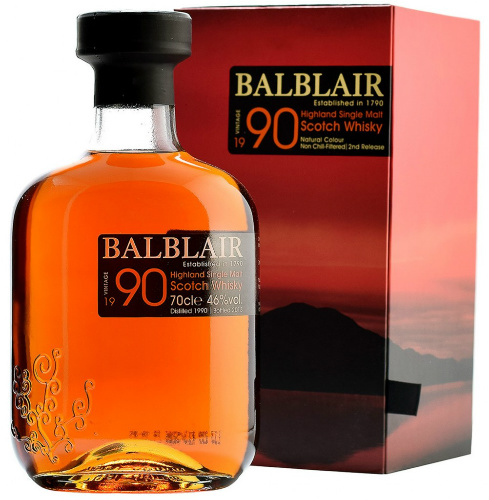
Balblair 1990/2014 (46%, OB, 2nd Release)

Unbelievable! Here we have another Distillery that has never featured on these pages before. Balblair. Just like Glenrothes, Balblair is a distillery that has gone down the road, laid out by Wine. The long and winding road of releasing their products as vintages (in a reduced state, ABV-wise, that is). On the back of the bottle, in rather small print one can find the statement: “2nd release”. It implies that there has been an earlier 1st release, yes? Well, yes, but…

Since 2008 there has been an 1990 release which was a lot lighter in colour and which was only released in litre bottles for travel retail. That one was matured solely in ex-Bourbon barrels. It was released annually untill 2011. So there was a 1990/2008, a 1990/2009 etc. Since 2013 the first 2nd release, was released. the second in 2014, the third in 2015 etc. So what we have here are multiple, annual, batches from different bottling years of the 1st release, as well as of the 2nd release. So not only Glenrothes style vintages, but also Springbank style batches. Again the industry seems to consider batch variation to be a dirty word(s), yet I hope there is some adventure in these different batches. This will be a review of the 2014 batch (the 2nd batch of the 2nd vintage 1990, can you still follow? However, if a different batch falls into my hands, I’ll compare it to this one. By the way the 2nd release comes from the same casks and the same vintage as the 1st release, the only difference being this second release has spent about two years in ex-Oloroso Sherry butts. Oh, and with each new batch, it gets older as well.

Color: Copper gold.

Nose: Quite creamy, with sweet vanilla, ice-cream, fresh cold butter and Sherry. Hints of oak, fresh and toasted. Dry (scorched) leaves and herbal. Hints of coal even. Hints of paper, cardboard, toffee and honey. Cough syrup. This smells so sweet and syrupy that it is easy to conclude it lacks a bit of the woody backbone to keep it standing. This Whisky smells like a dessert by itself. The wood that is here, smells like pencil shavings.

Taste: Quite big, matching the nose. Sweet (Sherry) and syrupy. A bit too sweet imho. Maybe these casks didn’t contain the highest quality Sherry in the first place. Sweet milk chocolate, vanilla and vanilla ice-cream. (Now the honey in the nose becomes more pronounced as well.) Butter and more chocolate. Almonds with fruity acidity on top, as often this fruity acidity doesn’t blend in all that well. There seems to be a little problem with balance as well.  This acidity also has quite some staying power well into the finish only to dissipate in the aftertaste.

One sunny afternoon I tasted this 1990 2nd release and I loved it. Now, when giving it almost too much attention and analyzing it, there are some flaws that distort the balance a bit. It’s a bit too sweet and I don’t think the Sherry finish worked quite as it should. It’s completely fine when you have a casual dram and that is precisely where it’s for. I really liked it on that sunny afternoon, outside, with nice food and friends. When sitting at home, analyzing it, in a controlled environment, these flaws become more obvious, but I still like the Whisky very much. I wish I had the first release for comparison.

Ok, now I ask you to look past the flaws I described above, because as a whole this is definitely a good Whisky, so I stand by my score, which might be higher than you might expect from the text alone, and yes, at a good price, I would even buy it again. How is that for a recommendation. Just pick your moments to drink this, wisely…

Points: 87