Borgoe 15yo “Single Barrel” (40%, Suriname)

After the pride of the SAB company why not move on and have a look at their Grande Dame. Where the 8yo was released in 2006 to commemorate the 40th anniversary of SAB, this 15yo “Single Barrel” was released in 2011 to commemorate the 45th anniversary. Maybe next november we’ll see the next anniversary bottling, a 20yo maybe? The 8yo and the 15yo thus are specials, but there is also a more standard range Borgoe. The first one of those is called the Borgoe ’82 “The Jubilee Blend”, the second is called the Borgoe “Extra”  and the third and last one is the Borgoe 5yo “Vintage”. By the way, all White Rums made by SAB have different brand names, so Borgoe only exists as a Golden (or Dark) Rum, whichever word you prefer. Borgoe uses both simultaneously.

Borgoe 15yoColor: Orange gold.

Nose: Very funky smelling. Still caramel and toffee, but there is a lot more going on. Very nutty. Organic clay. After the fatty and creamy introduction, Wood and deep sugared fruits. Honey with dark brown banana skin. This is completely different from the 8yo, not just an older version of it. I’m not completely sure everything is as it should be , but whatever it is, I love it. Fresh cigar box wood. Pencil shavings and dust. Just like the 8yo, the aroma’s it started with take a back-seat and it turns more dry. Smells like a worthy super premium Rum to me.

Taste: It starts out with the simple sugary sweetness, like the 8yo, as well as the fresh woody bit. After that, everything changes and it becomes incomparable to the 8yo. Where the 8yo went down in a hurry, this 15yo sticks to your throat and takes a long time to get down, developing along the way. Perfect balance between the nose and the taste. Again the thick creamy and nutty aroma. Tiny hint of burnt wood bitterness, but that only aids the wonderful taste. Excellent length in the wonderful tasting finish and a good aftertaste. Some tiny acidic wood note appears in the aftertaste, but that is hardly a problem, when so much other aroma’s keep lingering on. This one is far from tasting “thin” even when it shares the low ABV of the 8yo: 40%.

One thing strikes me as odd. The website mentions: “Our own master blender created this special Rum along with the best Rum makers of the Caribbean” and on the back label it states: “The golden rum was selected from each single barrel by our master blender and blended to ultimate perfection”. So several Rum professionals created this Rum or only their master blender? How can this be from a single barrel and be blended? Did they blend the Rum, put it back into a barrel, marrying it and then bottling it from a single barrel? Strange…

Twice the age of the 8yo, twice the price of the 8yo but also twice the taste of the 8yo. Definitely worth the money, if you can find it, because it seems quite hard to get lately.

Points: 86

Borgoe 8yo “Grand Reserve” (40%, Suriname)

Borgoe is one of a few (Rum) brands of Suriname Alcoholic Beverages (SAB for short). Other Rum’s made by SAB are Mariënburg and Black Cat. Both are White Rums. SAB is foremost a producer of Rum, but also some Vodka is made. Besides this, SAB also functions as an importer of several foreign “alcoholic beverages”. SAB was founded in 1966, but its predecessor was founded in 1882 as the “Suikeronderneming Mariënburg” and today is one of the most succesful enterprises of the country. To commemorate its 40th year of existence, the 8yo Borgoe was released in 2006. Borgoe 8yo has fully aged in American oak barrels straight from Kentucky.

Borgoe 8yo Grand Reserve (40%, OB, Suriname)Color: Orange gold.

Nose: Nicely sugared, hints of fruit and full on aroma, that leaps out of my glass. Lively and leathery. Sunny and happy, this want to be drunk (pun intended). Heavy fruit syrup and elegant wood. The heavy nose is not always sweet, It has its dry spells. After a while, the wood starts to play a bigger role, but foremost a sort of vanilla powder, locked into the woody backbone is present. Wet warm cotton with a meaty twist to it. Powdered coffee creamer. Sometimes the heavy aroma retreats and it allows some notes of black tea and licorice to escape from the glass. When this happens, the fruit takes a back-seat as well and a more floral note appears, honeysuckle, so not typically flowery-floral. Sawdust, new wood, not particularly an oak aroma though, and a tiny hint of ashes. Even though I used many words up ’till now to describe the nose, I wouldn’t say it’s as complex as it seems. Medium complexity it is then, but, there is evolution in the nose. The sweetness retreats even more, the “wood”, played its part and now a more plant-like aroma emerges. Dried and fresh. It’s a more overall feel, so hard to pin anything down, although lavas seems to be one of them, as well as italian laurel (licorice). Funky.

Taste: Caramel, wood, burnt sugar and toffee, but the sweetness speeds down my throat, and a more watery episode follows. In that watery, and thus, thin episode, the licorice from the nose pops up. Sugar water with toffee aided by a wooded note, nothing more really. The nose presents itself as syrupy and heavy, but the taste and especially the mouthfeel is not. Definitely getting more oaky now, but not fat succulent old oak, but a younger type of oak, young, fresh and slightly acidic. Tree sap. Quite a short finish, also slightly unbalanced. Overall it tastes nice, but quickly gone. The, slightly bitter, Italian laurel licorice really shines in the aftertaste.

Tasty stuff that could have been more like a Pussers or Demerara style of Rum, judging by the nose alone. It isn’t, and maybe it shouldn’t. Where in Demerara the nose, the taste and the body are heavy, here it comes across as too much reduced, where some aroma’s even seem to be stripped, thus missing some complexity. I can’t explain that. The watery part is obvious, but missing something from the body is a first for me. Still, it’s a nice sipper, easy-going and easy drinkable. Although it looks like a premium Rum, it drinks like a daily drinker, a sipper, not a mixer. But for the money I expected a more complex Rum. Nevertheless, good stuff, so no cause for alarm, although I feel SAB can still improve on this Borgoe Grand Reserve, and turn it into a really good Rum.

Points: 80

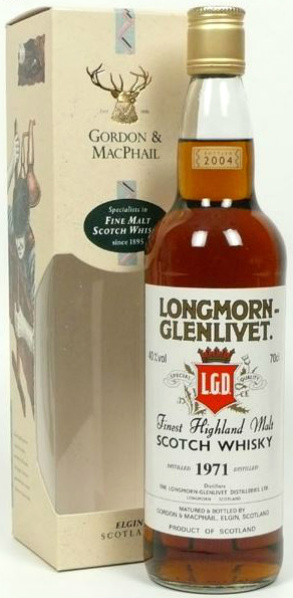
Longmorn 1971/2004 (40%, Gordon & MacPhail, Distillery Label, JD/AII)

The old Jameson opened my eyes for old bottles. Not true actually. I’ve known it all along. I just needed a kick in the bee-hind, to open some more, before I one day, kick the bucket. Luckily I had a birthday two months ago, and that is always a good reason to pick a nice one from the collection and “because you’re worth it…”. Of course, “Thursday” is also a good reason in my book. 1971 is quite a legendary year for Longmorn. At Longmorn nobody will concur, because they haven’t done anything different in the years before and since 1971. However, there somehow are a lot, very good sherried, and otherwise matured, Longmorns from around 1971. I particularly love the 1971 from Scott’s Selection, although true Longmornado’s tell me there a many better ones. Great!

Longmorn 1971/2004 (40%, Gordon & MacPhail, Distillery Label, JD/AII)Color: orange gold.

Nose: Waxy. Old black fruits and just like the Jameson I reviewed last a bit of steam. Buttery and beautiful Sherry and black coal. It doesn’t leap out of the glass and I believe that is due to the reduction to 40%. I’m not worried yet, because these old distillates can handle a lot of water. Today’s Malts do need a higher strength. Nevertheless it seems the nose suffered a bit in power. Maybe this is one for a Cognac copita (the big balloon glass). Luckily I have a whole bottle of this, so I can experiment a bit. Slightly tarry but right after that a fresh note of faint menthol/mint. Way down deep into the nose some licorice pops up, well hidden in the dark fruitiness. Again, a wonderful old bottle.

Taste: Sweetish black tea, and again pretty fruity. Raspberry hard candy, and some cherries. The whole is quite soft, so again, maybe this was reduced too much. It’s great as it is, but I can’t shed the feeling, a lot was taken away from this Malt as well. Now it’s too damn drinkable, so I don’t think this will last me a long time. I’m sorry the body isn’t a bit bigger. I’m accepting this now and I move on. This is great stuff extremely well-balanced. A nice nuttiness comes to the fore and then even some honey. Hurray for air, breathing and developing Whisky. Great combination of fruit and the hints of tar and black coal. Tiny hint of burnt Sugar towards the end. The finish could be longer, but we’re rewarded with a wonderful aftertaste. It even reminds me a bit of some Rhum Agricole in the finish. Be patient and give it time to breathe. It opens up. wow!

I’m a sucker for Sherried Longmorns from the second half of the sixties through the first half of the seventies. These Whiskies are so good. Sure there are a lot of Longmorns around that are better than this one, but there are not a lot of Whiskies better than Longmorns like this. Give it time to breathe, it will open up and become bigger than it initially was.

Points: 91

This one is dedicated to David Urquhard (1952-2015) who passed away on 30 November 2015, aged 63.

John Jameson & Son 7yo “Three Star Pure Old Pot Still” (43%, Bow St. Distillery, Dublin Whiskey, 75 cl, Circa 1965)

Who would have thought I’d still have an ace up my sleeve considering Jameson’s? The title seems a bit of a mouth full, but when you are identifying old bottles like these, you have to identify minute differences on the labels to carefully date them. I don’t know when exactly they started to use this exact label, but I do know the last year they used it was in 1968. So “circa 1965” is a carefull guess.

The Bourbon world has adopted the old “Stitzel-Weller” distillery as the ultimate Bourbon heaven on earth. Similarly, the Irish have the old “Bow Street” distillery that was/is situated in Dublin. The Bow Street distillery started working in 1780 with John Jameson acting as General manager. John bought the distillery in 1805. The distillery was eventually was closed in 1971. Since 1997 it is opened again, but alas only as a “tourist” attraction.

John Jameson & Son 7yo Three Star Pure Old Pot Still (43%, Bow St. Distillery, Dublin Whiskey, 75 cl, Circa 1965)Color: Light gold.

Nose: Extremely fruity steam punk kind of Whisky. Hints of old paint. Even if I would have tried this blind, you know when you have an old Whisky on your hands. I’ve said it before and I’ll say it again; They don’t make them like this anymore, and the other Jameson reviews just prove that. Wonderful old dried fruit intertwined with almonds and wax. It really smells of steam and coal and a bit of old engines. Warm machine oil and vanilla. Very appetizing. When you let it breathe the fruit gets less pronounced and a more dusty creaminess starts to emerge. A dustiness which seems to be coming from wood. A wonderful experience.

Taste: Quite different. It starts with old newspaper and luckily the waxy fruitiness hold it up. Still, somewhat lighter than the nose. The nose is special and quite “thick” this is less so. paper and wood but both are light and well-balanced with the rest of the aroma’s. Slightly warm apply note comes next. Those of you who are regular Calvados drinkers will recognize this apply note, and now that I recognize it, it’s there in the nose too. Hints of caramel and slightly burned caramel emerge, which is noticeable on the tongue. Not everything stays behind for the finish, but still a nice, but short finish, but we are left with a nice aftertaste. Good, but not as special as the nose was. The nose really oozes with times long gone.

The current Jameson and this Jameson are both tasted early in the morning before breakfast. The current Jameson is a nice aperitif. It’s niceness is in the detail, which is much easier to pick up in the morning, than in the evening, when you have just eaten and your palate is tired. The current Jameson has lost much of it charm when I tried it in the evening, after finishing the previous review. Tasting this, I fear this one will be better in the morning too…

Points: 87

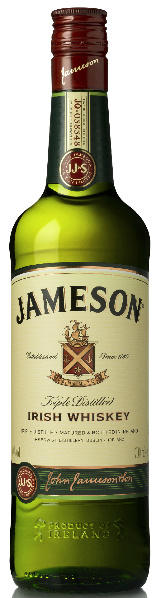
Jameson (40%, OB, Circa 2012)

Today if anyone mentions an Irish Coffee, you say Jameson. If you say Irish Whiskey, you still say Jameson, unless you’re an anorak, than you might say something different, like Connemara, if you like it peated, or Teeling, or Middleton. Enough to choose from and Irish Whiskey is on the rise again, and that is really great! It’s the ancient battle between the Scottish and the Irish, where Whiskey originated from, so why then is the Scottish Whisky so big and why was the Irish Whisky nearly dead in the recent past? There are enough examples of fabulous Irish Whiskeys and there is this Jameson. The oldest and best known of all Irish Whiskeys. Again a bottle you see in all the hotel bars and restaurant and in many homes as well.

When I started getting interested in Whisky in general, a long, long time ago, it started with Jim Beam White, the obvious Jack Daniels, Scottish blends like Teachers and Grant’s, and this Jameson. I hated Jack Daniels and Jameson actually, so I moved quickly into Single Malts and was immediately sold on Aberlour and Laphroaig. The rest is history.

Jameson (40%, OB, Circa 2012)Color: Gold.

Nose: Toffee and caramel. Grainy, fruity and quite fresh. The fruity note is quite lovely. Actually it reminds me of Gin a bit. The fresh, juniper like smell with some well hidden clean alcohol. Definitely grainy and seems to me in part like a sweet Dutch Jenever. It also has a paper like quality. This really smells nice, and I don’t recognize the nose from the first bottle of Jameson’s I had. Is that saying something about me, or is that saying something about Jameson? When the Gin aroma’s dissipate a bit, it at least smells like a Whiskey. And a very pleasant one too. Hints of spicy wood, paper and light wax.

Taste: Paper soaked in sweet apricot water. Definitely a bigger and sweeter body, than I remember from my first encounter with this Whiskey. Yes, slightly fruity sugar-water, with a hint of Whiskey. This sounds pretty negative, but let me tell you it is tasty (in a way). It is nice, very light and extremely simple stuff, but tasty nevertheless. No real off notes, not even the paper notes. but also hardly a Whiskey I guess. Short warming finish, with a short but nice aftertaste. Should work well in Irish Coffee! Otherwise, this is only suitable as an aperitif. If you use this as an after dinner dram, you’ll lose a lot of the subtleties.

This actually smells quite nice, I’m surprised. It is something you could drink easily. How is easy. Anything goes. Mix it, drink it straight out of the bottle, use a straw, you name it. It’s the Whisk(e)y-worlds lemonade, and not as horrible as I remember it. Compared to the “Select Reserve” this is more vibrant and a tad more fruity and playful which suits this destillate. I prefer this one, but the 18yo is way better, way more special, and costs more. If you’re interested in the Jameson 18yo, you’d probably do better with a Redbreast 15yo, but I think I mentioned that before.

Points: 72

Caol Ila 11yo 1994/2005 (58.2%, Gordon & MacPhail, Cask Strength, First Fill Sherry Butts #12423 & #12424)

I actually picked the 1990 Caol Ila and this 1994 Caol Ila, to compare Bourbon cask matured and Sherry cask matured young Caol Ila’s. However I don’t think the 1990 was aged in a Bourbon cask, but rather in a Fino or similar type of Sherry cask. However, American oak is probably the wood of choice for the 1990, and maybe the comparison with the two types of Sherry is maybe even a more interesting one. I’m a bit on thin ice here, since nowhere it is said in what kind of cask the 1990 has matured, nor is there any mention for both of what type of Sherry previously inhabited the casks.

Caol Ila 11yo 1994/2005 (58.2%, Gordon & MacPhail, Cask Strength, First Fill Sherry Butts #12423 & #12424)Color: Slightly orangey gold.

Nose: Fatty and funky Sherry. Raisins and wax. Stale rainwater and some muddy peat. Peaty clay, not very fatty or round, as some might say. The raisins do remind me a bit of a Highland Park bottled by Gordon & MacPhail as well. Although that one is much, much darker, it is the same raisiny aroma. Probably the same kind of Sherry. Wood spice and salty smoke. Nice creamy wood, smoky licorice. Perfumy sandalwood and a buttery acidity. Creamy and slightly meaty. Burning candles. Enough happening in this one. Vanilla comes late, it is just overpowered by so many other elements in the nose. A nose from an old house at christmas.

Taste: Initial sweetness with some toffee. Lots of wood, slightly dry, but it is soothing and not harsh nor sour. Some sweet licorice again, with some dusty spice and Cappuccino. After the dusty part comes a woody and slightly acidic wine-note. A fruity acidity that doesn’t fit this Whisky. It makes all the tastes up ’till now, fight each other, instead of becoming a band of brothers. It is obvious that this Sherry didn’t integrate that well. Dries the lips. Finish has only a medium length and quite bit of an unbalanced aftertaste, an apply acidity, which is not entirely tasty if you ask me. The aftertaste ruins it a bit for me. I definitely prefer the previous Caol Ila.

It almost seems as if you can’t go wrong with Caol Ila. Let’s say this is from a Oloroso Sherry or even a PX, both are considered somewhat “normal” Sherries, by wine-people, and considered of a lesser quality then a Sherry that has matured under flor, a “hat” of fungus that grows on the surface of the Sherry. The hat prevents contact with air. The G&M Caol Ila I reviewed the day before yesterday, I believe came form such a Sherry. For me that is the superior one of the two. I do usually prefer Oloroso ageing, especially when it is a Whisky that was aged a while back. Good Oloroso Sherry matured in European oak, instead of the American oak preferred by the Sherry industry these days. Vanilla, people, Sherry drinkers prefer a more creamy Sherry these days. European oak also seems to need longer ageing, to deal with the tannins, and that is time we don’t seem to have…

Points: 80

Caol Ila 13yo 1990/2003 (55.6%, Gordon & MacPhail, Reserve, Cask #1114, 283 bottles, JC/GF)

I got up this morning seeing that it is a nice and sunny day, just with a chill in the air. Ice on the windscreen, and couldn’t be bothered de-icing the car, so I did the school run on foot. Luckily no wind so it wasn’t so bad. Walking towards the winder I did pick up the inspiration to review some Islay Whisky. Yeah! Rummaging a bit in the sample bank I dug up two Islay babies, that will together well, or make for interesting comparison. Once not so readily available, today impossible to miss. Caol Ila is the name and peat is the game. I love Caol Ila because it ages really well. So lets educate myself and have a look at a younger example of Caol Ila. This 1990 Caol Ila was bottled by Gordon & MacPhail in 2003. The outturn was 283 bottles at cask strength, and considering the color and wood management policies at G&M, I would be surprised if this wasn’t matured in a remade Bourbon Hogshead although a Fino or Manzanilla Sherry hogshead is also possible. Two of its sister casks were also bottled in 2003: #1115 (JC/AEG) and # 1116 (JC/CEB). More sister casks exist. In 2011/2012 at least three more were bottled: #1120 (for La Maison Du Whisky, France), #1121 and #1122 (both for Van Wees, The Netherlands).

Caol Ila 13yo 1990/2003 (55.6%, Gordon & MacPhail, Reserve, Cask #1114, 283 bottles)Color: White wine.

Nose: Dry and smoky peat, with an underlying sweetness. So it’s not the fatty peat you sometimes get. This is drier and a wee bit more spicy. Cow organics in cold weather. With hints of hay and quite some buttery and lemony notes as well as hints of shiny aromatic apple skin (not acidic). Some flowery elements were present in the peat, lavender as well as there is some crushed beetle (sounds strange doesn’t it?). Vanilla and more creamy, fresh buttery notes. The wood smells a bit meaty and well aged, so not young and sappy. Hints of cured meat. Smells a bit toned down and maybe older than it actually is. Very well-balanced. More about fresh and fruity notes than heavy peat. Accessible. Garden bonfire burning off old branches combined with powdered vanilla and powdered coffee creamer. It’s not really a big Whisky, but a well constructed one. Wonderful nose, especially by the wonderful vanilla and floral nose. I would say Fino Sherry hogshead. made from American oak.

Taste: More peat and quite sweet, which works quite well this time. There is enough going around to balance the sugary sweetness out. Burned leaves and a lot of vanilla and clotted cream, custard, pudding. These notes are quite big and it takes a while for those to pass, to let a more paper and (spicy) wood note through. Distinct hints of soap. It breaks down a bit in the finish, with a creamy note that goes down my throat, but in the same time a more acidic wood note stays behind in the roof of my mouth, the soap also has some staying power under my tongue. These flaws are easily forgivable, looking at the whole. Good Caol Ila.

This went under the radar a bit when it came out, as well as its sister casks, but what a treat this is. Definitely American oak and probably Sherry that aged under flor instead of Bourbon. All aroma’s work together well. I wish I had more of this, but at least I had the experience of a whole bottle of this. Worth seeking out at auctions, but a lot of it was probably drunk back then.

Points: 87

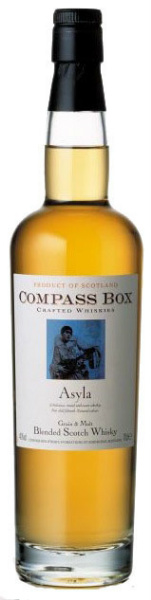
Compass Box “Asyla” (40%, OB, Circa 2006)

After the Chivas Regal 12yo, a Blended Whisky from a big company, let’s see what the little, more independent, guy can do. A guy with a passion for blending. Obviously I’m talking about John Glaser, and his Compass Box Whisky Company. A company that all Single Malt aficionado’s seem to love. We’ll have a look at an early “Asyla” here. Asyla is part of Compass Box’s signature range, or core range for us normal folks. A quick look at the website of Compass Box learns us that Asyla is the lightest of the signature range, calling it delicate and sweet.

Only Whiskies from first fill used American oak casks were used, for vanilla purposes obviously. The Malt’s used are Linkwood (30%), Glen Elgin (10%) and Teaninich (10%) and the Grain comes from Cameronbridge (50%). Sometimes Longmorn is also named as an “ingredient” for this blend, because the Compass Box website mentions that the Malts for this blend hail from the towns of Longmorn and Alness. Looking at the map you can say that Linkwood and Glen Elgin come form the town of Longmorn, so I’m not sure that there is any Longmorn in this blend. Since Asyla is around for quite some time, maybe the Malts that go into this blend differ from time to time. For now I’ll stick to Linkwood, Glen Elgin and Teaninich though. Before I forget, the other four offerings from the signature range are: “Oak Cross”, “The Spice Tree”, “The Peat Monster” and “Hedonism”. Of course outside of the signature range, a plethora of other bottlings exist.

Compass Box AsylaColor: Light gold.

Nose: Grainy, light, yet perfumed. Floral at first but also fruity, with a tiny hint of pineapple and green sour apple skin. Sometimes I even get a trace of lavas. Heaps of vanilla shoveled on top, and given some time even some spicy wood. More than a hint of Calvados, an Apple Cider distillate from Normandy or Brittany. Dry and powdery. Sweetness is mentioned by Compass Box themselves, but for me the nose doesn’t carry a promise of sweetness, in any way or form. Elegant and light, but alas also a bit thin and anonymous.

Taste: Paper and grain come first, after that a blend of sweetness and (virgin) oak, although no virgin oak was used for this one. The vanilla presents itself after the paper and grain, and a slight bitter note, fade out. Not a lot of development going on, and you’re probably not surprised this doesn’t have a long finish as well. The finish itself seems to be a bit unbalanced, due to some acidity from the oak. The oak seems a bit fresh, as in not used for a long time when it contained Bourbon (or Tennessee Whiskey).

To be honest other bottlings of Compass Box made me expect more from this. Something in the order of a variant of Delilah’s. It should have been more creamy and even more towards the vanilla note so vehemently advertised.

Sure. Whisky is the product of spirit and wood (amongst others), but the bitterness it could do without, and as I said, it should have been more creamy. If you can find it, get a Delilah’s by the same bottler, and you’ll know what I mean.

I do like a lot of Compass Box Whiskies, but this one is not entirely for me, and that’s a surprise, because I expected this would be better than the Chivas Regal 12yo. Maybe age does matter?

Score: 72

Chivas Regal 12yo (40%, OB, 2012)

After two highly specialized, anorak type of Glen Scotia’s, because, besides us, who in the world has ever heard of Glen Scotia? It’s time to move on and get back to basics again. Back to Blended Whisky even. This time we will have a look at Chivas Brothers Chivas Regal 12yo. This is something you might encounter in almost every hotel bar around the world, as well as any Whisky selling supermarket. It’s been around since the beginning of the twentieth century. Blends have homes and the “home” of this blend is the Strathisla Distillery.

Chivas Regal 12Color: Gold.

Nose: Barley with funky honey sweetness. Quite fruity too. Lemon, apple skins and apricot water, because it has quite a watered down nose. Vanilla powder and distant hints of charred oak. For a 12yo, this has remarkable little wood aroma, but I have to say that the whole is rather thin and light. Apart from that, the nose seems to be designed to have a certain composition. This composition is there all the time. No development whatsoever. Is that typical for a blend like this, a blend from a big company, blends we al know as well as our ancestors?

Taste: Sweet and honeyed, but not thick, and very likable, just like a lemonade in the summer. Lots of grainy elements, but before you can make your mind up if you like this grainy element it is already surpassed by the fruit, (peach and banana), and a delicious sweetness. Very rounded out, like you get from caramel colouring. When the sweetness slowly travels down your throat a more bitter note is left behind in my mouth. Here’s the wood, and here is maybe the age, I guess. This lingers on for a while, fruity sweet yoghurt, which is nice. The end of the body and the finish are the same. The bitterness fades out and there hardly is any aftertaste. Just an echo of the body, which is good, because you don’t want the slight bitterness to be the note that stays behind. So not a very long finish and the aftertaste lets it down a bit.

This is actually not bad. Love the taste, and do concentrate on the taste, since in no way you’ll get the “12yo”, and there isn’t any noteworthy development going on in the glass as well. So, not bad, but would you go for “not bad” or should we expect some more from our blends these days? Sipping along, yes, its nice initially, but I also get bored quickly with this. After a glass of this, which I enjoyed, I wouldn’t pour me a second one soon. So my pick from the hotel bar would be Glenfiddich 12yo, since it always sits next to this Chivas Regal.

Points: 74

Glen Scotia 6yo 1999/2006 (52.7%, The Whisky Fair, Heavily Peated, Bourbon Barrels #541 & #542, 464 bottles)

How ’bout another Glen Scotia then. One in its youth. This heavily peated Glen Scotia has a mere 6 years under its belt. Yes you read it right, a heavily peated Glen Scotia, move over Longrow? This is a Glen Scotia that was bottled for the 2006 Whisky Fair in Limburg, Germany. Most definitely a festival you shouldn’t miss. I like the label of this Whisky Fair bottling, since it looks similar to other Glen Scotia’s from that time. Lets have some peat then…

Glen Scotia 6yo 1999/2006 (52.7%, The Whisky Fair, Heavily Peated, Bourbon Barrels #541 & #542, 464 bottles)Color: White wine.

Nose: Soft elegant peat alright, but also very grassy. Lots of grass, dry grass, and hay. A confectionary sweetness, like warm icing sugar, but mixed with a little milk chocolate and the grass, peat and sweet ashes. Cocos macaroon with more than a hint of almond. This is already wonderful smelling after the mere 6 years in cask. Although this is from Bourbon barrels, I do encounter some sulfury compounds. Still grassy and some typical vanilla, with lemon freshness. Typical for Bourbon Barrels. Barrels are 20% smaller than (remade) hogsheads, so in theory the spirit ages more quickly, but not twice as quick, since nobody wold argue with you if you claimed this to be 12yo. Quite some active barrels. Nice.

Taste: Sweet barley, yup sweet barley. Diluted lemon curd. Altogether quite lemony. Where the nose was quite complex and didn’t show its age, the taste is much simpler and seems young, but not alcoholic. A sweet and creamy rounded off taste. Some prickly peat but not a lot. I wouldn’t call this heavily peated, at least it doesn’t seem heavily peated. Sweet barley and sweet yellow fruits, but none in particular. I guess dried apricots are the closest. Sweet Earl Grey tea with a hint of honey and a lot of lime. Medium to short finish and the same goes for the aftertaste. Which is about young soft peat added to warm diluted lemon curd.

Even though this tastes quite nice, I’m a bit disappointed that the taste didn’t live up to the promise of the nose. I was quite surprised at first in what the nose achieved in 6 years. Still an experience and a nice surprise. I wonder how this would have turned out with some more age to it.

Points: 84