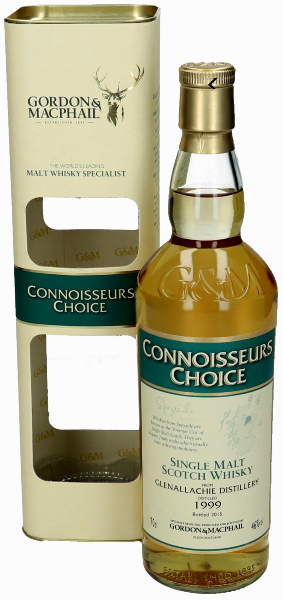
Glenallachie 1999/2015 (46%, Gordon & MacPhail, Connoisseurs Choice, Refill Bourbon Barrels, AE/JJCG, 23/01/2015)

So in earlier reviews I found out that Glenallachie probably isn’t one of my lesser known distilleries that really click with me. Some bottlings I tried were good, some a bit mediocre and some quite forgettable. Up ’till now nothing really stood out. I have a feeling though the newer Whiskies might prove to be better than ever, so Glenallachie might be on the way up again (for me). Nevertheless, Glenallachie is making quite a name for itself the last few years. Lots of official bottlings but also a lot of independent bottlings are coming to the marketplace, with quite a few people who like the output very much, so who am I to argue.

I have already reviewed some independently bottled Glenallachies: Dewar Rattray, Kintra, Beinn a’Cheo, Mo Òr and Cadenhead. Missing from this list is “the biggest and the baddest” of them all: Gordon & MacPhail. Here we have a 1999 distillate reduced to 46% ABV. Alas the only Cask Strength 1999 Gordon & MacPhail ever bottled was sent to Binny’s in the U.S. of A. Not really my neck of the woods. It was bottled way back in 2011. Hard to come across one of those now, since it doesn’t have a lot of collector value, so I can imagine the good people of the U.S. of A. drank most of them, an d rightly so! So without further ado, lets just dig into this reduced one from 2015, shall we?

Color: White Wine

Nose: Wow, very malty and sweet. Cookies, dusty oats and breakfast cereals. Dry grass and hay like. A brekkie Whisky. Sweet smelling cookie dough, with a green note, a fruity note and a cold dishwater note and thus quite appetizing and pleasant. Marzipan and ever so slightly nutty. After a while a tiny hint of licorice. This nuttiness is the closest it gets to wood, because the wood itself is hardly noticeable. It has quite an interesting and appealing perfume to it as well, which emerges somewhat later from my glass. This is real and honest stuff and maybe a bit back to basics, although it isn’t really basic nor simple for that matter. Just a very nice smelling Whisky. Excellent example what a spirit in some “basic and simple” Bourbon barrels can achieve, also proving that the Glenallachie spirit is a good one. Based on the nose alone this could be a very good Whisky, and based on the nose alone I would definitely buy it. Let’s move on.

Taste: Hmmm, quite different here on the palate. Starts fruity, with a surprising and definite bitter note. How strong this bitterness is perceived by the taster depends upon the taster. The first time around, I found this to be more better than the second time around. Runny, thin toffee, wood and thus its bitterness, yet also spicy with some black pepper. Dark chocolate, wood and an alcoholic note you get with those bonbons that contain alcohol. Based on the nose I didn’t expect this bitter note. I expected fruity caramel to be honest. Let’s take another sip. After a while I guess my palate just got used to the bitterness and it isn’t so dominant anymore. It’s hard to put my finger on it, but just like the nose, this palate has something really appealing and interesting which intrigues me. In this case the 46% ABV seems very soft. I may be used to, and prefer cask strength Whiskies to be honest, but this example seems very do-able in the alcohol department. Its neither harsh nor hot.

This will do very well as a daily drinker, or as an aperitif. However, do not make the mistake believing this is merely a simple, entry level Whisky. It is quirky, it is able to surprise you and I definitely like this one (especially after leaving it in my glass for a while to settle some more). Still, this has some bitter notes here and there, so buyer beware. Definitely noticeable is the reduction to 46%, sure quite a high ABV, but it is definitely different from a cask strength offering.

To me this smells and tastes like a classic ex-Bourbon casked Whisky, not modern at all. Would never have thought this was from 1999, which feels like yesterday to me. Maybe today it is a classic Whisky though. Personally I’m shifting my interest in Glenallachie. Where Mr. Walker puts out a lot of different casks, I will be, for the time being, sticking to ex-Bourbon Glenallachie. Again personally: I like this stuff way more than the heavily Sherried 15yo. Yeah, this is a nice surprise, have to find me one now somewhere.

Points: 86

Bimber “Virgin Cask” 2020 (57.4%, OB, American Virgin Oak Cask #94, 263 bottles)

Earlier we reviewed two Bimbers matured in American oak casks that previously held another Whiskey. One Bourbon and one Rye. Both, together with American oak casks that previously held a Tennessee Whiskey, (like Jack Daniel’s and George Dickel), should be the type of casks that showcases the Bimber spirit best, especially when they are refill casks. This will become even more clear in my next Bimber review. That review is not yet planned, but I promise, you won’t have to wait all to long for it, just not right after this one. Just bear with me on this one.

But wait a minute, what about an American oak cask that previously held nothing more than air and maybe some water? What about a freshly made American oak cask, that has only been toasted, as they all are? Yes virgin oak. Using a new cask is not very popular in the Whisky world, and for a long time it was quite unheard of. Sure there were Whiskies made that in part used new cask, but not a lot per batch. When looking at Bimber, I was quite surprised virgin oak cask editions perform really well in the secondary market. Especially in the home (UK) market people seem to dish out some serious amounts of dough for a virgin oak Bimber. Well, since Master Quill is based in mainland Europe, the secondary market for virgin oak Bimbers has not yet reached the levels like that of the UK, so, as usual I snapped some up at a German auction. Yes I did pay somewhat more than for both the Belgium and The Netherlands editions, but nowhere near the current UK prices.

Color: Full gold, almost orange.

Nose: Creamy, buttery (Werther’s Original), with Bimbers marker: Cinnamon. Very fragrant stuff this is, slightly perfumy. Early on some hints of apple aroma close to Calvados, these are gone or overpowered lateron. Bigger and fatter than the Ex-Bourbon and the Ex-Rye reviewed earlier. Very fresh, pleasant and well balanced. Wood and sawdust. Vanilla ice-cream with a leafy and green note to it. Old cardboard and some pencil shavings. Even when smelling, the Whisky becomes less fatty. It’s dryer now. Less “big”. Still some dust, more cinnamon and some indistinct wood related spices which are easy to spot yet hard to identify. To me this one seems somewhat less complex and layered than both the Ex-Bourbon and the Ex-Rye. It is almost like the fruit wants to come out, but doesn’t manage to make it through the creamy cloak, (the vanilla, the butter and the ice-cream), that stretches over it. So this a pretty straight forward expression. Good again, yet a bit simpler. Sniffing this deeply, beautiful abundant wood notes and in no way does it smell of alcohol, similar with the other two. This is wood perfume (hints of vegetal oil and an old bar of soap). Hints of sandalwood, just less intrusive than the sandalwood coming off some men’s eau de toilette. The nose develops over time, becoming more complex with added notes of licorice combined with fresh butter. So all is good. Whereas in a tasting session with both others, the complexity just seems less, it does show multiple personalities over different sessions, so maybe this is a different way of complexity after all, or is it just me that is different?

Taste: Fruity onset, somewhat sweet. Wood, wax and some bitterness cloaked by the fruit and creaminess. The slight bitter note is paired with some licorice. Next the char and some masked (fruity) sweetness. Hints of cola? I expected it to be more creamy though, but the wood does dominate. Next some cookie dough, with a (fruity?), acidic note on top. Here I notice again that the nose seems more refined and developed after taking the first sip. Strange combination of sappy oak, sweet mint candy and carbon powder (the charred oak). A dishwater like bitterness. Usually it is the florality of dishwater that can be smelled/tasted, here it is the bitterness of soap. Just a hint, just making the whole more interesting rather than disgusting, because really, dishwater? Definitely less creamy and fatty than I’ve come to expect from the nose alone yet still bigger than “the other two”. By now the nose does evolve a lot, and again becoming more than just good.

Virgin oak casks are made of charred American oak, and since no other liquid has been interacting with the (charred) wood, a cask like this will always properly colour the Whisky. Virgin oak is often looked at with some concern, and thus it was never a common practice when it came to producing Single Malt Whisky. But after the Wine casks, the Port casks, the Rum casks and so on, it was just a matter of time to broaden the wood palette, and start experimenting with virgin oak. Why not? The market demands it, it wants choice! It is yet another marriage between spirit and “a wood” which is essentially what Whisky is. Is it better than the others, no it’s not, it’s different and it is yet another take, and often the results are mediocre at best, just like the early Wine casked Whiskies. Sgtill a lot to learn here I guess. For Bimber though, virgin oak seems to work pretty well, the quality and the character of the liquid just work with the virgin oak. Bimber aficionado’s know this, as I said earlier, because virgin oak Bimbers do very well in the secondary market, much better than its Bourbon and Rye counterparts. Is it better than those, no it is not, I say it again, but it is a welcome variant, but for a lot less you can purchase an Ex-Bourbon Bimber or an Ex-Rye one which are also much less scarce and offer at least the same amount of quality, just with a different overall feel.

Final remark. I’ve come to find that to get all out of a Bimber, you need to give it peace and quiet and also give it some time. Comparing the three: Virgin has the more straightforward nose, yet very chewy and likeable. Rye is the most complex, distinct and fragile. The Bourbon is somewhere in between the two, less fragile but much closer to the Rye than the virgin oak, so no surprises there really. The Virgin oak is actually a different puppy, and a big puppy at that. Based on the taste, the Virgin is again a different puppy, way more creamy and sweeter, and more about the cask than the other two, which show more of the (quality of the) spirit. And tasting all three back and forth, it seems to me the Rye seems to have the best balance of the three, as well as its delicate complexity. So If I had to buy just one: The Rye. If I could pick two: The Rye + The Virgin. They are not created equal, where the Rye and the Bourbon almost are. If I could only get the Bourbon, no problem whatsoever. Both the Bourbon and the Rye are quite similar, with enough to set them apart in the details, today I prefer the Rye, but tomorrow might be different. The virgin, however, is a welcome “distraction” or better: a variation on the Bimber theme. Especially after trying the Bourbon and the Rye back an forth to pick a favourite (emptying both bottles in the process), and actually, the Virgin is also a very good dram. All three are definitely worthy of their spot under the sun, and on my lectern.

Points: 87

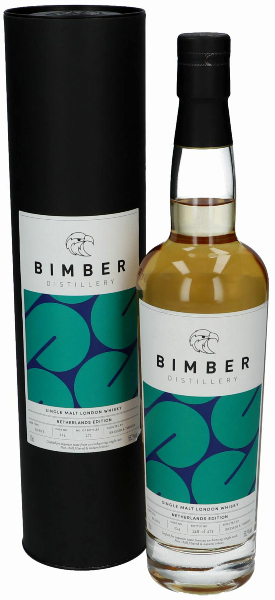
Bimber “Netherlands Edition” 2021 (58.2%, OB, Rye Cask #224, for Bresser & Timmer, 271 bottles)

Geographically, the transit from The Netherlands to Belgium is a short one. The Belgians, when compared to the Dutch, are known to be more into the taste and smell of food and drink, and thus spend more money on it. So, as the human I am, (I’m no T-1000, although I do love my liquids, nudge nudge, wink wink), I would say, and I know this is a big assumption now, that the Belgian version should be better than the Netherlands one. Also, one doesn’t hear a lot about ex-Rye Whisky casks. However, I do know that in general the Whisky industry in general doesn’t discern between casks that previously held a Bourbon or those that held a Tennessee Whiskey. All are called ex-Bourbon casks, since the two are common in the US of A. I guess the same maybe true for casks that previously held a Rye Whiskey. All three forms of Whiskey are different especially the Rye Whiskey and now we have a chance to find out if Bimber from an ex-Bourbon cask is different from one that matured in an ex-Rye Whiskey cask.

Color: Pale White Wine

Nose: Floral, perfumy. Old worn out dried flower pouch, pot-pourri would be to much, to describe the florality. Maybe it’s even slightly soapy, like an old bar of grandma’s soap in a closet full of linen. Malty and soft. Smells also ever so slightly sweet combined with some pencil shavings and cinnamon. Again a wonderful, friendly nose. Fresh and zesty now. Sometimes slightly farmy yet also clean. Warm mocha and creamy, with a hint of peanut and almonds. occasional whiff (a mere hint) of tea tree oil. Candied warm apple and a mixture of soft kitchen spices. Great balance again. Smells very tasty. Rye Whisky itself is in general more floral than Bourbon, and the same is applicable here as well. All of a sudden a whiff of fresher, almost virgin, oak. Again, when this gets some time to breathe, this one has a killer nose as well. It is slightly closed at first, so it does need some air. I pick up on some licorice notes out of the freshly emptied glass. The nose of the Bourbon expression is bigger, yet this one is similarly complex and wonderful as well, Even with this one being “thinner” it is equally as good. Again here we have yet another example of a Malt that needs to breathe. When it gets this time, it is an amazing nose. The nose of both belong to Whiskies that score in the 90 points range, an amazing feat for such a young Malt.

Taste: Short sweet onset, somewhat thin texture. Less sweet and creamy than the Bourbon expression for Belgium. Right out of the gate this seems to have been a less active cask, somewhat introvert so to speak. It gets leafy, green, paper-like and woody quickly. A bit dryer, spicier and more raw than the Bourbon expression, yet the fruity sweet bit clings on for dear life as well. After the first sip (quite hot going down), the nose shows a lot more cinnamon. Mocha as well, which pairs nicely with the cinnamon notes. After trying quite a few Bimbers over the last year, cinnamon seems to be a marker you can recognize it with. After the wood, fruity lemonade pops up. I’m sure that the nice play on wood masks the fruit a bit, but is it quite fruity (underneath). Even if the Bourbon-expression for Belgium turns out to be “better” than this Netherlands one, I feel this one is more unique. I welcome the different experience the Rye expression offers, and I’m having al lot of fun with this one as well. The finish is yet again a bit thin yet ever so slightly better balanced than the Bourbon one, and it is of medium length. The aftertaste is somewhat sweet and lacks a bit of staying power. No off notes, no bitterness.

I know Hans (Bresser) and Auke (Timmer) and these guys wouldn’t accept a “lesser” cask for a Whisky in their name. But I also know these guys enjoy their live better than the average Belgian, who most definitely enjoy the good things in life better than the average Dutch. Even though initially I found the Bourbon version to be slightly better, this Rye version differs a bit and as such is also a bit more adventurous. The Bourbon is more creamy, the Rye more floral and slightly more special if you ask me. It is nice though to have the two side by side and compare the two. Never ever did I regret to have them both open at the same time. It was definitely worth it. Now that they are nearly gone, I find myself leaning a bit more towards the Rye, yet on other occasions more to the Bourbon. Go figure. Both are actually equally good, so they get the same score. It was a good thing to have them both open at the same time, easier to pick up on the difference. Good stuff.

Points: 88

Bimber “Belgium Edition” 2021 (58.4%, OB, Bourbon Cask #194, for Top Malts, 257 bottles)

Bimber means Moonshine in Polish. You know, alcohol distilled by amateurs under amateuristic conditions. Home distilling is not a strange thing in (rural) Poland, and most distillates are fruit-based. The founders of Bimber, Darius and Ewelina, moved from Poland to London and started distilling. The first casks with Whisky were filled on the 26th of May, 2016. The apple often doesn’t fall far from the tree, so no surprise here that somewhere down Darius’ family tree there were men distilling alcohol under amateuristic conditions. Bimber tries to do as much as they can themselves, with traditional methods and always with the highest quality in mind. They have an on-site cooperage and they have their own yeast. Apart from that, they have a seven day fermentation period which is much longer than is usually the case. This long fermentation produces a light and fruity spirit.

As with any Whisky, I feel you get to know it best when it’s matured in an ex-Bourbon cask, preferably a refill one. So no surprise here that the first Bimber on these pages is matured in a cask like that. I only don’t know if this is from a first fill or a refill cask, although the amount of bottles produced seem to suggest it came from a hogshead, which makes it a refill cask. When the first cask has been filled in 2016 and this was bottled in 2021, this can be no more than five years old, and probably less than that. I came across Bimber for the first time at the Whisky Show in London and liked it very much, and after that, the first purchases, (five in total), were just a formality. This Belgium one is one of those first five.

Color: Pale White Wine

Nose: Holy moly what a wonderful nose. Soft, spicy (also soft), mineral and creamy. Slightly farmy with fresh rain water or water in a fast running stream. Barley, barley sugar, sweet fruits (in candy form) and more cream, clotted cream, powdered pudding. Candied cinnamon, fresh almonds, soft sawdust and somewhat leafy. It’s like being in a dusty mill where spices are being ground on a sunny day. Potent and light at the same time. Full on aroma’s. Hard candy raspberry stick, the ones you buy at a fun fair. More soft spices. Greenish and leafy again, almost like candied sawdust this time around (that’s a first). Sometimes hints of creamy horseradish (Chrzan cremowy). Already this Malt oozes utter quality. What a perfectly balanced blend of aroma’s, and at this age! Nothing short of amazing. I’m an instant fan of Bimber after Whiskies like this. Look, I believe this can’t be more than four years old and it has already nothing to do with new make spirit. Well sparsely the smell of Gin, but we do like the smell of Gin now don’t we? However, when sipping this, I often don’t smell the Gin to be honest, but sometimes I do. Today even Lagavulin, and for some years, some other bottlings from other distilleries in Diageo’s special releases, like the ever so popular smoky Cragganmore, still taste a bit of milky new make. What is that? And why do different Diageo distillates show the same markers. Markers I’m not really fond of, by the way. Point is, that this young Bimber seems to be more mature than some other Whiskies more than twice its age.

Taste: The onset is sweet, but already there are some nice amounts of sweetish wood spices and cardboard to be found. A minty and cola-like sparkle. So some wood, ever so slightly bitter and quite fruity, as well as some acidic lemony notes, which makes the whole more vibrant and less heavy (as in syrupy peaches). Mind you, it isn’t a really sweet Whisky this, but the sweetness does play its role. Mocha with brownie dough. Instant coffee granules. Taste-wise the youth of this Malt is easier to pick up on, because of the lack of complexity when compared to the wonderful nose. Even at this strength this is highly drinkable. I should try it before its gone, but I never found the urge to add water to this. Finally, in the finish some woody bitterness arrives, which, in moderate amounts, is needed by a Whisky, since it is aged in wood, so we want to notice the wood. We don’t like the bitterness to be overpowering though, and here it certainly isn’t. Nevertheless, the nose is better than the taste, but the whole is really good. I wonder what will happen when this becomes of age, I’m not even sure right now if that is going to be a good thing, since this youngster managed to pick up already quite a bit from the cask it was in. We’ll see.

Points: 88

Kilchoman 5yo 2008/2013 (59.4%, OB, Sherry Finish, Small batch for Germany, Cask #392-393-394/2008, 780 bottles)

Kilchoman, even though not that old (first distillation was performed in 2005), seems to be fully accepted as a full blown Islay Malt. Good when young, and it also matures well. Great people with great vision. Lots of variants around, however for me, Kilchoman still works best in a Bourbon cask or the occasional Sherry cask. That’s why my attention mainly goes out to the bottles with the red labels and boxes (pictured below). Often single casks at cask strength. By the way, worth a mention, the Sauternes I reviewed last was very nice as well. This time around, on our hands, seemingly the best of both worlds. Bourbon matured Kilchoman, finished in Sherry casks. I guess the mentioned cask numbers are for the initial Bourbon casks, and it probably has been finished in one Sherry butt (considering the amount of bottles in this release), since the label states this is a single cask release. What was the number of the Sherry cask I wonder. There are probably some SWA-rules for this, for which I’m now too lazy to look up. Anyone? All in all quite a confusing small batch/single cask release…

Color: Full Gold (slightly hazy).

Nose: Well, heavily peated indeed. Lots of luscious sweet, tarry and smoky notes. Salty kippers with crushed beetles, giving me salty dried out lips (after sipping it obviously). Tarry rope. Notes we know from Islay. Amazing balance for a five year old Malt. Mature stuff, and rightly accepted into the Islay fold. Nutty. Definitely not a sunshine Malt. Who needs sunny beaches when you can have this beach with grey skies and torrential rain in a bottle right here with you. Nothing bad about bad weather, with a dram like this in your glass. Sweet licorice powder and powdered sugar. Dare I smell a slightly floral note here? You might resent me for this, if you’re one of those brutal-Malt lovers. Mint candy (you know those with lots of sugar, a trace amount of mint, which is probably artificial). Not a lot of noticeable Sherry influence though. The Pulteney I reviewed before this Kilchoman, also wasn’t very Sherried, but at least it had some noticeable Sherry influence. Maybe the sherry influence in this Kilchoman lies within the slightly cherried fruity sweetness and the wonderful balance of the nose. However, when this Kilchoman heard me talk about a fruity note just now,  it responds with even more licorice powder and peat. Hints of warm mineral machine oil. The nose, especially after some extensive breathing turns into something really wonderful. OK, it is wonderful in a way a tank can be wonderful. The nose is really, really good.

Taste: Initially a sweet Beer-like quality. More licorice notes and definitely less peaty than the nose. WYTIWYG (What You Taste Is What You Get). It is Whisky like a peaty lemonade. One big taste. Where the Pulteney, was complex and layered, this tastes like one big thing. Salty kippers with crushed beetles, giving me salty dried out lips (yes, copy & paste indeed). Salty and peaty licorice All-sorts. The nose seems complex and somewhat layered, the taste isn’t. Don’t get me wrong, in general this isn’t a bad thing. It just isn’t complex at all. Even the finish is rather simple, yet very tasty, as is the aftertaste. Simple, yet very tasty and effective. Hey, and it’s only five years old, and in no way is it immature or “un-finished”. My tongue reveals (in the aftertaste), that this has some wood, which is completely masked by the licorice, the dominant note in this Malt. This one worked very well for me in the morning (on a day off from work for writing reviews). Ain’t that brutal, ‘eh?

Well one thing is sure, the nose of this Malt is better than the taste. The nose is actually truly amazin’, the taste is actually really very good (to put it in perspective for you). Simple or not this is great stuff. So it’s WYTIWYG and WITIRL (What I Tasted I Really Liked) or to paraphrase agent Cooper; “damn good Kilchoman!” Dear Readers (and Nico), you might want to consider picking this one up from an auction (just make sure to let this breathe for a while).

Points: 90 (yes I must be mad, second 90 points in a row).

Pulteney 15yo 2004/2020 (63.3% Gordon & MacPhail, Connoisseurs Choice, Cask Strength, Refill Sherry Butt No. 629, 20/092, 507 bottles)

Pulteney is the most northerly Distillery on the mainland of Scotland, just 30km shy of John O’ Groats. The distillery is situated in Wick and lies in a part of Wick that used to be called Pultney Town named after its founder Sir William Pultney. The distillery itself was built by James Henderson in 1826 and was initially called Pultney Town. I don’t think James built the entire distillery with his own two hands though. The distillery was owned by the family of James for nearly a decade, but the family had to sell off the distillery in 1920 due to financial hardship caused by WW I. The distillery was sold to James Watson & Co, owners of Ord and Parkmore. In 1923 James Watson & Co. dissolved into John Dewar & Sons (D.C.L.), which closed the distillery in 1925. The distillery in its closed state changed hands several times, and several owners were busy rebuilding the distillery. In 1951 production resumed and in 1959 new stills were installed. In 1995 Pulteney, together with Balblair (part of the same portfolio by then) were sold to Inver House Distillers, the current owners. The last review of an official (Old) Pulteney on these pages, was distilled in 1982, and must have been one of the early releases by said owner. This time however, we are going to have a look at a 2004 distillate bottled by good old Gordon & MacPhail in their new Connoisseurs Choice Cask Strength range.

Color: Light orange gold.

Nose: Very malty and lightly Sherried. Slightly sweet smelling, soapy and dull (and I don’t mean boring). Right from the start a classic smell. I would have never guessed this was distilled in the 21st century. Slightly off-balanced acidic fruity smell. (This is the Sherry influence). Old paper, hints of pencil shavings and spices (part of the “classic” smell). It doesn’t have perfect balance, but still I do like the nose of this dram a lot. Who cares about perfection? Old, dusty, at times waxy, yet fresh and vibrant. It has been a while, analysing something like this. I have to say, based on the nose alone, this was a very welcome buy. Just lay back and sip it, clear your mind and let everything go away for a while. No children, no work, just you, Norah Jones, and your dram with its classic feeling. Wonderful wood spices. Fruity and some distant meaty notes as well. Aromas of an old court yard, of old buildings. An usually busy place, but now quiet on a Sunday. More nice wood spices, yet now helped along with some old honey (which has some nice staying power), soft mocha and whipped cream. Soft licorice added to the spices already present. The balance regains itself after some breathing, and it doesn’t need a lot of time to get there. Occasionally more whiffs of old paper, toasted cask and breaths of fresh air. Yes very special, what this is able to bring up from my memory of old places I visited and classic drams I had before. Keep it moving around in your glass. Keep Matilda waltzing so to speak. After some more extensive breathing the (sweet) licorice note gains in strength. Yes, this has a wonderful nose. A fresh pour is definitely more closed, so there is quite some nice evolution going on in my glass.

Taste: Prickly and again initially somewhat unbalanced (or is it?), yet so tasty. Quite sweet now, perfectly balanced by the woody notes and cigarette ashes, so it doesn’t feel sweet overall. After the first sip, the nose of this Whisky is really excellent more. Right out of the gate, a lot of different things are happening. Different tastes shoot off in many different directions. Pepper, Peppermint, bamboo, cold dishwater, licorice and fruit to name but a few I just caught in the moment. I’m sure I’ll catch some more going forward. Second sip starts again somewhat sweet, yet less so than the first sip. It shows almonds and more creamy notes, as well as more dry wood. A medium Talisker-like white pepper attack, paired with the licorice and cigarette ashes I mentioned earlier, and some sweetness. All of this also paired with the almonds, wood and its medium bitterness, which is hidden well by the medium sweetness. I guess all these paired notes constitute a very good balance. The fruits here seem somewhat different, more acidic and lemony than the nose showed. The balance is good and the palette of tastes and aroma’s is just great. Give it enough time to breathe. I’m stopping writing notes now, but rest assured, this still has even more to give, it just keeps evolving like mad. Wonderful tasty and fruity finish, with some nice oak, just not a lot of it. Aftertaste is perfectly balanced and friendly. Amazing drinkablity at this ABV. This never needed any water.

Even though this might have some minor flaws across the board, it is also a very good and tasty Malt. I don’t even know why I’m pointing out these minor flaws all the time, because by now we also know this is an excellent malt. Both the nose and the taste of this Pulteney are complex, the layering (the evolution over time in my glass) is impressive. We’re definitely in the in the “you-should-have-bought-a-second-bottle” territory with this one. But as is always the case on these pages, this is only my personal opinion, and as we all know, tastes can differ a lot. Keep in mind that ones taste can shift over time and are highly dependent of the moment as well. Tasting is a subjective science. So for me this is really great stuff, and it might, it just might not be entirely true for you. It is for me!

Points: 90

Glenrothes 19yo 1997/2017 (58.7%, Cadenhead’s, Sherry Butt, 528 bottles)

Glenrothes is not an unknown on these pages. I come across a lot and on occasion I do buy some. However, somehow it never really became one of my favourite Whiskies. Sure, its good and I do by them and it does the job very well and so on, but it never passed that particular epic status for me. As I said, it’s very good, but it never pops up in any top 10. This Cadenheads expression, I have tasted before at a Whisky Festival, and by accident I bought two at auction in stead of the planned one. The second time around I forgot I already had one from the previous auction. Believe it or not, this happened to me twice recently, with yet another Glenrothes, strange enough. Go figure. I will probably replace this Cadenhead’s bottling, when its empty, with the other “doubly-bought” Glenrothes. I hope both are pretty decent though since I got two of both. This particular Cadenhead’s bottling, was picked by Mark to commemorate Cadenhead’s 175th anniversary, and if Whiskybase is anything to go by (very wonky scoring there), these 175th anniversary picks are usually better than the sister casks bottled by Cadenhead.

Color: Orange gold.

Nose: Soft Sherry notes. Creamy, slightly tarry and meaty. Nice soft wood, almost a bit paper-like. Quite fruity. A very well balanced dram without any flaws. Soft and smooth smelling, yet also a bit boring? Apple skins, warm apple compote. Red berry syrup with sugared lemon. Warm dishwater (a soft note), mocha and milk chocolate. Boring, because nothing really sticks out. All aroma’s flatlined, like a sleepy afternoon in warm wind. After some extensive breathing, some wood pops up. Not a lot, but just enough to make it slightly more interesting. However, this is a 19yo fully Sherry butt matured Whisky and it’s so soft, that it is in no way a Sherry bomb, it is not even a Sherry grenade. It has more colour than oomph, yet, as I stated above, it is flawless. It smells like an easily drinkable Whisky. It doesn’t even smell alcoholic, even though this has more than 58% ABV. A freshly poured dram smells better than one that sat in my glass for a while. A freshly poured dram has more notes like a Rhum Agricole, which dissipates with time.

Taste: Fruity with a white pepper kick, well, the latter came a bit as surprise. In a way it is syrupy, yet a somewhat thin syrup. The kick still lasts and stays a while to manhandle the back of my tongue. Black fruits as in very good Sherried bottlings from yesteryear. Apart from fresh fruit, also (again) the syrupy black fruits are here. If you give it more time and you keep the dram in your mouth for a while, the classic black fruit note becomes even more pronounced. I guess this is why it was picked for the 175th anniversary, because this is the note that makes this Whisky tick. On top of this, a slightly more acidic, fresh and fruity note, reminding me of sugared lemons again. Towards the finish a more tarry note, with its slight bitterness. Still not a lot of wood notes or any of its derivatives, so seemingly this wasn’t a very active cask. Hints of warm solid licorice. The chewy candy type licorice if left in the sun for a while. Vanilla powder. Just like the nose, on the palate a very well balanced Whisky. Since on my palate the Whisky is less soft and dares to show some spices, I do like the taste better than the nose, which is pretty good as well in its own right.

So, pretty good it is, with a nice, yet slightly boring nose. Tastes better than it smells, which is a big plus. Other than that, I still do like it. it’s good. ’nuff said. Moving on…

Points: 87

Glen Garioch 16yo 1995/2012 (55.3%, OB, Batch No. 10, 1st Fill Bourbon Barrels, L122205)

Onwards with another Glen Geerie. This is the fourth review of Glen Garioch on these pages. Until now, all are OB’s and all are modern OB’s presented in the bottle pictured. Earlier we had the “Founder’s Reserve” (yes a NAS), a “Virgin Oak” (yes, another NAS) and finally one with an age statement, the wonderful 15yo “Sherry Cask Matured”. This time around a 16yo “Vintage 1995” a.k.a. “Batch No. 10”. As the label states, this is from the very last production prior to the shut down of the distillery in October 1995. The label doesn’t say what happened next, but a quick dive in the Whisky history books reveals that the after the closure the Japanese owners (Suntory) tried to sell off the distillery. This failed and production was resumed again in June 1997. 1995-1997, could be worse, no mayor changes (apart from halting the use of the malting floor), so I guess after the restart the Whisky should have been more or less the same. See how marketing works? By the way, Suntory is still the owner (in the form of Beam Suntory now).

Color: Pale gold.

Nose: Malty and creamy. Lots of vanilla ice cream and some creamy pudding aroma’s. Initially, nice, friendly and appetizing. Mocha and soft vanilla-like oak. Wet biscuits, cereal-like and dust. Old books in a dry warm wind. Damp earthen warehouse floor. If you let this stand for a while, more spicy wood aroma’s prop up, helped along with some potent alcohol. Infused wood. Deeper down a more meaty bit, some cold gravy. Distant yellow fruits, ripe, aromatic yet not sweet smelling. Distant sweetness. Still this has a woody backbone to it all, with charcoal as well as a breath of fresh air. Sort of a combination of modern sharpness and some older style American oak aroma’s. Very fragrant. There is a lot coming out of my glass. After some more breathing, more of the fruits emerge, making for a very pleasant nose.

Taste: Big explosion of flavour with the first sip. Spicy, prickly, it almost seems carbonated. Hot going down, with already a vegetable bitter note, right upfront. Initially some fruity syrupy sweetness as well. It seems my wind pipe reveals some paper and bitter wood (this strengthens the gravy bit hidden deep down in the nose). Yes, dry, yet less dusty but more like vanilla powder. These must have been very active casks, because a lot of the mouthfeel is wood and there is a plethora of bitter notes in here as well, making this less of an any-occasion Whisky. Bitterness dominates the otherwise waxy finish and the aftertaste as well. Now we know what dominates this Whisky, it still is a fruity one as well.

Definitely a wood driven and somewhat bitter Glen Garioch. Lots of wood notes and lots of shades of bitterness, although non of them are really overpowering, yet it does makes me wonder if this wasn’t kept in the casks too long. It is here, yet it is also do-able. However do-able is not why we sip Whisky now do we? So again an anorak-y Whisky. Very good, but please read the manual, because again, this is not for everyone. I liked it quite a bit, with some reservation about the bitter notes. I’m not regretting buying it, but I wouldn’t buy another one anytime soon. The Tormore of the previous review is friendlier and definitely more approachable then this Geerie, even though I said that one wasn’t for everyone as well…

Points: 85

This review has been written from a nearly empty bottle. I feel like the many different bitter notes evolved a bit after extensive breathing. Initially it wasn’t as bitter as it was now.

Tormore “Batch 2” (51.4%, That Boutique-y Whisky Company, 103 bottles, 50 cl)

Third Boutique-y bottling on these pages, yet the first one that is not an Arran. Earlier I reviewed Arran batch #3 and Arran batch #4. When writing about batch #3, I completely forgot I earlier had done a review of Batch #4, so when that one popped up whilst scrolling through my own pages, it gave me quite a scare, because both labels are the same. As I mentioned before, I neglected Arran for a long time and especially after tasting batch #3, it brought Arran back for me. This time around however a Boutique-y Tormore. Tormore is a beautiful distillery with a very typical output. The word “metallic” often pops up when people taste Tormore. One of my first encounters with Tormore was a 13yo Cadenheads bottling from 1997 (distilled 1984). It was industrial all right, maybe even metallic, but I also became an immediate fan. It’s quirky and expressive, unique and definitely not for everyone, but I really liked its stand-offish character, so I always look at Tormore with great interest and a smile. In comes this Boutique-y expression I got from an auction site. Love the looks, and 50 cl is a nice volume (unless you really, really like it). The bottle looks cute in my hand. Love the humour and the label, not a fan of the lack of information though.

Colour: White Wine, pale gold.

Nose: Very funky, malty, grassy and fatty American oak. Waxy and also quite sweet smelling, fruity yet at the same time also quite floral. One reads a lot about banana on the nose, which I often don’t get actually, but in this one, there is certainly banana here all right. Very fruity overall, overripe fruit. A lot of peach, but only after the first sip. All the wood influence is quite soft and definitely present. Very waxy now, gravy, very fragrant, it leaps out of my glass. Big one and quite unique alright, that’s Tormore for you! Not aggressive at all though, no, this is actually a friendly and well-balanced Tormore. Excellent American oak, quite active indeed. Vanilla, with dark chocolate, dusty and it smells somewhat organic, almost human, which is quite a surprise after all those “metallic” Tormores. This one smells rather “classic”. Good and unique spirit matured in a good American oak cask. Smells fantastic.

Taste: Same here, very fruity initially and the wax is even slightly more prominent. Some bitterness to the back bone and quite hot going down. Waxy, sweet wood. Green yes, but the mix of herbs are not your favourite most liked herbs and dare I say that some of the overripe fruit may have passed the overripe stage altogether. All of this framed by some bitter wood with quite some staying power. Unique? Yes! Quite nutty with added licorice to the back bone. The licorice-note comes from the wood. Greenish, fresh almonds, yet also some hints of paper and cardboard. Here a more industrial feel pops up which is normal for Tormore, but it doesn’t match the nose entirely. This one strips the throat cavity of any fat, so it is somewhat harsh going down. Not your fatty vanilla, creamy feel when swallowing, so you’d better be prepared for that. The nose is definitely the more likeable of the two. Yet metallic it is not. The bitterness is more prominent in the finish and even more so in the aftertaste.

After the very promising nose, on the palate this is a somewhat more difficult puppy. Definitely not one for casual drinking. Tormore in general is not an easy one. I guess this is one for anoraks as well. But oh boy, is this an unique profile, and if you manage to “click” with it, you’re definitely in for a kick.

Points: 86

Since this is quite an unique offering, I’m sure this is not for everyone. For some of you this might seem to be a high score. For me this is a great trip though. Yet it suits the 50 cl format though.

Glenburgie 20yo 1998/2019 (58.6%, Elixir Distillers, The Single Malts of Scotland, Hogshead #751403, 246 bottles)

Glenburgie is one of those Malts with a profile that just suits me well. Most of it is used for blending, and not a lot of official bottlings exist. The owners are definitely not putting it in the spotlight I personally feel it deserves. Sure, the quality is there, but maybe Glenburgie is just too unknown to the general public and therefore hard to market. There are two bottlings released under the Ballantines label, a 15yo “Ballantine’s series no. 001” and a 18yo “Ballantine’s series no. 001”. Both are bottled at a whopping 40% ABV, so definitely targeted at the (adventurous) Ballantine’s drinker. For a Single Malt, 40% ABV was very nice in the seventies and before, but is not very 21st century if you ask me. Both bottlings seem rather obsolete (apart for the group mentioned earlier). I guess Pernod Ricard (Chivas Bros.), the owners, like, for instance, Aberlour a lot more. That “brand” definitely receives a lot more love from the company. Rightly so, it is an excellent Single Malt (but so is Glenburgie). The blend where most of Glenburgie goes into, is obviously Ballantine’s but also Old Smuggler and Teacher’s contain a lot of Glenburgie. For Anoraks there are some pretty rare 500 ml single cask bottlings or Distillery Reserve’s. Nope, If we want to have a serious taste and get a feel for Glenburgie, we are yet again saved by the ever so important independent bottlers (all hail to them all!), who luckily are able to put out Glenburgie for you and I to enjoy. In this case in comes Elixir Distillers of London…

Color: White Wine.

Nose: Creamy and lemony, yet also dusty and waxy. Soft mocha and slightly funky. Initially quite closed and smells a little bit dull, dusty and something like a wood shop. Old sawdust though, not the fresh stuff, that has been lying around for quite some time. Trodden down. Perfumy, and somewhat elegant, yet different than the elegance of the Macduff 10yo from the previous review. Actually typical for a refill hogshead. I expected more of a fruity nose to be honest. Slightly smoky nose, ever so slightly, maybe this comes from the toasted insides of the cask. Some dry kitchen spices come next, as well as some honey, hints of pine and fresh rain. Still closed, yet some well balanced beautiful details come up from the liquid. It seems a bit shy.

Taste: Quite sweet on entry and definitely way more fruity than the nose. Again some smoke and toasty bits, as well as some cannabis I sometimes also get in Bunnahabhain. This, plus the detailed nose, make the Whisky special. Quite tasty, even at this ABV. Sure, it is a bit hot going down, but the onset and the body are very nice. Where the nose was a bit closed, no problem like that here. Tastes open and ready to please you, me, us, the drinker(s). The cannabis bit returns in the finish where the aftertaste shows us some more of the wood the cask was made of. The roof of my mouth clearly shows this is a high ABV Malt, something that didn’t come to mind when tasting it initially. By the way, ripe, sweet yellow fruits also pop up in the aftertaste. The finish, as well as the aftertaste are the best traits of this Malt. When this is bottle is gone (and it almost is), I’m going to miss it. Glenburgie spirit is wonderful, both in Ex-Sherry and Ex-Bourbon casks. I have a soft spot for it.

I have said it before and I am going to say it again. This is yet another Whisky that really needed (a lot of) time to breathe. The second half of the bottle was better than the first half. A very laid back Malt, or so it seemed just by smelling it. Still, having spent some time with this in my glass, I do have a late found fondness for this Glenburgie. I like Glenburgie so I was a bit disappointed with this one at first. Not so much now, yet I think it is a bit of a shame that it wasn’t as good as it is now, from the moment you open the bottle. If decanting would work for a Whisky, this would be one to experiment with. The beauty of this one is also in the details, because it has those almost hidden elements that make it special. So, good for analysing and anoraks, not so much for casual sipping. It is certainly not an easy one. If you are new to Single Malt Whisky and you have this, keep it, don’t open it all to soon.

Points: 90