Time to take a small trip and have a look around some European distilleries producing Single Malt Whisky. We’ll start our mini trip in Austria to have a look at Hans Reisetbauers flagship Whisky, the 12yo. Earlier I already reviewed the 1998 Reisetbauer 7yo. Hans matures his Whisky in casks that once held Chardonnay and Trockenbeerenauslese, one, a dry and the second a sweet White Wine. Hans doesn’t import barley, but grows four hectares of summer brewing barley himself.
“The barley was crushed and malted at 65° C before being cooled and fermented in stainless-steel tanks for around 70 hours. The fermented mash is then twice distilled in copper pot stills. At this pointed the distillate, which has an alcohol content of around 70 per cent, is aged until fully mature in four casks that the top Austrian wine makers Alois Kracher and Heinz Velich previously used for aging Chardonnay and Trockenbeerenauslese.”
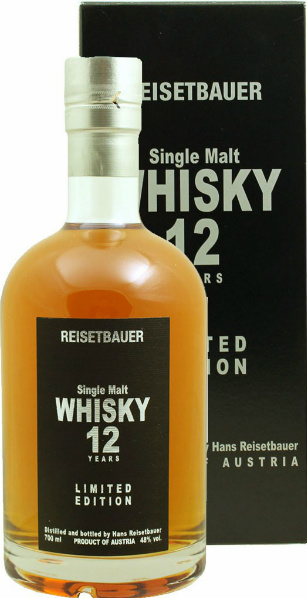 Color: Slightly copper gold.
Nose: Plastics and fruit. Orchard fruits. Hints of pear, apples. Ear wax. Extremely duty underneath and for a while the plastics dominate the nose. Some of the plastics are slightly burnt. The plastic note is very close to the waxy aroma, which probably comes from the wine casks used. Given some time to breathe, aroma’s of Grappa emerge. If I would venture a guess (and I can be completely wrong here), I would say the grappa note comes from the Chardonnay casks, and the waxy/plastics come from Trockenbeerenauslese (a sweet White Wine). Next up the woody notes, which are quite soft and slightly spicy. Mocha and Latte. The plastics give way, but the Grappa remains. Very interesting distillate. Nosed blind I wouldn’t have guessed this is a Whisky.
Taste: Plastics again and lots of wax. Polyester!That’s it! Have you ever repaired a polyester boat? WYSIWYG (What You Smell Is What You Get). The Polyester is there immediately, but luckily dissipates quite quickly, to give way to wax wood and a winey note. Coffee in the aftertaste. “Do-a-burp™” after drinking this and it’s all plastics again.
Just reading my note about the nose alone, its pretty obvious this is not a Scottish Malt, and reading it all it hardly seems to be a Whisky at all! In case of the 7yo Reisetbauer I reviewed earlier, I found that it already was dominated by the cask used. The 12yo we have at hand is so dominated by the casks, that it is difficult, if not impossible to detect that this is a Whisky at all! This is a Wine (and polyester) finished Single Malt Grappa. If you want a Whisky, you’re better off with the 7yo. Nevertheless, this distillate has a lot of good sides to it too, so maybe it is unfair to hammer it with its off-notes.
Points: 73
 Color: White wine.
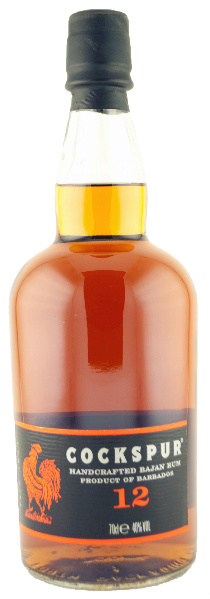 Color: Copper gold or dark amber.
 Color: Colorless, ever so slightly green.
 Those distilleries are viewed as production capacity for numerous blends owned by Chivas Brothers, like the well-known Chivas Regal. As said before, I would like to see those marketed as Single Malts by their owners! For the time being we’ll have a look at this independent version of a quite young and Sherried Glenallachie.
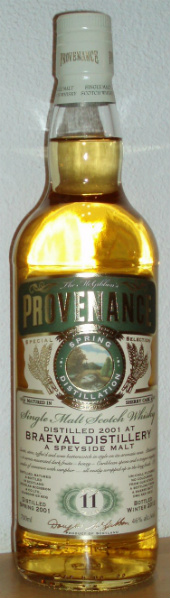 Color: White wine. Not too pale.
 Strathisla is famous for producing one of the best Sherried Single Malt Whiskies ever. Just have a go with some nice examples from an independent bottler with distillates from the sixties and seventies. Gordon & MacPhail have a huge range of Strathisla’s from those days that have long gone by, but also a lot of other independent bottlers have similar Sherried bottlings. Those Strathisla’s can easily compete with the best Longmorns and Macallans from the same era. Nevertheless, the owners of Strathisla themselves have never done a lot with the brand. In fact, only a 12yo has been readily available and the occasional 25yo. When visiting the distillery and additional 16yo can be bought, but that it! For a long time Strathisla was bottled in a flat dark brown, screen printed bottle, but since 2013, a new dumpy bottle was released. Now we would like to know if the Whisky has changed as well, since the ABV has been lowered to 40%. We also would like to know if the range will finally be expanded. Chivas Brothers (Pernod Ricard) are the current owners of Strathisla and they could do lots more with Strathisla like they are doing with two of their other brands like The Glenlivet and Aberlour.
 Color: Light orange gold
 Color: White wine, much less color than pictured here.
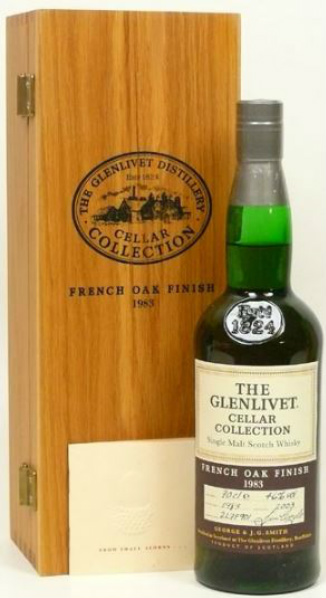 Color: Amber gold.
 This is moving in the wrong direction people! The Glenlivet 12yo has already been replaced with the new Founder’s Reserve, a highly original name taken from the old 10yo expression of The Balvenie. The Glenlivet already dropped the age statement for their highly popular Nadurra range, and are wooing the consumer to stay with Nadurra, by adding new versions. Bourbon, Oloroso and the next step will probably be a peated version. Other recent experiments were the NAS Alpha, and the NAS Guardian’s Chapter. We all know where this is going, don’t we. Lot’s of distillate will be put out as young NAS Whiskies, and the rest will be aged a prolonged amount of time to be bottled as (highly expensive) Whiskies which will still have an age statement. Yes, we should judge a Whisky by its taste and we will, and not by its age statement. Still, the super premium Whiskies will have an age statement, because age sells, people. Another experiment done by The Glenlivet is the release of an 11yo single cask for 300 Euro’s in the Netherlands, called Bochel (Hill). How far can you go? Let’s get back to the beginning, shall we? I already reviewed
  Color: Light citrus gold.
 Master Quill