Marieke – Oostenburgs Blond Bier (6.8%, 33 cl)

Marieke is, after Fonkel, the second Beer by Brouwerij Oostenburg. The people behind the brewery still don’t have their own brewery yet, but make their beers at the brewery of De 7 Deugden in Amsterdam, The Netherlands. Earlier you could read about the wonderful Fonkel, and today we’ll have a look at the just released Blonde Beer by Brewery Oostenburg. For those of you who can read Dutch, you might enjoy the nice romantic language on their site.

Brewery Oostenburg like so many others, started out as a hobby brewery but is rapidly becoming more serious, brewing special Beers for special occasions. The brewers, (no names are mentioned on the website), are trying to brew Beers with a flavor combination that was not there yet, so in that sense they started with the wonderful Fonkel (cloves). Marieke is a Blonde Beer, which to me doesn’t sound like something “special” since there are already numerous Blonde Beers around. Also a glance at the ingredients doesn’t tell us anything special. Still the wonderful Fonkel fills me with anticipation…
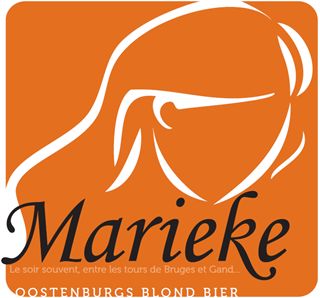
MariekeColor: Dark blonde, maybe even amber, with just the right amount of ivory foam, but less than Fonkel.

Nose: Fresh citrus odor. Hits of yeast and hops, but both are not very upfront. Advised drinking temperature for this beer is 6 – 8º C and that’s a temperature the nose of a Beer usually is pretty closed. What stays is the fresh or refreshing smell this Beer has. Very appetizing. The foam is about two centimetres thick, holds on for a while and then disappears rather quickly.

Taste: Very light when the beer enters the mouth. Light woody (hoppy naturally) bitterness and estery (tiny hint of banana) taste. Not the body I’ve expected. Short finish. The alcohol is not upfront. The refreshing nose doesn’t come back in the taste. And the whole taste dances around its, not too heavy, bitterness.

The strong points of this beer is in the beginning. Nice color, nice amount of foam. Clean looking with some dabs of yeast. Also nice is it’s smell. Is smells appetizing and refreshing. The taste however, for me, is too light. At entry, a nice bitterness helps the Beer along, but in the end the bitterness is too weak to give Marieke a nice voluptuous body. Marieke has a slim body, and actually, she doesn’t leave a lasting impression. That’s maybe Mariekes weakest point, a very light finish of hops and yeast which dissipates too quickly.

This beer has just been released and readers of my Beer posts will remember I believe in ageing Beers. This is freshly brewed and might gain from ageing. The brewers already got a lot right so I can imagine next batches of this beer to be even better. When tasting this Beer, I have found better development at a higher temperature than advised. 8 to 10º C seems more right to me.

In the end I’m quite disappointed with Marieke. Fonkel really is a Beer with an idea behind it and it seems to me the recipe was perfected over time (in a kitchen or something). This idea of brewing something special was conveyed onto us by word of the website, but Marieke, to me, has not that special idea behind its creation and may have been released too quick.

Points: 72
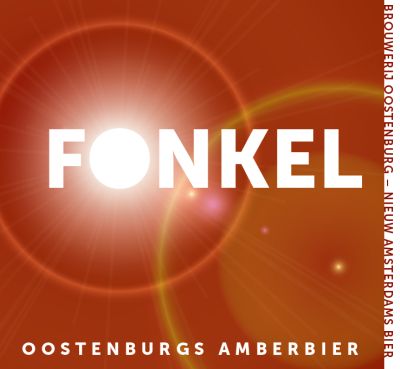
Fonkel – Oostenburgs Amberbier (7%, 33 cl)

This is the first beer of Brouwerij Oostenburg, that’s why I’m posting it first, but I’m tasting it áfter the Marieke which will feature in the next review. Marieke by the way, is Brouwerij Oostenburgs new Blond Beer. Out now! I’m tasting the beers in reversed order, because I got them out of the fridge together and according to the brewers, Marieke needs to be drunk at a lower temperature. Second, Fonkel is an Amber beer at 7% ABV and Marieke is a Blond Beer, lighter in style with “only” 6.8% ABV. So first up is Fonkel since it’s the brewers first beer and next time I’ll review Marieke, including a little bit of info about the brewers.

FonkelColor: Dark orange amber. It’s like having fire in a glass. Perfect thick and firm dark ivory foam. Medium residual yeast that transferred into my glass. Yummie!

Nose: Definitely a darker nose than Marieke. Fruity and even slightly fishy and dishwater (burnt sugar in water) like smell. This adds to the character. This may sound negative to you, but believe me, this is no bad thing. From a distance the beer smells floral and gives off a lovely smell. You’ll read about it next time, but Marieke too is a nice smelling beer. The added spices are easily recognizable. Coriander, but above all cloves! A real winter warmer by the fireplace. I like the use of cloves in this beer, it brings back my childhood at Christmas. My mother always put some oranges on the table with cloves sticking out of the skin and exactly that is what I get from this beer.

Taste: At entry, this is a very nice Beer, loads of character and well made. I like it. A little bit of deep citrus skins, predominantly oranges and tangerines. But yes, here the cloves play a nice part to. Just read the part about the nose of this beer and copy it here. The taste matches the smell of this beer perfectly. Good masculine finish with medium bitterness combined with spices. The finish is long and stays with a nice hint of cloves. (Personally I would have liked a little bit more clove even, and maybe a tad of cinnamon in this beer, but that may not work, I’m not a brewer).

Well made and very tasty beer, which hits the right chords. With beers like this in your collection, who wouldn’t like winter! Advised to drink around 8 – 10 C, and I guess that’s about right. Recommended if you can get a hold of it since it seems to be only sold locally.

Points: 84

Dailuaine 1999/2012 (59.3%, The House of MacDuff, The Golden Cask, Cask #CM172, 270 bottles)

Almost another year has passed since reviewing my last Dailuaine, bottled by Jürgen a.k.a. The Whisky Mercenary. This time a younger version, distilled in 1999, with a fairly light color, so probably not a very active cask.

Dailuaine 199920/12 (59.3%, The House of MacDuff, The Golden Cask, Cask #CM172, 270 bottles)Jürgen’s version was quite strong and with a cask picked by John McDougall I again have some high hopes for this Dailuaine. Let’s see if this light Dailuaine packs some punch, and does it also have some cannabis I picked up in several other Dailuaines?
Color: Light citrussy gold.

Nose: Vegetal, fern and high on malt. High alcohol too, sweet. Thin honey, toffee and hard caramel. Pretty anonymous. This cask didn’t do a lot for the spirit. One use too many I guess. Tine hint of soapy foam. A very “green” Malt, and actually not very interesting. Dull.

Taste: Malty and powdery and yes, some wood. Pretty powerful and sweet. Rustic. A Malt from the country so to speak. Lots of marzipan and very fresh and likeable. Strangely enough there is a citrussy soury note that only shows itself in the finish. I know it s the oil from orange skins! Although likeable, something is not quite right here. (The strange soury note?).

Typical high strength Whisky where the cask didn’t impair a lot, or so it seems. There maybe something wrong with this one, but nothing to worry about too much, yet this one doesn’t speak to me. Good enough for bottling it is as single cask, but personally I wouldn’t have. Tasted blind I would have thought this was a Cadenheads bottling, since they have released lots of Whiskies like this in the recent past, but they bottle a lot. The House of MacDuff bottle considerably less, so you could expect only nice picks in their range. If so, why was this one picked? Probably for its malty sweetness I guess (or the orange?). No cannabis this time though.

Points: 81

Linkwood 21yo 1985/2007 (43%, The Secret Treasures, Bourbon Cask #4548, 348 bottles)

Linkwood 21yo 1985/2007 (43%, The Secret Treasures, Bourbon Cask #4548, 348 bottles)Here we have a Linkwood bottled by a Swiss outfit bottling under the name of The Secret Treasures. Their website is quite amateurish and uninformative. Some basic information is there, but seems a bit outdated. The firm is known for some great rums, like Demarara and Guadeloupe, and apart from Whisky also bottles a Bitter (Els from herbs only found in the Eiffel region), a Gin and some fruit distillates. Their Whiskies are bottled at 43% ABV, a strength that also seems a bit outdated where single cask bottlings are concerned. Bottle looks nice though!
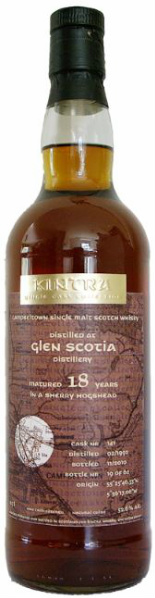
Color: Gold

Nose: Spicy wood, sweet with some vanilla notes. The typical smell of a Whisky coming from a Ex-Bourbon Cask, but with quite a lot of aroma. It smells big and fruity. Das pronto clay, I remember from my childhood. Nutty as well, with some flowery notes but also some candy sweetness. Mocha, tiny hint of mocha coffee. Small hint of cask toast mingled with some dry old spices. Creamy and powdery. I think you get the picture. Very balanced (after extensive breathing) and slightly salty even (dry lips). It doesn’t smell reduced, and this has hints of cannabis in the aftertaste. A big plus for this Linkwood.

Taste: Vanilla and oak. Big and slightly toasty. Small hint of cannabis (again), which is not quite unusual for this type of oak. Wax, maybe ear wax. Perfect fruity sweetness. Vanilla ice-cream with some pencil shavings and fresh almonds. Even though this is reduced to 43% it is quite hot at times, and the hotness stays around for a while. The finish itself, tastewise, is much shorter. Hints of fermentation (yeast, cow dung?) and then a bit sour. However, don’t get me wrong. This is very appetizing. Big and just nice even at this lower ABV.

Quite sweet and in part light. Nice sweet body with a hot finish that stays longer than the taste itself. To me this Whisky shows some small faults in distillation, but has way more good things to it. Initially it seems a nice Malt, with a nice smell and so forth, but the taste already shows some unbalance, nevertheless it needs some air to settle and reaches a higher balance. Nice entry, than heavy on the sweet part, and full body, but sometimes a bit hot and a medium finish at best finish. Not bad! A word of caution. This isn’t as good when freshly opened, it really needs a lot of air and patience to really shine, even this reduced Whisky, needs time.

Points: 84

Glen Scotia 18yo 1992/2010 (52.6%, Kintra, Sherry Hogshead #141, 62 bottles)

These days some people pick their Whiskies by the color and, this one has color abundant. A nice dark Sherried Campbeltown Malt. Some Sherried Malts work wonders and some are too heavy. Judging by the color, you never know what you’re  gonna get. I almost sound like Forrest Gump here don’t I. Glen Scotia is hardly a working distillery and it hardly is a popular distillery. Well, what kind of Whisky is this then, was it a gamble picking this up, and is it worth the money? Let’s see…

Glen Scotia 18yo 1992/2010 (52.6%, Kintra, Sherry Hogshead #141, 62 bottles)Color: Copper gold

Nose: Smoky sherry with a nice touch of oak. Red fruits in alcohol. Nice cask toast (uniquely acidic) and also slightly tarry. Sweet. The red fruits make way for deeper black fruits. Excellent development! The combination of these three and the fashion they fit together does remind me a bit of Demerara rums, although without the sweetness. The way the burnt, woody and toasty parts of the nose fit together is excellent. All this from a Sherry Hogshead with Glen Scotia in it. Great. Who would have thought. With some air, also some powdery and floral notes pop up, with tiny hints of lavender soap.

Taste: Sweet and creamy, but (luckily) again helped by the character building qualities of the toasted wood of the Sherry cask and the right kind of Sherry that was in it. Mocha, milk chocolate and Demerara Sugar (on the lips). Not weak and also not cloying or heavy. Great balance and very, very tasty. The acidity from the nose, the wood and the burnt sugar stay on to form the finish. The finish is a wee bit to dry (wood and paper) and could have benefitted from a little bit of honey and slightly better balance. Still, that’s me nit-picking, this is excellent stuff.

A stunning pick by Erik Molenaar. He only bottled 62 bottles of this so I’m wondering where the rest of the cask has gone. Could he only get 62 bottles, was the rest of the cask already sold? Who knows. Just like his other 19yo Glen Scotia, this is an excellent Whisky and if anywhere encountered, don’t hesitate to pick one or both up.

Points: 88

Blair Athol 25yo 1988/2014 (46%, The Ultimate, Refill Sherry Butt #6918, 712 bottles)

Here is another Ultimate bottling I tried recently. Dutch outfit Van Wees are getting some pretty good bottles released recently and there is a buzz going on about this 25yo Blair Athol. Blair Athol isn’t a very popular distillery, so when something like this is “buzzin'” we can’t ignore it now can’t we? This is from a refill Sherry Butt number 6918. More casks from this series are bottled this year by Van Wees: 6922, 6927 and 6928. All reduced to 46% ABV. Meanwhile in Scotland…

In 2014 Andrew Symington is releasing 25yo Blair Athol’s from 1988 too. Signatory Vintage, his company, is releasing some pretty good Cask Strength Blair Atholls with the following cask numbers: 6914, 6919, 6920+6924 and 6925. Seems like some sort of gentleman’s agreement doesn’t it? Well nothing wrong with having some good friends. I’ve tried one of these and it was very good. Now let’s see how Blair Athol behaves when Van Wees add some water to it…

Blair Athol 25yo 1988/2014 (46%, The Ultimate, Refill Sherry Butt #6918, 712 bottles)Color: Copper gold.

Nose: Intense Sherry nose, and I don’t mean Fino people. Floral and perfumy. Nice and laid back. Funky wood and also some sulphur. Hard candy powder. Toffee and black fruit. Blackcurrant and blueberries. Nice fruity sherried Whisky. Well balanced nose. Dry and aromatic and with some hints of soap. No sight of raisins or cloying sweetness in this dark-colored malt. Otherwise a typically dark sherried nose, with some acidic oaky notes.

Taste: Toffeed Sherry, yet it doesn’t seem sweet. It does have its Sherry-sweetness but that is pushed back by the dryness of the wood. The taste is quite dry (the wood again) but all seems to be in check. Not a very sweet and cloying malt. In the distance some notes of coal and elements of old malts. The dark fruits return in the finish, which makes for an excellent finish. Still it’s not over the top. It’s not overly woody, and the fact it’s not sweet makes for an easier drinkable Sherry malt.

This is a pretty funky Whisky, if you ask me. The funkiness is there when it’s freshly opened, but also when it’s freshly poured into a glass. I hope you don’t drink your Whisky from the bottle now don’t you? This tells us the Whisky needs some air, and time, to breathe. The air gives it a more elegant feel, but also more balance, the aroma’s tend to fit better to each other. I must say, al be it from a sister cask, I like this one, way better at higher strength, but this reduced one is also pretty good by itself, uncompared. Recommended!

Points: 86

Strathmill 17yo 1992/2010 (43%, Signatory Vintage, Refill Butt #40711, 873 bottles)

Strathmill 17yo 1992/2010 (43%, Signatory Vintage, Refill Butt #40711, 873 bottles)Strathmill was founded in 1891 in an old mill, that dates back to 1823. At first is was called Glenisla but when the distillery was sold to W&A Gilbey in 1895 they changed its name to Strathmill. Through some mergers along the way finally Strathmill becomes one of many distilleries in the Diageo portfolio. Strathmill is a big component in the J&B Blended Whisky. Not a lot of Strathmill was officially bottled by its owners. Best known of course, are the 12yo Flora & Fauna bottling, The Managers’ Dram and the Managers’ Choice that was released in 2009. This year Strathmill features in the highly priced annual releases from Diageo. A 25yo was released just recently…
Color: Full gold

Nose: Musty Sherry. Peanut oil and stale water. A little bit of old wood and almonds. Not sure this smells pleasant. Citrus oil from warm and soft tangerines. When the mustiness dissipates, a fresher apple skin note appears. Light apple compote. Still a sort of sidewalk after the rain smell stays. Maybe a trace of sulphur.

Taste: Sweet with a strange kind of sourness added to it. Pencil shavings, cardboard and dabs of licorice. Slightly waxy. Not quite balanced, but the sourness works refreshing and quite nice in its strangeness. Very malty later on with sugary sweetness and grassy and hay like notes. Not heavy on the sweets but it definitely tastes like sugar. Uncomplex.

Funky stuff, but its strangeness is interesting. Probably full of faults and to sweet to make it your daily drinker. I’m guessing this is a bottle that will stay open for a long time, but once in a while you take a sip and it becomes surprising and nice (for one glass only). To be enjoyed for a long time, although not the best stuff around. As I said, interesting.

Points: 80

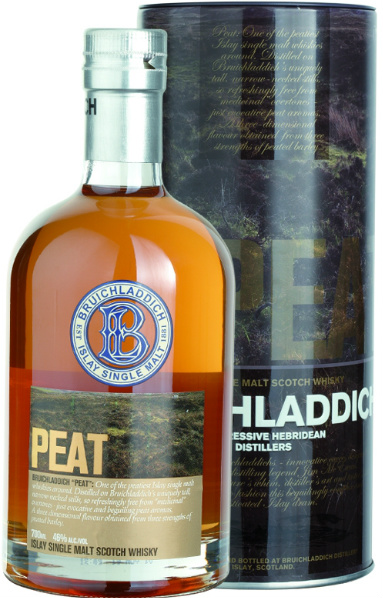
Bruichladdich “Peat” (46%, OB, Bourbon Casks, 2008)

Suddenly I had a craving. Lets try something with peat, so I picked this fairly new, but already discontinued Bruichladdich “Peat”. In everyday life, Whiskies released under the “Bruichladdich” brand name are unpeated. Bruichladdich has other brands for their peated Whiskies, like Port Charlotte and Octomore. This Bruichladdich “Peat” was peated up to a phenol level of 35 ppm, which compared to Octomore is pretty “light”. “Peat” bares no age statement, and will probably be young, but there are several other young Bruichladdichs around that are pretty good. Islay Barley (2006, 2007 come to mind)…

Bruichladdich Peat (46%, OB, Bourbon Casks, 2008)Color: Gold

Nose: Slightly peaty, with dust, elegant wood and vanilla. Very “friendly” smelling. Smoke on top. Young and likeable. Fruity. Distant pear, banana, Galia melon and other (sugared and/or dried) yellow fruits (trail mix). Fruitiness is not upfront. Slightly meaty. I suddenly have a craving for bacon! Nice.

Taste: Young, light and malty. Lots of licorice (in many guises) and some wax combined with old wood. Sugary sweet alcohol. Very toned down and laid back. Nice hints of oak and dry barley. Lots of licorice in the finish, with hints of Marmite in the finish too. Although maybe young and generic, I found it to be a nice addition to the peat-universe. Elegant and relaxed. Salty lips. I like it a lot actually. Imagine this with more complexity and sophistication, now that would be stellar!

Maybe its simple yet it is also very delicious. A nice companion to heavy hitting 10.000 ppm peat bombs. This has 35 ppm and is a very friendly Whisky, that also used to be very friendly on the olde wallet.

Points: 84

The Glenlivet 12yo (40%, OB, Circa 2005)

A few days ago I reviewed The Glenlivet 15yo and with prices of “better” Whiskies doubling by the week, it isn’t wasted time to look at some entry-level malts (again). Are the malts we anoraks always described as malt for the novices, still any good? Since we hardly can afford anything but the entry-level malts these days (the users, not the collectors), should we return to these Malts or should we move on and look for an alternative? As my dear readers already know, I review more stuff than only Single Malt Whiskies, and I can tell you that al the alternatives for Whisky, just don’t taste like Whisky and if they are any good in their own right, its price will be quite high too, so I’d rather look at entry-level malts and find some gems there. There are enough affordable whiskies around for us to find. The 15yo isn’t expensive, and this 12yo is even cheaper. This 12yo, although in my opinion suffers a bit from batch variation, is for a lot of tasters a benchmark Malt around the 80 points mark. The expression I’m about to review was bottled around 2005, but I have tasted a version from 2012 recently that scored only 77 Points. So let’s see if this earlier expression is any better…

Glenlivet 12yo (40%, OB, Circa 2005)Color: Gold

Nose: Malty, sweet-smelling and very aromatic. Fruity. Pineapple! Leaps out of the glass. Some Sherry influence, but also toffee and caramel (from coloring the Whisky?). Vanilla, but also powdery and almost no wood. Vanilla ice-cream. The smell is so full and pleasant I quite like it. Can hardly believe this comes from a standard 12yo Glenlivet @ 40% ABV (albeit from an older expression). Simple, but very effective stuff. I just hope the palate is not as sweet as the nose suggests.

Taste: Sweet, more wood influence here. Licorice. Entry into the mouth is syrupy and very nice, and as with the nose, it’s surprisingly aromatic. When kept in the mouth for a while it seems to break down a little bit. Some sour notes develop, and the initial full aroma get a bit thinner. The finish has some staying power, and is less sweet than the “beginning” of the Malt. However I can’t get away from the feeling this has gotten quite some caramel coloring. I’ve been involved in some tests where we colored our own Whiskies with original Whisky industry grade E150, and the effect of caramel is that is gives it a typical taste and mellows stuff out a bit. I’m getting that here.

If Glenlivet 12yo was always like this, this would be something of a benchmark Single Malt. Something to compare the others to. Alas that’s not true. As said before, I’ve tried a recent one that was less interesting than this one, but this example from round about 2005 is pretty ok for such a dirt cheap Whisky. I can’t use it as my 80 points benchmark Whisky, since I score it…

Points: 81

The Dalmore 12yo (40%, OB, Circa 2004)

Time for Dalmore, or The Dalmore as it’s called. I haven’t reviewed a Dalmore before on these pages, nor have I tasted Dalmore for a long time. So in a way I’m getting re-acquainted to it. Looking at my list of scores I have to say that Dalmore usually is not a very high scoring malt for me. Of course there are bottling that fetch high scores but when that happens it’s a Dalmore after some extensive maturation. However, the highest scoring Dalmore in my book is a Dalmore 12yo! A Duncan Macbeth bottling for the Italian market from around 1963! I won’t compare the two, since times have changed, but let’s have a look at a more modern 12yo. This example was bottled around 2004, so not yesterdays malt either…

The Dalmore 12yo (40%, OB, Circa 2004)Color: Full gold.

Nose: Powdery, creamy and slightly sour. Old bananas. Distant Sherry influence. Paper, I somehow smell a lot of paper in this. Malty, burnt sugar and some alcohol (like smelling Vodka). It smells a bit of caramel coloring. (Everybody tells you it doesn’t chance the smell and taste, but just try it for yourself and make your own mind up). Yet the whole smells just a bit different from other entry-level Malts. This is not bad, not bad at all (in the nose department).

Taste: A little bite from the wood, a little bit of dishwashing liquid too. Burnt sweetness you can find in some Rums. Did I mention some soapiness yet, indirectly maybe. Very nutty too. The nuttiness and the particular sweetness make up the signature of this malt. Crushed almonds ánd marzipan. A nice touch of woody bitterness towards the finish. Lots of markers that may well be typical for Dalmore. Finish is weaker than the body is, and lets it down a bit.

In the end a very different Highland Malt. Maybe not everything is in balance, not everything seems to fit together. It feels like a malt that was made to be accessible, but also a little bit different. I’m guessing this has a specific fan base. In the quest to make it different it isn’t quite congruent yet, but you have to love it for being slightly different.

Points: 80