Torres Viña Brava Parellada Muscat 2012

And here we have yet another summer Wine brought into our lives by my mother. This time from spanish giants Torres. Viña Brava is a series that convey the flavors of the mediterranean coast and in this case Catalonia. For 2013 the Parellada grape is combined with Garnacha Blanca to form a semi sweet white Wine, but this 2012 expression combines Parellada with the Muscat grape for a medium sweet white Wine. 11,5% ABV.
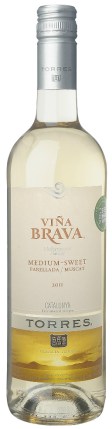
Torres has a nice website where this expression I’m about to review isn’t present. Advised drinking temperature for this wine is 10ºC (for fish and seafood), but with these 30ºC temperatures we have outside at the moment, this wine can be very well drunk with ice-cubes (as an aperitif or hot-weather refreshment).

Color: Light white wine.

Nose: Sweet, peaches and apricots (fresh ones and dried ones). It has a nice refreshing acidity as well. Lime juice and spicy. Nice.

Taste: Lemony and half-sweet. Good balance and very refreshing (I’m tasting this at the advised temperature without ice-cubes). Quite simple, but that isn’t a problem with this kind of wine in these circumstances. A very nice summer wine, like a lemonade. Clear apple juice.

Again thumbs up from my mother and my wife, and who am I to say something different! It’s easy and laid-back, luckily not too sweet with a nice acidity to it. Good.

Points: 79

St-Feuillien Blonde (7.5%, 33 cl)

This time a top-fermented Abbey beer made by Brasserie St-Feuillien (recently also called Brasserie Feuillien and/or Brasserie Roeulx). It’s history can be traced back to 1873 to the Friart Family, but the name, and the history behind it is much older. In the seventh century AD an Irish monk named Foillan (Faelan) passed through Le Roeulx to preach the gospel, but before he could do that he abused and finally beheaded by highwaymen. Right there where this happened, a chapel was built in his name (twelfth century AD). The chapel was eventually extended into an abbey, and as good Belgian monks do, they brew a great Beer on site…

Those of you who regularly read my Beer reviews know I like to age my Belgian Beers. Most Trappist and Abbey beers (top-fermented) usually get better with extra ageing, but not all. Some do get better, but become dirty, with sometimes a lot of unpleasant looking yeasty flakes floating in the Beer. This St-Feuillien Blonde was aged for an extra three years (quite unusual for a Blonde, even an Abbey one). Another thing that could affect the beer is the extremely hot day we’re having. (33° C), also quite unusual for this country.

Color: Brown Gold with very fine caramel colored fine cream.

Nose: Right out of the gate, unexpectedly fresh and citrussy. orange skin and brown candied sugar. After a while this beer turns. The fresh smelling start most definitely wears off and changes into a sweet-smelling kind of funkiness like cold dish water! Absolutely strange and interesting. I guess the turn comes from the yeast warming up, and there is quite a lot of yeast floating in my glass (sets slowly).

Taste: Again fresh and syrupy. Excellent balance between the sweet, the bitter and the freshness. It’s even less acidic than expected. Very nice, lovely stuff. Very late character building bitterness comes through, with a nice fresh green spiciness to it.

Optically not pleasing with all those flakes floating around, but especially the palate is great. Probably not for ageing, but when tasting this blindfolded, I guess the extra ageing did improve this beer (and it probably changed a lot over time). I will have to try a new bottle of this Beer soon, just for comparison of course!

Points: 83

Santa Cristina Cipresseto 2007 Rosato Toscana

Summer has arrived here finally and lasts for almost two weeks now.  That is a first! Probably a record has been broken for the last 5 years, since summers lately were less interesting than spring. That gives me lots of chances to try some summery wines in their natural habitat, meaning outside in the garden to be drunk in nice weather. Well I won’t let the sun cloud my palate, so I’ll stay critical. This is already the second wine of Santa Cristina to grace these pages. Earlier I reviewed the Santa Cristina Toscana IGT 2009.

Santa Cristina Cipresseto 2007 Rosato ToscanaColor: Beautiful red salmon.

Nose: Grounded coffee, dust and wet earth. It has a nice depth to it. Next up is the fruit. Some sweet apple juice. Classy stuff. Some floral hints. Meaty, not sweet and not acidic. Well balanced nose, that has a lot to offer.

Taste: Licorice, and a very thin acidity. Some bitterness and some wood. Taken in big gulps, a little bit of meaty body and a hint sweetness come through. The body is even less interesting than the finish, but still as nice as the nose was, the palate is rather disappointing. Totally unbalanced and a bit weak. Tastes a bit as a watered down red wine…

The landscape of Tuscany is utterly stunning, and the nose of this Rosato promises a lot. I’m almost in tears that the palate is…rather weak. It’s almost a dream gone bad! Having said that, the wine is not thát bad. It just could have been better. I have another bottle of this (from the same year). If that one turns out to be different from this one, I’ll rewrite this review. For the moment this one stands. In defence of this Rosato I have to say I probably let this lie around the cellar for to long, but I can’t image that’s it.

Points: 73

Stormhoek Moscato 2013

And here is another wine favoured by my wife and my mother! Again a white one, but this time without bubbles but a lot sweeter. Master Quill already reviewed a white wine from the Western Cape region of South Africa. I have the feeling there is quite a lot of marketing going one here, since the label states as with the best of cosmetics: London Cape Town New York. Wow! The wine has the following enlightened text on the back label: Be Moved. Love. Encourage and Excite. Be enthusiastic. Motivate. Change the World or go Home…

Stormhoek can be found on the internet, but also on Facebook and Twitter.

Color: Ultra light white wine.

Nose: Sweet, artificial fruity sweet. Lots of peaches and apricots. Slightest hint of acidity. lemons. Lemonade. Very very fruity (and sweet-smelling).

Taste: Very sweet and really a peach drink. It’s so sweet and fruity I can hardly notice it is made with grapes. Funny that the back label stresses that it ís made with grapes, and tastes of grapes. I have drank wine made with muscat grapes before, but never so fruity as this one is. Deep down there is some acidity that very much resembles Vitamin C.

Going by the nose and the taste I would almost call this a children’s wine. Still this summer wine does have 8.5% ABV, so nevertheless it isn’t suitable for children. Recommended by my mother and my wife. I will recommend this a s a compote! Definitely designed for a young public (read women), hence the marketing.

Points: 75

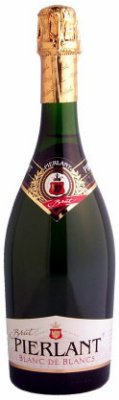
Pierlant Blanc De Blancs Brut

Here we have some bubbles from Landiris France, and again a wine both my wife and my mother love. My wife loves champagne, but with a plethora of Champagne houses and really how many of them are really good, sometimes we venture into other sparkling wines, especially for those occasions when the lively conversation makes you almost forget what you have in your glass. So for those carefree moments we buy sparkling wines like this. Nice to drink, nothing complex, and it doesn’t mean you have to get a second mortgage.

Pierlant Blanc De Blancs BrutThis wine is 100% Blanc de Blancs and produced with the following white grapes: Chardonnay, Colombard, Ugni Blanc (Trebbiano) & Gros Manseng harvested from: Bordeaux, Charentes and the Loire Valley. The wine has an ABV of 11%.

Color: White wine, with a fine mousse.

Nose: Slightly sour and sunny green apple skins, lightly fruity and elegant. Hints of spice, but overall very light. Nice aperitif wine.

Taste: The same here, light aperitif wine, without any off notes. Half sweet and slightly acidic. Nice balance. Very easy and simple and extremely drinkable. Light wine, with a light and dry finish. When drinking a lot of this the wood like bitterness gets noticeable and starts to dominate. So I wouldn’t drink a whole bottle by myself.

In our case, this wine accompanied a nice light tuna and past dinner, with a lot of fresh vegetables. and I have to say that this wine accompanied such a diner very well. Excellent match! In the end this is excellent summer stuff.

Points: 82

Glenfarclas 15yo 1991/2006 “Breath of Speyside” (60.2%, Adelphi, First Fill Sherry Butt #5642, 615 bottles)

Almost two weeks ago I reviewed a Adelphi Highland Park, and here is the next Adelphi bottling. This time a bastard malt. A bastard malt is a Whisky of which the distillery name can’t be found on the label. Usually some kind of fantasy name pops up like Probably Speysides Finest (Douglas Laing name for Glenfarclas), Director’s Tactical (Douglas Laing name for Talisker) or Laudable (Douglas Laing name for Laphroaig). Well this is called Breath of Speyside and in this case, that is Adelphi’s name for Glenfarclas. Glenfarclas do sell off lots of casks, but never allow the bottler to use the Glenfarclas name.

Glenfarclas 15yo 1991/2006 Breath of Speyside (60.2%, Adelphi, First Fill Sherry Butt #5642, 615 bottles)Color: Orange copper gold.

Nose: Cream and cherries. Quite fresh and fruity. Very lively, and not that deep dark in your face Sherry. Very obviously a first fill sherry. Perfumy, with a nice touch of wood, very elegant. lovely stuff and easier on the nose than A’bunadh, that can be harder or harsher (due to its youth). Toast and pepper come to mind and very spicy. Pot roast, tobacco and furniture polish. Very lovely and interesting nose. Great complexity and perfect balance, between the Whisky and the Sherry.

Taste: Creamy and woody. Nice sweetness that is delivered after the initial woodiness. It’s not overly woody though. Again roasted meat, combined with the dry woodiness and the late sweetness (caramel), makes for a very interesting play on your tongue. Excellent. Definitely elements of wine (Sherry). Also some organics I usually get from some white wines. Thick excellent stuff that works well at this high ABV. This Glenfarclas really intrigues me. Well chosen cask.

Heavily Sherried and high in alcohol, so this is Aberlour A’bunadh territory, the only difference being the age. A’bunadh is a young Whisky, probably around 8 to 10 years old, and this Glenfarclas is 15 years old. This one is milder older and wiser. It’s deeper, more complex and less rough around the edges. The only problem, you can only get this at three times the price of the Aberlour A’bunadh, just to show you how cheap the Aberlour actually is…

Points: 89

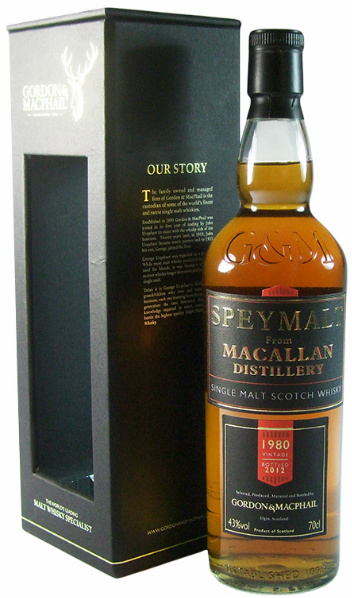
Macallan 1980/2012 (43%, Gordon & MacPhail, Speymalt)

Next up an already rather “old” Macallan. Macallan is a brand with a huge reputation as a Sherried Speysider, and therefore a huge following. The quality is unmistakable there, just have a look what older bottles fetch these day at auctions. Since the “new” Fine Oak series, Macallan have again a huge reputation, but this time more as a marketing giant, but again with a huge following. Alas from a connoisseurs point of view it not thát much of a Sherried Speysider anymore, not as they used to.

This is an independently bottled Macallan, and it doesn’t look like a heavily Serried Speysider. If I’m not mistaken Gordon & MacPhail can bottle Macallans in the Speymalt series, with a vintage, when the distillery themselves do not have a vintage of that same year themselves.

Macallan 1980/2012 (43%, Gordon & MacPhail, Speymalt)Color: Orange gold

Nose: Hmmmm, fabulously old and waxy smelling Speysider we have here. Lovely! Old soaked wood and very deep half-sweetness. The initial blast of fruitiness, and waxiness leave the building. What comes next is dry and dusty. The wood turns into old cardboard, but it works. It’s not an in your face Sherried Speysider, but definitely a very nice and elegant Macallan. Quality stuff. Toast and burn paper in the finish of the nose. Hints of a bonfire and vanilla (pudding). The nose is top-class.

Taste: Sweet with an edge. Estery and some acidity, that makes for great balance. Creamy and soft-toffee. Hints of black tea and a tiny hint of anise. Hardly any wood, which is a bit odd after give or take 32 years in the cask. The wood does show itself in the tiny bitter (and soapy) bite that graces the finish.

Absolutely a fine nose, alas the taste doesn’t match up. It somehow lacks some complexity. Having said that it is a damn fine Whisky, that for the price is easy drinkable. Gone before you know it. Therefore easily a favorite when on my shelves. For me a tad too much reduction here, I would have liked this at 46% ABV. Old Fino?

Points: 89

Thanks to Stan for the sample!

Tomatin 15yo (43%, OB, Bourbon Casks)

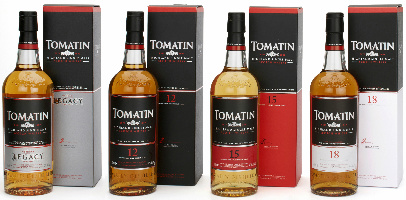
This is my last review of a Whisky from the standard range of Tomatins released by the distiller. The standard range comprises of Legacy, a 12yo, a 15yo, and last but not least, the 18yo. The age statement (or lack of it) not being the only difference. All are different in usage of casks:

  • Legacy – New Oak Casks and Bourbon Casks (82 Points).
  • 12yo – Bourbon & Sherry Casks (83 Points).
  • 15yo – Bourbon Casks (?? Points).
  • 18yo – Refill Bourbon Barrels with an Oloroso Sherry finish (87 Points).

So here we have the 15yo. This one is on paper the younger brother of the now sadly deleted 25yo. Both come from only Bourbon Casks. The new Tomatin is called Legacy, but the 25yo will turn out to be a Legend. But, and I can’t stress this enough, Tomatin 30yo, that’s even better imho!

Tomatin 15yoColor: Light gold.

Nose: Spicy and clean. Sweetish and creamy. Hints of toasted oak and crushed fresh leaves. Nice toned down fruitiness. Cookie dough. It does remind me a bit of the 25yo (and some notes of the fruitiness remind me of the 30yo). Fruity ánd perfumy. Very aromatic example of Tomatin. Good balance.

Taste: Clean and warming, warm wood and caramel. Hints of licorice, vanilla and toasted wood. Very creamy and half sweet. Again very good balance. Dangerously drinkable.

These four whiskies are absolutely family of each other. Brothers and sisters of one another. But just as with people, there is a family resemblance, but most definitely have different characters. It’s not merely an older version of the previous example, no, all are meant to be different through usage of different casks. I guess all of them will have different likers (or dislikers if you don’t like the mean Tomatin profile).

So time to come clean, which one would I buy? Well, according to points the 18yo is the winner. It has a stunning nose and taste to match, but there is always a candidate everybody likes, isn’t there. I scored the 15yo one point lower than the 18yo, but I think the 15yo is a true and honest malt (just look at its color), and is definitely easier to drink than the 18yo. I had problems writing tasting notes, because the glass seemed always empty, how is that for drinkability! So if you are new to whisky or just enjoy a good malt, I would buy the 15yo to start with, if you’re somewhat more seasoned and able to appreciate the added notes of the Oloroso finish , I would recommend the 18yo. Legacy and the 12yo are both alright, and dirt cheap to boot, but not my personal first choice. So for me the 18yo and the 15yo are the ones to buy, and differ strongly enough from each other to get both 🙂
Points: 85

Thanks to Jennifer for sending me this sample.

Grimbergen Optimo Bruno (10%, 33 cl)

Erkend Belgisch Abdijbier logoGrimbergen is somewhat of a (commercial) giant amongst Belgian Abbey Beers. Only Leffe sells more beer. It already was big when Scottish & Newcastle were the owners but when that company was bought by Dutch Beer Giants Heineken, well… Next question, is Grimbergen any good? At this point I don’t know, but I picked this Optimo Bruno to find out. Optimo Bruno saw the light of day in 1988 as a beer specially made for easter. Grimbergen Beers are made by Alken-Maes from Waarloos, not to far from the abbey. The top fermented Beers are made L’Union in Jumet. (Top fermenting means that the yeast lies on top of the wort). Last but not least, the beer did not receive post fermentation in the bottle, so even extended ageing (2 years past its best before date) kept this beer “clean” and there is no deposit.

The order of the Premonstratensians (White Canons) was founded in 1120 by Saint Norbert. Saint Norbert also founded the Abbey of Grimbergen, and in that way the abbey is quite unique. In its history, the abbey was ruined four times! But every time the abbey was rebuilt, therefore the label of the beer has a Fenix on it and the credo: ‘Ardet Nec Consumitur’ (Burnt but not consumed).

Grimbergen Optimo BrunoColor: Brown, a little bit of cream-colored foam.
Nose: Fresh and acidic. Candied sugar. Yeasty and absolutely murky! Not the nicest smelling beer around. Funky stuff, but not off-putting.

Taste: Deep and brooding. Again yeasty and some acidity. Nice warming taste. Hints of toast and burned sugar in the aftertaste. Dried plums and dates. When Belgian beer is called Belgium’s answer to wine, they probably had this in mind, or should I say, in their mouth. Very distinct beer. Quite bitter finish and especially in the aftertaste. A bitterness like this just fits the speciality this beer is. Unique stuff. Nice balance between the toasted Sugar and the acidity.

Again a well aged beer, so I can’t tell you how a fresh one tastes yet. Definitely not your every day drinker and maybe not for everyone, but when you choose the moment perfectly, you’ll know this is special. Best tasted in big gulps (again).

Points: 84

Mc Chouffe (8%, 33 cl)

Brasserie D'AchouffeIn the early eighties Pierre Gobron and Chris Bauweraerts (Brothers in law, and thus Brothers in Beer) started brewing beers as a hobby, and founded Brasserie D’Achouffe near Houffalize in 1982. Houffalize is in the Ardennes, where lots of stories are about elves (They call the leprechaun an elf).
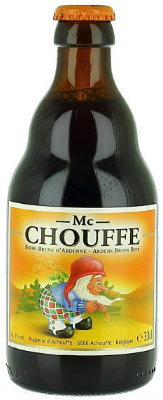
By now, I have to admit here to a fault in my character. It’s never to late to learn, and boy did I learn here! It’s this leprechaun and the immense availability of both beers made by Brasserie D’Achouffe that made me believe this was not much of a beer. Boy I was wrong! I haven’t tried the main beer by Achouffe yet, namely La Chouffe. But I did buy once a little bottle of its dark sister Mc Chouffe also called: ‘Scotch of the Ardennes’ by the brewery, and me being very fond of my Scottish Whiskies, who am I not to try this Belgian ‘Scotch’. By the way, I Aged the example of Mc Chouffe for 16 months past its best before date, and that is a bit longer than the makers recommend. They like to see their beers aged for 3 to 12 months.

Color: Brown. Not a lot of foam, but a lot of CO2

Nose: Fresh, citrussy, but also pretty murky, like a dirty sidewalk washed clean with the first rain after a long hot summer. Yeasty and sweaty with warming alcohol.

Taste: Wow, not as deep as the color suggests, but certainly what the doctor ordered! Quite full-bodied and very tasty. The carbonation ‘effect’ makes this half-heavy beer refreshing. Candied Sugar wine. Not bad, not bad at all.

I don’t know about the ‘Scotch’, but it reminds me more of an Belgian ‘Wine’. Take care not to pour the depot into your chalice. It’s better to consume that by itself. With this extended ageing I like to do, the depot left flakes floating in the beer, and that didn’t look very nice…(but tasted great).

Points: 84 (provisional, I might have aged my bottle for too long, as mentioned by the brewers, so I’ll try Mc Chouffe again in the near future, and will try it younger).