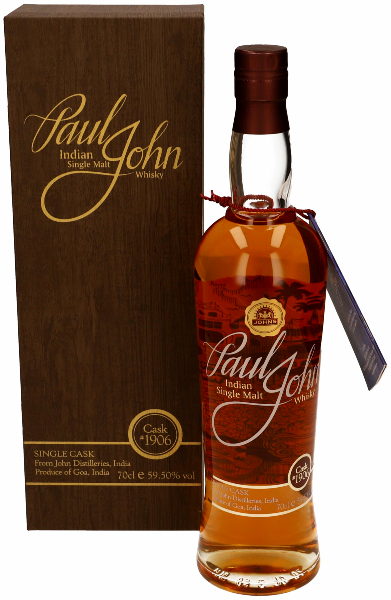
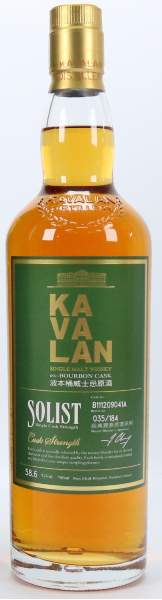
Kavalan Sherry Oak Matured (46%, OB, Oloroso Sherry Casks, 2017.08.07)

Kavalan has been founded in 2005, built in 8 months and thus in 2006 the first spirit already started to run off the still. Fun fact, most of the Barley that goes into the Whisky is imported from…Scotland. Kavalan is a big distillery (very big actually, and they keep expanding it), and lies an hours’ drive away from Taipei (the capital of Taiwan). Kavalan makes and bottles a lot of Whisky in lots of expressions. In 2009 the first Solist saw the light of day. Solists are single cask expressions, although officially released in batches, so maybe not every batch is from a single cask? Solists are bottled at cask strength, and not only coming from ex-Bourbon and ex-Sherry casks, there are a lot of other variants as well, some of which are quite expensive, for a NAS-Whisky. Me, already being a fan of Indian single cask Whiskies, the Solists are the ones I was most keen on trying, buying and reviewing.

Indian Malts, made from Indian six-row Barley (which makes a difference), as well as the Whisky made in Taiwan “suffer” from a lot of evaporation (a similarity). In these countries with their hot climates, numbers between 10% and 15% evaporation from the cask, per annum, are quite normal. So, Kavalan is made with Scottish barley and put in casks that also could have wound up in Scotland, the water is obviously different, but the biggest difference is thus the climate ensuring a more speedy maturation. Before I get to reviewing a true Solist, here is first a sort of lighter version of a Solist bottling called, Kavalan Sherry oak, bottled at 46% ABV. Presentation looks quite similar to a Solist, surely these must have been made in (small) batches rather than a reduced single cask.

Color: Deep dark brown, slightly orange/red.

Nose: Cherries, Oloroso Sherry and maybe a wee hint of PX for good measure. Figs, light black coal, herbal licorice and spicy wood. Very aromatic. Fresh oak and toasted oak, and no tarry notes to be smelled. Sometimes very clean and modern (at first), yet at other times almost old skool in style, but also just damn nice smelling, very appetizing. No tar, but it does have this classic fatty black coal note. Quite some American oak vanilla. Slightly nutty and cardboardy with vanilla pods. Hints of dust, more licorice, horseradish, lavas, clay and meat. Fresh air and an even fresher minty bit. Thick syrupy fruit, red fruit jam. Dust from a bookshelf and stinging sawdust. Milk chocolate. Even though this is quite dark, this isn’t a big, heavy, black coal and tarry, old style Sherry monster, no, it does have lots of those aroma’s, but they are fresh and fruity, and considering this has been reduced, the total package is more of a Sherry Whisky suitable for a lukewarm sunny day, whereas the monsters are more for an cold yet calm, and not entirely unpleasant evening in autumn. Having said all that, after some more breathing, the Whisky gets deeper. Honey, even more licorice, raisins and more syrupy. Maybe I spoke to soon. The nose moves more towards a dark, sweet Sherry, more towards the profile of a PX, even though this has been solely made with Ex-Oloroso casks. The vanilla note stays throughout, so most casks used, if not all, were probably made with American oak. The darker tone evaporates again like it was blown out with a whiff of fresh air. More of the milk chocolate now combined with a toffee note and a hint of creamy latex paint, and a more dry and warm summer wind. It also retains its modern feel as well as the older style notes. Well balanced, and yet another example of a Malt that really gets better with some extensive breathing, at least the nose did.

Taste: Well, dare I say it, It’s tarry now, diluted red fruit lemonade, with an light to medium oaky bitterness. Less sweet than expected, yet more acidic. This feels like it’s sweet, but it got somewhat masked by the wood. Very drinkable and sometimes a bit thin on entry. It’s big on aroma, if you give it some time. The sweetness is a bit odd though, it has this cloying taste, even though the texture remains thin. It tastes a bit like overly sugared food does, or even better, come to think of it, Rum with too much added sugar. Like A.H. Riise or Plantation. Now I can even smell the Plantation Grenada Rum. Wood, dosed Rum and licorice, also hindering the balance. Now that it somehow tastes like a Rum, the point of no return (to Whisky) has been reached. These must have been very active, first fill Oloroso casks, overpowering the distillate an turning it into an Oloroso finished Rum. Tastes good though, it really does, but it’s not what I’m looking for when I’m buying a Sherried Single Malt Whisky. So, wonderful nose, Rum-like on the palate. Big bodied aroma, with some thin moments, but a rather short finish and hardly any aftertaste to speak of.

Up ’till this point I haven’t had the opportunity to taste a lot of Kavalan’s. But with this Sherry Oak edition and some others that I did taste, I have to say that the distillate is quite good, although in this one, exactly that has been completely masked. I will try to get my hands on some more expressions, most likely some Solists, since I just love cask strength. In the introduction of this review I mentioned Indian Malts, but I feel now, for the time being, that Kavalan, as a whole, has more similarities with Scottish Malts, than Indian Malts, so the six-row Barley (and maybe some other regional factors present in India) does its job, creating a little bit of uniqueness…

Points: 86

Empty glass (the next day) smells of wood, red fruit jam and surprisingly, horseradish.

Lagavulin 11yo “Offerman Edition” (46%, OB, 750 ml, 2019)

If I would have written this review a bit earlier, than this particular review would have concluded the Lagavulin-prequel-quartet of the 8yo, 9yo, 10yo and this 11yo. However, just recently, yet another Offerman Edition has been released, this one finished in Guinness casks. Damn, now I have to find me that one as well, and just like the original Offerman Edition, this one isn’t destined for our European market. This Offerman is mostly US-only. They kept the new one at 11yo as well, because I suspect they wouldn’t dare on touching on (another) 12yo, as to not confuse the public too much with the annual cask strength version. This Offerman Edition is made with hand-picked Bourbon and rejuvenated Bourbon casks, in part by Offerman himself. Especially when you’re in Europe, you might wonder who this (Nick) Offerman is? Nick Offerman is an American Actor playing the role of Ron Swanson in the TV-series called “Parks & Recreation”, and Ron just loved Lagavulin (because Nick loves Lagavulin).

Color: Gold, lighter than the 9yo GoT version.
Nose: Wow, this has a mild, farmy, clay like start. Hay from healthy, fatty, full grown grass, making it somewhat different from the 8yo, 9yo and 10yo. Loving this. Otherwise, it does resemble the 9yo a bit. Just like I expected before reviewing the GoT Edition, this time again, I expected something more along the lines of the 8yo and 10yo, but with the 9yo already being quite the surprise, this one does even smell better. It smells a little bit like a…Brora! Man, if this tastes like it smells, please take my money now Diageo and thanks to you, Nick Offerman, for picking these casks! But wait a minute, let’s not get ahead of ourselves now. Iodine (and a tiny hint of chlorine as well) comes knocking on the door, especially when this gets some time to breathe in your glass. I suspect Nick especially sought out this Iodine. Old, wet wood spice. Slightly perfumy even. Tiny bonfire and a wee bit of prickly peat. This Malt has it all, including the underlying (candied) fruit. Wet iodine laden peat with salty seaside notes. The Broraness wears off and Lagavulin emerges some more, Lagavulin we know from the 16yo (which has Sherry) and especially the GoT edition. But the farmy bit that remains is still very nice, turning a bit meaty even. Not a lot of smoke any more. Dull vanilla powder, with still this zesty citrus note as well. Is there something like dry almond powder? Overall quite a soft edition, but one that works quite well. The GoT has slightly more of the creamy and buttery vanilla notes than the Offerman, but the bonfire notes are the same.

Taste: Starts as thin like the GoT, but this time with some crushed beetle and some fresh, slightly crushed almonds, and a very nice sweetish fruity bit. This one has even more of a licorice-peat note than the GoT. Fruity and appetizing, like cola on a hot day. It does have cola notes, hence the association. Almonds again and a wee bit of hot plastic. Warming and soft, so not this burning sensation when going down. This one has some sweetness as well, but definitely less so than the GoT. Slightly less complex than the nose, with seemingly less development. I like the lingering bonfire notes. It gives me a happy association, because who doesn’t like sipping a good Whisky when sitting and staring at a bonfire in the woods, or some pieces of wood in the fireplace.

This one turned out to be like a better variant of the GoT, but a variant of it nevertheless. Offerman offers us more than the GoT did, especially on the nose. Nice profile. Dear Nick, since you are a Lagavulin aficionado, why not pick some more casks like this, and bottle them at cask strength? Since this is Bourbon casks only, a fitting choice by an American if I may say so, it is more of a prequel to the 12yo, yet it is different in its profile. The empty glass (after a while), is iodine laden, where the empty glass of the GoT (the next morning) smells of peat and warm plastic. Looks like this (Iodine) is what Lagavulin and Nick went for.

Points: 87 (so the odd’s clearly beat the evens)

After the Offerman, I tried the GoT again, I find that there are a lot of similarities, but it is also lacking an entire (farmy) level. The Offerman is just a better and expanded version of the GoT. Tried it again and yes, the GoT is just simpler, still good, yet simpler. I haven’t seen Parks & Recreation yet, but I wonder if it’s also a better TV-series than GoT. Apart from some states in the US, this edition seems to be hardly available any more, thus prices are rising at auctions and the secondary market. Prices as I see today are such that even though this is a good Lagavulin, I can’t recommend it to you, because when taking the price into account, I believe you are better off with the 16yo and the Distillers Edition as well as the Game of Thrones version which turns out to be a very nice Lagavulin as well, is less expensive and more readily available. If you can spare the cash, please do buy it, because it’s another good Lagavulin differing from the others.

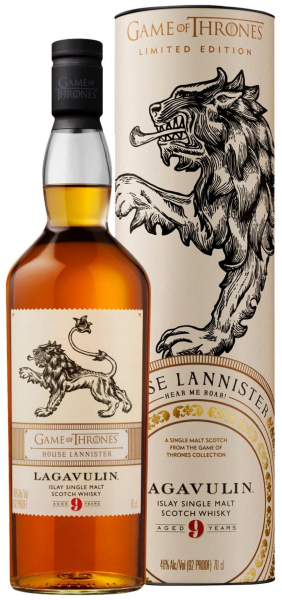
Lagavulin 9yo “Game of Thrones” (46%, OB, “House Lannister” L9016CM008, 2019)

For a Long time, Lagavulin was the unknown jewel in the crown of what is now Diageo, known to only a few. Lagavulin saw more recognition when it became part of the Classic Malts. Before that, Lagavulin was more or less only an utterly wonderful 12yo. Later came the also stellar 16yo and a nicely done Distillers Edition, again a very, very good version of this great distillery. Last of the newer regular releases the return of a 12yo, this time from Bourbon casks only and since 2002 bottled annually as a special release at cask strength. Some batches of these Whiskies have been reviewed on this site earlier.

Personally Diageo was taking a wrong turn starting with Talisker for me, with the release of a lot of mediocre (NAS) “versions”. I might have mentioned this already in several previous reviews, (Talisker is Diageo’s best selling Malt). The 10yo is still by far the best affordable Talisker, although it suffers sometimes of batch variation, just have a look at the following two more recent releases from 2015, and 2019. Incomparable to an earlier bottling from 2002. When NAS wasn’t all that accepted at first, Talisker tested out a rather young Malt, but gave it an age statement. The 8yo from 2018, is a very good Whisky, but the follow-ups from 2020 and 2021 are less so. Alas. I have tried them all, but have yet to review them here.

Back to Lagavulin. When Talisker was being taken advantage of (to up the sales), by all those aforementioned releases, Diageo left Lagavulin alone, at least for a while. Then all of a sudden in 2016 the 8yo and in 2019 the 10yo surfaced. In hindsight, both editions are gnawing away at the perfect reputation Lagavulin had (for me). Sure, both releases are not bad, especially the 8yo was acceptable (for a Lagavulin), but the downward spiral is easily noticeable. A disappointing and depressing feeling for me. Well, the time has come to look at the next one. Between the 8yo and the 10yo came a 9yo, bottled in 2018 in the Game of Thrones range, yeah because coupling up this Classic Malt with a TV-show makes sense now does it. And sure it does, from a business standpoint. I’m sure it’s making Diageo a lot of money and even selling more of the less popular Whiskies from the Diageo portfolio in the Game of Thrones series. Amazing how many people I know, have the whole range at home, some even got the GoT Johnny Walker editions. I respect the fact Diageo is in the business of making money and are not only aficionado’s. I’ve met several Diageo employees who have no clue what it is what they’re selling (but look the part and talk the talk) and only care about their monthly sales and what car they will be allowed to drive next. On the other hand I’ve also met several Diageo employees that are true aficionado’s and big ones as well! (This second group is usually a bit older than the first group).

Having said all that and with the experience I had with the 8yo and the 10yo, I’m not having high hopes for this 9yo, especially with the caramel colouring remark on the back label, but nevertheless here we go!

Color: Gold, slightly brownish.

Nose: Slightly sweet, with nice bonfire smoke and peat notes. Even some (dried) meaty notes crop up. Underneath, a little bit of fresh lemon skin acidity, as well as some menthos you are already chewing on. As always, the E150a cloaks the smell a bit, but also adds some artificial balance, as per design, although I also feel not a lot of colouring was needed for this one. Whiskies with lots of colouring tend to be dull and cloaked. But credit where credit’s due, this is a pretty good smelling Lagavulin. Nice and fresh. Since this is supposed to be first fill Bourbon casks only, is it really? Since it has this added caramel, it still has a decent spicy, ashy, waxy and fruity feel to it. On occasion, I even encounter some floral dishwater-detergent kind-of-job aroma. Spicy with some hot tar and smoking embers. Some molten plastic, clay, wood, some (burning) paper (and ashes), but some red fruit notes seem to point at Sherry, but no Sherry casks were used for this one. Yup, this is a very nice smelling Lagavulin. If the taste is on par with the nose, which has some classic Lagavulin traits to it, I’m in for a nice surprise.

Taste: Here it is a bit thinner than the nose promised. Sweet with obvious licorice and black and white powder right from the start, as well as the sweet lemon skin note from the nose. Smoky toffee. Here the caramel colouring seems to have a greater effect than it had on the nose. Nice chewy peat, nicely framed by some smoke. Waxy. Some cloaking caramel, and creamy, fatty hand ointment, but it’s also letting though some nice red fruity notes. Appetizing. Towards the finish the woody bits show some slight bitterness, fitting the rather large licorice profile quite well. However, for the profile it has it is actually a little bit too sweet. One glass of this on an evening is enough.

Well, this one is a bit of a surprise, I didn’t expect much of it to be honest, considering I’m not really a fan of the 8yo and especially the 10yo, as well as coupling it to a TV-show was a bit suspicious. The Talisker GoT was pretty decent as well. Nothing of the milky, new make-ish, youthful notes I got from both other mentioned Lagavulins. Maybe the E150a did some good here (yeah right, hahaha), or maybe the casks were just better (more likely). This would be a really really good Whisky if it was somewhat less sweet and bottled at a higher strength. Still, this was bottled at 46% ABV instead of the 43% ABV of some other Lagavulin releases. This is a review from a particular batch (L9016CM008) from 2019. I haven’t tried any others, so I can’t comment on batch variation, but there is always a chance that different batches have (slightly) different outcomes.

Points: 86

Worthy Park Quatre Vins 2013 (52%, OB, Cask Selection Series #8, Ex-Bourbon 4 years & Ex-Monbazillac, Ex-Sauternes, Ex-Moscatel & Ex-Jurançon 2 years, 1.318 bottles, Jamaica)

As we saw in the previous review, Worthy Park, as it is now, is a relatively new distillery, with the first distillate running off the still in 2007. As we all know, new distilleries sell a lot of young stuff, so there are a lot of rather young independent bottlings to be found, as well as a lot of the releases of the distillery itself are quite young, like most of these Cask Selection Series. By now, there is our Single Estate Reserve as well as a few 10yo’s (again finishes like the Madeira and the Port, both bottled @ 45% ABV.) and a 12yo bottled @ 56% ABV. So, since the distillery isn’t operational for all that long, it simply doesn’t have older stuff to release. A new distillery has to reach a lot of people to get some of the invested money back quickly to survive, so a distillery like this won’t be going for an extreme and funky style (yet). Non of the Worthy Parks I have tried until now, came across as a high ester Rum in taste (and nose). So for a Jamaican Rum, Worthy Park isn’t about all that super high ester stuff, like we saw with Hampden (or Long Pond).

By the way, Monbazillac, Sauternes, Moscatel & Jurançon are all sweet White Wines. Moscatel is fortified and Jurançon exists also in a dry version as well but then it is called Jurançon-Sec. However, I don’t think they used the dry variant here, since the rest is Sweet, but you can never be sure now can you. Since the previous review and the one below are from the Cask Selection Series, here is a list of the eight releases I know of:

Worthy Park 2012 Marsala Cask Selection Series #1 for La Maison Du Whisky, France, 60%, 319 bottles, 2017
Worthy Park 2012 Oloroso Cask Selection Series #2, 59%, 428 bottles, 2017
Worthy Park 2013 Sherry Cask Selection Series #3, 57%, 1.148 bottles, 2018
Worthy Park 2013 Madeira Cask Selection Series #4, 58%, 677 bottles, 2018
Worthy Park 2008 Port Cask Selection Series #5, 56%, 585 bottles, 2018
Worthy Park 2013 Virgin Cask Selection Series #6 for The Nectar, Belgium, 55% 342 bottles 2019?
Worthy Park 2013 Oloroso Cask Selection Series #7, 55%, 1.612 bottles, 2019
Worthy Park 2013 Quatre Vins Cask Selection Series #8, 52%, 1.318 bottles, 2019

Color: Orange brown.

Nose: This one starts with a nice funky caramel, like Jamaican funk toffee (if it exists). Clay, fatty and creamy. Honey, nutty, unlit tobacco, slightly burnt toast and warm plastic or polyester even. Organic and slightly grassy. Paint with a hint of solvents and vinegar made from Wine. Chocolate Rum beans. Spicy and obviously a bit winey yet also meaty. Gravy, dry and dusty. Nice fresh oak, in part a bit like plywood. Hints of Alsatian Gewürztraminer, but also the flinty bit of a Pouilly Fumé. Both wines, strangely enough, not one of the Quatre Vins. A fast flowing gutter in the rain. What? Yeah, well, the Wines give this Rum a bit of a combined note that is hard to put into words. Red fruit candy without the sweetness. Dusty, as well as some mocha and vanilla powder. Do you remember the smell of a bowl that had vanilla ice-cream in it a few hours ago? So, from this big funky start it first turns fruity and next, more dry and spicy. A lot of the complex initial smells wear off a bit. Stock cube, with hints of toasted oak and licorice. The development is not all that dissimilar to the previously reviewed Oloroso version. No doubt about it, this is a very good quality Rum, yet again, lacking a bit of the Jamaican funk, I’ve come to expect from a Jamaican Rum. It is almost closer to, yet another, rather new, high quality Rum that is Foursquare from Barbados, than to its Jamaican brother from another mother, Hampden. Traits I’m actually looking for in a Jamaican Rum. When you have a few open bottles of Rum around, like me, sometimes you feel like having a nice Rhum Agricole from Martinique, Guadeloupe, or Reunion. On other occasions, Jamaican Funk or a nice Demerara is the way to go. Worthy Park is very good Rum, but it isn’t old skool Jamaican in style. Jamaican funk without the funk is like chicken without the jerk, but I may have mentioned something like this as well about the Oloroso bottling. So sometimes when I want to go Jamaican, I tend to go for something like Hampden or Long Pond, more outspoken and yes, sometimes hit or miss, like the Hampden from Cadenhead I just reviewed. That one is just strange (in a good way), but therefore not for everybody/anyone. Apart from the nose not being quintessentially Jamaican, it definitely is a rather good nose though, lots happening and very fine. I have to say the Wines do lift this nose beyond the nose of the Oloroso version, the Quatre Vins smells rather exciting, and in comparison, the Oloroso can smell young and unfinished.

Taste: Big, fatty and sweet at first, yet quickly (in a millisecond or so) turning dry, spicy and winey. Although more of the Red Wine kind, than Sweet Whites (because of the sour notes). Herbal, medium bitter, green and somewhat hot. Flinty and with a slightly burnt edge to it. Licorice upfront as well as some bicycle inner tube rubber seems to be associated with it. Warming. Maybe slightly Jamaican in the beginning, but not really actually during the rest of the experience. As I said, short lived. Wax and almonds. All those different casks got very busy, but here in a somewhat disharmonious way. For me, it worked a lot better in the nose. Just like the Oloroso version, it thus starts big, funky and fatty, and it turns more dry, austere, herbal and spicy, rather quickly, which might seem odd. People tend to believe Rum is a sweet distillate, since is it closely associated with sugar as well as the fact that this has been finished in casks that previously held Sweet Wines, so one would expect something sweeter than this. Hints of latex paint. Where the Wine-casks helped the nose past the Oloroso, here on the palate, the Oloroso clearly worked better. Which is a shame really, because the nose of the Quatre Vins is much better. Well, one supposedly can’t have it all. In the finish, obvious notes of slightly milky, Red Wine notes, Merlot, this time and again not one of the Quatre Vins, and yet another Red, how peculiar. Hints of toasted oak, European oak, spicy and tannic. The finish, with some plastic/polyester and bitter notes, is short and quickly moves into the aftertaste. Which is unbalanced, actually it falls apart into a woody (bitter) bit and an acidic, winey bit, making this one somewhat less tasty to drink. Still a shame really, since the nose is really good and interesting as well.

First of all, if you want old skool Jamaican funk, than maybe you should reconsider buying a Worthy Park just yet. Do you want to buy a good Rum, than Worthy Park is happy to oblige, why not, it can be, and usually is good stuff, even though this Quatre Vins is something of an strange beast. Which one to get is up to you. Between the two, the Oloroso version is better and easier to get through, although somewhat sweeter (and more of the burnt notes) and with a (slightly) less interesting nose than this Quatre Vins offering. This one in particular is let down a bit by the taste, with the Wine casks playing a dubious role, and definitely overpowering the Ex-Bourbon cask maturation.

Points: 81

Worthy Park Oloroso 2013 (55%, OB, Cask Selection Series #7, Ex-Bourbon 4 years & Ex-Oloroso 2 years, 1.612 bottles, Jamaica)

Since we already are on a roll with nice Rums, why not just continue and go on? I’ve got no choice actually, since some of the Rums I have, already have a dangerously low filling level, so they need to be reviewed before they are gone. After two Hampdens, and understanding better what kind of Rum Hampden actually is, maybe it is a good idea, to stay on the island of Jamaica some more and look at another example from one of the other distilleries, which in this case is Worthy Park again. I say again, because it already featured on these pages before, with the Single Estate Reserve and a Oloroso finished Rum Nation release. What was lacking in those reviews was maybe some more information about the distillery itself.

Although the year 1670 is put prominently on all the Worthy Park bottles, The first mention of distilling comes from 1741. As we all know, the Sugar industry in the Caribbean hit upon hard times for reasons mentioned before, so no use going into that again here. Fast forward several centuries. Worthy Park stopped distilling in 1960. Fast forward some decades to Gordon Clarke, member of the family that owns Worthy Park since 1918. We have seen Matt’s pictures of Hampden, a place that oozes the feel of steam punk and abandoned places. Hampden was revived to a workable state, essentially not changing much. It still looks 200 years old and dilapidated, which is a big bonus for us Rum aficionados. We love that kind of thing as we are utter romantics. Long Pond is another example, also an old distillery. Worthy Park, even though steeped in a similar century old history, was not revived as it was, no, Gordon Clarke decided to build a hyper modern, new distillery in 2005. Modern, efficient and clean. In it, a single 18.000 litre Pot Still built by Scotland’s pride: Forsyths. The first Rum from this distillery was bottled in 2007 as an unaged Rum. Personally, I’ll treat this as a new distillery, not feeling romantic about it at all. However, even with this sense of history gone, this surely doesn’t mean that the distillery is bad, far from it, we have already encountered some pretty decent Rums from Worthy Park.

Color: Orange brown.

Nose: What can I say, this reminds me of the Rum Nation version I reviewed 5 years ago big time, albeit dryer and more dusty and cardboard-like. Very light Jamaican funk (only), and even this wears down after some time in your glass. Slightly creamy, with raisins, pear, milk chocolate and some vanilla from the American oak. Wood and toasted cask. The “Oloroso” itself comes somewhat later. Next, lots of fresh and acidic citrus notes show themselves. Overall quite dry smelling. Sinaspril (very artificial orange flavoured head ache medicine for small children) and sometimes it seems like a grassy note whiffs by. Occasionally a whiff of cigarette smoke from further up this grassy field. Quite a spicy and austere Sherry note, starts dry, but over time, (in the glass), becomes more jam-like. Red Wine-like with a nearly ripe red fruit mix. Although both come from the same island, Jamaica, this is no where near Hampden in style. This is much cleaner and more modern, just like the distillery itself, almost completely lacking Jamaican Funk altogether. The nose is not really quintessentially Jamaican to me, maybe only that moment, right after pouring. If I would smell this not knowing what it was, on a bad day, not picking up at the traits that are arguably Jamaican, I could have easily gone for maybe Foursquare (from Barbados). Seems to me the base Rum was quite light and the finish quite heavy. Medium complexity.

Taste: Slightly sweet (but only right from the start) and spicy, quite some, again modern, wood influence. Somewhat hot going down. Vegetal wood, in part leafy, in part waxy, almost like virgin oak. This fresh wood influence is quite large to be honest. Licorice, and dull red fruit. Dusty and toned down fruit. Dry and woody and not at all that complex. Not very bitter wood though, which might be masked. After some breathing, the jam-like fruit separates into jam-like fruit and an acidic top note. This does liven the Rum up a bit, makes it fresher and distracts from the wood. I’m not sure, in this case, if this takes a way from the balance a bit. The aftertaste seems quite short, and fades away rather quickly and shows some hint of machine oil and vegetable oil. Nevertheless it is a highly drinkable Rum, even at this ABV. A fun bottling. I need to find out though how an older official Worthy Park would taste to see the influence in this Rum of its youth. 6 years is not much if you ask me, but then again, it is tropical ageing isn’t it?

If memory serves me well, I think the Rum nation offering pleased me slightly more. It was also older, so maybe the youth of this Worthy Park has something to do with it. Compared to the Single Estate Reserve the Oloroso does seem to add something to the whole, another layer, coming from the Oloroso finish. The label on the back of the Single Estate Reserve states that the Rum has aged 6 to 10 years in ex-Bourbon barrels, so mathematically it is older than the Oloroso finish. So the Oloroso finish trumps the extra ageing of the Single Estate Reserve. Well, therefore I still need to try the 12yo to have a better understanding of what ageing does to Worthy Park Rum.

Points: 83

Hampden 13yo 1992/2006 (66.2%, Cadenhead, “HLCF”, Pot Still, Jamaica)

The previous review was of a more recent official release and I wrote down some sparse and basic early history of Hampden Estate. Well, since all good things come in pairs, I’ve managed to unearth, from my stash of samples, a nice companion to the previous review. If you call the official one bottled at 60% “Overproof”, then surely this Cadenhead’s offering fits that bill as well, clocking in at 66.2% ABV. Since the previous review turned out to be quite a long one, I decided to leave it at that and keep the rest of the information I gathered for that review for future reviews of Hampden Rums. Well, the next one came along rather quickly, so I can now use this space to tell you some more about the recent history of Hampden as well as some basic info about the marks of Hampden.

By 2003 Hampden Estate was nearly bankrupt, and the government of Jamaica stepped in to save a lot of local jobs, since lots of people were employed by the estate as a whole, working for the sugar factory, the distillery, the great house and working the 750 acres of sugar cane fields. A lot of legalities were exercised between 2003 and 2009, when finally the Jamaican government sold Hampden Estate at auction. The new owners became Everglades Farms Ltd. owned by the Hussey Family. The Hussey’s are well known on the island owning several (different) businesses on the island.

When making Rum for different purposes, one can aim for a certain ester count. So for instance, when making Rum as used in baking, a high ester count is key, for it gives off a lot of aroma with a tiny amount of liquid. For our purpose, the more esters the heavier and more flavorsome the Rum becomes. Are you a Rum aficionado, then you likely prefer a high ester count, are you a novice, the lower marks are best places to start your Rum journey on (if you can find them on the label that is. Again I’m going to steer you towards Matt, since he has, yet again, a very informative page on his site about the marks of Jamaican Rum, as well as to the site of Marius where he comprised a list of which marks were produced in which years at Hampden Estate (especially useful for the independent bottlings of Hampden). We can put this to the test and look up 1992 and sure enough, 1992 is coupled with HLCF. HLCF stands for Hampden Light Continental Flavoured and has an ester count of 500 to 700 g/hlaa (grams per hectolitre of absolute alcohol), which in comparison to most other Rums on the market is very heavy, but for Hampden, this mark can be found on the bottom half of the list!

Before we dip into this Rum here is the list of Hampden Marks:

  • DOK – Dermot Owen Kelly – 1500-1600 g/hla
  • C<>H – Continenal Hampden – 1300-1400 g/hlaa
  • H/GML – Hampden George MacFarquhar Lawson – 1000-1100 g/hlaa
  • <>H – Hampden – 900-1000 g/hlaa
  • H/LCF – Hampden Light Continental Flavoured – 500- 700 g/hlaa
  • LROK – Light Rum Owen Kelly – 250- 350 g/hlaa
  • LFCH – Lawrence Francis Close Hussey – 85- 120 g/hlaa
  • OWH – Outram Warmold Hussey – 40- 80 g/hlaa

Color: Light gold.

Nose: Banana (only in the first nano-seconds or so) and some soft dull wood, cold gravy and tree sap. Even more banana and papaya come next, and like the previous Hampden a lot of fruit in the pre-rot phase, especially pineapple. Passion fruit ice cream mixed with vanilla ice cream and a wee sprinkle of wee (lukewarm urine, acidic). Wow all this just leaps at you. Vegetal, with dried pineapple and an undefined solvent. Dry and dusty notes with licorice (of the all sorts kind), announcing wood. Funk, dried cow dung (lying in the sun) and leather. Artificial fertilizer and a slight note of warm plastic, like the electrical cable mentioned in the previous review. Cold black tea. Very fruity with lots of spicy and woody notes for balance (I don’t get the wood all the time though…). 17th century spices. Sailing ship hold after a spice transport. Very well balanced. The freshly emptied glass reveals cinnamon, and dare I say that it smells even better than the glass still containing the Rum. Maybe the high ABV gets a bit in the way of things, although normally that isn’t a problem for me. Soft wood, and more different spices, still this associated with times lone gone. I don’t know why, it just doesn’t smell like anything from the past two centuries I guess. The note mentioned earlier turns into a more organic urine note, steamed up sauna full of people. Died out fire, cold burnt wood, charcoal. Very complex and laid back. Hints of grenadine lemonade and even the slightest whiff of cola and unripe green apples. Amazing stuff, very different from those dosed and utterly sweet and cloying Rums, some people believe to be true Rum. Remember the Rums of A.H. Riise and even worse, Don Papa? Freak out!

Taste: Starts with most of the fruits from the nose as well as the wood, and its bitterness, and the urine notes with some added ear wax notes. Might sound horrible, but isn’t, although it’s impossible to shed this association. I guess this makes this Rum not for everyone, but I don’t think “everybody” will seek out this Rum that was bottled a good fifteen years ago. Fruity with ashes. Oranges and lemons to some degree, but it seems to be those aroma’s without being all that citrussy. Hope this still makes sense… Warming and friendly. Some toffee and warm caramel, but to a lesser extent than your usual Rum. Very well balanced. I would never have guessed this was as high in ABV as it is. Quite tasty but with, in some areas, medium staying power. Some bitterness in the finish, as well as the urine and some varnish and/or resin.

This is a Rum (I mean Hampden in general) that in nose and taste, is closer to “extreme” than “middle of the road”. It is very big and unusual. Rivière du Mât is another good example of this. I guess both Rums are not for you, if you are new to the game of Rum, nor if have a mind unlike a parachute (works best when open). An acquired taste.

Comparing the Cadenhead’s offering to the Overproof shows us something interesting. First of all, the Cadenhead’s is five years older, yet the Overproof is darker in colour. That in itself isn’t saying much, however, the Overproof is made up of foremost lighter marks OWH and LROK (OK, and a wee bit DOK for good measure) and the Cadenheads offering with H/LCF, but smelling both side by side the Overproof seems fuller, less fresh and acidic, yet more syrupy and glue like, so more of this indistinct solvent mentioned above. The average consumer would associate the smell of Overproof more like a “classic” Rum. The Cadenhead’s offering smells quite different and more complex (as it should). Both are actually quite good, and quite different as well. Both have their good and bad sides to them. Cadenhead’s needs some work and experience from the taster, Overproof is more forgiving and surely would please more people. For me personally, the Overproof just might be the better Rum overall, although that obviously is a matter of taste, but the Cadenhead’s has the better, definitely less cloying and more complex finish. The Overproof seems to be also a more modern Rum, where the Cadenhead’s brings back times long forgotten. Both Rums have been a blast to review.

The empty glass (the next day) smells of wood and hints of chlorine, yet soft and waxy, hints of lemon (acidity) and wood and a wild mix of herbs. Old machine oil, like lying on the bottom of an old motor vessel that hasn’t run for many years. (Rivière du Mât has also this old machine and industrial feel to it, maybe even more so). Smelling an empty glass the next day, can reveal things you didn’t pick up on when tasting, and especially with Hampden Rums this seems true.

Points: 87

Hampden Estate Overproof (60%, OB, LM191, Jamaica)

What can we say about Hampden Estate. First of all, I don’t want to be a completist here and write down a full-blown history. On one hand there is much better information online than I can write down here by myself, and on the other hand, there actually is also not a lot to be found. There are a few great sources for information, but there is still way less information available on Rum than there is on Whisky. Much less. If you have some time then Matt’s visit of Hampden is an excellent read.

Hampden started out somewhere in the 18th century already, and the distillery today still operates more or less in the same way today. Old skool. The first mention of Hampden was in 1684. However, Hampden’s own website starts history in 1753 (as a sugar plantation), but no clear year is mentioned for the start of Hampden as a Rum distillery, only 1779 is coupled with Hampden Great House where the ground floor was a Rum store. What we do know is that somewhere Hampden started distilling Rum, as did many sugar plantations, when exports of sugar from sugarcane started dwindling, when in Europe sugar was made from sugar beets in stead of cane. What we also know is that Hampden, after all there years, still looks more or less unchanged, and looking at Matt’s pictures, steam-punk comes to mind as well as the pictures from fans of abandoned places. Time definitely stood still here big time.

Hampden is also known for its Jamaican funk, and of all the Jamaican funk that can be had, Hampden is probably the mother of Jamaican funk. The funk is partially there because of a very long fermentation, somewhere between 8 and 15 days, fermentation with wild yeasts that just come flying in with the wind. No yeast is added. Also, Hampden produces a sugar cane vinegar (muck) that is added during the fermentation, helping the funky aroma along. Hampden currently has four stills they call the heart of the distillery, and rightly so, but I guess that is true for most, of not all, distilleries: A 1960 John Dore (7.560 litres) from Forsyths, Scotland, a 1994 Vendome from Kentucky (18.900 litres), a 2010 Forsyth still (18.900 litres) and the most recent addition is a Pot still made by T&T from South Africa (18.900 litres). All stills are heated with coils on the inside.

Hampden’s core range consists of Hampden 46 (8 years of tropical ageing) and Hampden 60 (or Overproof, 7yo and older, a mix of different marks). I have yet to try the 46% ABV. I never got around to it because, up ’till now, I always believed it is the reduced version of the Overproof, but that might not be true. The Hampden I’m about to try must be one of the early bottles, where the front label mentions 8yo and the back label 7 yo, whereas newer versions have a more prominent 8 on the front label. To add to the confusion. The website mentions 7 years again. However I still believe the 46% is nothing more than the reduced version of the Overproof.

Color: Orange gold.

Nose: Highly aromatic. Big, fatty, sweet and nutty. Fruity with bath/shower cosmetics florality. No, you cannot even call this big, no, this has an humongous aroma, so high level of esters indeed. Fruity and fresh. Acidic and lively. Fatty nuts, almonds. High ester Rums like this are used for their aroma’s for baking and yes, that’s where you know this aroma from. After the initial wave of bigness passes, a little bit of wood starts to become noticeable, grows bigger over time and is here to stay. Some oak and some pencil shavings and an indistinct herbal quality, as well as a tiny hint of car exhaust. It is remarkable how the big, fatty and syrupy start does move back to leave some room for more astringent notes like the woody notes. It doesn’t even carry this promise for a sweet toffee’d Rum any more. I have to say excellent balance after some air. A sort of instant classic. Unique. A must-have.

Taste: Where the wood is somewhat laid back in the nose, it is most definitely present here on the palate. The wood opens the ball. Modern wood, but that probably won’t make any sense to you. hint of plastics, otherwise it smells of tropical ageing, you just sense the heat that surrounded the cask. Acidic. Big fruit and quite a lot of fresh acidity as well, with this underlying woody backbone. Acidity bordering on very, very (over)ripe fruit, the pre-rot phase almost. The wood becomes more dark chocolaty in style, and more spicy. Less herbal though, but more leathery in stead. Wood and ear wax. In fact the ear-wax was here right from the beginning, just in the plethora of things I didn’t recognize it immediately. The bitterness moves forward now, especially noticeable in the back of your mouth. The wood is upfront but luckily, in this case, its not over the top bitter. At this point, the pencil shaving note on the note grows stronger. On the palate it shows some similarities with Demerara Rum and a specific Port Mourant comes to mind. This is not something I get all the time. When trying this late at night, with a tired and fulfilled palate, the Demerara association isn’t there. So this has some bitterness and it certainly shows wood which now picks up a slight soapiness, reminding me of the bath/shower cosmetics from the nose. The aftertaste is long and warming with a key role for the woody bitterness, but again, it is kept in check sufficiently not to bother you.

For me this is a good Rum with a good ABV, sold at a very fair (good) price and with good availability as well. In hindsight it also has a remarkable simplicity uncommon for a high ester Rum. This is the overproof version and I hear some good stories about the reduced versions as well. I may have to look into those as well, since by now there are some more expressions to choose from than the 46% ABV version alone. Hampden LROK, and Hampden LROK the younger, both bottled at 47% ABV have become available just recently. LROK is a mark given by Hampden. LROK stands for Light Rum Owen Kelly and by this, it tells you that is has 250-350 g/hlaa of esters. By the way, this Overproof version is made with several marks: OWH (Outram Warmold Hussey, 40-80 g/hlaa), LROK and DOK (Dermot Owen Kelly, 1500-1600 g/hlaa). I don’t think a lot of DOK went into this blend to be honest. More about “Mark and Ester” in the next Hampden review.

Points: 88

The empty glass, the next day, smells of warm electrical cable and the dusty insides of an old transistor radio. How odd…

Savanna 15yo 2004/2019 (62.8%, Rum Nation, Rare Rums, 2nd Fill Cognac Cask #59, 402 bottles, Réunion)

So the yet another strange year has passed (2021), a year Master Quill did a lot of Whisky yet finished off with a Rhum Traditionelle (distilled from Molasses) most likely from Savanna. Today it’s 2022, so why not pick up where we left off with yet another Rhum Traditionelle from the same outfit, but this time Savanna has been mentioned on the label.

This offering was released in Rum Nations’ Rare Rhum series, with nice and classy white labels. The websites Rum Nation keeps up, are quite good and informative. Just have a look at the page for this Rhum particularly. Reading all the info about this Rhum some additional facts becomes apparent to us consumers, like this is in fact a 13yo Rhum, since the Rhum only aged in wood for 13 years (in the tropics). The Rhum spent its final 2 years in Stainless steel tanks (in Europe). In the introduction it is also mentioned this comes from Cognac casks (plural), yet the label mentions one cask #59. So the more information one gets the more questions arise… Well let’s not dwell too long about the facts ma’am and shift focus towards the Rhum at hand.

Color: Copper Orange.

Nose: Sweetish, with warm toffee and caramel. Intense, oozing with perfumed aromatics. Quite fruity as well, with dry notes as well. Dusty and somewhat oaky. Cold black tea. Dried red fruit. Goji berries. Even though this is clearly a Savanna, like the previous reviewed Rhum, this also has some similarities to the Rhums Traditionnelle from Rivière du Mât, maybe that is the (volcanic) influence of the island? The Rhum smells extremely balanced and appetizing, but not all that complex to be honest. When this gets some time to breathe it also becomes more and more “friendly” and less intense, less of a heavy hitter. When snorted vigorously, some green spices emerge (reluctantly). Dried parsley? Hard to tell actually. More sugared black tea and somewhat nutty as well. Fragrant.

Taste: Yeah, big. Very nutty. Edible charcoal and nuts. Initially sweet but when that coating descends down the hole, quite a lot of wonderful chewy wood and heat come forward. Yup, more toffee. Tropical ageing all right! Sweet, nutty, hints of toasted oak and some smoke from a distant laid back smoke lying in the grass. The wood influence is quite big, and may not be for everyone, it isn’t all that disturbing to me. It deals with the sweetness in a wonderful way, but yes some might say this has aged too long, probably why this was transferred into stainless steel. Having tasted it now, the nose get even better than it already was. Dark chocolate, peppery, white pepper, herbal and with some good velvety bitters. More ashes and toasted oak. I like the oaky bitters in this Rhum. It suits it well. I’m tasting this from a sample, so I don’t have a back label at hand, but it should make the statement that this is an austere Rhum for connoisseurs who don’t like excessive sweetness. It did so on the back label of the previous Rhum I reviewed.

Since I still have a tiny amount left of the Réunion Cask Strength 7yo, and since it just has to be another Savanna, lets just compare the two. The 7yo is definitely lighter, friendlier and has a somewhat more industrial plastic smell in the nose, close to a more children’s clay smell. Many similarities, but in a toned down fashion, yet more of the fruity and sweet black tea notes. This 15yo just has more of everything (a lot of wood especially). On the palate the similarities don’t end, the 7yo is lacking most of the wood, but it also does show you how the 15yo was before most, yet not all, of the wood influence. The 7yo seems simple compared to the 15yo, but its worth the price of admission and the score I gave it earlier. So if you are having it, just don’t have it after the 15yo, that “wood” make no sense. Catch my driftwood? The 15yo is just a lot bigger, more mature and more sophisticated than the 7yo is, and has a lot more wood influence, but I believe you already got that if you made it this far down the review…

Summa sumarum: this Cask #59 is just a great Savanna.

Points: 89

Merci beaucoup Auke for the sample!

Réunion Cask Strength 7yo (60.5%, Rum Nation, Cask Strength, Rhum Traditionelle, 3.000 bottles, 2018, Réunion)

This is not the first Rum from Rum Nation on these pages and not even the first Rhum from Ile de la Réunion. Earlier I reviewed a Rhum from Rivière du Mât and I thought that one was nothing short of amazing, even though it was a reduced to a measly 42% ABV. Rivière du Mât isn’t even the most popular distillery from the Island, that honorary mention goes to Savanna, and then especially to the Rhum Agricoles Savanna produces. Savanna distillery was founded in 1870 in Saint Paul on the north west corner of the island and supposedly made Rhums based on molasses only. Fast forward many years. Since 1964 the distillery runs a continuous still. In 1992 the distillery moved to Bois-Rouge on the north eastern corner of the island, by today’s standard, some 50 kilometres by car. Today the distillery makes Rhum Agricoles, for which it is now mostly known, as well as Rhum Traditionelle (molasses based), some of the Rhums are of the high ester kind.

The Cask Strength series is a somewhat recent addition to the Rum Nation portfolio. The first Rum released in this series is actually this 7yo rum from Réunion, probably distilled at Savanna, and matured in ex-Cognac casks. Savanna uses a lot of ex-Cognac casks, because many of the official releases have been matured in Cognac casks as well. After this, examples from Jamaica and Guyana were also released.

Color: Orange Gold.

Nose: Fruity and creamy. Fresh (air) with toffee and caramel. Slightly funky and somewhat sweet smelling. Lightly waxed. Sweet White Wine, mocha, licorice and leather. Some dust on rainwater. Definitely has some traits from Rhum Agricole. The nose reminds me of J.M Agricoles. More J.M than, lets say, Rivière du Mât (Rhum Traditionelle). Initially some sweet citrus bathroom cleaner, soft chlorine and ozone from a pool or jacuzzi. These aroma’s are short lived, and are gone soon, never to return again (unless you pour yourself another one). Black tea with lemon. Hints of cookie dough, moist brown sugar, wood and sweet mint candy. Malty and biscuity, and thus some very soft oak. A whiff of fresh air, yet also spicy, a mix of many dried kitchen spices, yet also some cinnamon and hints of toasted oak (soft). Some unripe banana and also the brown bits of a banana skin and some aroma’s of overripe, almost rotting yellow fruits. Don’t worry, the Rhum still smells quite nice and is nicely balanced as well. Rum Nation also bottles quite a lot of Cask Strength Savanna’s, and I have one here to compare it with. Based on the smell of both, it is safe to assume this 7yo is a Savanna as well, nevertheless, one can be never entirely sure (please read on). By the way, the day after, the empty glass smells just wonderful. Very fruity and with hints of the fireplace at Christmas, or a nice bonfire. Love it!

Taste: Big and still sweet, although the back label mentions this is “for connoisseurs that don’t like excessive sweetness“, it is sweet but not excessively so. This sweetness is balanced out with quite some spicy wood, and toasted wood as well. Distant pine anyone? Quite hot going down. Brown sugar and candied cinnamon mixed with cola notes for freshness or zest. Very tasty. Well balanced stuff of high quality. Now for an interesting remark. Where the smell is all Savanna, there are some notes in the taste that do remind me a bit of Rivière du Mât (also from the Island of Réunion). An industrial, fatty, motor oil aroma. Crushed almonds with some woody bitterness mixed with brown sugar. I’m still convinced this is a Savanna, the smell is there and since Rum Nation has many other Savanna’s in their portfolio it is simply highly likely, but as said above, one can never be sure. Even though this is bottled @ 60.5% ABV, it isn’t hot all the time, like many other high strength R(h)ums. Licorice and Cognac, (really?), in the finish, as well as some wood. The aftertaste shows even some more wood accompanied by its bitterness. The Casks used must have been quite active or caught a lot of sunshine.

I say, high quality, big and very tasty. Lance mentions in his review: “It’s very much like the new wave of Jamaican rums now making such big waves – Hampden and Worthy Park in particular, because this presses many of the same buttons“. This is my sentiment exactly. It presses the same buttons without even being really close to those in smell nor taste. Its big and estery and bottling this @ 60.5% ABV helps the Rhum come across big time. Since this has been bottled in Rum Nation’s Cask Strength series, only mentioning it is a 7yo hailing from Réunion, thus calling it an entry level Rhum, (yeah right), this therefore also damn affordable. Heartily recommended and definitely not for novices to R(h)um. If you are just that, you should by it all the same, but do not open it just yet.

Points: 87

Talisker 8yo (57.9%, OB, Special Release, Carribean Rum Cask Finish, 2020)

Talisker is no stranger on these pages, and this 8yo is already the fifteenth Talisker reviewed, and why not, I ask you. Talisker has a lot going for it. It is an excellent distillate, has some peat, although not as much as some others on the market, and has a distinct and maybe unique feature, it is often considered to be peppery. A lot of wonderful aroma’s can converge in a Talisker. Works well in both Bourbon and Sherry, and the core range 10yo is already a very good Whisky. One other distillery manages to tick all these boxes save one. The distillery’s name is Springbank and the box not ticked is the box for pepper, I did say it was an unique feature, didn’t I?

In 2018 the first 8yo was released in Diageo’s annual special releases series. That “first” 8yo, was a very good one, and I remember back then, (and this is not that long ago), the talk of the town were the plethora of NAS releases (in general). At the time, there were many Talisker NAS bottles released as well. This 8yo was so good, a lower number like 8 suddenly became acceptable again, and the public always seem to prefer an age statement, so better a low number than none at all. I guess this took Diageo a bit by surprise, who knows, because there wasn’t an 8yo released in 2019. In 2020 this Caribbean Rum version saw the light of day (rushed maybe?) and earlier this year, another 8yo was released, from the smokiest stock they could find. Looks like the 8yo is here to stay. We’ll see what next year brings.

Color: White Wine.

Nose: Initially milky and young. Tasted blind, I would have guessed this was a Lagavulin, since it has some similarities with the 8yo and the 10yo, similarities, which, I didn’t like by the way. I really, really like Lagavulin, never came ‘cross one that was sub par. So when coming across the 8yo and the 10yo, it felt a bit like a sell-out by Diageo, and I was overly disappointed, damn, I didn’t think they would stoop so low as to mess with the ‘vulin. But I digress, back to the Talisker at hand. Sweet tea leaves (wet), rain water and dead dry leaves on the street in autumn. It shows more (quite nice) wood spices when the initial milky component wears off a bit. Spicy, with mild sulfury organics, sweet mint and orange powder. Smells of a distant wood fire whilst walking on a snowy street at night (by yourself). This bit is great. When drinking this Whisky casually, I have a hard time to find any notes of Rum, both in the nose and in the taste. I do now, but for me they are more similar to a Rhum Agricole than the Caribbean Rum that is stated on the label, and by the way, Caribbean Rum, that isn’t really narrowing it down now doesn’t it? So Rum yes, but there isn’t a lot of it though. I feel all the alien notes this Talisker shows us, maybe aren’t even coming from the Rum casks at all, but they probably are. Diluted smoky toffee notes and hints of Brazilian Rum (Epris 15yo). At times sharp. The wood turns towards, toffee, coffee, mocha and pencil shavings. This will improve a lot with air, so give it time, but if you pour yourself another dram, the whole experience starts anew, including the wait for the nose to improve. Recognizable as a Talisker though. Apart from the wonky start the nose is all-right.

Taste: Starts with coarse alcohol, like Wodka, right from the start, not balanced. Paper and cardboard and some residual (barley) sweetness. Not much later the wood and all the lovely aroma’s from American oak kick in, as well as a peppery attack, yes, there it is. The aroma’s are there but the balance still struggles, like its missing a component. The wood also impaired a healthy amount of bitterness onto this Whisky, but since this Whisky also has a bit of sweetness, the bitterness is kept in check. The bitter notes take residence right on the very back of your tongue. Smoky and thus a peppery attack as well, so it’s still a Talisker after all. Fresh almonds, wood and latex paint. Come to think of it, this one isn’t really all that complex. The body of the work is good, the ending a bit less, so the finish shows the unbalance again, and the aftertaste does so as well, and shows us again the bitter notes this has.

First piece of advice. Pour this dram and put it away, let the air do its job first, because the first aroma’s that escape from your glass are too close to new make spirit. And after a long wait the whole experience is much better. The nose improves a lot and therefore the taste is helped along. In the end it is an interesting Talisker, no regrets opening it and it wasn’t a nasty chore to finish it as well (not empty just yet, but it will be soon). I won’t be opening a second bottle anytime soon though. Buy the 2018 version in stead, and well see about the 2021 edition in the (near) future.

Points: 85