The Glenlivet 12yo (40%, OB, Circa 2005)

A few days ago I reviewed The Glenlivet 15yo and with prices of “better” Whiskies doubling by the week, it isn’t wasted time to look at some entry-level malts (again). Are the malts we anoraks always described as malt for the novices, still any good? Since we hardly can afford anything but the entry-level malts these days (the users, not the collectors), should we return to these Malts or should we move on and look for an alternative? As my dear readers already know, I review more stuff than only Single Malt Whiskies, and I can tell you that al the alternatives for Whisky, just don’t taste like Whisky and if they are any good in their own right, its price will be quite high too, so I’d rather look at entry-level malts and find some gems there. There are enough affordable whiskies around for us to find. The 15yo isn’t expensive, and this 12yo is even cheaper. This 12yo, although in my opinion suffers a bit from batch variation, is for a lot of tasters a benchmark Malt around the 80 points mark. The expression I’m about to review was bottled around 2005, but I have tasted a version from 2012 recently that scored only 77 Points. So let’s see if this earlier expression is any better…

Glenlivet 12yo (40%, OB, Circa 2005)Color: Gold

Nose: Malty, sweet-smelling and very aromatic. Fruity. Pineapple! Leaps out of the glass. Some Sherry influence, but also toffee and caramel (from coloring the Whisky?). Vanilla, but also powdery and almost no wood. Vanilla ice-cream. The smell is so full and pleasant I quite like it. Can hardly believe this comes from a standard 12yo Glenlivet @ 40% ABV (albeit from an older expression). Simple, but very effective stuff. I just hope the palate is not as sweet as the nose suggests.

Taste: Sweet, more wood influence here. Licorice. Entry into the mouth is syrupy and very nice, and as with the nose, it’s surprisingly aromatic. When kept in the mouth for a while it seems to break down a little bit. Some sour notes develop, and the initial full aroma get a bit thinner. The finish has some staying power, and is less sweet than the “beginning” of the Malt. However I can’t get away from the feeling this has gotten quite some caramel coloring. I’ve been involved in some tests where we colored our own Whiskies with original Whisky industry grade E150, and the effect of caramel is that is gives it a typical taste and mellows stuff out a bit. I’m getting that here.

If Glenlivet 12yo was always like this, this would be something of a benchmark Single Malt. Something to compare the others to. Alas that’s not true. As said before, I’ve tried a recent one that was less interesting than this one, but this example from round about 2005 is pretty ok for such a dirt cheap Whisky. I can’t use it as my 80 points benchmark Whisky, since I score it…

Points: 81

The Dalmore 12yo (40%, OB, Circa 2004)

Time for Dalmore, or The Dalmore as it’s called. I haven’t reviewed a Dalmore before on these pages, nor have I tasted Dalmore for a long time. So in a way I’m getting re-acquainted to it. Looking at my list of scores I have to say that Dalmore usually is not a very high scoring malt for me. Of course there are bottling that fetch high scores but when that happens it’s a Dalmore after some extensive maturation. However, the highest scoring Dalmore in my book is a Dalmore 12yo! A Duncan Macbeth bottling for the Italian market from around 1963! I won’t compare the two, since times have changed, but let’s have a look at a more modern 12yo. This example was bottled around 2004, so not yesterdays malt either…

The Dalmore 12yo (40%, OB, Circa 2004)Color: Full gold.

Nose: Powdery, creamy and slightly sour. Old bananas. Distant Sherry influence. Paper, I somehow smell a lot of paper in this. Malty, burnt sugar and some alcohol (like smelling Vodka). It smells a bit of caramel coloring. (Everybody tells you it doesn’t chance the smell and taste, but just try it for yourself and make your own mind up). Yet the whole smells just a bit different from other entry-level Malts. This is not bad, not bad at all (in the nose department).

Taste: A little bite from the wood, a little bit of dishwashing liquid too. Burnt sweetness you can find in some Rums. Did I mention some soapiness yet, indirectly maybe. Very nutty too. The nuttiness and the particular sweetness make up the signature of this malt. Crushed almonds ánd marzipan. A nice touch of woody bitterness towards the finish. Lots of markers that may well be typical for Dalmore. Finish is weaker than the body is, and lets it down a bit.

In the end a very different Highland Malt. Maybe not everything is in balance, not everything seems to fit together. It feels like a malt that was made to be accessible, but also a little bit different. I’m guessing this has a specific fan base. In the quest to make it different it isn’t quite congruent yet, but you have to love it for being slightly different.

Points: 80

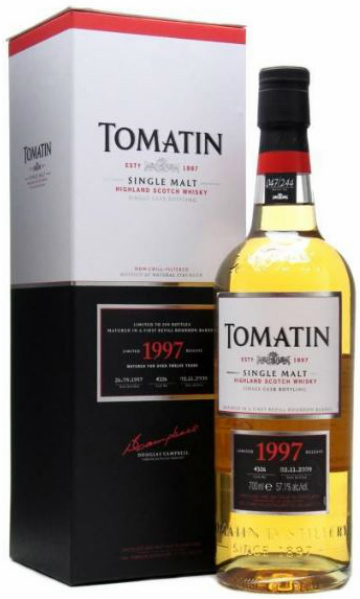
Tomatin 12yo 1997/2009 (57.1%, OB, First Refill Bourbon Barrel #4326, 244 bottles)

Here is another Tomatin, the tenth already if I’m not mistaken, but this time no obscure independent bottling, but an official bottling, yet not from standard range, but a limited release. Some sort of official bootleg so to speak. I hear this particular bottling was distributed in western Europe and Japan. Tomatins from the standard range that are from ex-Bourbon casks are quickly disappearing. The 25yo is no longer with us and who knows what will happen with the 15yo, the only true Bourbon casked Tomatin left.

Here we have a Tomatin that is 12 years old and comes from a refill Bourbon Barrel. You can’t get them more original than this, nor is the cask tampered with in a sense that the barrel is rebuilt as a Hogshead, nor has the distillery character been changed by (part) maturation in ex-Sherry casks or even by a first fill Bourbon Barrel. To sum things up, this is an official bootleg that probably will show a lot of distillery character. A real natural Whisky.

Tomatin 12yo 1997/2009 (57.1%, OB, First Refill Bourbon Barrel #4326, 244 bottles)Color: White wine.

Nose: Spicy wood, sweet and lots of vegetal notes. Alcohol. Vanilla and wood and a little bit of white pepper, but more is going on here. Slightly fruity and tiny hints of licorice and mushrooms. All in all a very clean nose.

Taste: Sweet at first, with again spices and white pepper. Even with this high alcohol content, it seems very smooth and even the finish is half long only. Warming and fatty. In the back of the mouth the alcohol has some acetone notes to it. But above all its zesty and shows signs of lemon. Lemon curd is stated on the back label and that’s what it is. The vanilla pod transforms into creamy ice-cream. Good balance.

Having just opened the bottle it seemed to be very closed and even a little bit unforgiving, but some five months of breathing did the Whisky a lot of good. Again an example of a Whisky that is closed and needs some time to really “wake up”. Just like me I suppose.

This Whisky is actually all about the details, and all details are tiny and restraint. Due to its high alcohol content, no-one will pick this up first, but when it’s tasted after a few other Whiskies, the subtleties are gone. Definitely use this as an aperitif, or when you are planning to have only one dram. If you stick to these “rules” you will be rewarded. I like it.

Points: 86

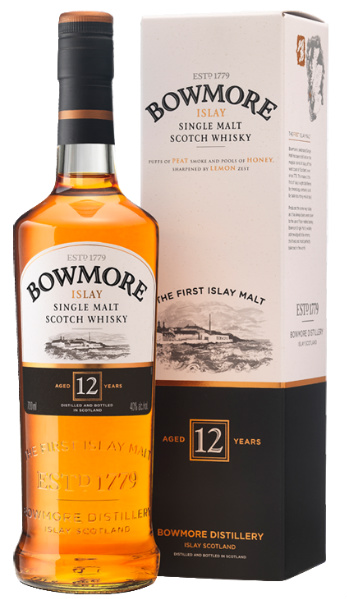
Bowmore Week – Day 1: Bowmore 12yo (40%, OB, Circa 2013)

Bowmore WeekYes this is the start of a new “Week” at Master Quill. This time it’s december and the weather is still pretty good for this time of year. Still the cold should be not too far away and I most definitely have an itch for something more peaty. Bowmore, as Caol Ila are known as the more medium peated Islay Whiskies, as opposed to Ardbeg, Lagavulin and Laphroaig that have a more heavy hitting reputation, and Bruichladdich and Bunnahabhain which are even lighter in peat than Bowmore is. Not to forgetting about Kilchoman (new) and Port Ellen (closed).
Bowmore itself had a little problem in the eighties and nineties with some of their Whiskies being called Badedas of heavily soapy, or even full of FWP (French Whore Perfume). I once had a Bowmore from 1989 that had so much of this it made me physically ill (on two different occasions when tasted blind). It made me ignore Bowmore for a long time (and the independent bottler that bottled the stuff as well…)

But after way more than a decade, and hearing Bowmore of late are very good it is time to have another go at Bowmore and look at some of their newer bottlings and maybe some old, who knows? Lets start the Bowmore Week with the newest version of the standard 12yo.

Bowmore 12yoColor: Full Gold.

Nose: Peaty, sweet and animalesk (smell it and you’ll know what I mean). Salty, smoky and vegetal. The peat gives off this typical coastal character. Burning off garden waste (not everything is dry), but also a clean wood fire. These two different kinds of fires coexist in this Bowmore! Hidden (sweet and aromatic) fruits come next, very nice! Little bit of toffee, vanilla and caramel. Fresh, sea air. But the whole is very elegant (for something from Islay). Not in your face. But Bowmore isn’t about heavy peating anyway. Cold tea. Good balance and quite complex, especially for such an entry-level Bowmore @ 40% ABV. Smell it for a while because not all is released at once.

Taste: Sweet, with lots licorice, peat, cardboard and black & white powder. Hints of vanilla ice-cream and wee bits of yellow and red fruits. Waxy, peppery and a funky kind of sugary sweetness underneath (ever so slightly too sugary sweet sometimes, but the fruity sweetness is good). Again an association with garden leaves, but this time just lying there (before being burned off). Very good Whisky. Alas, the palate can’t keep up with the more than excellent nose. To be taken in big gulps for maximum pleasure. Medium finish, but the aftertaste is very pleasant.

This is great Whisky, and has a lot of potential. I would have liked this very Whisky also being bottled at “the new export strength” of 46% ABV, I would be very curious how it would have turned out, also at cask strength it would be a blast. It smells fantastic, the taste is a wee bit simpler but still well made, very well made. It’s almost too good for an entry-level malt. It just is too watered down, which (alas) makes it an entry-level malt.

Points: 85

Tomatin 12yo (40%, OB, Bourbon and Sherry Casks)

Not so long ago, this was the new-look entry-level malt from Tomatin, but in the quickly changing Whisky-world and especially the trend of releasing Whiskies without an Age Statement (NAS), Tomatin issued Legacy and they priced thát one even lower than this already inexpensive 12yo. Names hardly add something to whisky and I would have loved to see Legacy being released as a 10yo or a 8yo. Now that would have been exciting! Together with the wind of naming Whiskies, I sense a wind that loves young whiskies!
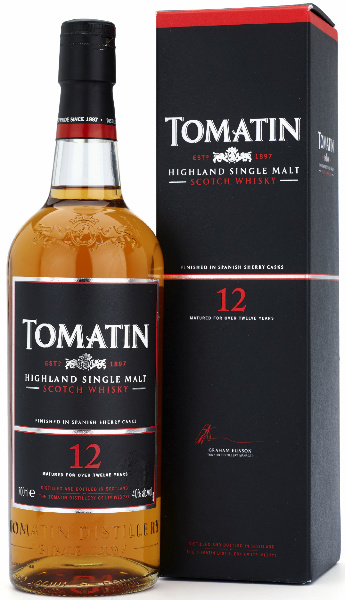
Legacy was made with new oak casks mixed with Bourbon casks. This 12yo is a mixture of Bourbon and Sherry casks, so there should be a lot of difference between the two. Besides this, the 12yo is bottled at 40% ABV, and Legacy gets three points more, 43% ABV.

Color: Ochreous gold (Chewbacca golden hairdo).
Nose: Creamy and alcoholic. Leafy and quite woody. Hints of Sherry mustiness and just a little bit of soap. Estery and thick. It smells chewy (how is thát possible), as if you could sink your teeth into this one, (do I detect a meaty touch?). Lots of vanillin from the cask, toasted cask and toast (bread). Behind the creamy vanilla a lot of sweetness (anticipated).

Taste: Thick and actually pretty good. Woody and spicy, but noting like wood in an old Whisky. To me the wood part is pretty similar to that of the Legacy and especially in the taste both are not worlds apart. The difference being some Sherry casks, that were used for the 12yo. It’s more “dirty”, more spicy and a has a different kind of sweetness to it. Leafy. I can’t imagine the Sherry part being more than 20 to 30% of all the casks used. For a sweeter malt, it is pretty drinkable and certainly well made and it has good balance to boot.

The 40% ABV is all right, it really doesn’t need more than that for the market it targets, but the Whisky doesn’t need it too. I tasted this 12yo a few times at festivals (Thanks Alistair), but never at home in my “controlled” environment. The score didn’t change, but it is nice to concentrate on this for a bit. Again bang for your buck from Tomatin!

Points: 83

Thanks Jennifer for the sample!

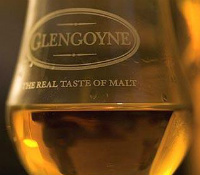
Glengoyne week – Day 1: Glengoyne 12yo (43%, OB, Bourbon Casks, 2012)

Hurray, we have another ‘week’ at Master Quills! No April fools! As you all know this sort of event is very nice to do. This is already the fourth time we’re doing a ‘week’. We started out with the Bourbon week, that was not all about Bourbon. The second time around we had a go at the tipple of Japan, and I’m not yet talking about Saké. The last one, up ’till now, was Rum. Now we’ll do the first about a Single Malt Whisky, Glengoyne in particular. Glengoyne is famous for not using peat at all. They are so proud of it they even mention such a thing on their labels, or used to. Second, Glengoyne is also one of the distilleries that uses (or used) the Golden Promise Barley variety, one of the best tasting barley’s around. Glengoyne is owned by Ian MacLeod, we all know as the independent bottler of the Chieftains range and Dun Bhaegan.

Last year the core range, the 10yo, 12yo, 15yo, 18yo, 21yo and the cask strength version got a new look. This 12yo is a few points up in ABV from the 10yo and cost only a fraction more.

Color: Gold

Nose: Malty and quite stuffy at first. The stuffiness dissipates very quickly. After that, very clean, which doesn’t exclude the initial stuffiness. This is the way to find out how the Spirit of Glengoyne ages, without being obscured. Fresh seaside air. Sweetish and clean oak. Going by the smell alone I would say mostly refill casks were used. Toffee and a little bit of wood and vanilla. Slightly floral. Undemanding and unobtrusive.

Taste: Sweetish (corn?) and quite simple. Malty, slightly bitter, fruity (pineapple) and sweet. A little bit of toast. It’s quite nice and dangerously drinkable. Slightly warming. All in all quite simple. Short finish, that leaves a trace of sugar in the mouth. Slight imbalance towards the finish (sour beer).

A very easy, simple and inoffensive entry-level malt, without faults, but also nothing special. A good inexpensive choice for a novice, and if you don’t like this, stay away from single malts altogether! Still when compared to the cask strength version, well that is quite another story…

Points: 81

Bowmore 12yo 1988/2000 (50%, Douglas Laing, Old Malt Cask, Sherry, 702 bottles)

The Master of Malt version of an eighties Bowmore did not turn out to be a FWP-Bowmore after all. Looking though the whiskies that have accumulated at Master Quill’s castle, I found another eighties Bowmore. This time an oldie by Douglas Laing. At one point in time, the Laing Brothers thought they would have to show the public what are the ‘young’ whiskies in their Old Malt Cask range, so decided on red lettering and a red tube. Somehow this ‘experiment’ didn’t last for very long, so this look is rather scarce. Lets see if this time we have a genuine FWP-Bowmore on our hands? Is it lavender & violets or peat & smoke?

Color: Light Copper Gold.

Nose: Butter, popcorn, quite some hints of flowers, but not like a FWP. Peat and a decent amount of smoke. Deep almost brooding kind of licorice. Clay, smelly pond in summer, probably a sulphur compound. This organic smell is actually great in this Whisky. Ashes and gravy, meaty.

Taste: Nice elegant Islay. Soft tasty peat, with smoke on top. Lots of caramel, toffee. Nothing is over the top. Perfect non-sugary sweetness in the background. But as with the Master of Malt version, it breaks down a bit towards the end, and has a sweet yet ‘light’ finish. There is something else that is pretty similar with the Master of Malt bottling. Again, the acidity quickly follows the sweetness. They somehow are linked. Do I detect some soap at the end of the finish? If it’s there it doesn’t hurt the whisky much. On occasions it takes the properties of a rum.

Not a perfect Whisky. Has some distillation faults (butter) and some issues with the finish and stability (with air), but overall it’s a very drinkable and likeable Whisky. Again not a victim of FWP.

Beware, this whisky doesn’t take air very well, let this breathe and you’ll see how it breaks down in your glass. Break open a new deck of cards, invite some (lady) friends over for a nice and friendly game and drink the whole bottle in one evening, you’ll do yourself and the Laing Brothers a big favour.

Points: 88

Highland Park 12yo 1997/2010 (56.2%, G&M, Reserve for van Wees, Refill Sherry Hogshead #5823, 271 bottles)

In this day and age of battles, battles for oil, battles in politics, and even dance battles, now there are also battles in Whisky. The guys in the picture are Jan Beek (right) and Dennis Mulder (left). They do tastings/battles to see who bottles the best Whisky, the distilleries themselves or the Independent bottlers. Jan represents the independent bottlers and Dennis the official bottlers. Time for my own battle. Well not a battle with axes and swords. Earlier I reviewed an official Highland Park 12yo and scored it a decent 85 points. Here we have a this independent 12yo Highland Park, bottled by Gordon & MacPhail and selected by Van Wees, so mostly sold in the low counties. Let’s see if this Gordon & MacPhail 12yo can beat the official 12yo, and score more than 85 points…

Color: Lively orange brown.

Nose: Extremely sweet, spirity, spicy and woody. Raisins, lots of raisins. This smells exactly like a PX-Sherry. Apart from the thickness of it all, it does smell dryer later on because of the wood and spice. Gravy and meaty, something that fits the Sherry profile too. Definitely some honey and heather in the nose. Which surprises me since the Sherry cask might be very overpowering. Tar and sulphur come late into the mix. I love the coal and tarryness of sherried single cask Highland Parks. Burnt wood. Bonfire from a distance at night. The opposite of elegant I would say. The longer it breathes in the glass the better this gets. It reminds me of some of the better early seventies good sherried Whiskies.

Taste: This is sweet PX-Whisky with a bite. It starts out sweet and quickly turns into spicy wood. Syrupy sweet. But the initial sweetness terns into dryness because of the woody attack. Again coal, tar and even some licorice. Fireworks and a cold freshly half burnt log. Demerara Rum with a lot of smoke. It’s sweet but not quite honeyed. And no heather to be tasted too. Some dark chocolate and cola. Do I really taste a hint of soap?

OK, it’s a 12yo Highland Park all right, but this version has nothing to do with the official 12yo of today or any day for that matter. It’s a beast, but a lovely beast. If you can handle heavy Sherry, than this is one for you (and me). In the end I like this one better than the official 12yo, so this battle is won by Jan Beeks axe. But the whiskies are completely different and both have their moments. One is elegant and light(er), the other a beautiful beast at high strength. Still, I like the older official bottlings of Highland Park.

Points: 87

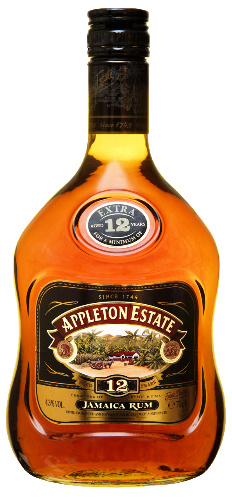
Rum Week – Day 7: Appleton Estate 12yo Extra (40%, Jamaica)

Appleton Estate, of course, is a sugar estate that started to distill their waste, to earn some extra money. It is located on the Island of  Jamaica and makes Rum since 1749. The estate exists since 1655. It is the oldest sugar estate and distillery on the island. Appleton is owned by J. Wray and Nephew Ltd. another name we know from the rum business. The Appleton Estate covers more than 4,500 ha of land. Nice to know is that they still, in part, cut cane by machete! The Appleton Estate makes traditional pot still Rums that are aged in American Bourbon Barrels. Just like their counterparts of El Dorado.

Color: Orange brown.

Nose: yeah! That’s more like it! Sweet, Cane Sugar and molasses. Very fruity. Lots of banana. And some clean wood with tar in the far distance. Thick. Clay and full of esters. I like this very much.

Taste: Syrupy, half-sweet, and has a bit of a bite from the wood. It tastes just a tad too much toward the new-wood spectrum to call it great, but it does seem to be a great rum. Altogether I expected this to be a bit heavier and more complex, than it actually is.

So there you have it. Seven Rums in seven days. Three were pretty good and very close in points. If I would pick a winner I would choose the Barbancourt. It’s the most perfect of the bunch. The El Dorado is as good and who knows maybe even better in complexity, but I have a dislike for the sweetness that is on the edge. Almost too sweet or maybe it is already too sweet. This Appleton is almost as good as the ones I just mentioned, yet the taste is a bit too simple for the nose and maybe a tad too woody. Still I consider this a very good rum. Of the rest the Malecon is too weak to stand out, but the quality is there. The Angostura 1919 is pretty good too. The Diplomatico and the Flor de Caña were, for me at least, disappointing. Not bad, but disappointing. I expected more of both. These were all readily available rums that, compared to Single Malt Whiskies these days, cost next to nothing. To explore this further it will be interesting to look into some single cask Rums. I enjoyed this week thoroughly, but I do feel there is a lot of Sugar in these Rums, I’m not quite accustomed to. LOL.

Points: 83

Rum Week – Day 6: Flor de Caña 12yo Centenario (40%, Nicaragua)

Flor de Caña is made by Compañía Licorera de Nicaragua that is based in Managua. Their first distillery was built in 1890 in Chichigalpa that lies some 120km from Managua. Flor de Cana was only introduced in 1937. The Chichigalpa distillery was modernized three times in 1963, 1965 and 1996, and in 1973 a second distillery was built in Honduras. I’m not sure if distillate from this Honduran distillery finds its way into Flor de Caña.

Color: Orange copper.

Nose: Vegetal, leafy and spicy. Lemons combined with fresh air. Unripe strawberries. Dry and cardboardy. Old books, musty. Hot water with hints of wood. Average balance.

Taste: First cardboard, and decent sweetness, Dissolved sugar cubes in lukewarm water and brown sugar. Quite a lot of wood. Half-firm body. The taste is even less balanced than the nose was. The finish is rather light after the woody body.

This one is not for me, not my style of rum. It doesn’t bring a lot into the fold. Lots of wood and cardboard and a short finish. Do I want to say some more about this? Nope.

Well yes, actually. I come from Single Malt Scotches, so I will most definitively look at these rums with a specific baggage of knowledge that is very different from a rum-buff’s. This Flor de Cana Centenario and The Diplomatico I reviewed first are both multiple award-winning rums. They just don’t seem to match up with my palate. So keep this in mind, when reading these reviews.

Points: 74