Irish Whiskey Week – Day 5: Kilbeggan 15yo (40%, OB, 5000 bottles)

Irish CloverKilbeggan distillery a.k.a. Brusna Distillery a.k.a. Locke’s Distillery, was founded in the small town of Kilbeggan, County Westmeath in 1757 by Gustavus Lambert. The distillery was formerly a monastery and is situated near the Brusna river. Kilbeggan is now claimed to be the oldest working distillery in the world. One of the two stills at the distillery was made early in the 19th century and is considered the oldest working Pot still in the world. The distillery was dormant for quite a while, but Cooley restarted the distillery in 2007. Today Kilbeggan an Cooley are part of the Beam Suntory group.

Kilbeggan 15yo is a small batch blend, made with Cooley Whiskey, since Kilbeggan Distillery wasn’t running 15 years ago.

Kilbeggan 15yo

Color: Orange gold.

Nose: Fruity and fresh. Lovely. Vanilla pods and vanilla ice-cream but also a little dusty. Very nice and sweet grain in the nose. Slightly burnt wood (and new wood) with toasted bread.

Taste: Lots of vanilla and dried yellow fruits. Caramel and fresh toffee. Lovely stuff, I would pour this over pancakes. Peach yoghurt. Again toast and slightly smoky. Sweet, sappy wood. Nice hint of bitterness in the finish to hive the whole experience some balls. Excellent! Since this is a blend, don´t be surprised the finish is rather short, but who cares the Whiskey is simply delicious!

I love Cooley Whisky, but what makes this Blend really work is the high quality grain Whiskey that in here and it seems to me that there are a lot of first fill Bourbon Barrels (or Hogsheads) used. This 15yo is discontinued and is replaced with the 18yo in the same style decanter. Decanter you say, after-shave bottle imho. The 15yo was 5.000 bottles stong, of the new 18yo a mere 4.000 bottles were filled. I hear the 18yo surpasses this 15yo, and if that’s true get it if you can, since both are probably sold out everywhere.

Points: 85

Inchmurrin 15yo (46%, OB, 2012)

Bottled on the 14th of november 2012, we have here an Inchmurrin which is a Single Malt Whisky made at the Loch Lomond distillery. Loch Lomond was founded in 1965 and distillation started a year later. On site there is a malt distillery as well as a grain distillery. The distillery has two copper pot stills and four stills with adjustable rectifying columns (for Single Malt production). Because of these different stills and the fact that the rectifying columns are adjustable a series of different Single Malts can be made. Today Loch Lomond produces the following Single Malts: Loch Lomond, (Old) Roshdu, Inchmoan, Craiglodge, Inchmurrin, Croftengea (heavily peated), Glen Douglas and Inchfad.

Inchmurrin 15yoSince 1993 also a Coffey still is placed for Grain Whisky production and therefore the company is able to produce a Single Blend named Loch Lomond (you’d think they were good at making up names for their products)
Color: White wine.

Nose: Extremely malty, grassy and has notes of lactic acid. How’s that for a start! We continue with cardboard and a strange kind of acidity. Vegetal and woody. Toasted wood which makes the whole rather spicy. Slight whiff of menthol. When you let it breathe a while in your glass this is actually not a bad nose, the strange funkiness that was there in the beginning dissipates, to give us a more normal nose.

Taste: Grainy, very grainy. Neutral. It tastes like a Vodka on wood. It ís a Single Malt, so what happened in those casks over all those years? Grain and wood, not a lot more actually. Freshly cut baguette with its paper bag. Hint of vanilla. It isn’t sweet and has only a hint of bitterness. Finish is uneventful, and the higher strength gives it some staying power. But nothing really special stays behind.

First of all let me say that the bottle looks very nice when you have it in front of you. Highest marks on the packaging. The Whisky itself seems almost like a Grain Whisky that was aged in a bunch of rerererefill casks, very inactive indeed. Probably the most neutral Single Malt Whisky I ever tasted. Let’s make it my 70 points benchmark.

Points: 70

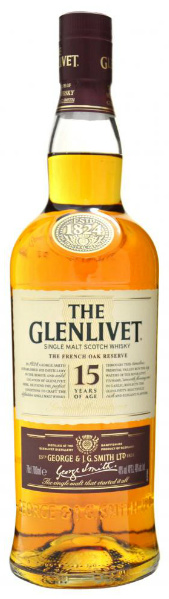
The Glenlivet 15yo “French Oak Reserve” (40%, OB, 09.11.2009)

After the oldie from 1975 and the two recent “special” releases, Alpha and Guardians Chapter, here we look into a more “normal” release by The Glenlivet. This is a 15yo standard release Glenlivet, where the tipple came in contact with some French oak. French oak is known for impairing a slightly more tannic flavour to Whisky, whereas American oak usually gives off a more Vanilla or Toffee note. I expect a very easy drinkable Whisky with maybe a little “bite”.

Glenlivet 15yo "French Oak Reserve" (40%, OB)Color: (Light) gold, slightly pink?

Nose: Altogether light and slightly malty. Nice hints of wood. A little bit of toffee, vanilla and sweet apple. Very middle of the road, but also decent and pleasant. It smells like a good daily drinker. A little bit of dust on wood and nuttiness. Picture dust floating in the air in the sunlight in a room with unpolished wooden furniture. Also a touch of oil from tangerine-skins. Nothing out of the ordinary for a decent Single Malt Whisky, yet nice nevertheless.

Taste: Sweet, creamy with toffee and vanilla. A little tannic bite from the wood. Otherwise again very pleasant and very middle of the road. Slighty malty and nutty. Daily drinker written on its forehead. Slightly bitter on the finish, like licking walnut skin for a moment. Obviously from this particular type of oak, French you know.

A very reasonably priced 15yo, which offers a middle-of-the-road experience, with a little bite from the French oak. Pleasant but hardly entertaining, good but nothing special. Especially since it has aged for 15 years, in a time where all Whiskies are released without an age statement. It probably sells a lot, and why not. There is nothing wrong with it and it isn’t a bad Whisky either. Bang-for-your buck material, or a starters Whisky at 40% ABV  if you are interested in the effect tannins can have from French oak. Good but a bit boring (for me).

Points: 82

Port Morant 15yo 1992/2007 (46%, Berry Brothers & Rudd, Islay Cask, Guyana)

This Demerara Rum from Port Morant was bottled by Berry Brothers & Rudd and somewhere in its life came in contact with a cask that once held Islay Whisky. The label doesn’t state from which Islay distillery the cask came…

BBR Port Morant 1992 Demerara RumColor: White Wine with lots of viscosity.
Nose: Very aromatic with lots of petrol and tar, paper and cardboard and you know we like this in a rum. Vanilla, caramel, Demerara sugar. Industrial at first and not very fruity, Solvents, but not the usual stuff. Small hint of mint and a good body of wood, but nowhere near the amounts of wood that can be found in aged Rums. Fantastic balance, but wait. A lot more is happening here after a while. The wood opens up and the whole becomes more floral and adds notes of dry leaves. That’s a first for me with Demerara’s. Next are some spices, cardamom, white pepper and it finishes of in great funkiness. Actually it never ends, put it away and pick it up again and you smell new things. Wonderful stuff. Although this comes from an Islay cask, meaning peat I guess, I can not detect any peat at all but there is a tiny, tiny hint of smoke. Can’t imagine they would use an unpeated Malt Whisky cask for this.

Taste: Yes there is the peat! Very up front and comes sailing in on a wave of restrained sweetness. Nice. Fits the toasted wood note that comes next. Mocha, toffee and chocolate (not the darkest kinds though), hints of cucumber, can it get any crazier than this? The wood and the peat give off a slightly disturbing kind of bitterness to this not-so-sweet Demerara. The jury is still out if it actually fits the Rum. Sometimes this note resembles an electrical fire. Still, it oozes character and proves again that Demerara’s are a force to recon with. Alas, most distilleries are closed by now, luckily most stills have survived…

It reminds me a bit of a Cadenhead Enmore, also a Demerara Rum from Guyana which will be reviewed in the future. Talking about Cadenheads, also a Scottish independent bottler, that also used some Islay casks, but from them we know they were Laphroaigs, one of the most heavily peated Islay Whiskies.

Points: 87


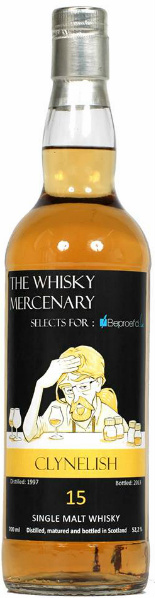
Clynelish 15yo 1997/2013 (52.2%, The Whisky Mercenary, for Beproefd.be, 65 bottles)

This Clynelish caught me completely by surprise, since Jürgen didn’t tell me he was sending this, and getting free Whisky in the post is, niiiice 🙂 We all know Jürgen from his series of Whiskies he picks out and releases under his Whisky Mercenary moniker, but he also writes the odd stuff about Whisky including some notes on beproefd.be. I’m guessing Jürgen doesn’t need an introduction, but for those of you who do, here is review of Jürgens Tormore. Now let’s have a look at this Clynelish…

Color: Light gold.

Nose: Clean, fresh and fruity, meaty and salty smoke, bacon? Waxy with vanilla, paper and nice hints of wood. A plethora of yellow sugared fruits. The Obvious apricot, but also some pineapple. Excellent modern and clean nose. Warm butter and gravy, so a little bit musty. Easily recognizable as a Clynelish.

Taste: Fatty, waxy and fruity. Warm toffee and mellow oak. A little bit of woodsmoke. Quite sugary sweet, but not overly sweet. Vanilla ice-cream. Nice warming spiciness. Lemons and some orange skins. Dry black tea. The nice fruits mingle perfectly with a nice touch of wood. Extremely drinkable. Nice full body with a medium finish. Low 50’s is a perfect strength too. Lovely and with great balance.

Well Jürgen is known for having a good nose and palate, so his picks are always interesing to have a look at. And Jürgen delivered again. This is again a very good Whisky. I found this one to be even better after some breathing. With air it achieves even better balance and the body gets even more full. Reccomended!

Points: 87

Glenfarclas 15yo 1991/2006 “Breath of Speyside” (60.2%, Adelphi, First Fill Sherry Butt #5642, 615 bottles)

Almost two weeks ago I reviewed a Adelphi Highland Park, and here is the next Adelphi bottling. This time a bastard malt. A bastard malt is a Whisky of which the distillery name can’t be found on the label. Usually some kind of fantasy name pops up like Probably Speysides Finest (Douglas Laing name for Glenfarclas), Director’s Tactical (Douglas Laing name for Talisker) or Laudable (Douglas Laing name for Laphroaig). Well this is called Breath of Speyside and in this case, that is Adelphi’s name for Glenfarclas. Glenfarclas do sell off lots of casks, but never allow the bottler to use the Glenfarclas name.

Glenfarclas 15yo 1991/2006 Breath of Speyside (60.2%, Adelphi, First Fill Sherry Butt #5642, 615 bottles)Color: Orange copper gold.

Nose: Cream and cherries. Quite fresh and fruity. Very lively, and not that deep dark in your face Sherry. Very obviously a first fill sherry. Perfumy, with a nice touch of wood, very elegant. lovely stuff and easier on the nose than A’bunadh, that can be harder or harsher (due to its youth). Toast and pepper come to mind and very spicy. Pot roast, tobacco and furniture polish. Very lovely and interesting nose. Great complexity and perfect balance, between the Whisky and the Sherry.

Taste: Creamy and woody. Nice sweetness that is delivered after the initial woodiness. It’s not overly woody though. Again roasted meat, combined with the dry woodiness and the late sweetness (caramel), makes for a very interesting play on your tongue. Excellent. Definitely elements of wine (Sherry). Also some organics I usually get from some white wines. Thick excellent stuff that works well at this high ABV. This Glenfarclas really intrigues me. Well chosen cask.

Heavily Sherried and high in alcohol, so this is Aberlour A’bunadh territory, the only difference being the age. A’bunadh is a young Whisky, probably around 8 to 10 years old, and this Glenfarclas is 15 years old. This one is milder older and wiser. It’s deeper, more complex and less rough around the edges. The only problem, you can only get this at three times the price of the Aberlour A’bunadh, just to show you how cheap the Aberlour actually is…

Points: 89

Tomatin 15yo (43%, OB, Bourbon Casks)

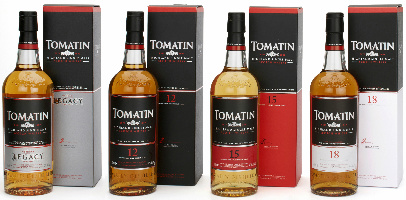
This is my last review of a Whisky from the standard range of Tomatins released by the distiller. The standard range comprises of Legacy, a 12yo, a 15yo, and last but not least, the 18yo. The age statement (or lack of it) not being the only difference. All are different in usage of casks:

  • Legacy – New Oak Casks and Bourbon Casks (82 Points).
  • 12yo – Bourbon & Sherry Casks (83 Points).
  • 15yo – Bourbon Casks (?? Points).
  • 18yo – Refill Bourbon Barrels with an Oloroso Sherry finish (87 Points).

So here we have the 15yo. This one is on paper the younger brother of the now sadly deleted 25yo. Both come from only Bourbon Casks. The new Tomatin is called Legacy, but the 25yo will turn out to be a Legend. But, and I can’t stress this enough, Tomatin 30yo, that’s even better imho!

Tomatin 15yoColor: Light gold.

Nose: Spicy and clean. Sweetish and creamy. Hints of toasted oak and crushed fresh leaves. Nice toned down fruitiness. Cookie dough. It does remind me a bit of the 25yo (and some notes of the fruitiness remind me of the 30yo). Fruity ánd perfumy. Very aromatic example of Tomatin. Good balance.

Taste: Clean and warming, warm wood and caramel. Hints of licorice, vanilla and toasted wood. Very creamy and half sweet. Again very good balance. Dangerously drinkable.

These four whiskies are absolutely family of each other. Brothers and sisters of one another. But just as with people, there is a family resemblance, but most definitely have different characters. It’s not merely an older version of the previous example, no, all are meant to be different through usage of different casks. I guess all of them will have different likers (or dislikers if you don’t like the mean Tomatin profile).

So time to come clean, which one would I buy? Well, according to points the 18yo is the winner. It has a stunning nose and taste to match, but there is always a candidate everybody likes, isn’t there. I scored the 15yo one point lower than the 18yo, but I think the 15yo is a true and honest malt (just look at its color), and is definitely easier to drink than the 18yo. I had problems writing tasting notes, because the glass seemed always empty, how is that for drinkability! So if you are new to whisky or just enjoy a good malt, I would buy the 15yo to start with, if you’re somewhat more seasoned and able to appreciate the added notes of the Oloroso finish , I would recommend the 18yo. Legacy and the 12yo are both alright, and dirt cheap to boot, but not my personal first choice. So for me the 18yo and the 15yo are the ones to buy, and differ strongly enough from each other to get both 🙂
Points: 85

Thanks to Jennifer for sending me this sample.

Glengoyne Week – Day 2: Glengoyne 15yo 1991/2006 ‘Jim’s Choice’ (57%, OB, American Oak Sherry Butt #1083, 693 bottles)

We lifted off safely, and now we are on our way with Glengoyne. In 2005 Glengoyne started a series of ‘Choices’. In 2005 the Lucky choices were made by stillmen Ronnie, Ewan and Duncan. In 2006 the mashmen Peter, Jim and Charlie had a go, and finally in 2007 Billie, Deek and Robbie chose their casks to be bottled. Good choice, bad choiceRobbie is the distillery manager and Deek and Billie are warehousemen.

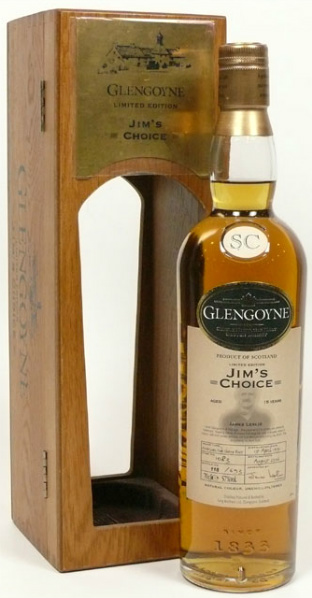
Today’s Butt was chosen by mashman James ‘Jim’ Leslie. This sort of this is always interesting to me. A Sherry Butt made of American oak, instead of Spanish or French oak.

Jim’s said the following about his choice; “I love Glengoyne at this age – the cask and the whisky are perfectly balanced. There is plenty of sweet fruit and rich oak.”

Color: Gold.

Nose: Wow, nice and spicy, apples, waxy with cold toasted wood. Rotting leaves. Not woody at all. Very lively and fresh. Fresh cut grass. Given some time the wood does start to play its part. Wood related vanilla (dry, as opposed to ‘sweet’ ice cream). Barley, mocha and clean, slightly sour oak. Also some varnish.

Taste: Spicy and elegant wood. Fino Sherry. Tobacco and cigar box. Slightly soapy, which also makes it a little bit unbalanced. The initial sweetness is gone quite quickly. Barley and dried grass. Pickle water (sweet/sour). Where the soap affects the balance of this Whisky, the finish does that too. It breaks down rather quick, and the whole palate is too much dominated by wood. No need to tell you that the finish is dry.

Well, for a Glengoyne this is a bit disappointing, and that’s saying a lot! Nosing it, I can imagine Jim to choose this, but on the palate there are so much more beautiful Glengoynes around. Especially the balance of the palate could have been better. Not bad.

Points: 86

Glenfiddich 15yo “Solera Reserve” (40%, OB, Circa 2003)

Solera is an ageing system for Sherry (and other fortified wines), in which younger wines in upper rows of casks are used to top up casks of older wines stored below. Every time a batch is bottled, the wine is taken from the bottom row. Not everything though, usually up to 30% of the cask is bottled. After this, the casks in the bottom row are topped up with the wines from the casks in the row directly above, and that row is topped up with wines from the row directly above that, and so on. After a startup period this system gives wines of a consistent age and quality, even if one particular vintage is weaker than the others.

Color: Light copper gold.

Nose: Very malty, and immediately recognizable as a Glenfiddich. It has a lot of traits of the 12yo “Special Reserve” I reviewed earlier. Lots of vanilla. There is also a light Sherry influence. Waxy. But overall it’s quite flowery and light. When tried blind, a definite Lowlander, (which it is not). Likeable.

Taste: Creamy, and very malty. In the back there is a little bit of mint, which makes it fresh and lively. Ice cream, winegums and apples. It starts to break down late in the mouth, where it shows an added sour note. The finish is short. Where the nose was more floral, the taste is more fruity. Loveable.

I don’t know if it’s a step up from the 12yo “Special Reserve”, but it is most definitively a variation. And yes, I think it’s better, and it’s extremely drinkable. Again nothing wrong and again a perfect malt to get you into Single Malts. It’s well made. Even if it’s the only Single Malt at the hotel bar, I would still pick this over any other drink available. But when spoiled for choice, well, it’s a great malt to get you into Single Malts.

Points: 82

Inverleven (Dumbarton) 15yo 1987/2003 (58.1%, Cadenhead, Bourbon Hogshead, 294 bottles)

I ended the last post about Gordon & MacPhail’s Inverleven with the hope that they wouldn’t reduce the next issue (so much). Frolicking around in my stash of samples I unearthed this unreduced Inverleven bottled by Cadenhead’s. It’s from another year, so this may have a different profile, but still worth checking out. Dumbarton was foremost a Grain Distillery. The distillery was built in 1938. In 2002 the distillery was closed and demolition commenced in 2005. I’ve added a picture here, because I have always liked the big red brick industrial complex on the river. By the way, after stopping the production of the Inverleven malt, the Stills went on to Islay to produce Port Charlotte at Bruichladdich.

Color: White wine.

Nose: Grassy and murky, like sitting next to a ditch in summer, not bad, but certainly not lovely as well. A lot of citrus fruits. Lemon, lime, tangerines, but over this a lot of dried grass and hot butter. A slightly meaty or gravy like component emerges from all this. Quite fresh and slightly estery. Hints of mint when nosed vigorously.

Taste: Sweet and fresh. Lively, leafy, slightly woody and again lemons. Some underlying caramel and this type of whisky at this strength makes this hot, but that’s not a bad thing. Caramels, vanilla and toffee, are the main markers here. Not very complex. After some breathing, the bite of the wood enters, but luckily not a lot of bitterness.

Compared to the 1991/2012 G&M, this has even less than half of the wood the G&M. So this is more grassy, lemony and much sweeter to boot. This one lacks complexity, and even though the G&M was on the brink of becoming a log of wood, that one was more complex and therefore more interesting. This Cadenheads is easier to drink (as long as you like cask strength whiskies), sweeter and fresher. Still I like this type of Lowlander profile. Sadly gone.

Points: 84