 Wow, it’s already the seventh and last day of Master Quill’s Highland Park Week. How time flies when you’re having fun, but I say that after every Master Quill Week. Somehow it is always nice to concentrate on one subject and try several examples in quick succession. This week may have been a bit heavy on the Independent side, since only two offerings released by the distillery themselves were reviewed. Beforehand I would have thought the 18yo OB would be a worthy opponent to the five Independent offerings, but it turned out otherwise. We know the 18yo can be (very) good, but we also know that it does suffer from batch variation. So quite a surprise there. Another surprise was the sheer quality of the 9yo Signatory bottling. A Whisky not even in its teens! If only all of todays NAS offerings would be this good… Yesterday we had a very nice Highland Park bottled by Douglas Laing, which churned out quality Whisky one after the other. So it wasn’t a hard decision to end this Week with a 1972 bottling by Douglas Laing again, especially since it was bottled in 1999, early on in the Old Malt Cask series (OMC). Early OMC bottlings were always right up there, so lets see if this is any different, and therefore a worthy example to finish off this week.
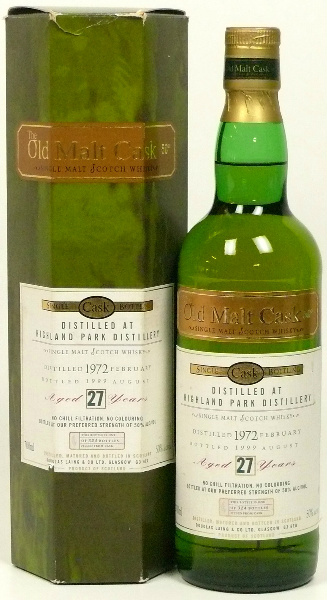 Color: Gold.
Nose: I had only one sniff and I’m already in love. Nectar of the gods. Super fruity, old Malt. Too much fruit to name. Pineapple, passion fruit, apricots and white peach (somewhat later in the mix), but there is a lot more. More apricots, dried and sugared, Hints of regular peach and banana. Super fruity and super funky. Nutty and sweaty. Utterly wonderful. Yes this is an old Single Malt from, and I’m guessing here, a remade American oak hogshead. Vanilla combined with clay, soft spices and very soft oak. Vegetal and slightly dusty. Hints of cereal and latte macchiato as well. The yellow fruits are thick and syrupy, but just like a great, sweetish, White Wine, the acidic part is equally important. This thick, syrupy Highland Park has such an acidic top note, that livens the whole up. This is stuff from the hall of fame, something like 1972 Caperdonich. Stellar. Sugared yellow fruits picked up by hints of zesty citrus fruit. Well-integrated acidity. With some breathing, a more restrained note emerges. Fresh air. The big fruit dissipates a bit, leaving more room for some sour oak. Underneath, a slightly meaty, cold gravy aroma. Amazing how little wood is showing throughout. Butter with hints of salt and black pepper and after a while some nice oak finally emerges to make up the finish. Creamy and half-sweet yoghurt with white peach. Calvados and graphite powder. This change in character is kind of special. This Highland Park starts out as a 1972 Caperdonich, however the Caperdonichs don’t show such a change, so both finish quite differently.
Taste: Wonderful, elegant, half-sweet at first and a bit brittle. Lots of fruit again, red fruit pastilles and a large nutty part combined with slightly bitter dark chocolate and toffee. This is a bit of a Malt with granny’s osteoporosis, but we all love our granny don’t we, warts and all. It still has enough power at 50% ABV, but the aroma’s don’t seem to be as big as in the nose. Laid back fruit and even some Belgian Beer (again). It’s definitely simpler and not as thick as I imagined it to be. Some sweetness from sugared fruits, which fade-out… The body is thin, but not weak. It disintegrates a bit. Still a pretty long finish though, leaving a note of warm milk (from the latte macchiato?)
Don’t buy the, sometimes, mediocre over-priced, over-hyped bottlings of today, unless there are no old bottles to be bought, when bottles don’t show up anymore at auction. All collected or hopefully drunk by people who appreciate them. Spend your hard-earned cash on something like this, before it’s really too late. Everybody needs to taste how it used to be, and how it could be done…
Points: 91
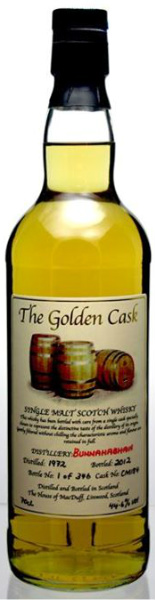 Color: Light Gold.
 This is the first Tobermory on these pages and the Whisky itself comes from the Island of Mull. This distillery was founded already in 1798 and was originally called Tobermory. Tobermory closed in 1930 and was turned into a power station. It stayed closed as a distillery, untill it reopened in 1972, but this time as Ledaig. Ledaig’s history, from its reopening was a rocky one, with a lot of buying and selling of the distillery with production stops to match. The current owner is Burn Stewart (which itself is/was owned by an insurance company (since 2002), that again was rescued by the government of Trinidad & Tobago in 2010. You don’t want to know…)
 Back to Tobermory (or Ledaig). Ledaig was sold to Burn Stewart in 1993, and they decided to give back its original name: Tobermory. In 2005 Tobermory issued three 32yo from 1972. These were Oloroso Sherry finished Whiskies. One with a black label, one with a red label and this green label reviewed here. Purists mention an additional brown labeled version for sale at the distillery. Also 32yo and 1972, but “put on bottle” in 2010, so it must have been kept in stainless steel tanks of on glass from 2005 to 2010 to stop further ageing. Not a lot is known about this bottle…
 Color: Brown
 sometimes seems thinner than the other two.
 Looking back, I see that two of the last four posts are old Clynelishes. One from
 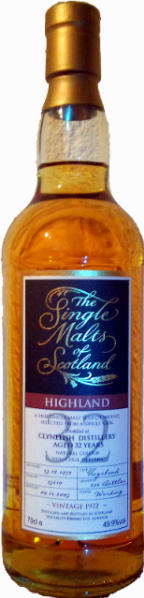 But that’s Brora, here we have a 1972 Clynelish, so it’s distillate from the then newly built distillery next to Brora…
 Oh no, we’re already at the end of the Glengoyne week, quelle misère! This is always the moment with a little bit of melancholy. That moment when you’ve been with a good friend for a week and you know he or she has to leave. Waving goodbye at the train station or the airport. Going home alone with a little tear in the corner of your eye.
 Color: Sparkling gold.
 with an almost equally briljant and newer ‘summer’ edition in the runner-up position. Actually the odds were a bit uneven since this Glengoyne is from the seventies and therefore well older than the rest of the contenders, but who said it was a contest? Through the rest of the offerings reviewed in this Glengoyne week, it can be clearly seen that Glengoyne makes a high quality whisky with multiple facets to it. Keep up the good work!
 Color: Gold
 Founded in 1843 by William Mathesen, but whisky was distilled on site as early as 1703 (or 1738). Glenmorangie is now known for their stills with very tall necks that ensure a very light and clean spirit that had to reach incredible heights. Glenmorangie are also known for their Dr. Bill Lumsden, a man who doesn’t fear innovation and experimentation with his grains and woods.
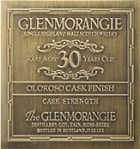 The whole is pretty balanced. It’s easy noticeable that this is from light spirit. The nose is great, and the taste is very nice. The only two things that let this down is its lightness. And a Glenmorangie should be light, that’s one of their pillars. Personally I like a bit of body to it, like yesterdays
  Color: Copper gold.
 Color: Orange Gold
 Master Quill